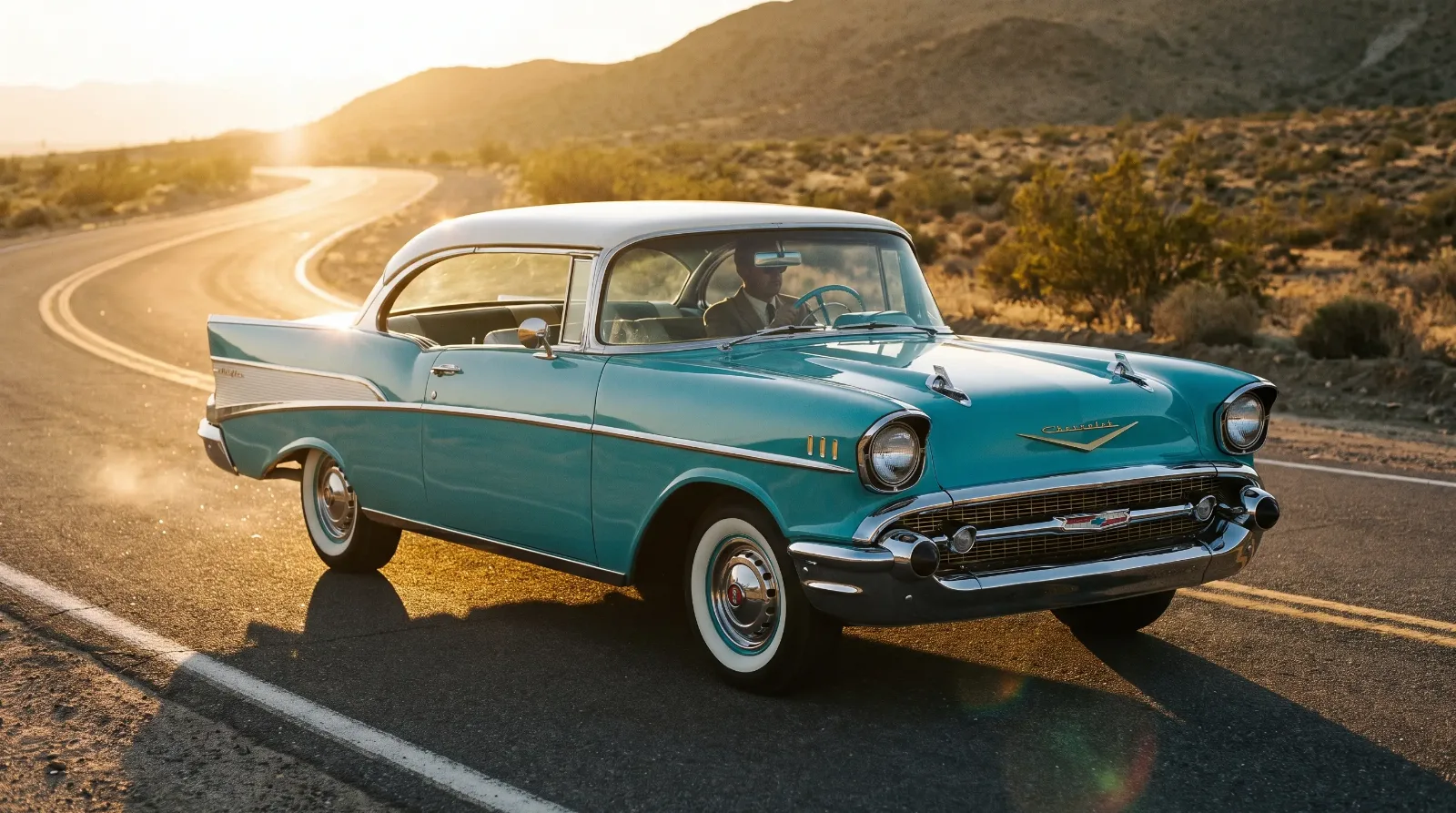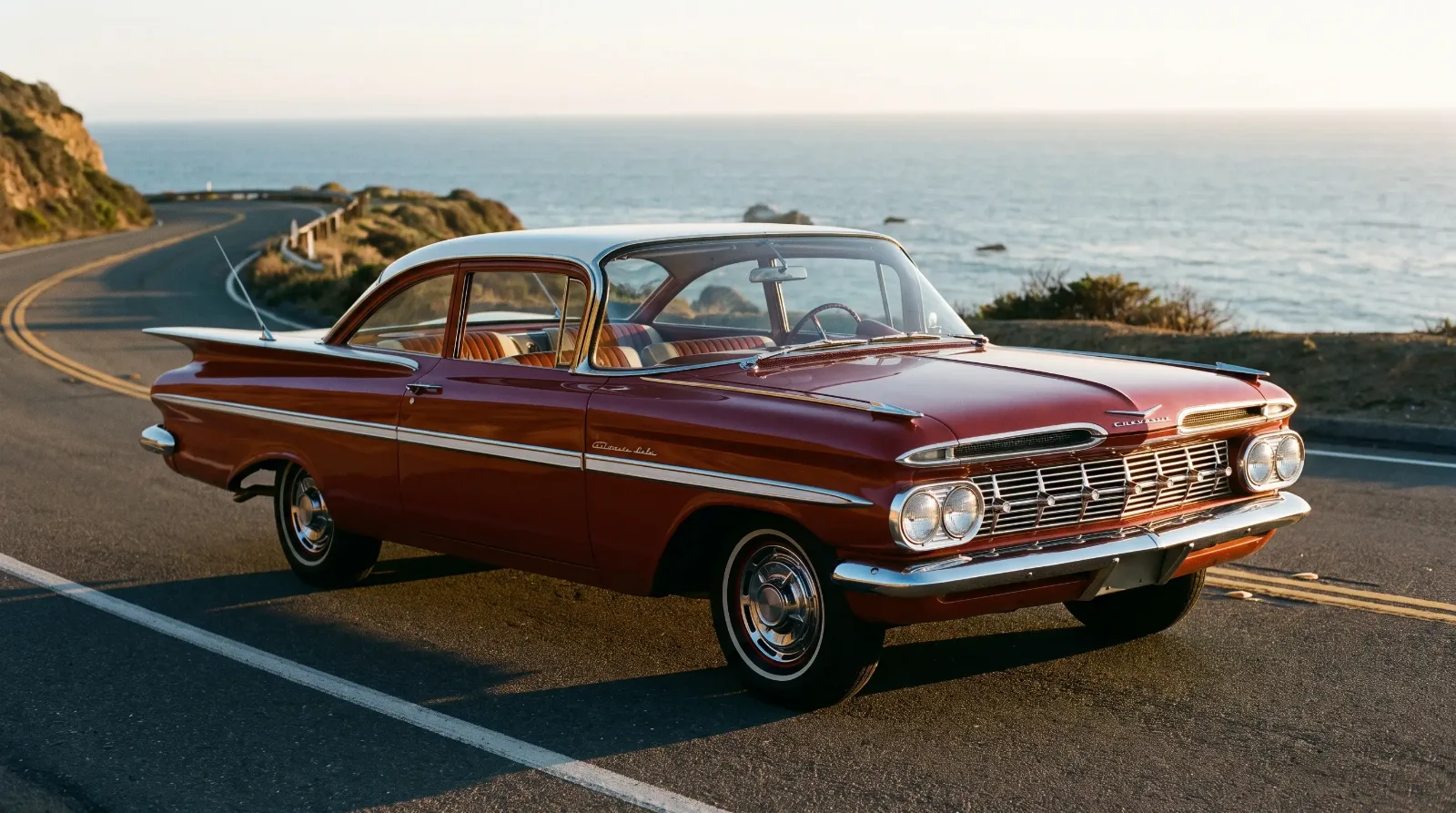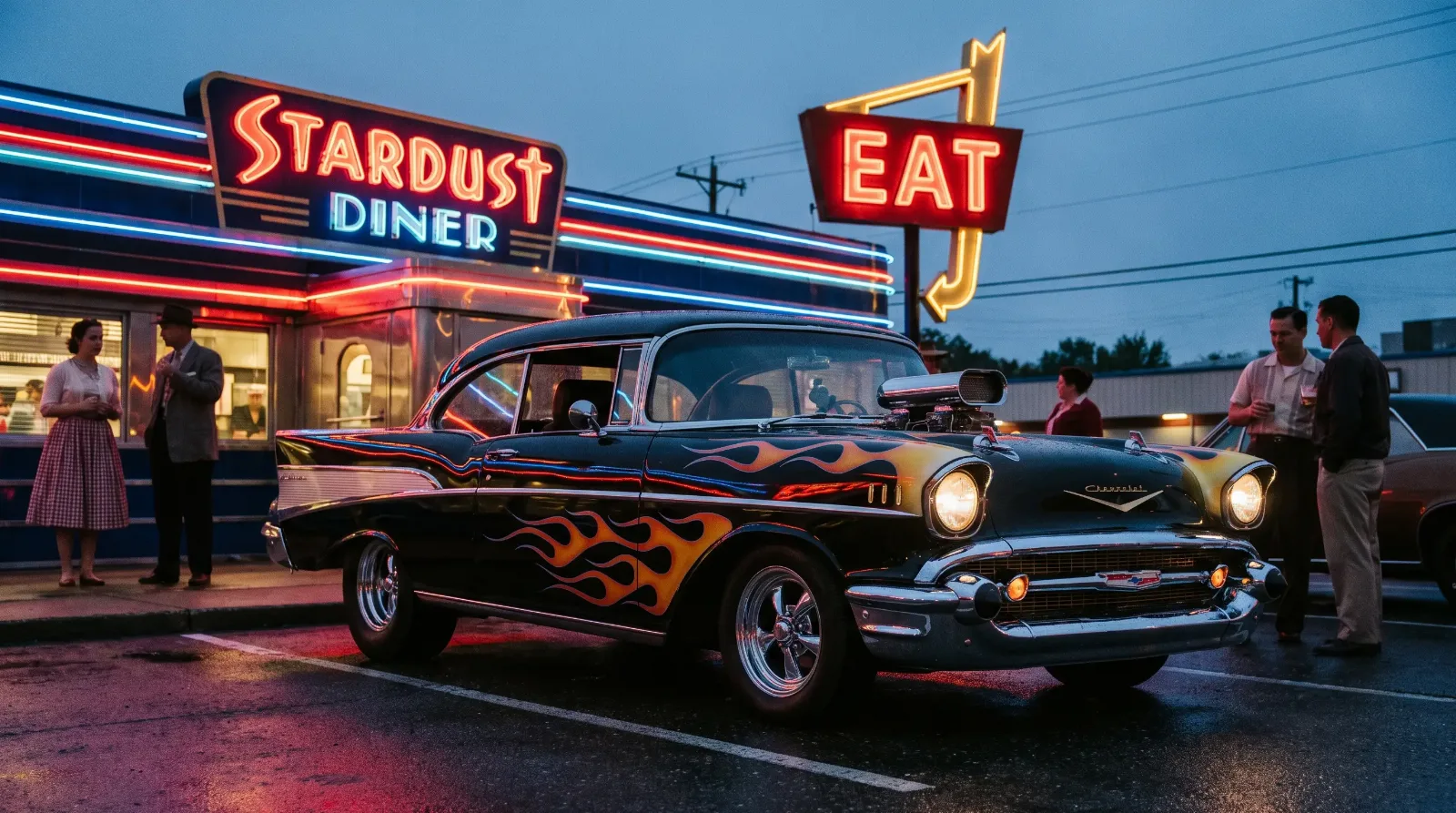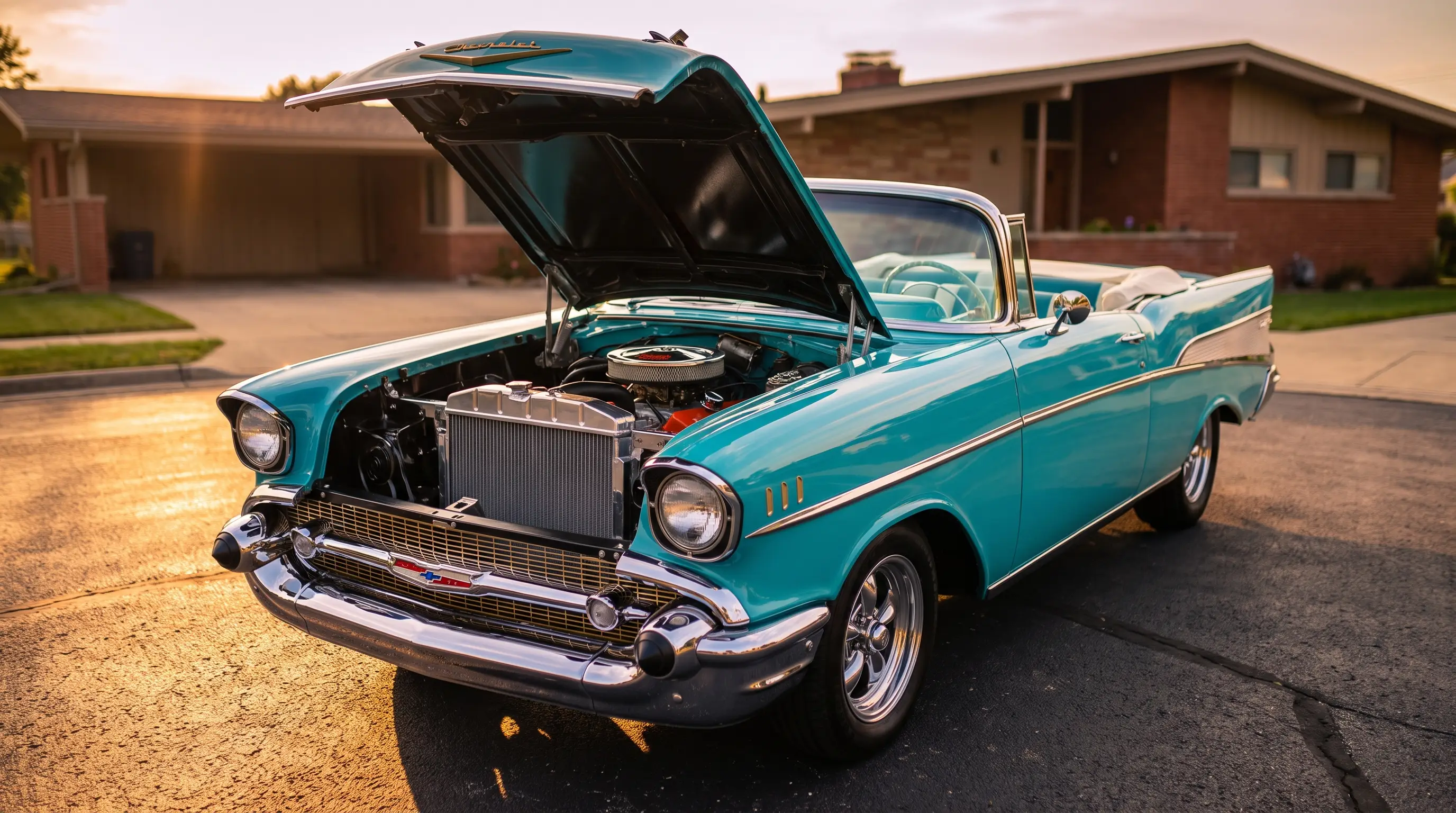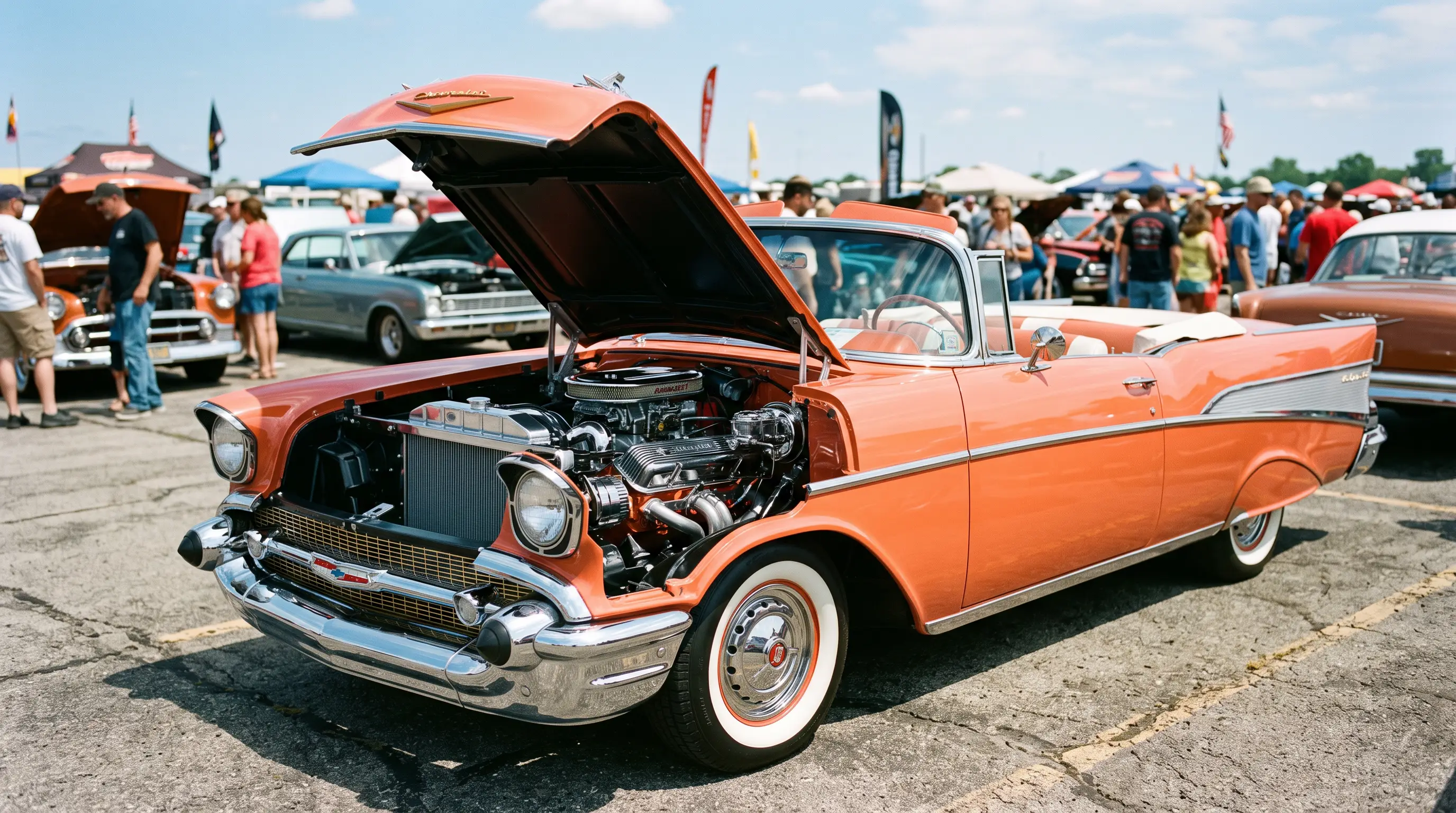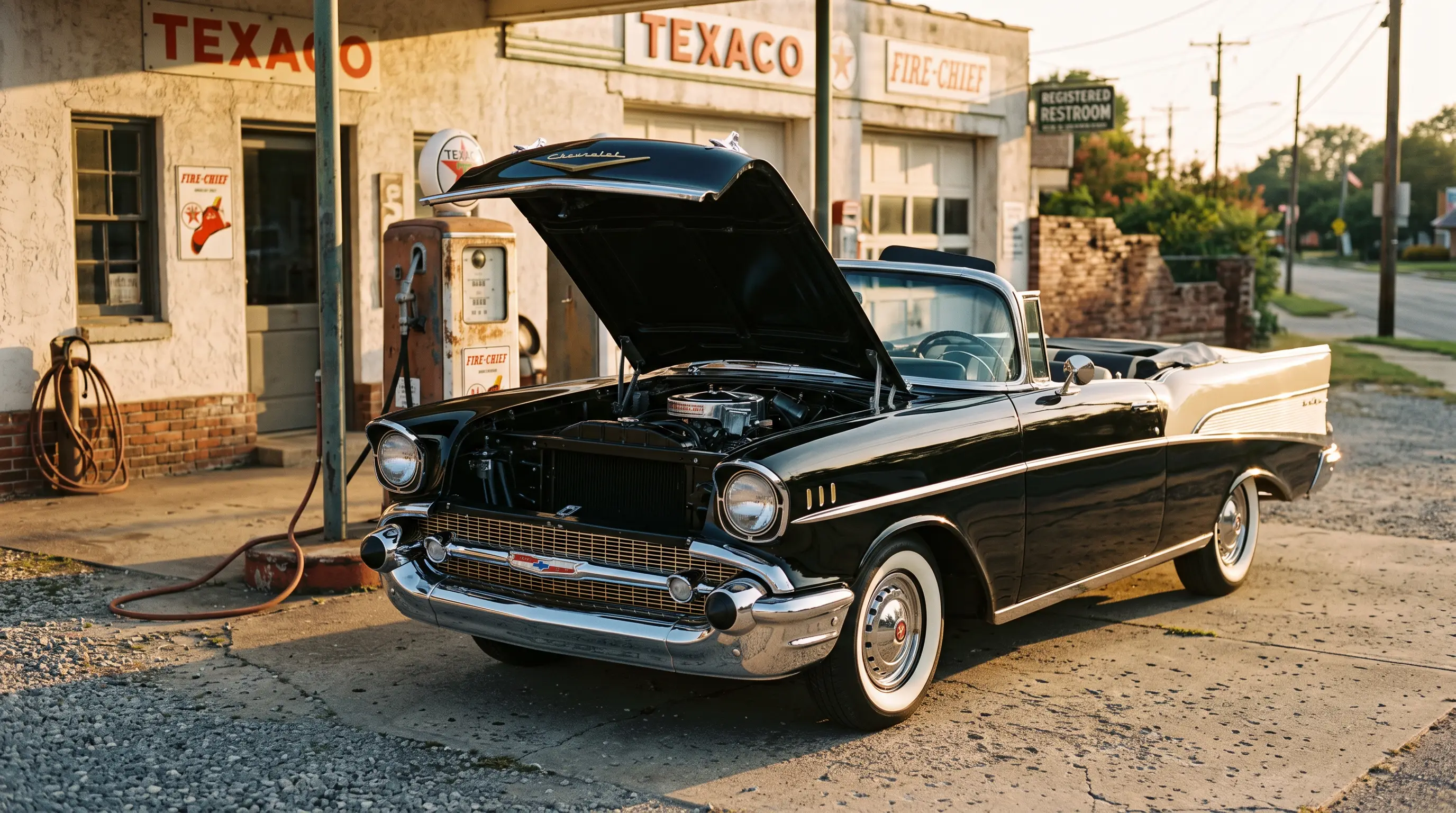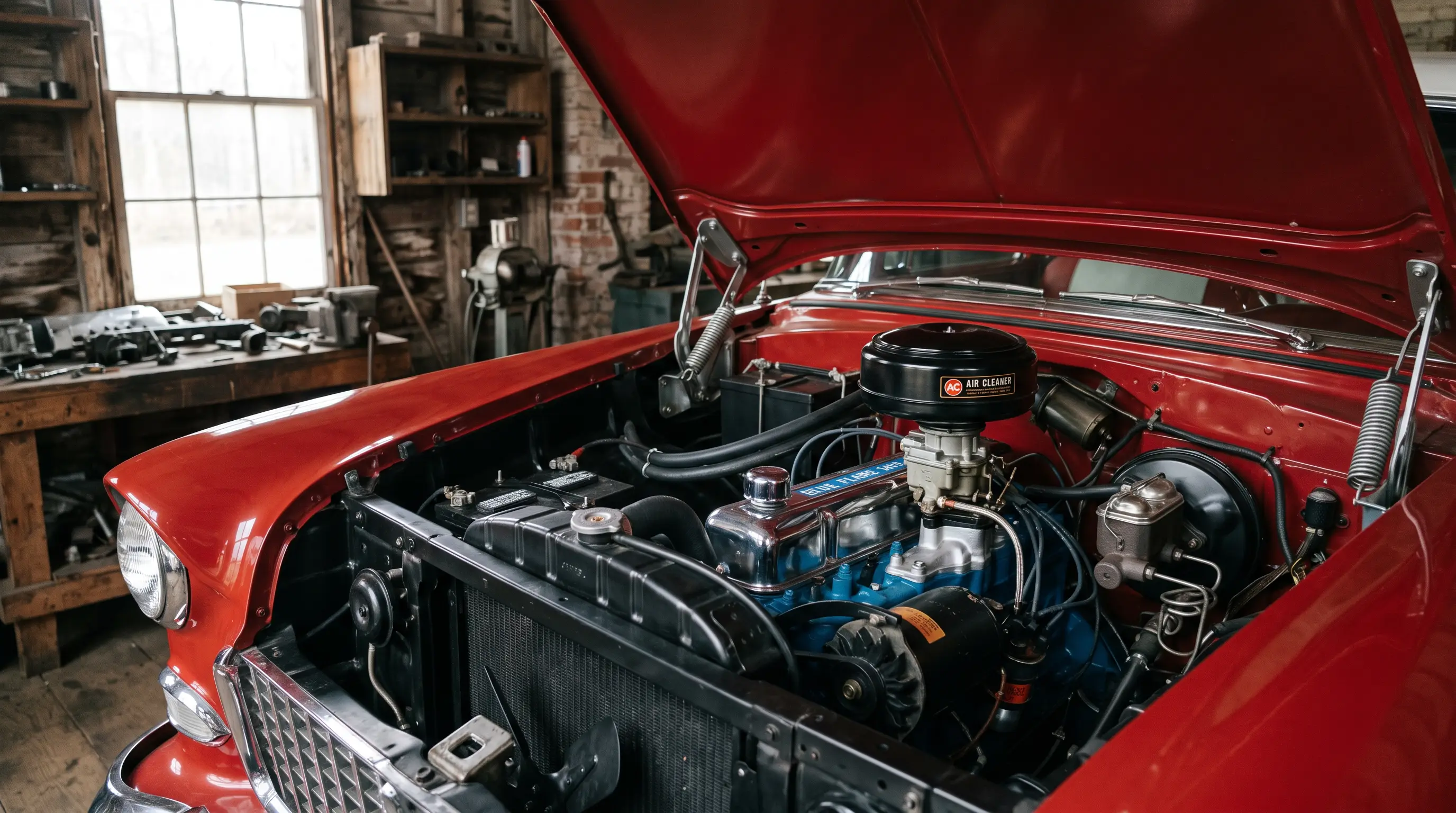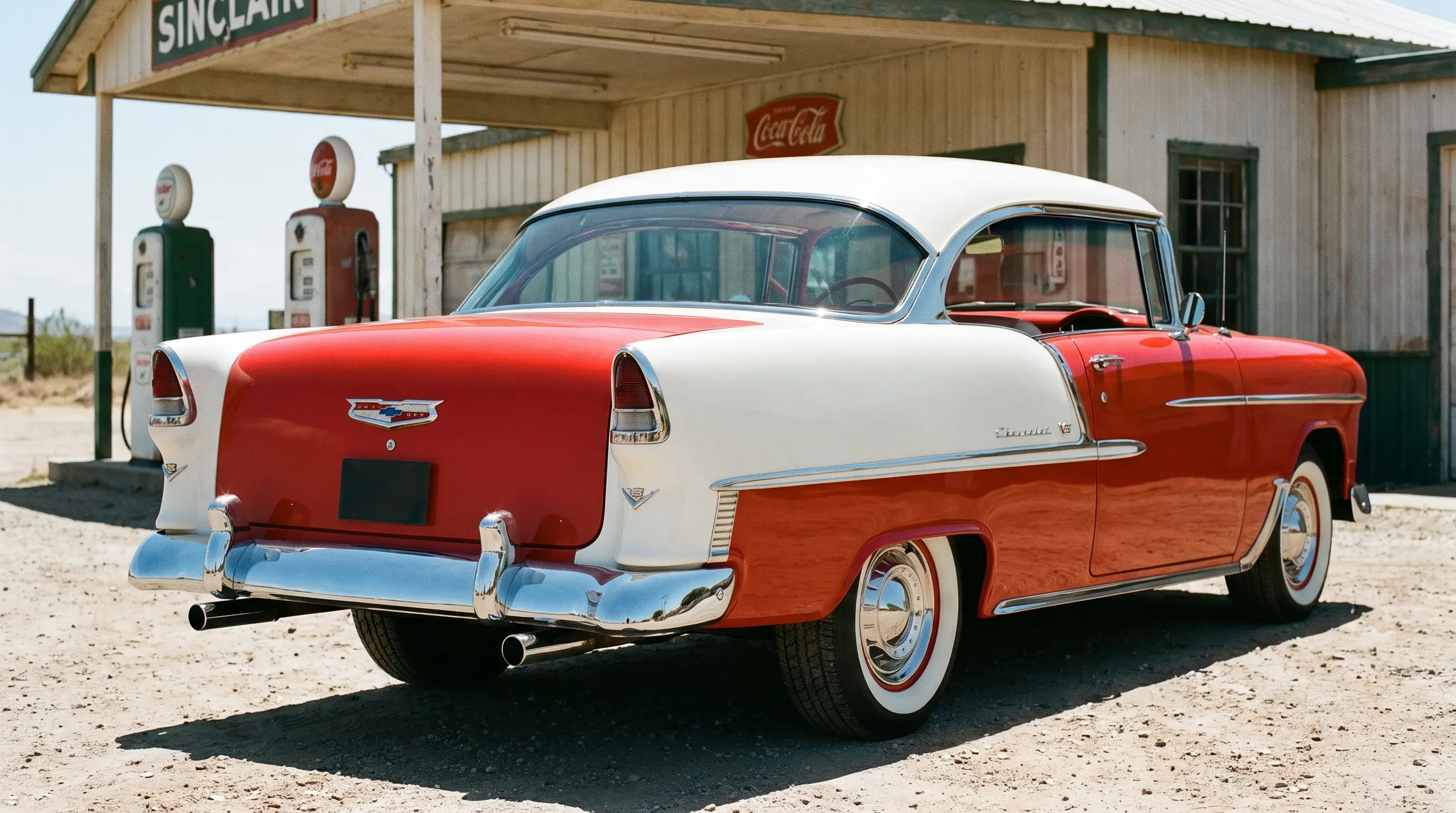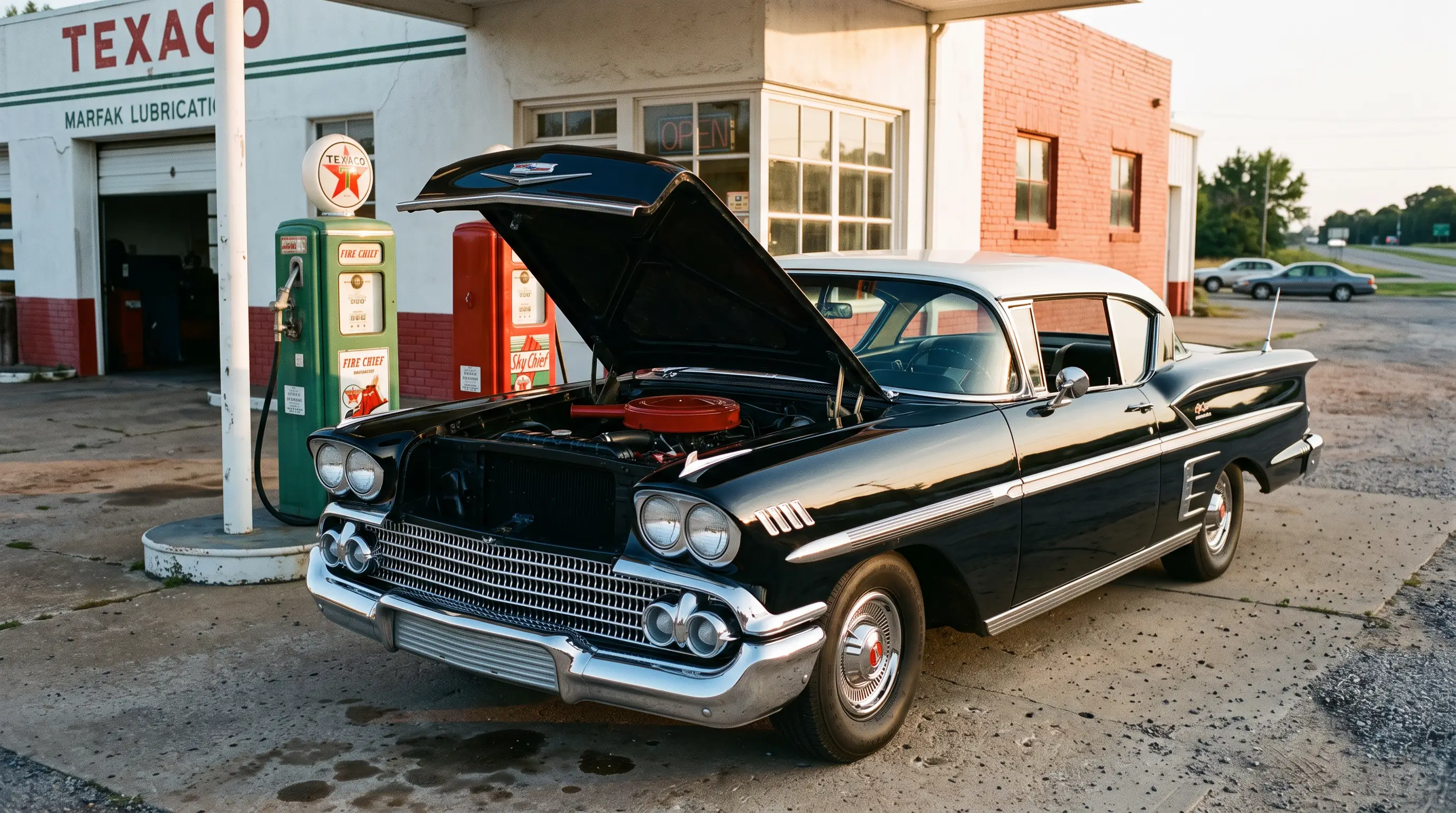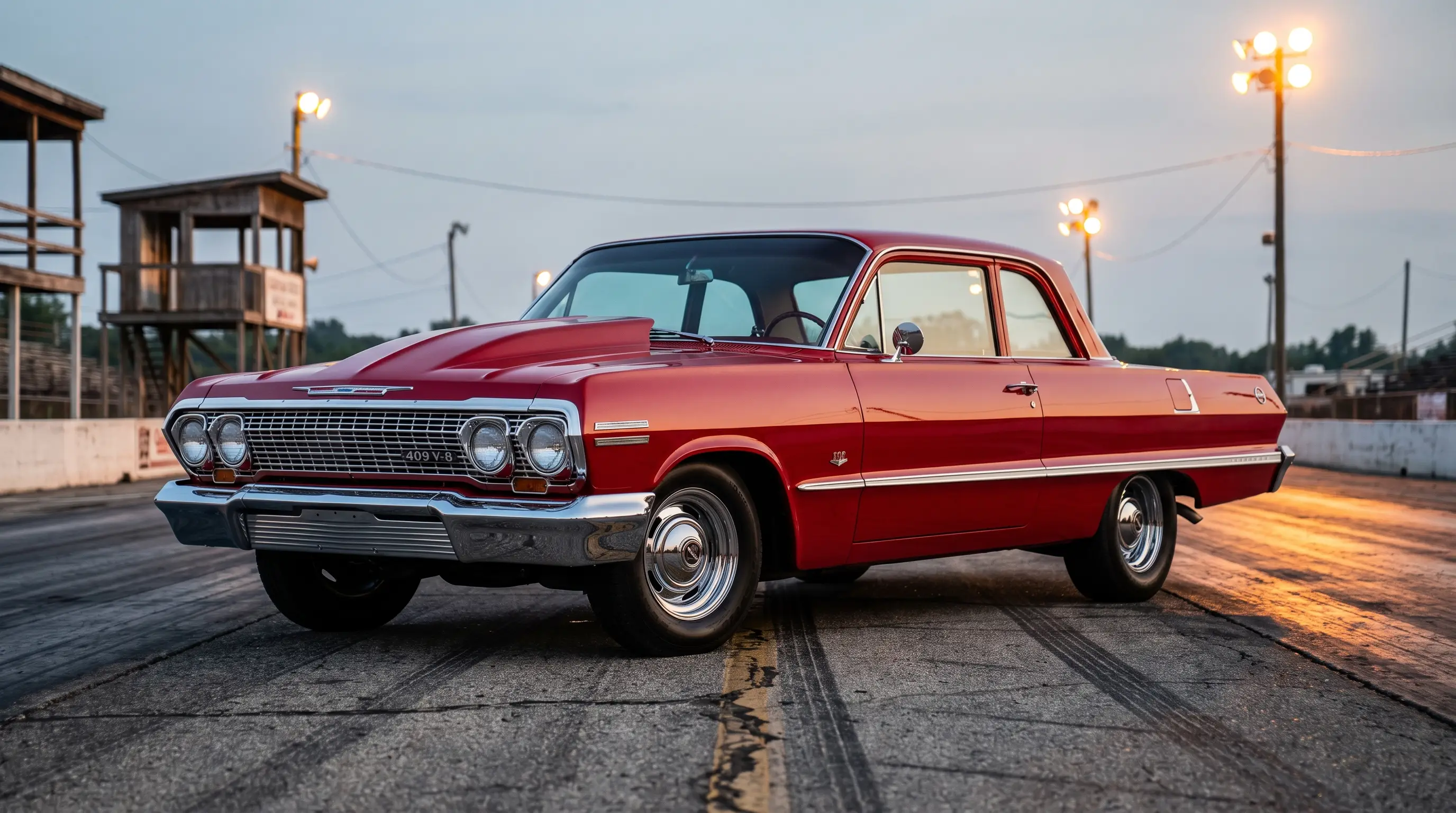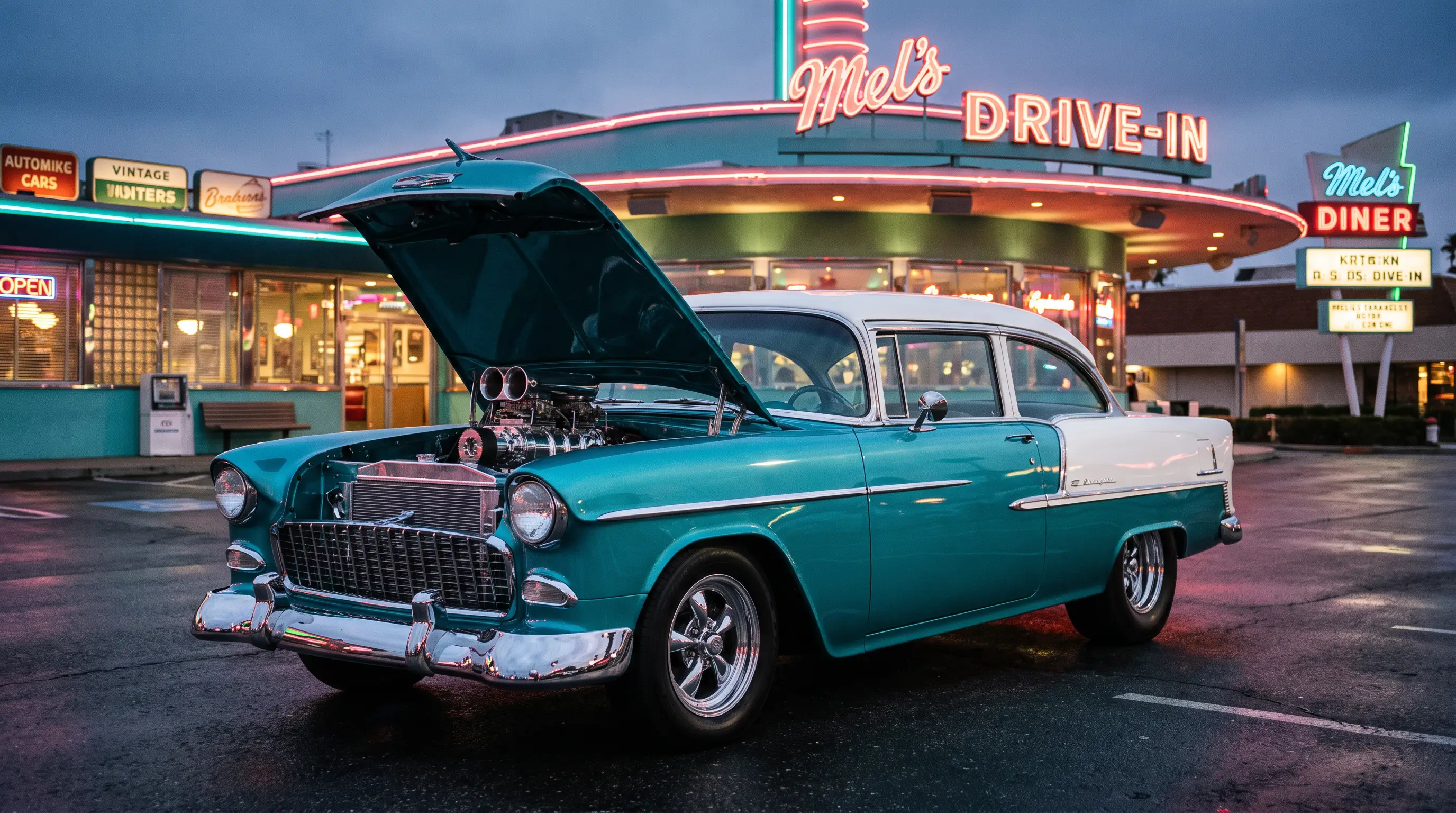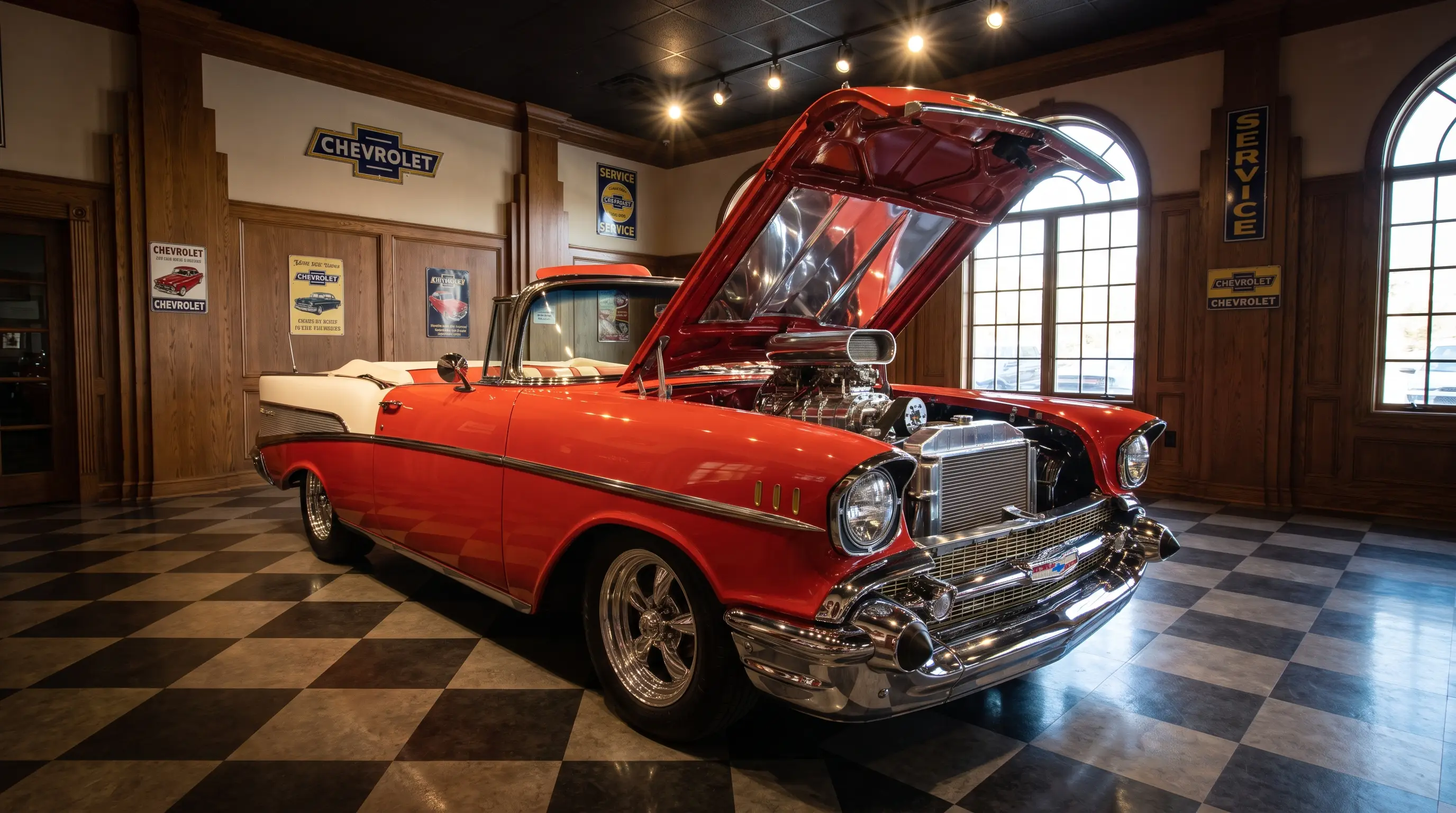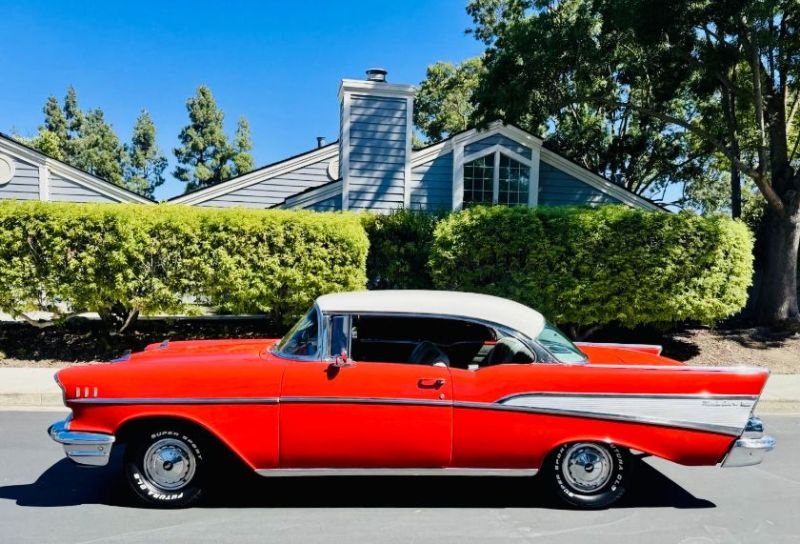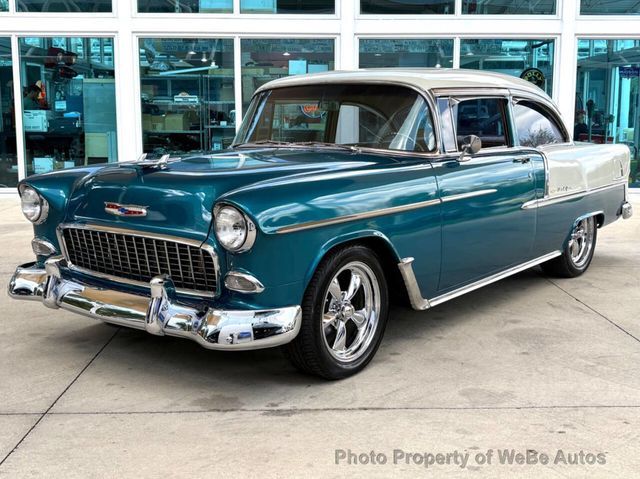
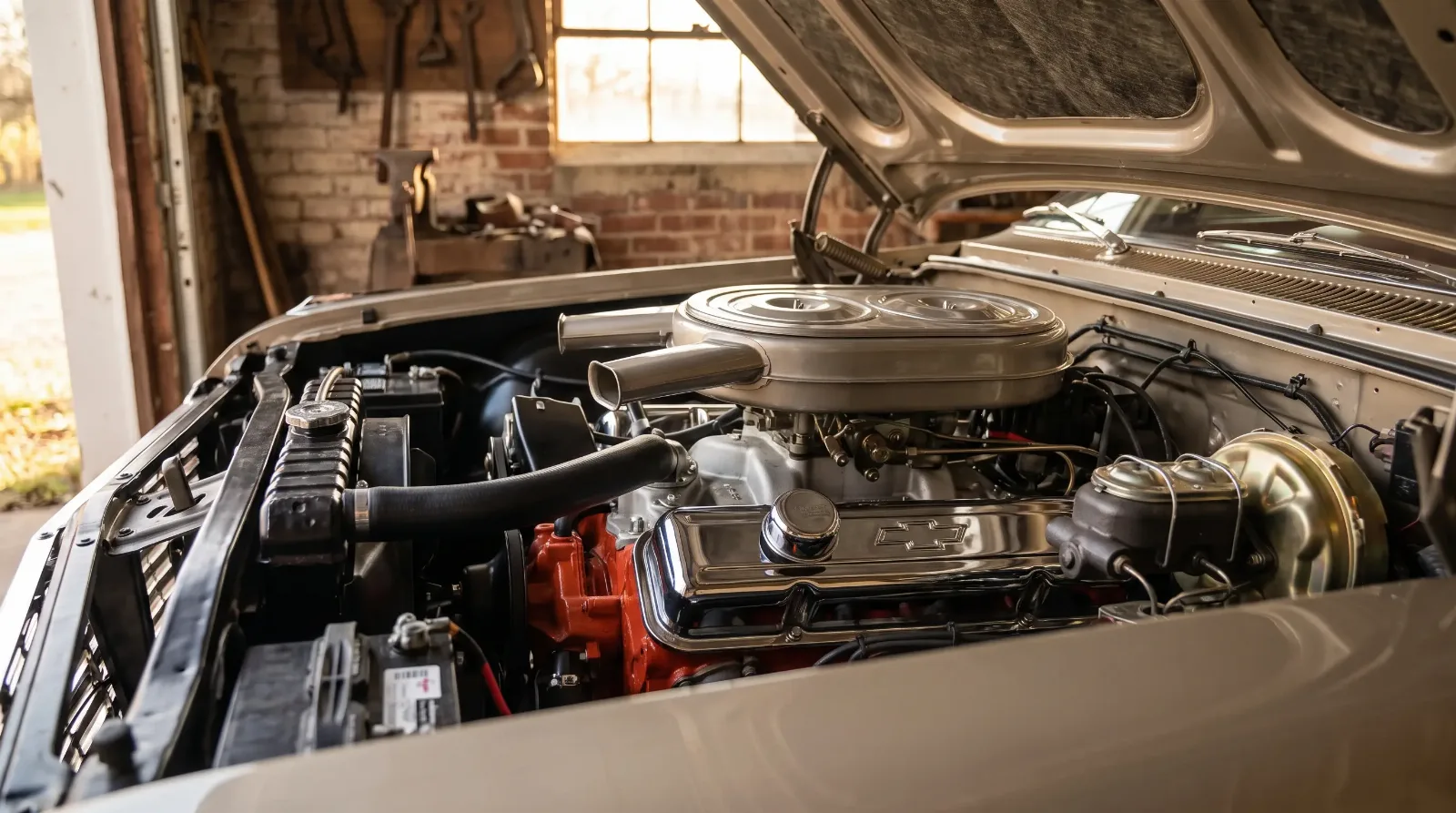
The Bel Air was only ever as good as what sat under its hood. Start with the truth: the chevy 283 engine is the one that made the reputation. It was not the biggest engine Chevrolet offered in the Bel Air, and it was not the most powerful. It was the one that got the balance right, and it is the reason people still care about these cars. Everything else in the Bel Air engine story is a footnote next to the small block. Get the engine right and the rest of the car follows. Get it wrong and no amount of chrome will save the deal.
Chevrolet built the Bel Air from 1950 through the classic era with engines that ran from sleepy to ferocious. A base car might make less than a hundred horsepower. A top 1962 car made more than four times that. That spread is the whole story. One nameplate, one lifetime, and an engine bay that went from grandmother-slow to genuinely dangerous.
The Blue Flame six: where it started
The early Bel Air ran an inline six called the Blue Flame. It was durable and slow. The 1955 base six made 123 horsepower, and that was fine for the job it had. Nobody bought a Blue Flame Bel Air to win a stoplight. They bought it to get to work and back for a decade without complaint. It did that.
The six is not why anyone collects a Bel Air now, but it matters to the story. It is the baseline. The Blue Flame name came from the shape of the combustion, and Chevrolet leaned on that engine because it was proven and cheap to build. It powered millions of cars without drama. When the V8 arrived, the difference was not subtle. It was night and day, and buyers felt it immediately. A six-cylinder Bel Air got you there. A V8 Bel Air made you want to keep driving. For the full arc of how the nameplate grew, there is more on the chevy bel air, but the short version is simple. The six built the reputation for reliability. The V8 built the reputation for everything else.
1955: the small block changes the math
The 265 cubic inch small block V8 landed in 1955 and rewrote what a Chevrolet was. It made 162 horsepower at launch, and with the optional four-barrel Power Pack it made 180. Those numbers do not sound wild now. In 1955, in a light car, they were.
The engineering is what mattered. The 265 was light, it was compact, and it revved. It responded to tuning better than anything in its price class. That design became the foundation for one of the longest-running engine families in history. Chevrolet built variations of that basic small block for decades. That is not hype. That is a fact you can check.
The design credit usually goes to Ed Cole and his team, and they earned it. The small block was cheaper to build than the engines it replaced, and it weighed less than the Blue Flame six it sat next to on the option sheet. Think about that. The V8 was lighter than the six. That is unusual, and it tells you how clean the engineering was. A light engine in the nose of a light car is a recipe that pays off everywhere, in handling, in acceleration, in fuel use. Chevrolet stumbled into a formula that would define its performance image for the rest of the century.
The 283: one horsepower per cubic inch
The 283 arrived for 1957. It was the 265 bored out, and it is the engine the Bel Air is remembered for. The headline was the fuel-injected version. With the Rochester Ramjet mechanical fuel injection, the top 283 was rated at a confirmed 283 hp. One horsepower per cubic inch. Chevrolet put that on the advertising and never let anyone forget it.
Here is the honest part. The fuel-injected 283 was expensive, temperamental, and rare. Most buyers took the carbureted versions, which ran from about 185 to 245 horsepower depending on the setup. Those are the engines that actually powered the 1957 Bel Air on the street, and they were excellent. The fuelie gets the legend. The four-barrel carburetor cars did the work. Both are worth respecting for different reasons.
| Engine | Introduced | Notable output |
|---|---|---|
| Blue Flame six | Early 1950s | 123 hp (1955 base) |
| 265 small block V8 | 1955 | 162 to 180 hp |
| 283 small block V8 | 1957 | Up to a claimed 283 hp with fuel injection |
| 348 W-series V8 | 1958 | Up to roughly 315 hp |
| 409 W-series V8 | 1961 | Up to a claimed 409 hp by 1962 |
The 348 and the arrival of the big block
Small blocks have a ceiling. When Chevrolet wanted more, it went bigger. The 348 cubic inch W-series V8 arrived for 1958. It started life as a truck engine, which is a detail people forget when they get romantic about it. The engine debuted in 1958 at 280 hp in its top triple-carburetor form, and by the early 1960s the hottest Special Super Turbo-Thrust 348 with three two-barrel carburetors was rated at a confirmed 315 hp.
The 348 was heavy and it was not a revver like the small block. What it had was torque and room to grow. That room mattered, because the 348 was the direct ancestor of the engine that would become a legend in its own right. Without the 348, there is no 409. It is that simple.
The W-series had a trick in its design worth understanding. Instead of a conventional combustion chamber in the cylinder head, the 348 formed its chamber in the block itself, using angled cylinder decks. That is why the valve covers sit at that odd scalloped angle that tells a W-series engine apart from a small block at a glance. It was an unusual solution, and it gave the engine its character. Torque low down, a distinctive look, and a sound that big-block people learn to recognize from across a parking lot. The 348 was never elegant. It was effective, and it set the stage for what came next.
409: the number that became a song
The 409 cubic inch V8 arrived in 1961 as an enlarged W-series big block. In 1961 the top version made a claimed 360 horsepower. For 1962 Chevrolet pushed a dual-quad version to a confirmed 409 hp. The engine displacement and the horsepower figure matched, and that symmetry helped make it famous.
Then the Beach Boys put it in a song in 1962, and the 409 stopped being just an engine. It became pop culture. Fair or not, that record did more for the 409 legend than any dyno sheet ever could. Puncture the myth all you want, the truth is the music sold the engine. A real 409 Bel Air, the light bubbletop body with the big block, is one of the most desirable factory Chevrolets of the era. That is not sentiment. That is what the auction results say.
Look past the song and the engineering story holds up on its own. The 409 was the 348 taken to its logical end, bored and stroked for more displacement, with better breathing and stronger internals in the hottest versions. In the light, cheap Bel Air body it was a genuine drag strip weapon, and it won races before the record ever hit the radio. The 1962 dual-quad cars are the ones collectors chase hardest. They pair the smallest, lightest full-size body with the biggest available engine, which is exactly the combination that makes a fast car. Chevrolet knew what it was doing when it offered that package, and the buyers who ordered it knew too.
The 409 did not last long in this exact form. Within a few years Chevrolet moved on to the Mark IV big block, the engine family that would carry the 396 and the 427 and eventually the 454. The 409 was a bridge, a brilliant one, between the old W-series and the modern big blocks that followed. That short production window is part of why genuine 409 cars are rare and valuable. The engine was famous for only a handful of years before Chevrolet replaced it with something better, and fame plus scarcity is the formula that mints a legend.
"The fuelie 283 gets the poster. The 409 gets the song. But the carbureted small block is the engine that actually made the Bel Air's name, and the numbers back that up."
- Dan Reeves
What this means for buyers
Match the engine to the price. A base six Bel Air is a cruiser, and it should cost cruiser money. A four-barrel 283 is the sweet spot, plenty of period-correct performance without the fuelie premium or the fuelie headaches. A verified fuel-injected 283, a documented 348, or a real 409 is a different market entirely, and every one of those claims needs paperwork behind it.
That last point is not optional. The rare engines get faked constantly. A 409 badge is cheap. A real 409 is not. Numbers-matching documentation is the difference between a legend and a lie, and the gap between them can be enormous in dollars. If you want to compare a few real cars before you commit, browse classic Air listings and study what the honest ones actually cost. And if the engines pull you in, the wider culture around these cars is another one worth knowing.
One more number worth keeping in your head. Horsepower ratings from this era were gross figures, measured on a bare engine without accessories, and they were often optimistic. The advertised output on a hot 409 or a fuelie 283 was a marketing figure as much as an engineering one. That does not make the engines slow. It means you should read the period numbers as claims, not as gospel, and judge a car by what it does rather than by what the badge promises. The best of these engines were genuinely quick for their day. The worst of the hype was still hype, and a numbers guy owes it to himself to keep the two straight.
The engine is the legend
Strip away the chrome and the fins and the nostalgia, and the Bel Air's reputation comes down to what Chevrolet bolted into it. The chevy 283 engine set the standard. The 409 wrote the myth. The Blue Flame six kept the lights on while the V8s got the headlines. Buy the engine first and the car second, check every number twice, and you will end up with the right Bel Air. Ignore the engine and you are just buying old sheet metal with a famous name.