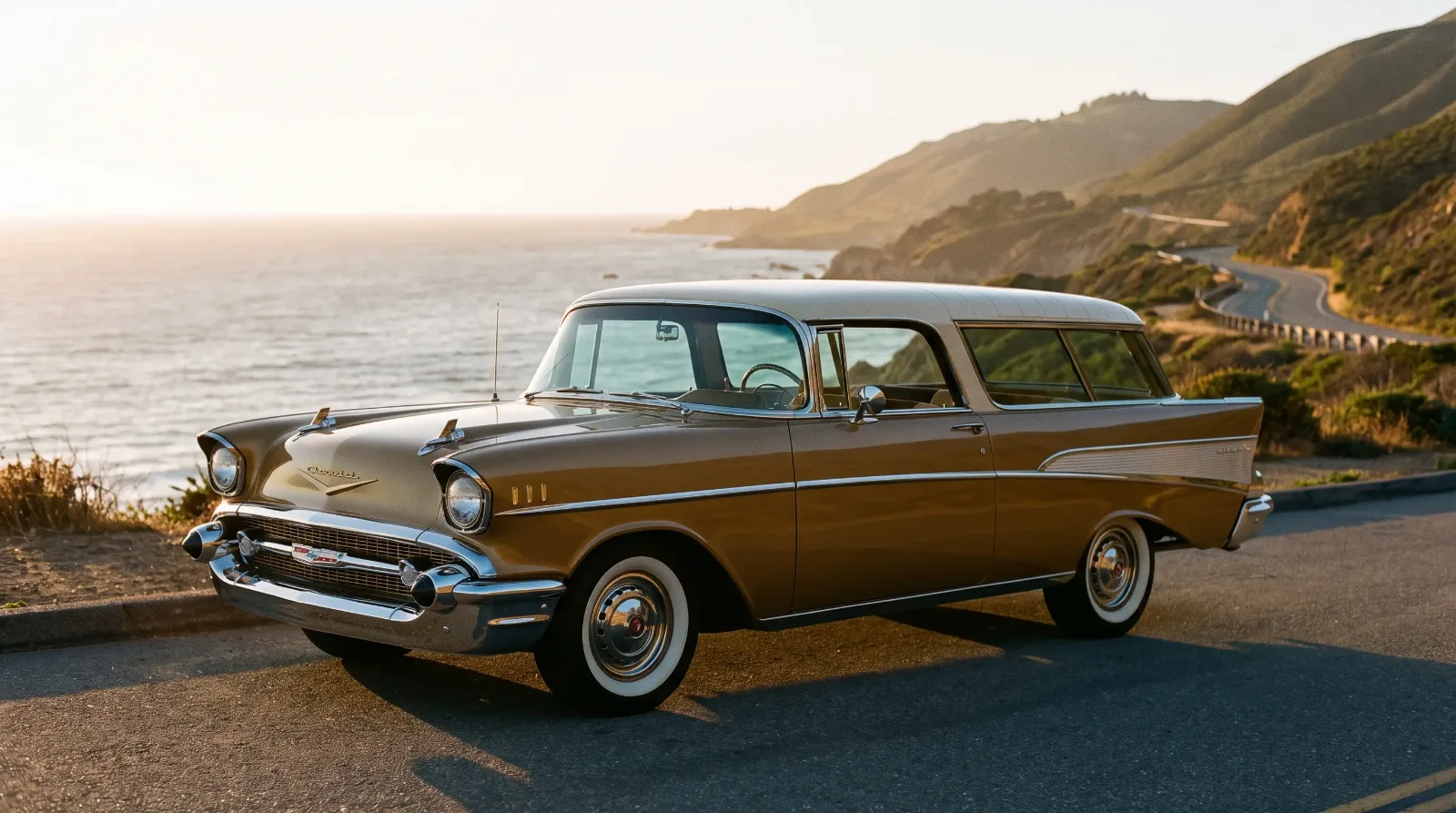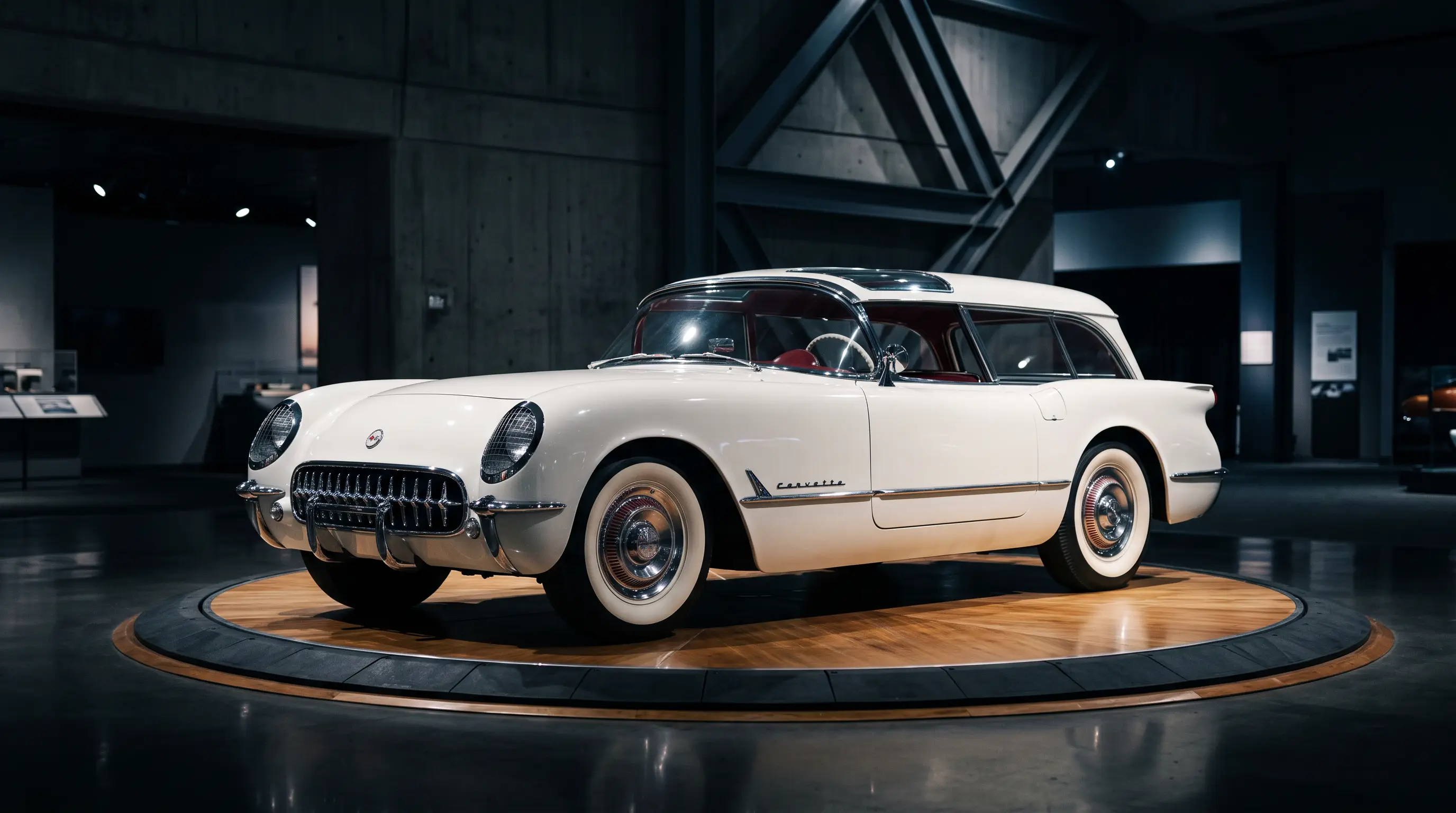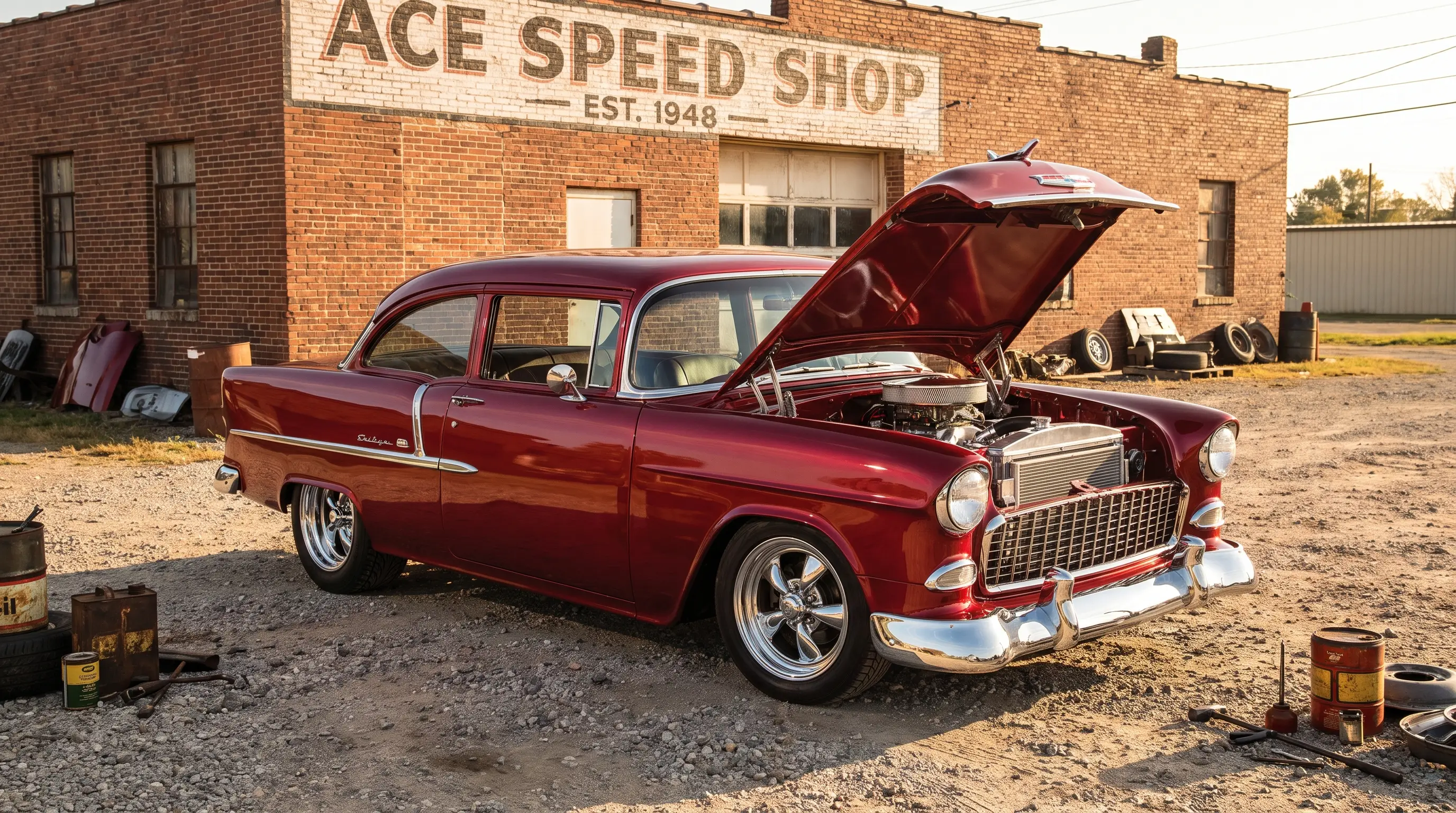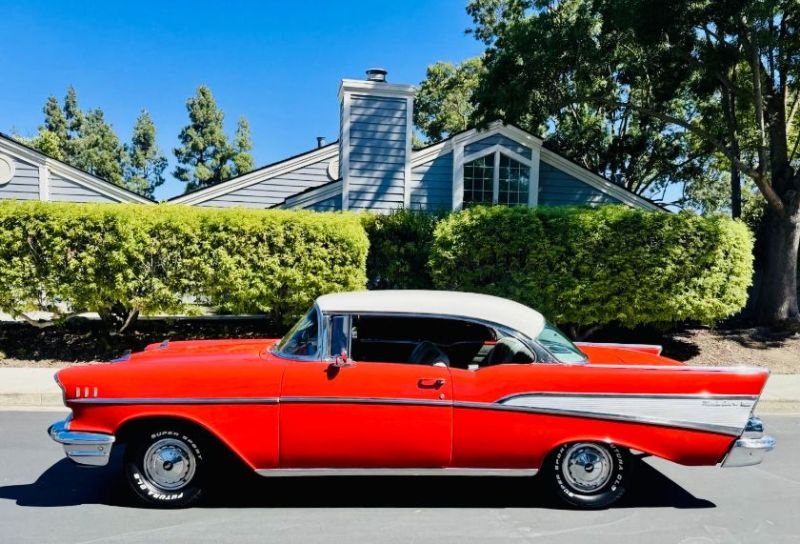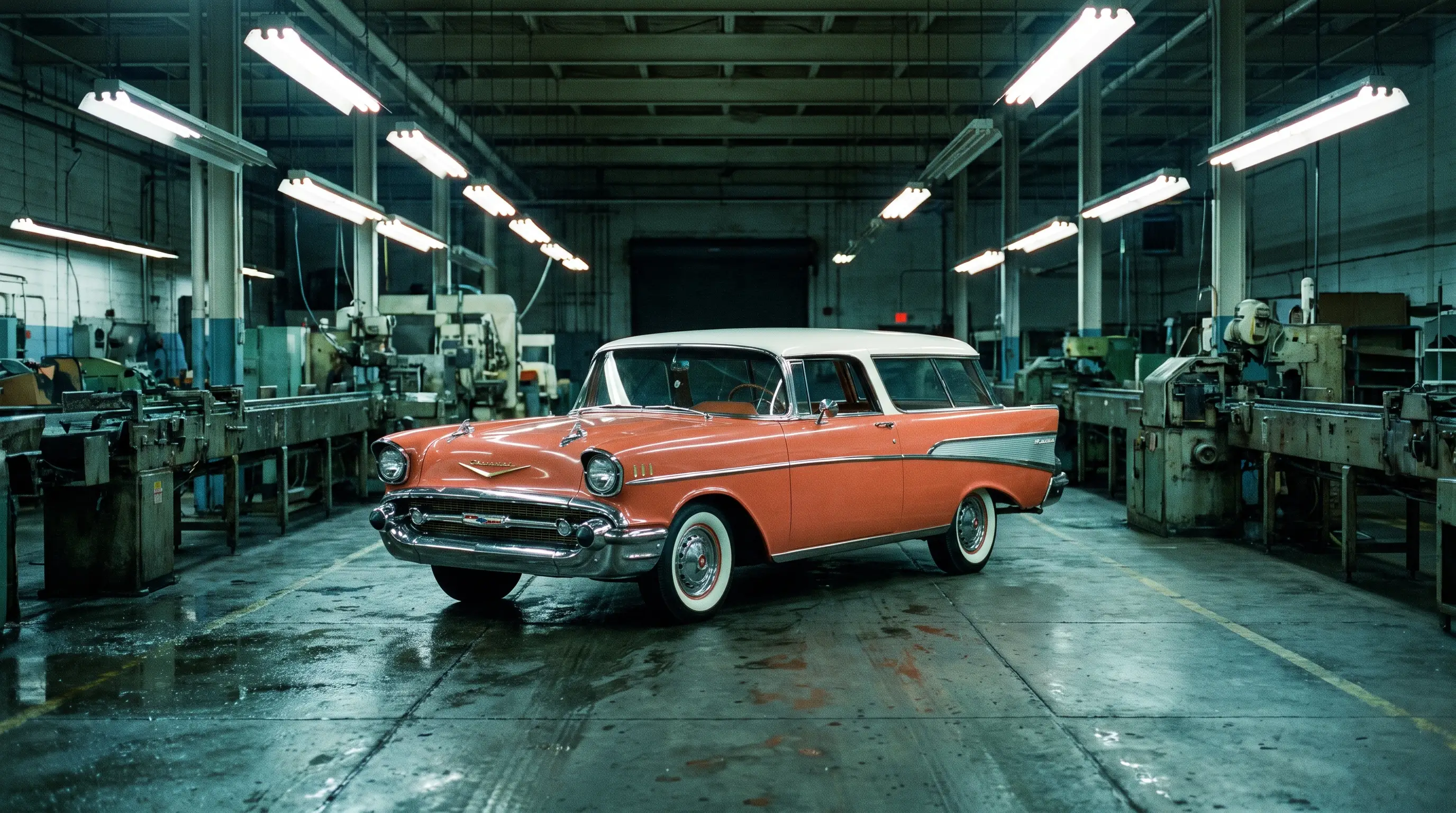
The 1957 Chevrolet Nomad rolled off the line and, without much fanfare, took the whole idea with it. No press release announced the end. No dealer memo warned buyers to grab one while they still could. The chevy nomad discontinued story is really a story about a car that never sold in the numbers its reputation would suggest, and about a company that eventually had to admit an experiment, however beautiful, was not paying its own way.
A short run by design, not by accident
Three model years, 1955 through 1957, is all the original hardtop Nomad ever got. That is a remarkably short life for a car people still talk about as if it defined an era, but the brevity was baked in from the start. Chevrolet built the Nomad as a low volume specialty wagon riding on Bel Air mechanicals with a unique, expensive-to-tool body. Every one of those was more costly to produce than a standard four door wagon, and every one of them competed for a buyer who wanted style over space, a much smaller pool than the family-first shoppers who kept the regular wagon line profitable.
Chevrolet built roughly 22,400 hardtop Nomads across the three years combined, 8,386 in 1955, 7,886 in 1956, and 6,103 in 1957, a total that was consistently a fraction of what the standard Chevrolet wagons moved in a single season. That gap between cost to produce and units sold is the entire explanation for why the run ended when it did. Beautiful does not pay the tooling bill by itself.
What buyers actually chose instead
Here is the part that stings a little if you love the car: most Chevrolet wagon buyers in the mid-1950s simply wanted the practical version. A conventional four door wagon offered easier rear seat access, generally more usable cargo space, and a lower price than the Nomad's hardtop-and-two-door configuration demanded. Families hauling kids and groceries did not need a raked windshield and a sporty roofline. They needed doors that opened where doors were supposed to open, and Chevrolet's standard wagons delivered exactly that for less money.
That is not a knock on the Nomad's design, it is just market reality. A car built to turn heads in a parking lot is competing against cars built to solve a Tuesday afternoon errand run, and the errand run usually wins the volume war. Chevrolet's own sales figures made the pattern impossible to ignore by the time the redesigned 1958 lineup was on the drawing board, and the decision to drop the hardtop wagon body style from the next generation was less a dramatic call than an obvious one.
Why scarcity became the car's second act
Every reason the Nomad struggled commercially in period is the exact reason it commands attention now. Low production numbers across a short run created genuine scarcity, and scarcity paired with a design people still find striking is a reliable recipe for collector demand decades later. The car that could not find enough buyers in 1957 has no trouble finding buyers today, they are just paying auction prices instead of sticker prices, and there are a lot more of them chasing a lot fewer surviving examples.
There is a lesson in that for anyone shopping this specific niche of the market now. A three year production run means model year differences matter more than they would for a longer-lived nameplate. The 1955 car established the shape. The 1956 brought minor trim and grille revisions. The 1957 added the fin styling and available fuel injection shared with the rest of the Bel Air lineup that year, and tends to carry the strongest premium as a result. Knowing which year you are looking at is not optional trivia here, it changes the price conversation immediately.
"Chevrolet did not kill the Nomad because it failed. They ended it because it succeeded at being beautiful and failed at being cheap to build, and only one of those numbers shows up on a balance sheet."
- Patrick Walsh
What replaced it, and why the replacement never quite matched
Chevrolet's full size lineup got a complete redesign for 1958, larger, heavier, and styled in an entirely different direction than the tri five years. The Nomad name survived that transition, attached to a standard four door wagon body rather than the hardtop configuration that made the original famous. That later Nomad sold in far greater numbers than its hardtop predecessor ever did, which only reinforces the original point: the market always preferred the practical version, it just took Chevrolet renaming the practical version to actually capture that demand under the name people remembered fondly.
Collectors and historians generally treat the 1958 and later Nomad as a separate story entirely, related in name only rather than in spirit. The cars that carry real premium in the market, the ones people mean when they say Nomad without qualification, are still the 1955 through 1957 hardtop wagons. That naming overlap trips up newcomers to the hobby fairly regularly, and it is worth knowing before you start shopping, since a listing that says Nomad from the 1960s is describing a genuinely different car than the one this story is about.
How the ending connects to the bigger tri five story
The Nomad's brief run is really a chapter inside a larger story about Chevrolet's mid-1950s experimentation, and it is worth reading more on the tri five chevy if you want the full arc from the platform's 1955 launch through its eventual replacement. The company took real chances during these three years, on styling, on engine development, on body configurations nobody else was trying, and the Nomad is simply the clearest example of a swing that did not connect commercially even though it connected creatively.
That willingness to experiment traces back further than most people realize, and understanding where this started gives useful context for why Chevrolet was in a position to try something as unconventional as a hardtop wagon in the first place. A company playing it safe does not greenlight a car like the Nomad. Chevrolet in the mid-1950s was not playing it safe, and buyers today are grateful for it, even if the accountants at the time were less enthusiastic.
For collectors weighing whether to chase one, the short production run is precisely what makes patience worthwhile. Clean examples do not sit on lots for long, so anyone serious about the hunt should keep tabs on where classic Airs on the market tend to surface, because a three year run means the supply was never going to catch up with the demand, and it still has not.