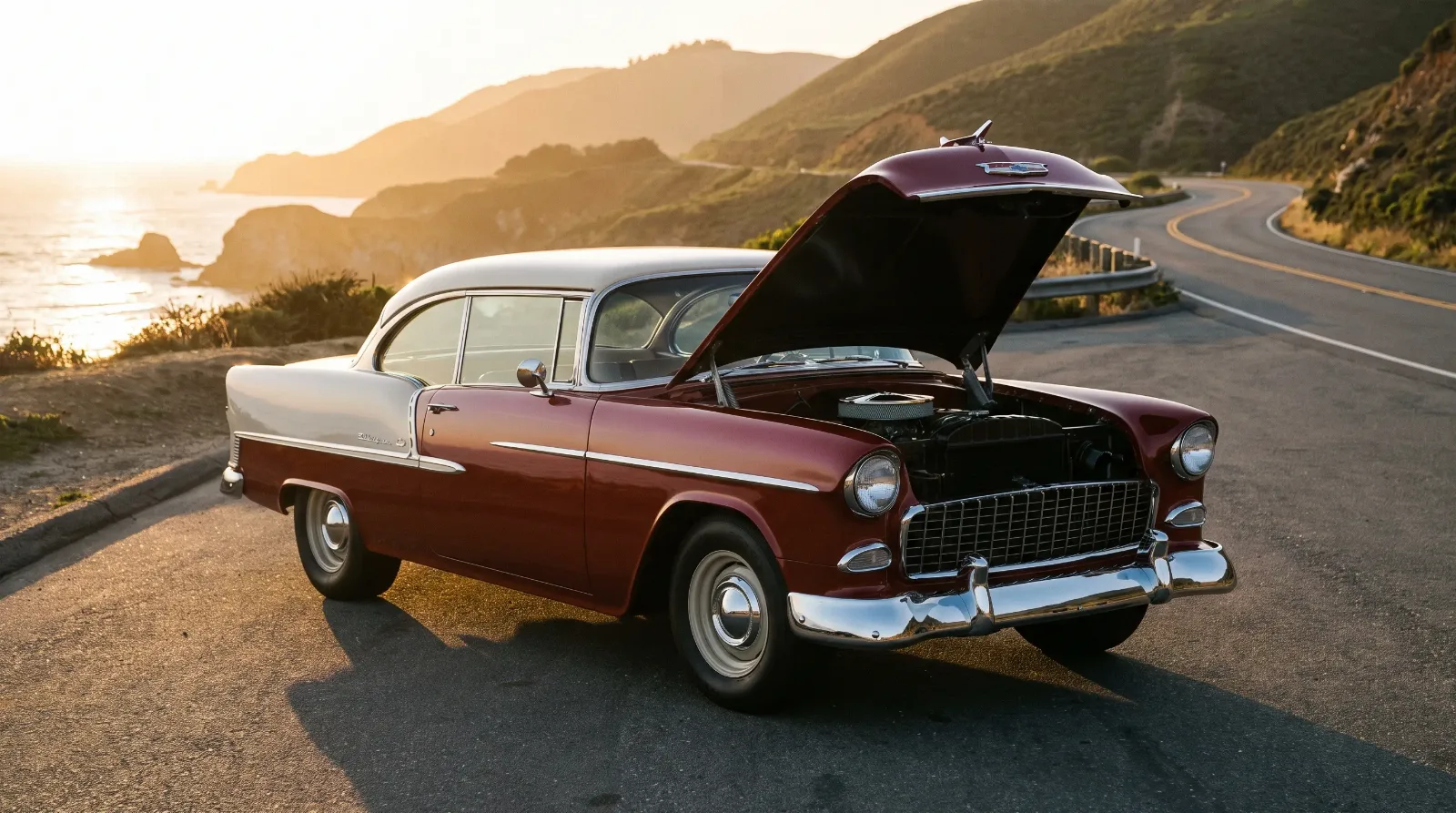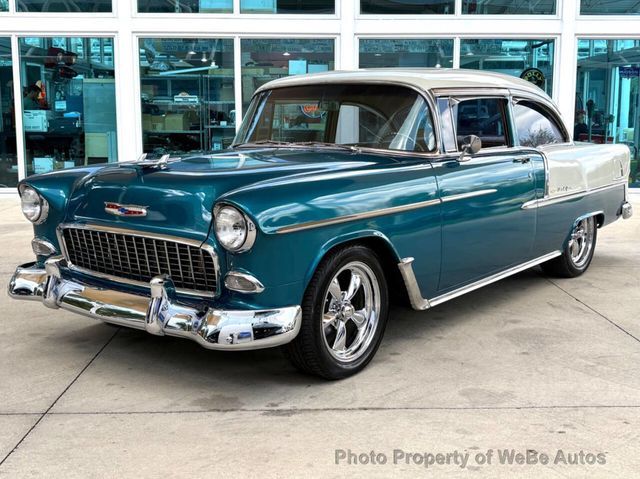
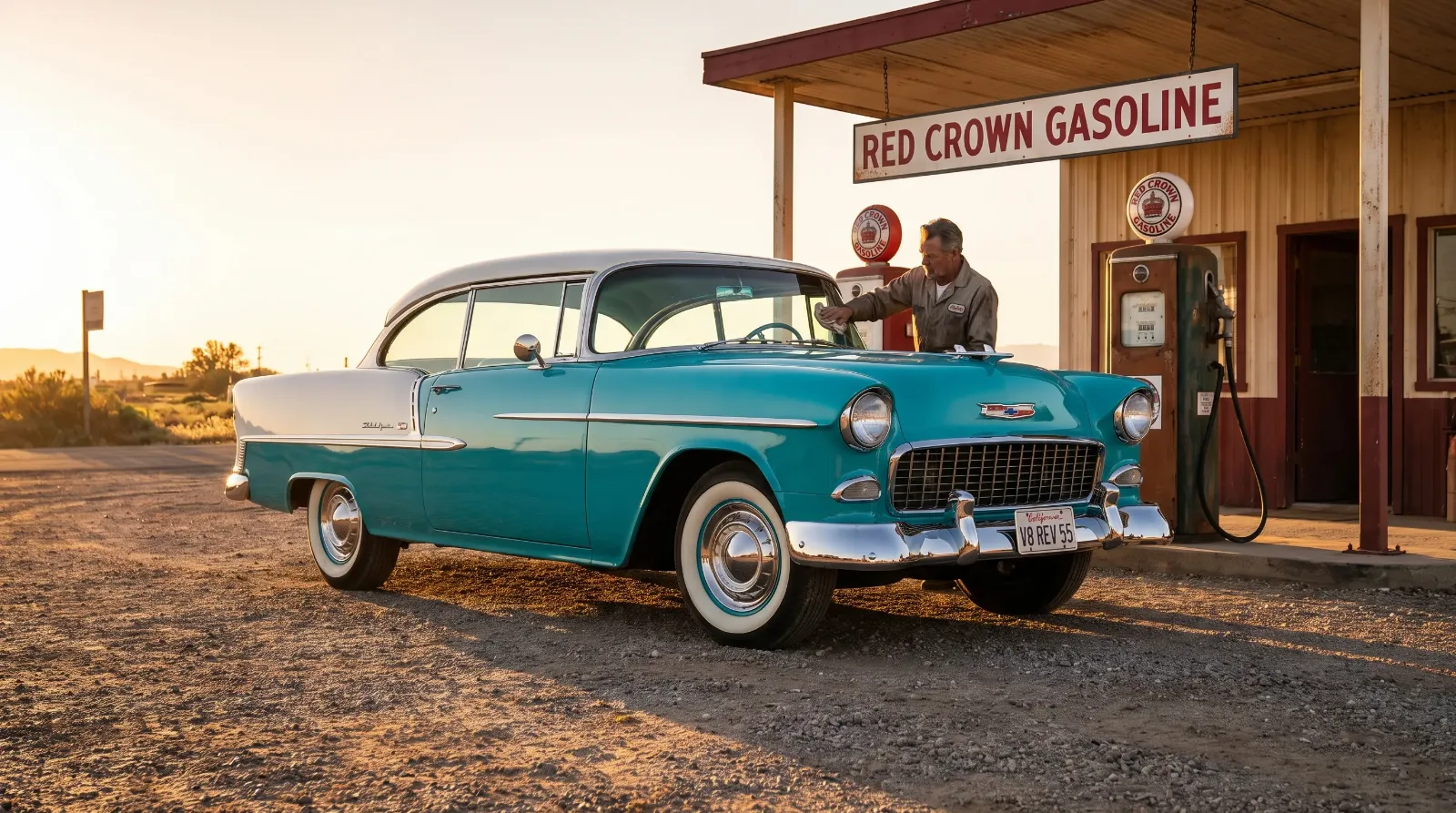
Picture a Chevrolet engineer named Ed Cole standing in front of a corporate review board sometime in the early 1950s, arguing that Chevrolet needed a modern V8 or it would keep losing ground to Ford and the new Oldsmobile Rocket. That argument won, and the result landed in the engine bay of the 1955 Bel Air as a 265 cubic inch V8 that weighed less than Chevrolet's old inline-six and made noticeably more power. Nobody in that boardroom called it a revolution at the time. History did that later, once it became clear how much of American car culture would be built on top of what Chevrolet had just done.
A clean-sheet engine, not a patch job
Chevrolet's previous V8, the one it built in the 1917 to 1918 period, had been a dead end decades earlier, and everything Chevrolet sold through 1954 ran on inline-six power. The 1955 small-block V8 was designed from scratch by a team led by Ed Cole and Harry Barr, with a lightweight thin-wall casting process that kept the block's weight down and let the engine breathe better than anything else in its price class. It used a simple valvetrain, a compact combustion chamber, and stamped steel rocker arms that were cheap to build and easy to service, none of which sounds thrilling on paper but all of which mattered enormously to a company trying to sell an advanced engine at a mainstream price. The chevy small block revolution started here, with an engine that was engineered to be affordable to manufacture and satisfying to drive at the same time, a combination that had not really existed before in a Chevrolet.
What it actually delivered
In its debut form the 265 produced 162 horsepower with a two-barrel carburetor, and up to 180 horsepower with the optional Power Pack, a figure that made the Bel Air genuinely quick for a mainstream 1955 car. More important than the peak numbers was how the engine made power, with a broad, usable torque curve that did not require the driver to wind it out to feel the difference from the old six. Period road tests noted the car's newfound eagerness immediately, and dealers reported that customers who came in intending to buy a six often left with a V8 once they had driven both back to back.
| Spec | 1955 Chevrolet 265 V8 |
|---|---|
| Displacement | 265 cubic inches |
| Base horsepower | 162 hp (2-barrel) |
| Power Pack horsepower | 180 hp (4-barrel, dual exhaust) |
| Chief engineer | Ed Cole |
| Casting method | Thin-wall, lightweight block |
Why it mattered beyond one model year
The 265 did not stay a one-year story. Chevrolet grew the same basic architecture into the 283, then the 327, then decades later the 350, and racers, hot rodders, and everyday mechanics kept the small-block family in production essentially unbroken for generations. That longevity is the real reason people call 1955 a turning point rather than just a strong model year. A huge share of the aftermarket industry that exists around Chevrolet performance parts today, from cylinder heads to intake manifolds to complete crate engines, traces its lineage directly back to the block Cole's team drew up for the Bel Air. Hot rodders in the late 1950s and 1960s adopted the small-block as their go-to swap engine because it was light, powerful for its size, and endlessly tunable, and that reputation never really faded.
"You can trace half of American car culture back to a decision Chevrolet made about casting thickness. That is not an exaggeration, it is just how much that one engine ended up touching."
- Patrick Walsh
The Bel Air's role in the story
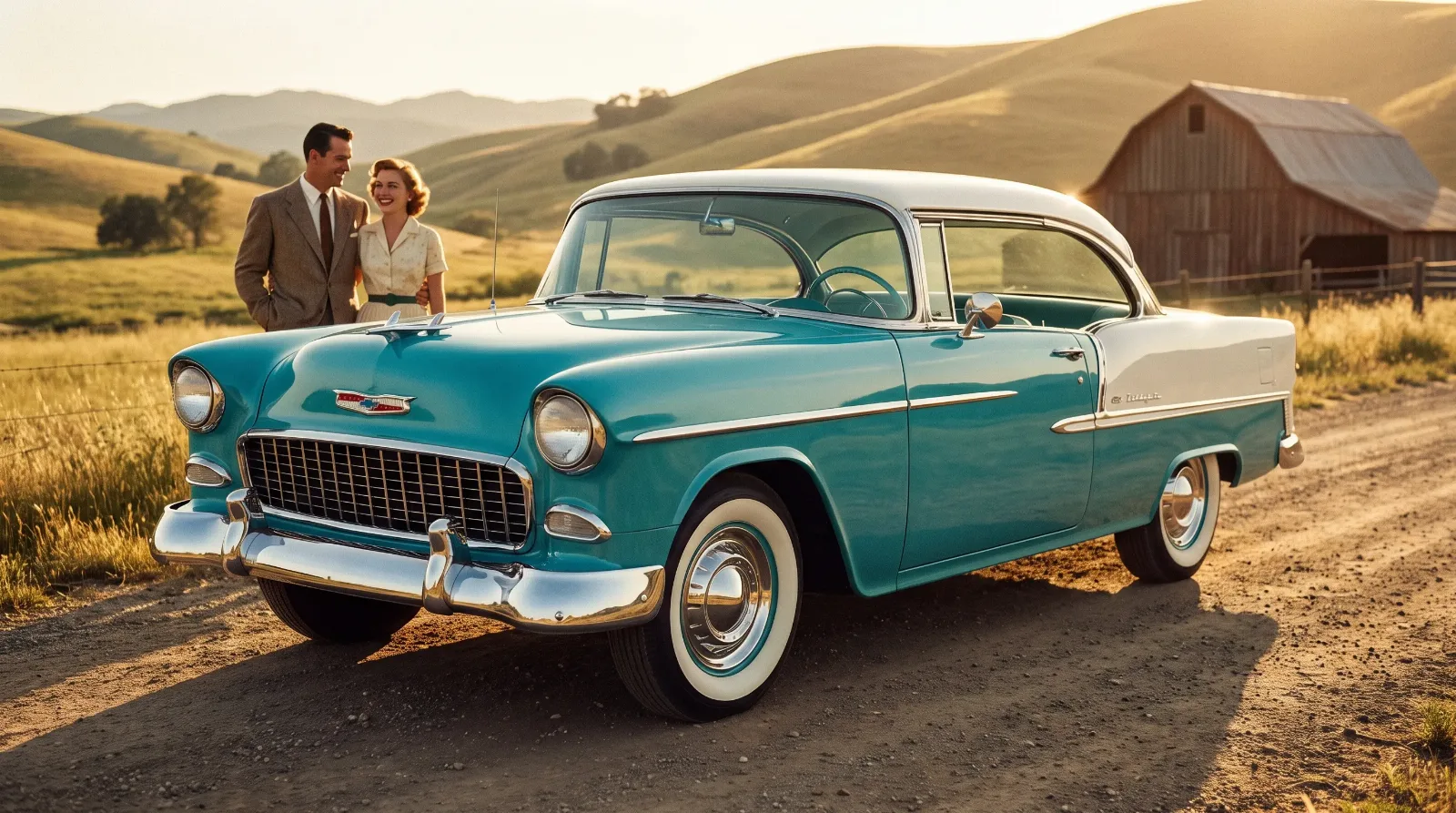
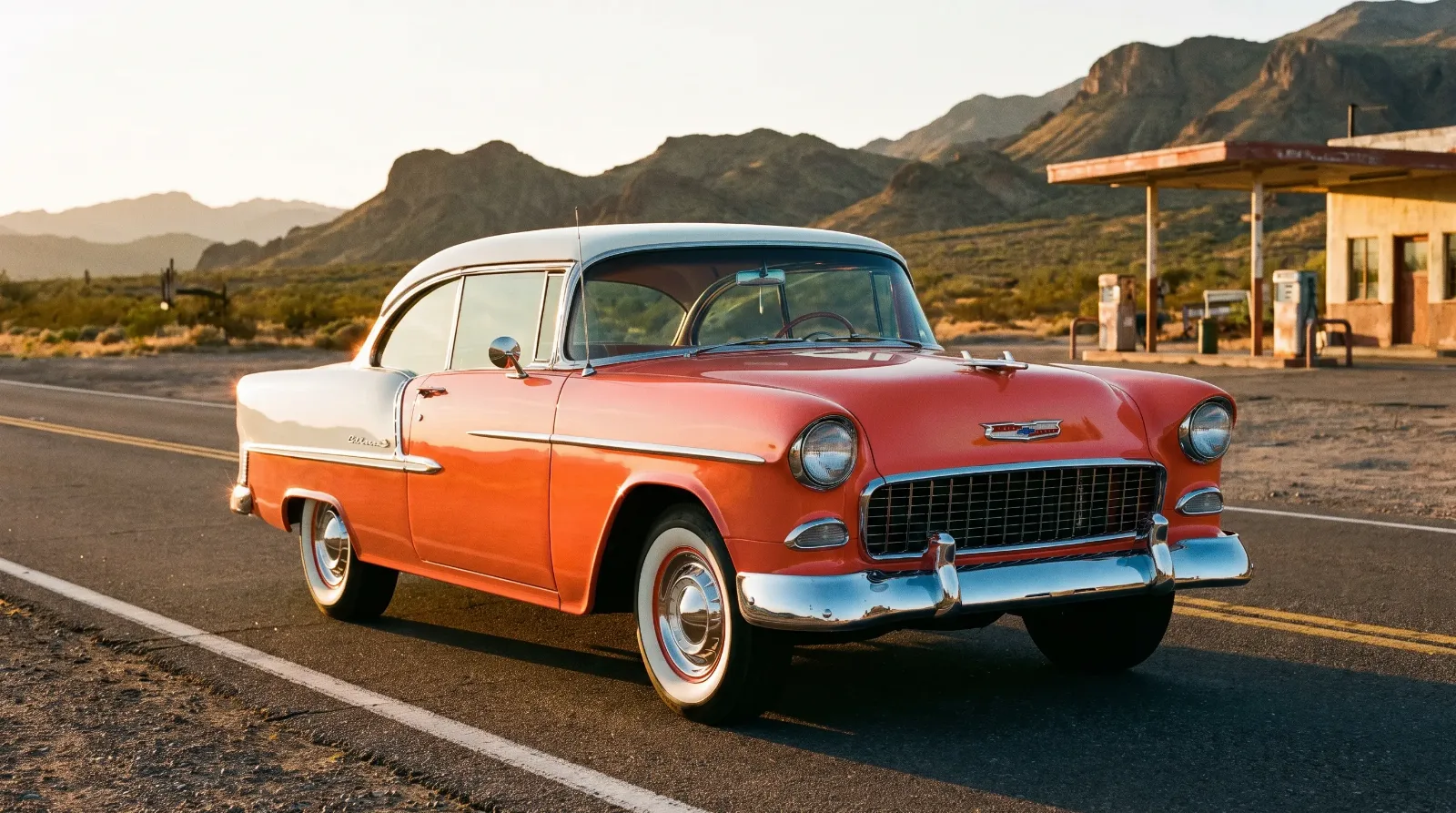
The Bel Air was the demonstration piece for this new engine, the trim level Chevrolet used in its advertising to demonstrate what the V8 could do for a mainstream family car. Readers who want the fuller picture of how the 1955 redesign came together, engine included, should look at our 1955 chevy bel air retrospective, which covers the styling and market context around this same engineering leap. The color and trim side of that same model year gets its own treatment in a related story, since Chevrolet paired its most colorful lineup ever with its most significant engine in the same twelve months, which was not an accident.
What set the 265 apart from its rivals
Ford answered with its own overhead-valve V8 the same year, and Plymouth had a V8 option too, so Chevrolet was not alone in bringing V8 power to the mainstream market in 1955. What separated the 265 was weight and simplicity. Chevrolet's engineers kept the block light through thin-wall casting at a time when rival engines still leaned on heavier, more conservative iron, and the valvetrain used stamped rocker arms instead of more complex forged or cast pieces, cutting both weight and cost without sacrificing durability. That combination gave the 265 a better power-to-weight balance than most of its direct competitors, and it made the engine easier and cheaper to service, a detail that mattered enormously to owners who kept these cars running well past their first decade on the road. Mechanics of the era noticed the difference immediately, and that reputation for being both strong and straightforward to work on followed the small-block for the rest of its production life.
The engine also proved unusually receptive to modification almost from the moment it appeared, since its basic architecture left room for larger bores, different cam profiles, and aftermarket cylinder heads without requiring a fundamentally different block design. Racers noticed this quickly. By the late 1950s, small-block Chevrolets were already showing up in oval track and drag racing, years before the engine had built the broader cultural reputation it holds today. That early adoption by the racing community did as much to cement the small-block's legend as anything Chevrolet's own marketing department produced.
The engineer behind the argument
Ed Cole had joined Chevrolet's engineering staff after work on Cadillac's V8 program, and he brought a conviction that Chevrolet's traditional inline-six, reliable as it was, would eventually leave the division outgunned against Ford and the newer independent makes pushing V8 power. Convincing corporate leadership to fund a clean-sheet V8 for a mainstream, budget-conscious brand was not a given in the early 1950s, since a new engine program represented real risk if the finished product came in overweight, overpriced, or underpowered relative to expectations. Cole's team answered that risk with discipline rather than ambition for its own sake, choosing a five main bearing bottom end, a compact wedge combustion chamber, and stamped components wherever a stamped part could do the job of a machined one without sacrificing durability. That restraint is easy to overlook when discussing an engine now celebrated as a legend, but it is exactly why the 265 succeeded where a more expensive, more elaborate design might have failed to reach the price point Chevrolet needed.
Finding one today
A numbers-matching 265 in a 1955 Bel Air is a meaningfully different car, historically and financially, from a later small-block swap, and buyers researching the market should understand which they are looking at before they negotiate. For anyone chasing an original example, current Airs for sale now represent a reasonable starting point to compare condition and documentation across the market. The chevy small block revolution began quietly in a 1955 engine bay, and it is still shaping how people talk about American V8s seventy years later.