
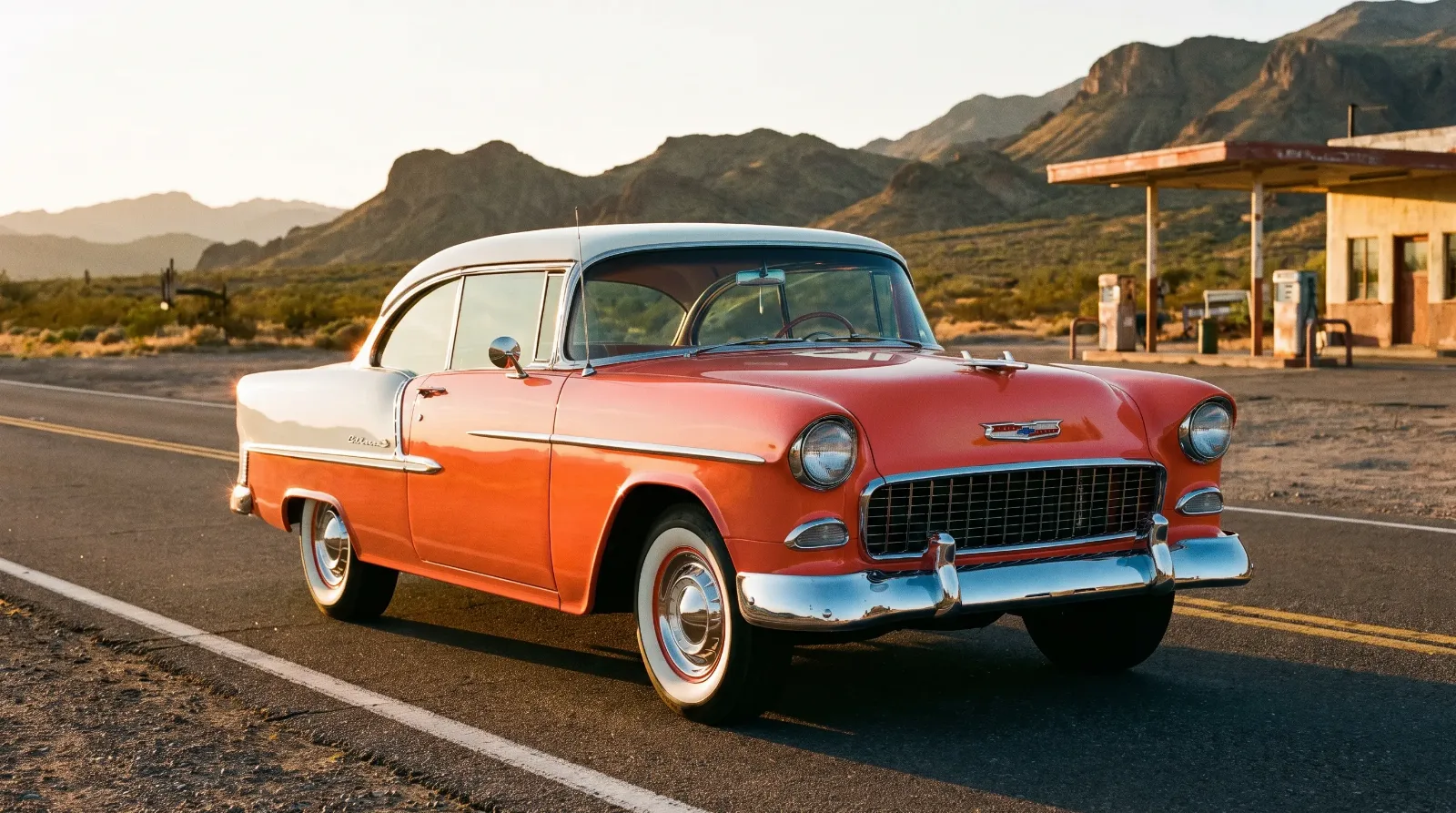
An old woman in Ohio once told a car show judge that she remembered her father's 1955 Bel Air the way other people remember a room from childhood, not by its shape but by its color. Coral and India Ivory, she said, the way it looked pulling into the church parking lot on a Sunday morning, the paint catching light in a way their previous car, a gray Ford, never had. That kind of memory is not unusual among people who grew up around this car. 1955 Bel Air colors did something to people that specification sheets cannot explain, and sixty years on, those same combinations are still what draws a crowd at a show field.
Car Features
6 min read
1955 Bel Air Colors
The two-tone 1955 Bel Air colors were a deliberate showroom strategy, and decades later they remain the detail people remember most vividly about the car.
A palette built for attention
Chevrolet offered nineteen exterior colors for 1955, a genuine expansion from the more restrained palettes of the early 1950s, and it let buyers combine many of them into two-tone schemes that split the body along a defined line running through the doors and rear fender. This was not an accident of the styling department. Chevrolet's designers, working under a broader General Motors push toward color as a selling point across the whole industry, treated the 1955 palette as a direct response to what buyers were asking for after years of black, gray, and dark green dominating American driveways. Postwar prosperity had changed what people wanted their cars to say about them, and color was the easiest, cheapest way for Chevrolet to say it.
The combinations people remember
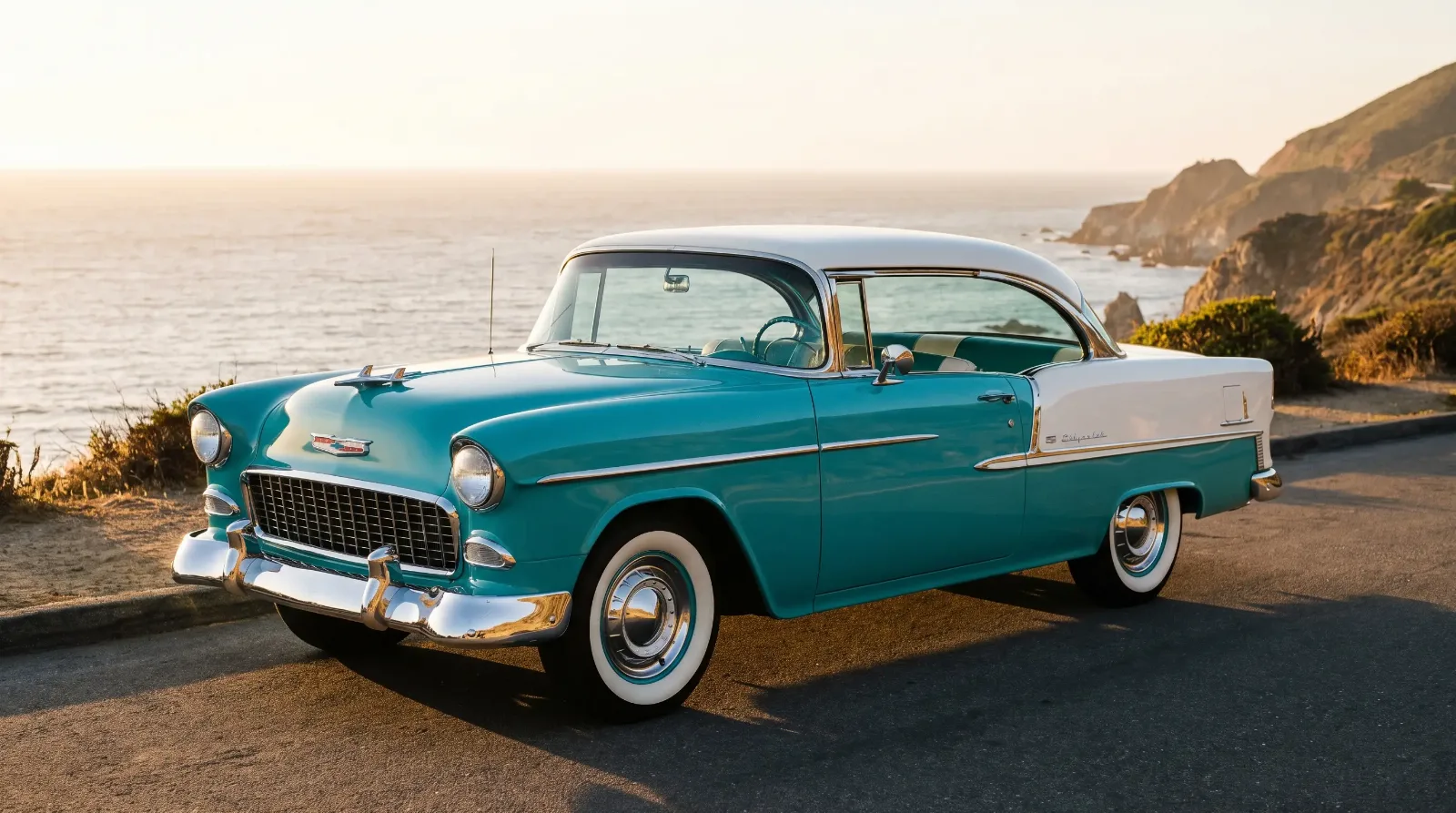
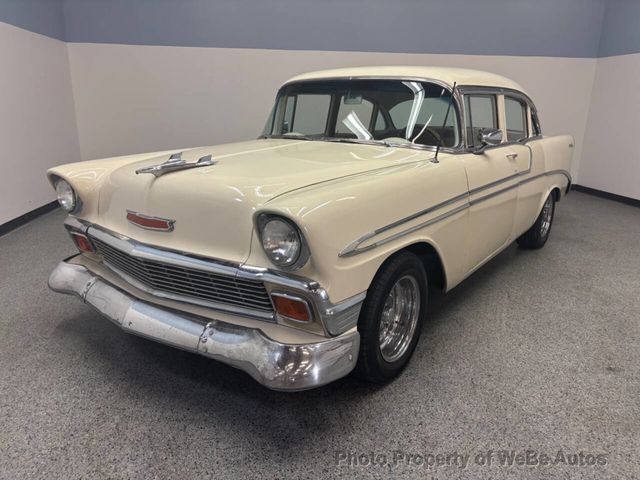
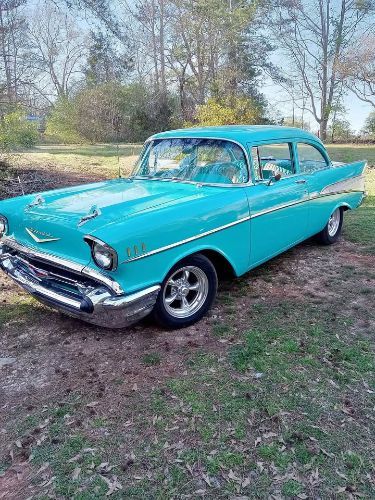
Certain pairings became so closely associated with 1955 that they now function almost like a visual shorthand for the whole model year. Coral and India Ivory. Regal Turquoise and Shoreline Beige. Gypsy Red over black. These were not random pairings pulled from a paint chart, they were curated combinations Chevrolet's stylists tested and promoted specifically, printed in brochures and displayed on showroom floor models so buyers could see how the split actually looked on real sheet metal rather than imagining it from a swatch. A body in one of these combinations, especially on a Bel Air with its extra brightwork to frame the color break, reads completely differently in person than photographs from the period suggest.
Why the paint still moves people
There is something about a two-tone 1955 Bel Air that photographs of a modern car rarely manage, a sense that someone made a deliberate, almost playful decision about how the car should look, rather than defaulting to whatever the factory line was already running. People who grew up riding in the back seat of one of these cars often describe the color before they describe anything mechanical, the same way that woman in Ohio remembered coral before she remembered anything about the engine under the hood. That is the quiet part of this car's appeal, the part that has nothing to do with horsepower or production numbers and everything to do with a Sunday morning and a particular shade of ivory catching the sun.
"People don't fall in love with a spec sheet. They fall in love with the way a certain shade of coral looked against ivory trim on a morning they weren't expecting to remember."
- Nora Beckett
Names that read like a period catalog
The names Chevrolet gave these colors were as evocative as the paint itself. Sea Mist Green. Harbor Blue. Autumn Bronze. Names like that were not written by engineers. They were written by someone in the marketing department who understood that a buyer choosing between two nearly identical shades of turquoise would be swayed as much by the word on the order form as by the chip itself. Dealers reported that customers frequently asked for a car "in the coral" or "the turquoise one" without ever using a paint code, treating the color name the way someone might describe a dress or a room, by feeling rather than by specification number. That is a small but telling detail about how Chevrolet's 1955 buyers actually related to their cars, less like a mechanical purchase and more like a piece of the household they were choosing carefully.
Regional taste played a role too. Dealers in warmer climates tended to order a higher share of the brighter combinations, coral, turquoise, bright yellow paired with white, while dealers in more conservative markets ordered proportionally more black, gray, and darker two-tones. None of that shows up in a national sales brochure, but it surfaces in the surviving build records and in the memories of people who grew up in a specific town watching specific colors roll through the local dealership week after week. A 1955 Bel Air in a bold color combination, seen against the backdrop of a small town main street, was as much a regional cultural marker as it was a Chevrolet product.
Finding those colors today
Restorers chasing an authentic 1955 Bel Air color combination face a real challenge, since original paint codes have been reinterpreted by different paint manufacturers over the decades, and matching a period photograph to a modern formula takes patience and, ideally, an original chip from the factory booklet rather than a reproduction. The reward for getting it right is a car that reads exactly as it did to a buyer standing on a dealer lot in 1955, which is a different kind of accuracy than horsepower or torque figures ever provide.
Faded original paint complicates the matching process further, since sixty years of sun exposure shifts a color noticeably from what left the factory, and a restorer working purely from a surviving unrestored panel risks reproducing the faded version rather than the true original. The safest approach combines a factory chip, if one can be located, with cross-referencing against period color photography taken close to the car's original build date, since even factory chips can shift slightly with age and storage conditions. This is painstaking, unglamorous work, and it rarely gets mentioned in the glossy magazine features about a finished restoration, but it is the difference between a car that merely looks old and one that actually looks correct. Readers curious about the fuller history behind this model year, engines and production included, can read the background that shaped why 1955 became such an important year for Chevrolet.
For anyone who has been carrying around a memory like the one that woman in Ohio described, whether it is a parent's car or one glimpsed once at a county fair, the search usually ends the same way it started, by looking. Those who want to see what is actually available right now can find a classic Air and start comparing colors in person rather than on a screen. Some memories are worth chasing down properly.
Sources and notes
Related Reading
Have a
Chevrolet Bel Air
for Sale?
Reach thousands of serious classic car collectors across the US.
Sell It Here →
Are You a Classic Car Dealer?
List your full inventory and connect with targeted classic car buyers.
Join as a Dealer →

About the author
Nora Beckett
Automotive features writer and photographer who tells the human stories behind the cars, from show fields to cross-country road trips.
Related Listings - Chevrolet Bel Air
Comments
Be the first to comment on this article.