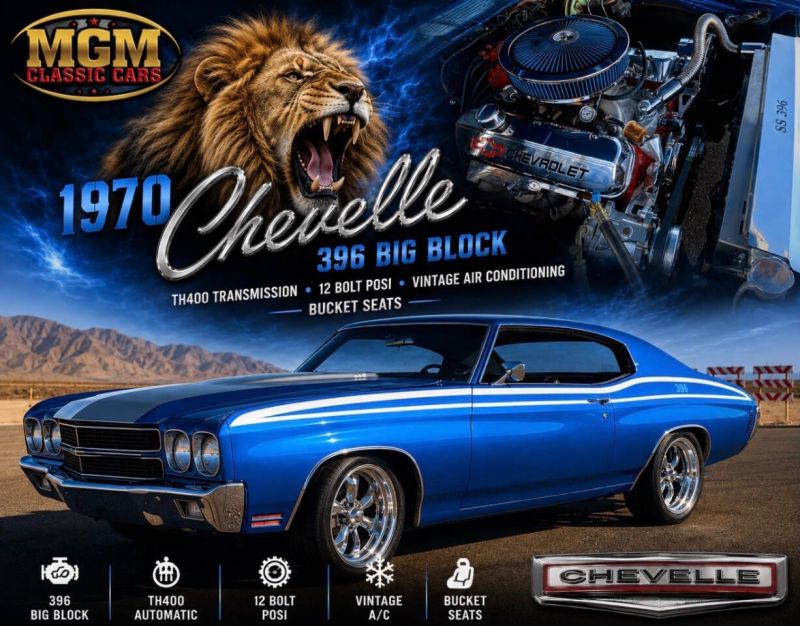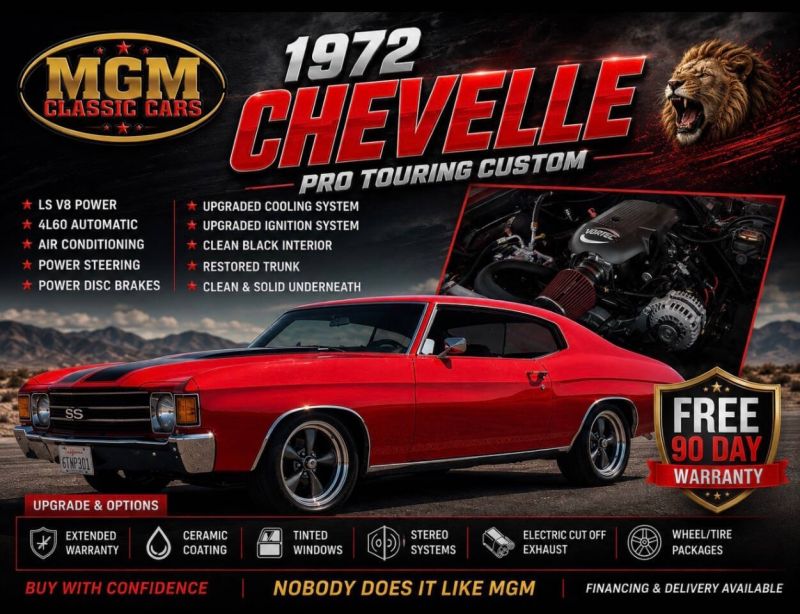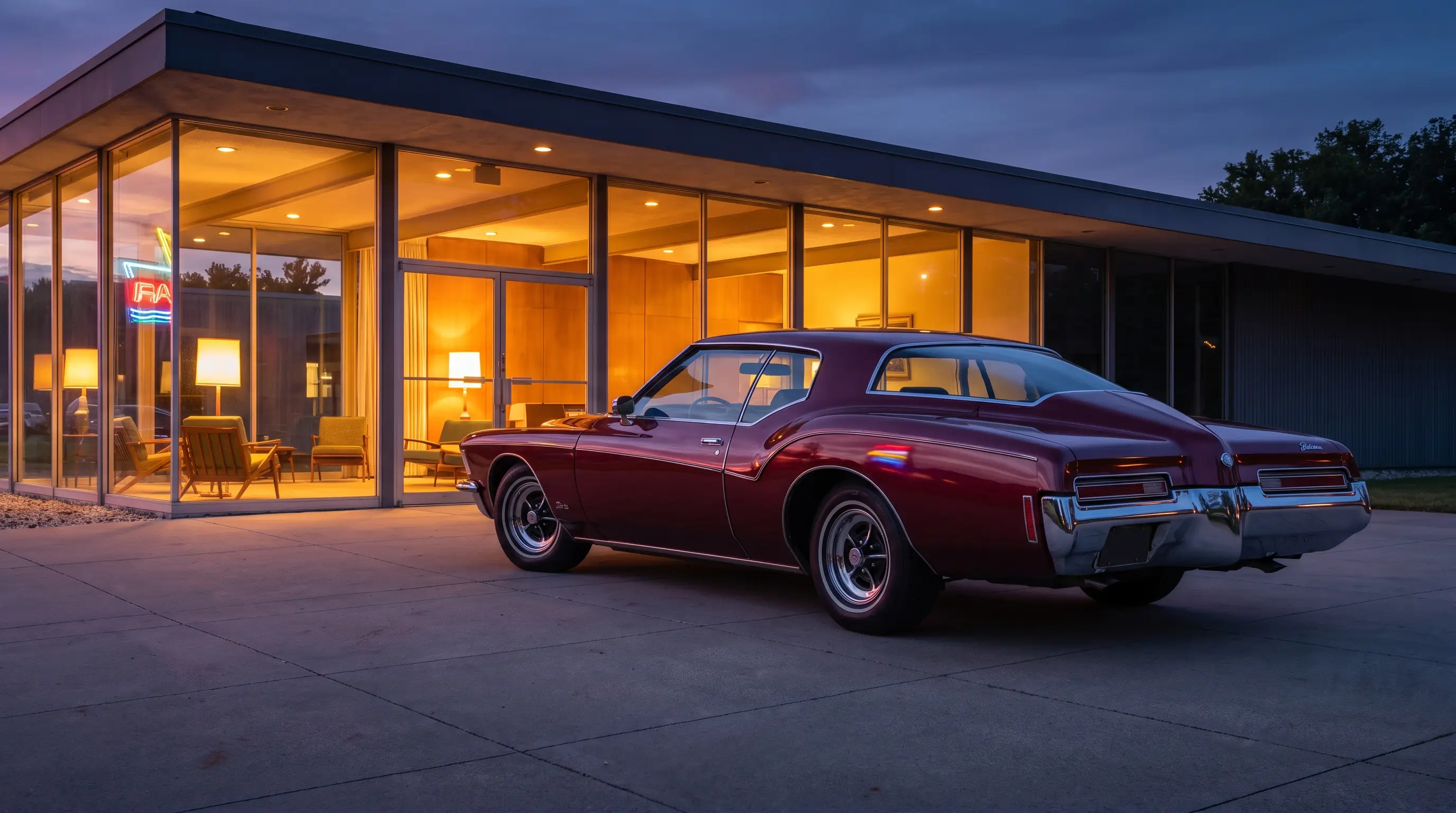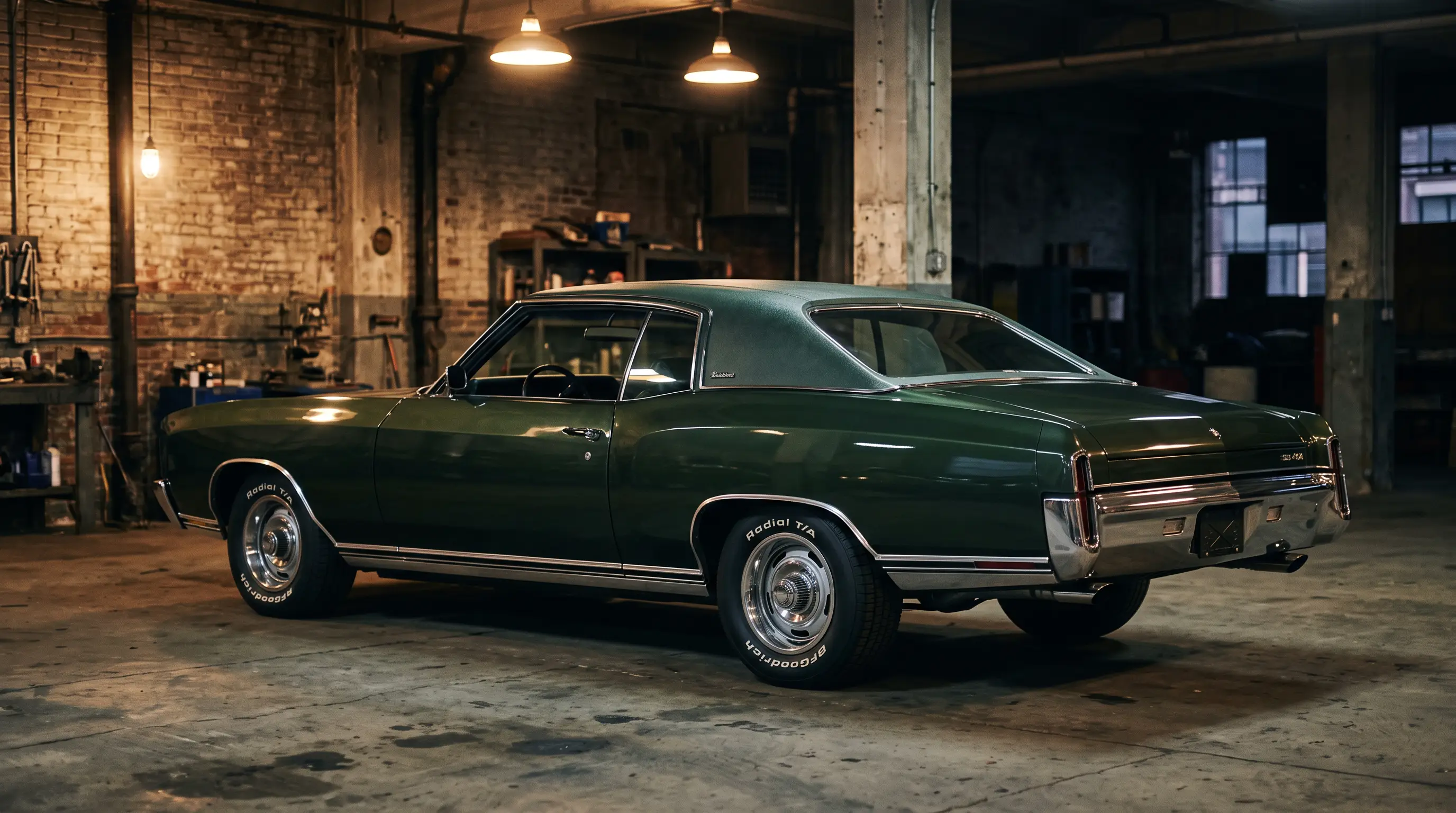
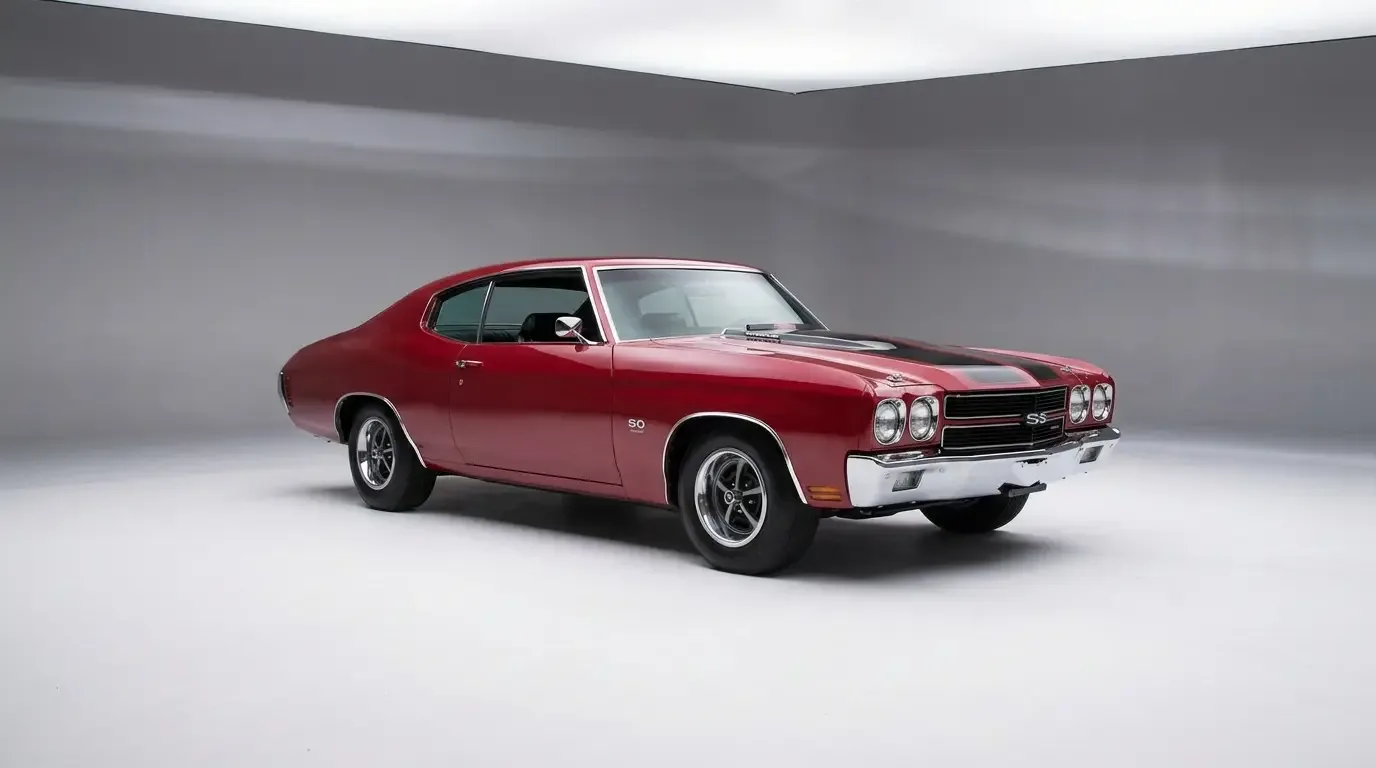
You can learn a lot about a car by looking at how many different bodies its designers built off the same basic architecture without losing the plot. The Chevelle ran as a two-door hardtop, a convertible, a four-door sedan, a wagon, and a coupe utility in the El Camino, and every one of those bodies shares the same beltline, the same basic proportions, and the same design language even though the sheetmetal above the frame rails is doing something completely different from one to the next. That's not an accident. That's good industrial design holding a family together across five distinct silhouettes.
Read Chevelle styling history for the full arc of how that language evolved generation to generation. Here I want to walk through how the same underlying sheetmetal DNA got stretched, chopped, and reshaped to serve five completely different jobs.
The hardtop: the body the whole design language was built around
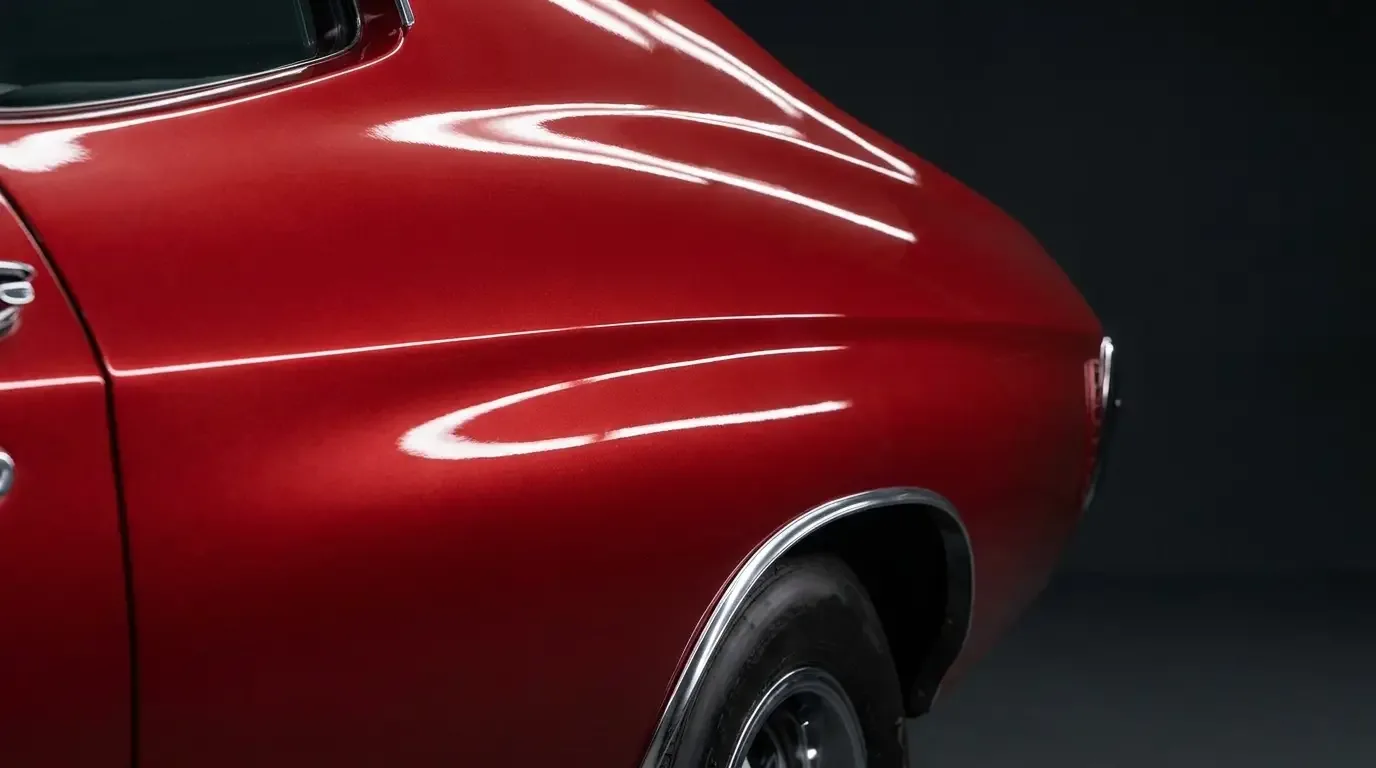
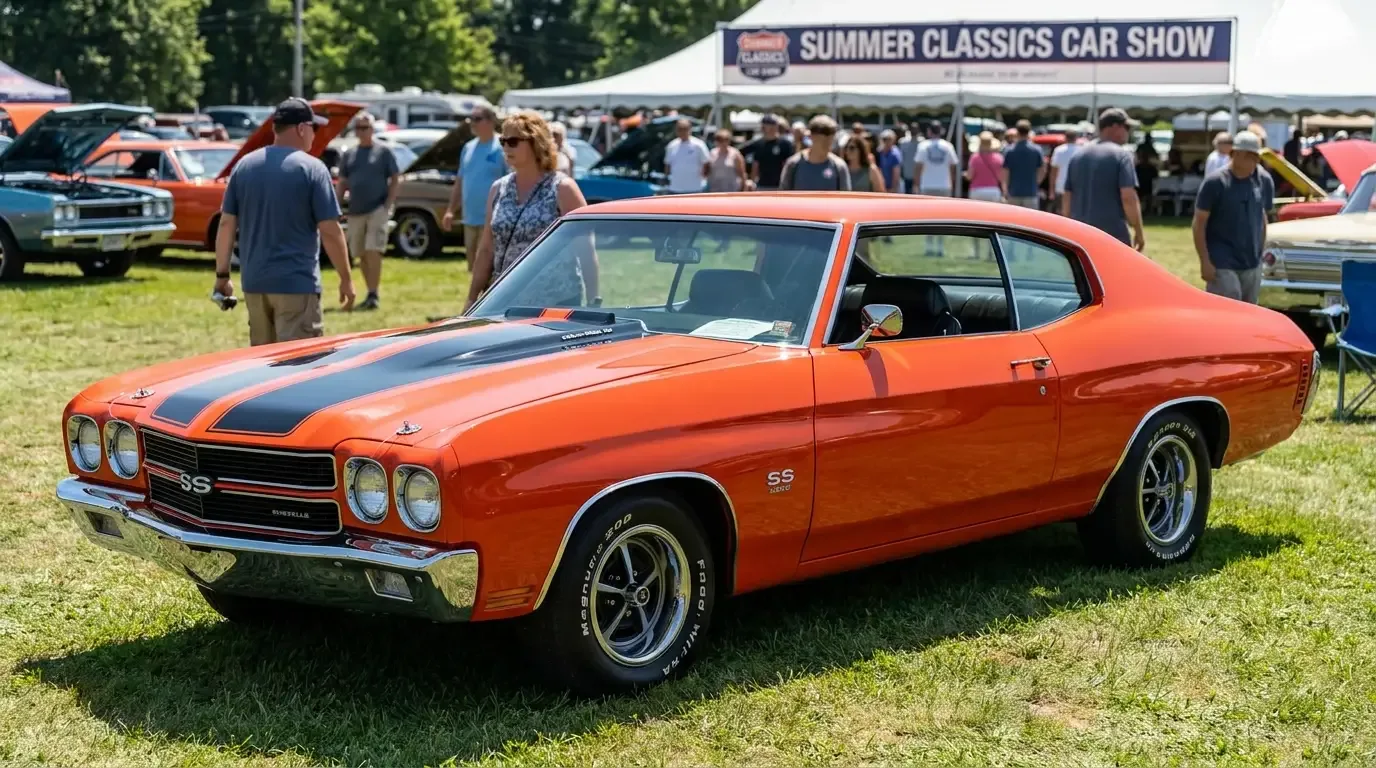
The two-door hardtop is the body every enthusiast pictures first, and for good reason. It's the shape the studio guys were sculpting when they laid down the beltline, the greenhouse taper, and the roofline the rest of the lineup had to respect. Look at the quarter panel on a hardtop and you're looking at the purest expression of whatever styling era that generation represents, whether that's the clean-slab simplicity of the mid-1960s cars or the coke-bottle curvature of the 1968-72 generation. Everything else on this list is a variation worked out from that starting point, not the other way around.
The convertible: same bones, no roof to hide behind
Take the roof off a hardtop and you find out fast whether the underlying body structure was actually any good, because a convertible has to carry its own rigidity without a fixed top to help it. The Chevelle convertible kept the same beltline and quarter panel shape as the hardtop, but the cowl and floor pan got extra reinforcement to compensate for losing the roof's contribution to overall stiffness. That's not a small change. It's the difference between a body that flexes over bumps and one that doesn't, and it's why a correct convertible frame and floor structure is worth checking closely on any car you're considering, because a convertible chassis that's been cut for a roof it was never supposed to lose is a different animal than a factory-built open car.
The sedan and wagon: same face, honest utility behind it
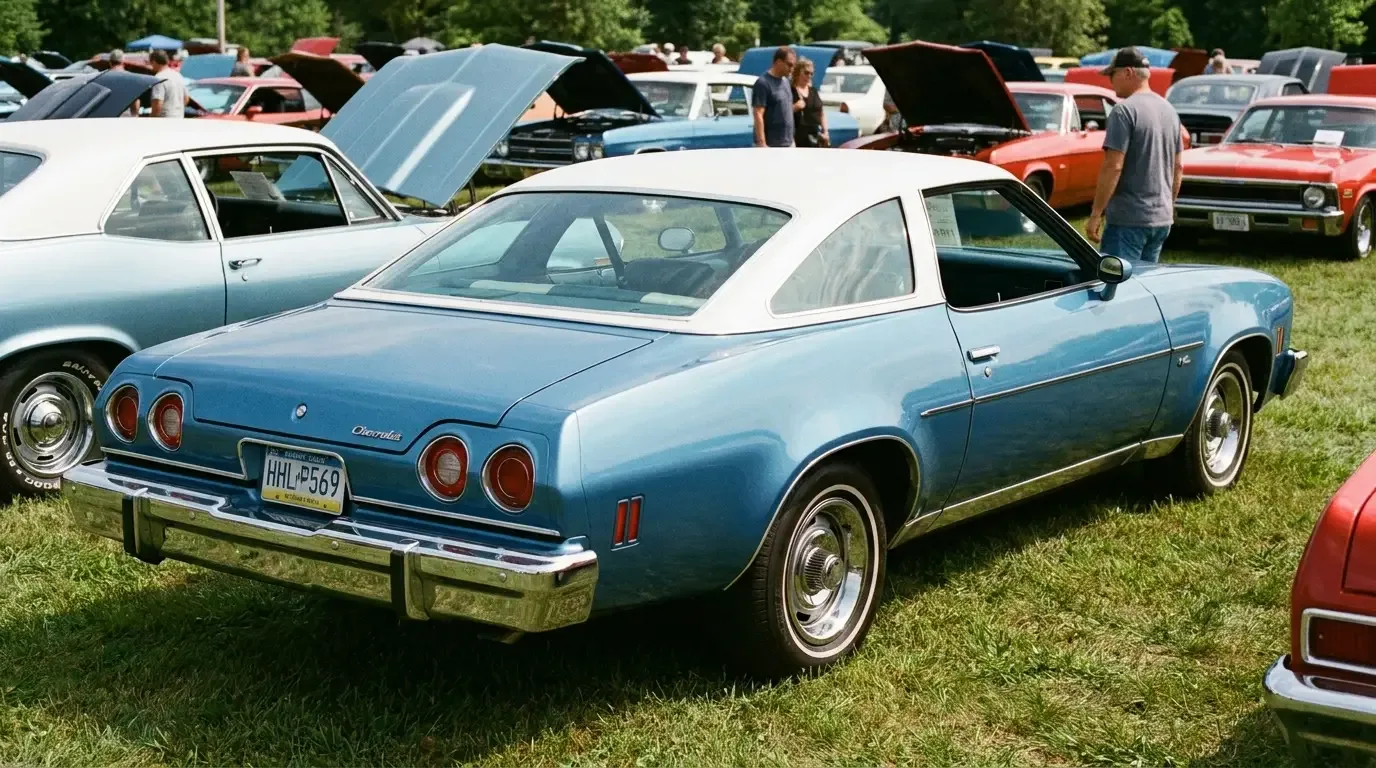
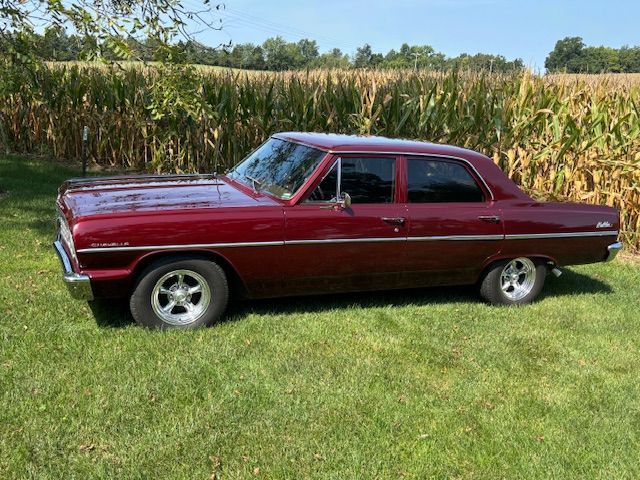
The four-door sedan and the wagon kept the family face up front, the same grille treatment and front fender line as the two-door cars in a given generation, but the greenhouse and roofline behind the A-pillar were their own thing entirely. A wagon roofline runs flat and high all the way to the tailgate because the job is cargo volume, not a swept fastback profile, and that's a completely different design problem than what the hardtop studio was solving. What impresses me about these bodies is that Chevrolet didn't treat them as afterthoughts tacked onto the sporty coupe. The proportions still work. The car still reads as a Chevelle from the windshield forward, even when the whole rear two-thirds of the car is doing something the coupe never had to consider.
The El Camino: a coupe utility with a truck's job to do
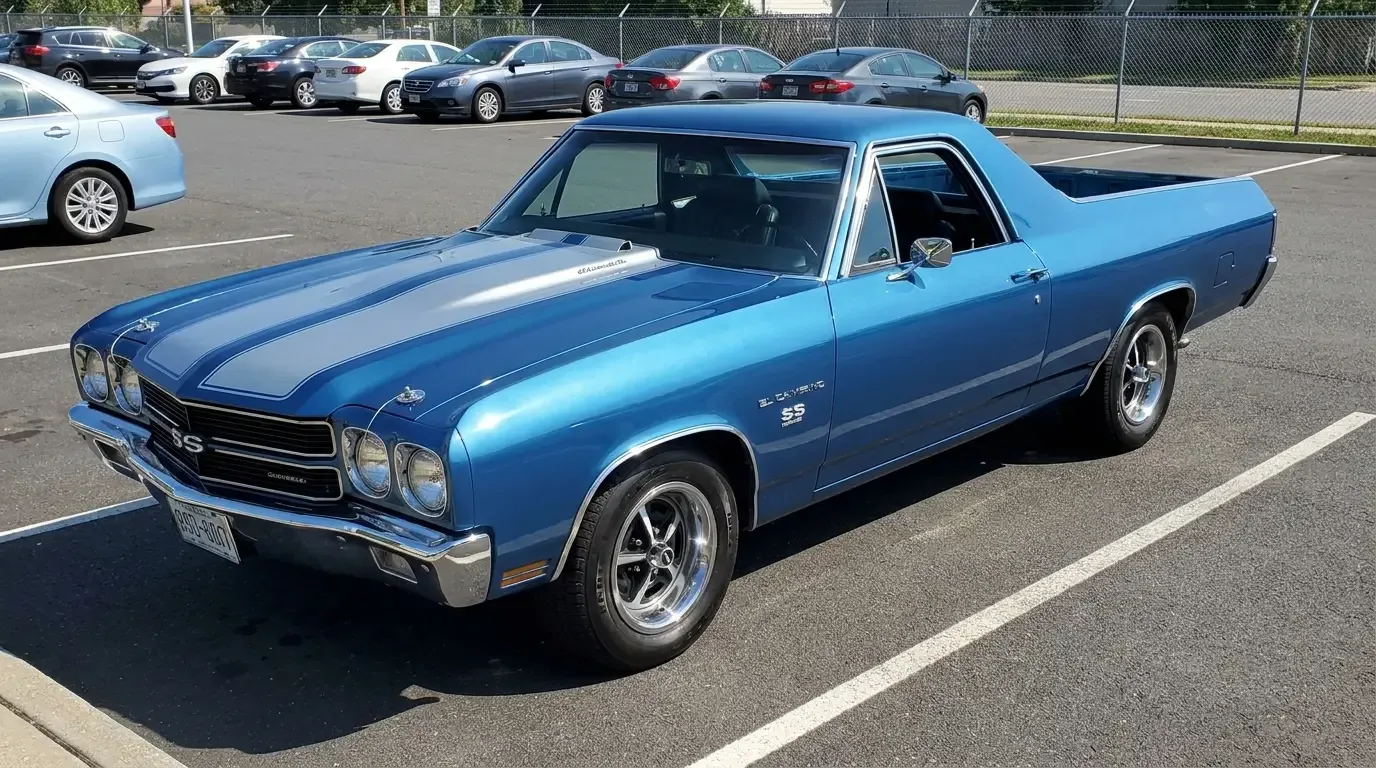
The El Camino is the body on this list that had to solve the hardest problem, because it's carrying a load bed behind the cab, not just passengers, but Chevrolet's stylists still made it look like it belonged to the same family as the sedan and the hardtop. The cab structure borrows heavily from the two-door body up front, the same doors, the same greenhouse shape through the windshield and side glass, and then the whole rear structure transitions into an open bed with its own separate design logic. Getting that transition to look intentional instead of bolted-together is genuinely hard bodywork, the kind of thing you don't appreciate until you've had to make two different design languages meet cleanly at a single beltline. Chevrolet's studio pulled it off well enough that the El Camino reads as a Chevelle first and a truck second, which is exactly the trick they were going for.
| Body style | Shares with hardtop | Unique design challenge |
|---|---|---|
| Two-door hardtop | Baseline for the generation | Sets the language everything else follows |
| Convertible | Beltline, quarter panel shape | Structural rigidity without a fixed roof |
| Four-door sedan | Front-end sheetmetal, grille | Formal roofline, four-door proportion |
| Wagon | Front-end sheetmetal, grille | Flat cargo roofline vs. sporty profile |
| El Camino | Cab, doors, greenhouse | Clean transition from cab to open bed |
Why this matters if you're building or buying one
Once you see how these bodies share a spine, you start noticing it everywhere on a real car, the way the beltline height stays consistent from a hardtop to a wagon even though everything above it is different, or how the front fender stamping is genuinely the same part across three or four body styles in a given year. That's useful information if you're sourcing sheetmetal for a build, because a fender that looks right in a parts listing for a Malibu sedan is very likely the correct part for your El Camino or wagon project too, and knowing where the shared parts start and stop saves you from chasing the wrong panel or paying a premium for something that isn't actually body-specific.
It also changes how I look at these cars when I'm evaluating one for a build. A tired wagon or a rough El Camino isn't a lesser Chevelle. It's the same design DNA doing a different job, and if the beltline is straight and the cowl is solid, you're working with the same fundamentally sound architecture the hardtop guys get all the credit for. You can browse Chevelles across every body style and see that range for yourself, from a clean hardtop to a wagon that never gets enough respect.
"People treat the wagon and the El Camino like they're the budget option, the car you settle for when the hardtop's out of reach. I look at it the other way. Those bodies had to solve a harder design problem than the coupe did, and the fact that they still read as a Chevelle from ten feet away is the real achievement, not an afterthought."
— Jim Vasquez
Once the body architecture itself was established, the finishing details, colors, tops, and trim, are what made each individual car feel distinct within the family. That's the next piece of this story: Vinyl Tops and Color Palettes.