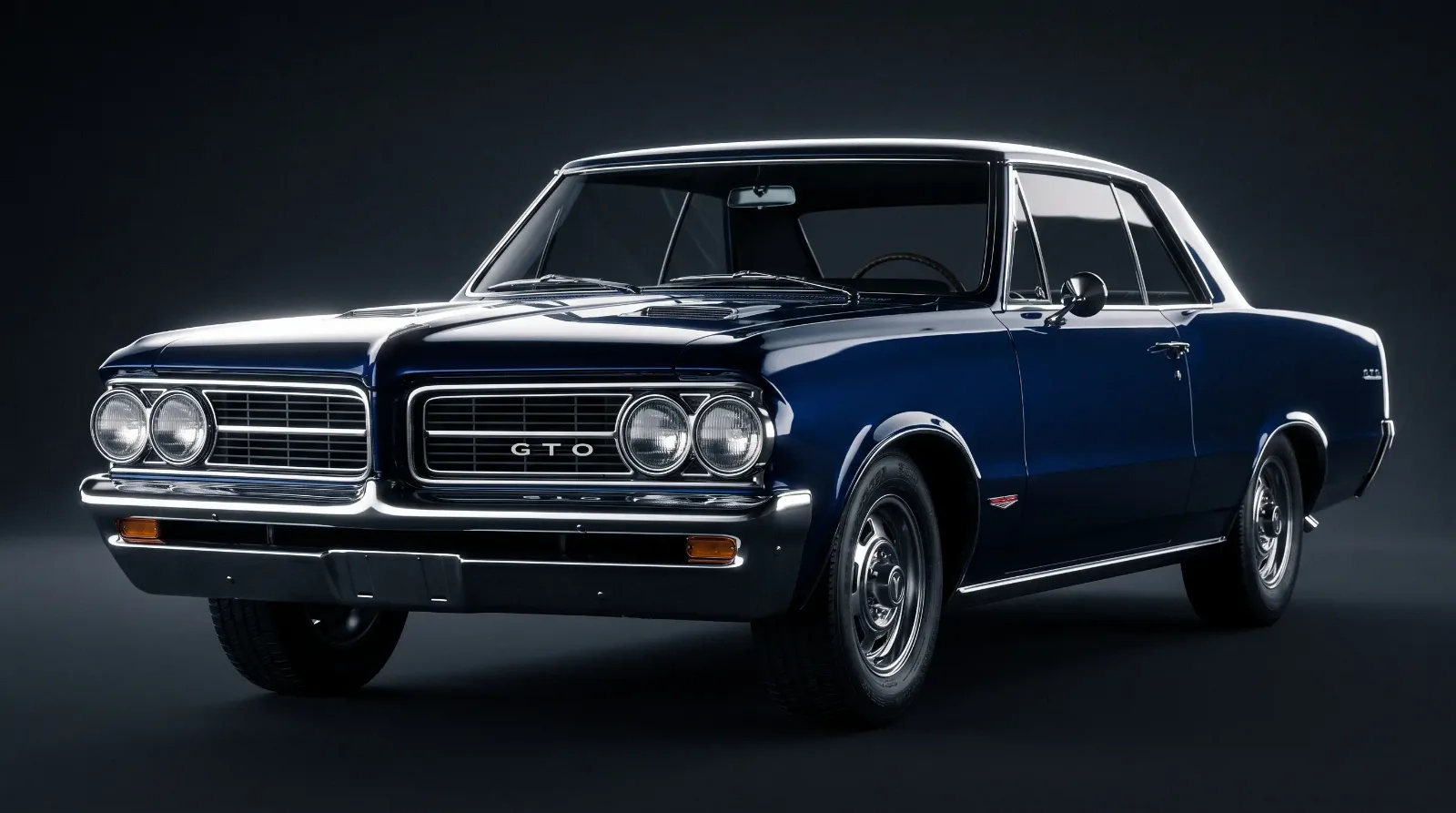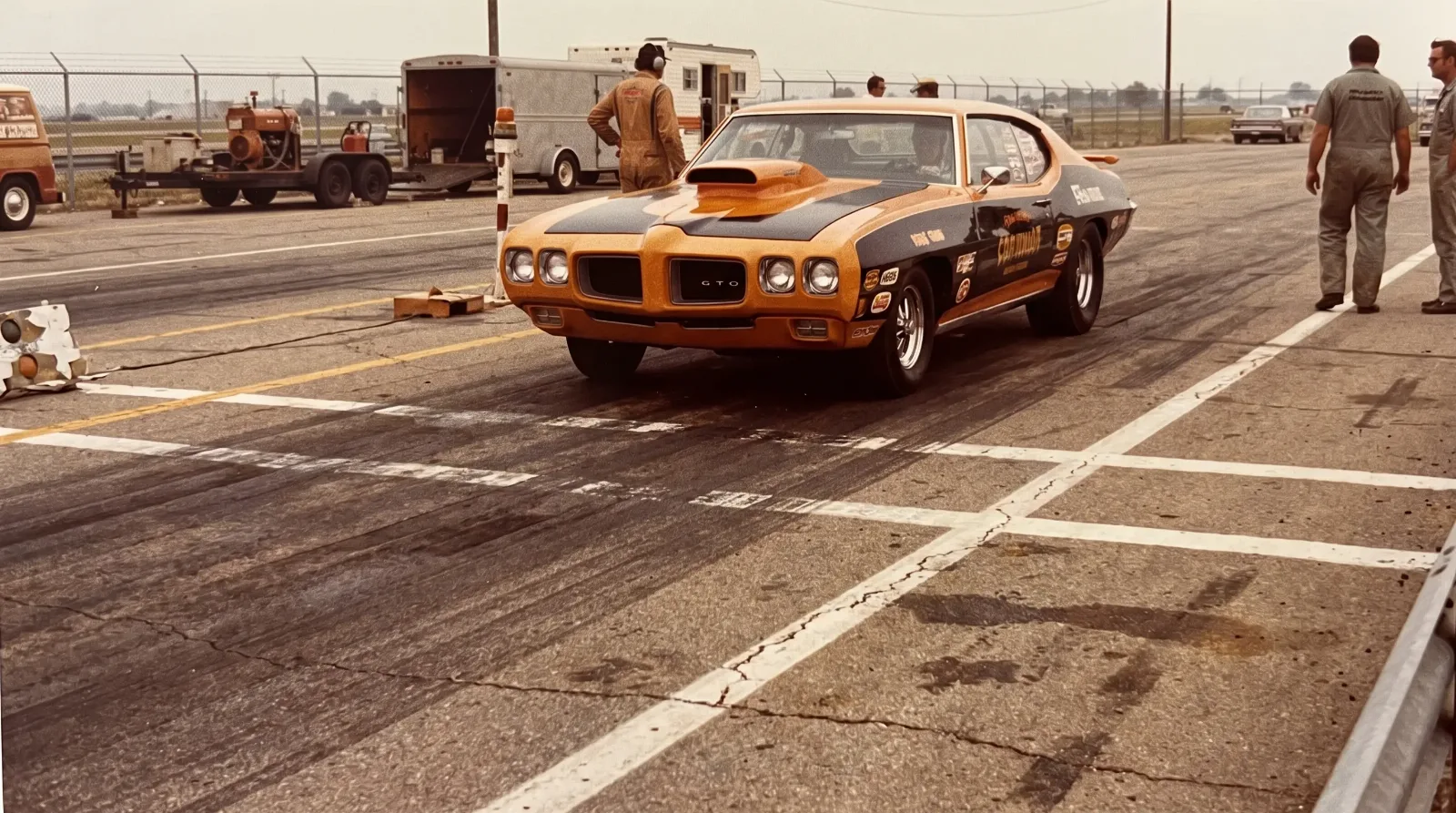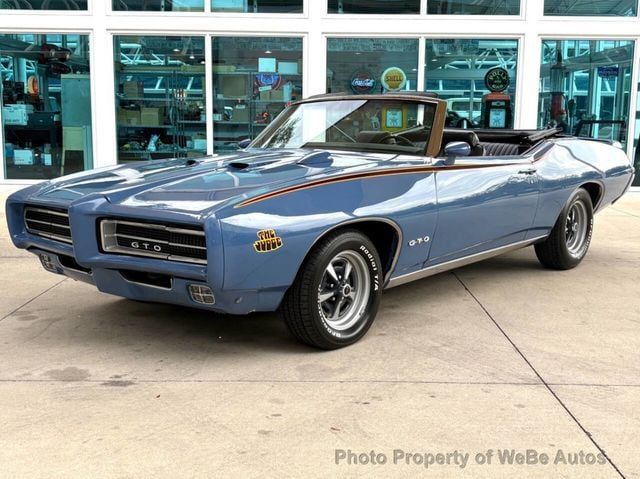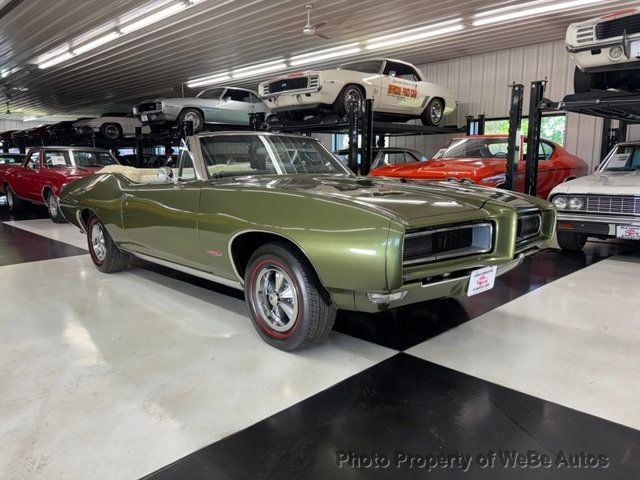
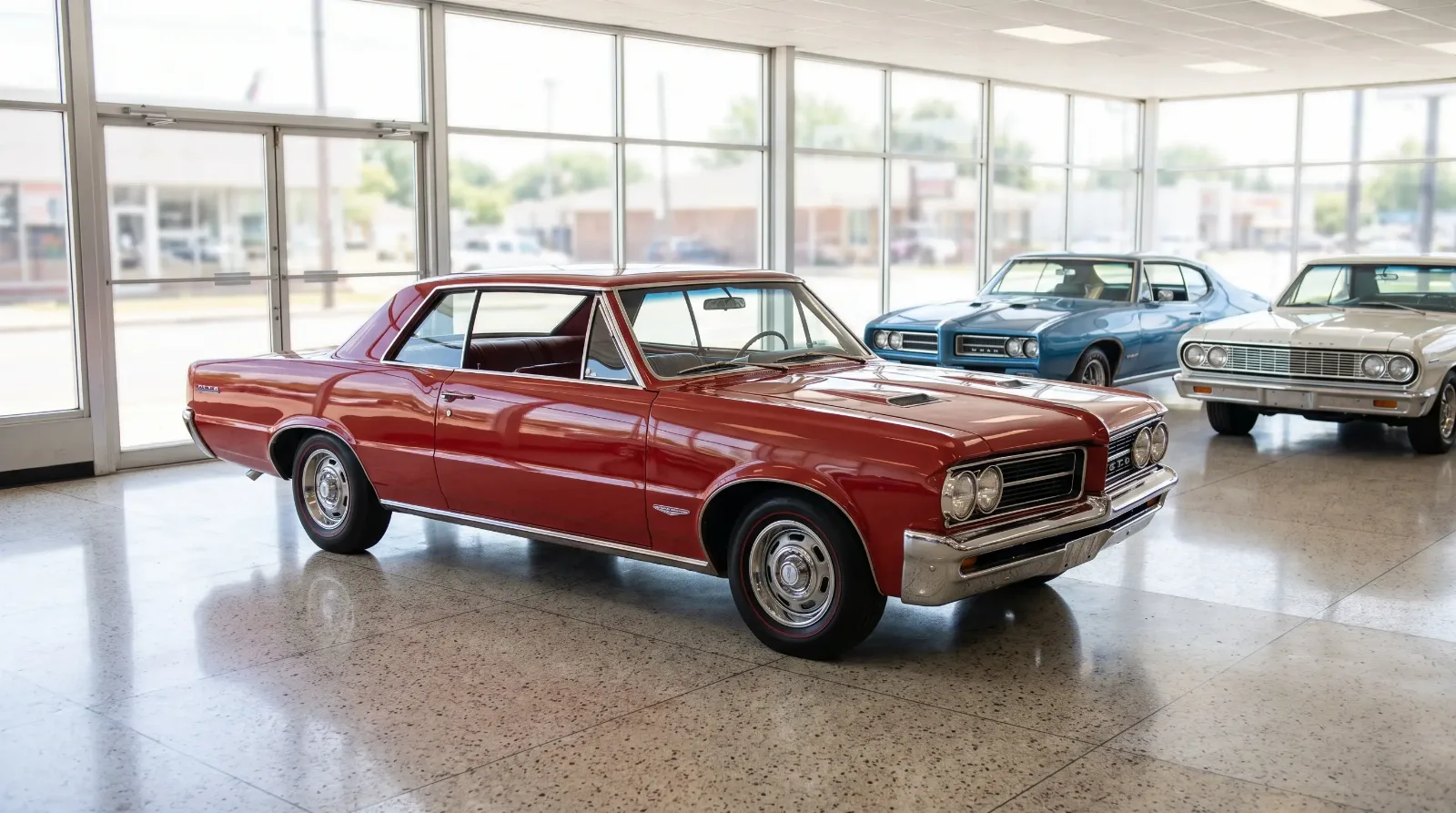
Before 1964 there was no muscle car war to fight, because there was no muscle car category for the manufacturers to fight over. Detroit built performance cars, certainly, and it built big-engine full-size cars that could move, but the specific formula that came to define the muscle car, a big engine dropped into a mid-size body and sold as an affordable option package rather than an exotic halo car, did not exist as its own recognized segment until Pontiac's engineering team built the GTO. Everything that followed, every rival, every escalating spec sheet, every advertising war fought in the pages of the same handful of car magazines, happened because Pontiac proved the formula worked first.
How fast the rest of Detroit reacted
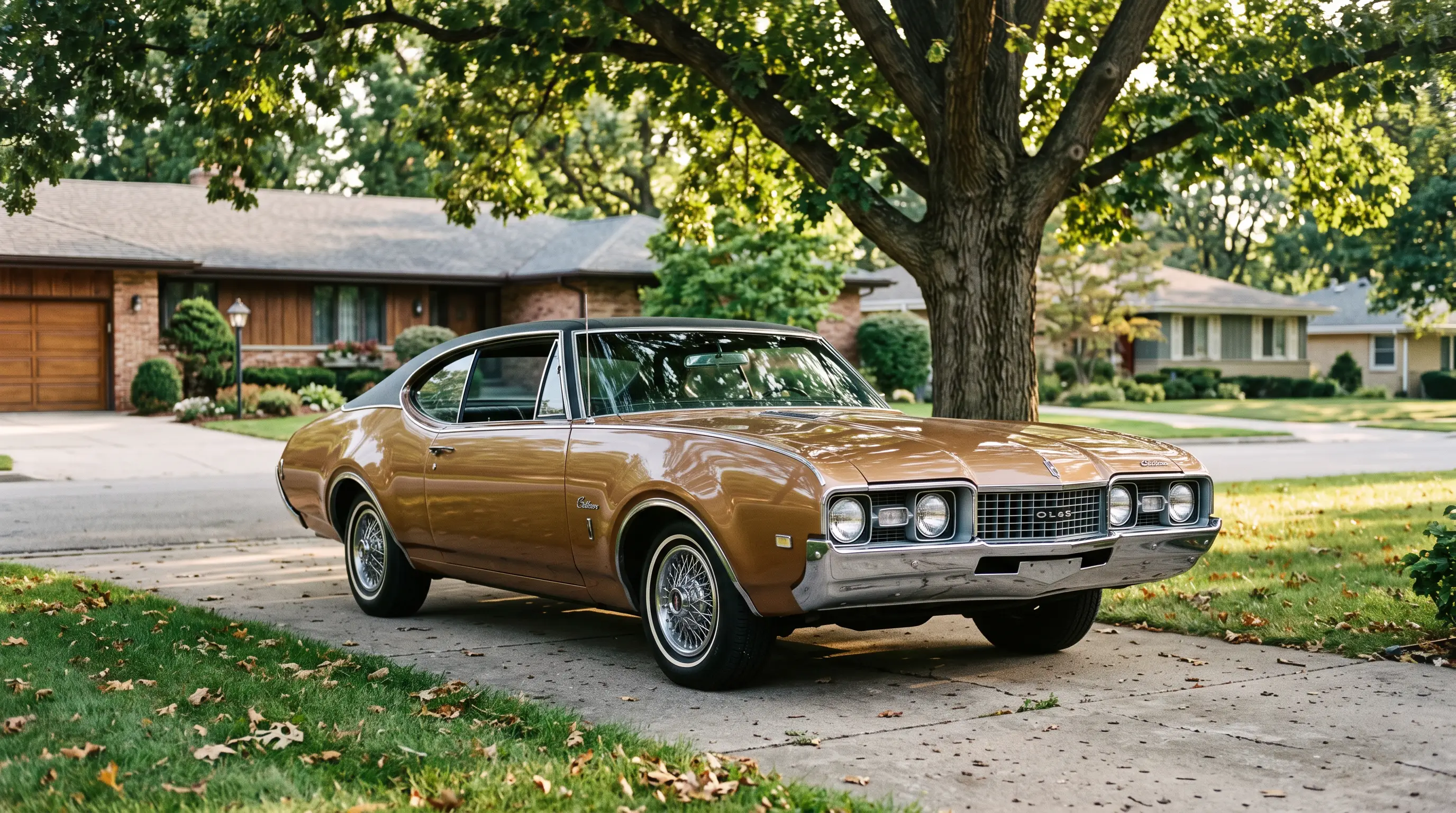
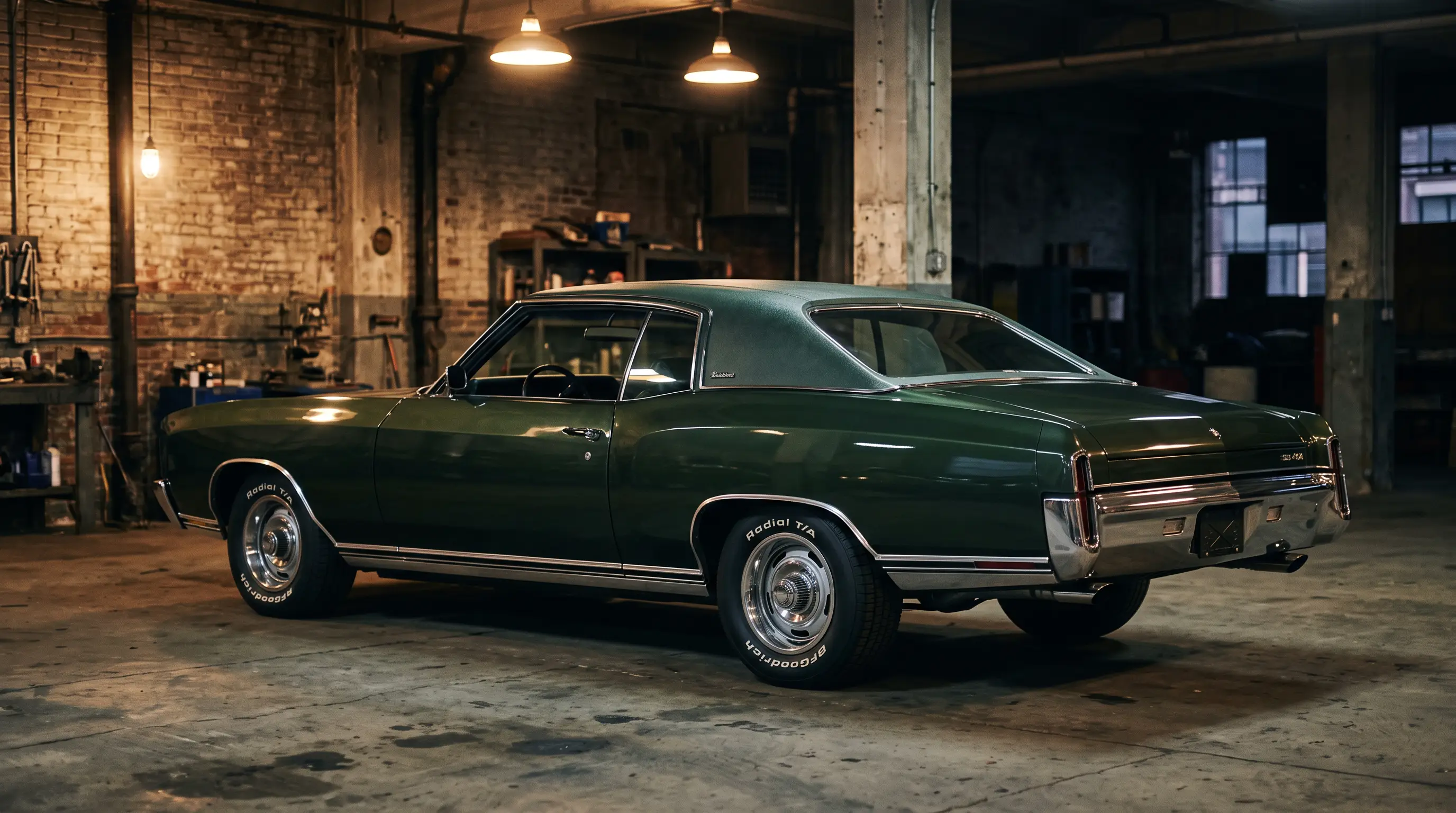
The response was almost immediate. Oldsmobile brought out the 442 in the same 1964 model year the GTO launched, close enough in timing that it reads less like a reaction and more like GM's other divisions had been circling the same idea and Pontiac simply got there first with a name that stuck. Chevrolet followed with the Chevelle SS the same year, working from a similar premise, a mid-size body carrying more engine than the segment had traditionally offered. Within GM alone, four divisions were suddenly competing to sell essentially the same concept to the same young, performance-hungry buyer, which meant the GTO's success had immediately created internal competition before it ever had to worry about Ford or Chrysler.
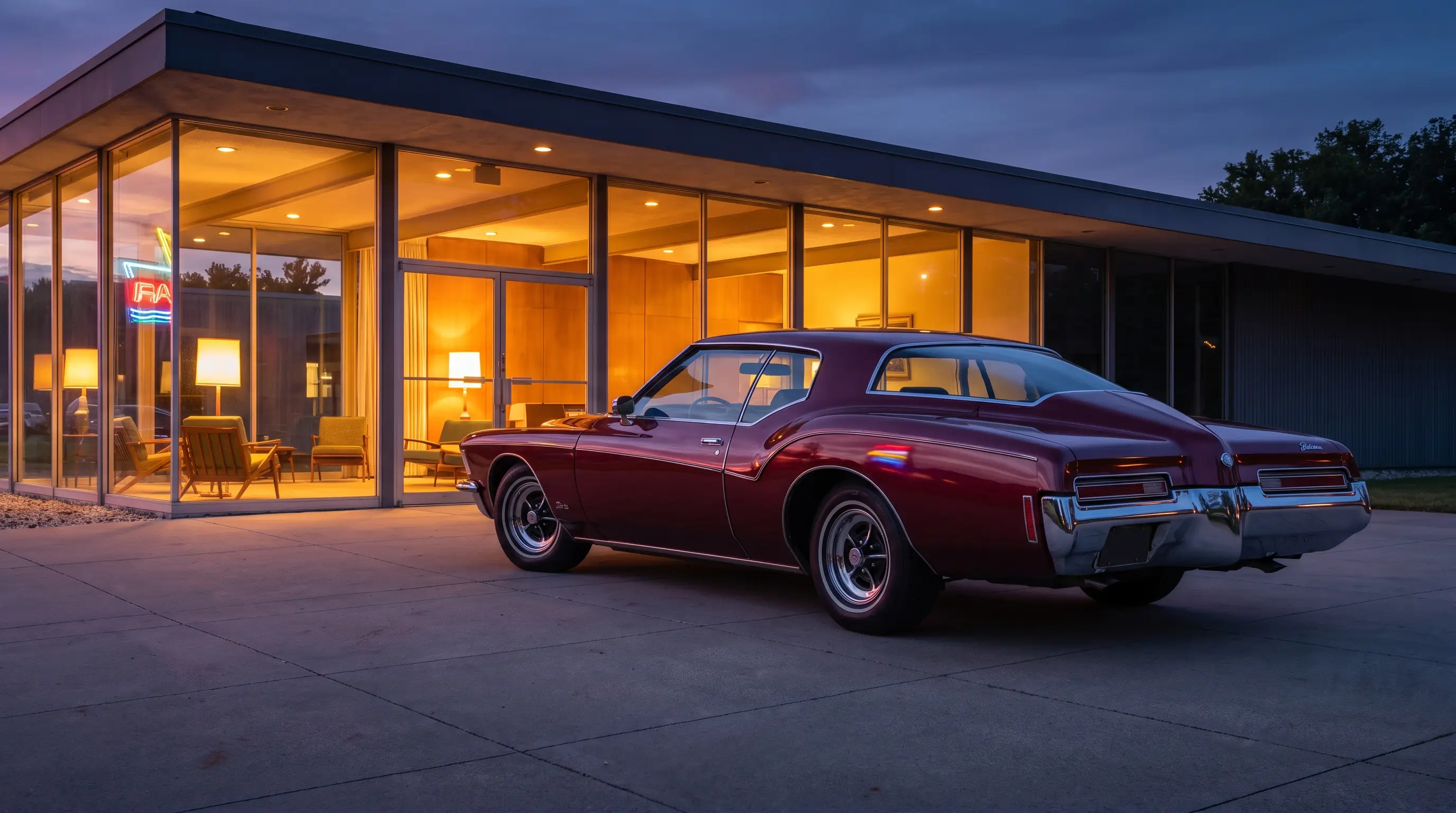
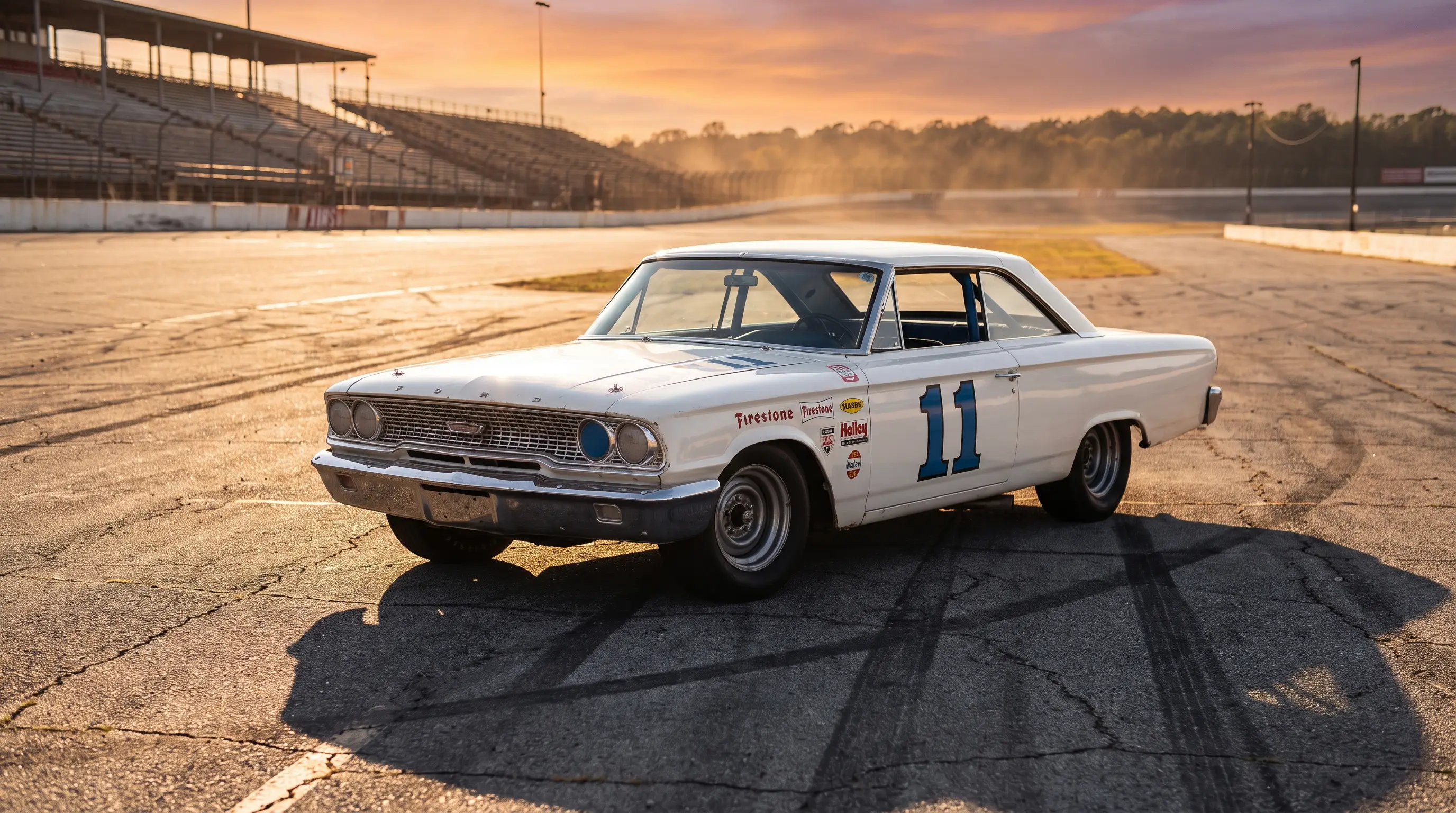
Ford and Chrysler were not far behind. Ford leaned on the Mustang to capture a related but distinct slice of the performance market, while its intermediate offerings evolved to compete more directly with the GTO's formula as the decade went on. Chrysler's answer arrived a little later but hit harder once it did, with the Road Runner launching in 1968 as a stripped-down, value-focused muscle car built around the idea that buyers wanted straight-line performance more than luxury trim, undercutting the GTO on price while still delivering serious power. Each new competitor pushed the entire category further, which is exactly what a genuine market war looks like from the inside: every manufacturer chasing the same buyer with a slightly different pitch, none of them willing to concede ground.
"Once the GTO proved a mid-size car with a big-block heart could sell in real numbers, every division in Detroit had the same conversation internally. Do we build our own version, or do we let Pontiac own this entire category alone? Nobody chose to sit it out. That's how you get a war instead of just one successful car."
— Patrick Walsh
What the competition actually did to the cars
Escalation is the honest word for what happened across the rest of the 1960s. Engine displacements climbed. Option packages multiplied. Marketing departments reached for increasingly aggressive language to distinguish their car from a growing field of near-identical rivals. Pontiac itself kept pushing the GTO forward through this period, adding the Endura body-color bumper in 1968 and debuting The Judge as a distinct, more aggressive trim level in mid-1969, both moves aimed squarely at staying ahead of a field that had grown crowded with capable competitors chasing the exact same formula Pontiac had invented.
By 1970, when the 455 cubic inch V8 became available in the GTO, the market had shifted considerably from the relatively simple field the car entered in 1964. Buyers now had a genuine menu of mid-size muscle cars to choose from across nearly every domestic manufacturer, and specification sheets had become a real competitive battleground in a way they simply had not been six years earlier. The GTO that started the category found itself, by the early 1970s, just one strong option among many rather than the singular proposition it had been at launch.
The advertising war ran alongside the engineering war
None of this escalation happened quietly. Every new competitor arrived with its own advertising campaign built around outdoing whatever the GTO had claimed the year before, and car magazines of the era fed that competition directly by running comparison tests that pitted the latest GTO against its newest rival, results printed in bold type and argued over in letters columns for months afterward. That magazine coverage did as much to define the muscle car war in the public imagination as the actual sales figures did, because most buyers experienced the competition through those printed comparisons rather than through side-by-side dealership visits.
The dealerships themselves became part of the battlefield too. Performance-minded dealers across the country built reputations around specific manufacturers the same way Royal Pontiac had built its name around the GTO, stocking speed parts, sponsoring local racers, and turning showroom floors into extensions of the same rivalry playing out in the magazines. That layered competition, factory engineering, magazine coverage, and dealership hustle all reinforcing each other, is what turned a single successful car into a genuine era-defining war rather than just one company's good idea getting copied.
Why the GTO still gets credit for starting it
Plenty of the cars that followed the GTO into this category eventually outsold it in individual seasons, and some, particularly the later Road Runner and certain Chevelle SS variants, built their own devoted followings that rival the GTO's in size today. None of that changes who moved first. The GTO's 1964 debut is the recognized starting point for the entire muscle car era among historians and enthusiasts alike, and that first-mover status is a large part of why the car still commands the attention it does, separate from any argument about which individual competitor was objectively quickest in a given model year.
That distinction, between starting a category and always dominating it, is worth sitting with. Being first mattered more to the GTO's long-term reputation than winning every individual head-to-head against 442s, Chevelle SS models, and Road Runners across a decade of increasingly close competition. First movers get remembered differently than mere participants, and the GTO has benefited from that historical positioning for sixty years running.
The nickname that grew out of this origin story, calling the GTO the godfather of the entire muscle car category, is not just a marketing flourish. It reflects a real, documented sequence of events that started with one engineering team's workaround for a corporate displacement rule and ended up reshaping what an entire decade of American performance cars looked like. That fuller nickname and what it actually claims about the GTO's place in this history is worth its own look if you want read on, and it connects directly back to the Goat's mythology as a whole, since so much of that mythology traces back to this single claim of having started something the rest of Detroit spent a decade trying to catch up to.
For the complete account of how that single option package grew into the car that triggered this entire chapter of American automotive history, Classic Cars Arena's GTO story covers the full arc from the 1964 launch through the car's final classic-era model year in 1974.
Sources and notes
- Wikipedia - Pontiac GTO, 1964 launch and production
- Wikipedia - Oldsmobile 442, 1964 debut as a direct GTO response
- Wikipedia - Plymouth Road Runner, 1968 launch and sales figures
- ClassicCars.com Journal - 1964 GTO, first year of the muscle car era
- Hagerty - the GTO as the single most important car of the muscle car era
- GM Authority - 1964 GTO convertible headed to Mecum Houston auction