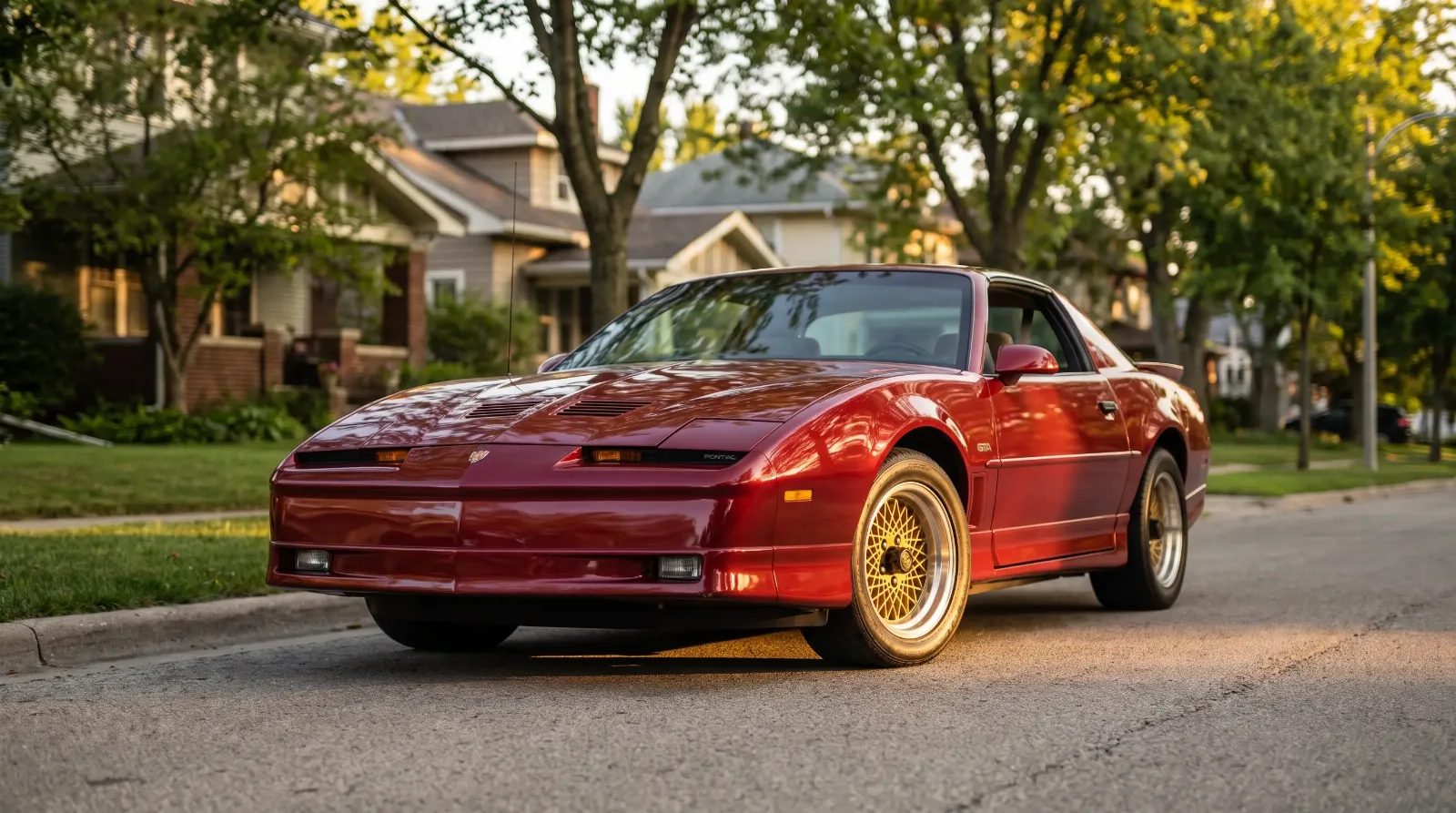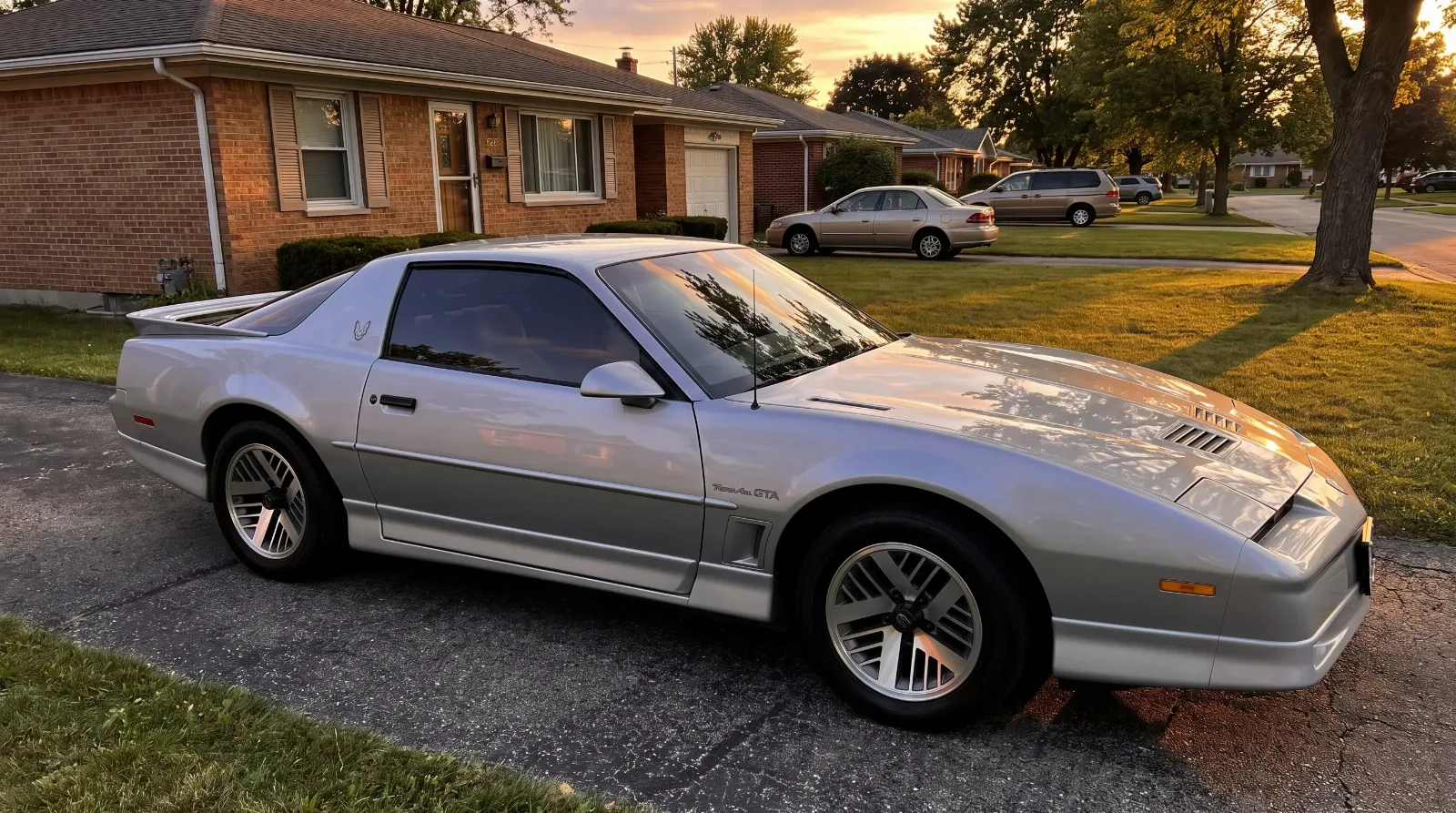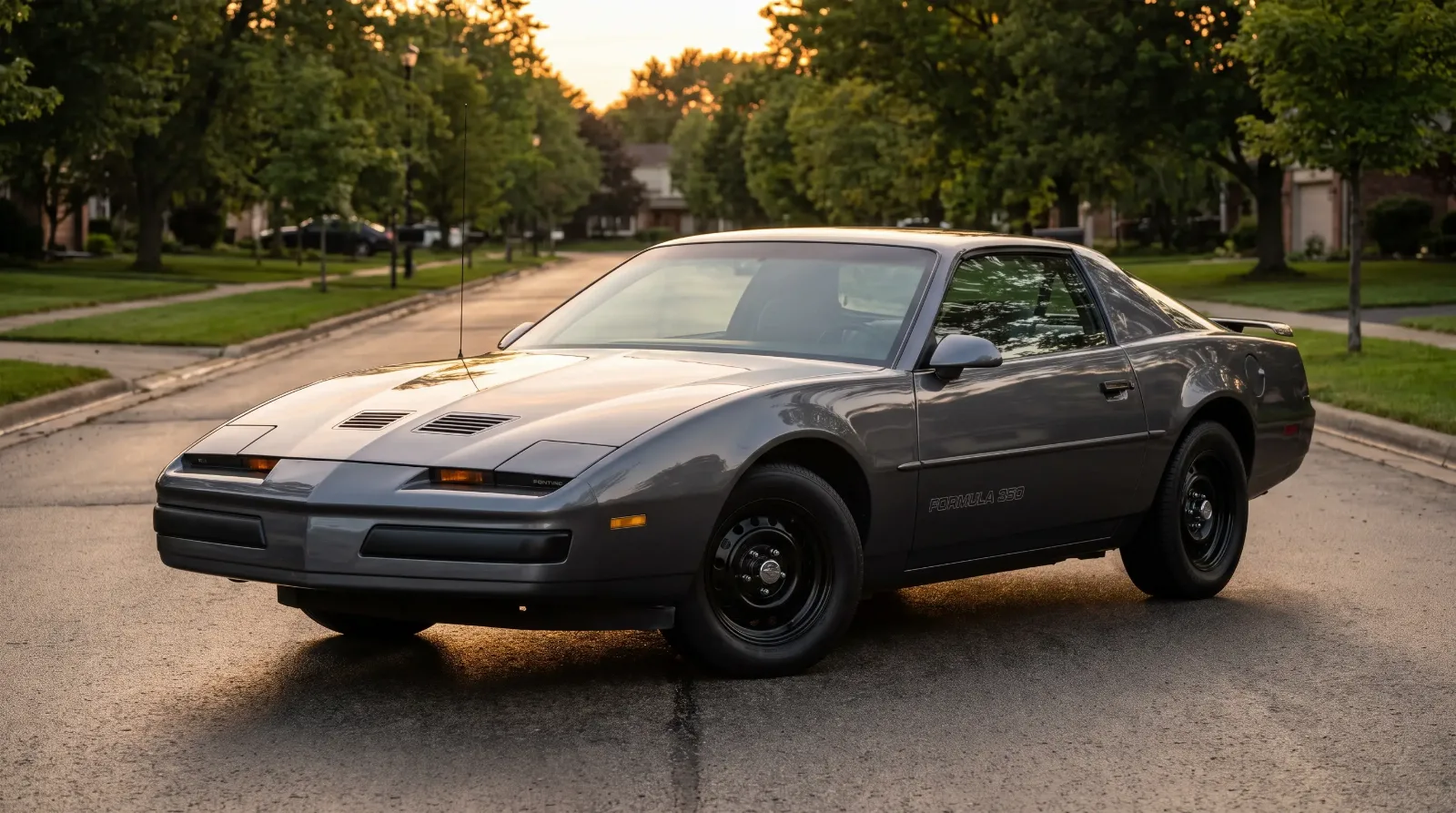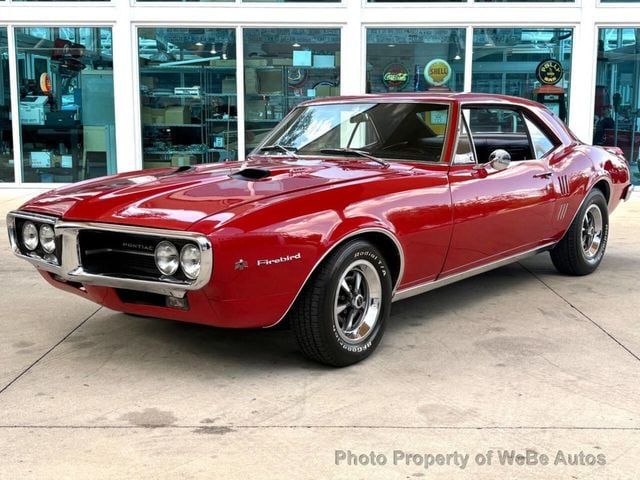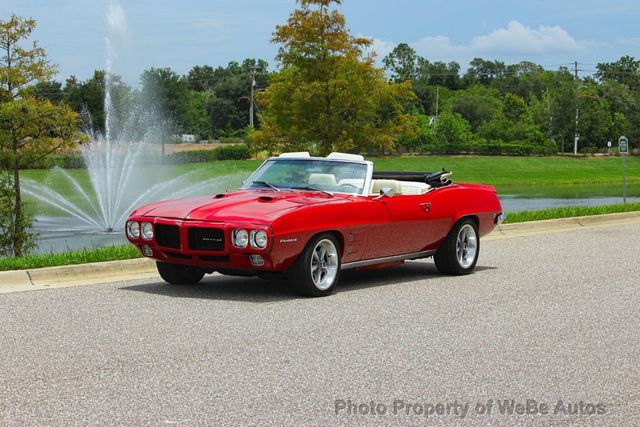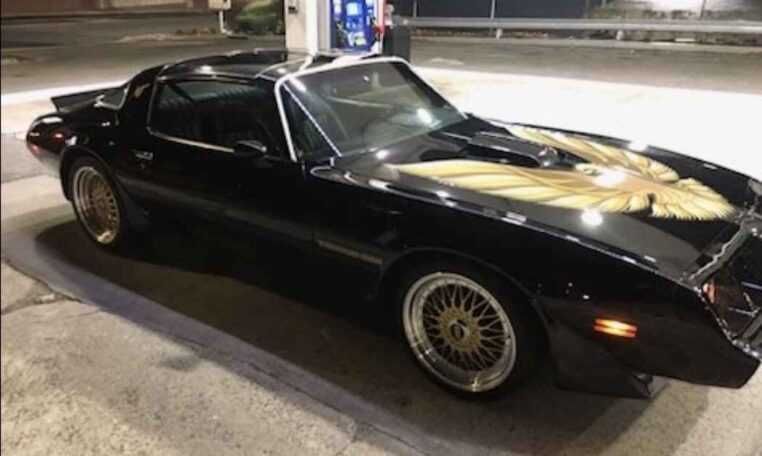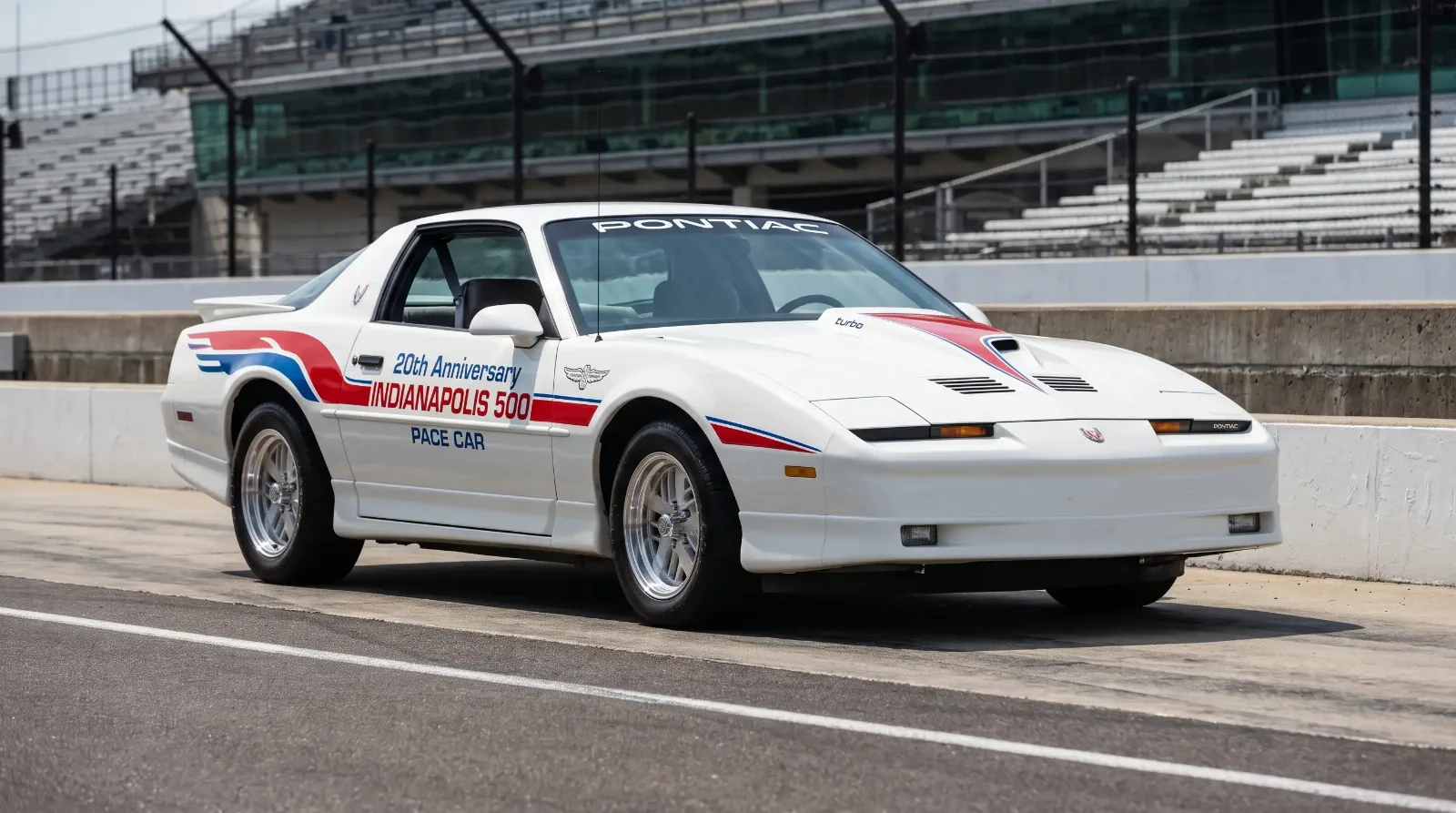
Production records and period press kits agree on one thing about the 1989 Turbo Trans Am: it was never meant to be a regular option on the order sheet. Pontiac built it to mark twenty years of the Trans Am nameplate and to put a Firebird at the front of the field for the 1989 Indianapolis 500, and the result was the fastest, most mechanically unusual Firebird of the entire Gen3 run.
An anniversary car built around a borrowed engine
Rather than developing a new engine from scratch, Pontiac's engineers reached across the GM family to Buick's turbocharged 3.8 liter V6, the same basic architecture that powered the Buick GNX and Grand National. Factory documentation lists the Firebird's version, badged LC2, at 250 horsepower and 340 lb-ft of torque, sent through a four-speed automatic transmission. That torque figure mattered more than the horsepower number on paper, since it arrived low in the rev range and gave the Turbo Trans Am a shove off the line that the small-block V8 Firebirds of the same year could not match.
The decision to use a turbocharged six instead of a V8 surprised plenty of Pontiac loyalists at the time, and some never fully made peace with it. But the numbers on a drag strip did the arguing for Pontiac, and the record from period magazine testing shows the Turbo Trans Am running with, and at times ahead of, V8-powered competition it was never expected to trouble.
Pace car duty at the Indianapolis 500
Twenty years earlier, the original 1969 Trans Am had launched alongside the nameplate's racing pedigree, and Pontiac wanted the anniversary car to carry a similarly public credential. The 1989 Turbo Trans Am was selected as the official pace car for the Indianapolis 500, and Pontiac built a run of anniversary cars finished in white with the commemorative Indy 500 graphics package available, though documentation and surviving cars show that not every anniversary Turbo Trans Am left the factory wearing the decals. Some buyers ordered the car without the graphics package, a detail that collectors and researchers still cross-reference against build sheets today.
Production totals for the 1989 Turbo Trans Am are consistently cited at 1,555 units, a figure that breaks down to 1,550 regular production cars plus five pilot-build units, a number small enough that surviving, well-documented examples carry genuine significance within the Firebird world, distinct from the far higher production runs of the standard V8 Trans Am the same year.
What made it different from every other 1989 Firebird
Beyond the drivetrain swap, the anniversary package brought specific badging, a unique white paint code, and interior trim details not shared with the standard Trans Am lineup. The turbocharged six required its own underhood layout, different from the TPI V8 cars covered in the 1980s Firebird engine lineage, and technicians working on these cars today need to understand that the maintenance procedures diverge meaningfully from a small-block Firebird of the same model year.
The car also carried a price premium reflecting its limited production and specialized engineering, positioning it above even the GTA in the 1989 order guide. That price, combined with the low production number, is part of why so few were bought as daily drivers and so many survive today in original or lightly modified condition.
| Specification | Detail |
|---|---|
| Engine | LC2 turbocharged 3.8L V6 |
| Horsepower | 250 hp |
| Torque | 340 lb-ft |
| Transmission | Four-speed automatic |
| Production | 1,555 units (1,550 production plus 5 pilot cars) |
| Role | 1989 Indianapolis 500 pace car commemorative |
Restoring and verifying a genuine example
The scarcity of the 1989 Turbo Trans Am has created a documentation problem that researchers deal with regularly. Because the anniversary package touched paint, badging, and interior trim rather than a single obvious component, verifying a car requires cross-referencing the VIN against factory build sheets, dealer invoices, and the original window sticker when one survives. A turbocharged LC2 engine alone is not proof of an original anniversary car, since engine swaps happened over three and a half decades of ownership, some done carelessly and some done by owners trying to correct a car that had lost its original drivetrain to a costly repair.
Parts availability is its own challenge. The turbocharged V6 shares some components with Buick's Grand National and GNX, which helps, but Firebird-specific pieces like the turbo hood with its offset scoop, the anniversary badging, and certain interior trim pieces were produced in small enough numbers that reproduction parts are limited and original take-off pieces command real money when they surface. Anyone researching a potential purchase should expect to spend as much time reading old service records as looking at the car itself.
The engine's turbocharged nature also means service procedures differ meaningfully from a naturally aspirated small-block Firebird. Boost-related components, the specific turbo oil feed and drain lines, and the electronic engine controls tied to boost management all require familiarity most general Firebird mechanics never had to develop, since so few of these cars ever came through a typical shop.
Its place in the Firebird record
Factory build documentation and dealer literature from 1989 treat this car as a distinct, standalone model rather than a trim level bolted onto the existing Trans Am, and that distinction still matters when researching a specific chassis today. Anyone assembling a full picture of the Gen3 era should read a related deep-dive on the Formula 350 that arrived around the same years, since the two cars represent opposite ends of Pontiac's late-1980s strategy, one chasing outright pace car credentials with a borrowed turbocharged six, the other refining the small-block V8 formula that had defined the Firebird since the 1970s. For the complete lineage connecting both approaches, the full Firebird story lays out how each generation built on the last.
"The build sheet doesn't lie, and neither does the production count. Fifteen hundred and fifty five cars is a small enough number that every one of them has a paper trail worth chasing down."
— Tom Ramirez
Sources and notes
- 1989 Pontiac Firebird Turbo Trans Am Specifications - TurboTransAm.com
- History of the 1989 Pontiac Firebird 20th Anniversary Turbo Trans Am Pace Car
- 0-60 in 4.6 Seconds: The 1989 Turbo Trans Am That Shocked America
- One Fast Bird: Looking Back At Pontiac's '89 Turbo Trans Am AE
- The Legendary 20th Anniversary 1989 Trans Am: A Pace Car with Power to Match
- 1989 Pontiac Turbo Trans Am - Pacing the Indy 500 race Unmodified