
There's a particular satisfaction in showing up to a cruise night in a car nobody expects much from and leaving with the parking lot bragging rights the flashier trims spent all night trying to earn. That's the Formula, and specifically the Formula 350, brought back into the Firebird lineup in 1987 after sitting out the early Gen3 years while Pontiac sorted out what the aero-bodied Firebird was going to be.
Car Features
6 min read
The Formula 350 Returns
Revived for 1987, the Formula 350 paired GTA-level 350 TPI performance and optional WS6 handling with an understated look, making it the Gen3 Firebird's quiet insider choice.
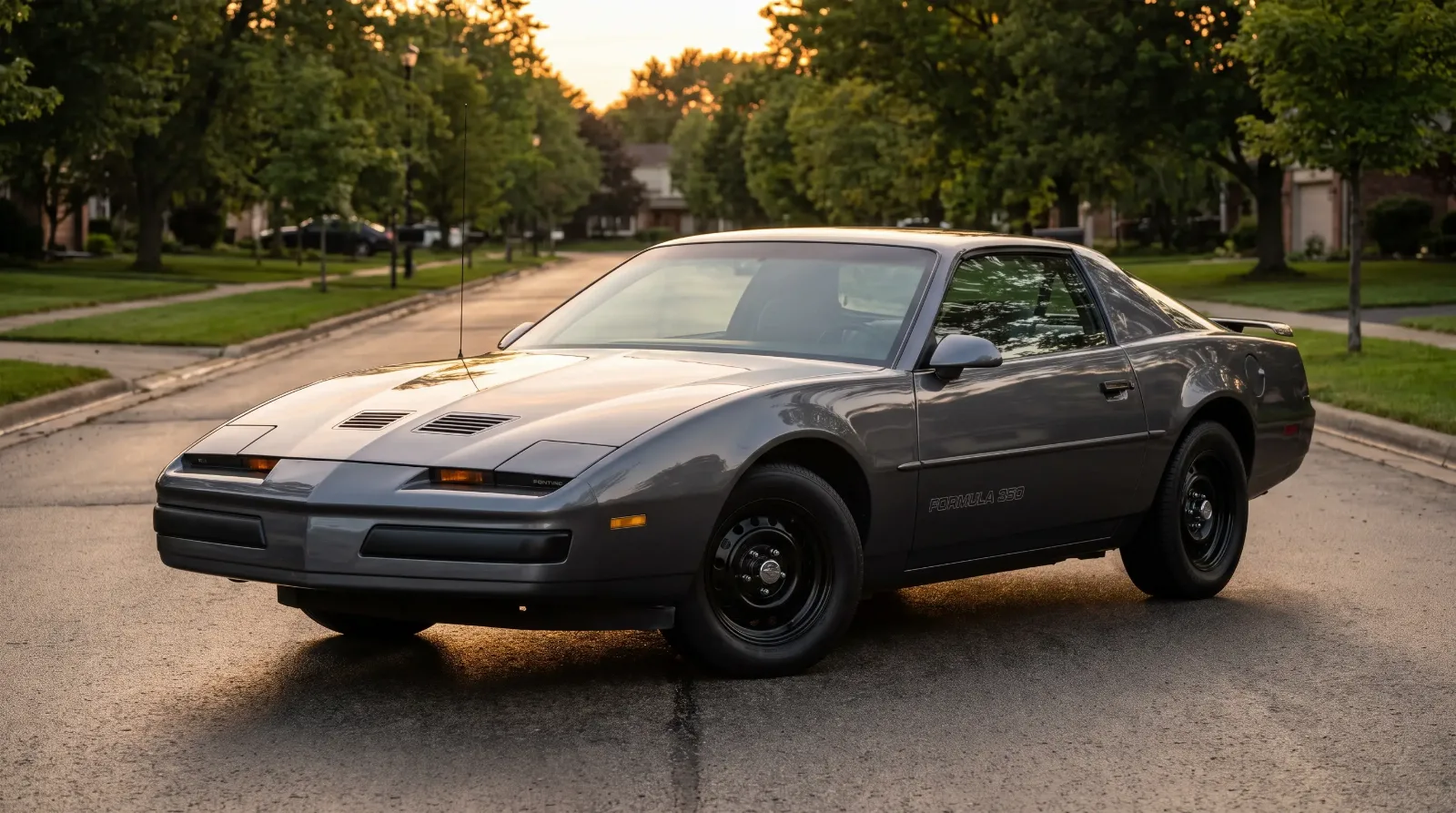
Bringing the Formula name back for Gen3
The Formula badge dated back to 1970, always positioned as the performance trim without the luxury trappings, and Pontiac revived it for 1987 as a middle ground between the base Firebird and the increasingly dressed-up Trans Am and GTA covered in the aero Firebird era feature. Where the GTA wrapped its performance in color-keyed cladding and leather, the Formula kept things plain. Body-color trim was minimal, the badging was understated, and buyers who wanted the wheels without the flash could even option a Formula with steel wheels instead of the flashier aluminum designs, a combination that confuses plenty of people encountering one for the first time.
That restraint was the whole point. Pontiac built the Formula for the buyer who wanted the mechanical substance of the Trans Am without paying for, or advertising, the image that came attached to it.
The 350 arrives and changes the equation
For its early Gen3 years the Formula ran with the same 305 Tuned Port Injection engine available across the lineup, but the 350 TPI option, first offered in the GTA and Trans Am, eventually made its way into the Formula as well in the final years of Gen3 production. That combination, the 350's stronger torque curve dropped into a car that weighed about the same as the base Trans Am but carried less badge premium, made the Formula 350 something of an open secret among people who cared more about the drive than the reputation.
Horsepower figures for the Formula 350 tracked closely with the GTA's own 350 TPI numbers, landing in the 230 to 240 horsepower range depending on model year, with torque figures around 335 to 340 lb-ft. On paper the Formula gave up nothing to its more expensive stablemates. What it gave up was the badge, and for a certain kind of buyer that was the appeal, not the drawback.
WS6 and the Formula's handling case
The WS6 suspension package, standard on the GTA, remained optional on the Formula, which meant a careful buyer could spec a Formula 350 with the same firmer springs, larger anti-roll bars, and specific shock valving found on the flagship trim, while skipping the leather interior and body cladding entirely. That option sheet flexibility is a big part of why the Formula built a loyal following among people who understood exactly what they were buying rather than shopping by trim name alone.
A well-optioned Formula 350 with WS6 could match a GTA through a corner and undercut it meaningfully on price, a fact that period buyers, and today's collectors, both recognize even if the general public still reaches for the more famous badges first.
| Feature | Formula 350 | GTA (same years) |
|---|---|---|
| Engine | 350 TPI, 230 to 240 hp | 350 TPI, 230 to 240 hp |
| Suspension | WS6 optional | WS6 standard |
| Body cladding | Minimal, understated | Full color-keyed cladding |
| Wheels | Steel or aluminum options | Unique alloy design |
Spotting a genuine Formula 350 at a show
Because the Formula never carried the same badge premium as the GTA or the Trans Am, fewer people bothered documenting exactly which options a given car left the factory with, and that has created real headaches for anyone trying to verify a car decades later. The RPO codes on the factory build sheet remain the only reliable way to confirm whether a Formula actually left the assembly line with the 350 TPI, the WS6 package, or both, since owners over the years swapped engines and suspension components with a casualness the more collectible trims rarely saw.
Wheel choice adds another layer to the puzzle. A Formula ordered with steel wheels from the factory sometimes had those wheels replaced with the more desirable aluminum design somewhere along its ownership history, either for looks or because the original wheels were damaged. That swap does not change the car's mechanical identity, but it does mean a savvy buyer checks the build sheet rather than assuming the wheels on the car today tell the whole story.
The interior tells its own tale as well. Formula cabins skipped the leather and the extra brightwork the GTA carried standard, sticking with cloth or vinyl seating and a simpler dash treatment. A Formula with a later-added leather interior swapped in from a GTA parts car is not unheard of, and it is exactly the kind of detail a documentation-minded buyer should ask about directly rather than assume from a glance.
The Formula's reputation among today's buyers
Ask around a swap meet about which Gen3 Firebird represents the best value and the Formula 350 comes up more often than casual fans would expect. It carries less of the badge premium that inflates GTA and Turbo Trans Am prices, while offering nearly identical mechanical substance for buyers focused on the drive rather than the trim level's reputation. That's part of why a well-documented Formula 350, particularly one optioned with WS6, has quietly become one of the more sought after Gen3 configurations among people who know the lineup in detail rather than judging by name recognition alone. Those looking to understand how the Formula fits alongside the WS6-equipped cars of the same era should read a related deep-dive covering that suspension package across the whole Gen3 lineup.
"Nobody buys a Formula to be noticed at a red light. They buy it because they already know what's under the hood and they don't need anyone else to."
Wayne Coburn
Sources and notes
- Pontiac Firebird (third generation) - Wikipedia
- 1987-1992 Pontiac Firebird/Trans Am Formula - Motogallery Automotive Resource Guide
- 1987-1992 Pontiac Firebird Formula 350 - Old Car Memories
- 91 Formula Technical - 3rdGenFormula.com
- Factory horsepower ratings for the TPI Firebirds - ThirdGen.org
- 1992 Pontiac Firebird - Hagerty Valuation Tools
Related Reading
Have a
Pontiac Firebird
for Sale?
Reach thousands of serious classic car collectors across the US.
Sell It Here →
Are You a Classic Car Dealer?
List your full inventory and connect with targeted classic car buyers.
Join as a Dealer →

About the author
Wayne Coburn
Longtime Corvette owner, judge and club figure who knows the cars, the records and the people behind them.
Related Listings - Pontiac Firebird
Comments
Be the first to comment on this article.