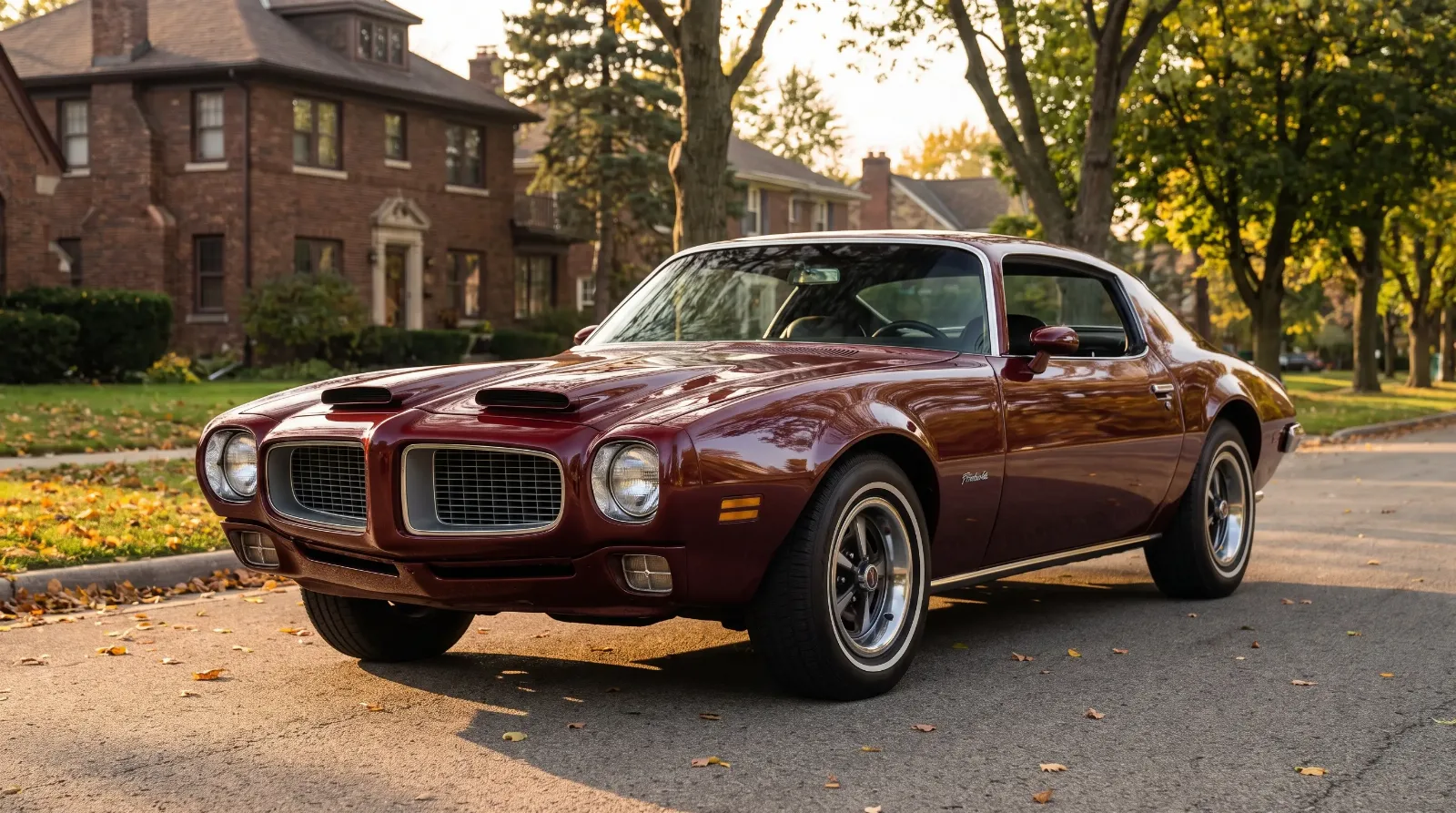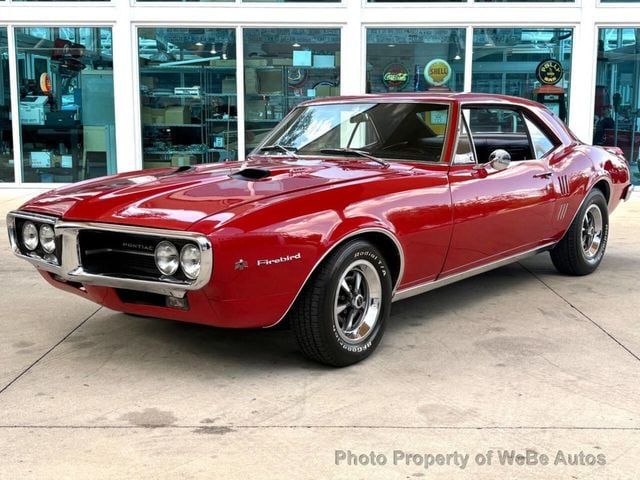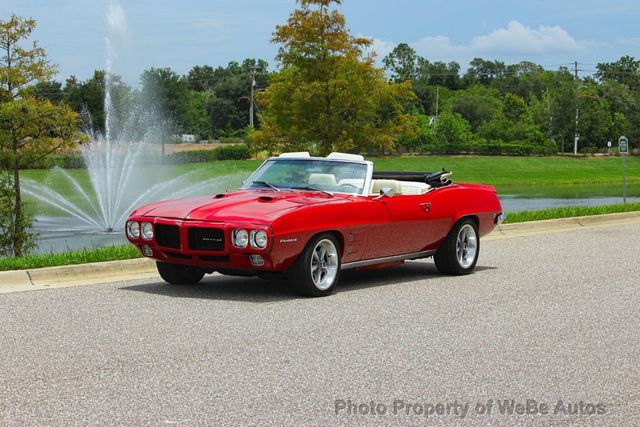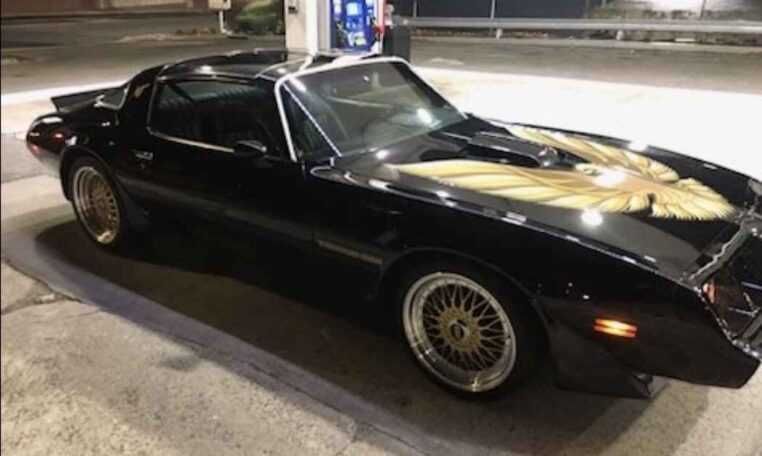
The Pontiac Firebird Formula never wore the big screaming chicken. That decal belonged to the Trans Am, and if you're looking at a Formula with a giant bird spread across the hood, somebody added it after the fact. The Formula's real identity was quieter: functional hood scoops, careful formula stripes, and a personality built for guys who wanted the drivetrain without the show-car flash. I have pulled tape and decals off more Formulas than I can count, and most of the confusion buyers bring me starts right here, with what stripe belongs on what car.
Why the Formula never got the hood bird
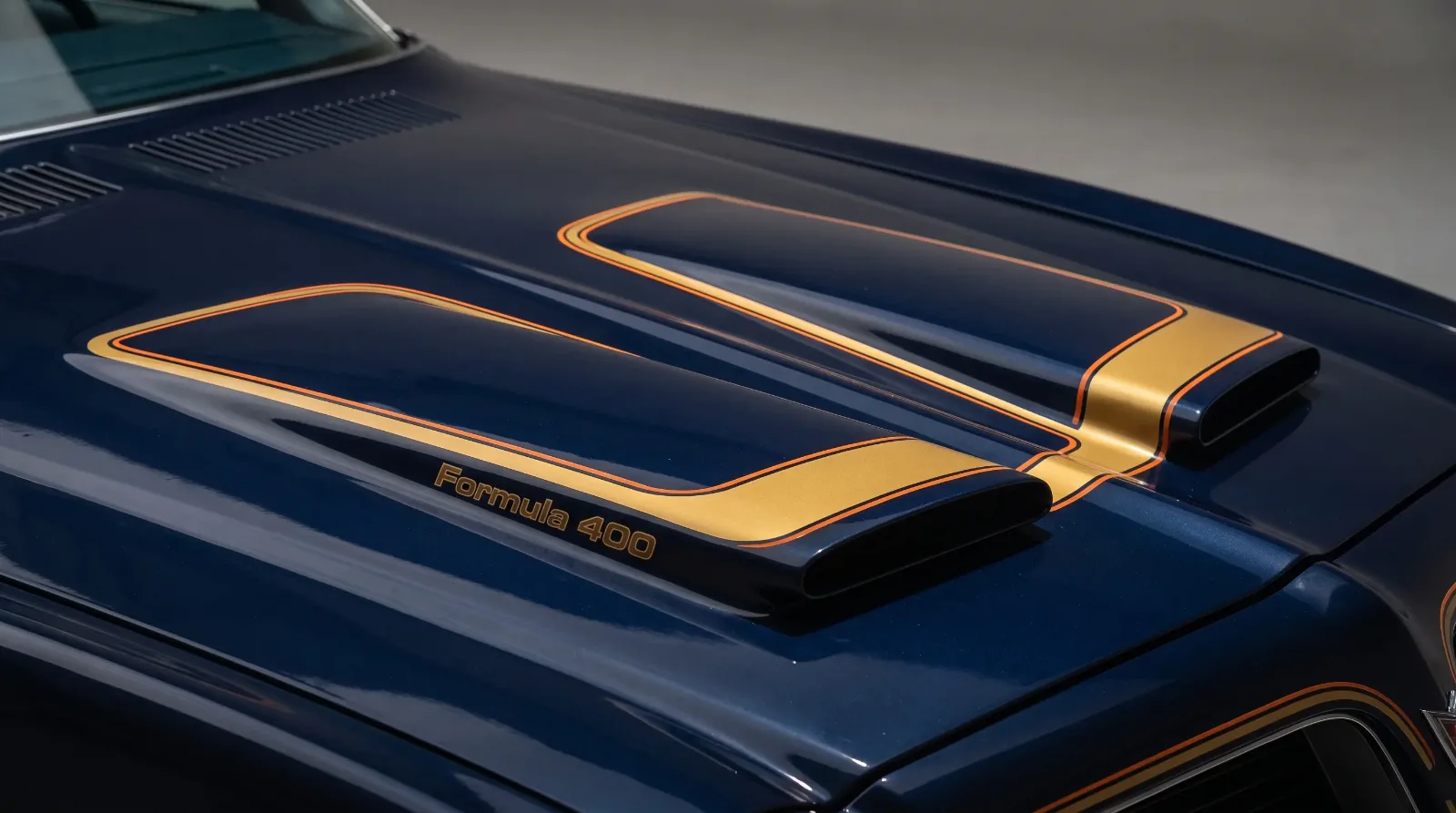
Pontiac split its Firebird lineup on purpose. The Trans Am was the image car, the one with the giant hood decal starting in 1973 and the spoilers and the attitude. The Formula sat one rung down in price and one rung up in restraint. Its calling card was the twin-scoop hood, a piece of sheet metal shaped different from every other Firebird, and under it the same big-inch engines the Trans Am offered. Pontiac did not need a hood graphic to sell that car. The scoops did the talking.
That distinction matters when you are shopping. A Formula with a bird decal is either a tribute build or a car somebody dressed up to look pricier than it is. Neither is a crime, but the seller owes you the truth, and the sticker on the hood is not proof of anything factory.
The stripe and decal packages, year by year
Second-generation Formulas, 1970 through 1981, ran through several stripe treatments as Pontiac tweaked the car's graphics almost annually. Early 1970 to 1972 cars kept things simple: body-color scoops, small "Formula" script on the front fenders, and optional lower body accent stripes that ran the length of the rocker panels. By the mid-1970s Pontiac added the W50 stripe package as a factory option, which brought bolder decal treatments to the hood scoops themselves, usually calling out displacement, "Formula 350," "Formula 400," or later "6.6 Litre" once emissions rules shrank the big-block choices.
Late-decade cars, 1977 to 1979, leaned into decal size the way the whole industry did during that stripe-happy era. The scoops carried larger graphics, and Pontiac offered multiple colorways depending on the base paint. None of it matched the Trans Am's screaming chicken in scale, and that is the tell I use when a car is presented as more special than it is. If you want the story behind why the Formula existed as the sleeper Firebird in the first place, that piece covers the positioning Pontiac was chasing.
| Years | Typical stripe/decal treatment | Notes |
|---|---|---|
| 1970-1972 | Fender "Formula" script, optional lower body stripe | Simplest graphics of the run |
| 1973-1976 | W50 stripe package, hood scoop displacement callouts | 350 was the standard Formula engine by 1976, with the 400 offered as an option |
| 1977-1979 | Larger scoop decals, "6.6 Litre" callouts on 400/403 cars | Matches era-wide decal inflation |
| 1980-1981 | Revised nose, updated stripe graphics | Final second-gen Formula years |
Colors that actually suited the car
Formula buyers in period skewed toward colors that hid the working-class intent: Cameo White, Brewster Green, Carousel Red, and a run of blues Pontiac cycled through the mid-1970s. Dark colors show scoop seams and decal edges better, which is part of why restorers gravitate toward black and dark blue Formulas for show duty even though period buyers often picked lighter shades for a daily driver. I have never bought into the idea that one factory color is worth chasing over another for value's sake. Buy the drivetrain and the sheet metal. The paint code is a preference, not a investment thesis.
Reading the decals to spot a repaint or a reproduction
Decal edges tell you almost everything. Factory-applied stripes from the 1970s have a slightly rounded edge from the application tooling of the era, and they sit under the clear on original paint, not on top of it. Reproduction stripe kits sold today are good, some are excellent, but they go on over finished paint, so you will feel a slight lip at the edge with your fingernail on a repaint job. That is not a deal breaker on a driver-quality car. It is a problem if someone is charging concours money for decals that were never done to concours standard.
I always tell customers the same thing: check the cowl tag and the fender tag against the stripe package before you trust the paperwork on any Formula. Decals lie. Metal does not. If you want a related deep-dive into how Pontiac dressed up its big-inch Firebirds mechanically rather than cosmetically, a related deep-dive covers the engine side of that story.
"Buyers get hung up on stripes because stripes are what they see first. I get hung up on stripes because they are the easiest thing on the car to fake."
— Mike Sullivan
What restorers get wrong when refreshing stripes
Most of the mistakes I see on refreshed cars are not malicious, they are just rushed. A shop pulls up a generic online photo of a "Formula stripe kit," matches it loosely to the customer's car, and applies whatever ships fastest. That is how you end up with a 1975 body wearing a stripe width that belongs on a 1978 car, or a color combination that never left the factory in that pairing. It looks fine to a casual eye and wrong to anyone who has actually studied the brochures.
The fix is not complicated. Pull the build sheet or cowl tag before ordering a stripe kit, confirm the model year's actual factory option, and only then call a supplier. It costs nothing extra to get it right, and it saves you from redoing the paint booth work a second time once somebody at a car show points out the mismatch. I would rather spend an extra hour on research than an extra weekend pulling tape off a car I just finished.
The other common mistake is skipping the fender script entirely because a stripe kit did not include it. The small "Formula" lettering on the front fenders is part of the factory look for most years, not an optional flourish, and a car missing it looks unfinished even with otherwise correct hood graphics.
If you are hunting a real one, start with the drivetrain and the tags, then worry about whether the stripe kit matches the brochure photo. There are plenty of Firebird Formulas for sale out there wearing decals that do not match their build sheet, and the sellers are not always the ones who put them there. Do your own homework before you write a check.
Sources and notes
- Hagerty Media, original-owner 1971 Firebird Formula profile
- Heacock Classic, 1970 Pontiac Formula 400 history
- Pontiac Trans Am Forum, 1970 Firebird 400 Ram Air history
- Firebird Nation, cowl tag decoding reference
- birdfire.com, Pontiac Firebird Formula/Trans Am RPO codes 1970-1981
- Wikipedia, Pontiac Firebird