
Say "Firebird 400 HO" to somebody who has actually owned one and you will get a specific answer, not a vague one. This was the engine that turned the first-generation Firebird from a Mustang answer into something that could embarrass a GTO owner who did not check his mirrors. Pontiac built the HO around the same 400 cubic inch block the division used everywhere else, then leaned on cam timing and breathing to get more out of it without touching the bore or stroke. I have torn down a handful of these over the years, and the story under the valve covers is more interesting than the badge on the fender.
Car Features
6 min read
The Firebird 400 HO: Pontiac's Practical High-Output Muscle Engine
The Firebird 400 HO gave buyers GTO-level performance without the GTO badge. Here is what the High Output engine actually changed, and what to check before you buy one.
What HO actually meant on a 400
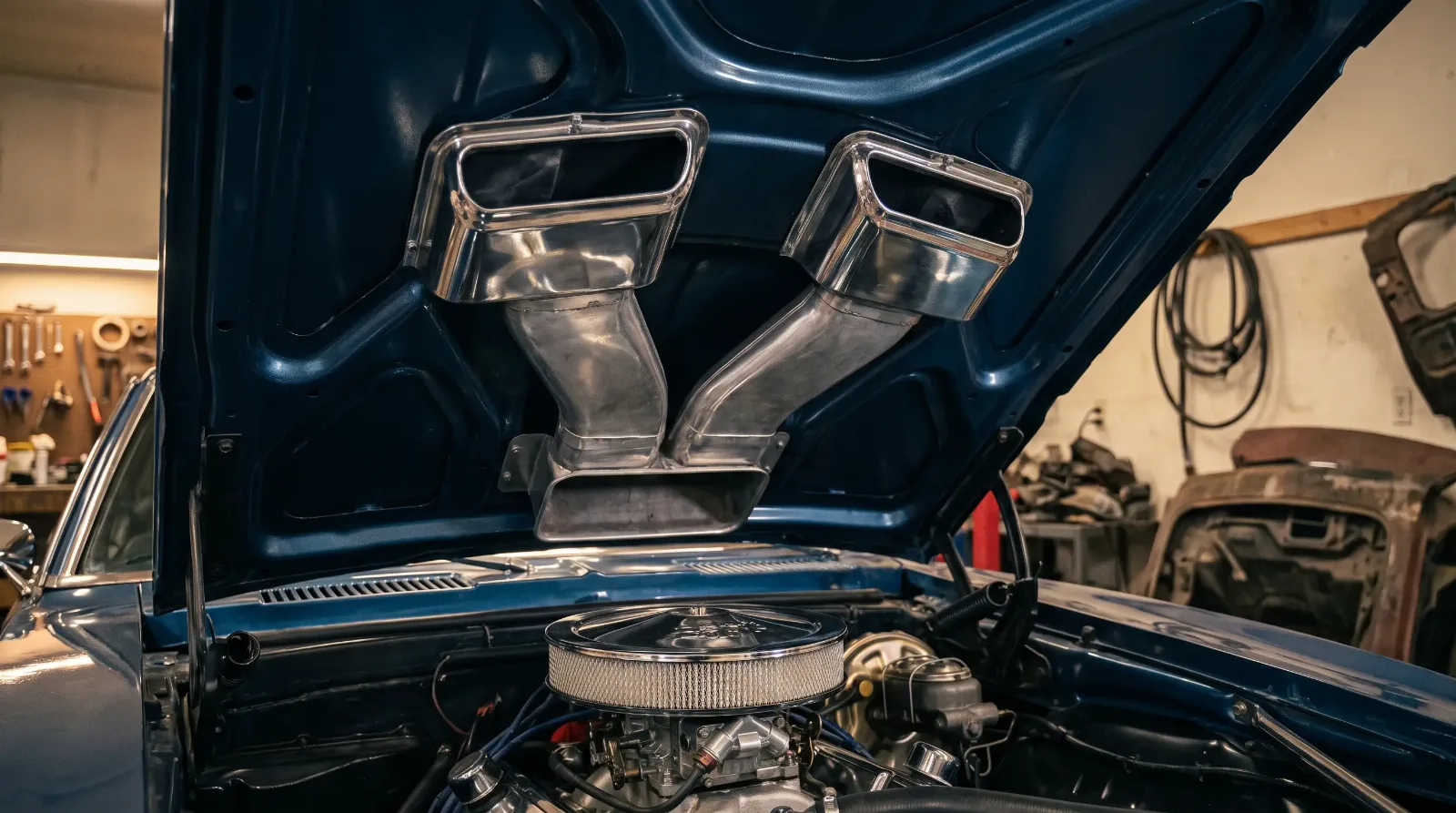
HO stood for High Output, and on the Firebird it was Pontiac's way of offering GTO-level performance without building a whole separate model. The 400 HO used a more aggressive camshaft than the standard 400, along with different valve springs and, depending on the year, a different carburetor and exhaust manifold setup. Compression stayed in the same neighborhood as other 400 variants, so the gains came from breathing and cam timing rather than a static compression bump. Pontiac rated the 1968 Firebird 400 HO at 335 horsepower, five ponies above the base 400's 330, a number that sat comfortably above the base engine's output while stopping short of the Ram Air variants that came later in the run.
The HO was never meant to be the top dog. Ram Air II and Ram Air IV heads, when they arrived, pushed further into serious performance territory. The HO was the practical high performance option, the one a buyer picked when he wanted real power without chasing the last few percent of a Ram Air build.
Ram Air options and how they layered on top
Where things get confusing is the overlap between HO and Ram Air. Pontiac offered functional Ram Air induction as a separate option on top of certain 400 configurations, meaning a car could be both an HO-spec engine and a Ram Air car depending on order sheet choices. The functional hood scoops fed cool outside air to the carburetor rather than hot underhood air, which is a real gain on a warm day even if the horsepower number on paper does not move much. Buyers chasing documentation should not assume "HO" and "Ram Air" are interchangeable terms. They describe different parts of the same order sheet, and a correct restoration needs both call-outs to match.
| Configuration | Approx. rating | Notes |
|---|---|---|
| Standard 400 (1968-69) | 330 hp | Base performance engine |
| 400 HO | 335 hp | Hotter cam, different valve springs |
| Ram Air II | 340 hp | Revised heads, functional induction |
| Ram Air IV | 345 hp (Firebird/Trans Am rating) | Round-port heads, most aggressive cam |
Those numbers moved during the model years themselves, since Pontiac revised several ratings as heads and cams changed, and I would rather flag that honestly than hand you a number I cannot back with a build sheet. If you are cross-shopping engine tiers, the next story in this set gets into how many of these higher-output cars actually left the factory, which tells you a lot about what you are likely to run across in the real world.
What breaks and what to check before you buy
These engines are sixty-some years old now regardless of trim, so the usual suspects apply: rust in the oil pan rails, a timing chain that has stretched past spec, and valve seals that leak once the car sits for a season. The HO's hotter cam means a rougher idle than a base 400, which is normal and not a symptom of a problem. What is a problem is a seller who cannot produce documentation tying the engine to the car. Numbers-matching HO Firebirds carry a real premium, and a period-correct but non-original 400 dropped in later is a completely different purchase even if it runs the same on a test drive.
Check the block casting number and date code against the car's build date before you accept anyone's word on originality. I have seen good, honest 400 blocks from a donor car presented as numbers-matching HO engines because nobody thought to check. Ask, verify, then negotiate.
Carburetor and intake originality matters too, and it gets overlooked more than it should. A correct HO build ran specific jetting and a specific intake casting to match the cam profile, and a mismatched carburetor from a later emissions-era 400 will make the engine run rough in a way that has nothing to do with age or wear. If a seller tells you the car "just needs a tune," ask what parts are actually on it before you believe that diagnosis. Sometimes a rough-running HO is a correct HO that needs a proper carburetor rebuild. Sometimes it is a car wearing parts that were never meant to work together.
Where the HO fits in the bigger Firebird picture
The 400 HO is one chapter in a longer story about how Pontiac used the same basic Firebird body to offer everything from a mild six-cylinder commuter to a genuine street brawler. If you want the full arc, from base cars up through the performance-focused Formula and Trans Am trims, the full Firebird story lays out how the lineup evolved year to year. The HO's own closest relative in spirit is the sleeper Firebird, the Formula trim that carried the same big-inch philosophy into the next generation of the car.
"An HO badge on the fender does not mean anything until the block casting number backs it up. I have seen plenty of honest engines wearing a story that was not theirs."
Mike Sullivan
If you are shopping this generation seriously, treat the paperwork with the same respect you give the compression test. There are plenty of Firebird Formulas for sale and period big-block Firebirds on the market wearing engine badges that do not match what is actually under the hood, and the only way to know for sure is to check the numbers yourself.
Sources and notes
- 1968 Pontiac Firebird 400: A Profile of a Muscle Car - HowStuffWorks
- 1968 Pontiac Firebird Convertible 400 HO Ram Air II Specs - automobile-catalog.com
- 1968 Pontiac Firebird Ram Air II - Silodrome
- 1969 Pontiac Firebird Ram Air IV Power and Performance - Gold Eagle Co
- Pontiac V8 engine - Wikipedia
- 1968 Pontiac Firebird Fact Sheet - Over-Drive Magazine
Related Reading
Have a
Pontiac Firebird
for Sale?
Reach thousands of serious classic car collectors across the US.
Sell It Here →
Are You a Classic Car Dealer?
List your full inventory and connect with targeted classic car buyers.
Join as a Dealer →

About the author
Mike Sullivan
Detroit-area muscle car enthusiast and restoration specialist with three decades of hands-on experience working on American iron.
Related Listings - Pontiac Firebird


Comments
Be the first to comment on this article.