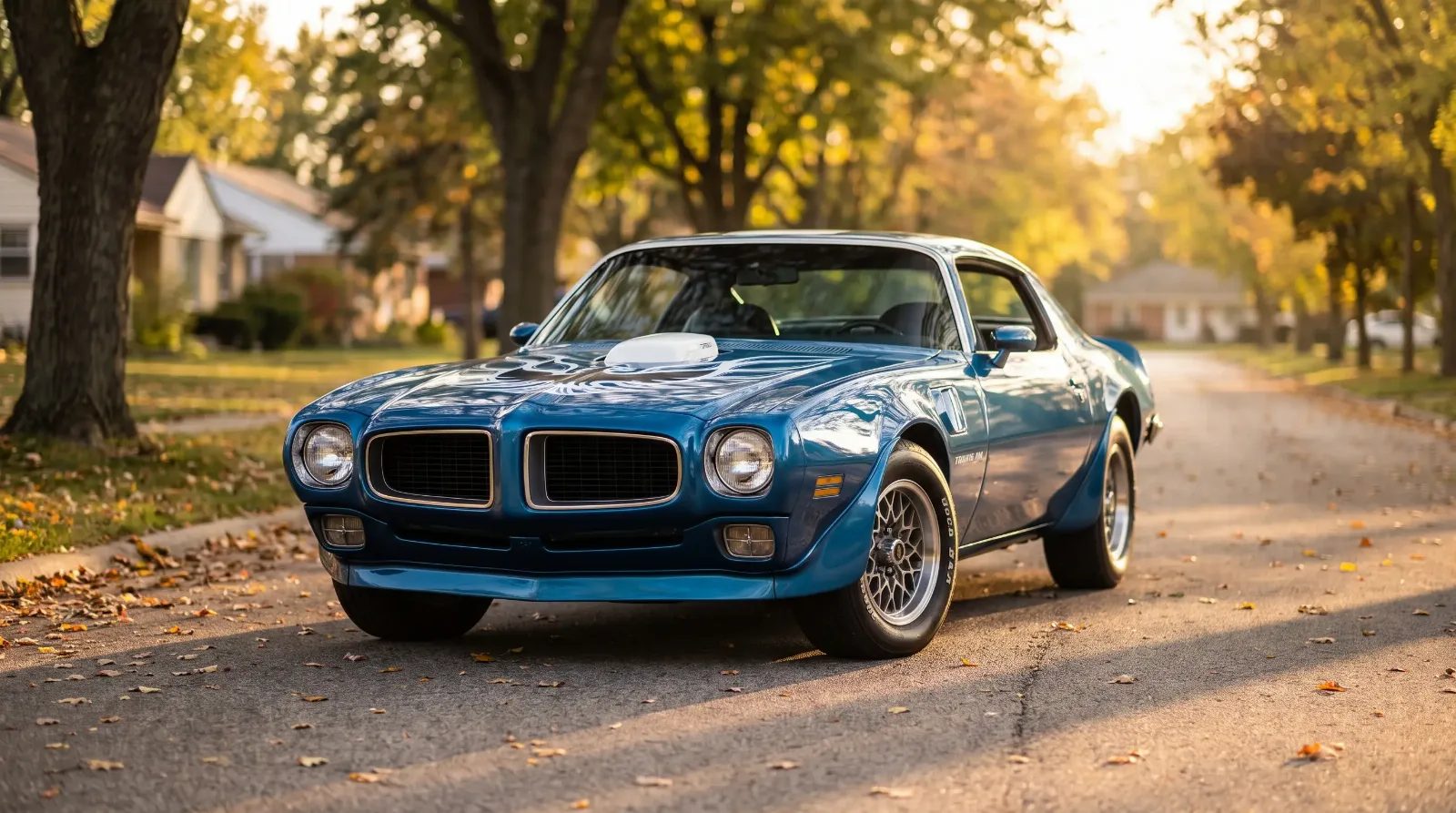
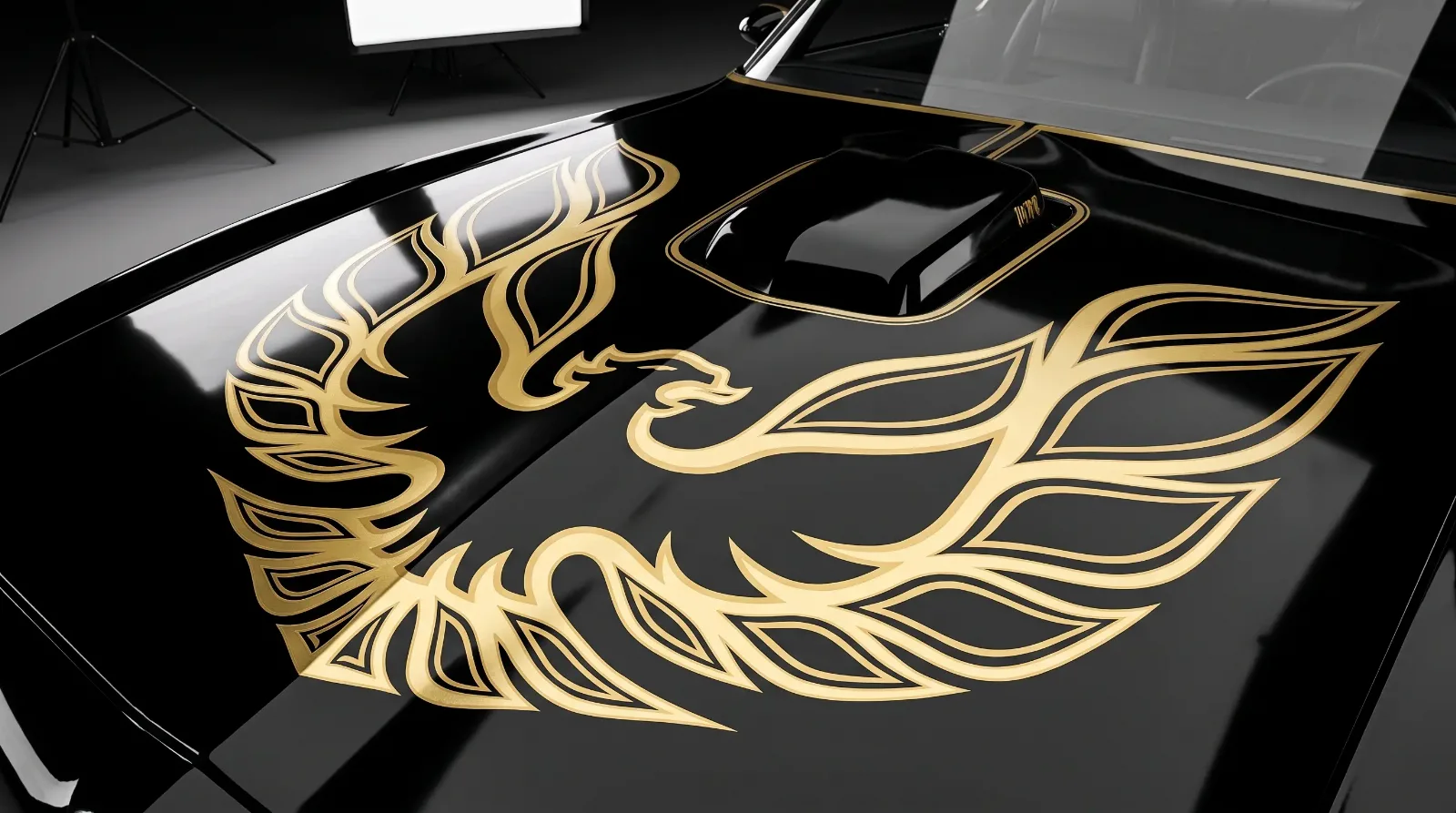
No option on any second-gen Firebird gets more attention at a car show than a hood decal that doesn't do a single thing for horsepower or handling. The firebird screaming chicken decal is pure image, and it worked so well that most people who've never owned a Trans Am in their life could still describe it from memory. I've had customers ask me to source a replacement decal before they've asked me to check the engine. That tells you something about what this option actually sold.
Where the bird came from
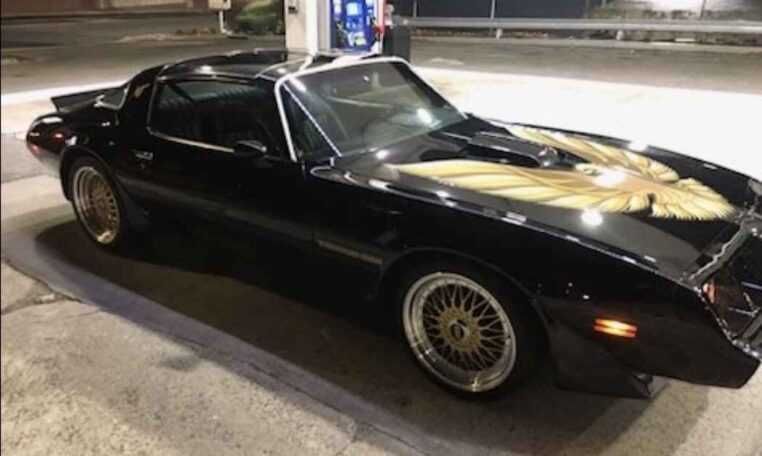
The bird's roots go back further than most people assume. Designer Norm Inouye first sketched a version of the spread-wing firebird in 1970 at the request of studio chief Bill Porter, and an early take appeared on the 1969 Banshee II concept before a toned-down version rode the nose of 1970-72 Trans Ams. GM design chief Bill Mitchell reportedly disliked the full hood-graphic idea and shelved it for two years. Designer John Schinella took over the Firebird studio in 1971 and, working with Bill Davis, refined the concept into the full-hood decal Pontiac introduced on the 1973 Trans Am as option code WW7, priced at $55. It stuck around, in various forms, through the end of second-gen production in 1981. The result was a full-hood graphic of a firebird with its wings spread, rendered in gold on black cars and in contrasting colors on others depending on the model year and paint scheme.
It wasn't universally loved when new. Some buyers thought it was gaudy, and GM's own design chief needed convincing before the concept ever reached a hood. Pontiac offered a delete option in certain years for buyers who wanted the Trans Am's mechanical package without the hood art, and those decal-delete cars exist, though they're a minority of the production run.
What it actually is
The decal wasn't a static design across the whole second-gen run. Pontiac revised the artwork more than once between 1973 and 1981, changing the bird's pose, color treatment, and how far it spread across the hood. Later years, especially into the early 1980s, saw a more stylized, angular version replace the earlier rounded artwork. Color combinations tracked exterior paint to some degree, with gold-on-black being the combination most people picture when they hear "screaming chicken," largely because of how visible that specific pairing was in period advertising and, later, in film.
| Era | General look | Notes |
|---|---|---|
| 1973-1976 | Rounded, spread-wing bird | Gold-on-black most iconic pairing |
| 1977-1978 | Similar pose, refined detailing | Peak cultural visibility era |
| 1979-1981 | More angular, stylized rework | Final second-gen artwork before a 3-year hiatus |
The Bandit effect
The decal's reputation is inseparable from a single black-and-gold Trans Am and a movie about running moonshine past a sheriff. Smokey and the Bandit put a screaming-chicken Trans Am on screens across the country in 1977, and the car became as recognizable as the actors driving it. Pontiac's own sales numbers for Trans Am jumped in the years following that film's release: from 46,701 in 1976 to 68,745 in 1977, then to roughly 93,000 in 1978 and a record 117,108 in 1979, and dealers leaned hard into the black-and-gold Special Edition look that matched what audiences had just watched on screen. Nobody in this hobby argues that the movie didn't move Trans Am off dealer lots.
That cultural moment is also why reproduction decals are such a steady business forty-plus years later. People aren't just restoring a car. A lot of them are restoring a specific memory of a movie poster.
Why some buyers deleted it
Not every original buyer wanted to drive around with a giant bird on the hood. The decal-delete option existed for people who wanted the gen2 Firebird's performance hardware without inviting the attention that came with it, whether for personal taste or simply to keep a lower profile behind the wheel. Decal-delete Trans Ams are a genuine, factory-documented variant, not a customer having removed it later, and they're worth recognizing as such rather than assuming every plain-hooded Trans Am has just lost its decal to age or a repaint.
"I've had guys ask me to peel a bad repro decal off a car that never wore one from the factory. Check the build sheet before you assume every Trans Am is supposed to have the bird. Some of the coolest ones on the road never did."
— Mike Sullivan
Buying one today: decal condition and authenticity
If you're shopping a decal-equipped car, look at the edges first. A properly applied decal, whether original or a quality reproduction, should show clean edges with no lifting, no bubbling, and consistent color saturation across the whole graphic, especially where the hood curves. Sun-faded gold turning brassy or chalky is common on original decals that were never replaced, and it's not necessarily a flaw, it's evidence the car hasn't been re-decaled with a modern reproduction. Cracked or peeling edges near the leading edge of the hood, where stone chips and heat cycling do the most damage, are the first place I check.
For a companion piece on another option that defines the same era of Trans Am, and for the bigger picture on how this car got its reputation, read Pontiac's Firebird history. If you're actually in the market, start browsing classic Firebirds for sale and use the decal as one data point among many, not the whole story.
Sources and notes
- The History of the Pontiac Trans Am Hood Bird - Classic Industries
- What Kind of Bird Is Pontiac's Famous Firebird Logo Supposed to Be? - SlashGear
- The History Behind the Iconic Hood Decal - Blue Water Auto Restoration
- Smokey and the Bandit Propelled Pontiac's Trans Am to Stardom and Sales - Hagerty UK
- How Smokey and the Bandit Made the Trans Am an Icon - Carsforsale.com
- Screaming Chicken option history discussion - Third Generation F-Body Message Boards