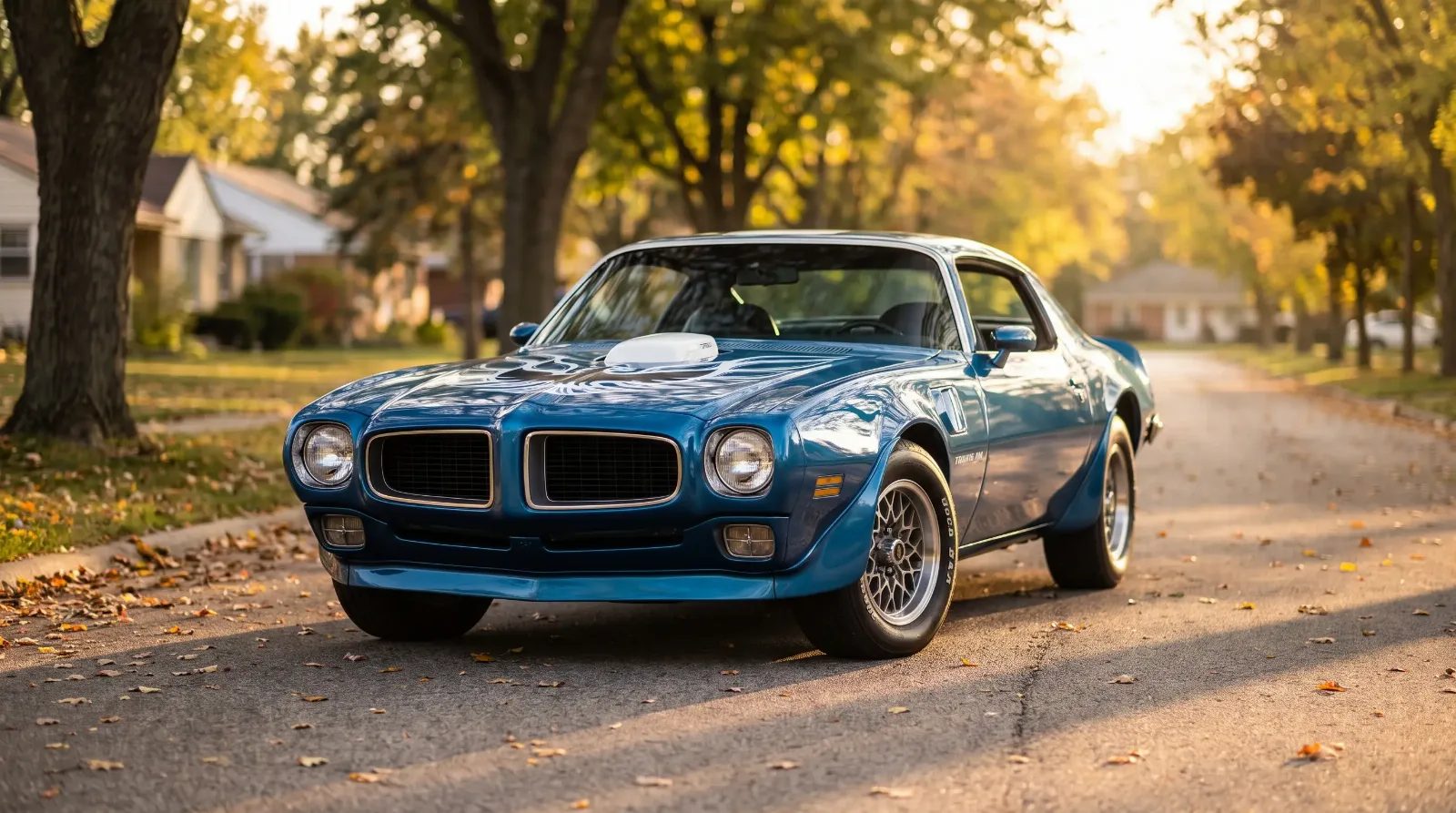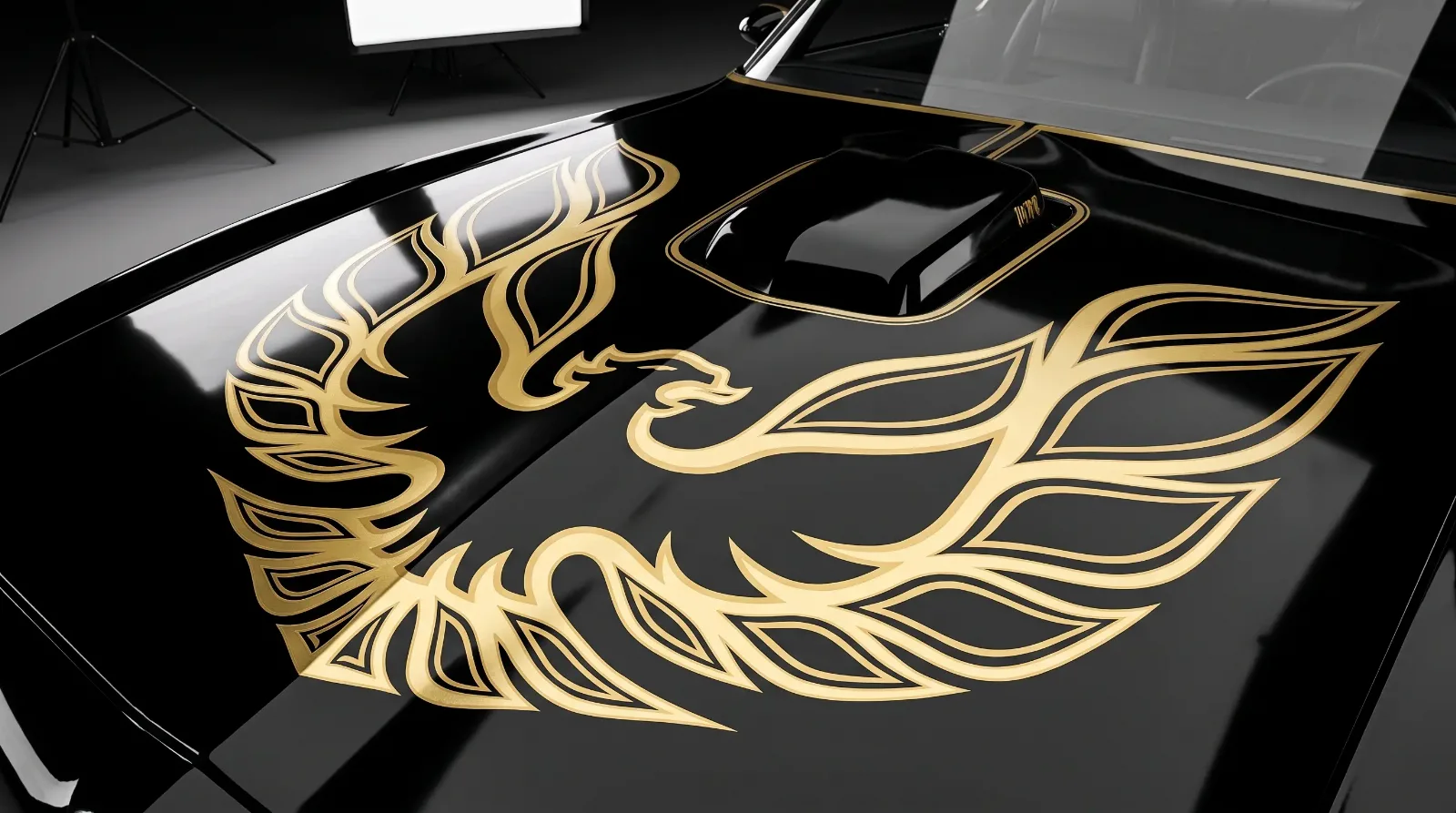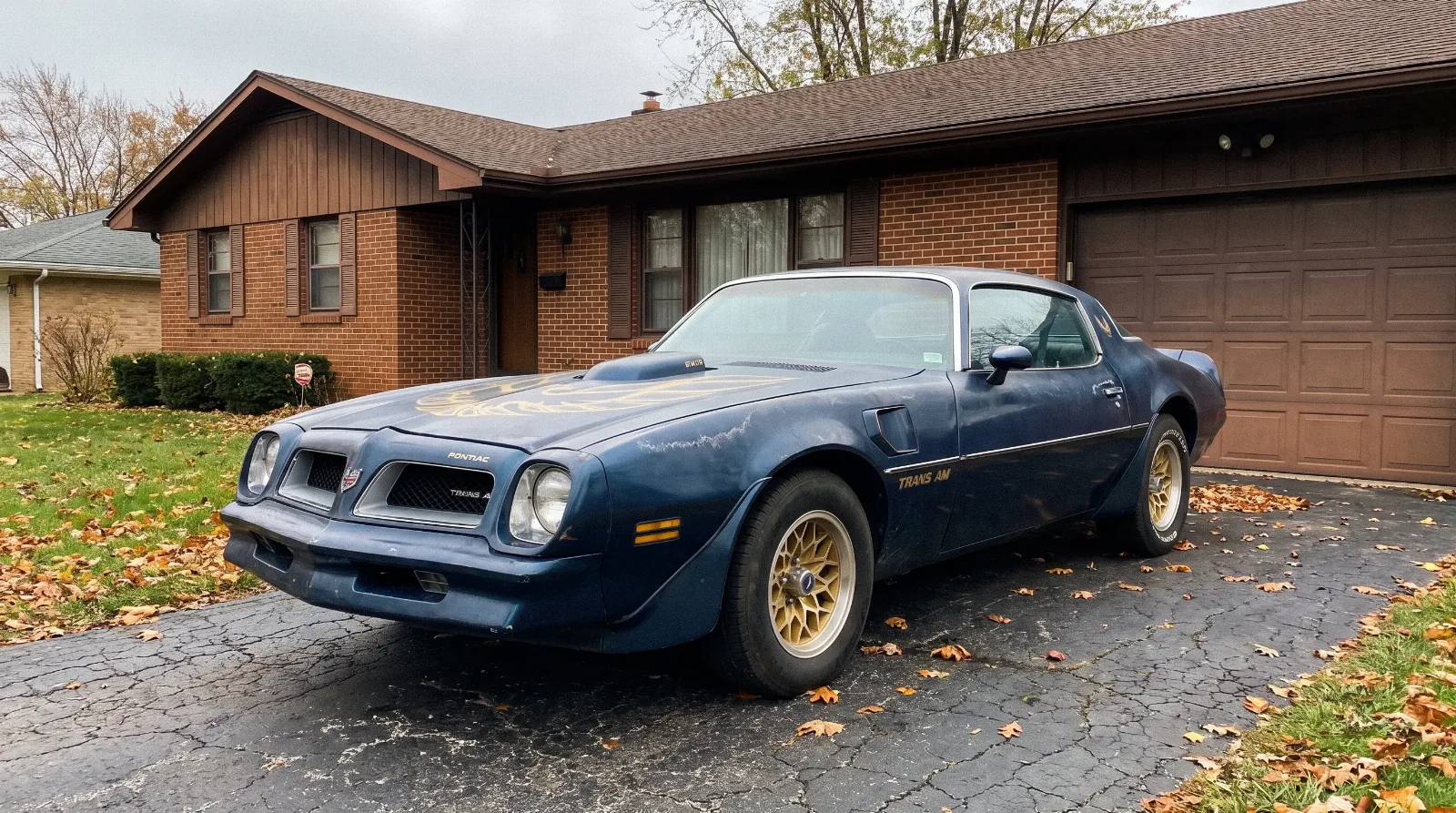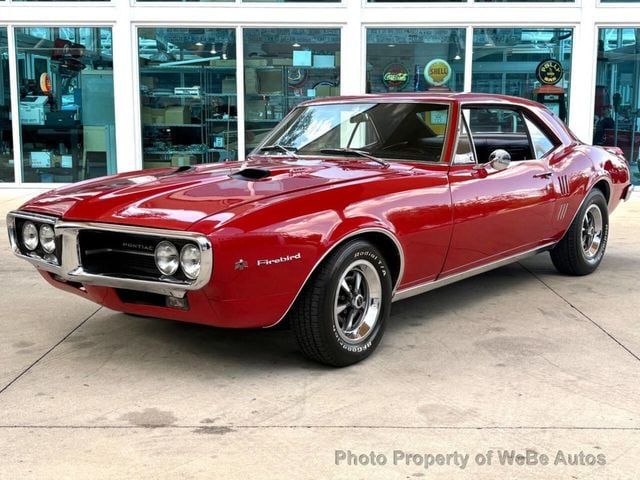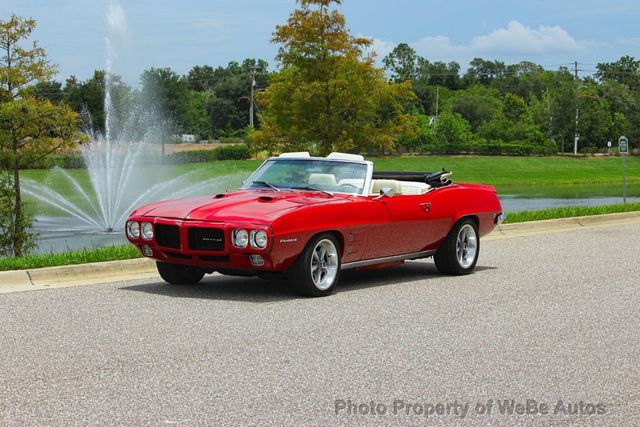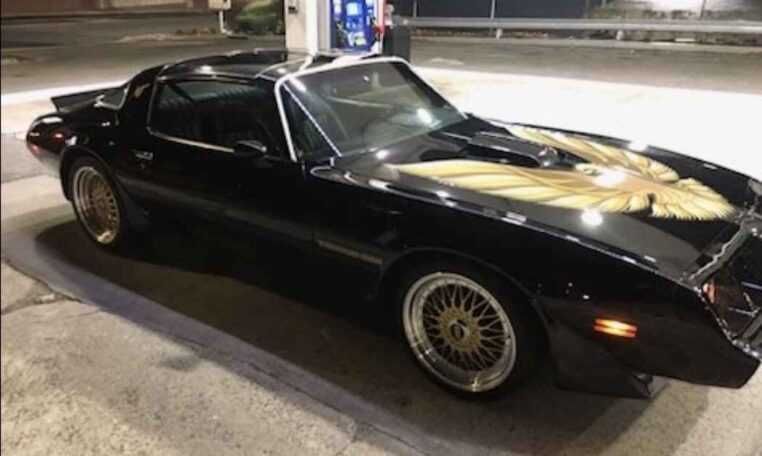
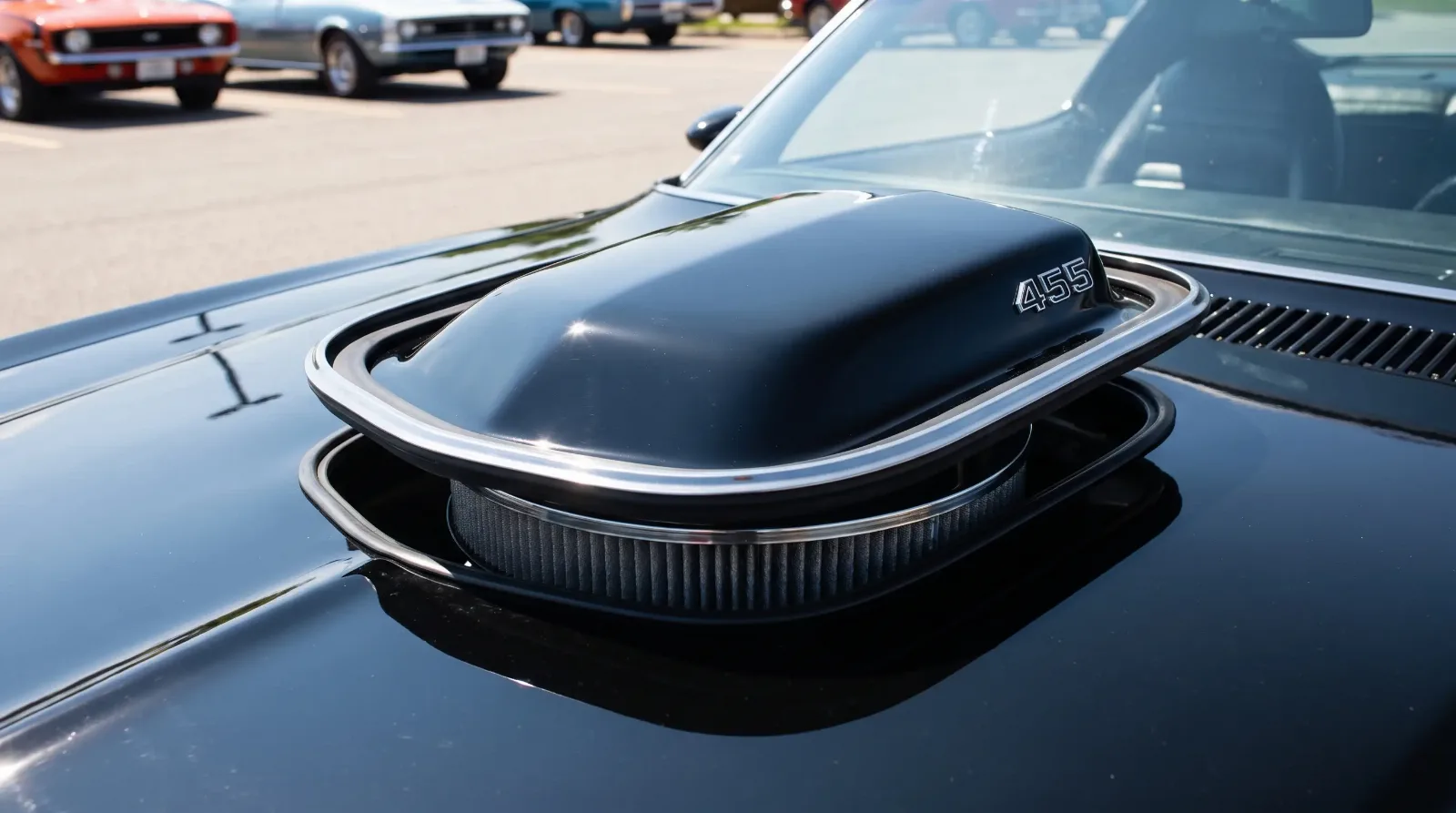
The firebird shaker scoop is one of the few options in this hobby where the party trick is also the value driver. It shakes because it's bolted directly to the air cleaner, not the hood, so it moves with the engine at idle and under load while the sheet metal around it stays still. Buyers loved the theater of it in period, and forty-plus years later the auction market still pays a real premium for a Firebird that has one and can prove it's functional, not just for show.
What the shaker actually does
Unlike a hood scoop that's molded into the sheet metal and either fake or fed by a duct underneath, the shaker sits on top of the carburetor's air cleaner assembly and pokes through a cutout in the hood. Cold outside air gets pulled in through the forward-facing opening, which on Ram Air-equipped cars fed the engine denser, cooler air than anything drawn from inside a hot engine bay. On non-Ram-Air applications in some years it was closer to a styling exercise with limited functional benefit, which matters when you're valuing a car, because "has a shaker" and "has a functional Ram Air shaker" are two different claims with two different price tags.
Which engines got it, which years
Pontiac made the shaker standard equipment on essentially every second-gen Trans Am from 1970 through 1981, with the notable exception of the turbocharged 1980-81 cars, which used a different induction setup entirely. The Formula almost never got one: its own twin-scoop hood was the standard look, and the shaker only showed up on a Formula in 1973 and 1974, when ordering the rare SD-455 engine option brought the Trans Am's shaker hood along with it instead of the usual Formula scoops, a combination built in numbers small enough to count in the dozens rather than the hundreds. That distinction, functional versus cosmetic, is exactly where I'd tell a buyer to slow down before writing a check.
The functional side of the story tracks the calendar as much as the engine. The 1970-72 shakers used a genuine flapper door that opened with throttle position, feeding real cold air to the carburetor. Tightening noise and emissions rules led Pontiac to block off that flapper on 1973-76 cars with a factory plate that satisfied regulators, and some later cars regained real functional induction depending on engine and package. That means a raised hood profile and a scoop housing can be present on a car without the full Ram Air ducting ever having worked behind it, which is exactly the split that makes a plain "has a shaker" claim worth so little on its own. The engine code on the invoice settles the argument far faster than the scoop's appearance ever will.
| Configuration | What it means | Value impact |
|---|---|---|
| Functional Ram Air shaker, documented engine | Genuine cold-air induction tied to a factory high-output engine | Highest premium |
| Shaker present, engine unverified | Scoop may be correct, but engine documentation is missing | Moderate, needs verification |
| Shaker added later, non-original | Aftermarket or incorrect-year installation | Little to no premium over a standard hood |
Why it matters to buyers today
I look at the shaker the same way I look at any option that's cheap to fake and expensive to verify: it's a red flag magnet precisely because it's desirable. A shaker hood cutout can be added to a car that never had one from the factory, and a scoop assembly can be sourced separately from the engine it was originally paired with. None of that makes the car worthless. It just means a "shaker car" claim needs the same documentation discipline I'd apply to any factory option that moves the needle on price, meaning a cowl tag, a build sheet, or PHS documentation that ties the scoop to the engine actually under it.
The buyers who get burned aren't the ones who overpay for a documented car. They're the ones who pay documented-car money for a scoop with no paperwork behind it.
What the market pays for a genuine shaker car
Auction results for second-gen Firebirds consistently show a gap between comparable cars that differ mainly on documented shaker/Ram Air presence versus cars without it, or with an unverified example, though the exact spread moves with the broader muscle car market and is not a fixed percentage. The spread widens further when the shaker car also carries a documented high-output engine like the SD-455, where the combination of functional induction and a verified top-tier engine option compounds rather than simply adds to the premium. Driver-quality Formula and Trans Am cars without documented Ram Air trade in a lower band than comparable cars where a buyer can prove the whole package is original and correct.
My read on this segment right now: documentation is worth more than it was five years ago, not less. Buyers have gotten more sophisticated about telling a genuine functional shaker from a cosmetic one, and the price gap reflects that education. If you're buying to hold value, a well-documented shaker car in either Formula or Trans Am trim is one of the more defensible plays in the 1970s Firebird story.
"A shaker scoop with no paper trail is a decoration. A shaker scoop tied to a documented Ram Air engine is a line item on an appraisal. Buyers who understand that difference are the ones setting the top of this market, not chasing it."
— David Mercer
Verdict: buy one with the option intact and documented
If you're shopping this segment, prioritize a car where the shaker, the engine, and the paperwork all agree with each other. That combination is scarcer than the scoop alone, and it's where the real appreciation has happened. For the fuller context on how this fits into the broader second-gen story, including where the Firebird's performance options went as the decade wore on, see another angle on the same era, or read the full Firebird story from the beginning. When you're ready to shop, look at classic Firebirds for sale with the documentation question in mind before the color or the price.
Sources and notes
- Shaker scoop - Wikipedia
- Pontiac Shaker Hoods: Which Models Had Them - SlashGear
- Hitman's Pontiac Trans Am Site - Shaker Scoops
- Pontiac Firebird (second generation) - Wikipedia
- The 1973 Firebird Formula SD-455 and the Trans Am shaker hood - Just A Car Guy
- 25 Firebird Facts Every Enthusiast Should Know - Hagerty Media