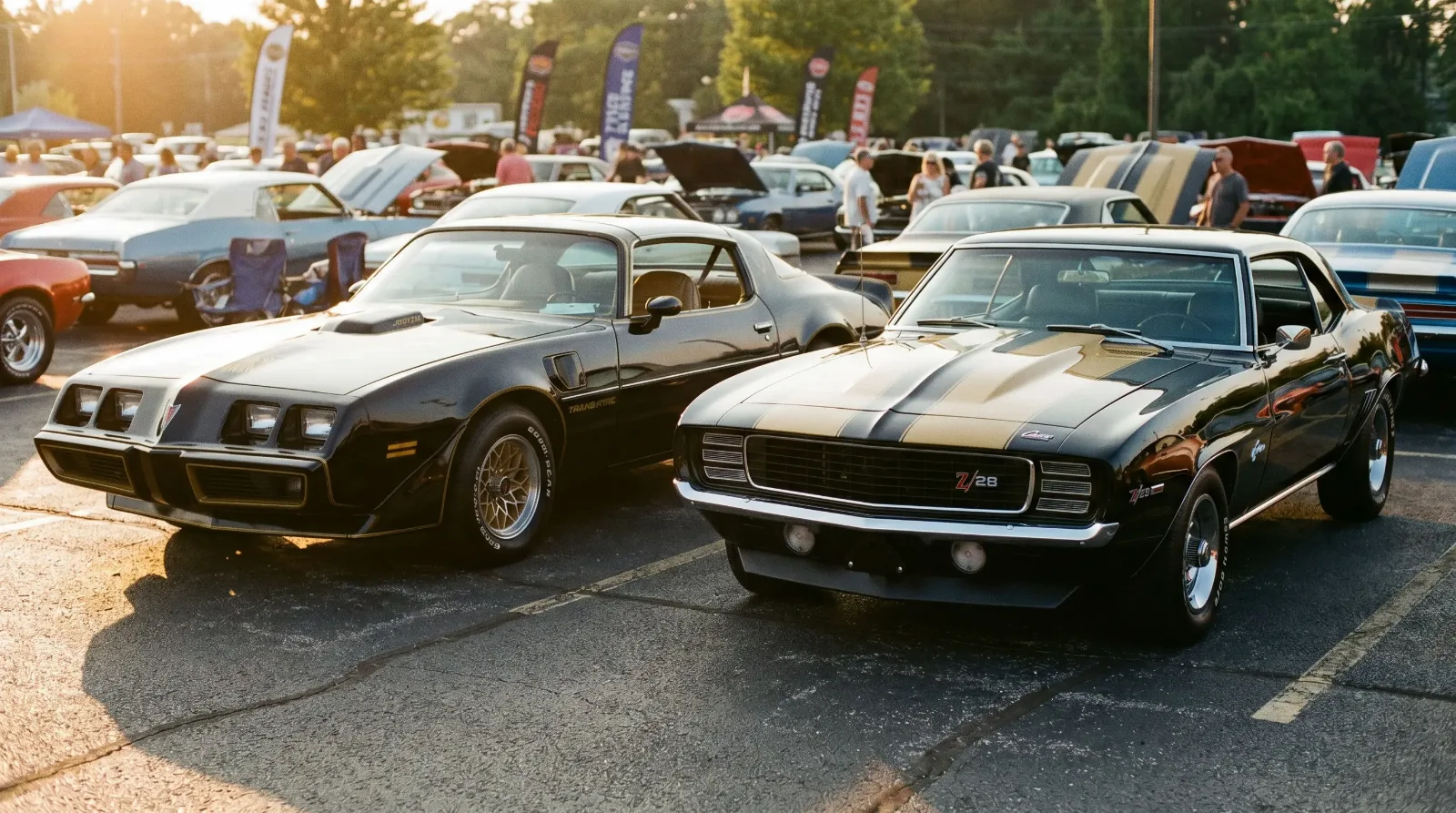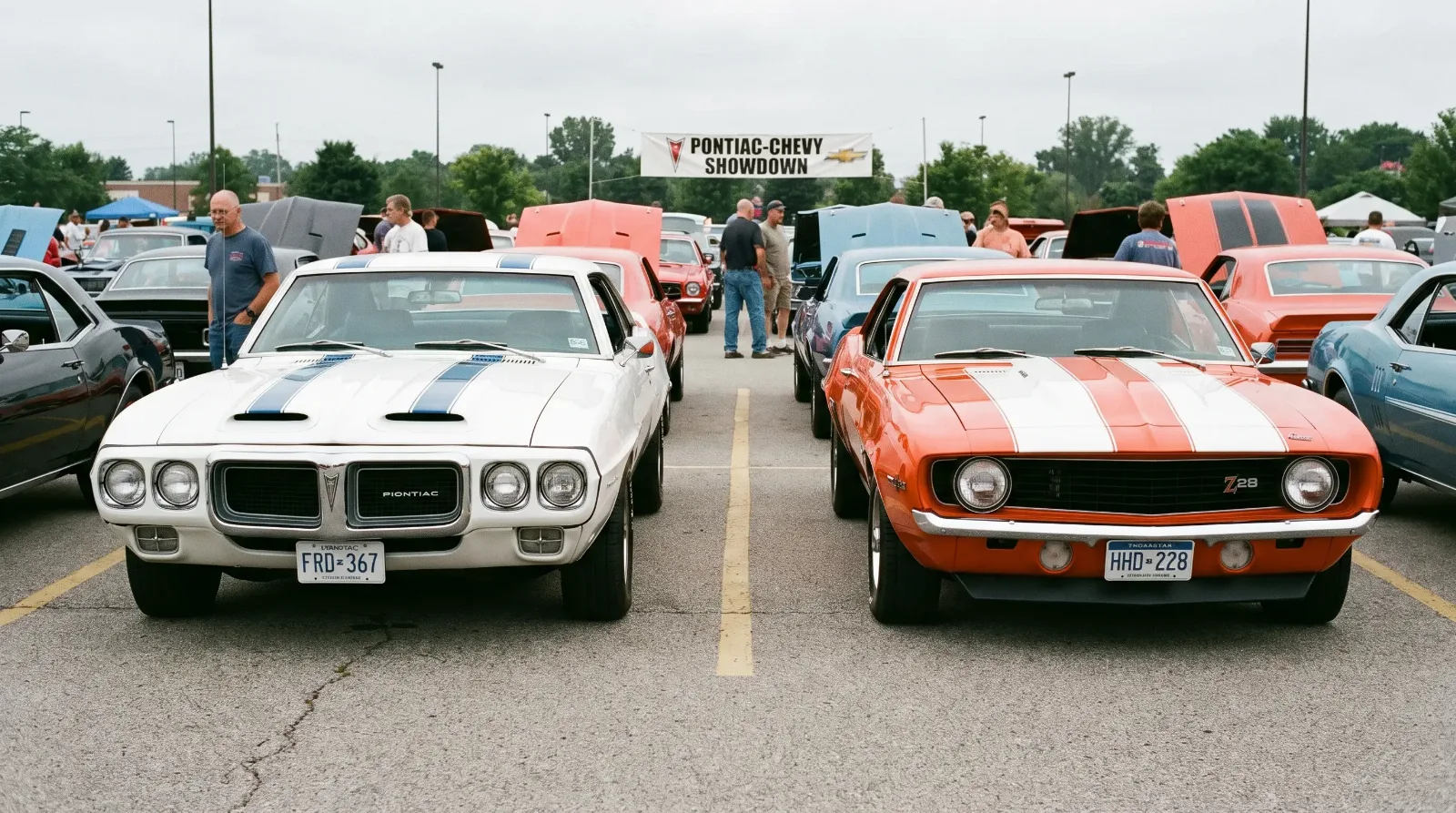
Park a Trans Am next to a Z28 from the same model year and the shared platform underneath stops mattering the second you look at the front clip. Firebird camaro styling has always been the fastest way to tell GM's two pony cars apart, and Pontiac's designers spent three and a half decades making sure of it. Same floor pan, same cowl, completely different face, and that was never an accident.
The split grille that started it all
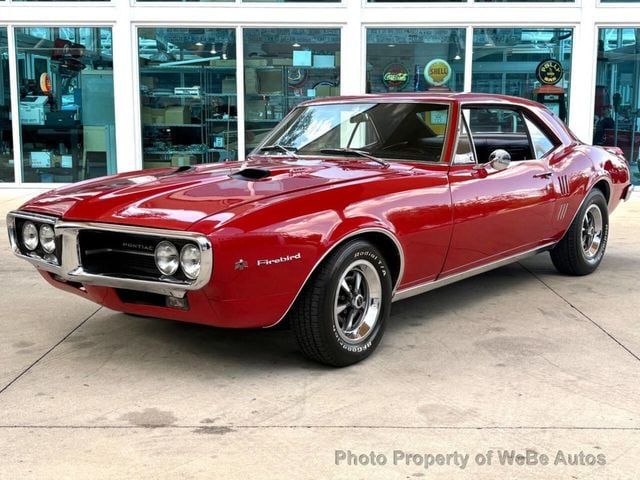
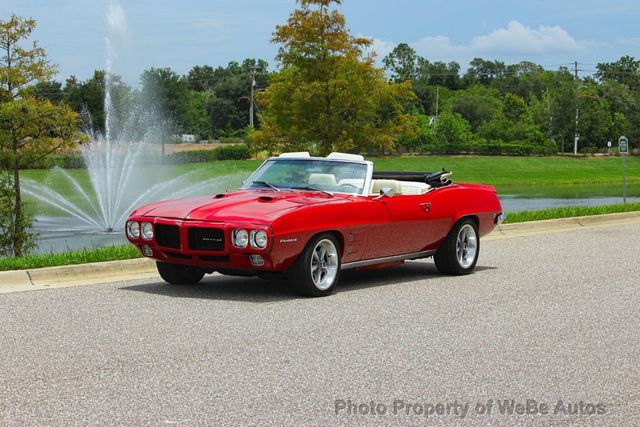
From the very first 1967 Firebird, Pontiac's stylists reached for the same visual signature the division had been using on its full-size cars since the early 1960s: a split, twin-nostril grille that read as unmistakably Pontiac from fifty feet away. Chevrolet's Camaro of the same year wore a single wide grille opening with a simple horizontal bar, a cleaner and more conservative face. That split-grille identity carried through generation after generation of Firebird, evolving in shape and prominence but never disappearing, while Camaro's front end took a more varied path across the decades. It is still one of the quickest tells in a parking lot today, even on generations where the two cars' sheet metal is otherwise very close.
By the second generation, launched for 1970, Pontiac pushed the split-nose theme further with a shark-like snout and, on Trans Am models, driving lights integrated into the grille openings. Camaro's second-generation face went a different direction, favoring a more restrained, body-color treatment with body-colored bumpers arriving as the decade wore on. Two cars, one platform, and buyers who could tell them apart from across a football field.
Hidden headlights, a shaker scoop, and a bird on the hood
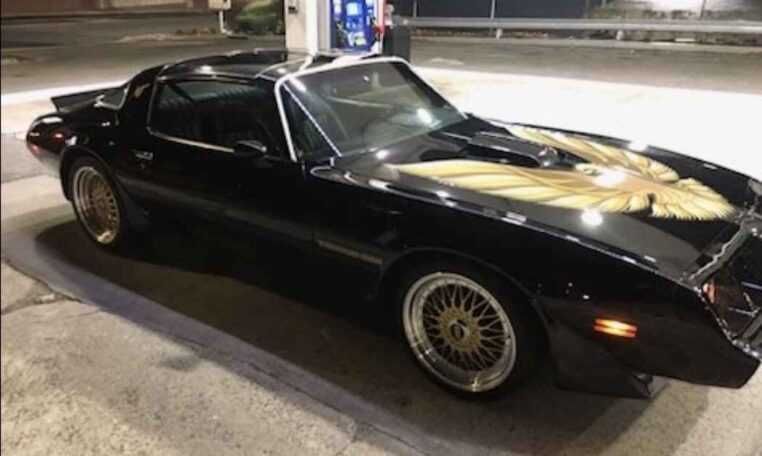
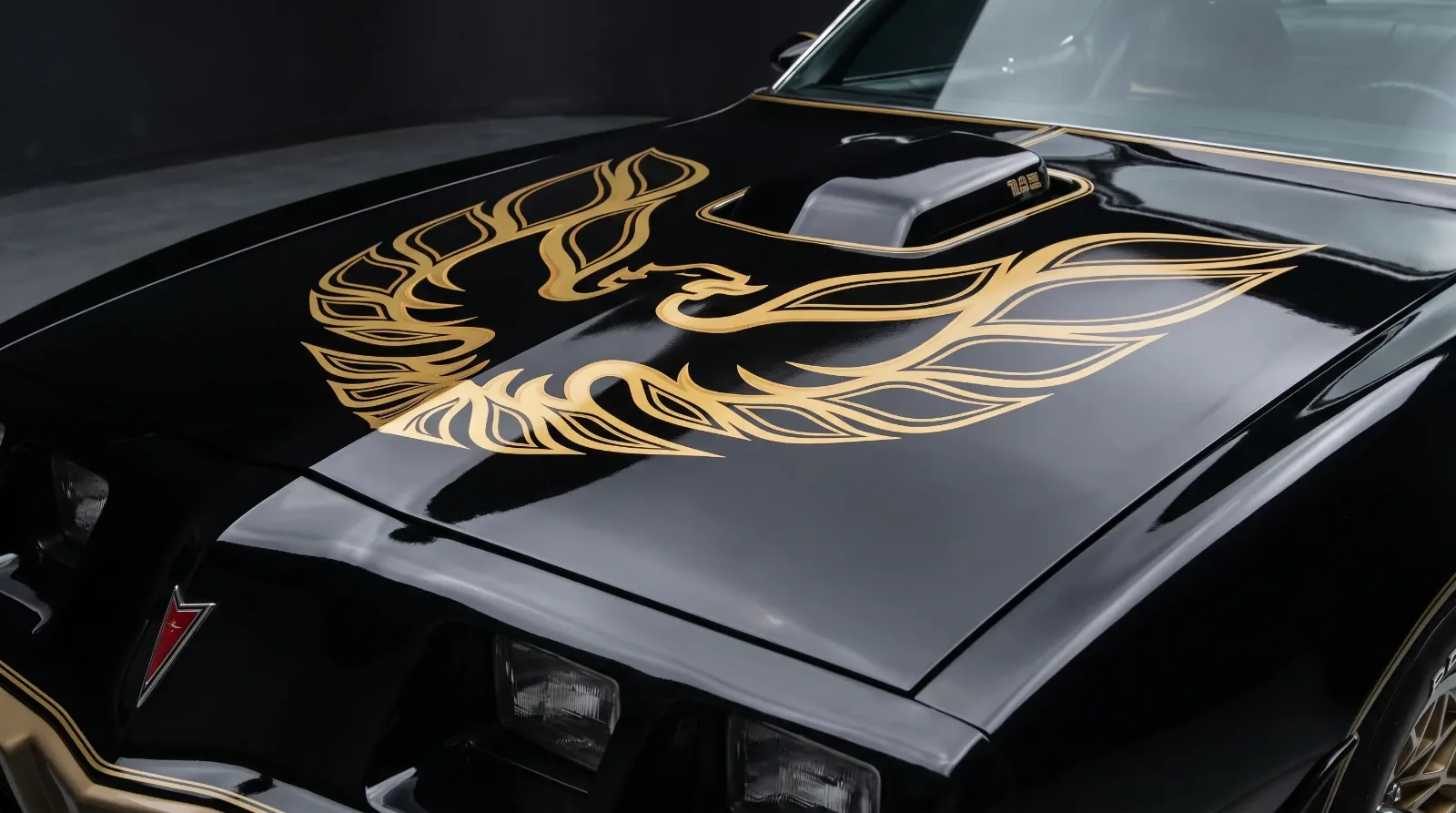
Third-generation cars, from 1982 through 1992, are where the styling divide becomes almost impossible to miss. Pontiac gave the Firebird retractable hidden headlights, a smoother, more aerodynamic nose than Camaro's exposed quad lamps, and on Trans Am and GTA models, the enormous "screaming chicken" hood decal that has become the single most recognized visual signature the nameplate ever wore. Camaro, meanwhile, carried its own identity through the era with the IROC-Z's flared ground effects and distinctive wheel package, aggressive in a completely different register than the Firebird's smoother, more sculpted approach.
The shaker hood scoop, a functional ram-air intake that literally shook with the engine on early cars and remained a visual signature on later Trans Ams, is a Pontiac-specific detail that Camaro never wore in the same form. It is a small piece of sheet metal that tells you everything about how differently the two design studios approached the same job of making a fast car look fast.
"Pontiac's stylists never let you forget which car you were looking at, even when the Camaro underneath was doing the exact same mechanical job. That hidden-headlight nose and the chicken on the hood did more marketing work than any ad Pontiac ever bought."
— Patrick Walsh
| Generation | Firebird Signature Styling Cue | Camaro Signature Styling Cue |
|---|---|---|
| First (1967-1969) | Split twin-nostril grille | Single wide horizontal grille opening |
| Second (1970-1981) | Shark-nose front with integrated driving lights | Restrained body-color nose treatment |
| Third (1982-1992) | Hidden headlights, screaming chicken hood decal, shaker scoop | Exposed quad lamps, IROC-Z ground effects |
| Fourth (1993-2002) | Sharply pointed, sculpted nose | Rounded, bulbous fascia |
Interiors told the same story from the driver's seat
Step inside either car and the design divide continues. Pontiac's dashboards through the 1970s and 1980s consistently ran a more driver-focused, gauge-heavy layout, part of the division's broader effort to sell itself as GM's performance-and-handling brand. Camaro interiors tended toward a simpler, more conventional presentation aimed at a slightly broader buyer. Neither approach was wrong, and both had loyal followings, but a blindfolded passenger could likely tell which car they had climbed into just by running a hand across the dash.
T-tops, spoilers, and the details that dated fast
Beyond the nose and the dashboard, both cars leaned hard on the same broad menu of era-defining details, T-top removable roof panels, rear spoilers, and increasingly aggressive ground effects packages as the 1980s wore on, but even here the execution diverged. Pontiac tended to integrate its spoilers and air dam extensions into a single cohesive shape that read as one design gesture from front to back on Trans Am models. Camaro's IROC-Z and later Z28 packages built up drama through layered add-ons, more flare, more vents, more visual noise stacked onto the same basic shape. Neither approach was more correct. They simply reflected two design studios solving the same late-1980s performance-car brief with different instincts.
Wheel design followed the same pattern. Pontiac's aluminum wheel offerings through the WS6 and GTA years favored a distinctive turbine-style or slotted look that became closely associated with the brand, while Camaro's wheel packages, especially on the IROC-Z, developed their own recognizable five-spoke identity. Enthusiasts today can often date and identify a third-gen from either brand at a glance just from the wheel design alone, without needing to see the badge.
Why the styling divide still shapes the market
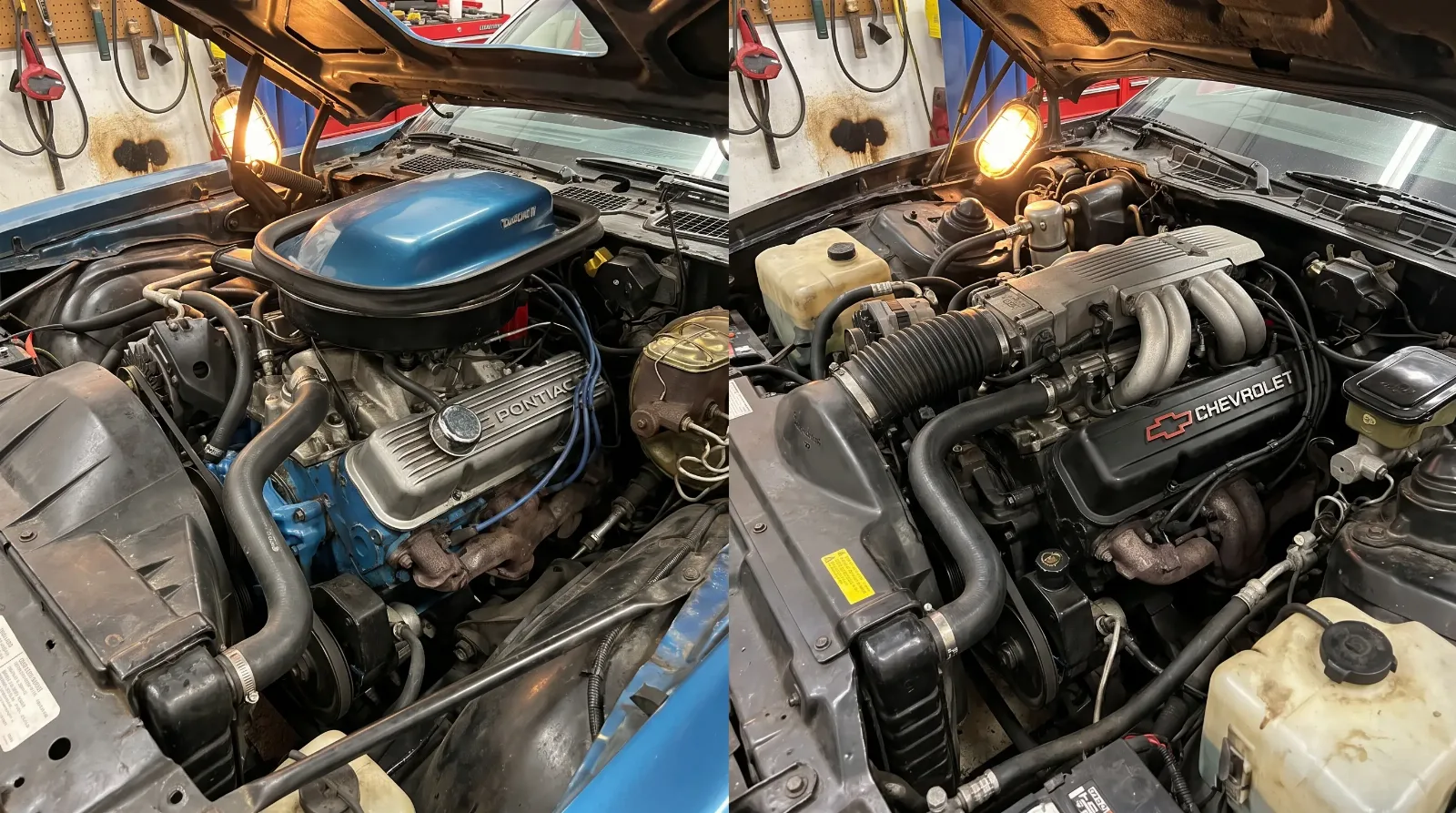
None of this happened by accident, and it explains a lot about how these cars are collected and valued today. Firebird buyers tend to gravitate toward specific styling-era favorites, whether that is the split-grille first-gen cars or the hidden-headlight third-gen Trans Ams, in a way that is inseparable from the sibling rivalry that GM built into these two nameplates from the start. Anyone following the sibling rivalry from the mechanical side should know the styling story and the engineering story rarely tell the same tale, which is exactly why this series keeps circling back to both. For the drivetrain half of that comparison, keep reading the series to see how Pontiac and Chevrolet split the difference under the hood as well as on the outside.
Whichever badge a buyer eventually chooses, the styling divide is worth studying on its own terms rather than treating it as a footnote to the mechanical rivalry. It is the reason these two cars, built from nearly identical bones, still photograph, show, and sell as two completely distinct collector categories rather than one platform with two logos stuck on it.
Sources and notes
- Pontiac Firebird - Wikipedia
- Chevrolet Camaro - Wikipedia
- The History of the Pontiac Trans Am Hood Bird - Classic Industries
- Firebird/Trans Am Vinyl Graphics - Screaming Chicken
- 25 Firebird facts every enthusiast should know - Hagerty Media
- This Is Why The Second-Generation Pontiac Firebird Deserves Your Respect - CarBuzz