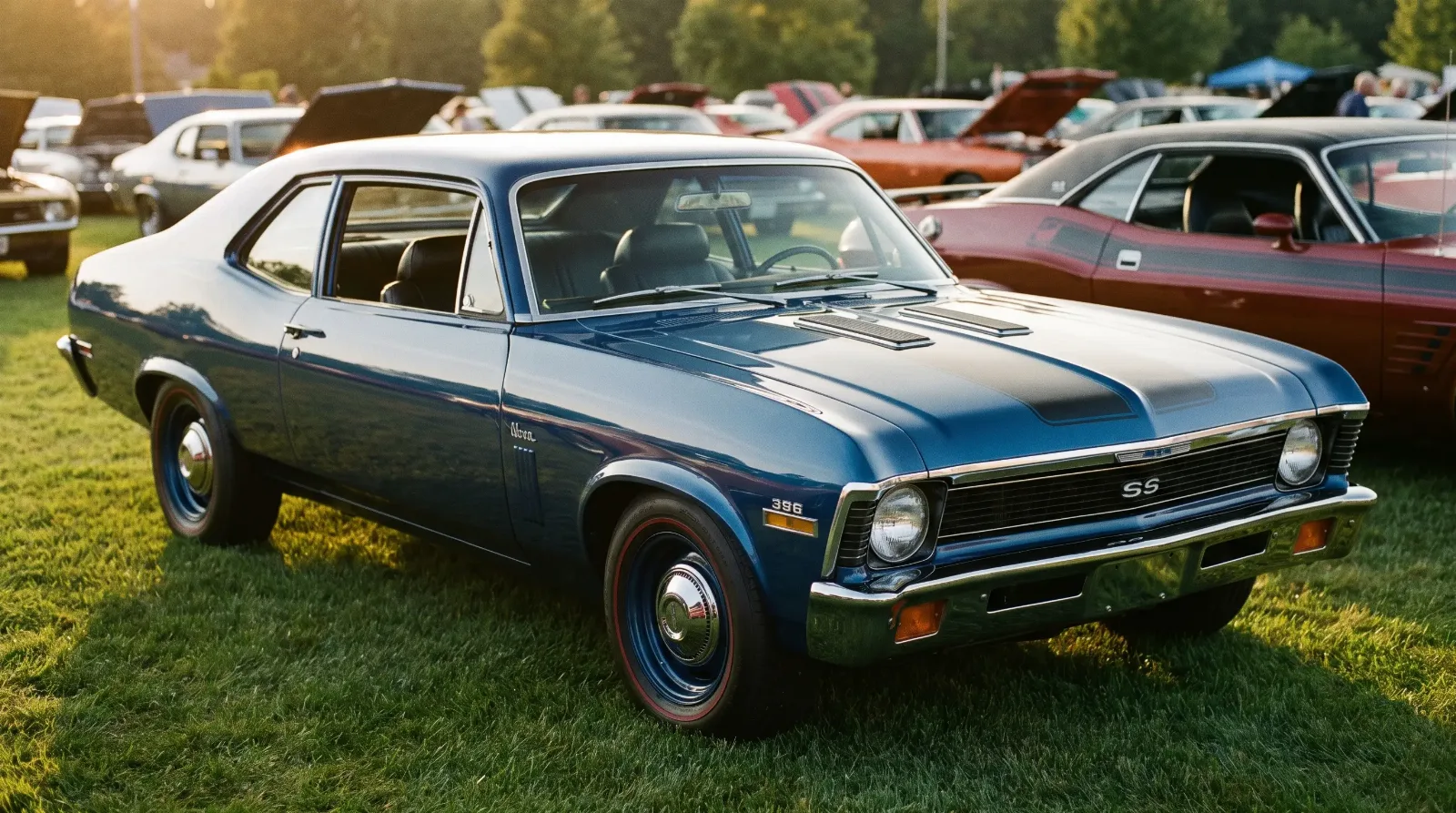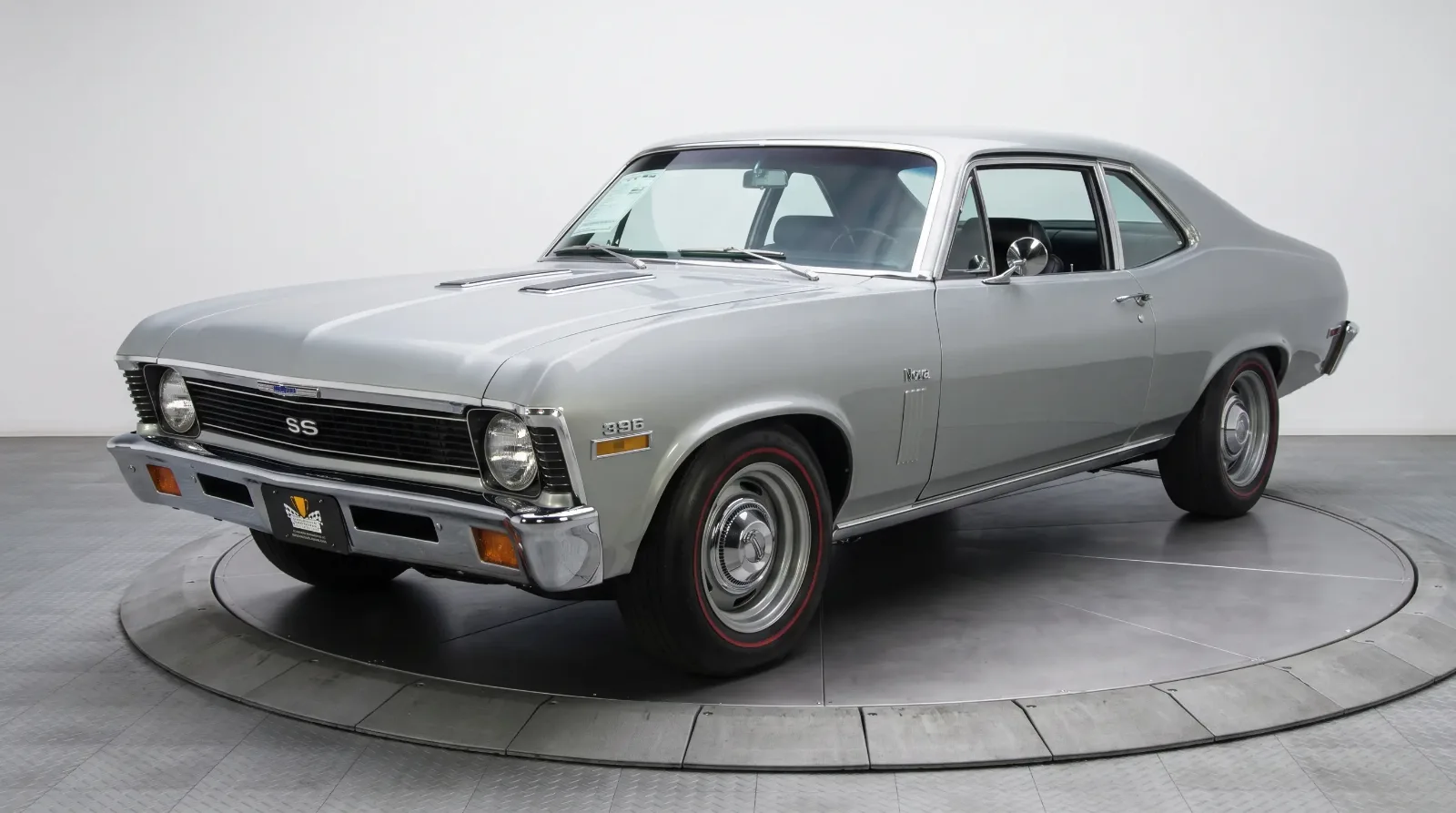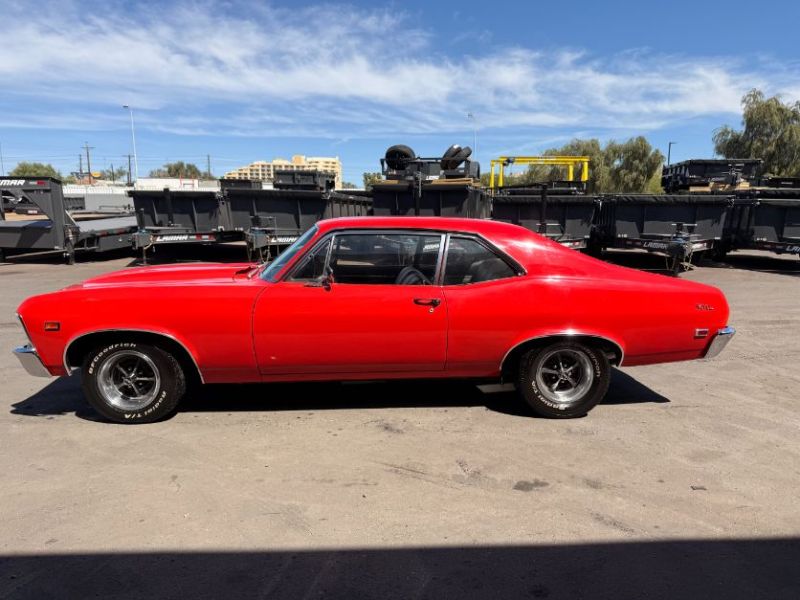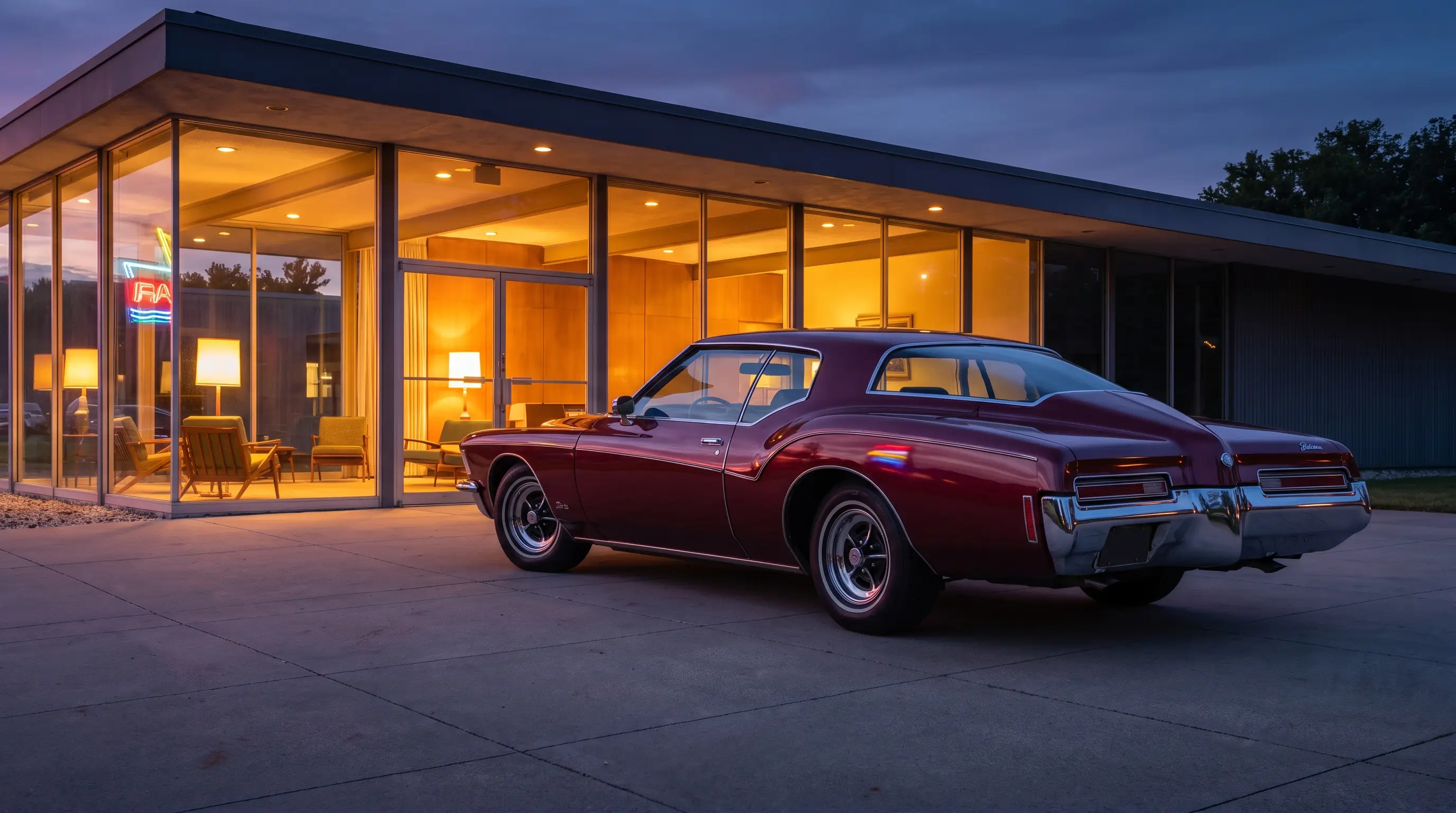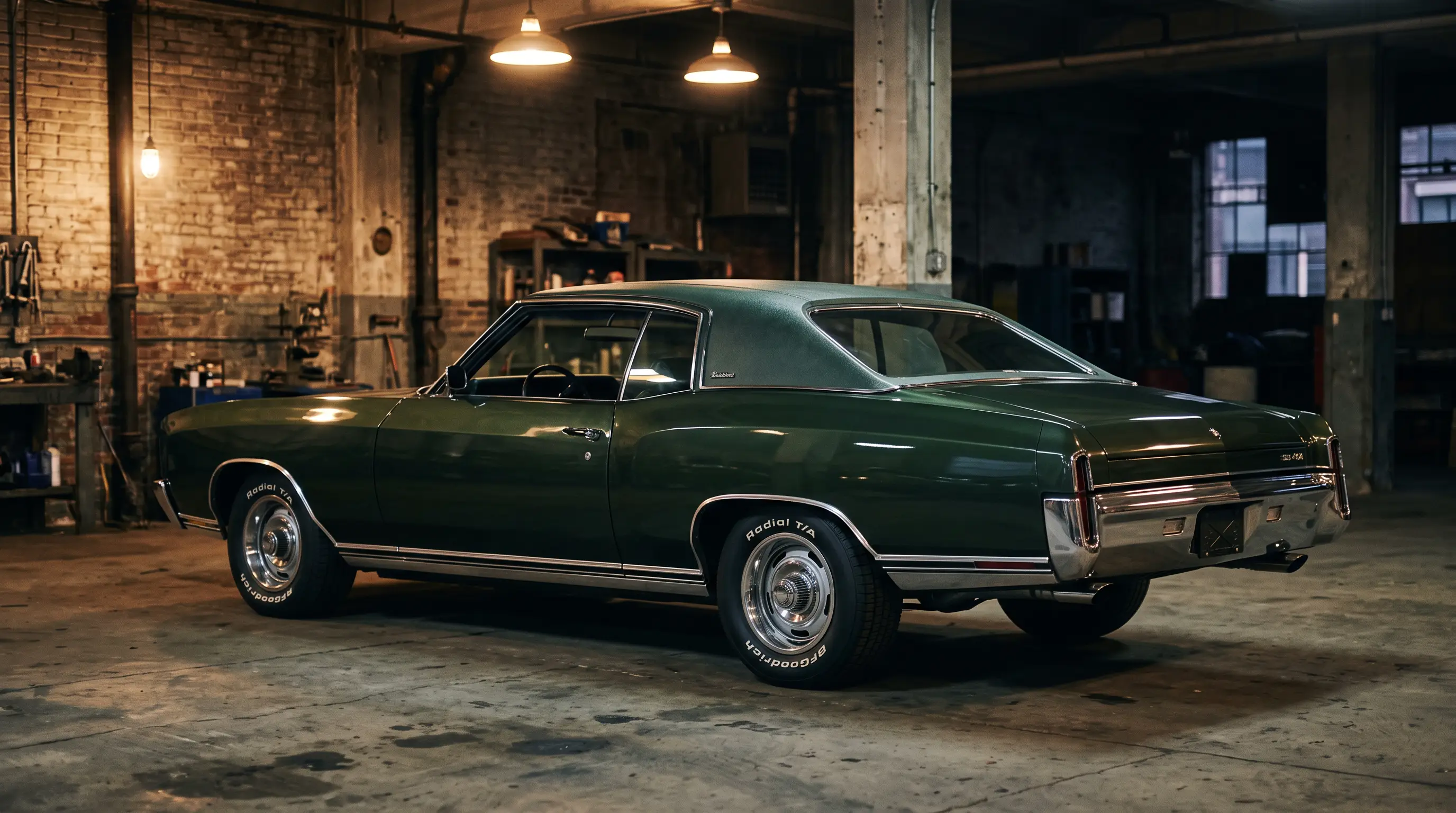
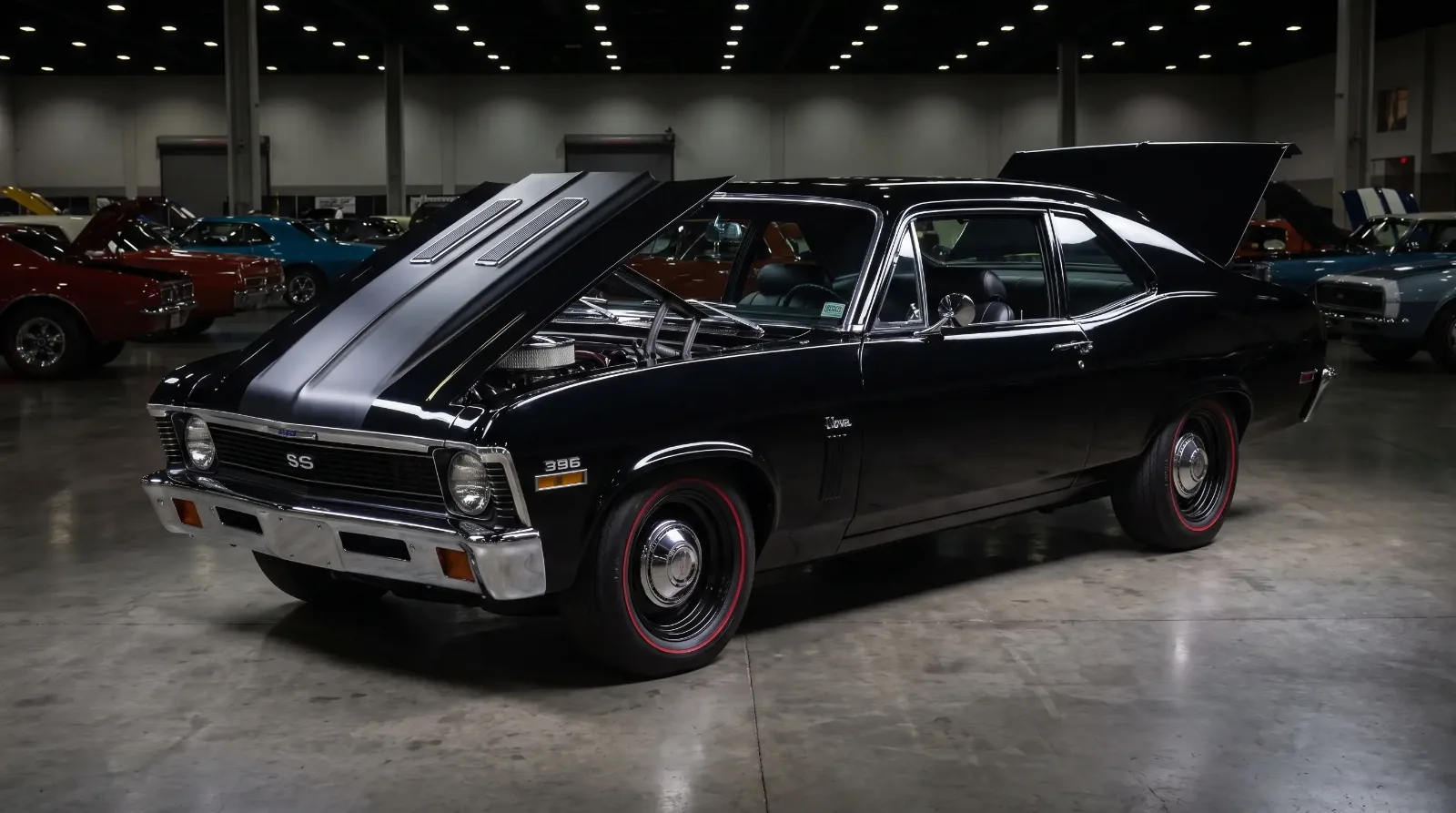
The 1968 nova ss is the car most people actually picture when somebody says "Nova SS," even though it arrived five years after the badge was invented. Chevrolet redesigned the whole platform for this model year, and the new body did something the earlier cars never could. It gave the SS package a genuine big-block to sit over, and that single change turned a trim option into a real muscle car almost overnight.
A new body, same nameplate confusion
Chevrolet gave the compact a cleaner, more grown-up shape for 1968, dropping some of the boxier lines of the earlier Chevy II in favor of a smoother, semi-fastback profile. The car was still built on the same basic idea, a light, simple, inexpensive platform, but it looked far more like something you would want to be seen in rather than something you bought because it was cheap. The Nova name was doing most of the talking by this point too, even though the car technically still fell under the Chevy II series designation for buyers reading the fine print.
None of that redesign was aimed at performance on its own. Chevrolet was updating the whole compact lineup to look current against newer competitors. What made 1968 matter is what the new body allowed engineers to fit under the hood, not the sheet metal itself.
What changed under the skin
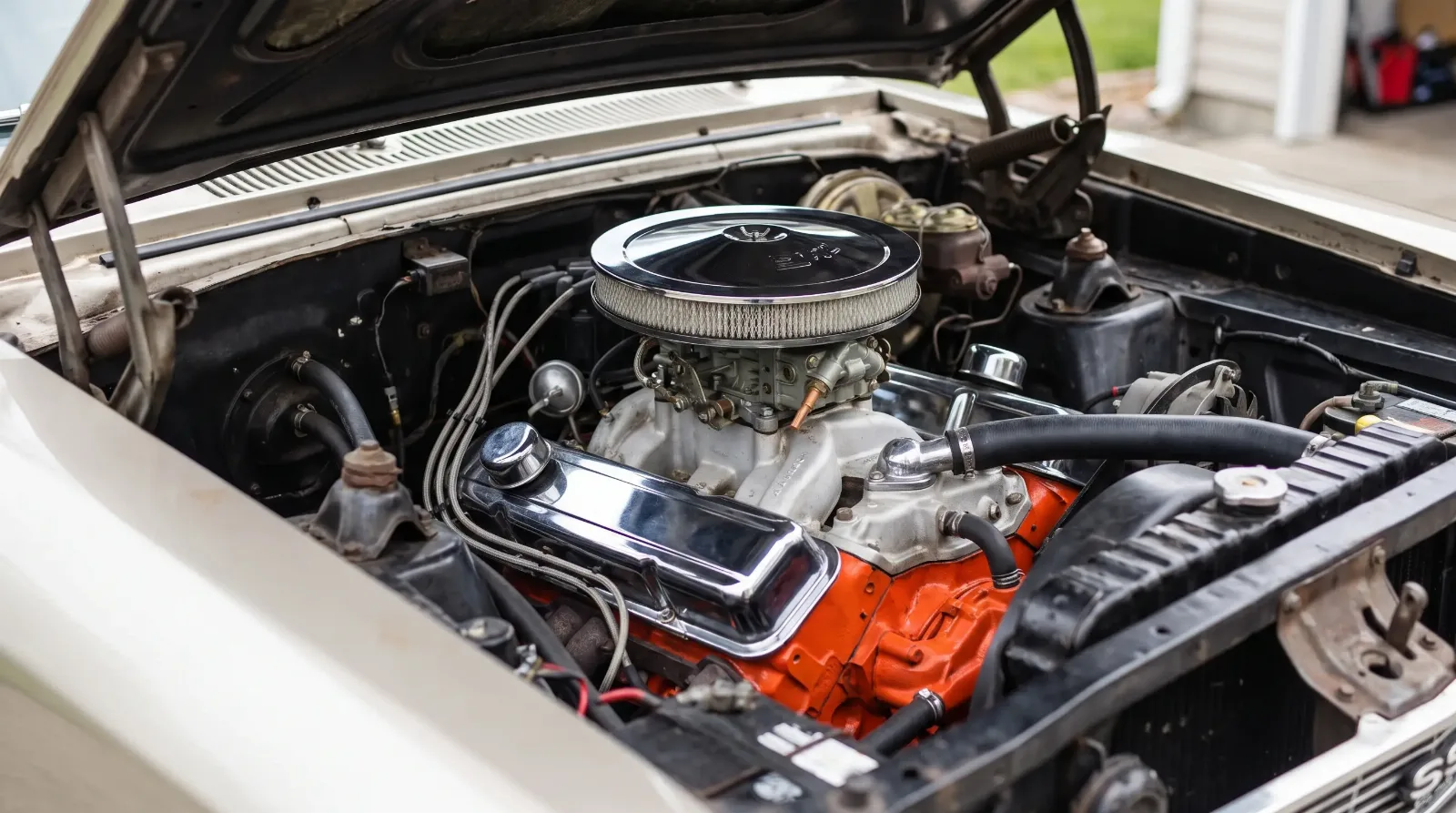
The new platform had a stronger structure and more room in the engine bay than the earlier Chevy II, which mattered enormously once Chevrolet decided to let a big-block into the lineup. Earlier Novas, even the quick L79 327 cars, were built around a small-block engine bay and a lighter-duty chassis underneath. Fitting anything bigger meant beefing up the front end, the cooling system, and the driveline, and the 1968 redesign gave Chevrolet the room to do exactly that without a total reengineering job.
That is not a small detail. A car this size was never meant to carry a big-block, and the parts that made it possible, heavier-duty suspension, a wider radiator, and a stouter driveshaft, all needed real space that the earlier body did not have to spare.
SS options: small-block standard, big-block available
For 1968, the SS package could still be ordered with a small-block, now stretched to 350 cubic inches for the first time in this car, a genuinely capable engine on its own. But the real headline was the 396 big-block becoming available in the SS for the first time. Depending on which version you ordered, you were looking at 350 horsepower out of the hydraulic-cam L34 or 375 horsepower out of the solid-lifter L78, both dropped into a body that was never designed with that kind of weight and torque in mind.
A 396 in a car this size was almost comic in the best possible way. The Nova was still fundamentally a compact economy platform underneath the new sheet metal, and Chevrolet was now selling it with an engine that would have felt right at home in a full-size car a decade earlier. That contrast between the modest body and the serious drivetrain is exactly what built this car's reputation.
| Engine | Type | Rated output | What it meant |
|---|---|---|---|
| 350 small-block | Hydraulic cam | 295 hp | New displacement, still a manageable street car |
| L34 396 | Hydraulic cam big-block | 350 hp | Real muscle car torque for the first time in this body |
| L78 396 | Solid-lifter big-block | 375 hp | The serious version, forged internals and a stiffer bottom end |
Losing the convertible, gaining something else
The redesign was not free of trade-offs. The convertible body style did not carry forward into this generation, so if you wanted an open-top Nova SS, you needed an earlier car. Chevrolet also narrowed the body style lineup generally, focusing the compact range on the coupe and sedan rather than spreading engineering effort across as many variants as before.
What buyers got in exchange was a car that finally matched its reputation. Earlier SS Novas asked you to squint a little, to appreciate a trim package or a quick small-block hidden in a plain body. The 1968 car did not need the squinting. It looked the part and, with the right engine ordered, it genuinely was the part. That is a real trade if you actually wanted a performance car rather than a stylish commuter.
What to check on a 1968 Nova SS today
The same rules apply here that apply to every SS Nova, arguably more so, because this is the car clone builders target most often. The SS package and the big-block option were both order-sheet items rather than a separately coded model, so nothing about the VIN proves you have a genuine big-block car. A welder, a badge kit, and a used 396 can produce something that looks exactly like the real thing.
Ask for a build sheet, Protect-O-Plate, or dealer invoice showing the actual RPO codes before you take a seller's word for it. Check that block and head casting numbers, along with date codes, line up with the car's actual build date rather than following it by months. And look past the engine entirely for a minute to check the floors, trunk pan, and lower quarters, since a documented drivetrain sitting in a rusted-out shell is still a rusted-out shell no matter what the paperwork says.
Buy a documented 1968 Nova SS 396 and you own a car that legitimately earned its reputation, small body, real muscle, and no apologies needed. Buy an undocumented one at genuine-SS money and you are just taking someone else's word for the most expensive part of the deal.
"The 1968 redesign is where the badge finally caught up to itself. Before that year you were buying the idea of a fast Nova. After it, with the right engine and the paperwork to prove it, you were actually buying one."
— Mike Sullivan
If the big-block side of this story interests you specifically, a companion piece goes deeper into the 396 options and what they are worth chasing today. For the broader picture of how the badge evolved across every year, the SS chapter covers the whole timeline in one place.
Sources and notes
- Street Muscle Magazine: Rare Rides, the 1968 Chevrolet COPO Nova SS 396
- Automobile Catalog: 1968 Chevy II Nova SS 396 specs
- Chevy Hardcore: Top 5 Chevy Novas, the 1968 Nova 396
- Mac's Motor City Garage: Introducing the 1968 Nova Super Sport
- NovaResource: Nova Engine Statistics
- Wikipedia: Chevrolet Chevy II / Nova