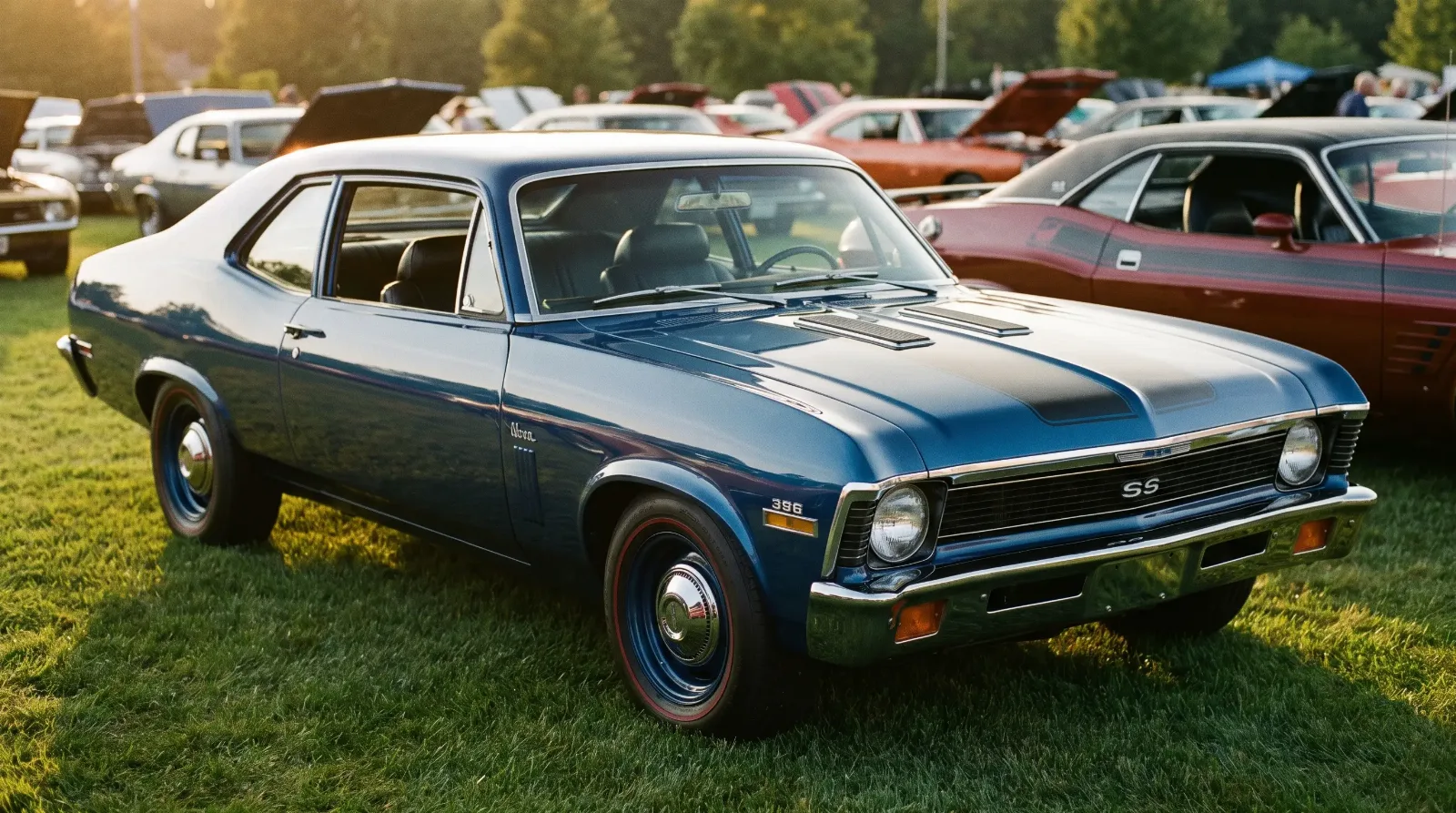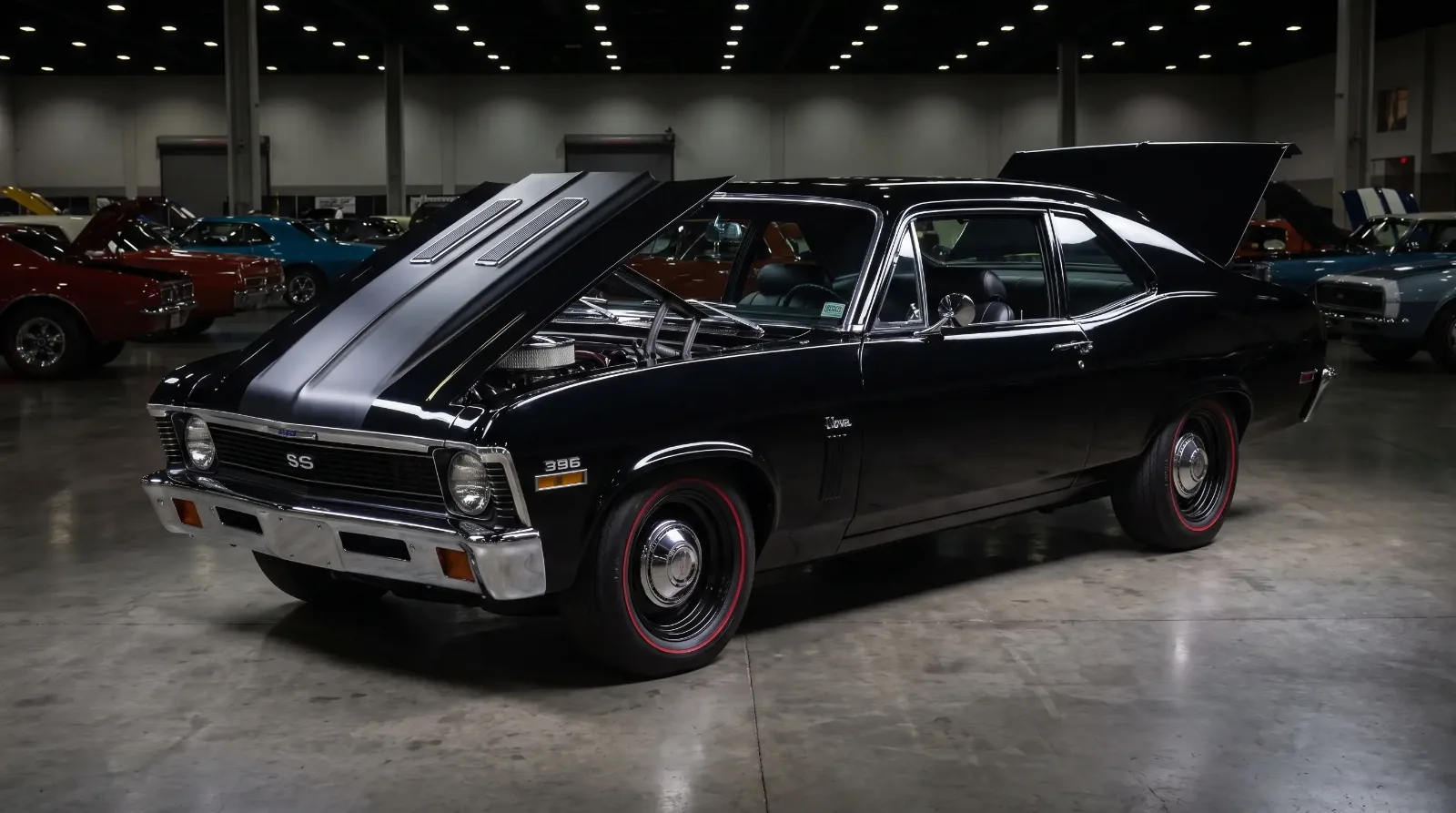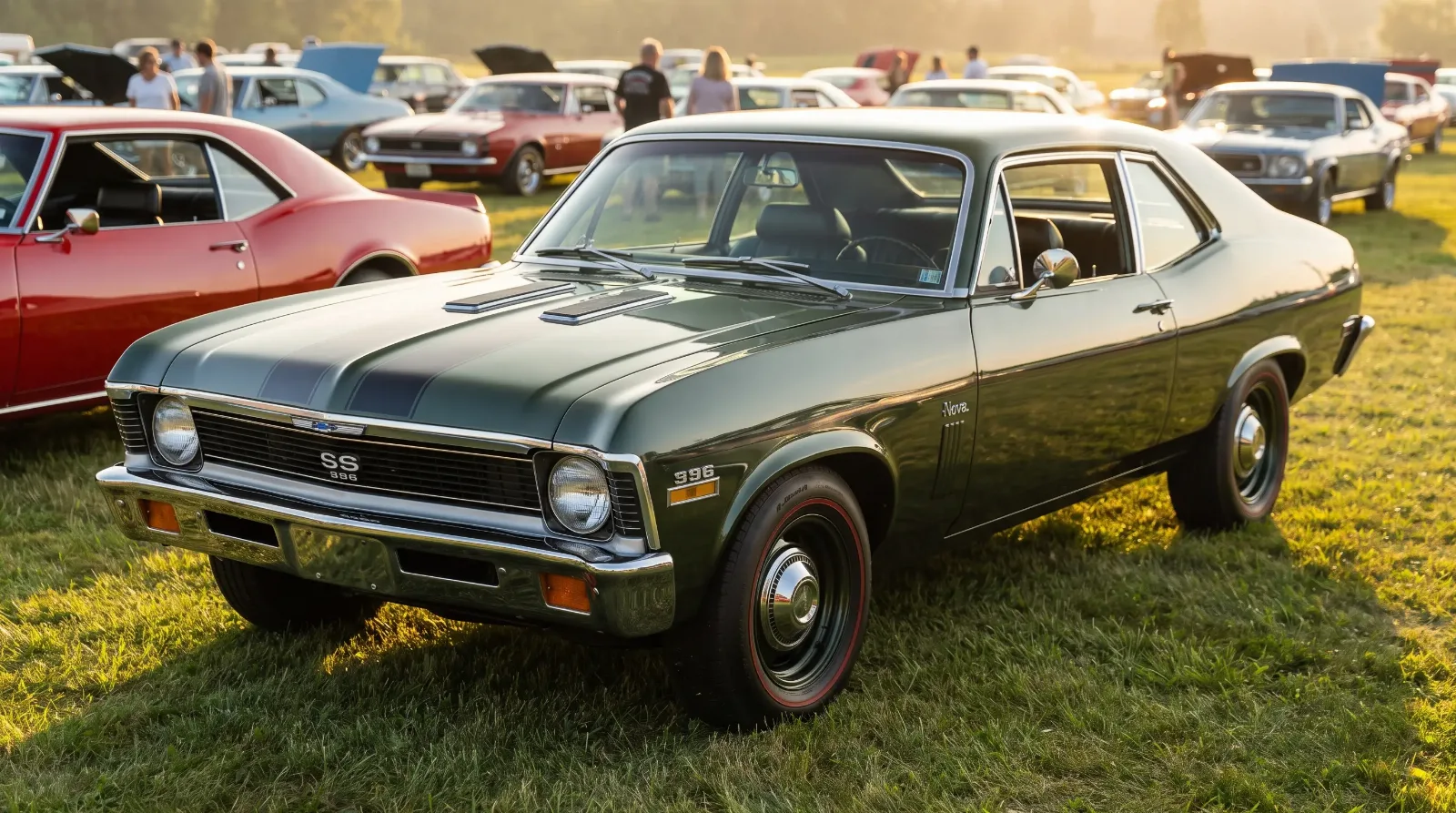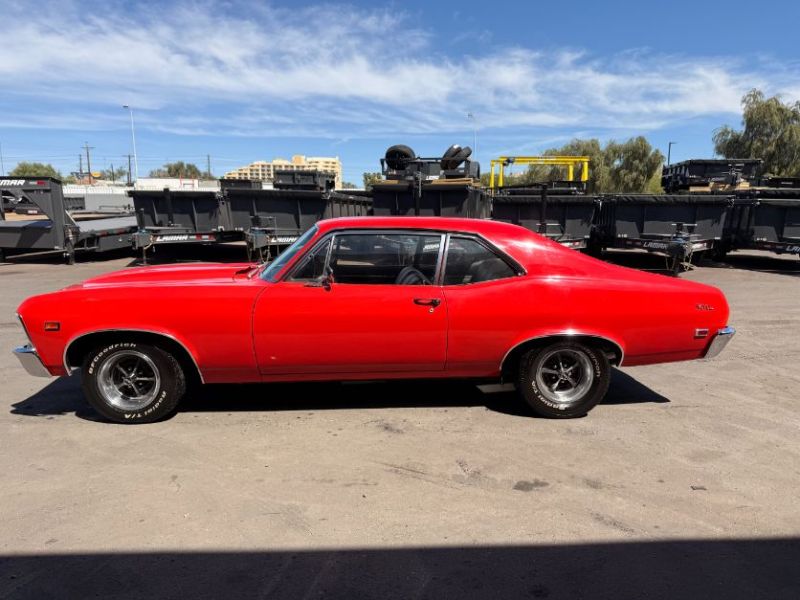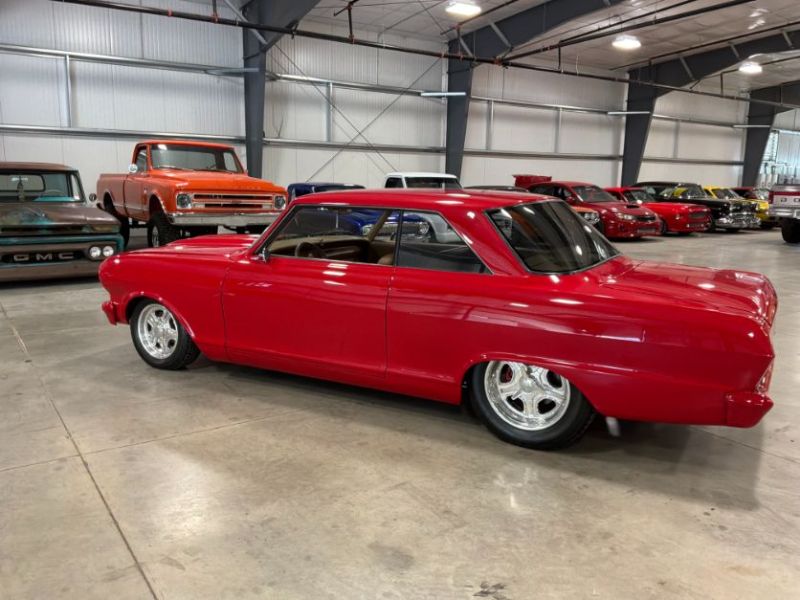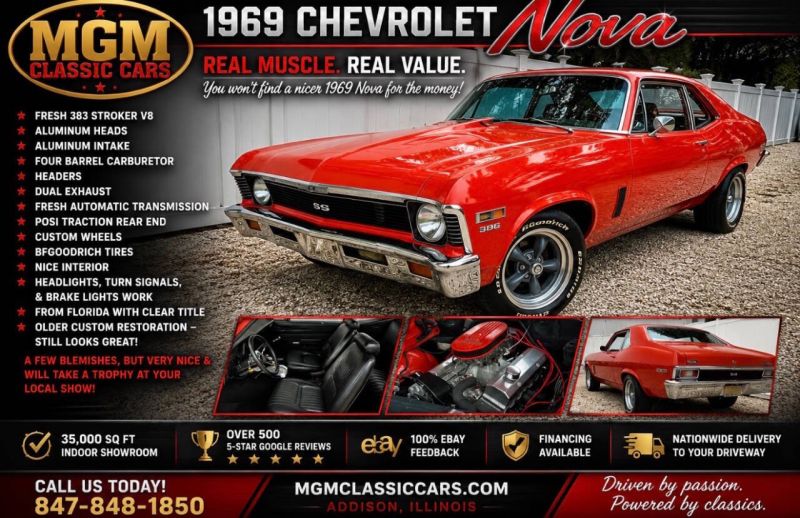
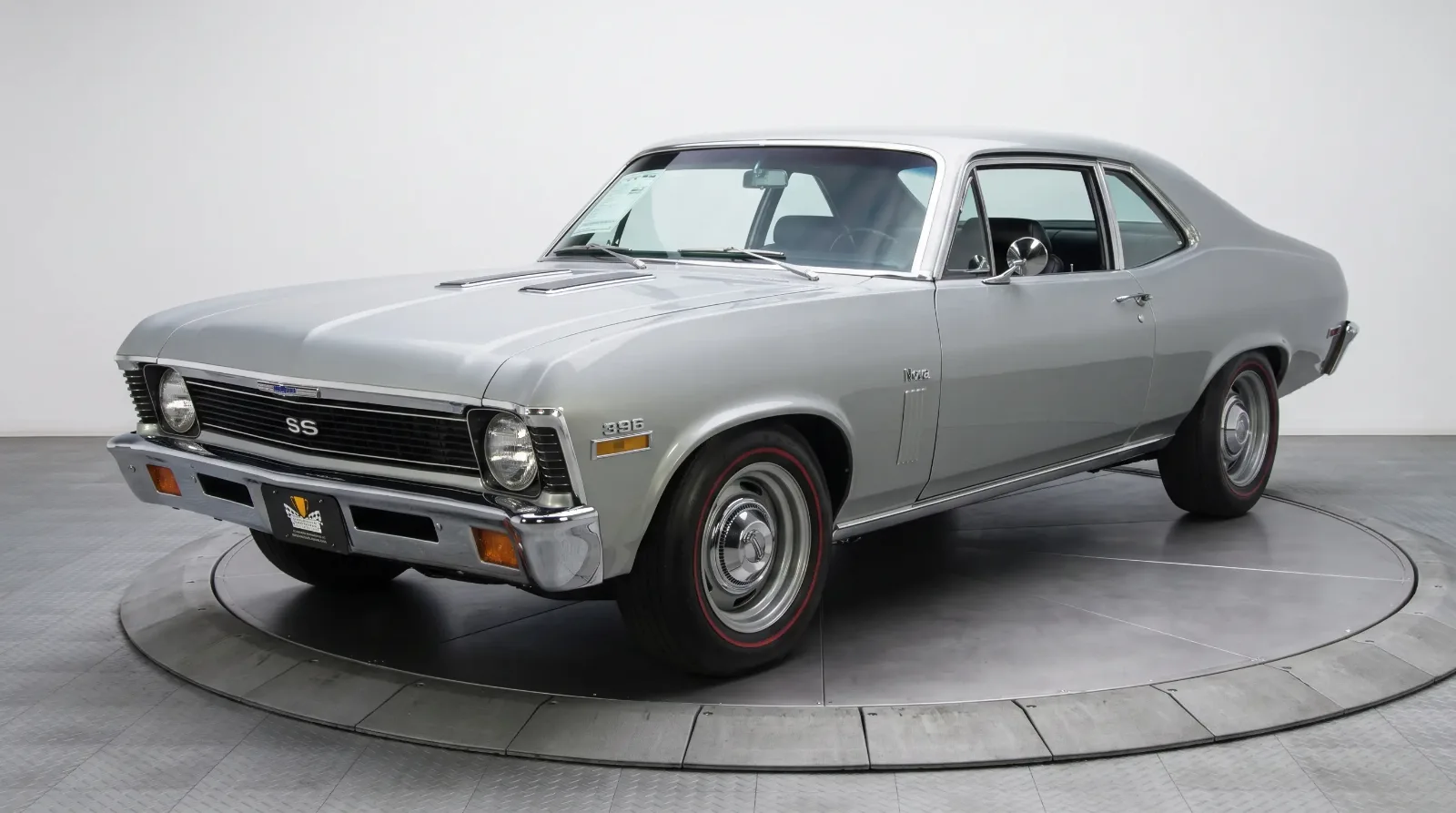
The nova ss 396 sits in an odd corner of the muscle car market. It never had the marketing budget of a Chevelle SS or the mystique of a Camaro Z/28, but for three seasons Chevrolet dropped its biggest available V8 into the smallest body it sold, and the résumé still reads better than the reputation. If you track auction data the way I do, the Nova SS 396 is a case study in a car that the market has been slow to price correctly.
Why the compact body mattered
Chevrolet built the second-generation Nova on a shorter wheelbase than the Chevelle, and when the 396 cubic-inch big-block became a factory option starting in the 1968 model year, the math changed for anyone doing the actual weighing. A Nova SS with the L34 or L78 396 carried roughly 200 to 250 fewer pounds over the front axle than a comparably equipped Chevelle, and that number shows up in period quarter-mile times. Car and Driver and Hot Rod both ran L78 Novas into the low 14s and high 13s in period testing, quick enough to embarrass some genuinely expensive iron at the strip.
The catch, and it is a real one, is take rate. Chevrolet sold the 396 Nova in far smaller numbers than the small-block versions, and dealers were not exactly pushing the option. Big-block Novas required a heavier-duty suspension, a different radiator, and a wider driveshaft tunnel, so this was never a cheap add. Buyers who wanted the fastest possible Nova for the least money often paid it, and that self-selection is part of why surviving cars carry real documentation more often than you would expect for a budget muscle car.
| Engine option | Years offered | Advertised horsepower | Notes |
|---|---|---|---|
| L34 396/350 | 1968 to 1970 | 350 hp | Hydraulic cam, more common of the two big-block Nova options |
| L78 396/375 | 1968 to 1970 | 375 hp | Solid-lifter, forged internals, the rarer and more valuable of the two |
What the numbers actually say about value
I have watched Nova SS 396 sales at Mecum, Barrett-Jackson, and the regional houses for years, and the pattern is consistent. Documented L78 cars with a build sheet or protect-o-plate routinely bring more than double what an L34 car in similar condition brings, and the gap has widened rather than narrowed over the past several seasons. That is not surprising on its own, but the size of the spread surprises people who assume all big-block Novas trade in a tight band. They do not. Condition matters, but engine authenticity and documentation matter more here than in almost any other muscle car segment I track.
Compare that to the Chevelle SS 396 market, where the volume of cars sold every year is high enough that pricing tends toward consensus fairly quickly. The Nova market is thinner. Fewer transactions means more noise, and more noise means a sharp buyer with real documentation can still find a car priced below where it should sit. I would rather buy a solid, honestly represented L34 Nova with paperwork than an unverified "believed to be a real 396 car" at a discount, because the discount on the second car is rarely big enough to cover the risk.
What separates a real car from a clone
The clone problem is real and it is not going away. A Nova SS 396 shell is one of the easier muscle car bodies to fake convincingly, because the small-block SS trim and the big-block SS trim share most exterior parts. What you actually need to verify is the cowl tag, the VIN derivative, and ideally a factory build sheet or invoice showing the RPO codes for the engine and the corresponding heavy-duty suspension components. Casting numbers on the block and heads should correspond to the claimed engine, and the date codes should predate or match the car's build date, not follow it by months.
None of that is exotic detective work. It is the same discipline that governs Chevelle and Camaro authentication, applied to a car that has historically drawn less scrutiny simply because the dollar amounts were smaller. That is changing as the segment gets more attention, and buyers who skip the verification step are taking on real risk at prices that used to feel low enough to shrug off.
"The Nova 396 market rewards patience. Wait for the car with a paper trail instead of chasing the cheapest advertised big-block, because the cheap one is usually cheap for a reason."
— David Mercer
Where the market is actually headed
Auction volume for muscle cars overall has been steady, but the mix has shifted. Buyers under fifty are entering the market with different reference points than the guys who grew up wanting a Chevelle or a GTO, and a fair number of them are drawn to the Nova specifically because it was never the flagship. That is a real dynamic, not just a talking point. When I see younger bidders competing hard on a documented L34 or L78 car, that tells me the demand base for this segment is widening rather than aging out, which matters more for long-term value than any single sale result.
The other trend worth watching is restomod crossover. A meaningful number of Nova SS 396 cars on the market today have been modified with modern drivetrains, brakes, or suspension, and those cars trade in a completely different lane from numbers-matching originals. Do not let a seller blur the two categories when you are comparing asking prices. A beautifully built resto-mod Nova can be worth real money, but it is not competing against a documented factory L78 car, and pricing one against the other will cost you either as a buyer or a seller.
Where this leaves a buyer today
If you are shopping this segment, treat the Nova Super Sport package broadly and the 396 specifically as two different purchase decisions. The SS trim alone gets you the styling and the suspension upgrades. The 396 gets you the performance the badge implies, and it is the harder car to find honestly. I would read a companion piece comparing the small-block and big-block SS before committing to either, since the price gap between them is smaller than most first-time buyers expect and the ownership experience differs more than the sticker suggests.
For the full picture of how the Super Sport package evolved across the Nova's production run, the complete Nova saga is worth the read. And if you are ready to move past research, there is usually a classic Nova SS for sale worth cross-checking against everything above before you write an offer.