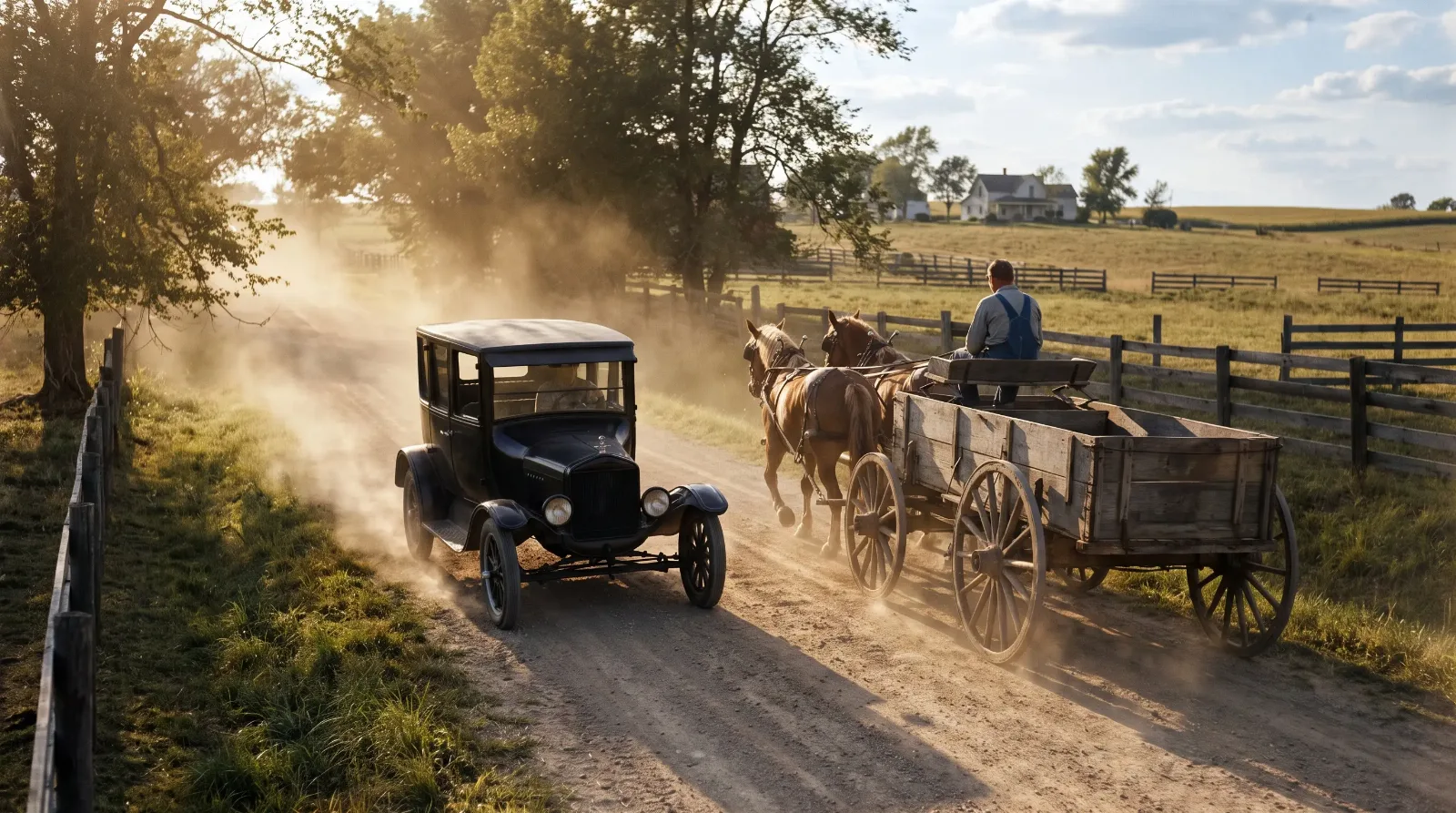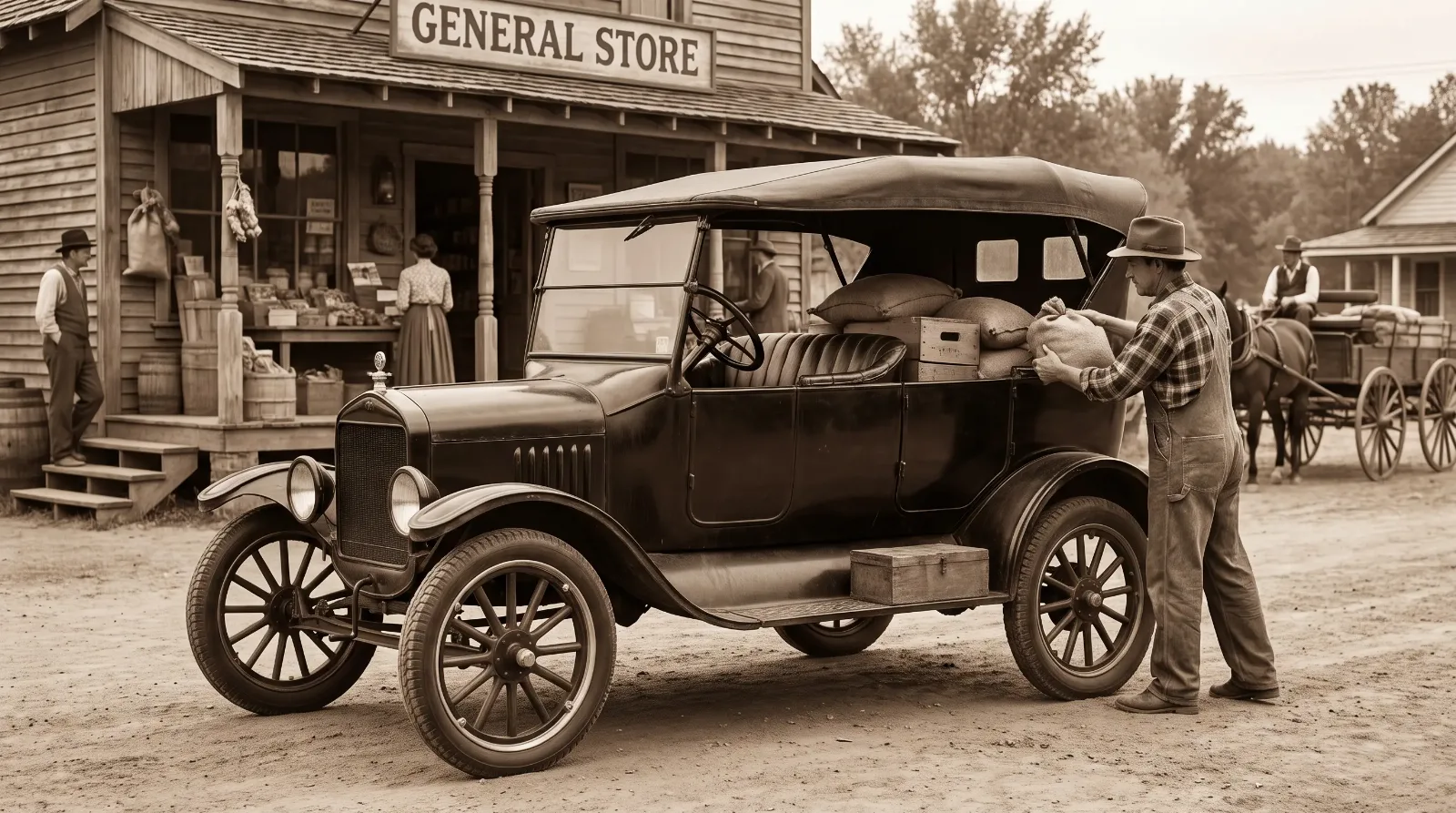
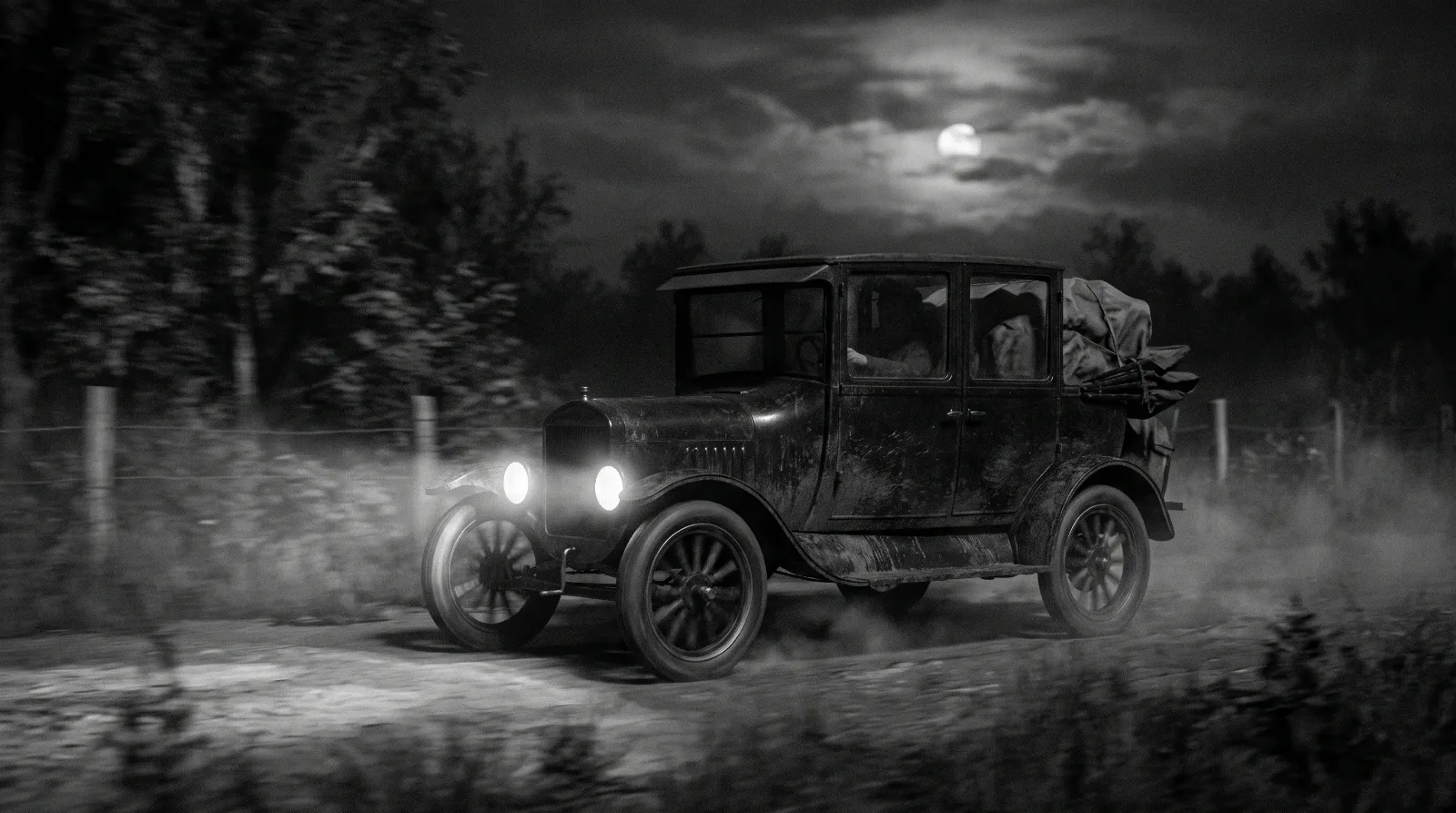
Picture a back road outside Detroit on a moonless night in 1925. A Ford Model T rumbles past a farmhouse with its lights off, running low and heavy on its springs, the trunk and the back seat packed with crates that clink when the tires find a rut. That car is not carrying groceries. It is carrying whiskey from a Canadian crossing point down to a speakeasy that will pay real money for it before sunrise, and for thirteen years, that scene played out on roads across the country. This is more on prohibition era cars, and it is a story that runs straight through the middle of the decade's automotive history.
How Prohibition turned the car into a weapon
When the Eighteenth Amendment took effect in January 1920, it did something almost nobody in Detroit had planned for. It created a nationwide demand for a very specific kind of automobile: fast enough to outrun a police car, roomy enough to hide a serious cargo, and unremarkable enough not to draw a second look on a country road. The car became the delivery vehicle for an entire underground industry overnight, and the people running that industry had real money to spend on making their cars better than the ones chasing them.
Rum-runners along the coasts and Canadian border towns favored anything with a strong six or eight-cylinder engine and a chassis that could take modified springs to handle the extra weight of hidden cargo. Cadillac, Buick, and later the big Lincoln and Cadillac V8s became favorites among the wealthier operators, not for luxury but because they were simply the fastest thing available that could also carry a load without bottoming out.
The false floors and the hidden tanks
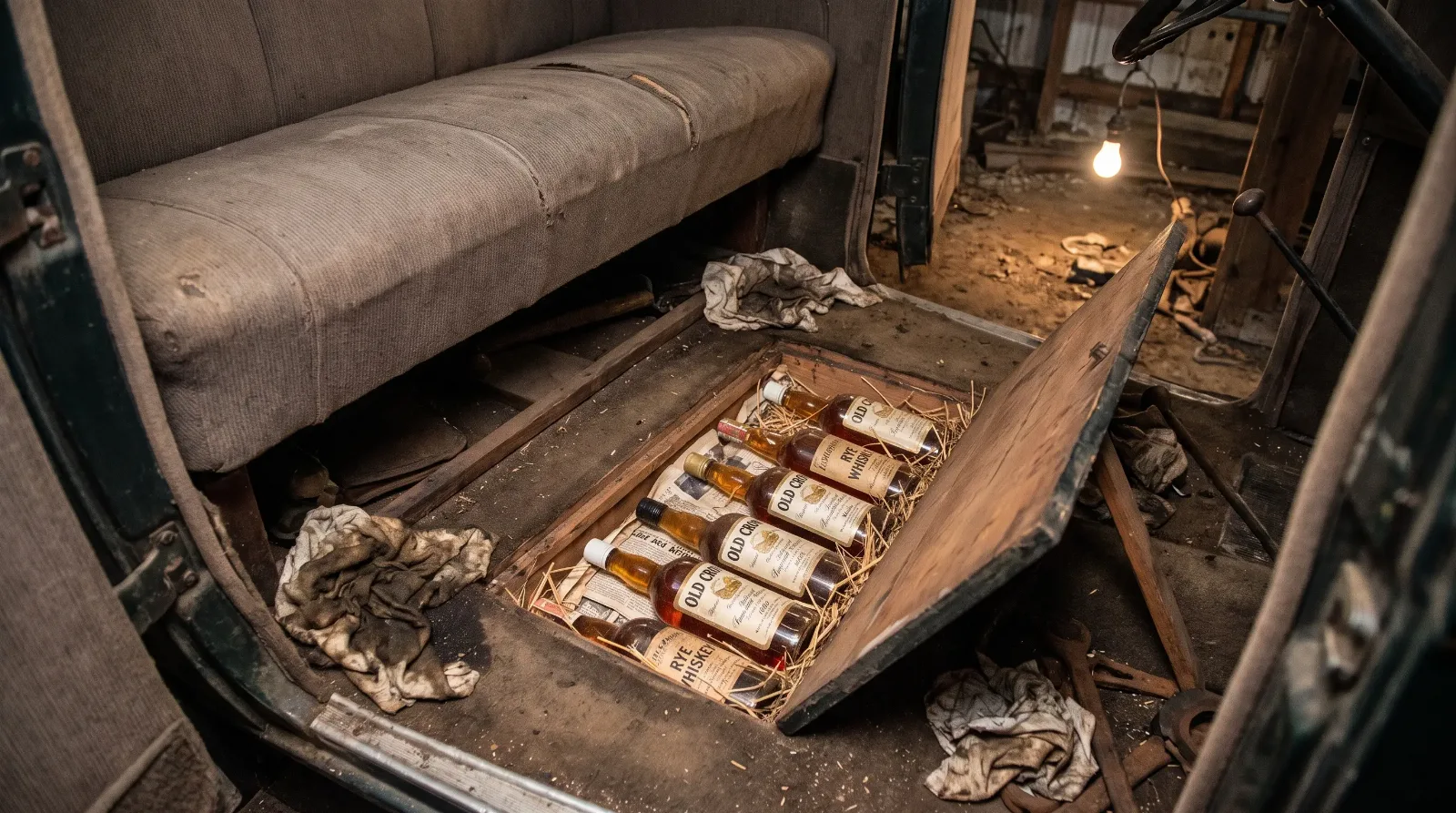
The mechanical ingenuity that went into hiding liquor is a story on its own. Bootleggers built false floors under back seats, hollowed-out spare tires, and modified fuel tanks with a second compartment for product rather than gasoline. Some operators went as far as reinforcing the rear springs and shocks so a heavily loaded car would not sag and give away its cargo to a suspicious deputy watching the road.
Federal and local agents got wise to these tricks fast, which pushed the bootleggers to keep innovating. It became something close to an arms race, with agents learning to spot a car riding low on its springs and runners finding new ways to distribute weight evenly so the car sat level even with a full load. That back-and-forth quietly pushed suspension and chassis engineering in directions the factories were not necessarily planning for, all in service of an industry that officially did not exist.
Speed became the whole business model
For the runners moving product long distances, especially along the eastern seaboard and down from Canada, raw speed mattered more than cargo capacity. A car that could simply outrun the Coast Guard's cutters or a county sheriff's Ford was worth more than one that could carry an extra case but got caught doing it. This need for speed on ordinary roads is part of what fed into the era's fascination with performance, a thread that runs directly into the organized racing scene that grew up alongside it.
There is a real argument that some of the earliest stock car racing culture in the American South grew out of exactly this world, drivers who had learned to handle a loaded, modified car at speed on bad roads while being chased, and who later turned that same skill and the same modified cars toward organized competition once Prohibition ended.
"You can't separate the car culture of the 1920s from what was happening on the back roads at night. Half the mechanical tricks that later showed up in performance shops started as ways to move whiskey without getting caught. Nobody wrote that down in a factory manual, but it happened, and it shaped how a whole generation of drivers thought about their cars."
— Patrick Walsh
The lawmen's side of the arms race
It is easy to romanticize the runners and forget that the other side of this story was equally shaped by the automobile. Federal Prohibition agents and local police forces had to modernize their own fleets to keep pace, and departments that could afford it started buying faster factory cars specifically for pursuit duty rather than relying on whatever had been sitting in the motor pool. Some agencies experimented with radio-equipped cars for the first time during this period, coordinating patrols along known smuggling routes in a way that would have been impossible with the horse-and-foot patrols of a decade earlier.
That modernization did not happen evenly. Rural counties along the Canadian border and in the hill country of the South, where much of the moonshine and rum-running traffic actually moved, often could not match the equipment the wealthier bootlegging operations were running. That mismatch is part of why so many smugglers operated successfully for years before Repeal finally ended the whole business in 1933, and it left local law enforcement with a lasting appetite for faster, better-equipped patrol cars that outlived Prohibition itself.
What survives, and what it means today
Genuine, documented bootlegger cars are rare finds today, and understandably so, since nobody kept careful paperwork on a car built to evade the law. What does survive is mostly stories, family lore about a grandfather's Buick that made a few runs before Repeal, and the occasional car with modification evidence, an odd second fuel line, a reinforced rear spring perch, that hints at a past nobody documented on purpose.
What Prohibition really left behind for the car world is less about specific surviving vehicles and more about a mindset. It normalized the idea of modifying a factory car for performance and concealment, techniques that carried straight through into hot rodding once the amendment was repealed in 1933. The bootlegger's Buick and the hot rodder's coupe are closer relatives than most people realize, and the story of how a family put money together to buy a new car in this same decade, which often meant scraping together cash the legal way while their neighbors made it the other way, gets the next installment here. If the top-dollar side of the era interests you more, the pre-war classics story covers the wider arc this all fits into.
Sources and notes
- Wikipedia: Eighteenth Amendment to the United States Constitution
- Hagerty: Al Capone's Bulletproof 1928 Cadillac Town Sedan
- autoevolution: Al Capone's 1928 Cadillac, the World's First Civilian Armored Car
- History.com: Prohibition is ratified by the states
- Federal Judicial Center: Prohibition in the Federal Courts, A Timeline