
A young clerk in Ohio in 1923 might make around 25 dollars a week if he was doing well. A new Model T touring car cost around 300 dollars. Do the arithmetic and you get roughly three months of pay for the cheapest car in America, which sounds steep until you compare it to a decade earlier, when the same car would have cost that same clerk closer to half a year's wages. This is the 1920s car prices guide, and the numbers tell a story about how fast the automobile went from luxury to necessity.
Car Features
6 min read
What a New Car Cost in the 1920s
A Model T cost roughly three months' wages by 1925. A custom Duesenberg cost fifty times as much. Here is the real price story of the decade.
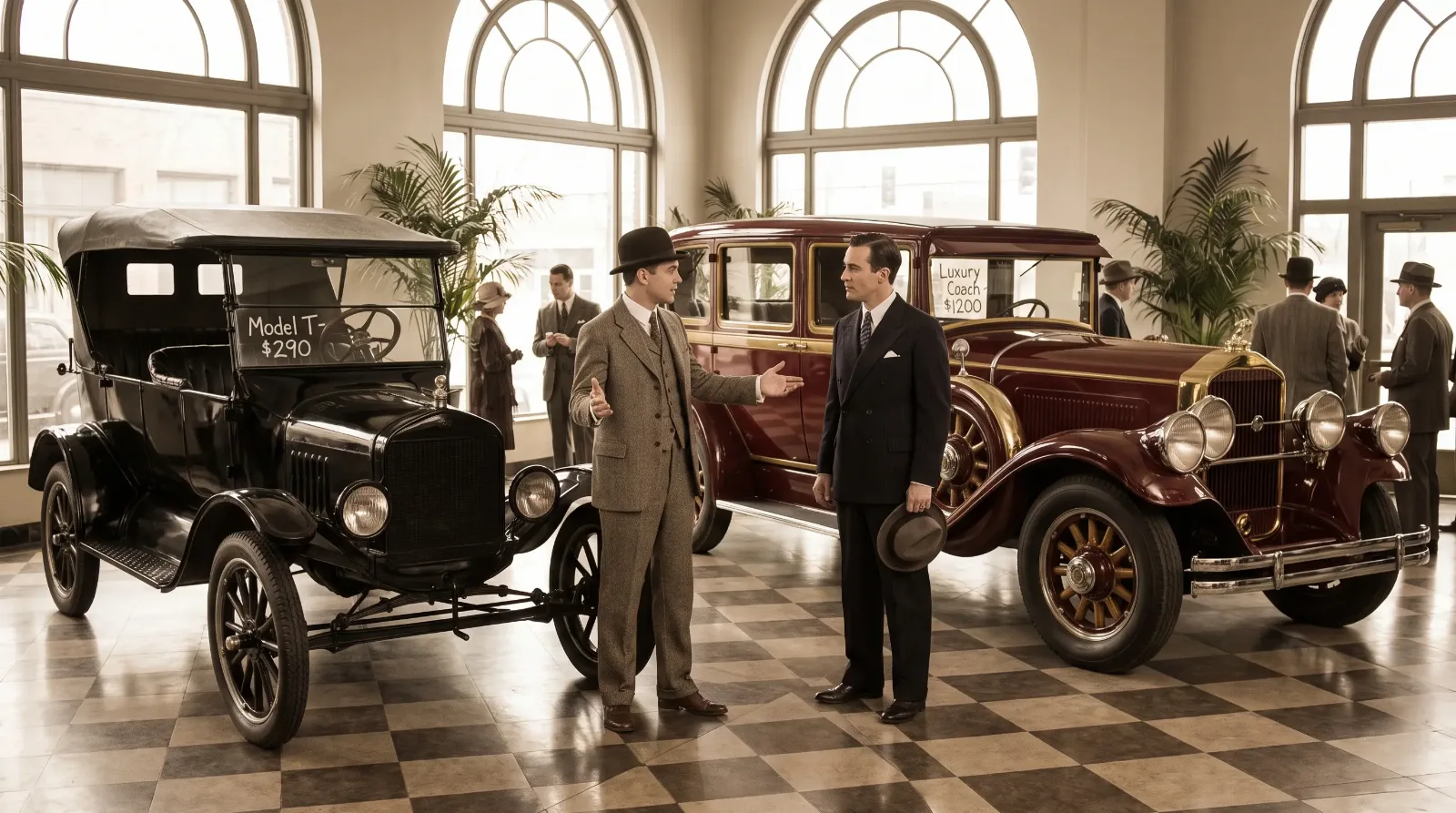
What a dollar actually bought in 1925
Prices across the decade fell for the cheap cars and held roughly steady or rose slightly for the expensive ones, which is a pattern worth sitting with. Ford's relentless drive to cut costs through the moving assembly line and standardized parts pushed the Model T's price down almost every year through the mid-1920s, even as the car itself barely changed. Meanwhile Packard, Pierce-Arrow, and the coachbuilt custom market kept climbing, because those buyers were not price sensitive in the same way.
The result was a widening gap rather than a shrinking one. In 1920 the spread between a cheap car and a top luxury model was significant but not absurd. By 1929 it had stretched to a chasm, a Model T at around 290 dollars against a custom-bodied Duesenberg at 15,000 dollars or more, roughly fifty times the price for what was still, mechanically speaking, a car with four wheels and an engine.
| Car | Approximate new price, 1925 |
|---|---|
| Ford Model T Touring | Around 295 dollars |
| Chevrolet Superior | Around 525 dollars |
| Buick Standard Six | Around 1,150 to 1,670 dollars |
| Packard Single Eight | Around 3,650 to 4,975 dollars |
| Duesenberg Model A | Around 6,500 dollars and up, complete |
Buying on time changed everything
The other half of this story is not the sticker price, it is how people paid it. Before the 1920s, most consumer purchases were cash or nothing, and a car was too expensive for most families to save up for outright while still living. General Motors changed that in 1919 with the founding of GMAC, its own financing arm, letting buyers pay for a car in installments the way they might already be paying off a mortgage or a piece of furniture.
Installment buying spread fast because it worked. By the middle of the decade, the majority of new cars in America were sold on some kind of time payment plan rather than cash on the barrel. That single financial innovation probably did as much to put the country on wheels as anything Henry Ford did on the factory floor, since it let a family buy the car today against wages they had not earned yet.
Wages, prices, and the arithmetic of ownership
Average factory wages through the decade sat somewhere in the range of 1,200 to 1,500 dollars a year for a skilled worker, which puts the Model T at roughly a fifth to a quarter of an annual income by the middle of the decade. That is still a real commitment, especially once insurance, gasoline, and repairs are added in, but it had moved decisively out of luxury territory and into the range of a serious but achievable purchase for a working family, particularly with installment financing spreading the cost over a year or more.
Used cars mattered here too, and get overlooked in most price discussions. As newer models pushed older ones out of showrooms, a healthy secondhand market developed, letting buyers who could not stretch to a new Model T pick up a used one for a fraction of the original price. That secondhand supply is part of why car ownership spread through the American middle and working classes faster than the new-car sales figures alone would suggest.
"People look at a 300 dollar sticker price from 1925 and think that sounds cheap by any measure. It wasn't cheap to the family paying it. It was a real sacrifice, and the fact that so many families made that sacrifice anyway tells you how much the automobile had become a part of ordinary American life by the middle of that decade."
Patrick Walsh
What repairs and running costs added on top
The sticker price was never the whole bill, and any honest accounting of 1920s car ownership has to include what it cost to actually keep one running. Gasoline ran a few cents a gallon through most of the decade, cheap by modern standards but a real recurring cost against a working wage, and tires wore out fast enough on the rough roads of the period that replacement rubber was a genuine budget line rather than an occasional expense. Insurance was not yet the near-universal requirement it is today, but many owners carried at least basic coverage, particularly once state governments began experimenting with financial responsibility laws late in the decade.
Add it all up and the true annual cost of owning even a cheap car could run close to what the car itself had cost to buy, spread across gasoline, tires, oil, minor repairs, and whatever registration fees a state charged. That total cost of ownership is part of why the price tag alone understates just how significant a purchase a new car represented for an ordinary family, even at the low end of the market.
What the numbers add up to
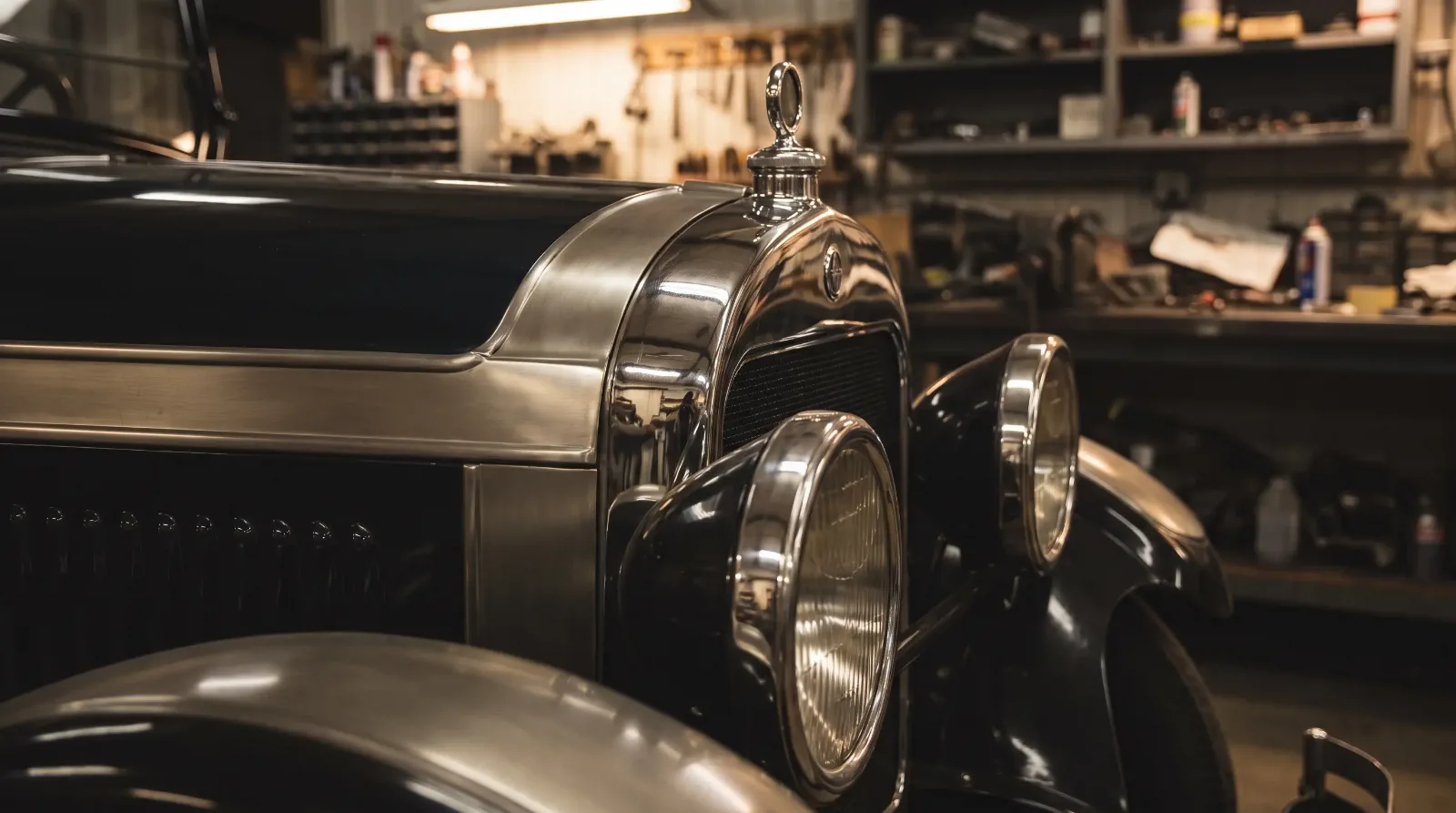
The price story of the 1920s is really two stories running side by side. One is Henry Ford and his imitators grinding costs down until a car became something a working family could plausibly own. The other is the luxury makers pulling further away, building for a smaller and wealthier customer who was not shopping on price at all. Both stories are true at once, and understanding that split is the key to understanding why the decade produced both the mass-market Model T and the untouchable Duesenberg within the same ten years. If it is the details and materials of that era's cars that interest you more than the dollar figures, keep reading for how the trim on these same cars changed right alongside the prices.
Sources and notes
Related Reading
Have a
Classic Car
for Sale?
Reach thousands of serious classic car collectors across the US.
Sell It Here →
Are You a Classic Car Dealer?
List your full inventory and connect with targeted classic car buyers.
Join as a Dealer →

About the author
Patrick Walsh
Automotive journalist covering classic car shows, events, and the enthusiast community across North America.
Comments
Be the first to comment on this article.