
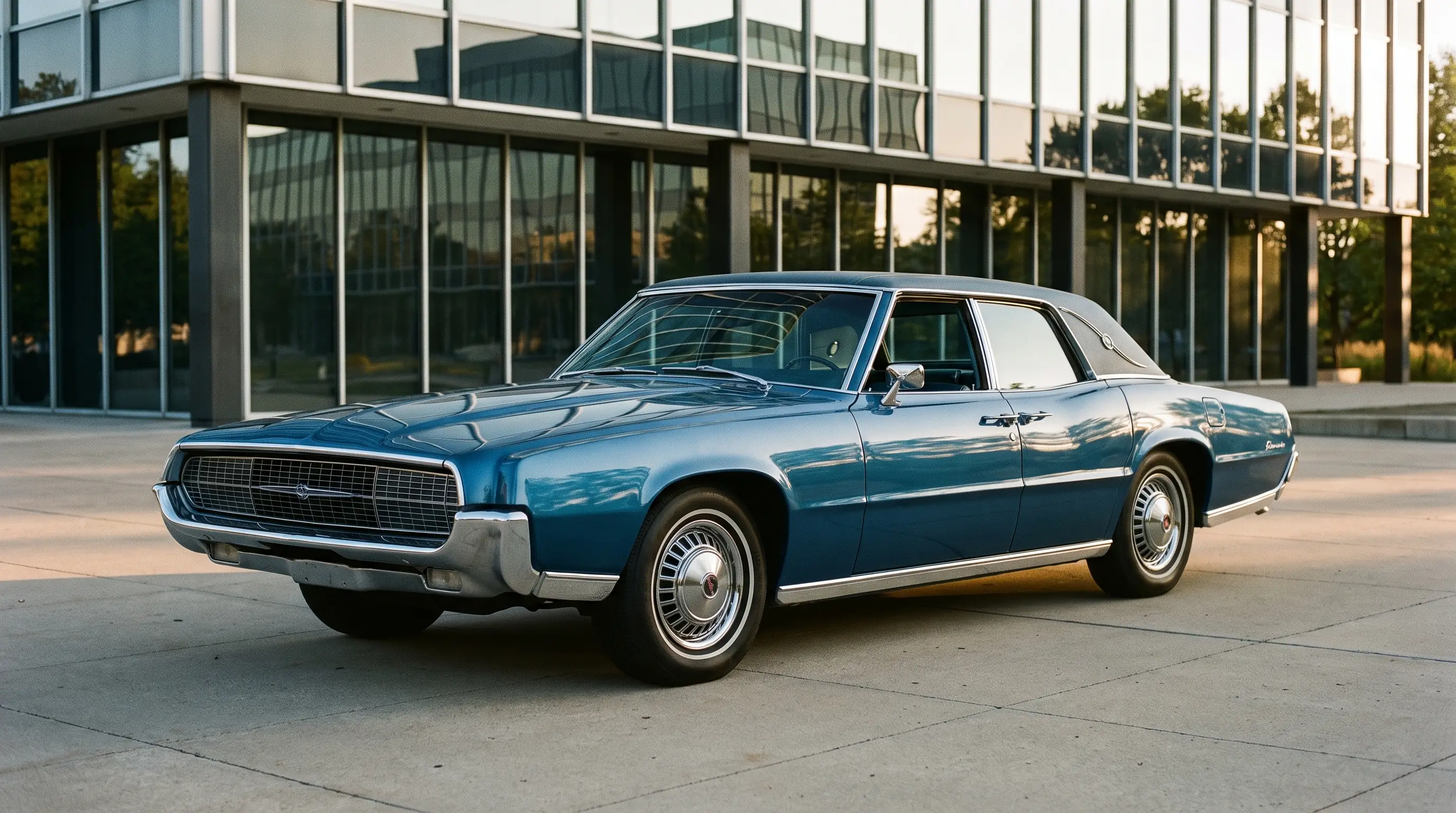
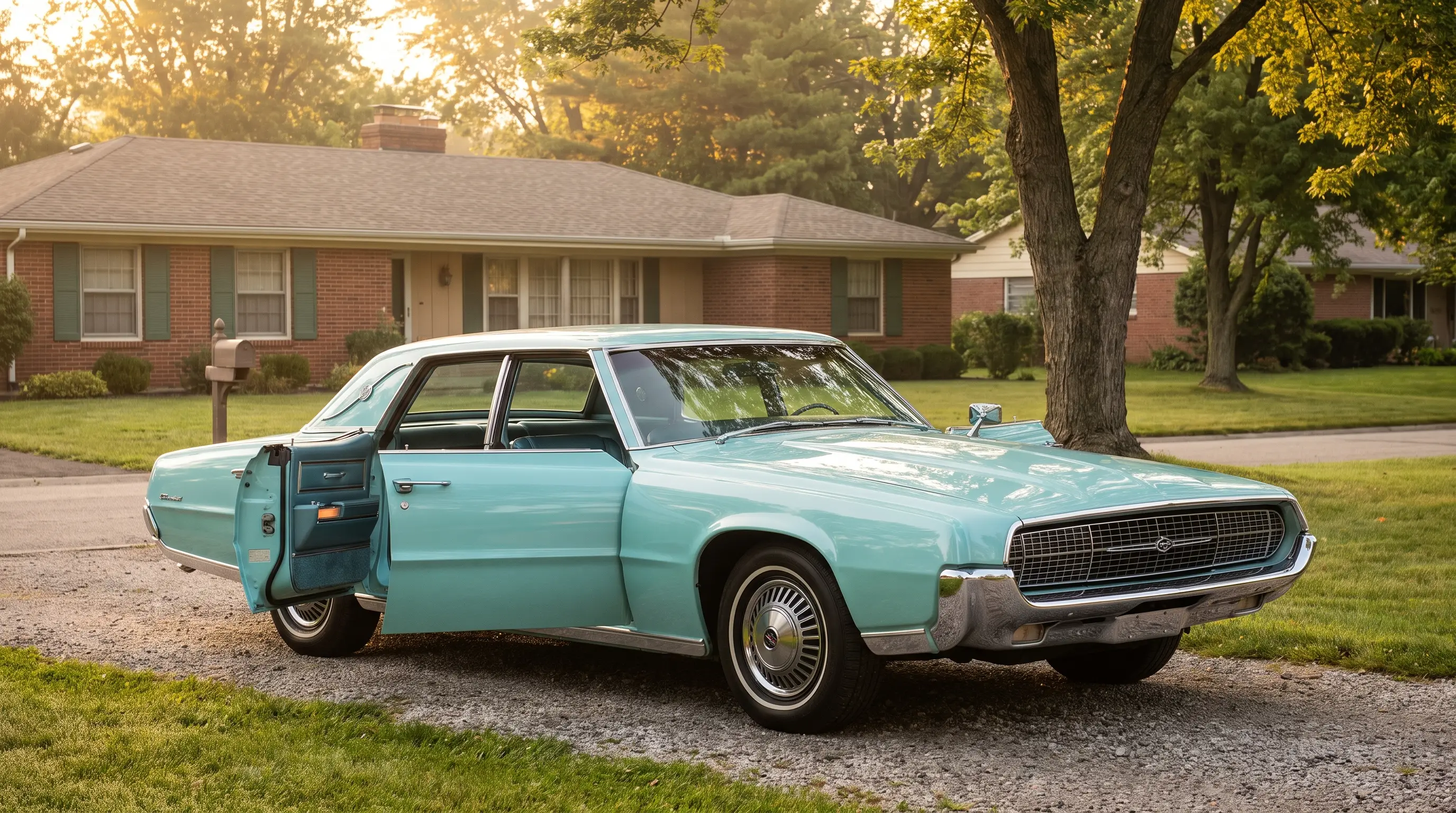
A fellow named Ron pulled into our spring show a few years back in a four-door Thunderbird, and half the field wandered over to argue about whether the thing was real. Some folks were certain Ford never built a Thunderbird with four doors. Ron just leaned on the fender and let them talk, because he had the build sheet folded in the glovebox and he was in no hurry. That car was a 1967 Ford Thunderbird Landau sedan, one of the strangest and most quietly bold decisions the model ever made, and it settled the debate the moment he opened the rear doors and they swung backward into the wind.
Car Features
9 min read
The Glamour Bird (1967-1971): When the Thunderbird Grew Four Doors
The 1967 Ford Thunderbird added a four-door Landau sedan with rear-hinged suicide doors, the only four-door Thunderbird Ford ever built.
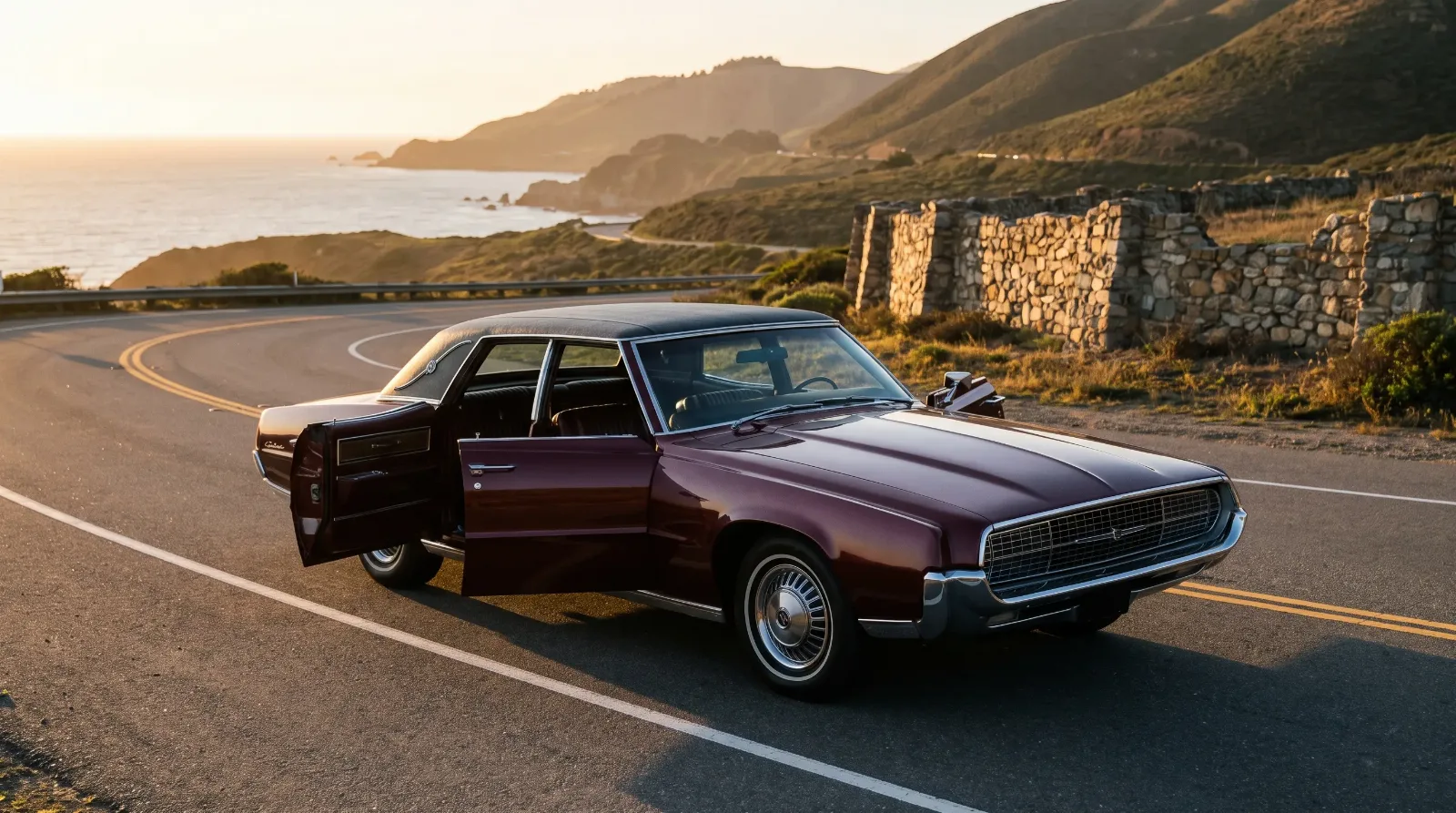
The fifth generation, built from 1967 through 1971, is the one collectors nicknamed the Glamour Bird. It is the chapter where the personal luxury coupe grew a back seat you could actually reach, added two doors, and asked buyers to rethink what a Thunderbird was supposed to be. For a car that started life in 1955 as a two-seat roadster, that is a long way to travel.
How the Thunderbird ended up with four doors
By the mid 1960s the Thunderbird had already abandoned its two-seat roots and settled into life as a big, comfortable coupe. Sales were healthy but the personal luxury field was filling up fast, and Ford wanted a way to reach the buyer who liked the Thunderbird's style but needed to carry passengers without folding them into a hardtop's back seat. The answer, arriving for 1967, was a four-door Landau sedan sold right alongside the two-door hardtop and the two-door Landau coupe.
What made it memorable was not just the extra pair of doors. The rear doors were rear-hinged, the style people call suicide doors, so the whole car opened up like a cabinet when both doors on a side were swung wide. Ford leaned into the theater of it. The sedan rode on a longer wheelbase than the coupes, 117.2 inches against the two-door's 115 inches, and the extra length went straight into rear-seat room and a sense of occasion.
This was also the generation that moved the Thunderbird back onto a separate frame. The fourth generation had used unit construction, but for 1967 Ford went to body-on-frame, partly to quiet the ride and partly to make the sedan practical to engineer. If you want the longer arc of how the model kept reinventing itself, our ford thunderbird history retrospective traces every turn from roadster to land yacht.
The 1967 restyle and the look of the early cars
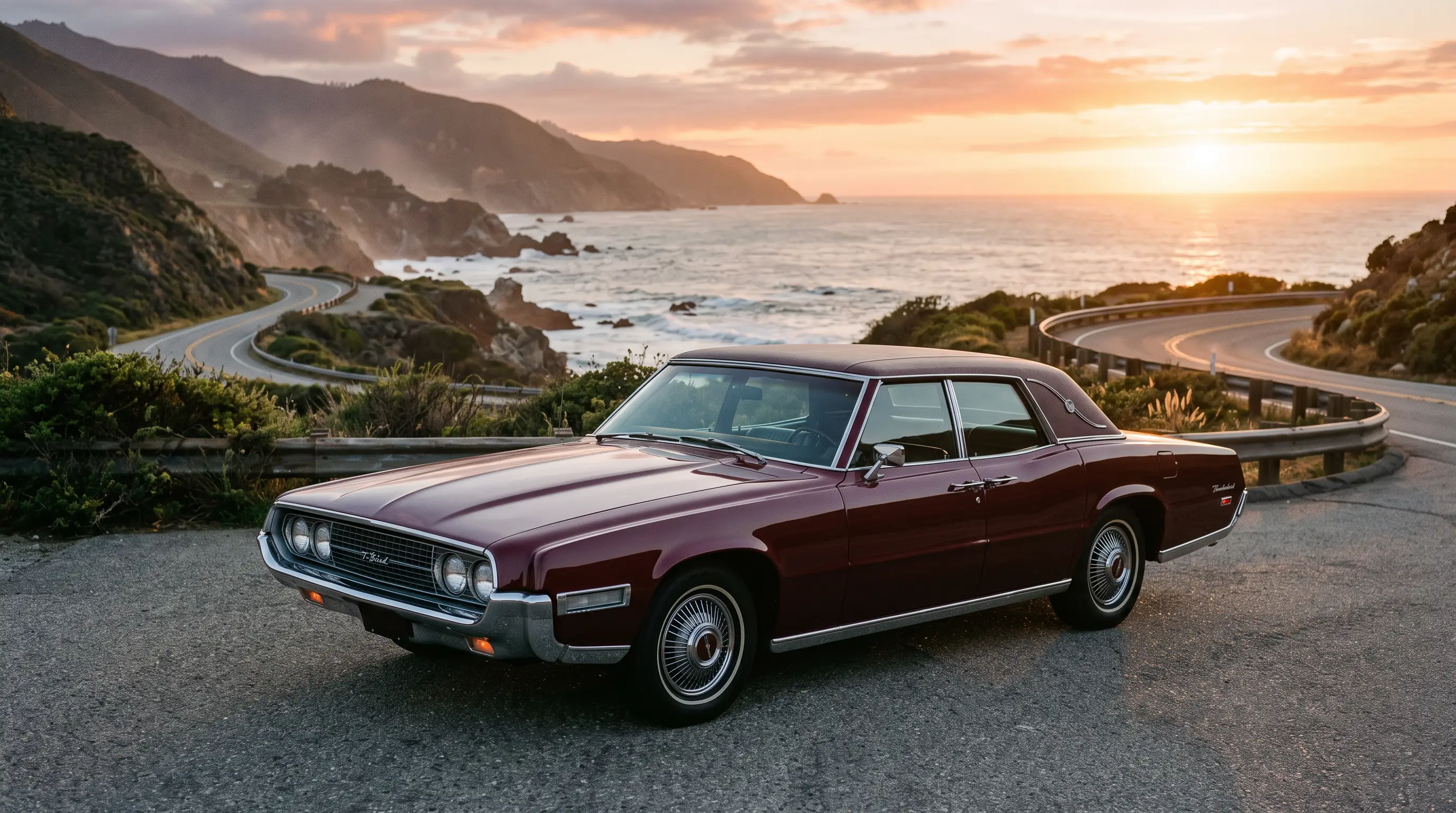
The first Glamour Birds, the 1967 and 1968 cars, wore a heavy, formal front end with hidden headlamps behind a full-width grille. Collectors sometimes call the early nose the frog-eye or the bunkbed front depending on which corner of the country they learned the car in, and neither name is exactly flattering. The look was deliberate. Ford wanted the Thunderbird to read as a luxury car first and a sporting car second, and the wide grille and vinyl-roof Landau band did that job.
Inside, these cars committed fully to the personal luxury idea. Deep bucket or bench seating, a wraparound cockpit feel up front, sequential turn signals blinking across the tail, and enough sound deadening to make the thing feel like a smaller Lincoln. That family resemblance was not an accident, since the Thunderbird and Lincoln shared engineering thinking in this era, and the sedan in particular felt like it wanted to be mistaken for something more expensive.
Bunkie Knudsen and the 1970 beak
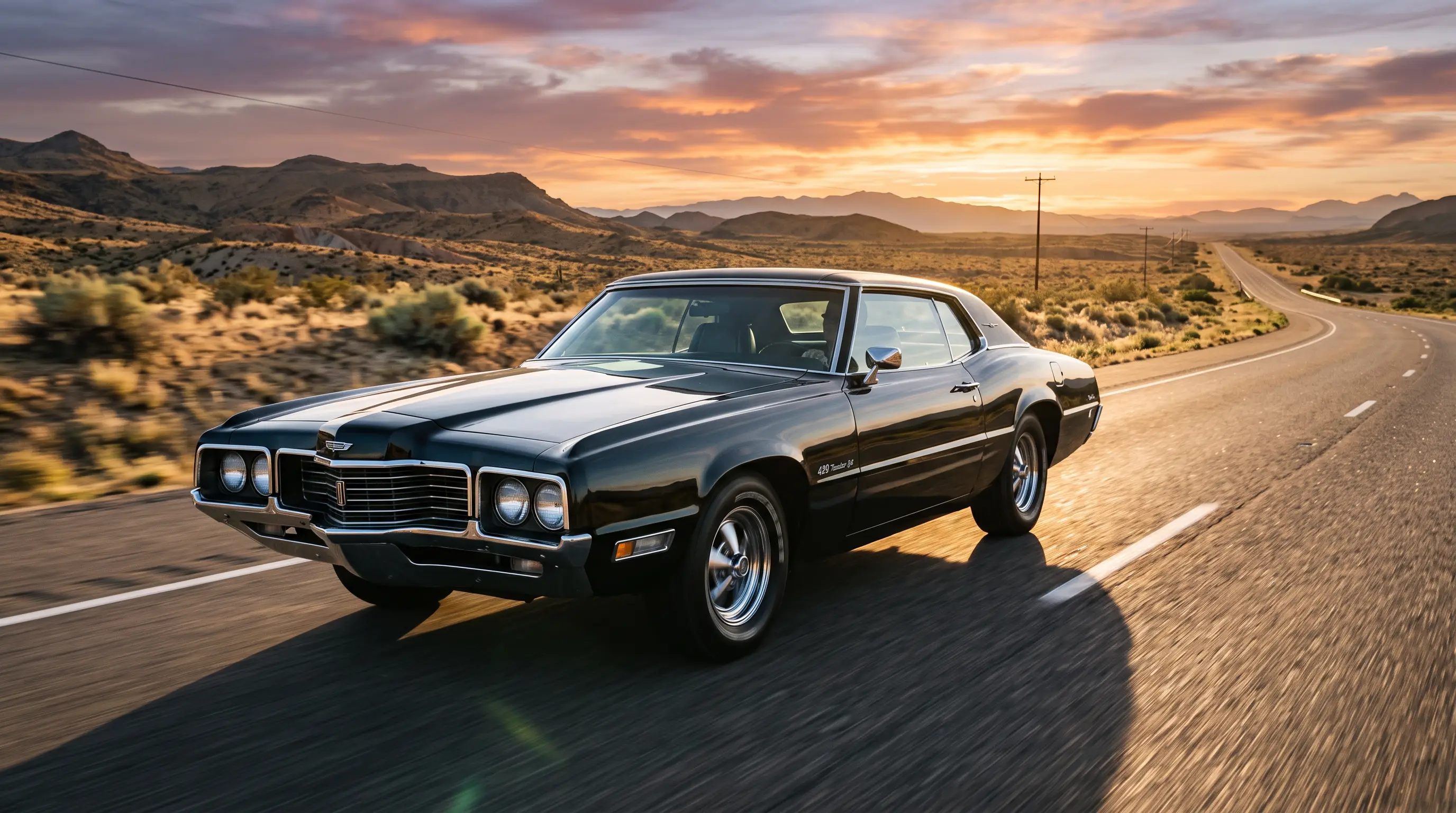
The car changed character in 1970, and the reason has a name. Semon Knudsen, known to everyone as Bunkie, arrived at Ford from General Motors in 1968 and brought designer Larry Shinoda with him. For 1970 the Thunderbird got a pointed, protruding front end that people immediately started calling the bird beak or the bullet nose. It was aggressive in a way the 1967 car never tried to be, and it split opinion then just as it splits opinion at shows now.
I have stood in enough club parking lots to tell you the beak-nose 1970 and 1971 cars have their own devoted following. Some members chase the clean formality of the early cars, others want the Shinoda beak, and the two camps needle each other in the friendliest way. The engines underneath had grown too, and if the powertrain side of the story is what pulls you in, the tale of how these cars were motivated is worth a look too.
"I have watched people spend twenty minutes insisting a four-door Thunderbird cannot exist, right up until the owner hands them the Marti Report. The paperwork always wins, and the look on their faces is the best part of the whole weekend."
- Wayne Coburn
The rivals the Glamour Bird was chasing
None of this happened in a vacuum. The late 1960s were the golden age of the personal luxury car, and the Thunderbird was fighting for a buyer who had real choices. The Buick Riviera had arrived in 1963 and set the template. The Oldsmobile Toronado brought front-wheel drive and a fastback silhouette in 1966. Cadillac answered with the Eldorado in 1967, the very year the Glamour Bird debuted. Every one of those cars promised the same thing, a big American coupe that felt special without being a full-size land yacht.
The Thunderbird's play in that crowd was the four-door. None of its direct rivals offered a sedan with suicide doors, so Ford staked out a corner of the market nobody else wanted to contest. Whether that was clever or simply odd is a debate our club has never fully settled, but it gave the Thunderbird something to talk about that the Riviera and the Toronado could not match. The sedan was the conversation piece, and conversation sells cars.
I have owned my share of these cars and driven more of them than I can count on club tours, and the thing that always strikes me is how differently the sedan carries itself. It feels less like a sporty coupe with extra doors and more like a small, private limousine. Back-seat passengers get real space and real dignity, which is precisely what a two-door Thunderbird never offered. Ford was betting there were buyers who wanted the name and the style but had grown out of the coupe's cramped rear bench, and for five years that bet paid off well enough to keep the sedan in the catalog.
What was under the hood
The Glamour Bird was never a lightweight, so Ford gave it big-block muscle to move it. The standard engine for 1967 was the 390 cubic inch FE V8, with the larger 428 cubic inch FE available for buyers who wanted more effortless push. Ford then introduced the 429 cubic inch 385-series Thunder Jet V8 in 1968, which took over as the primary big-block and remained the headline engine through the 1970 and 1971 restyle, when the 390 briefly returned as a lower-cost option. None of these cars were built to be drag racers. They were built to gather speed quietly and hold it on an interstate all day.
| Detail | Fifth-generation Thunderbird (1967-1971) |
|---|---|
| Years built | 1967 to 1971 |
| Nickname | Glamour Bird |
| Body styles | Two-door hardtop, two-door Landau, four-door Landau sedan |
| Rear doors (sedan) | Rear-hinged suicide doors |
| Construction | Body-on-frame |
| Standard V8 | 390 cubic inch FE (1967) |
| Optional / later V8 | 428 FE (1967-68), then 429 Thunder Jet as headline engine 1968-1971 |
| Design note | Larry Shinoda beak nose arrives 1970 |
Because the sedan carried extra weight and the longest wheelbase in the range, it leaned hardest on that big-block torque. A four-door Glamour Bird with the 429 is not quick by modern numbers, but it moves with a kind of unhurried confidence that suits the whole idea of the car.
Production, rarity and why the sedan matters
Total Thunderbird volume in this generation was solid but not enormous, and the four-door Landau was always the minority body style. The two-door cars outsold the sedan every year, which is exactly why the four-door is the one that stops traffic at a show today. Survivors are thinner on the ground than the coupes, and a clean, documented sedan with its suicide doors aligning properly is a genuinely uncommon thing to find.
The sedan was quietly dropped after 1971, and when the Thunderbird returned for 1972 it was a two-door again, bigger and plusher than ever. That makes the 1967 to 1971 four-door a closed chapter. Ford tried the idea once, committed to it for five model years, and never went back. For collectors, that combination of oddity and finality is the appeal. You are not just buying a luxury coupe from the late 1960s, you are buying the only four-door Thunderbird the factory ever made.
Values have crept up as more people discover the story, though the Glamour Bird still trades for less than the celebrated two-seat 1955 to 1957 cars. That gap is part of what makes it interesting to a certain kind of buyer. If the four-door itch has set in, you can shop classic Thunderbird listings and see how the sedans stack up against the coupes for yourself.
The car that keeps the argument going
Ron sold that sedan eventually, to another club member who had wanted one for years, and the car still shows up at our events wearing the same quiet confidence. Every single time, somebody new walks up and says a four-door Thunderbird cannot be real, and every single time the owner opens those backward doors and lets the paperwork do the talking. That is the Glamour Bird in a sentence. It is the Thunderbird that dared to be different, got called strange for it, and turned out to be one of the most memorable things Ford ever put the name on.
Sources and notes
- Ford Thunderbird (fifth generation) - Wikipedia
- Curbside Classic: 1967 Ford Thunderbird Landau Sedan
- The More-Door Thunderbirds, 1967-71 - Mac's Motor City Garage
- 1967 Ford Thunderbird 4-Door Landau 428 specs - Automobile Catalog
- 1969 Ford Thunderbird Thunder Jet 429 specs - Automobile Catalog
- Car of the Week: 1967 Ford Thunderbird 4-Door - Old Cars Weekly
Related Reading
Article
The Ford Thunderbird Story: How Ford Invented the Personal Luxury Car
Article
The Flair Bird (1964-1966): The Last Convertible Thunderbird
Article
Thunderbird Engines: From the Y-Block to the 428 Big Block
Article
The 1967 Thunderbird: The Four-Door Landau
Article
The Suicide-Door Thunderbird Sedan: The Only One
Article
Body-on-Frame Again: The 1967 Redesign
Article
The 429 Thunder Jet V8
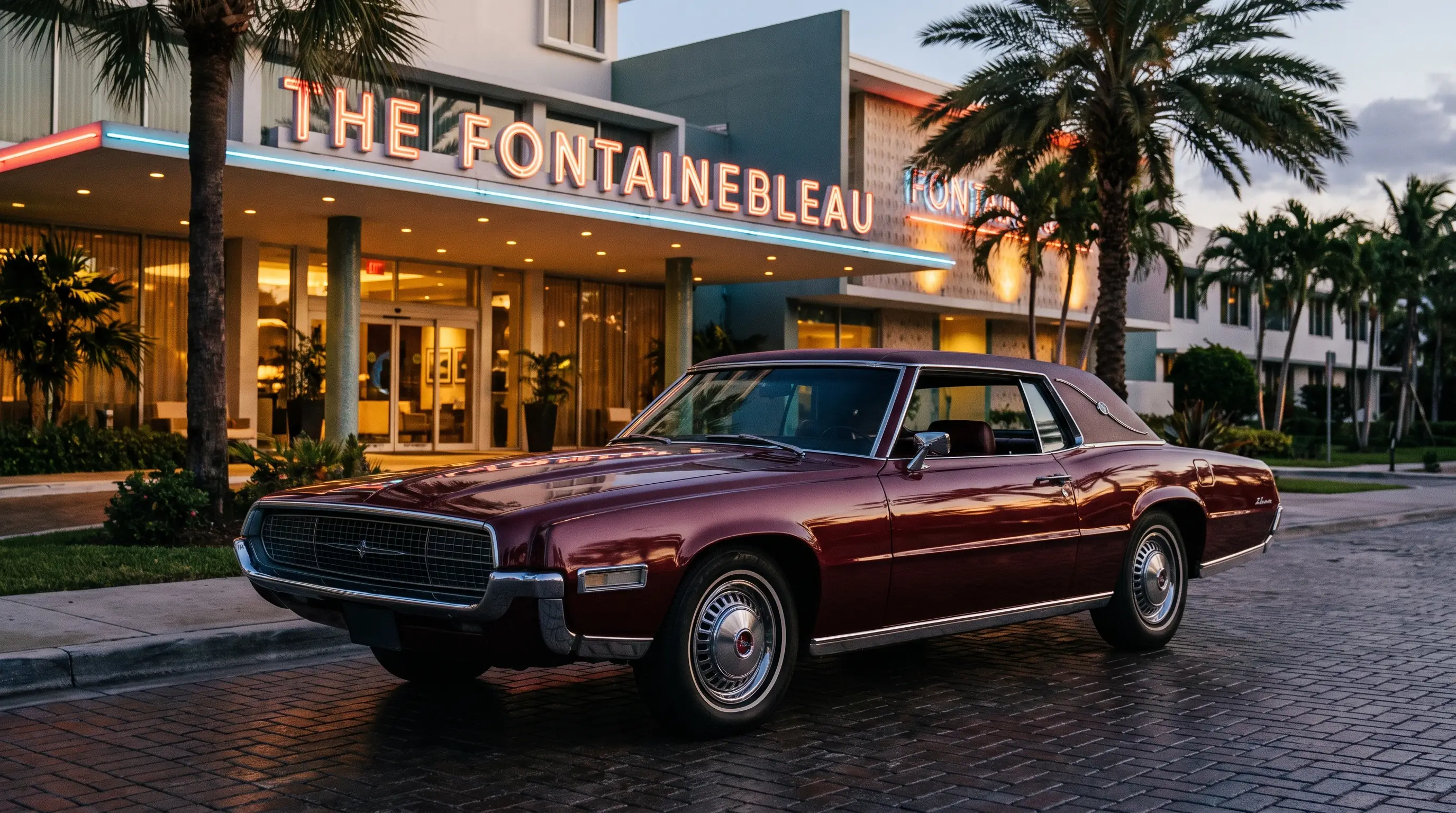
Article
The 1968-69 Thunderbird: Refining the Glamour Bird
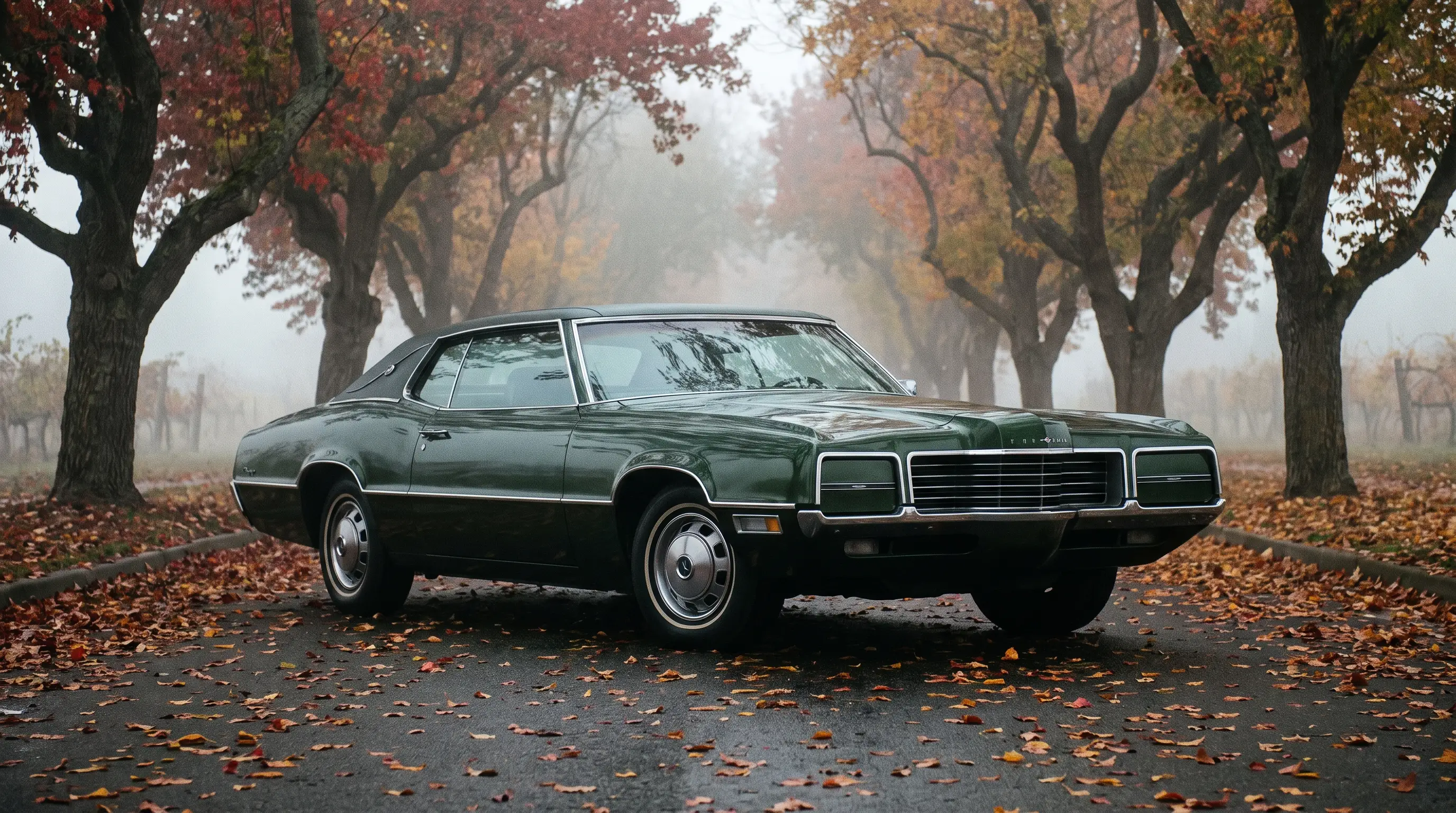
Article
The 1970-71 Thunderbird and the Bold Front
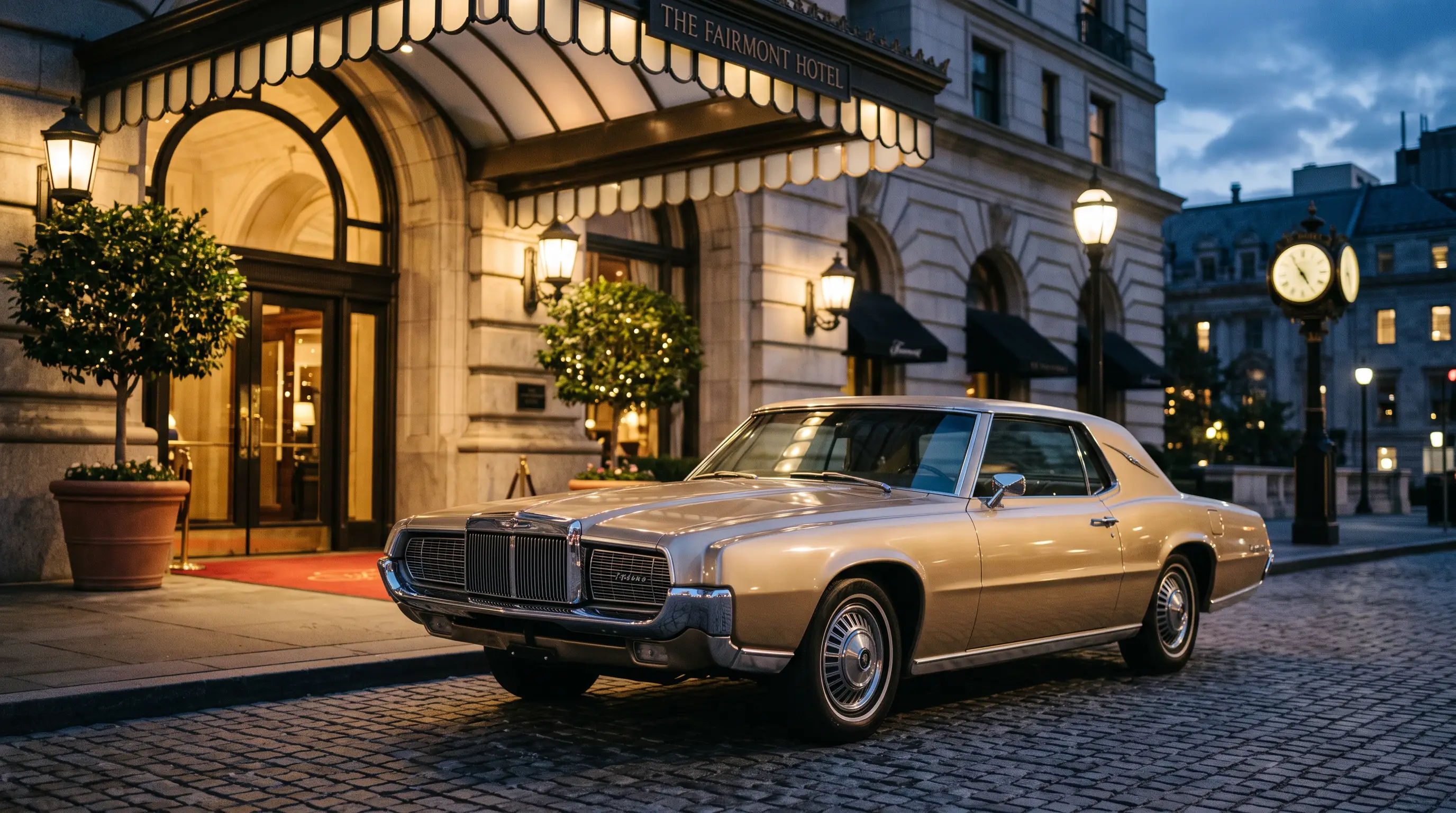
Article
How the Thunderbird Moved Upmarket Toward Lincoln
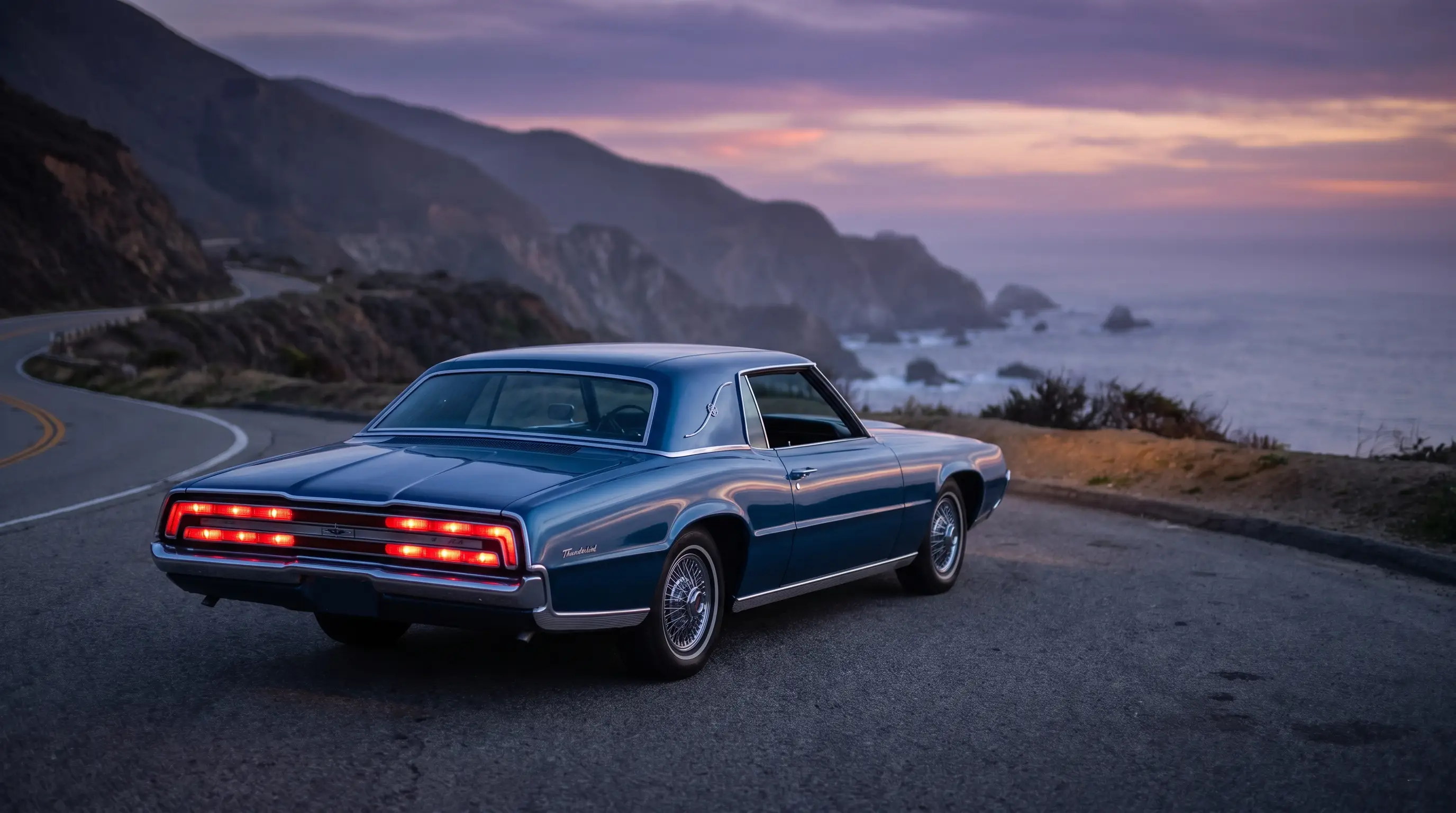
Article
Glamour Bird Styling
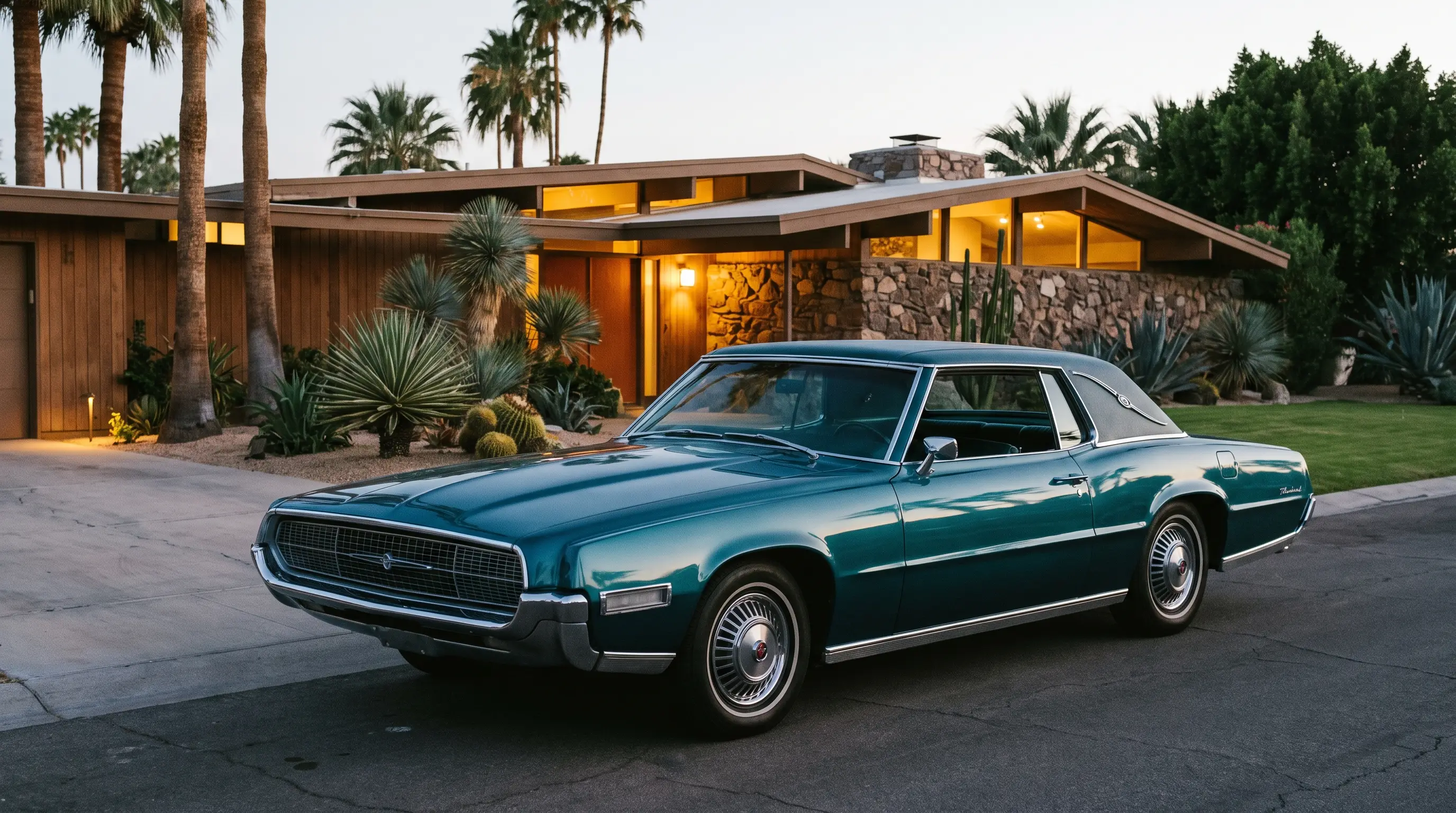
Article
The Personal Luxury Segment at Its Peak
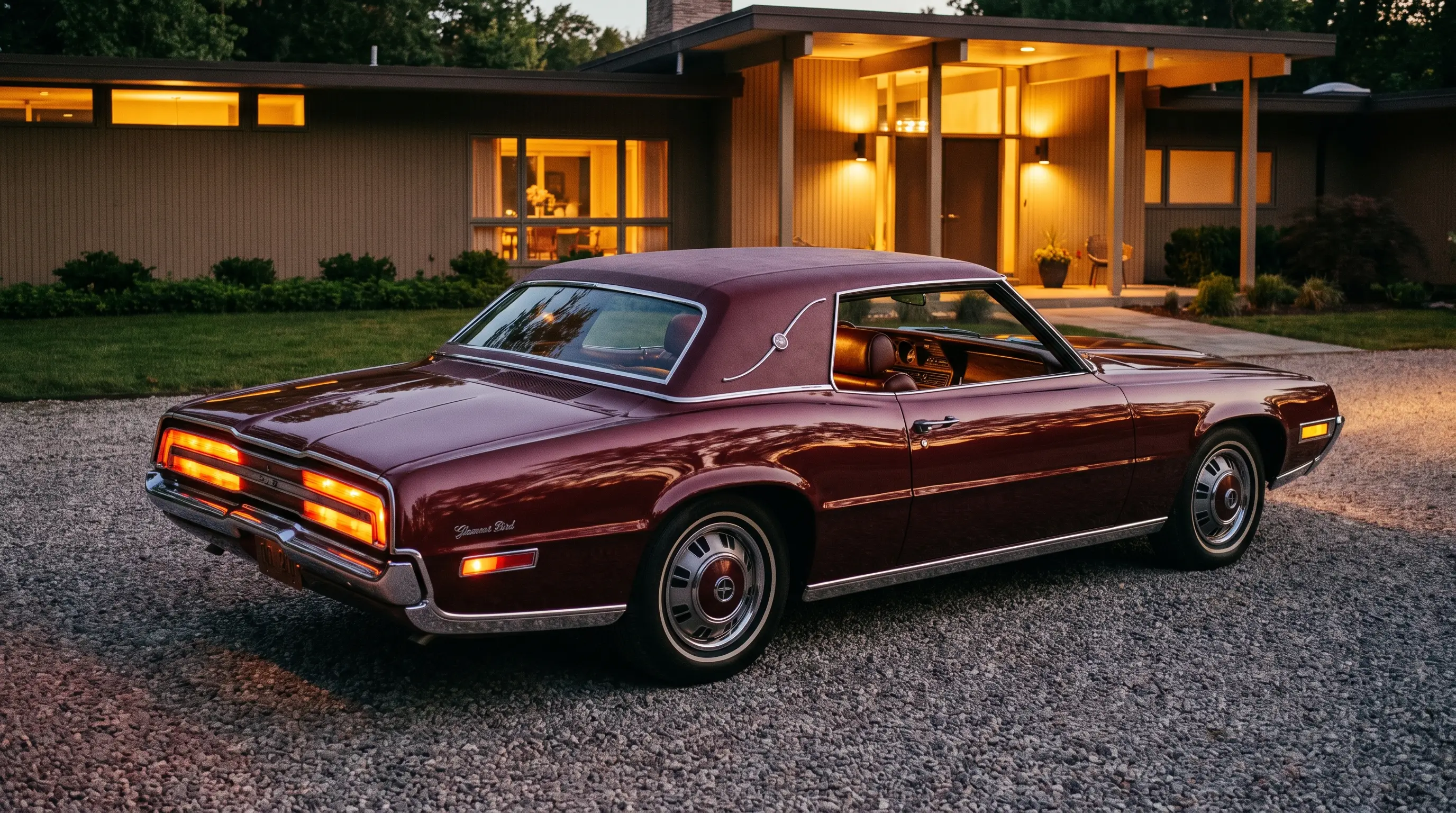
Article
Colors and Luxury Options of the Glamour Bird
Article
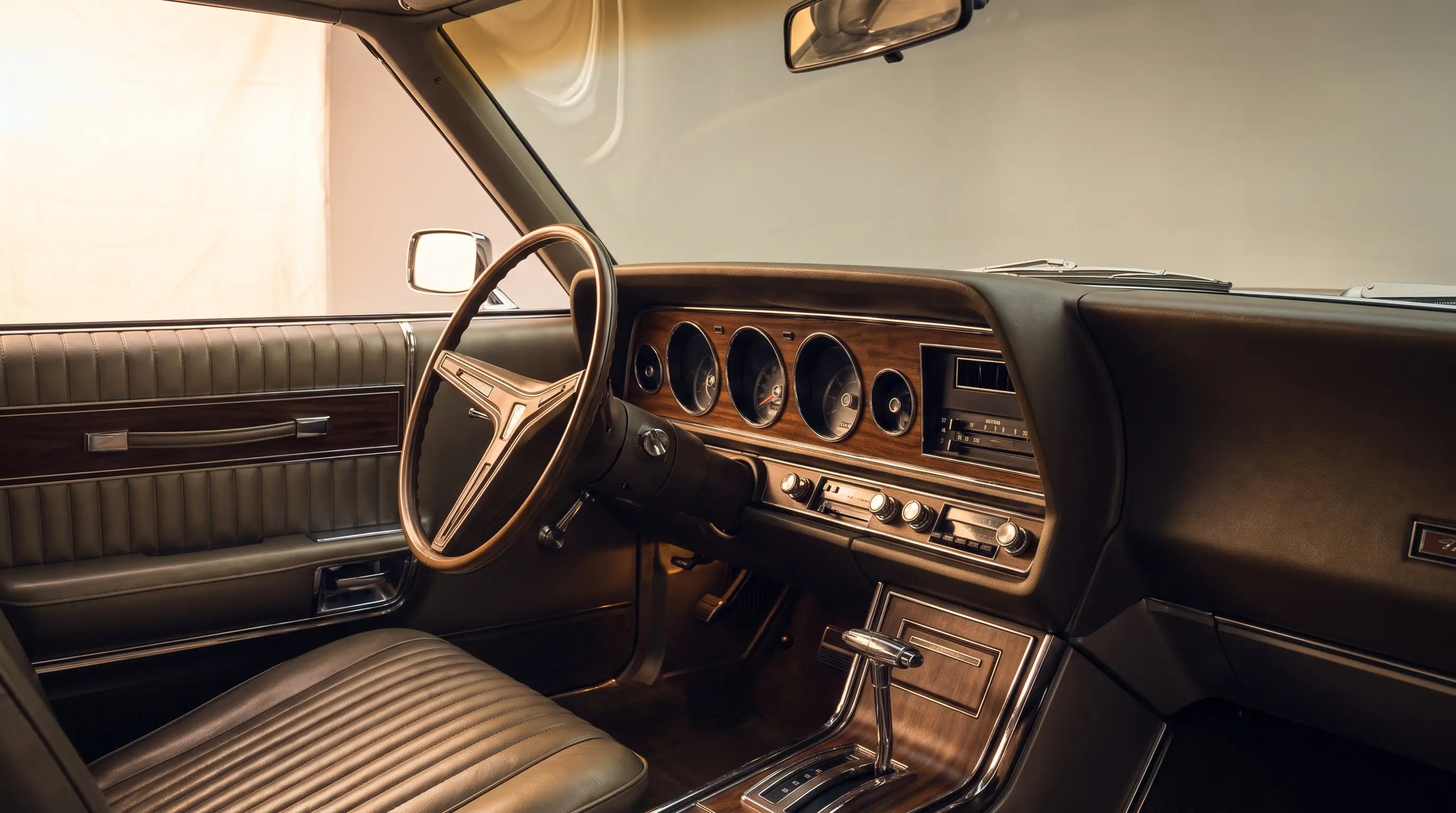
The Fifth-Generation Interior
Article
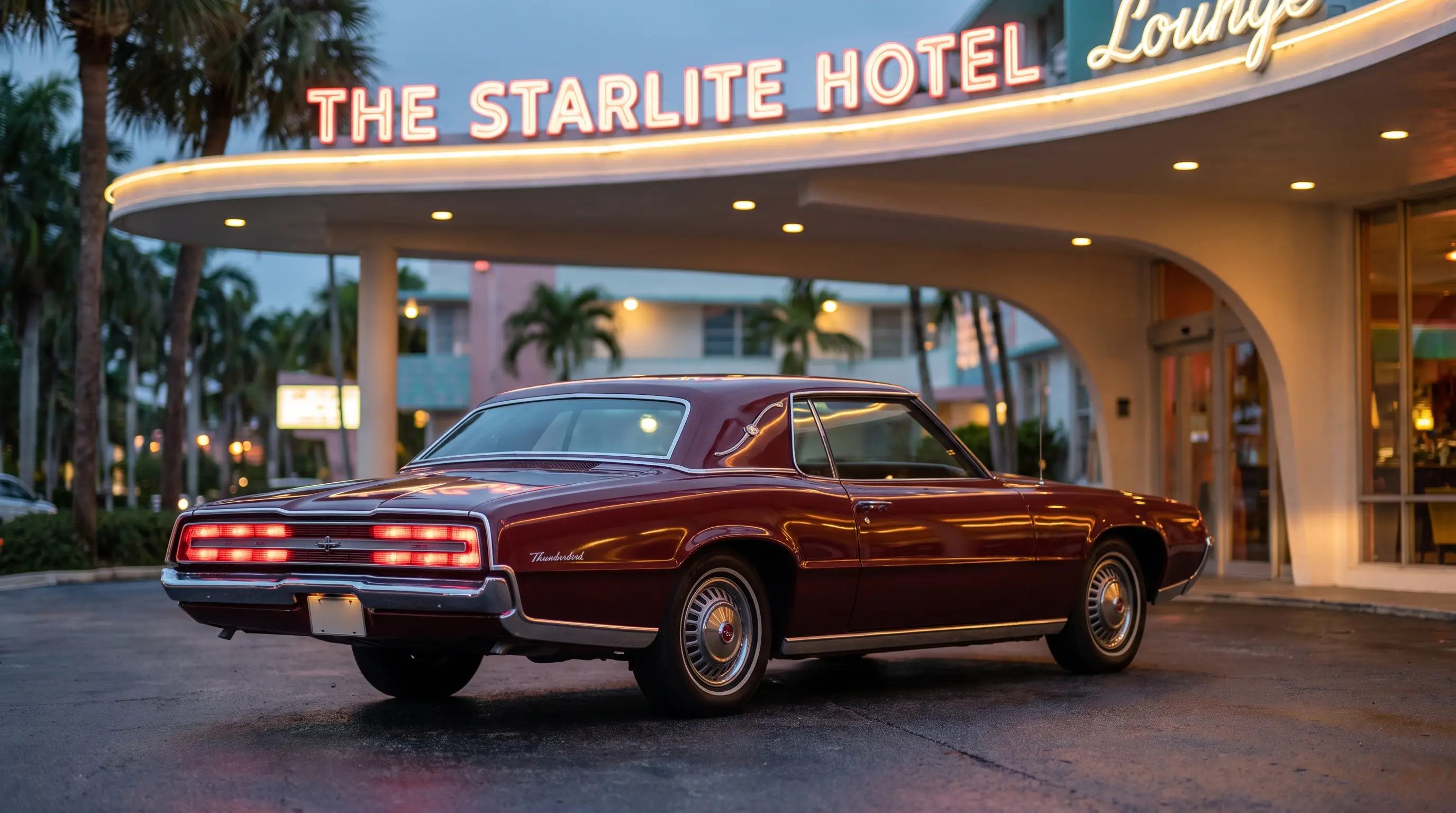
Collecting the 1967-1971 Thunderbird Today
Have a
Ford Thunderbird
for Sale?
Reach thousands of serious classic car collectors across the US.
Sell It Here →
Are You a Classic Car Dealer?
List your full inventory and connect with targeted classic car buyers.
Join as a Dealer →
#classic ford
#ford thunderbird
#suicide doors
#personal luxury
#Glamour Bird
#1967 Thunderbird
#four-door Thunderbird

About the author
Wayne Coburn
Longtime Corvette owner, judge and club figure who knows the cars, the records and the people behind them.
Related Listings - Ford Thunderbird




Comments
Be the first to comment on this article.