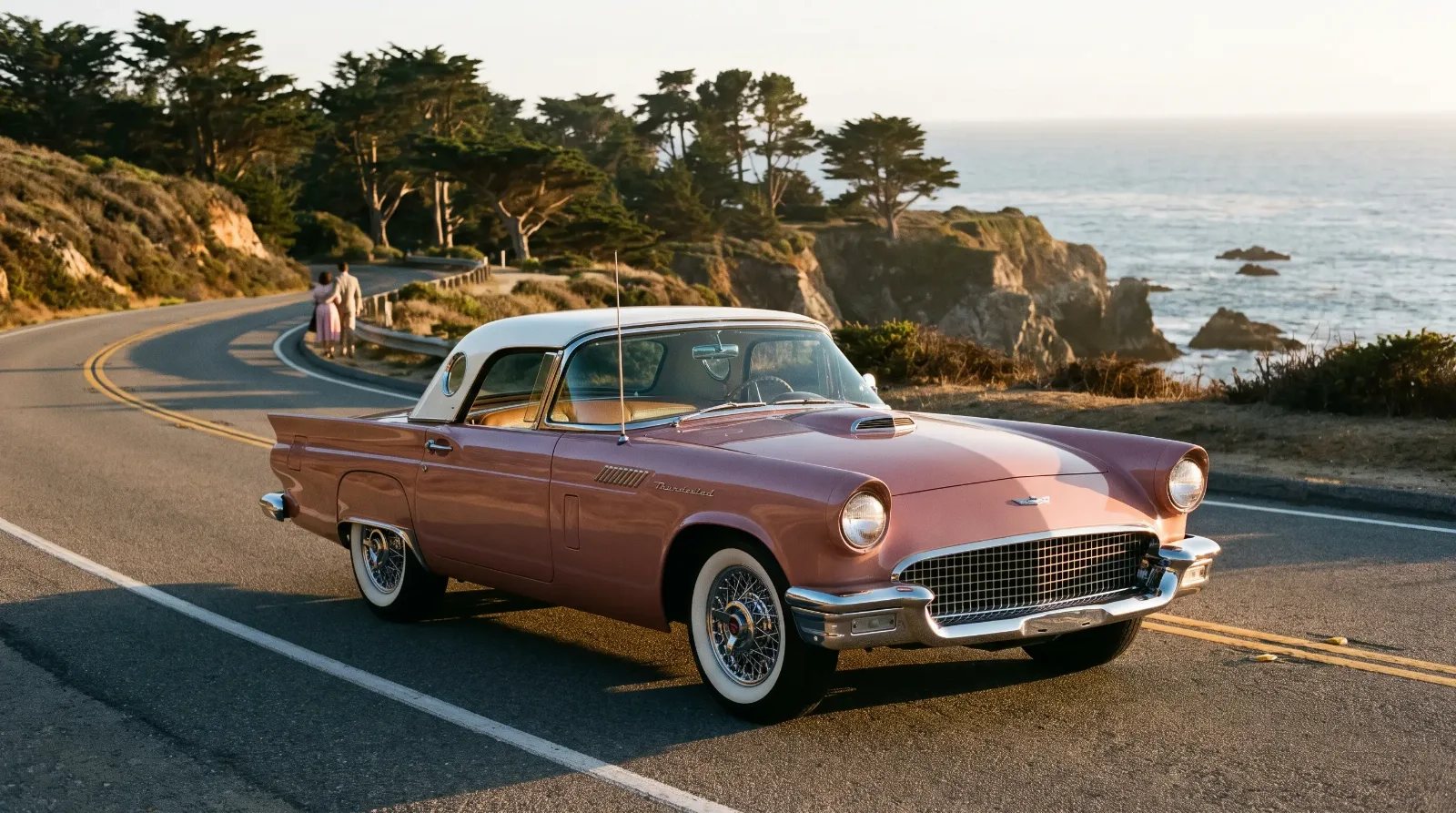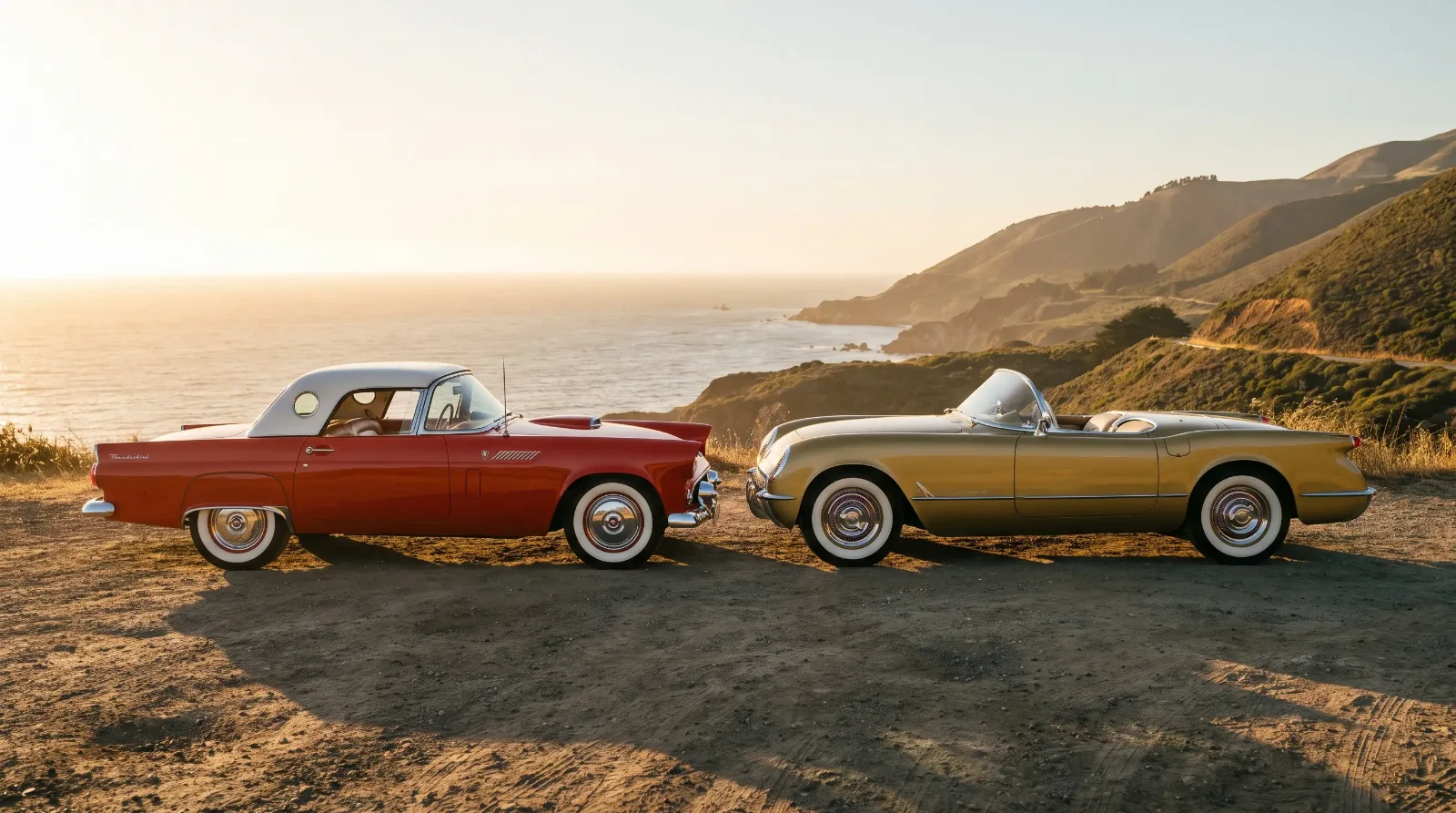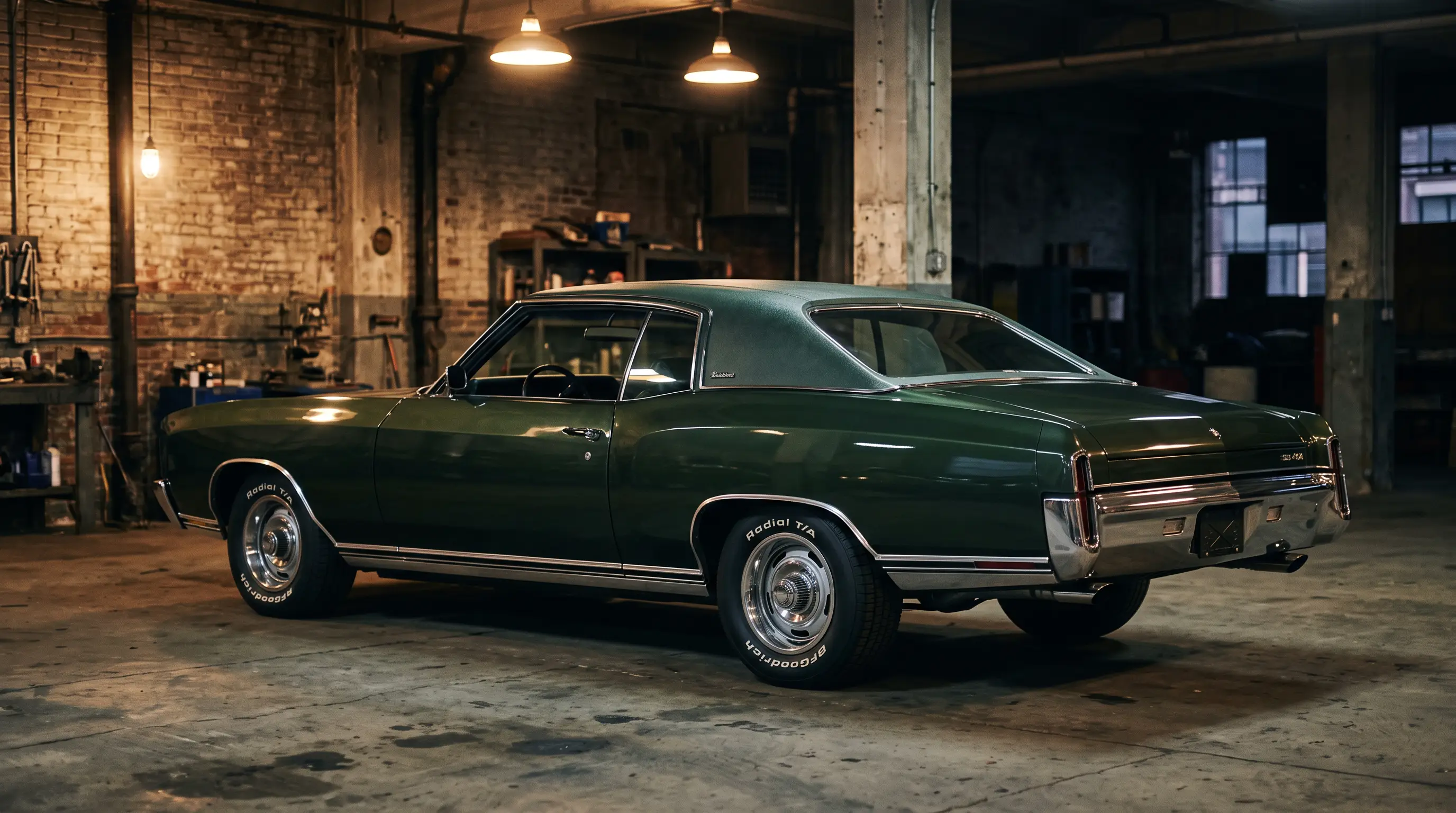
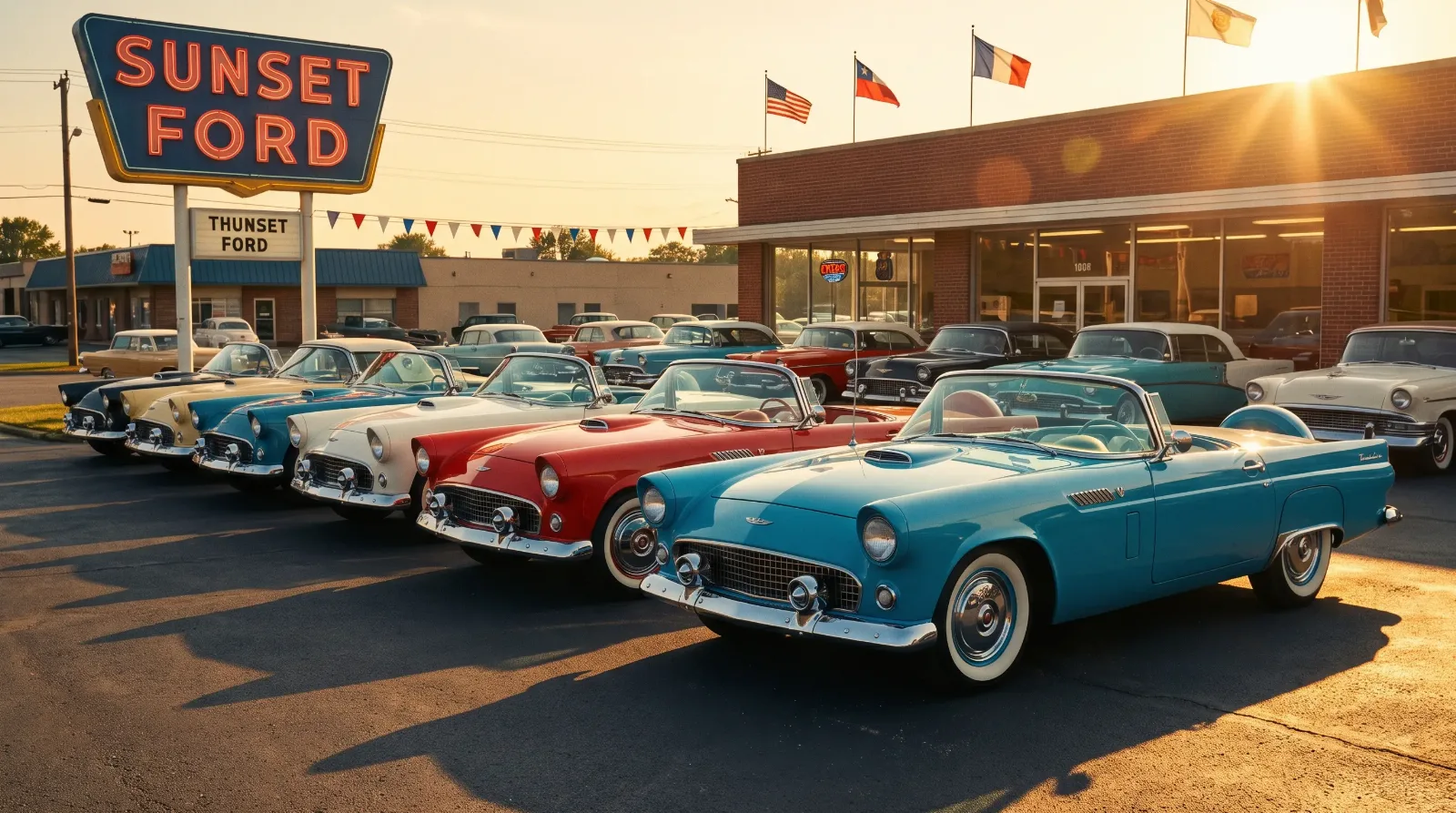
Picture a Chevrolet regional sales manager in early 1956, staring at a stack of dealer reports, trying to explain to his bosses in Detroit why a car GM had bet real money on was getting buried by a Ford that had existed for barely a year. That is not a dramatized scene. That conversation, or something close to it, actually happened across Chevrolet's dealer network, because the Thunderbird outsold Corvette by a margin that turned a promising new nameplate into an internal crisis at General Motors.
The number that got everyone's attention
Ford built 16,155 Thunderbirds in the 1955 model year. Chevrolet built roughly 700 Corvettes over that same stretch, a gap of just over 23 to 1 using each company's own 1955 model-year production totals. Whatever the precise multiple, the scale is not in dispute: Ford's brand-new personal car outsold Chevrolet's sports car experiment by an order of magnitude in the one year both companies were selling directly comparable, freshly launched two-seaters.
That kind of gap does not happen by accident, and it did not happen because Ford got lucky with timing. It happened because the two companies built genuinely different products for the same slice of the market, and American buyers in 1955 answered clearly which product they actually wanted to drive home.
Why the gap was this wide
Start with what a buyer actually got for their money. The Corvette's early build quality was inconsistent, its fiberglass body a genuine engineering novelty rather than a proven material, and its standard powertrain, a Blue Flame inline six paired only with a two-speed Powerglide automatic for most of the 1955 model year, undersold the sports car image the styling promised. Side curtains instead of roll-up windows made the car impractical in anything but ideal weather. None of this was secret at the time. Period road tests said so plainly.
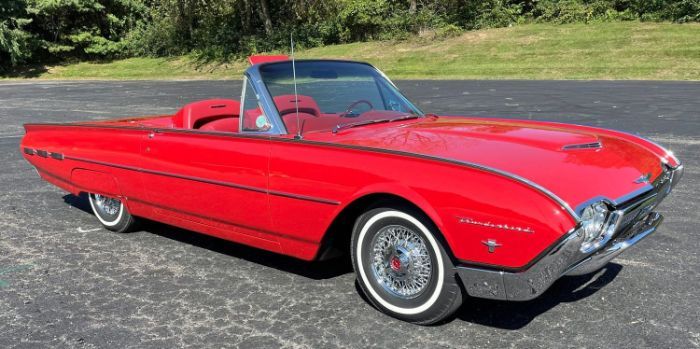
The Thunderbird solved every one of those problems before a single customer complained. A proper V8 producing up to 198 horsepower, roll-up windows, power steering and power brakes available as options, a steel body with none of fiberglass's early production headaches. Ford was not competing on novelty. Ford was competing on delivering a finished, comfortable product to a customer base it had already spent decades understanding through its dealer network.
What it felt like from inside a Ford dealership
Talk to anyone who worked a Ford lot in 1955 and 1956, or read the secondhand accounts collected by Thunderbird clubs from those who did, and a consistent picture emerges: Thunderbirds did not sit. Allocations arrived and moved, sometimes with waiting lists at busier dealerships in markets with strong demand. That is the opposite of the picture painted by contemporaneous accounts of Corvette inventory, which describe cars sitting on lots for extended stretches while Chevrolet worked through quality issues and tried to figure out who its actual customer was supposed to be.
This is not a story about one car being objectively superior in every dimension forever. It is a story about a specific year, 1955, when Ford's read on the market was simply more accurate than Chevrolet's, and the sales figures made that gap impossible to spin. You can read our 1957 ford thunderbird retrospective for the fuller three-year story of how that early advantage played out across the whole two-seat era.
"A 23 to 1 sales gap is not a marketing footnote. It is a verdict. Whatever the Corvette eventually became, and it became plenty, in 1955 the American car buyer looked at both options and picked the Thunderbird without much hesitation."
- Patrick Walsh
What the price tags said about both companies
Line up the sticker prices and the picture gets more complicated, not less. The 1955 Thunderbird carried a base price of $2,944, while the base six-cylinder Corvette actually listed lower, around $2,774, despite offering a smaller engine, a single transmission choice for most of the model year, and none of the comfort options Ford buyers could check off on an order form. A lower price for less car, less power, and an unproven body material was still a hard sell, and Chevrolet's own dealer network felt that friction directly in 1955 and into 1956.
Ford, by contrast, priced the Thunderbird to compete directly with mid-range Ford and Mercury models a buyer might already be cross-shopping, which meant the personal car pitch never asked anyone to stretch financially to get it. That pricing discipline, paired with a genuinely finished product, is a big part of why the sales gap opened as wide as it did rather than settling into something closer to a normal competitive split between two new nameplates chasing the same buyer.
The long shadow of a short-lived blowout
The gap narrowed fast. Chevrolet's changes for 1956 and 1957, including the arrival of fuel injection and steadily improving build quality, closed the distance and eventually flipped the Corvette into the dominant American sports car nameplate for the rest of the century and beyond. But that later success does not erase what happened in 1955, and serious historians of both brands treat the early sales blowout as a formative moment for both companies rather than an embarrassing footnote Chevrolet would rather forget.
For Ford, the lesson was validating: comfort, finish, and a clear read on the customer beat novelty and unproven engineering, at least in that specific market moment. Some of that same instinct shows up again the following year in a smaller but related story, when Ford standardized a styling detail that became one of the Thunderbird's most recognizable signatures; a related story covers how that detail came to define the car's look. If the early Thunderbird's winning formula still appeals to you, Thunderbirds for sale now shows how the cars that actually won that 1955 sales fight are priced and available today.
What makes this story worth retelling accurately, rather than letting it collapse into a simple footnote before the Corvette's later dominance, is what it reveals about how quickly a sales verdict can flip in either direction. Ford held the advantage decisively for exactly one generation of two-seat cars, then walked away from the format entirely in 1958 to chase a bigger, four-seat market. Chevrolet, meanwhile, treated its early beating as a problem to engineer its way out of rather than a signal to retreat, and within a handful of years had turned the tables completely. Both responses were rational given each company's broader business, and both are worth understanding on their own terms rather than through the lens of how the rivalry eventually turned out decades later.