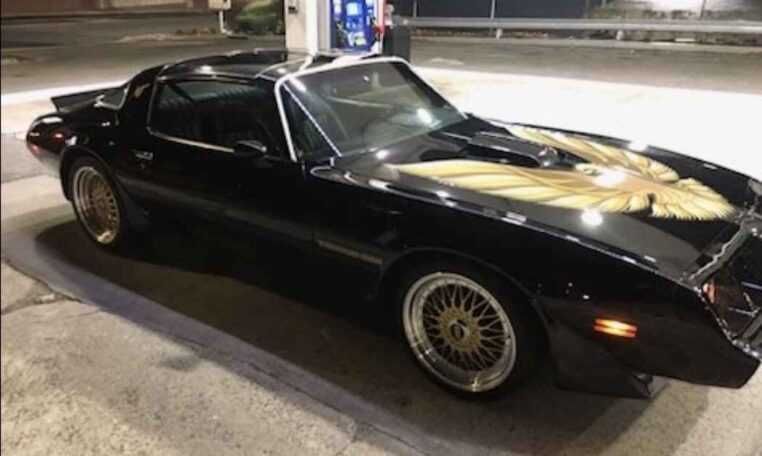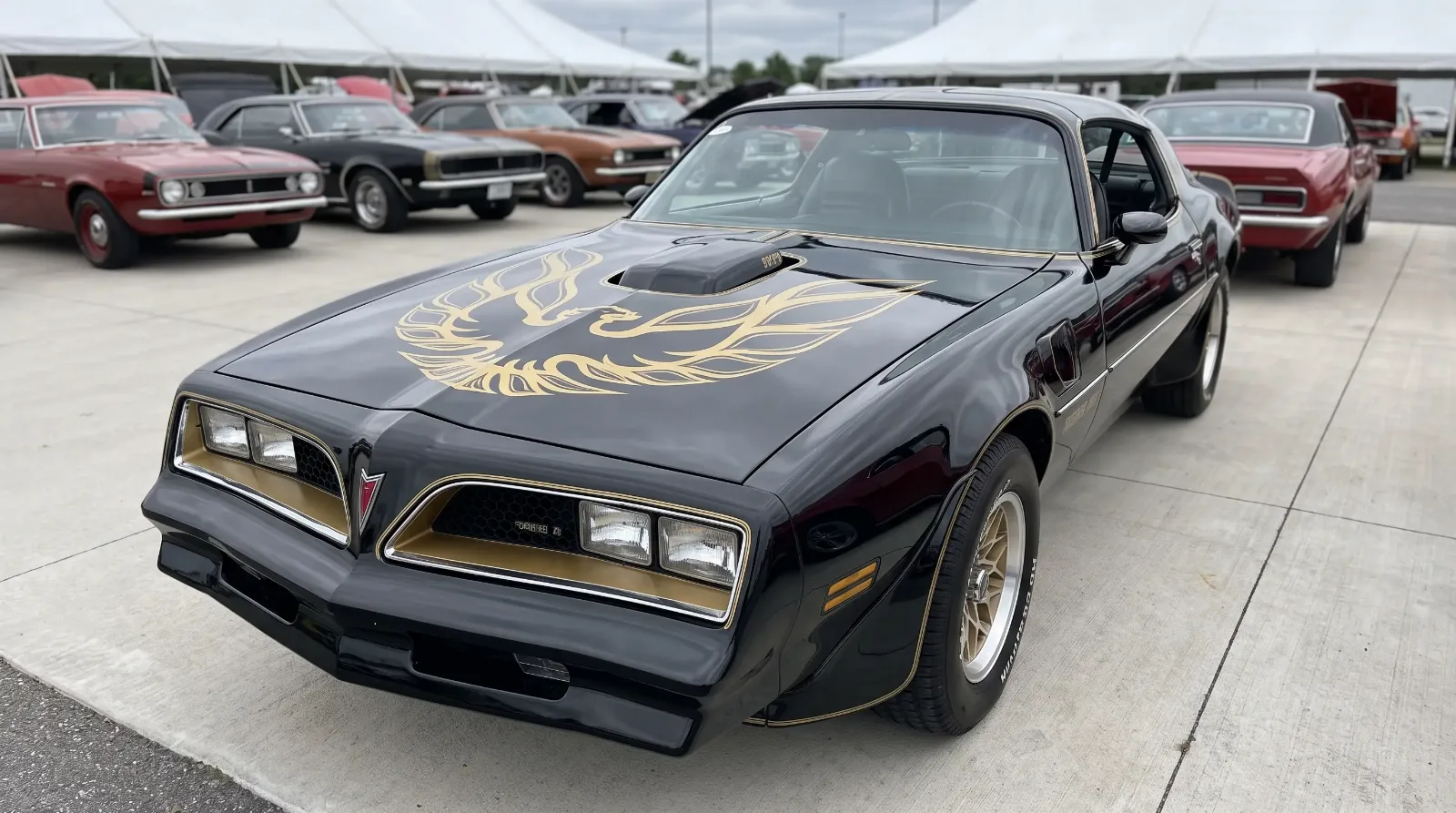
She found the photograph in a shoebox after her father died, tucked between a church bulletin and a phone bill: a black Trans Am parked in front of a house that no longer stands, her father leaning on the fender in a windbreaker, grinning like he had just gotten away with something. He had. He bought that car used in 1979, kept it through two moves and one divorce, and sold it in 1994 for less than he owed on the loan he took out to buy it. He never stopped talking about it. That is the strange gravity of the Firebird Trans Am. Muscle cars are supposed to be a decade, a phase, a thing you grow out of. The Trans Am refused the plan.
A name borrowed from someone else's championship
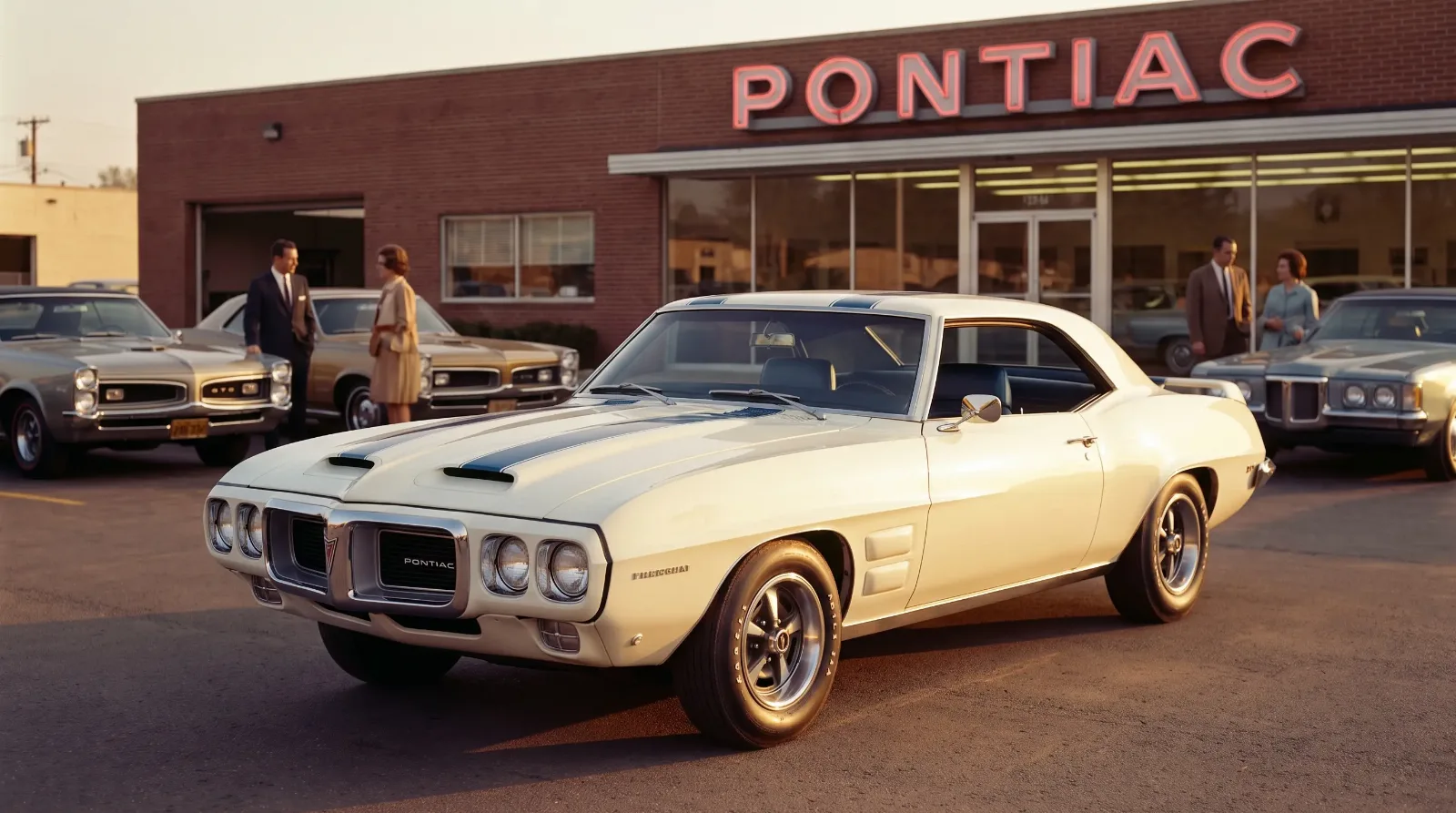
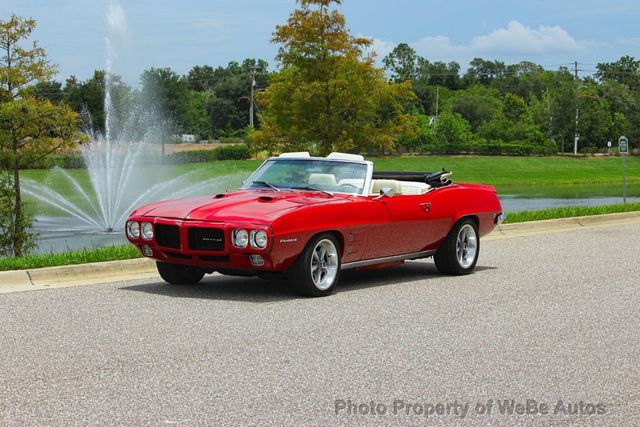
The Trans Am did not start as a flagship. It started as a footnote, a mid-1969 addition to the Firebird line built to cash in on a racing series Pontiac was not even winning. The name came from the Sports Car Club of America's Trans-American Sedan Championship, and Pontiac reportedly paid the SCCA five dollars for every car sold under the Trans Am name. Fewer than 700 were built for 1969, most of them white with blue stripes, and almost nobody at the time would have guessed the name would outlast the division that inspired it. The early cars were fast, a little raw, and sold in numbers small enough that they now command real money among people chasing the origin story rather than the best version of the car.
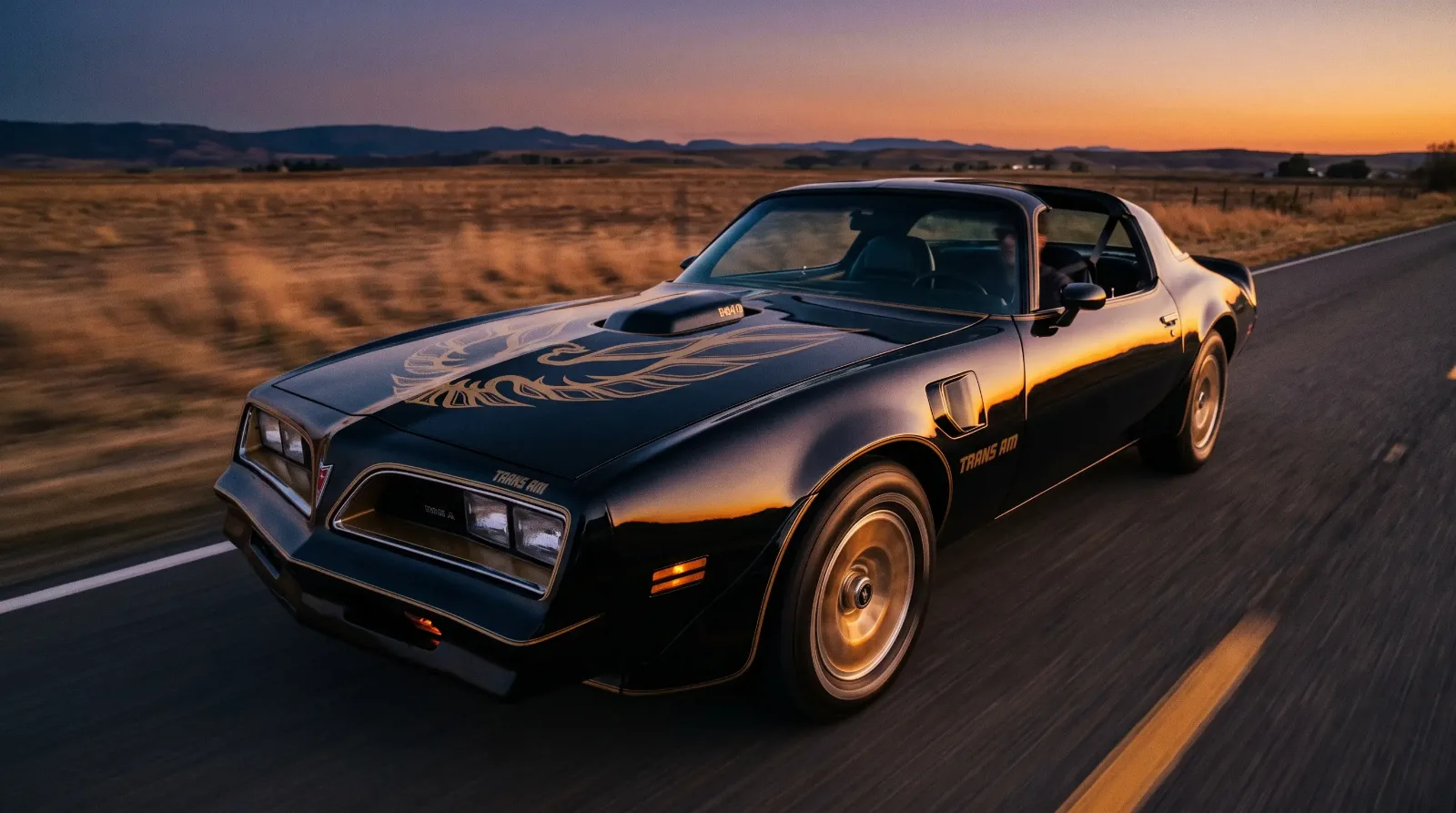
What the badge had, from the start, was theater. The stripes, the shaker hood, the spread-wing decal that eventually became the car's signature, all of it read as a costume built for a stage bigger than a dealership lot. That instinct for spectacle is what carried the car through decades that had no business supporting a performance nameplate at all.
The years the Trans Am should have died
By the mid-1970s, the muscle car era most people picture was already over. Insurance surcharges had gutted the big-inch performance market, unleaded fuel and catalytic converters were reshaping engine compression, and horsepower numbers across the industry were falling fast, some of it real, some of it just the shift from gross to net ratings. Plenty of nameplates that had defined 1969 quietly disappeared by 1974. The Trans Am kept selling, and kept selling better. Production climbed through the back half of the decade even as the cars underneath the decals grew softer.
That is the part of the legacy that gets glossed over at car shows. The Trans Am's biggest sales years were not its fastest years. The 1976 through 1979 cars, built during a genuine horsepower recession, moved in numbers the 1969 original never approached. People were not buying a quarter mile time. They were buying an image, and Pontiac had built an image sturdy enough to survive without the engine to back it up.
Hollywood did what the engineers could not
Smokey and the Bandit hit theaters in 1977, and the black and gold Trans Am Burt Reynolds drove became more famous than most of the actual race cars wearing the name it borrowed. Pontiac could not have bought that kind of exposure. Dealers reportedly could not keep black and gold Special Editions in stock, and the car's silhouette, that low nose and the bird decal spread across the hood, became shorthand for a certain kind of American cool that had nothing to do with lap times. A few years later, a modified Trans Am played KITT on Knight Rider, and an entire generation of kids who had never seen a real muscle car learned to recognize one from a television dashboard.
This is the uncomfortable truth under the nostalgia: the Trans Am's cultural legacy was built more by screenwriters than by engineers. The car earned its shape and its attitude honestly. What kept it in the public imagination through the lean years was two hit productions that happened to need a car with presence.
"People ask me why anyone would want a 1978 with a two hundred and something horsepower engine when the 1969 had real muscle behind it. I tell them the same thing every time. Nobody kept that car alive for the dyno sheet. They kept it alive because it looked like it was going somewhere even parked in a driveway, and that's worth something a spec chart can't measure."
— Nora Beckett
Four generations, one shape that people kept recognizing
Across more than three decades of production, the Trans Am changed bodies four times and never lost the plot. The table below is a rough map of how the badge moved through the years, not a full production history, just the shape of the legacy as most owners encounter it.
| Generation | Years | What defined it |
|---|---|---|
| First | 1969 | Mid-year introduction, low production, the original shaker hood and stripe package |
| Second | 1970 to 1981 | The longest run, the Bandit era, the switch from gross to net horsepower ratings |
| Third | 1982 to 1992 | Knight Rider fame, a lighter body, the return of real performance late in the run |
| Fourth | 1993 to 2002 | LS1 power in the final years, ending with Pontiac's own send-off before the badge retired |
Read that table straight through and the pattern is obvious. Every generation had a stretch where the car was underpowered relative to its reputation, and every generation eventually got the engine the image had been promising the whole time. The 1969 got real muscle from day one. The late second-generation cars spent years running on fumes before Pontiac and Buick's turbocharged efforts got the numbers back up by 1980. The final LS1 cars of 1998 through 2002 finally matched the shape to a genuinely quick drivetrain, right before General Motors killed the Firebird and the Trans Am name along with it in 2002.
What the legacy is actually worth today
For a buyer today, the Trans Am's staying power translates into an unusually wide field of entry points. A rough 1978 driver can still be found for a fraction of what a documented 1969 or a late LS1 car commands, and all three cars trade on the same name and the same silhouette even though they have almost nothing else in common under the skin. That is worth knowing before you shop with your heart. Decide first whether you want the origin story, the pop culture icon, or the car that finally had the engine to match the decals, because the badge alone will not tell you which one you are buying.
The Trans Am outlived the muscle era because it stopped depending on the era to justify itself. It became a character instead of a spec sheet, and characters age differently than machines do. That is not something you'll find written on a build sheet, but it is the reason a shoebox photograph of a tired 1979 in front of a house that no longer exists can still stop someone in their tracks. You can read more of that origin story in the Trans Am chapter, and for the year the name was born, there is a companion piece worth reading alongside it. The wider arc of the nameplate that carried it all sits in our Classic Cars Arena feature on the Firebird itself.