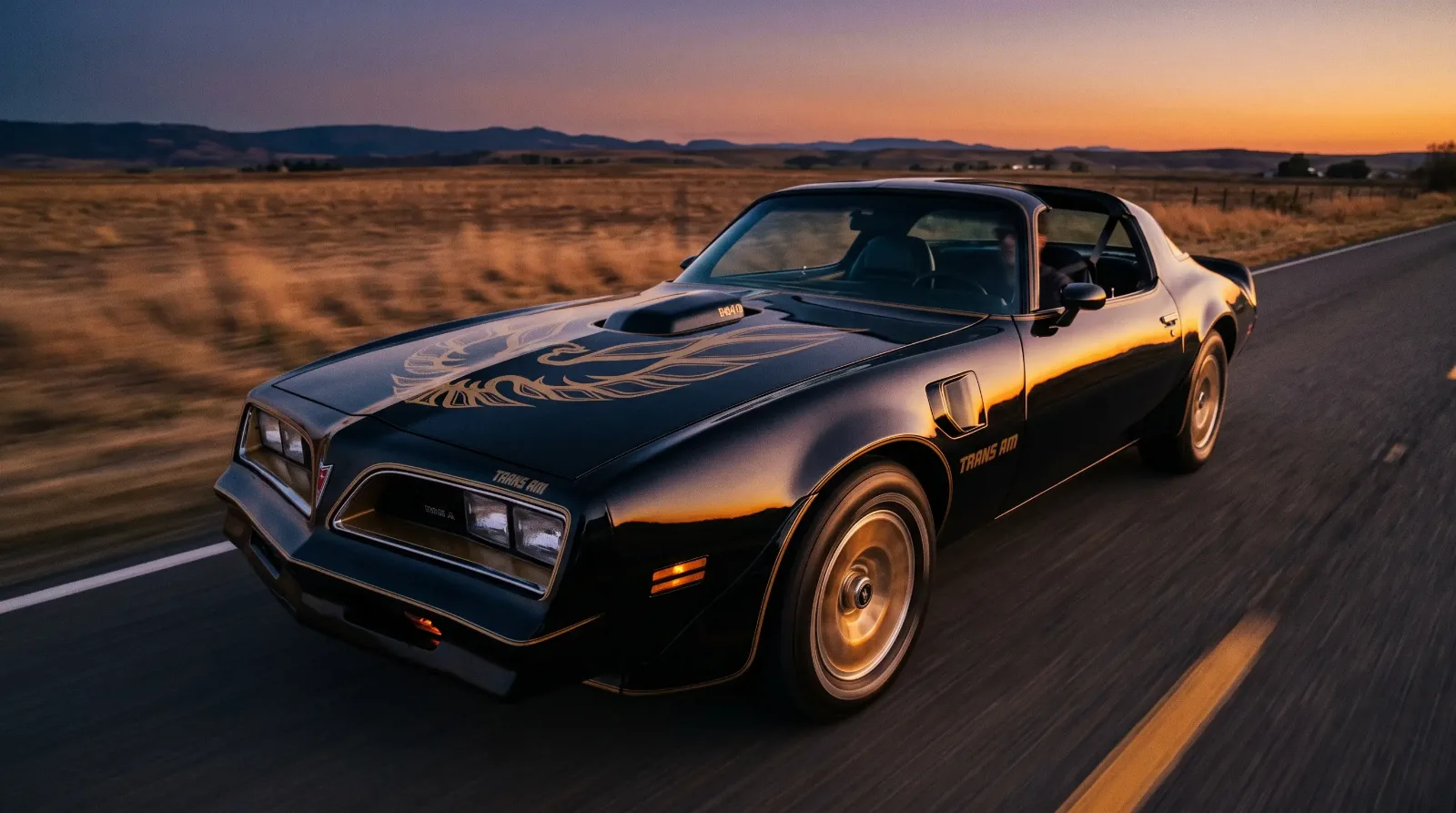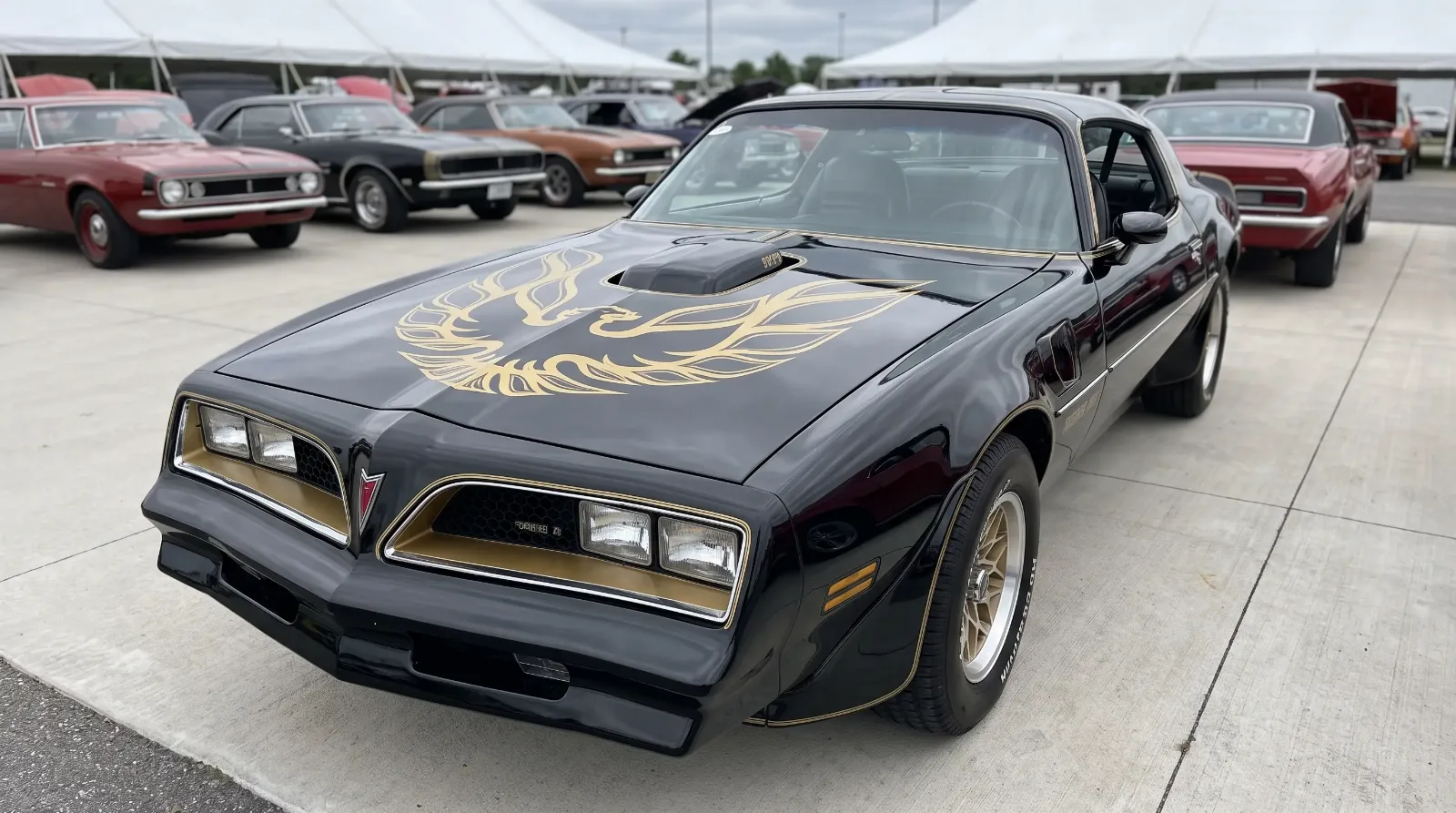
A collector I met at a regional Pontiac gathering in Indiana told me the first thing he checks now when he looks at a later Trans Am for sale is not the engine bay. It is the seats. He slides in, checks the bolstering, checks the recline mechanism, and only then walks around to the front of the car. "The engine is easy to fix," he told me. "Good seats that fit right are harder to find than people think." He was talking about the recaro trans am option, and once you understand why he checks that first, it makes sense.
Why Pontiac reached outside Detroit for seats
By the late 1970s and into the 1980s, Pontiac's engineers and the Trans Am's growing base of driving enthusiasts had a shared problem. The factory buckets that had served the car well through the muscle car years were comfortable in a straight line but did not hold a driver in place through a fast corner the way a genuinely sport-oriented seat would. Recaro, the German seat manufacturer with a long history in motorsport and high-performance road cars, had already built a reputation for exactly that kind of bolstering and support.
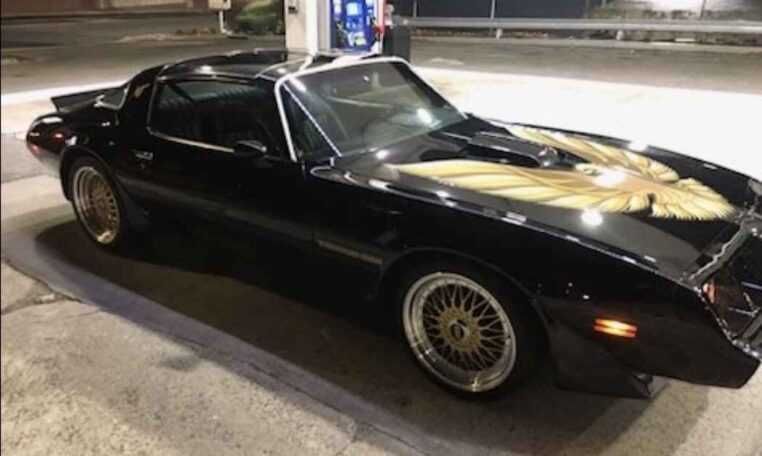
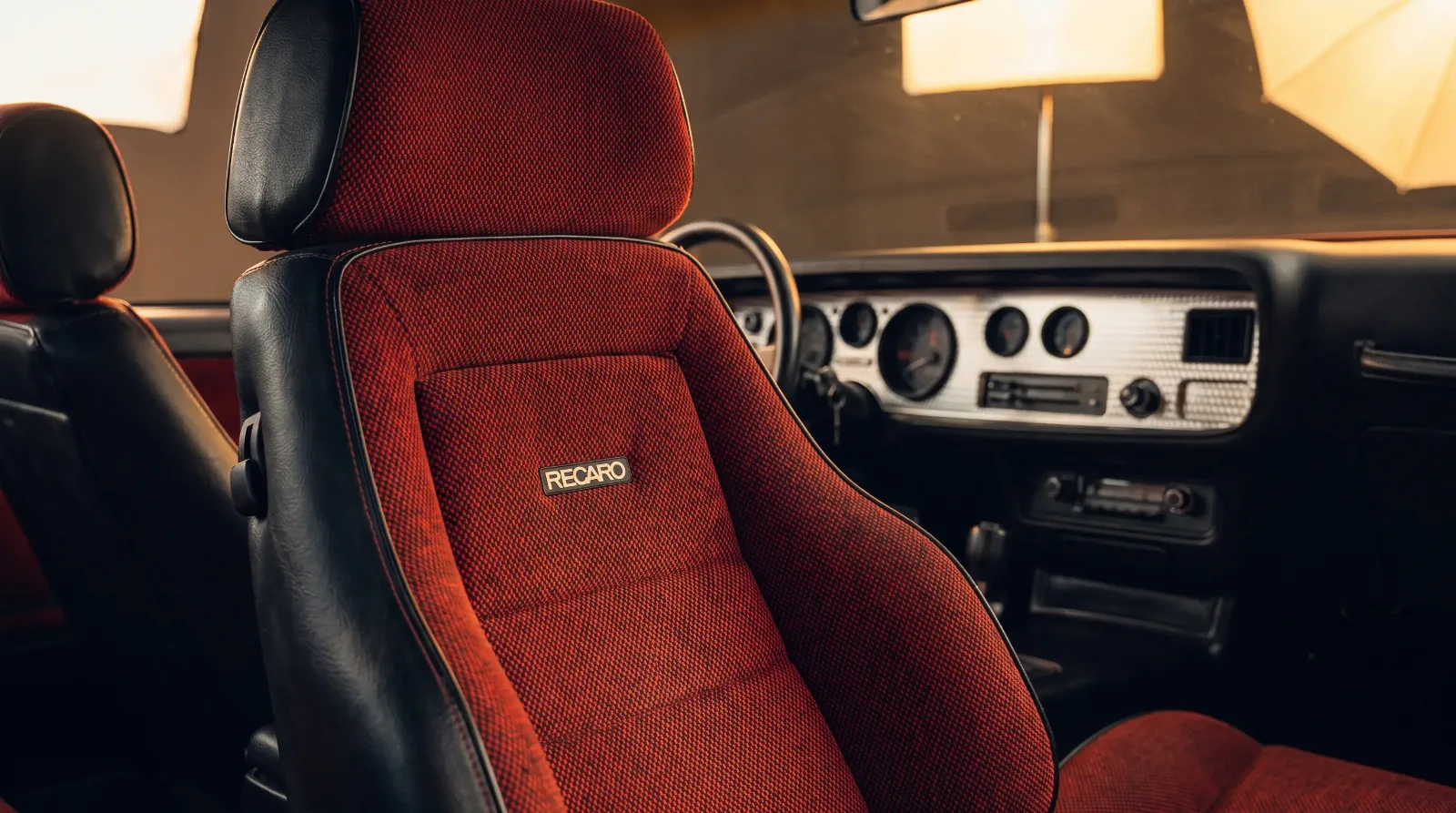
Offering Recaro seating as an option on the Trans Am was Pontiac signaling something specific to a specific kind of buyer: this was not just a car for straight-line bragging rights anymore, it was a car meant to be driven through corners, and the seats needed to keep up with that ambition. It fit neatly alongside handling packages like WS6 that were pushing the Trans Am toward being a genuine road car rather than only a drag strip hero. Recaro seating first appeared on the Trans Am for the 1981 model year as part of a special edition Pace Car package, then became a wider factory option for 1982 through 1984, typically ordered alongside the WS6 Special Performance package by buyers who wanted the car set up for corners rather than just a straight line.
What made the Recaro option different
Where the standard Trans Am buckets were softer and more heavily padded for a comfortable highway cruise, the Recaro-equipped seats had noticeably firmer bolstering along the sides of the seat back and cushion, designed to keep a driver's torso from sliding during hard cornering. The upholstery treatment and stitching pattern also set the option apart visually from the standard buckets, giving the interior a more purposeful, driver-focused look that matched the engine-turned dash trim already present on Trans Am models.
It was not a cheap option either. Buyers who checked that box on the order form were making a statement about how they intended to use the car, and it shows in how those cars are regarded by collectors today. A well-preserved Recaro-equipped example tends to draw more attention from serious buyers than an otherwise identical car with standard seating, partly because the option was less common and partly because it signals a more enthusiast-minded original owner.
Condition and what restorers run into
Original Recaro upholstery on a car this old is not something you find sitting on a shelf at a swap meet. Reproduction options exist, but matching the exact stitching pattern, bolster shape, and material grain of the factory pieces takes real research, and not every supplier gets it right. A seller advertising "Recaro seats" without being specific about whether they are original, professionally reupholstered to correct pattern, or a generic aftermarket substitute is a red flag worth chasing down with direct questions.
| What to check | Why it matters |
|---|---|
| Bolster firmness and shape | Softened or collapsed foam is common and expensive to correct properly |
| Stitching pattern match | Reproduction quality varies widely between suppliers |
| Recline and track mechanism | Original hardware should operate smoothly, replacements can feel notchy |
| Documentation of original option | Build sheet or window sticker confirms factory-installed Recaro seating |
None of that is meant to scare a buyer away from a Recaro-equipped car. It is meant to explain why the option carries real weight in the market and why a careless restoration on those seats specifically will cost more to fix later than most buyers expect walking in.
"I've watched buyers spend all their attention on matching numbers and engine codes, then get blindsided by a seat repair bill because nobody checked the bolster foam before the sale closed. The seats tell you almost as much about how a car was actually driven and cared for as the engine bay does."
— Patrick Walsh
Where this fits in the bigger picture
The Recaro option is a small chapter in a much larger story, but it says something important about where the Pontiac Trans Am was headed as a platform in its later years, moving from pure muscle car theater toward something closer to a genuine driver's car. Anyone who wants the full arc of how that transition happened, and what came after it, should look at a companion piece covering the Trans Am's broader legacy.
And for readers who have not yet gone back to where this whole lineage started, the complete Firebird saga lays out how a car that began as Pontiac's answer to the pony car boom eventually grew into something confident enough to offer German motorsport seating as a factory option. That is not a small arc for a car that started life competing for the same buyers as a base Camaro.
What strikes me every time I talk to an owner of one of these cars is how personal the seat conversation gets. People will happily debate engine specs for an hour with a stranger at a car show, trading numbers back and forth without much emotion attached. Ask them about their Recaro seats and the tone changes. They talk about long drives, about a seat that held them through a mountain pass without complaint, about the specific way the bolster meets your hip on a hard right hander. That is not a conversation about horsepower. It is a conversation about a car that did its job well enough to be trusted, and trust is a harder thing to engineer than raw power ever was.
That is really the quiet lesson buried in the Recaro option. Pontiac did not need to offer it. The Trans Am would have sold plenty of units on reputation and styling alone through the early 1980s. Doing it anyway, and doing it with a genuine motorsport supplier rather than a badge-engineered domestic imitation, tells you the people building this car still cared about getting the details right even after the muscle car era's original glory days had faded. That is worth remembering the next time someone tries to write the Trans Am off as style over substance.