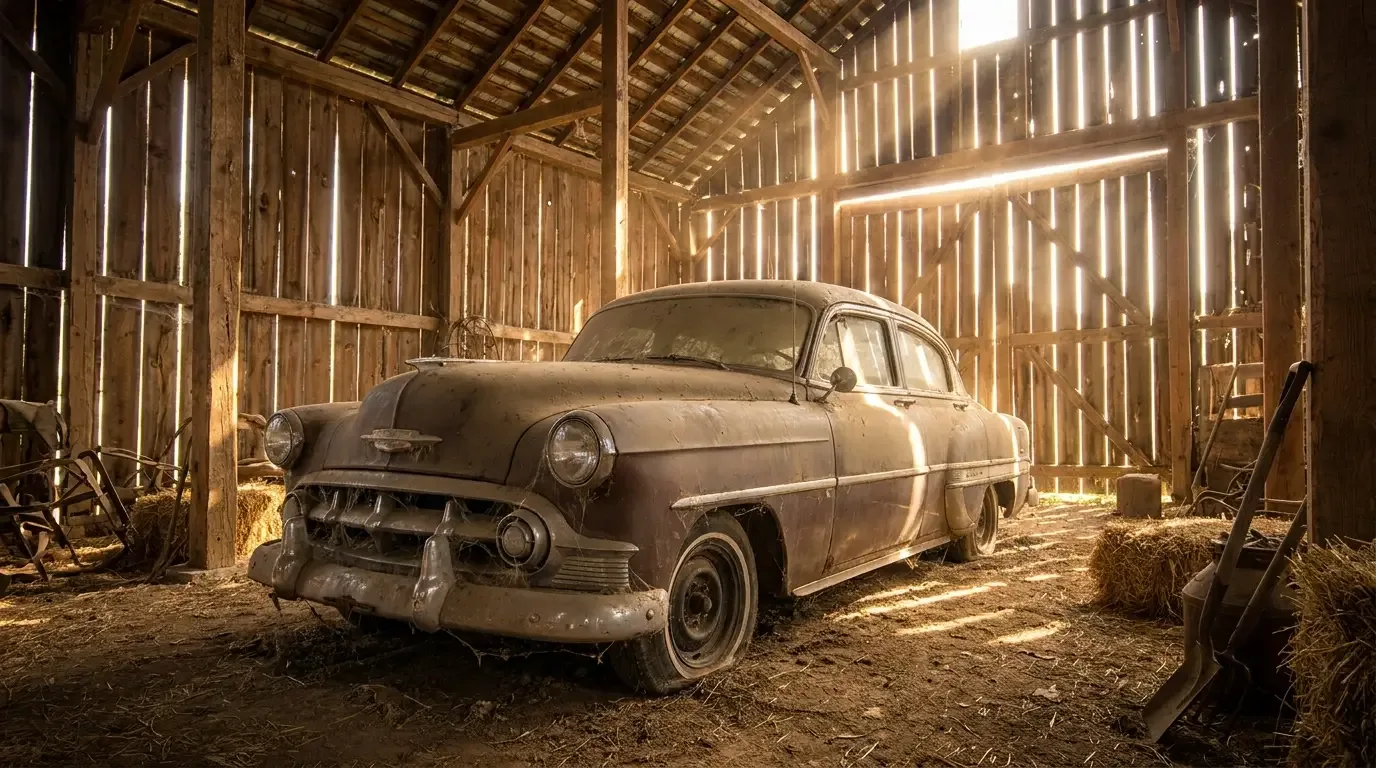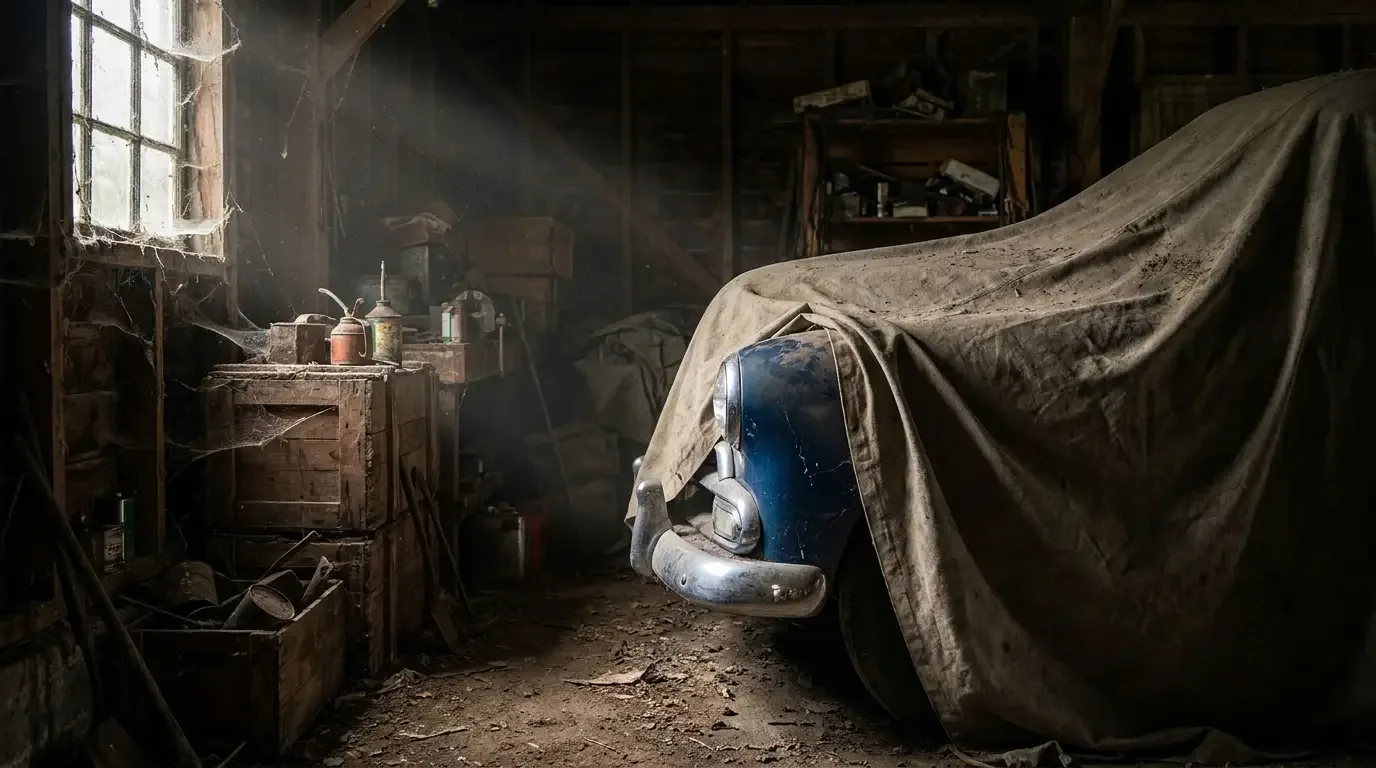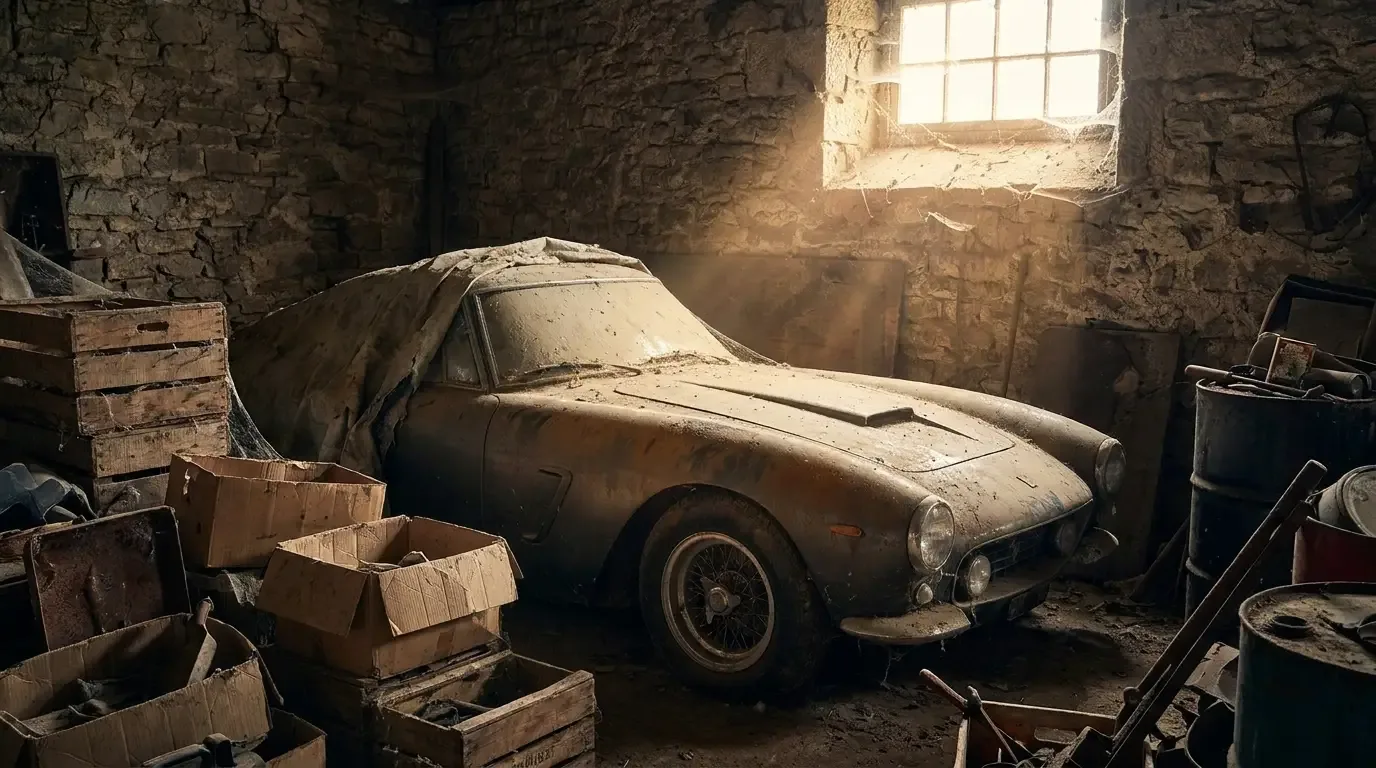
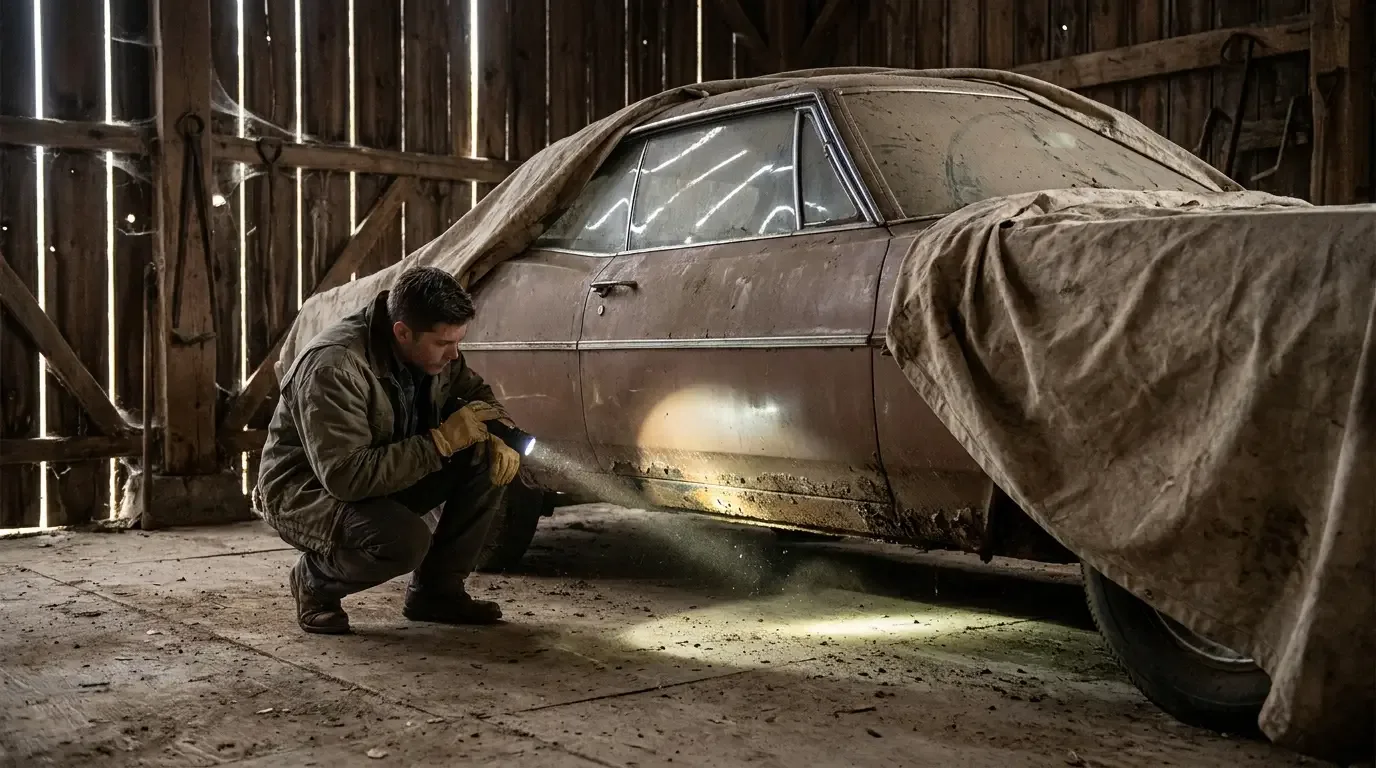
You get the call on a Tuesday. Somebody's grandfather passed, there's a car under a tarp in a pole barn, and the family wants it gone. You show up with a flashlight and a cup of gas station coffee, and everybody standing around expects you to fall in love. Don't. A barn find is a used car with a decade of neglect stacked on top of it, and your job in the first twenty minutes is to figure out what that neglect actually cost. Romance is for the guys who write checks they regret. If you're fuzzy on where the line sits between a genuine find and an old wreck under a sheet, start with what a barn find really is, then come back and we'll walk the car together.
I've evaluated a few hundred of these. Most are rough. A handful are worth the trailer fee. The difference is never how good it looks in the barn light. It's what you find when you get low, get dirty, and stop believing the seller.
Start with rust, because rust is the whole ballgame
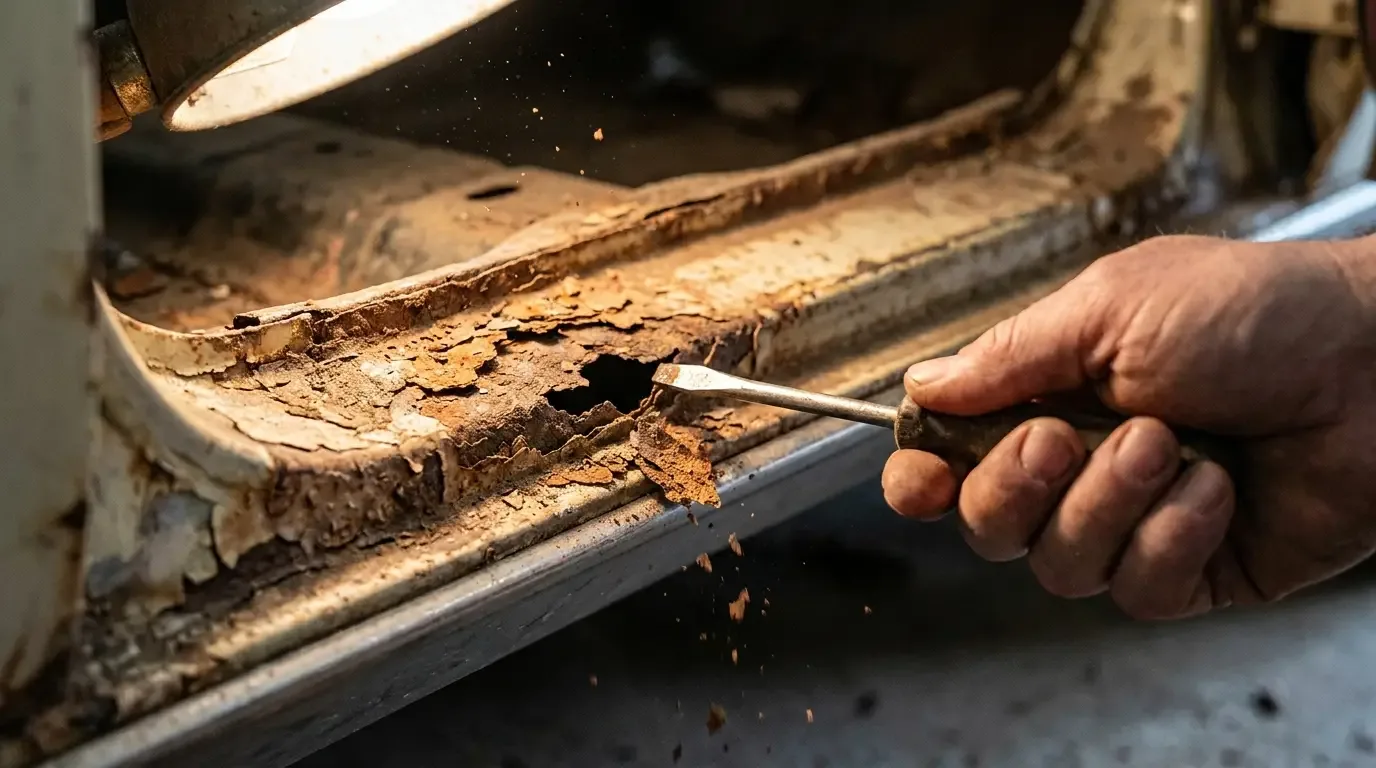
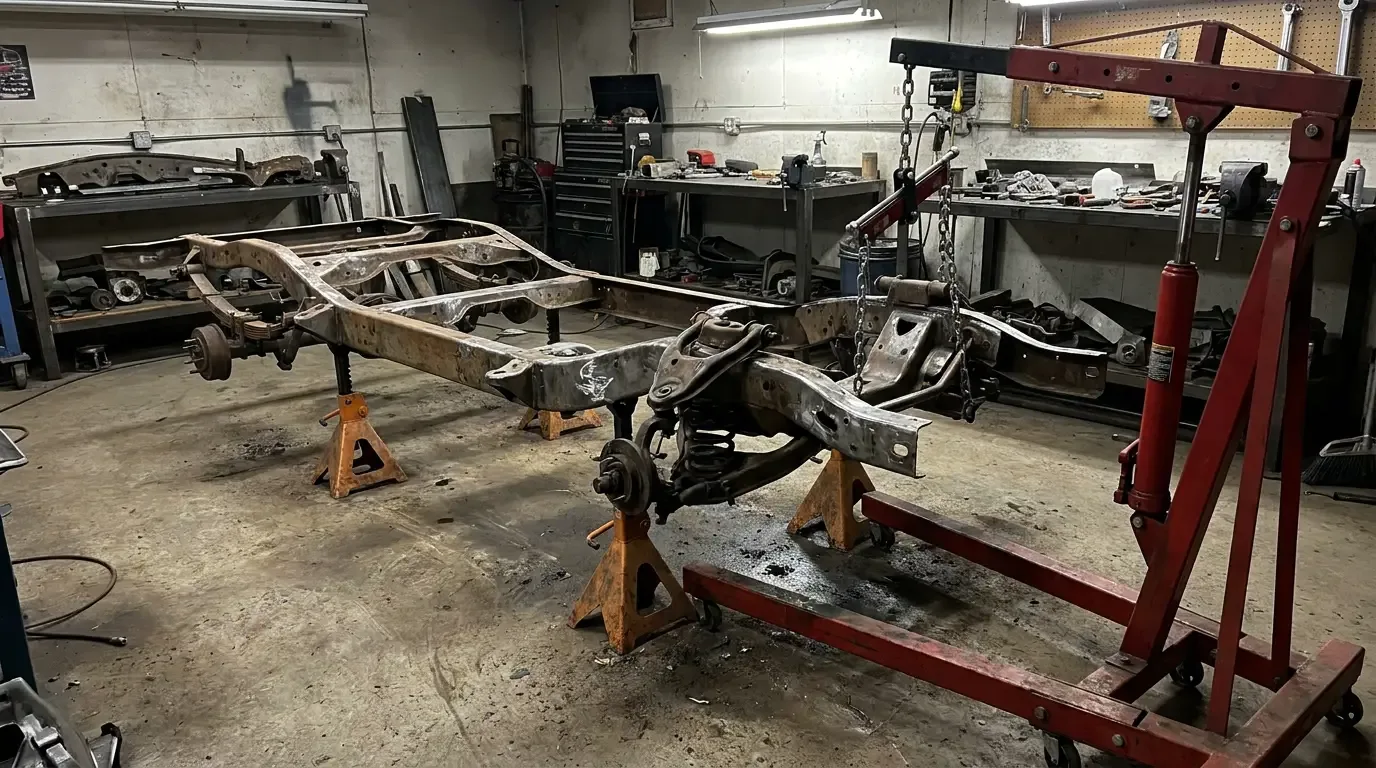
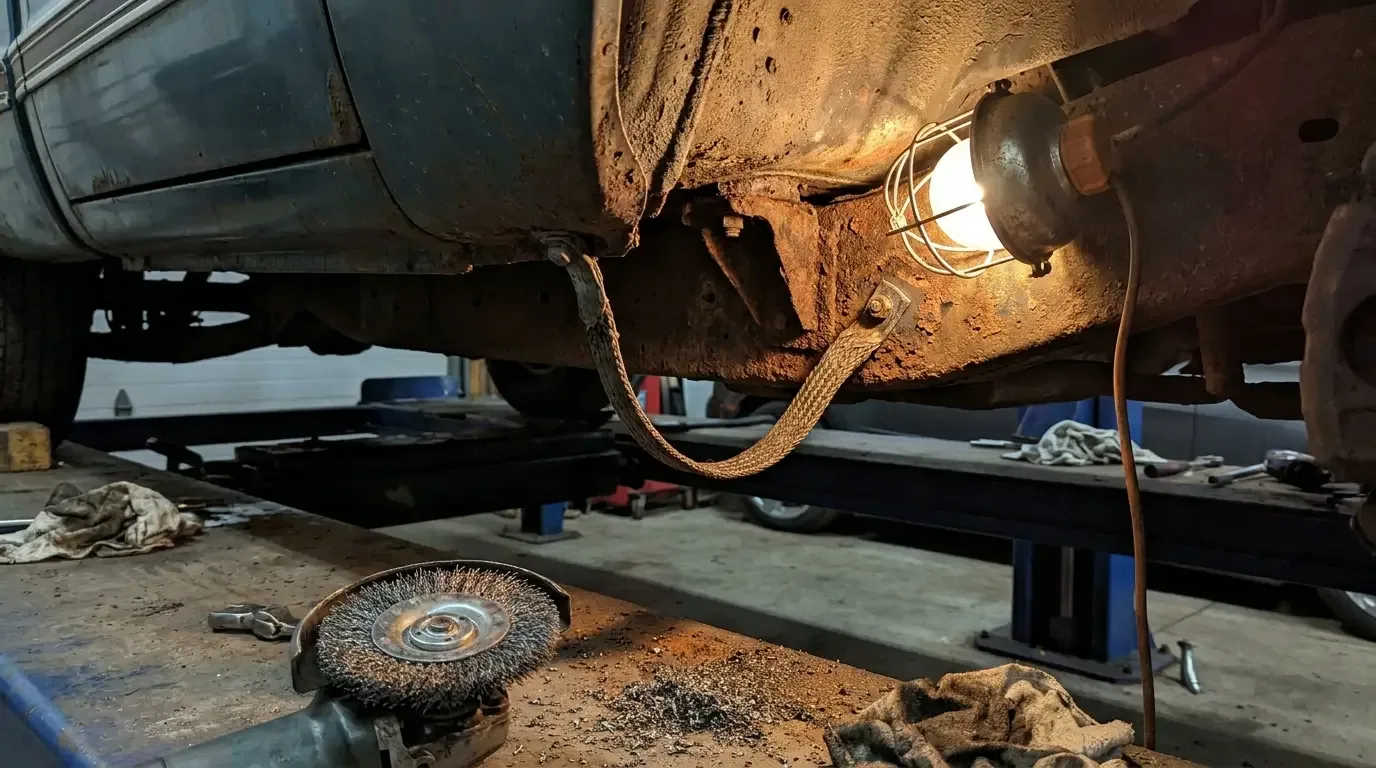
Everything else on a car is a part you can buy. Rust is the one problem that eats the thing the parts bolt to. So before I look at the engine, the interior, or the badge on the fender, I get under the car and I read the metal. Storage is what kills these cars. A car parked on dirt or bare concrete sits in a column of rising ground moisture for years, and it rots from the floor up while the paint on top still shines.
Surface rust, the orange dusty stuff, is nothing. Wire wheel and paint. Scale rust that flakes off in sheets is a warning. Perforation, where you can push a screwdriver through and feel it pop into daylight, is the expensive kind. Here's the order I check, worst-to-cheapest to fix:
- Frame rails and unibody rockers. Structural. If these are gone, you're not restoring a car, you're building a jig to hold a title.
- Floor pans and trunk floor. Replaceable, but it's cutting and welding. Pull the carpet and the trunk mat. A wet trunk floor tells you the whole car sat with water in it.
- Lower fenders, quarter panels, door bottoms. Where mud and moisture collect. Repair panels exist for popular cars, cost real money for anything rare.
- Cowl and windshield channel. The hidden killer. Rusts from the inside where you can't see it and where nobody wants to repair it.
Bring a magnet and a small flashlight. A magnet that slides off or hangs weak over a panel means body filler, and thick filler usually means rust or a wreck hiding underneath. I've seen cars with a quarter inch of Bondo troweled over a hole the size of my fist.
The engine: seized, stuck, or just sleeping
A non-running engine scares people off, and that's fine, because their fear is your discount. But you need to know which kind of not-running you're looking at. There's a big difference between an engine that's stuck from sitting and one that's grenaded internally.
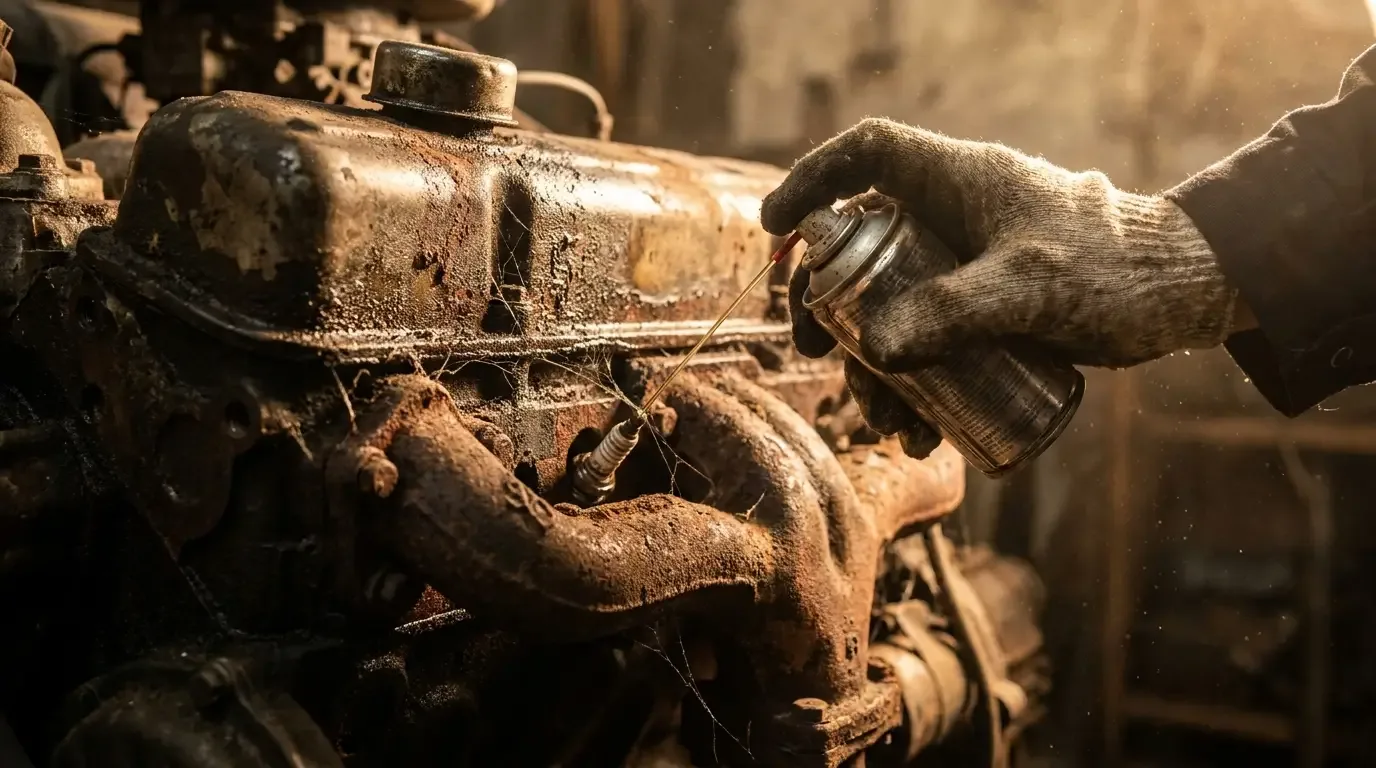
First test costs nothing. Put a breaker bar on the crank bolt and try to turn the engine over by hand, gently, both directions. If it rotates, even stiffly, the bottom end is probably free and you're in good shape. If it won't budge, it's seized, and now you're guessing. Seizure usually means rings rusted to cylinder walls, which is common and often recoverable. Pull the plugs, squirt oil in the cylinders, let it sit a few days, and try again. A lot of "seized" engines are just parked engines with rust in the bores.
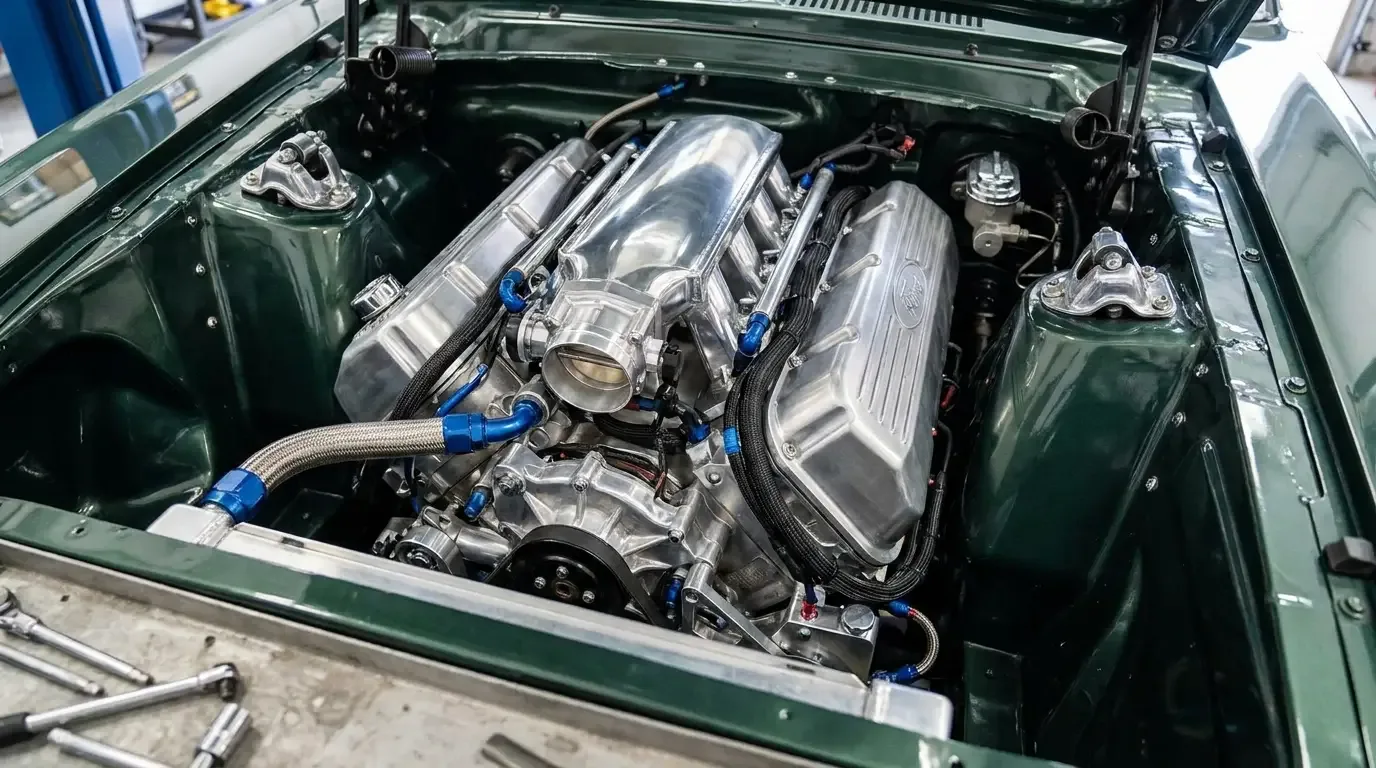
What you can't fix cheaply is a hydrolocked or broken engine. Pull the dipstick. Oil that looks like a coffee milkshake means water got into the crankcase, and water plus cast iron plus years equals rusted bearings and cam. Pull a valve cover if you can. Clean shiny valvetrain under old varnish is a good sign. Orange fuzz on the rockers is not.
🔧 Inspection Priorities
- Turn the engine by hand first. A breaker bar on the crank bolt tells you free-versus-seized before you spend a dollar. Free bottom end is the single biggest green light on a barn car.
- Read the oil and coolant. Milky oil means water intrusion and likely internal rust, budget a full rebuild, roughly a few thousand and up depending on the engine. Clean amber oil means it was probably parked properly.
- Check for rodent nests in the intake and exhaust. Mice pack air cleaners, intake runners, and mufflers with nesting material. Cheap to clean, but nesting acid corrodes wiring and aluminum. Expect to chase electrical gremlins.
- Look for a cracked block from freezing. A car stored with plain water instead of antifreeze in a cold climate can split a block or crack a head. Check the freeze plugs and the block sides for weeping stains. A cracked block on a rare engine can total the project.
- Inspect the fuel system state. Old ethanol gas turns to varnish and gum. Tanks rust from the inside. Plan on a tank, lines, pump, and carburetor rebuild as a baseline, a few hundred to over a thousand.
Rodents and water, the two things that ruin the parts you forgot about
Rust and a bad engine are the headline problems. Rodents and water are the ones that nickel-and-dime you into the poorhouse after you've already bought the car. A mouse infestation isn't just gross. Mouse urine is acidic and it wicks into wiring insulation, connectors, and upholstery. I've seen wiring harnesses turned to green powder and seat foam eaten down to the springs. A full harness for a common car is a few hundred bucks and a weekend. For a car where nobody reproduces the harness, it's a custom fabrication nightmare.
Water damage is quieter. A leaky barn roof or a cracked window seal lets water sit in footwells and trunk for years. That water rusts floors from the top, rots carpet and jute padding, delaminates dash pads, and grows mold that never fully leaves the interior. Lift every piece of carpet and pad you can. Press on the headliner. Open the doors and smell them. A car that smells like a wet basement had standing water in it, and standing water leaves damage in places you won't find until you're three months into the job.
Completeness is worth more than condition
Here's the thing green buyers get backwards. A rough, rusty, complete car beats a clean car that's missing pieces. You can fix rust with metal and money. You cannot easily replace a trim piece, an emblem, or a one-year-only carburetor that nobody reproduces. When I evaluate a barn find, I inventory what's there as hard as I inspect what's wrong.
Open the trunk and look for boxes. People pull parts off before storage, brightwork, mirrors, badges, small trim, and toss them in the trunk or on a shelf. A car that comes with a box of its own bright bits is worth a premium. A car missing its grille, its taillights, its correct wheels, and its interior soft trim is a parts hunt that can outlast your patience and your marriage.
| Component missing | Replacement reality | Rough cost impact |
|---|---|---|
| Engine or transmission | Often findable, correct-numbers unit is hard | Hundreds to many thousands |
| Reproduced trim/emblems | Available for popular models | Low, budget it and move on |
| Unobtanium trim (rare/one-year) | Swap-meet hunt, luck-dependent | High, and open-ended in time |
| Interior soft trim (seats, panels) | Reproduction kits for common cars | Moderate to high |
| Glass (curved, tinted, dated) | Hard for rare cars, mind chips and delamination | Moderate to high |
| Title/paperwork | Bonded title process, varies by state | Time and legal cost, sometimes a dealbreaker |
Missing paperwork isn't a mechanical problem, but it's a real one. A barn find with no title is a car you might not be able to register, and running down a legal title can take longer than the restoration. Ask about paper before you fall for the sheet metal.
Preserve or restore: the decision that changes everything
This is the fork in the road, and you have to decide before you buy, because it changes what a good car even looks like. The collector world has moved hard toward preservation. An original, unrestored survivor, patina and all, is often worth more than the same car restored to shiny showroom paint. Original paint, original interior, factory markings, and honest wear only exist once. You can restore a car ten times. You can only un-restore it never.
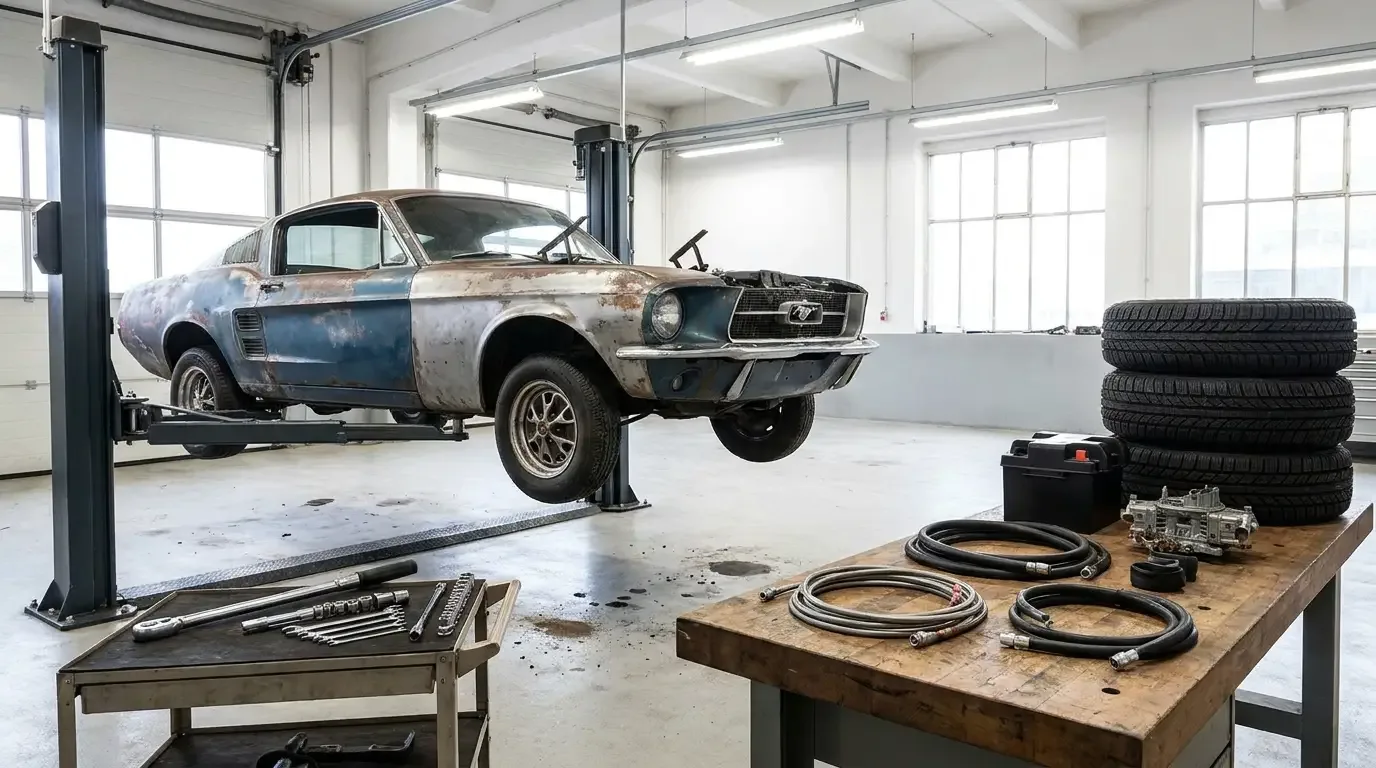
So the question at the barn is: is this car a preservation candidate or a restoration project? A preservation candidate is complete, structurally sound, mechanically recoverable, and wears its original finishes honestly. You clean it, you get it running safely, you fix what's unsafe, and you leave the rest alone. A restoration project is a car that's too far gone to save as-is, rust through the structure, missing major pieces, ruined interior, where the only path forward is to take it apart and rebuild.
"The mistake I see over and over is a guy sandblasting and repainting a car that would've been worth double left exactly as it sat. You cannot buy patina at any price. Before you touch a wire wheel to that original paint, ask somebody who knows the market what the honest survivor is worth. Nine times out of ten, the answer is leave it alone."
— Mike Sullivan
Money follows the same logic. A preservation job might be a few thousand in mechanical work and detailing. A full restoration on the same car is a five-figure commitment, easy, and often more than the finished car is worth. Do that math in the barn, on your phone, before you shake hands.
What's realistically fixable, and what isn't
Every barn find is a list of problems. The skill is sorting that list into three buckets: cheap and easy, expensive but known, and don't-buy. Let me put it plainly, because plainness saves you money.
Fixable without drama: stuck-but-free engines, varnished fuel systems, dead batteries, flat tires, surface rust, seized brakes, dried-out seals and hoses, filthy interiors, mouse nests, dead ignition parts. This is the normal cost of a car that sat. Budget it, expect it, don't let it scare you off, and don't let the seller act like it's a bargaining chip in his favor.
Expensive but knowable: floor and trunk pan replacement, quarter panel repair, full rewire, engine rebuild, transmission rebuild, interior reupholstery. These are real money and real time, but the outcome is predictable and the parts usually exist. You can price these before you buy if you know your car.
The don't-buy list, unless the car is rare enough to justify anything: rotted frame rails on a unibody car, a cracked block or head on an unobtainable engine, extensive missing unobtanium trim, a hopeless title situation, and flood damage where silt and corrosion got into everything. These aren't repairs. They're a second car's worth of work bolted onto the first. When you're ready to shop with clear eyes, the current barn finds for sale will look a lot different once you can tell the fixable from the fatal.
Walk every barn find like it's trying to lie to you, because in a sense it is. The tarp hides the rust, the dust hides the completeness, and the seller's story hides the title problem. Get low, get dirty, turn the engine by hand, count the parts, and do the money math on your phone before anybody sees you smile. Do that, and the good ones find you.
Sources and notes
- Restoration shop practice and hands-on evaluation experience with long-stored vehicles.
- Collector-car club and registry guidance on preservation versus restoration value.
- Auction and market records on survivor-class and unrestored original pricing trends.
- Marque and engine reference material for seizure diagnosis and rebuild scope.
- Period and current parts-availability catalogs for reproduction versus unobtanium trim.