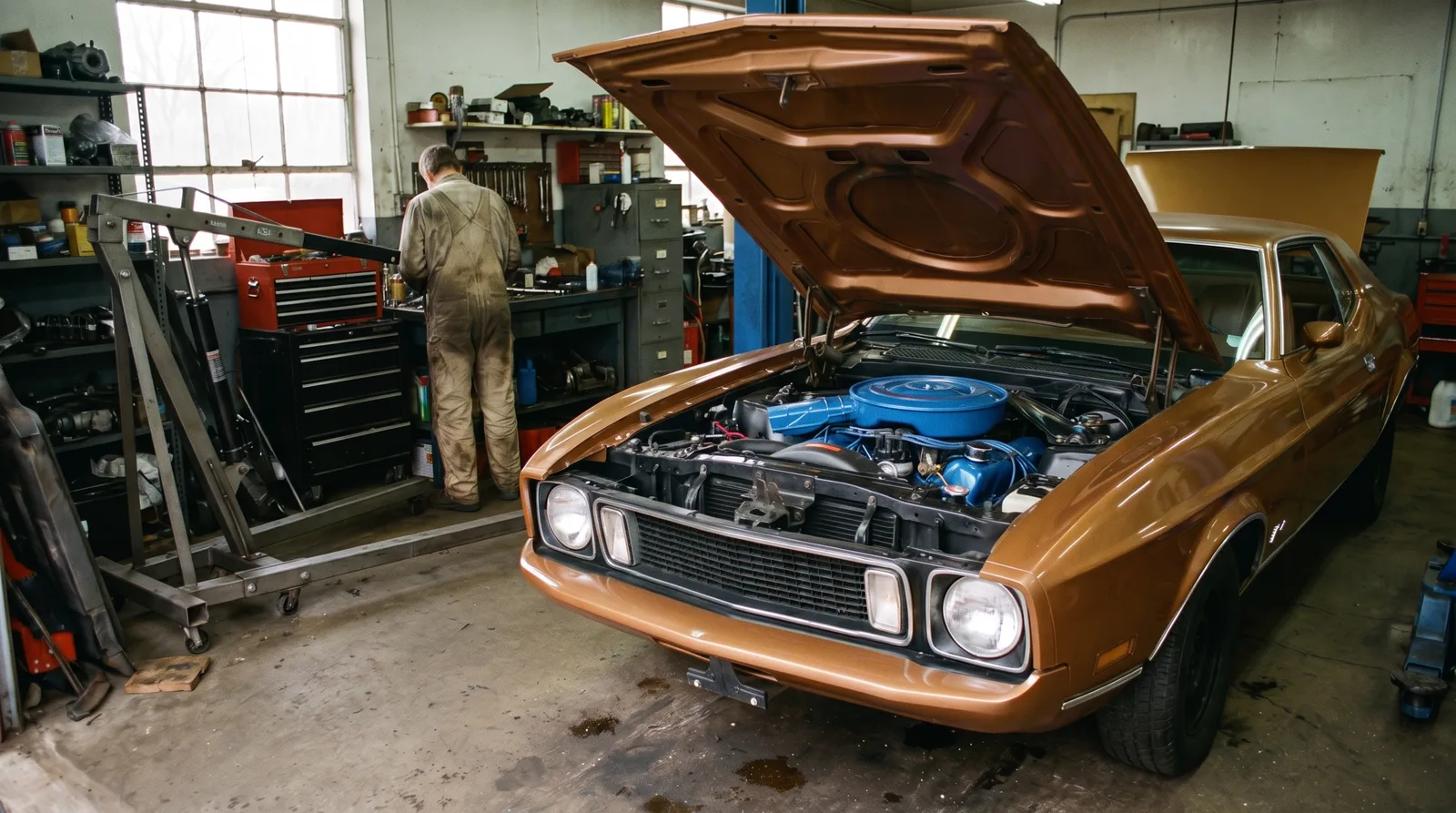
Two engines, one displacement: what Ford was trying to solve
In 1969, Ford introduced a 351 cubic inch V8 to fill the gap between the small 302 and the heavy FE big-blocks. A year later, they introduced a second 351 cubic inch V8. Same displacement, different engine family, different architecture. For enthusiasts who grew up hearing the names "Windsor" and "Cleveland" used almost interchangeably, the distinction matters enormously when it comes to restoration, performance, and identification. The two engines were born of different engineering philosophies, and they tell different stories about where Ford was heading in the late muscle-car era. If you want to understand how these engines fit into the broader picture of the engine options Ford offered Mustang buyers across the generations, the displacement wars of the early 1970s start to make more sense.
The 351 Windsor: a taller version of a familiar family
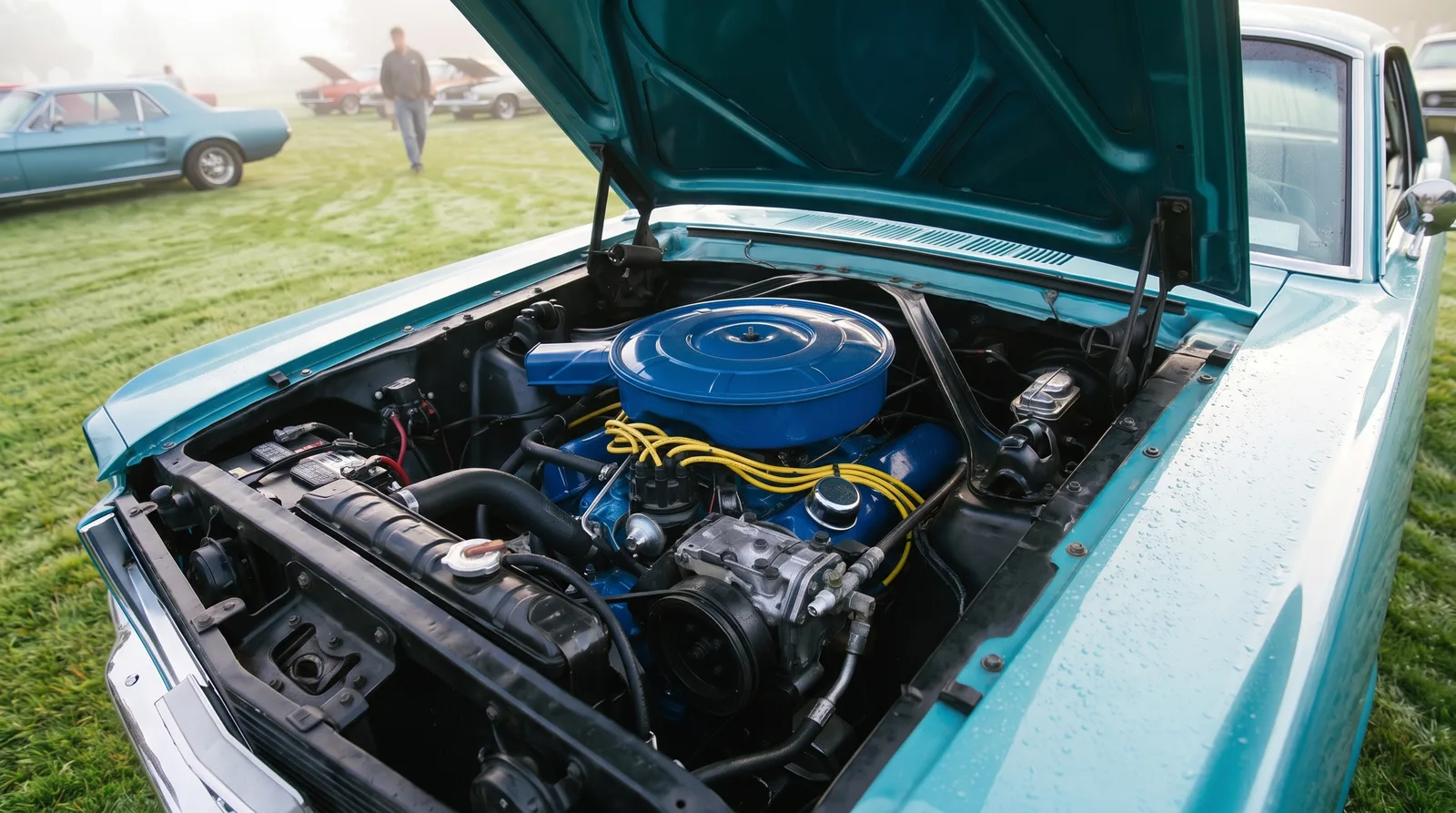
The 351 Windsor, which arrived for the 1969 model year, was a direct evolution of the Windsor engine family that had produced the 260, 289, and 302. The "Windsor" name comes from the Windsor, Ontario plant where these engines were manufactured. Ford's engineers stretched the 302's architecture by increasing the deck height, lengthening the stroke, and giving the block more material to work with. The result was a physically taller engine than the 302, which is why restorers call it a "tall-deck Windsor."
The heads on the 351W are the most revealing part of the story. They use relatively small intake ports and a conventional valve arrangement that runs in line with the cylinder bores. Port cross-section on the 351W heads is modest compared to what Ford's performance engineers were experimenting with at the same time. The combustion chambers are small, which works in favor of compression ratio but limits peak airflow at high rpm. In stock form the 1969 351W produced 250 hp at 4600 rpm in two-barrel trim and 290 hp at 4800 rpm in four-barrel form (both SAE gross figures, the rating convention of the day), numbers that reflect a torquey, broad-powerband character rather than a high-revving one.
From a practical standpoint, the 351W was Ford's bread-and-butter 351. It went into more vehicles, ran longer in production, and was easier and cheaper to rebuild because parts were widely shared with the 289/302 family. The 351W continued in production well into the 1990s, long after the Cleveland had been discontinued.
The 351 Cleveland: big-port heads and canted valves
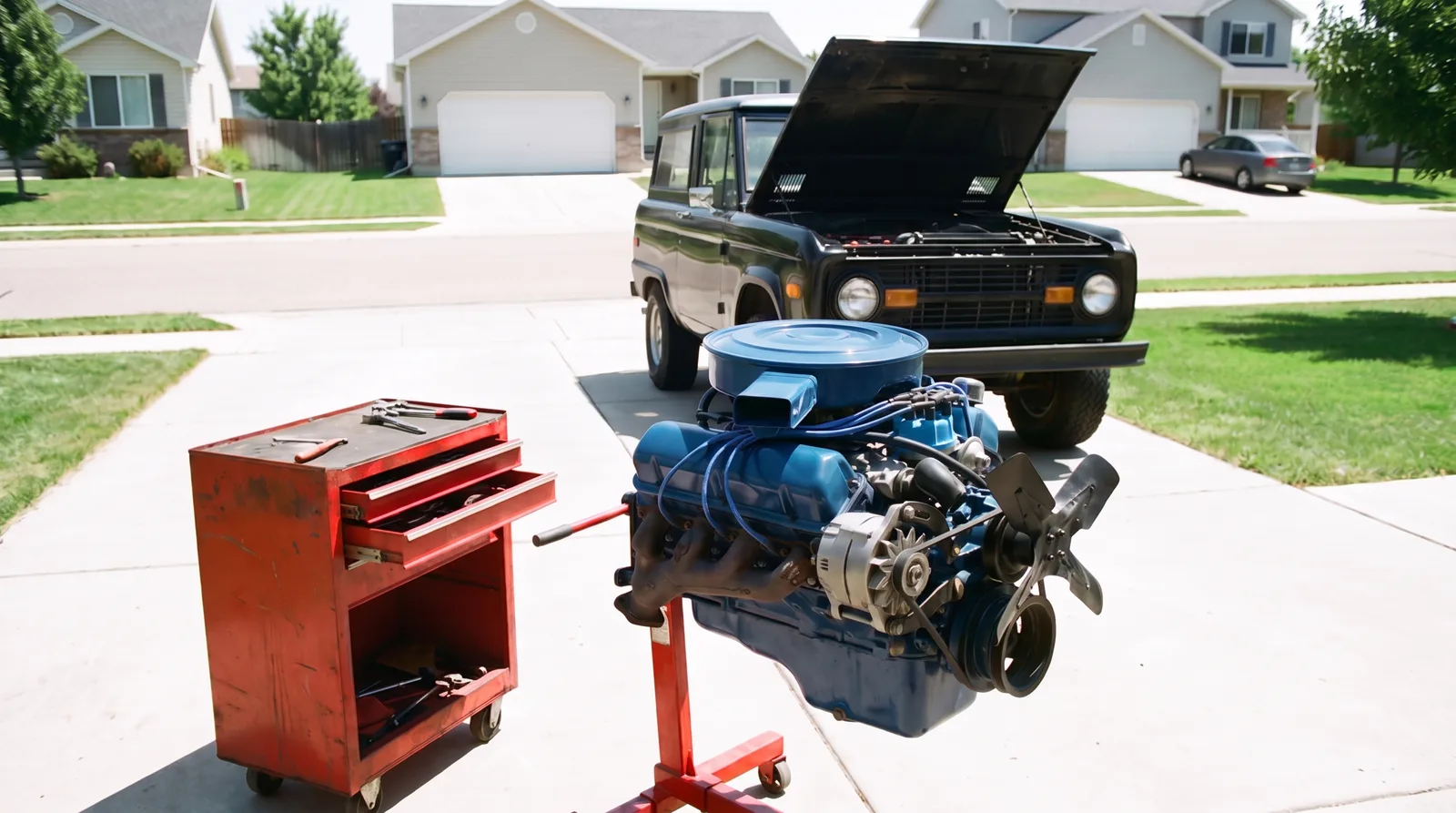
The 351 Cleveland, introduced for 1970, was a different animal. It came from the Cleveland, Ohio engine plant, and it was designed from the outset around high-performance breathing. The most dramatic difference is in the cylinder heads. The 351C heads use canted valves, meaning the intake and exhaust valves are tilted at angles rather than sitting perpendicular to the bore. This geometry allows for much larger ports and bigger valves while still fitting within the combustion chamber space.
Two head configurations were offered. The two-barrel version used smaller ports and was tuned for street drivability. The four-barrel version used the large, open-chamber heads that Ford shared conceptually with the Boss 302's high-flow design thinking, featuring massive intake ports that could support serious airflow at high engine speeds. Those big-port four-barrel heads are the reason the 351 Cleveland earned a reputation as the better performance engine of the two. At high rpm, the Cleveland simply breathed better than the Windsor.
The Cleveland also used a different front timing cover and accessory mounting layout, which means the two engines are not interchangeable without significant changes to the engine bay. Connecting rods, pistons, crankshaft dimensions, and oiling system details also differ from the Windsor. Despite sharing a displacement number, these are two separate engine designs that happen to displace the same volume.
Which Mustangs got which engine
Ford did not use the two 351s interchangeably in Mustangs, and knowing which car got which engine is essential for accurate restoration. The 351 Windsor appeared first, offered in the 1969 Mustang as an option above the 302. It continued into 1970 Mustang production as well, sitting alongside the newly introduced Cleveland in the order book.
The 351 Cleveland entered Mustang production for 1970, initially as the standard 351 four-barrel option. For 1971, Ford standardized on the Cleveland for Mustang 351 applications, which brings us to the most celebrated version of the engine: the Boss 351.
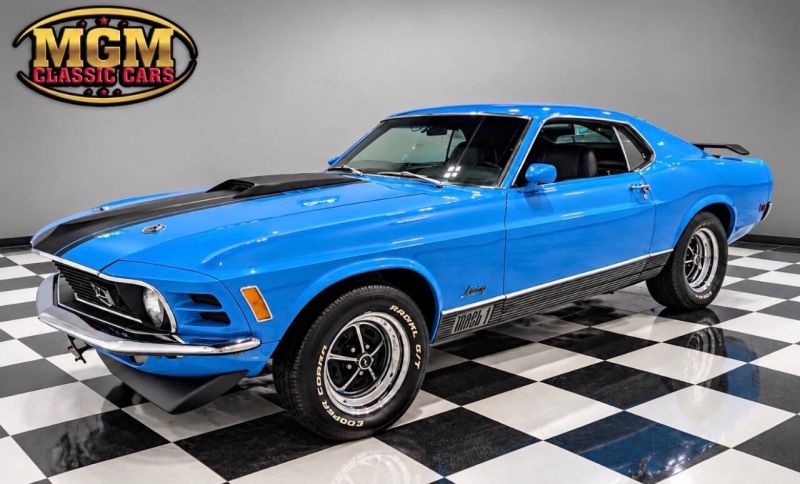
The 1971 Boss 351 Mustang used a high-output version of the Cleveland with solid-lifter camshaft, an 11.1:1 advertised compression ratio, four-bolt main bearings on the center journals, and the large-port four-barrel heads in their most aggressive factory tune. Rated at 330 hp at 5800 rpm (an SAE gross figure, not the lower SAE net measurement that became standard the following year), the Boss 351 was the quickest Mustang Ford built in 1971, and it represented the Cleveland engine at its factory peak. The Boss 351 was a one-year offering, discontinued after 1971 as emissions regulations and insurance costs began squeezing high-compression performance engines out of the market. To understand how the Boss 351 fits into the wider story of factory performance Mustangs, the context of the Boss and Mach 1 story covers the full arc of Ford's performance strategy in those years.
How to tell them apart
For anyone standing in front of an undocumented engine, several identification markers reliably distinguish the two families. The most immediate is the front of the engine. The 351 Windsor uses a timing cover that looks like a scaled-up 302 cover, and the distributor sits at the rear of the block. The 351 Cleveland has a distinctly different timing cover profile, and the water passages at the front of the block are configured differently.
The cylinder heads are the surest identifier once the engine is accessible. Windsor heads have small, oval-shaped intake ports arranged in a conventional in-line pattern. Cleveland four-barrel heads have large, nearly rectangular intake ports with the canted-valve layout clearly visible when you look at the combustion chambers. Even the Cleveland two-barrel heads have a noticeably different port shape compared to any Windsor head.
Ford also cast engine codes into the blocks. On a Mustang, the data plate (door jamb tag) and the engine identification codes on the block can confirm what was originally installed, which matters considerably for numbers-matching restoration values.
| Feature | 351 Windsor | 351 Cleveland |
|---|---|---|
| Production years (Mustang) | 1969-1970 | 1970-1973 |
| Engine family | Windsor (tall-deck) | Cleveland (new design) |
| Valve arrangement | Conventional, in-line | Canted-valve |
| Port size (4-bbl) | Smaller, oval | Large, near-rectangular |
| Character | Broad torque, low-rpm | Strong top-end, high-rpm |
| Parts commonality | Shares much with 289/302 | Unique to Cleveland family |
| Production longevity | Into the 1990s | Discontinued mid-1970s |
| Peak Mustang application | Standard performance option | 1971 Boss 351 |
Which engine was better?
The honest answer is that they were better at different things. The 351 Windsor was a refined, dependable engine with excellent parts availability, wide torque spread, and an easier rebuild path. For a driver who wanted a strong Mustang without obsessing over peak horsepower, the Windsor delivered exactly what it promised for decades.
The 351 Cleveland, particularly in four-barrel form, had breathing capability that the Windsor simply could not match. At high engine speeds, the big-port heads came alive in a way that made the Cleveland the more exciting engine to push hard. Its shorter production run and fewer vehicles means Cleveland parts are harder to find and more expensive, which is a real consideration for anyone keeping one on the road.
"When I look at a build sheet for a 1971 Mustang, the presence of the Cleveland four-barrel tells me something deliberate happened at the factory. Ford's engineers knew exactly what those heads could do, and they chose them for a reason."
Tom Ramirez
For the Mustang historian, the distinction between the two engines is not just a technical footnote. It reflects a period when Ford was running parallel performance programs, trying to serve both the street driver and the performance buyer with engines built on different engineering premises. The fact that both carried the same "351" badge on the air cleaner made things simpler for the marketing department and considerably more interesting for everyone who has been sorting through these cars ever since. The big-block side of that performance effort belongs to the 428 Cobra Jet, a drag-strip legend with its own story.
Sources and notes
A note on horsepower figures: all output numbers in this article for the 1969 351 Windsor and the 1971 Boss 351 are SAE gross ratings, measured on an engine dyno without accessories, fan, or production exhaust. This was Ford's published convention through 1971. Beginning with the 1972 model year the industry switched to SAE net ratings (engine as installed, with all accessories), which produced substantially lower numbers; gross and net figures are therefore not directly comparable. The 1969 351W produced 250 hp (2V) and 290 hp (4V) gross; the 1971 Boss 351 produced 330 hp gross at 5800 rpm with an 11.1:1 advertised compression ratio. Some references cite a higher 11.7:1 nominal compression for the Boss 351; the 11.1:1 advertised figure is used here. Figures and family/head details were verified against the sources below.
- Ford 335 engine (351 Cleveland and Boss 351): Wikipedia
- Ford Windsor engine (351W): Wikipedia
- Sorting out the Mustang's 351 Cleveland engines: Hagerty Media
- 1969 Mustang Engine Information & Specs: 351 Windsor V8: MustangSpecs
- 1971 Mustang Boss 351: Ultimate In-Depth Guide: MustangSpecs
- 351 Small Blocks (1971–1973 Mustang), 7173Mustangs Wiki