How a Rhode Island Ford dealer changed muscle-car history
The 428 Cobra Jet did not emerge from a quiet engineering program at Dearborn. It was dragged into existence by a frustrated dealer who was tired of watching his customers lose. Bob Tasca Sr., owner of Tasca Ford in Bristol, Rhode Island, had built one of the most respected performance dealerships in New England by the mid-1960s, and he had a reputation to protect every weekend at the drag strip.
By 1967, Tasca watched the big-block Chevelles and GTOs run away from Ford's factory offerings. The 390 GT that Ford advertised as its performance Mustang simply could not compete in Super Stock. Tasca's solution was direct: his shop pulled a 428 Police Interceptor block, combined it with 427 low-riser heads and a single 735-cfm Holley carburetor, and dropped the assembly into a Mustang fastback. The car, which the shop labeled "KR-8" (standing for King of the Road, 1968), ran quarter miles that caught everyone's attention at the track.
Tasca sent his findings to Ford's product planning department with a straightforward message: build this engine from the factory or concede the drag strip to General Motors. Ford listened. Engineers worked rapidly through late 1967, and the result was ready early in the 1968 model year. That engine was the 428 Cobra Jet, and it would define factory-built American drag racing for the next three years.
April 1968: the mid-year engine that rewrote the rulebook
Ford released the 428 Cobra Jet on April 1, 1968, giving rise to what collectors now call the "1968 1/2" Mustang. It was not a full model-year revision but a mid-year option introduction, available in fastback and hardtop body styles. The groundwork had actually been laid months earlier: in late December 1967, Ford built a batch of 50 stripped-down Wimbledon White fastbacks, known to collectors today by their "135" VIN sequence, which satisfied the NHRA's minimum-production rule and made the engine legal for Super Stock competition.
The 428 CJ shared its displacement with the 428 Police Interceptor that had inspired Tasca's shop build, but Ford engineering reworked the package for sustained high-performance use. The engine received large-port heads originally developed for the 427 side-oiler, a single 735-cfm Holley four-barrel carburetor, an improved intake manifold, stronger connecting rods, and a revised camshaft profile. Oil pan windage was also addressed, an important detail for cars that spend time at high rpm under hard acceleration.
Ford rated the 428 CJ at 335 horsepower gross, a figure the buff books of the era treated with open skepticism. True output is widely estimated to have been closer to 410 horsepower, and road testers consistently found the cars ran well ahead of what 335 gross horsepower would predict. The conservative rating was widely understood to be a strategic decision, keeping the engine under the then-informal one-horsepower-per-ten-pounds-of-car threshold that insurers and sanctioning bodies were beginning to enforce.
The 1968 Winternationals and what happened at Pomona
The timing of the 428 CJ's release was not accidental. Ford needed the engine in sufficient production numbers to satisfy NHRA homologation rules before the Winternationals, held February 2 through 4, 1968, in Pomona, California.
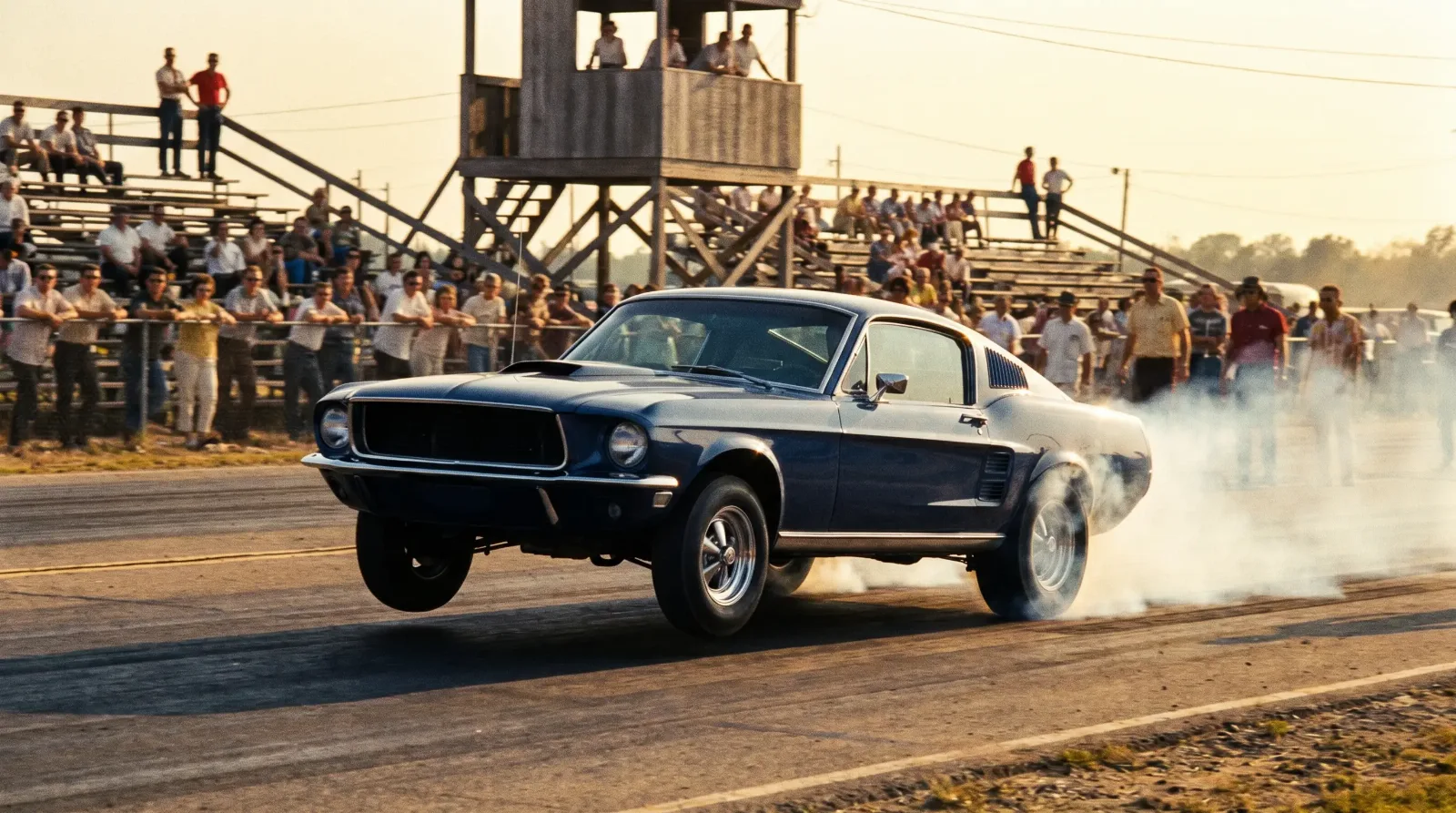
The results at Pomona announced the 428 CJ to the country. Ford entered six factory-backed Cobra Jet Mustangs, and four of them reached their respective class finals. Al Joniec took it furthest, winning his class against fellow Cobra Jet driver Hubert Platt and then beating Dave Wren to claim the overall Super Stock Eliminator title, Ford's first. Joniec's winning pass is often quoted at around 11.49 seconds at roughly 120 mph. The cars made clear what Tasca's shop build had suggested months earlier: the 428 CJ package, even in near-street trim, was a genuine drag racing weapon. The performance at that event cemented the engine's reputation before most buyers had even seen one at a dealership.
For enthusiasts following the Mustang performance story, the Winternationals results were the turning point. Ford had found its answer to the Chevelle SS 396 and the Plymouth Road Runner, and it came in a Mustang fastback with a blue oval under the hood.
Ram Air, the Super Cobra Jet, and the drag-pack option
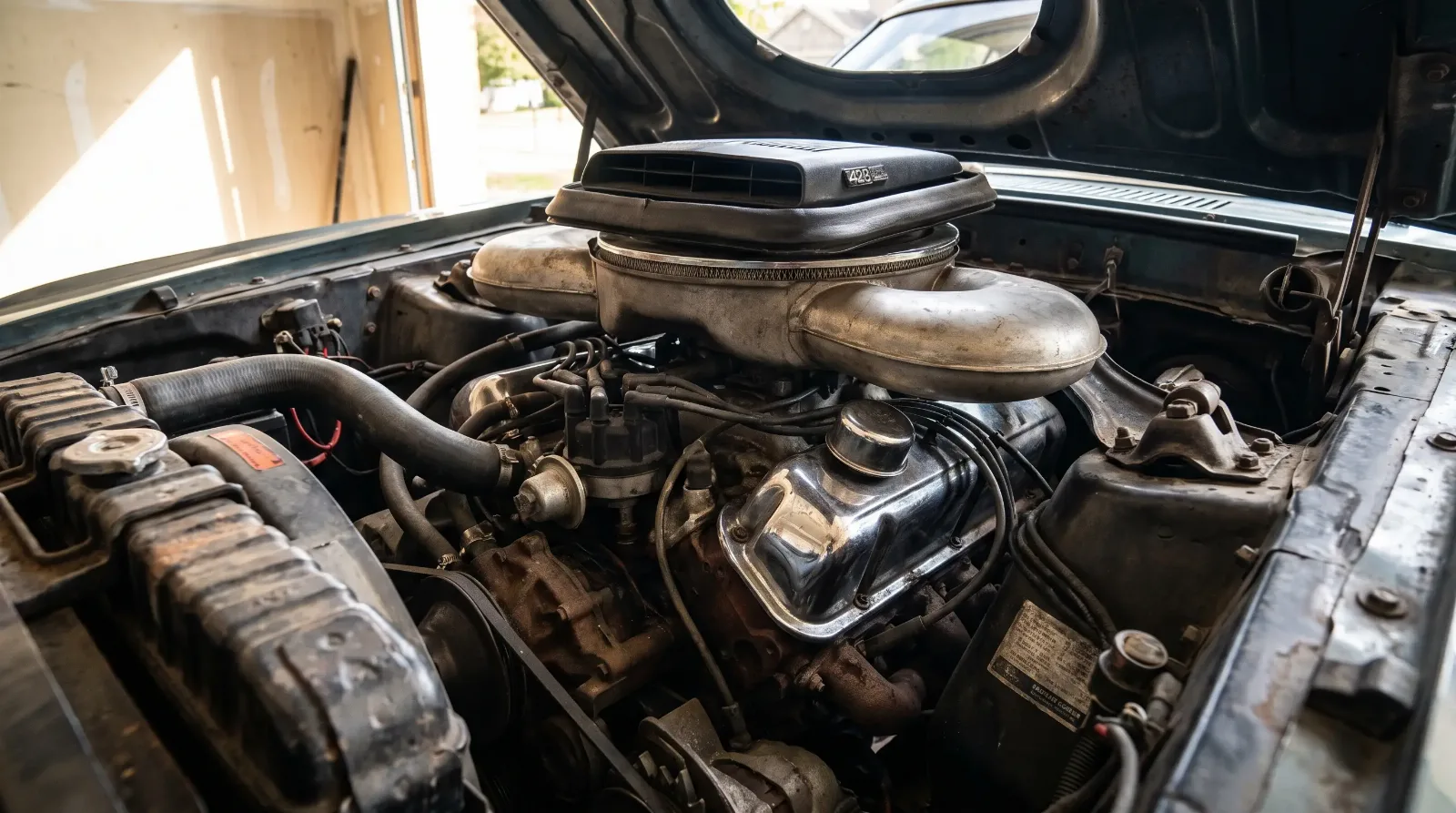
Ford quickly expanded the 428 CJ lineup with two important additions. The Ram Air package, often designated by the "R" suffix in the engine code, added a functional fresh-air induction system that drew cooler outside air directly into the carburetor rather than pulling warmer underhood air. The performance gain from Ram Air was real in street conditions, particularly in cooler weather. Visually, Ram Air cars wore a unique hood scoop treatment, and the setup became a defining styling element of the performance Mustangs of this era.
More significant for serious drag racers was the Super Cobra Jet, introduced as part of what Ford called the "drag pack" option. When a buyer ordered the 3.91 or 4.30 rear axle ratio, the factory automatically upgraded the engine internals to Super Cobra Jet specification. The SCJ received race-proven 427 "Le Mans" capscrew connecting rods, a heavier counterweighted harmonic balancer, and an external engine oil cooler mounted ahead of the radiator. These were the pieces that made the engine durable under repeated hard acceleration runs.
The drag-pack option was a factory acknowledgment that some buyers intended to race these cars regularly, not just occasionally. Ford gave them an engine that could survive the punishment. The Super Cobra Jet became the preferred choice among racers who understood that consecutive quarter-mile passes require more than power, they require rotating assembly durability.
"The 428 CJ was the rare case where the factory actually built what the racers asked for, and they built it tough enough to survive a real weekend at the strip."
Mike Sullivan
Beyond the Mustang: the 428 CJ across Ford's performance lineup
Ford did not limit the 428 Cobra Jet to the Mustang. The engine appeared across the company's performance vehicles during the 1968 to 1970 model years, making it one of the most widely deployed factory performance engines of the era. Within the Mustang family, the 428 CJ powered several distinct variants that collectors now prize above almost every other Pony Car, while the same engine also went into the Fairlane-based Ford Cobra, the Torino, and other intermediates.
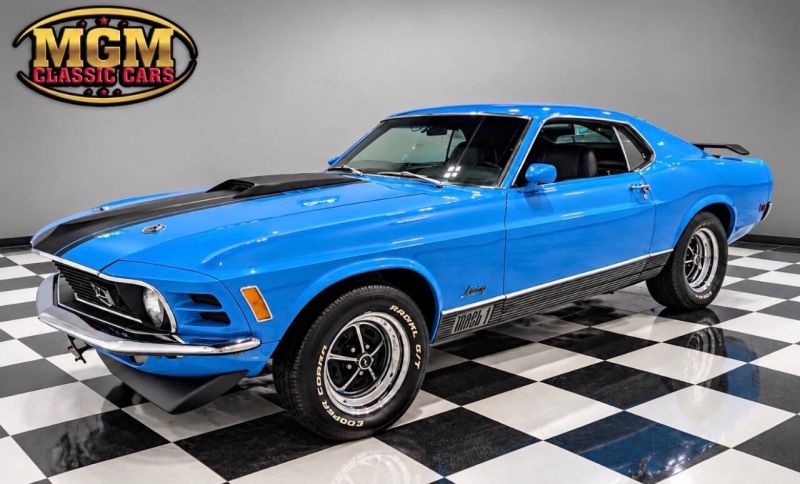
The Mach 1, introduced for 1969, became the volume performance Mustang and the most common home for the 428 CJ and 428 SCJ. Its SportsRoof fastback body combined with the available 428 engines to produce one of the most recognizable drag-strip vehicles of its decade. The 1969 Ford Cobra, by contrast, was not a Mustang at all but a stripped-down, Fairlane-based intermediate built to chase the Plymouth Road Runner, sharing the same 428 CJ under its hood. The road-course counterpart of those years was the Boss 302, built for the Trans-Am war rather than the drag strip.
The GT500KR, produced for the 1968 model year only, carried the "King of the Road" designation that echoed Tasca's original shop build. Carroll Shelby's Mustang variants adopted the 428 CJ in place of the 428 Police Interceptor that had powered earlier GT500 models, and the KR designation acknowledged the upgrade explicitly. Just over 1,000 GT500KRs were built, and the "King of the Road" name appeared on the GT500 for the 1968 model year only.
Across all these applications, the 428 CJ maintained its conservative factory rating while delivering performance that buyers discovered quickly. For anyone considering classic Mustangs of this generation, the presence of a numbers-matching 428 CJ or SCJ remains one of the most significant factors in desirability and value. Those engines, whether in a Mach 1, Cobra, or the earlier CJ fastbacks, represent Ford's most complete factory performance statement of the muscle-car era. Browse available classic Mustangs to see how the market values CJ-powered examples today.
Sources and notes
This article was fact-checked against the references below. Production figures, horsepower ratings, and race results from the late-1960s muscle-car era can vary between sources; specifications and dates here reflect the most authoritative period and registry documentation available, but enthusiasts verifying a specific car should confirm details against its individual build documentation. The 335-horsepower gross rating was Ford's official factory figure; the roughly 410-horsepower true-output estimate is a widely cited approximation, not a measured factory number.
- The Mustang 428 Cobra Jet Registry: The Introduction of the 428 Cobra Jet
- The Mustang 428 Cobra Jet Registry, 428 CJ Mustangs at the 1968 NHRA Winternationals
- The Mustang 428 Cobra Jet Registry, 428 Cobra Jet vs. 428 Super Cobra Jet
- Hagerty Media: How a Ford dealer created the 428 Cobra Jet
- HowStuffWorks, 1968 Ford Mustang 428 Cobra Jet profile
- Revology Cars: Why the 1968 Shelby GT500KR Was Called "King of the Road"