Born from a rules loophole: why Ford built the Boss 429
In the late 1960s, NASCAR was a horsepower war with very specific rules of engagement. To run an engine in a stock car race, a manufacturer first had to install that engine in a minimum number of street-legal production cars. Chrysler had learned this lesson early with its 426 Hemi, homologating the engine through production Dodge and Plymouth muscle cars and then dominating superspeedway racing. Ford was not prepared to concede the ovals to a Pentastar engine.
The answer was the 429 cubic-inch big-block in its highest-performance form, internally called the 429 "semi-hemi." The cylinder heads featured crescent-shaped combustion chambers that, while not true hemispherical like the Chrysler unit, shared the same fundamental breathing advantage: large valves, excellent flow, and enormous potential at high rpm. Ford engineers knew the engine could win on the big ovals. The problem was getting it into production vehicles fast enough to satisfy NASCAR's homologation requirement.
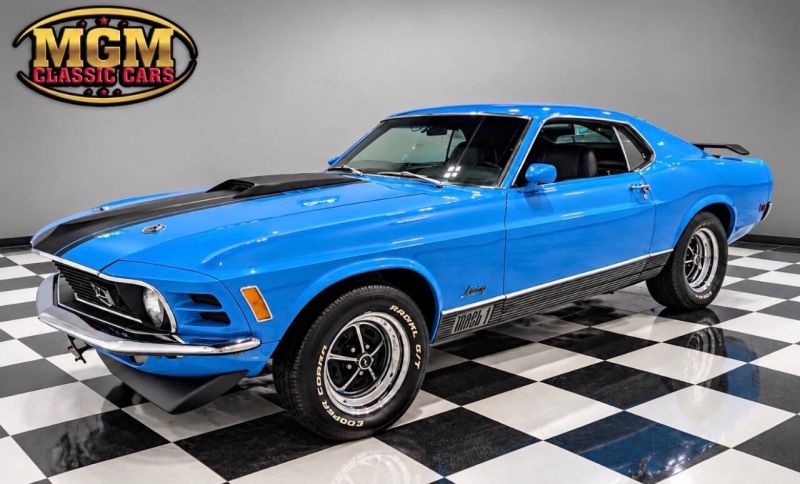
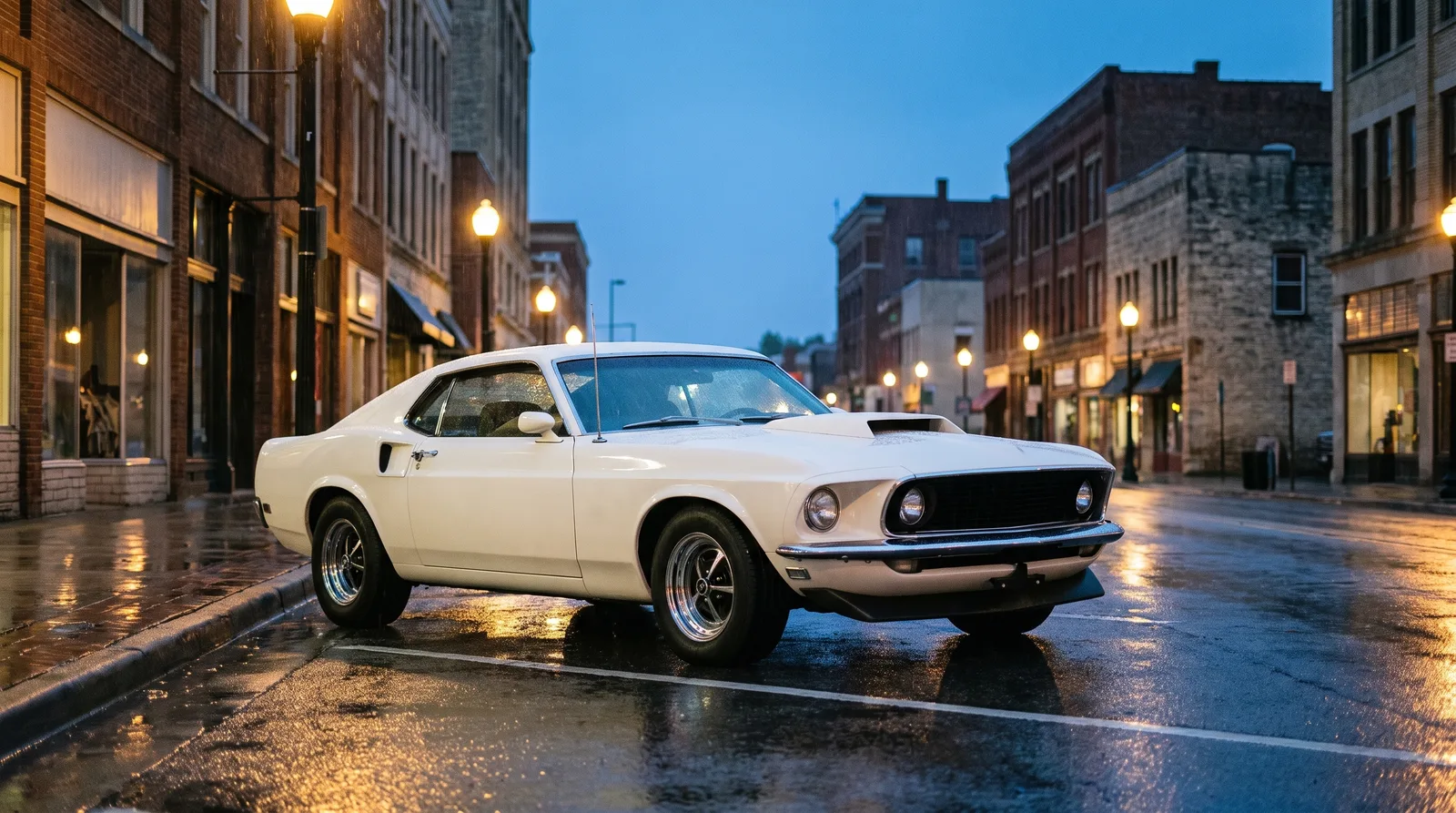
The resulting car, the Boss 429 Mustang, is one of the most deliberately engineered homologation specials in American automotive history. It was built to satisfy a rulebook, but it became something far more lasting: one of the most respected performance Mustangs ever produced. For the full story of Ford's performance Mustang lineage, see our coverage of Boss and Mach 1 Mustangs.
The Kar Kraft conversion: hand-building a homologation special
Installing a 429 big-block into a first-generation Mustang was not a simple bolt-in operation. The engine was physically too wide to fit between the standard shock towers without serious interference. Ford solved this by contracting with Kar Kraft, a Brighton, Michigan engineering firm that had a long relationship with Ford's performance programs, to hand-convert production Mustangs at a dedicated facility.
Each car began its life as a standard Mach 1 Mustang rolling off the Dearborn assembly line. It was then driven or transported to the Kar Kraft facility, where workers cut and relocated the front shock towers outward by approximately one inch on each side to clear the engine's massive cylinder heads. The front suspension geometry was reconfigured, and a relocated battery was moved to the trunk to improve weight distribution. The cars then went back to Ford dealers as finished Boss 429 Mustangs.
The process was labor-intensive and expensive. Every single Boss 429 was, in essence, hand-built at the conversion stage. The shock tower modification alone required careful metalwork to maintain structural integrity, and the suspension tuning was revised to suit both the added weight of the big-block and the altered geometry. Kar Kraft also fitted a unique oil cooler, a dry-sump-style baffled oil pan, and specific cooling components to manage the engine's heat output in street trim.
The 429 engine: what the factory rating did not tell you
Ford rated the Boss 429 at 375 horsepower (gross) in both 1969 and 1970. Nearly every automotive historian and restoration specialist who has studied the engine agrees that figure was a significant understatement. The practice of understating factory output was common in the late 1960s, driven partly by insurance industry pressure, partly by corporate liability concerns, and partly by a quiet agreement among manufacturers not to escalate the horsepower numbers race into territory that would attract federal scrutiny.
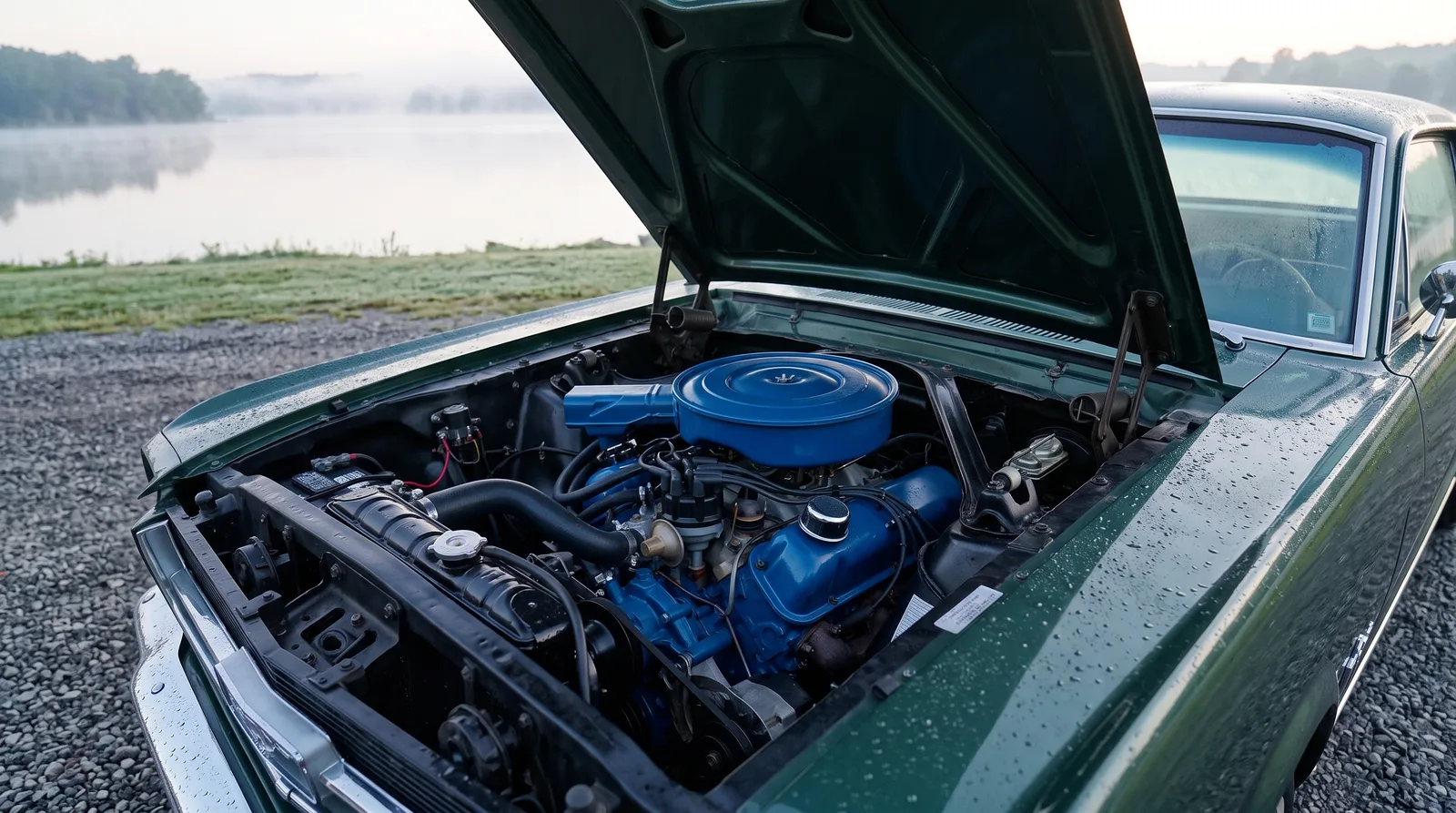
The 429's cylinder heads were the heart of the engine. The semi-hemi combustion chambers allowed the use of very large valves: 2.28-inch intake and 1.90-inch exhaust valve diameters in a design that breathed exceptionally well at high rpm. A solid-lifter camshaft, four-bolt main bearing caps, forged connecting rods, and an aluminum intake manifold topped by a single 735 cfm Holley four-barrel carburetor completed the package. The engine was built to rev, built to last under sustained high-load conditions, and built to translate directly to the racing version with minimal modification.
In NASCAR trim, the same basic architecture produced figures well north of 600 horsepower. The street version, even in its deliberately detuned form, was a fundamentally different animal than the 428 Cobra Jet it sat alongside in Ford's lineup. Where the 428 CJ was optimized for brutal low-rpm torque in drag racing trim, the Boss 429 was engineered for high-rpm endurance, with tighter tolerances and a personality better suited to road courses and superspeedways than the quarter mile. How the 428 and the rest of the Mustang range fit together is laid out in a guide to every engine by year, from the 260 to the 428.
"The 375-horse rating on the Boss 429 is one of the most famous lies in muscle car history. These engines were making serious power from the factory, and anyone who has driven a properly sorted example already knows it."
Mike Sullivan
Production numbers: 1969 and 1970
Ford produced the Boss 429 Mustang across two model years. Production figures cited in the literature vary slightly depending on the source, but the most widely accepted numbers place total output at roughly 1,358 units: 859 in 1969 and 499 in 1970. (Some references cite slightly different totals in the 1,356 to 1,359 range, reflecting the difficulty of reconstructing exact figures from the Kar Kraft records.) The drop in production from 1969 to 1970 reflected a combination of factors, including the rising cost of the Kar Kraft conversion process and shifting market conditions as insurance surcharges began to suppress demand for high-performance vehicles broadly across the industry.
The 1969 cars are generally considered the more desirable of the two model years from a collector standpoint, partly for their rarity and partly because they represent the first-year execution of the concept. The 1970 model received some refinements, including an improved cylinder head design that many engineers considered superior to the 1969 version, but lower production numbers and the specific characteristics of 1969 Mustang styling keep that first-year car at the top of most serious collectors' lists.
Both years were available only in the SportsRoof (fastback) body style. The Boss 429 was not offered as a coupe or convertible. Color choices were deliberately limited in the first year, and certain options available on other Mustangs were deleted because they were incompatible with the Kar Kraft conversion or the racing-derived engineering philosophy behind the car.
Legacy and collector value
The Boss 429 achieved exactly what Ford intended on the NASCAR circuit. The 429 engine, in race-prepared form, competed at superspeedways through the early 1970s and validated Ford's investment in the homologation program. On the street, the Boss 429 Mustang built a reputation that has only grown in the decades since production ended.
Today, genuine Boss 429 Mustangs are among the most valuable muscle cars from any manufacturer. Historically, strong examples have changed hands at major auctions in roughly the $250,000 to $550,000 range, with exceptional, well-documented or unusually optioned cars climbing higher still: a 1969 example sold for around $605,000 in early 2023, and a 1970 car in Calypso Coral reportedly set a public-auction high near $627,000 at Mecum's Indianapolis sale in 2025. These figures are historical results, not current valuations, and individual prices vary widely with condition, documentation, and provenance. Numbers-matching cars with documented Kar Kraft conversion histories and traceable VINs command significant premiums, while the relatively small production run across both years keeps overall supply constrained.
Authentication is critical in the Boss 429 market. Because the cars were hand-converted rather than factory-assembled in the conventional sense, documentation standards require careful attention to the Kar Kraft sequential numbering system, original build sheets, and the specific engineering details that distinguish a genuine conversion from a replica. Potential buyers should engage with marque-specific registries and authentication specialists before any transaction involving a car represented as an original Boss 429.
For those looking to explore the market for collectible classic Mustangs, the Boss 429 sits at the top of the performance hierarchy, representing a moment when racing requirements and road car engineering produced something genuinely extraordinary.
Sources and notes
The technical and production figures in this article have been checked against published references. Production totals for the Boss 429 vary slightly between sources (commonly cited at 1,356 to 1,359 cars total, with 859 built in 1969 and 499 in 1970); the engine's factory rating of 375 horsepower gross, its 2.28-inch intake and 1.90-inch exhaust valves, the 735 cfm Holley four-barrel carburetor, and the Kar Kraft conversion in Brighton, Michigan are all corroborated below. Auction prices cited are historical results from specific past sales and should not be read as current market valuations; values for any individual car depend heavily on condition, originality, and documentation.
- Boss 429 Mustang: Wikipedia (production figures, 375 hp gross rating, 735 cfm Holley carburetor, Kar Kraft Brighton conversion)
- Secrets of the Ford Boss 429 V8: Mac's Motor City Garage (2.28-inch intake / 1.90-inch exhaust valves, "twisted hemi" combustion chamber, 735 cfm carburetor)
- 1970 Boss 429 Sets Record Auction Price, autoevolution (Mecum Indianapolis 2025 record sale, ~$627,000)
- 1969 Boss 429 Sells for $550,000, autoevolution (Mecum Monterey historical sale result)
- 1970 Ford Mustang Boss 429: Barrett-Jackson (auction docket and condition reference)
- 1969 Ford Mustang Boss 429: Silodrome (Kar Kraft conversion history and homologation background)