Born from a rulebook: why the Boss 302 existed
The Boss 302 was never conceived as a showroom star. It was conceived as a racing weapon that happened to be sold at dealerships. In the mid-1960s, the Sports Car Club of America's Trans-American Sedan Championship had become the most visible road-racing series in North America, and the rules were unambiguous: any engine used in competition had to be available in production cars sold to the public. Ford wanted to campaign a high-revving small-block in the 5.0-liter (302 cubic inch) class, and that meant building enough street cars to satisfy the homologation requirement. The result, introduced for the 1969 model year, was the Boss 302.
For fans of the performance Mustangs, the Boss 302 occupies a singular place in the lineage: it was purpose-built for one specific competitive goal, and every engineering decision followed from that goal with unusual discipline.
The engine: Cleveland heads on a Windsor block
The mechanical heart of the Boss 302 was its engine, and that engine was genuinely unusual. Ford engineers grafted the large-port, canted-valve cylinder heads being developed for the forthcoming 351 Cleveland onto a standard 302 cubic inch Windsor short-block. The result was a combination that never appeared in any other production Ford of the era.
Those heads were the key to the engine's character. The canted valves allowed for larger ports and better airflow than conventional inline-valve designs, and the combustion chamber geometry favored high-rpm breathing. The engine wore a Holley 780 cfm four-barrel carburetor on an aluminum intake manifold, solid lifters, and a radical cam profile that made it choppy at idle and ferocious above 5,500 rpm. Ford rated the engine at 290 horsepower gross, a figure that knowledgeable observers then and now have consistently treated as conservative, with real output widely believed to sit well above the advertised number.
The high-revving nature of the combination demanded supporting hardware. The Boss 302 received a stronger four-bolt main block, a revised oiling system, and a close-ratio four-speed manual gearbox as standard equipment. No automatic was offered. The suspension received stiffer springs and shocks, a thicker front anti-roll bar, and staggered rear shocks to control axle wind-up under hard acceleration.
Larry Shinoda and the look of a racer
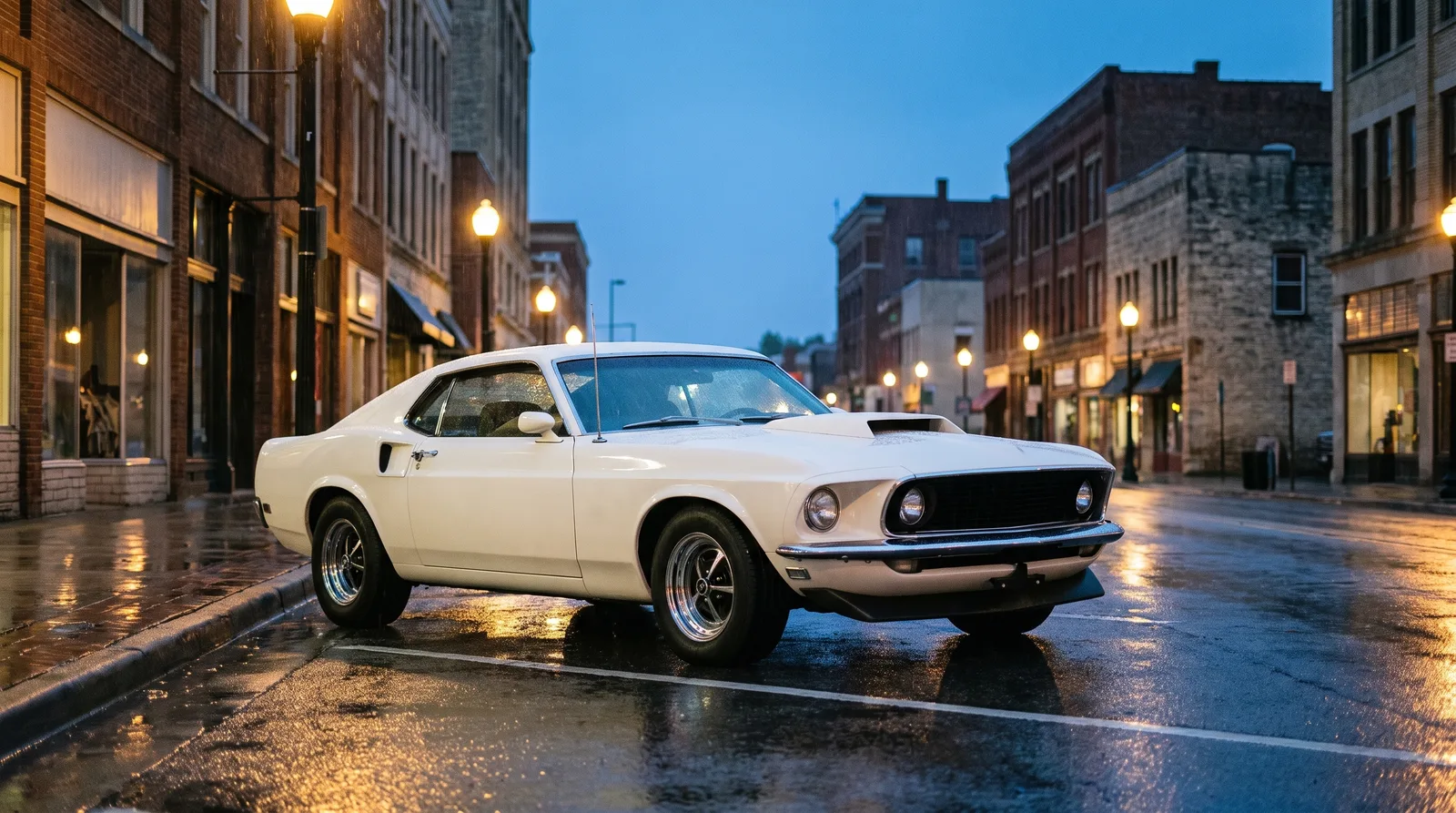
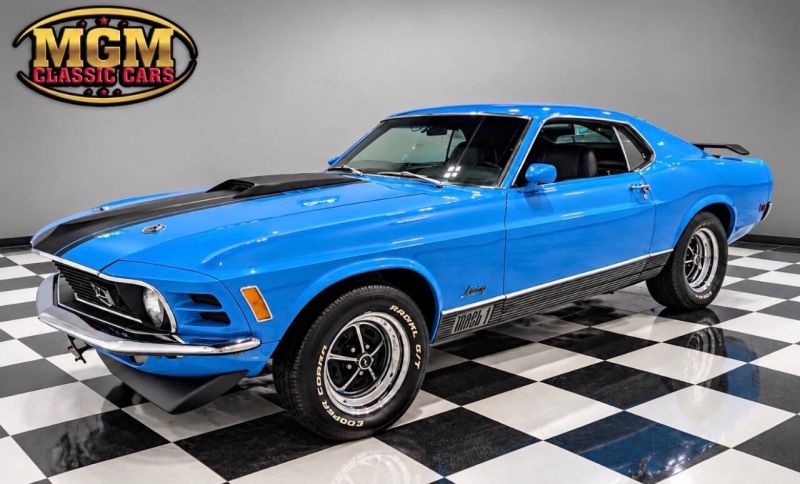
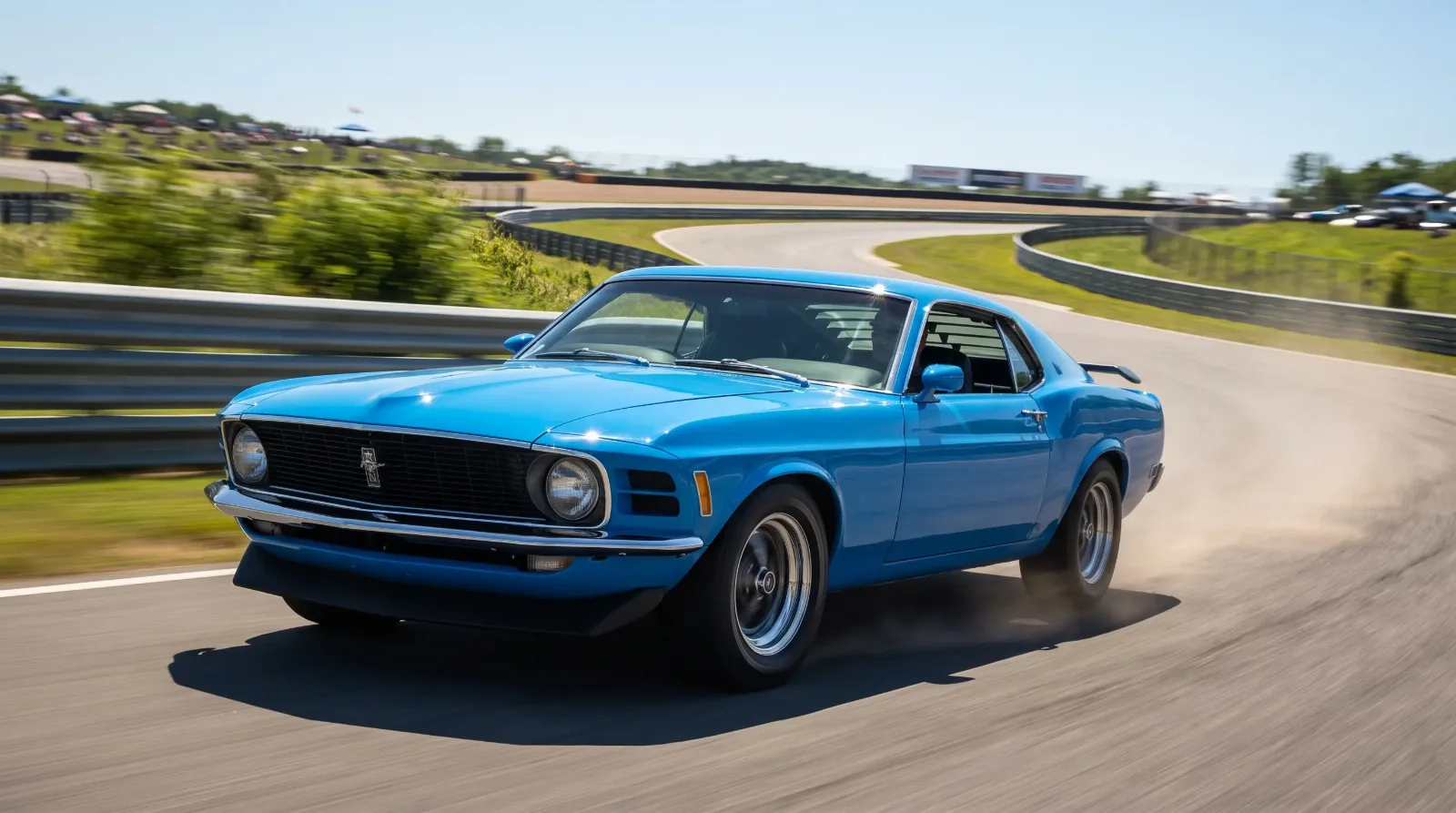
The Boss 302 was not just a mechanical exercise. Larry Shinoda, a designer who had worked on the Corvette Stingray before moving to Ford, was assigned to give the car a visual identity that matched its engineering ambitions. Shinoda's contributions were direct and functional-looking: a black hood treatment with a competition-style hood lock pins, a rear window louver (the "sport slats" that became one of the car's signature details), a front chin spoiler, and a rear deck spoiler on some configurations.
The striping ran along the lower body and up the C-pillars in a pattern that Shinoda designed to emphasize the car's length and give it a purposeful, race-derived appearance. The name "Boss 302" itself appeared in large block lettering on the front fenders. Shinoda reportedly gave the car its "Boss" name as a casual description, and it stuck.
The visual package worked. The Boss 302 looked like it belonged on a road course, because in fundamental ways, it did.
Bud Moore, Parnelli Jones, and the Trans-Am campaign
Ford contracted Bud Moore Engineering to run the factory-backed Trans-Am effort. Moore was a veteran NASCAR team owner from Spartanburg, South Carolina, with a reputation for thorough preparation and mechanical shrewdness. His drivers for the effort were Parnelli Jones and George Follmer, both experienced road racers with the aggression and car control that the Trans-Am format demanded.
The 1969 season was intensely competitive. Chevrolet campaigned the Camaro Z/28 with Roger Penske and Mark Donohue, and the Penske-Donohue combination had dominated the 1968 series. The Ford effort under Moore was fast but the 1969 championship went to Donohue and Penske. However, the engineering and development work that season paid off in 1970.
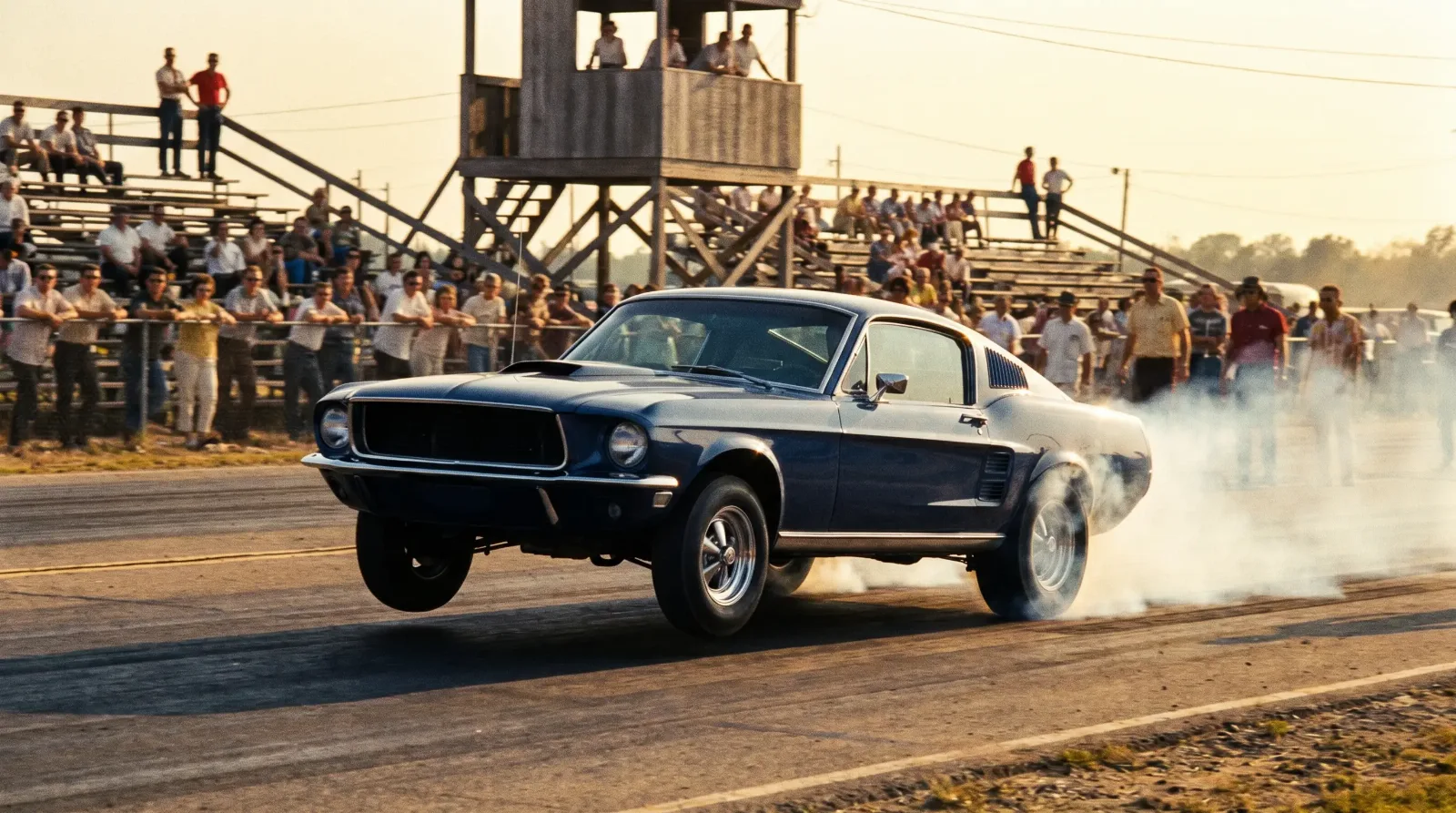
The 1970 Trans-Am season saw the Bud Moore Mustangs hit their stride. Parnelli Jones drove with particular ferocity, and George Follmer provided consistent points support. Ford claimed the 1970 Trans-Am manufacturers' championship, with Bud Moore's Mustangs winning six of the season's eleven rounds and Parnelli Jones edging Team Penske's Mark Donohue, a result that vindicated the entire Boss 302 homologation program.
"What people forget is that the Boss 302 street car was the admission ticket to go racing. Every one of those numbers-matching engines sold to the public was Ford buying its way onto that starting grid."
Mike Sullivan
Production numbers and what to know today
Alongside the Bud Moore race effort, Kar Kraft played an important supporting role in the Boss 302 program. The Brighton, Michigan-based specialty shop had an established relationship with Ford on high-performance projects, and they helped bridge the gap between the street hardware and the fully developed race preparation that Trans-Am competition demanded.
The Boss 302 was produced for two model years. Ford built approximately 1,628 units for 1969, the first year of production. The 1970 model year saw dramatically higher numbers, with production reaching 7,013 units. The Boss 302's big-block sibling, the Boss 429, was Ford's NASCAR answer to the Hemi and has its own story.
The jump in 1970 production reflected both the car's commercial success and Ford's need to continue satisfying homologation requirements as the racing program matured. The 1970 cars received a revised front end treatment and some detail changes, but the mechanical formula remained the same.
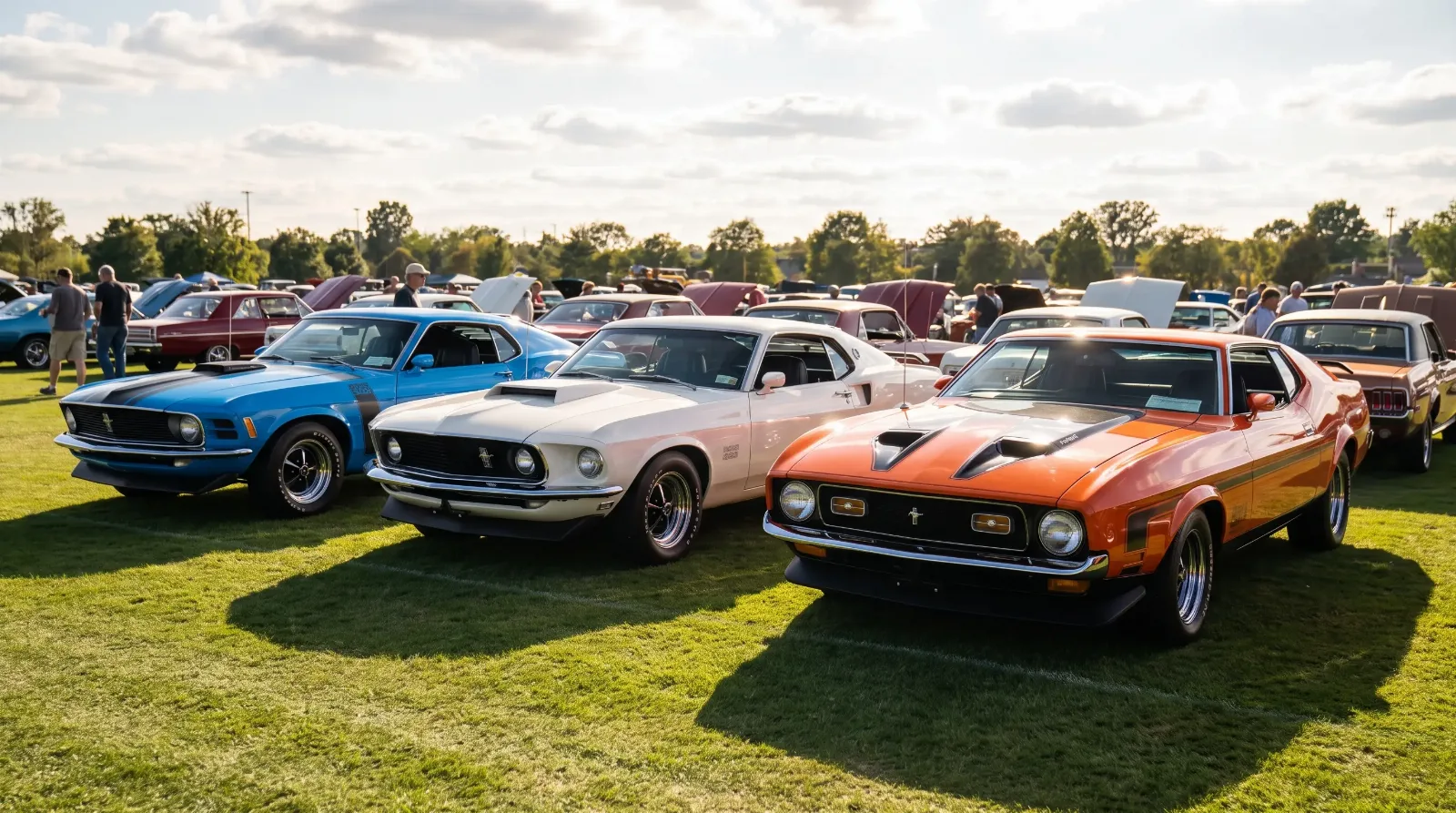
Today the Boss 302 stands as one of the most desirable first-generation Mustang variants. The combination of homologation history, distinctive styling, and a genuinely high-performance engine makes surviving examples significant. Numbers-matching cars with the correct engine, transmission, and date-coded components command serious attention, and documentation through the Marti Report system is the standard for establishing authenticity.
For anyone exploring the broader classic Mustang market, the full range of classic Mustangs shows how the Boss 302 fits into a family of cars that spanned a wide performance spectrum across the pony car era.
Sources and notes
This article is intended for general historical and enthusiast reference. Period figures such as horsepower ratings and production totals can vary slightly between sources and surviving factory records; where minor discrepancies exist, the most widely corroborated figures have been used. Always confirm a specific car's specification and authenticity through documentation such as a Marti Report before making any purchase decision.
- Boss 302 Mustang: Wikipedia (290 hp gross rating, 7,013 units for 1970, canted-valve heads, four-bolt main, 1970 Trans-Am championship, Camaro wins in 1968 and 1969)
- History of the 1969 and 1970 Boss 302 Mustang: CJ Pony Parts (model history and production overview)
- Boss Mustang Production Information: Nate's Classic Cars (1969 and 1970 production breakdown)
- Ford's Boss 302 & Boss 429 Mustangs: Heacock Classic (homologation background and engineering)
- Parnelli Jones' 1970 Ford Mustang Boss 302: Silodrome (Bud Moore team, Parnelli Jones, 1970 Trans-Am campaign)
- Boss 302 Trans-Am Mustang: Hagerty Media (race history and collector context)