The Man Who Replaced Harley Earl
When Harley Earl retired from General Motors in December 1958, he left behind one of the most consequential design legacies in automotive history. He had invented the concept of the concept car, shaped postwar American taste toward chrome and tail fins, and launched the Corvette in 1953. His replacement, William L. Mitchell, had worked under Earl for nearly two decades and understood the master's vocabulary — but had no intention of simply continuing it.
Mitchell had sharper instincts, a fiercer aesthetic, and a particular obsession: speed as form. Where Earl drew inspiration from aircraft and the optimism of the postwar era, Mitchell was drawn to the predatory world of nature — sharks, manta rays, the angular tension of a predator coiled to strike. He believed American cars had grown too soft, too ornamented, too comfortable with their own excess. The Corvette, he felt, deserved something rawer.
"Design is not decoration," Mitchell reportedly told his studio staff in the early 1960s. "It's the honest expression of a machine's purpose." That philosophy would define what came next — and it would arrive in the form of a show car that became one of the most influential vehicles in Corvette history: the Mako Shark I.
XP-755: The Car Born from a Fish
The project that would become known as the Mako Shark I was designated XP-755 within GM's design studios. Commissioned by Mitchell himself in 1961, it was built on a modified Corvette chassis and presented at the New York Auto Show that same year, initially under the name "Shark." The rechristening to "Mako Shark" came later, partly to distinguish it from a subsequent concept — the Mako Shark II of 1965 — and partly because the name more precisely captured Mitchell's inspiration.
Mitchell was an avid deep-sea fisherman, and according to period accounts, he had caught a mako shark off the coast of Florida sometime in the late 1950s. The creature's coloration — a deep, graduated blue-grey on top fading to a lighter, almost white underbelly — struck him as exactly the kind of visual drama that a sports car should possess. He reportedly had the Mako Shark I painted in a two-tone scheme that mimicked that gradient precisely: dark blue-grey on the upper body, silver-white along the lower flanks.
The XP-755's shape was a radical departure from the C1 Corvette's rounded, almost friendly contours. The nose was long and tapered, aggressive where the C1 had been approachable. The side coves — a design element that had appeared on the 1956 Corvette — were deepened and reshaped, becoming more sculptural, more integral to the overall form rather than decorative add-ons. The tail tapered sharply, a shape drawn directly from the mako's caudal silhouette. The whole car had a sense of coiled energy, as though it was about to lunge forward regardless of whether the engine was running.
From Show Floor to Production Blueprint
General Motors show cars of this era occupied an unusual position in the development pipeline. They were simultaneously genuine experimental vehicles and elaborate marketing exercises — built to gauge public reaction, to establish design direction, and to give the press something to write about. The Mako Shark I was all of these things, but it was also something more deliberate: a preview of where Mitchell intended to take the production Corvette.
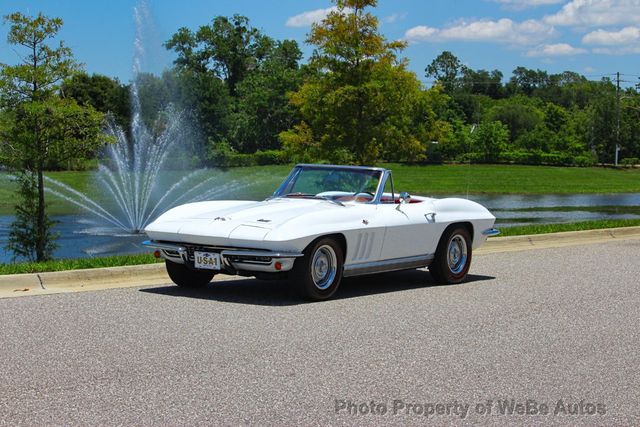
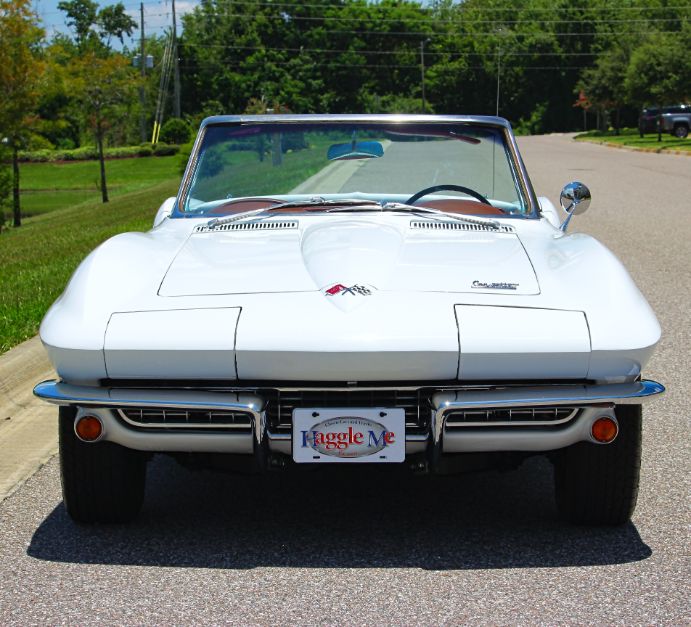
Historians generally agree that the relationship between the XP-755 and the second-generation Corvette — the C2, which arrived for model year 1963 — was unusually direct. Several of the show car's most distinctive design elements appeared on the production car with relatively little alteration:
- The tapered, pointed nose, more predatory than the C1's rounded front
- The refined and deepened side coves, now flowing more naturally into the body line
- The raked windshield and fastback roofline on the coupe variant
- The overall sense of a car shaped by aerodynamic purpose rather than decorative intent
- The graduated two-tone color treatment, which influenced how the production car's body lines were sculpted
This wasn't accidental. Mitchell used the Mako Shark I as a kind of public design laboratory — a way to test audience reaction to a direction he had already largely committed to internally. The car appeared on the show circuit for several years, gathering crowds and generating the kind of press that confirmed Mitchell's instinct: the public was ready for a Corvette that looked like it meant business.
For the full story of how these design cues carried through into the production car, the C2 Corvette Sting Ray history traces the complete arc from concept to showroom.
The Stingray Racer and the Connected Vision
The Mako Shark I did not emerge in isolation. It was part of a broader creative moment in Mitchell's career, one that also produced the Stingray racer — a pure competition vehicle that Mitchell had developed privately, technically outside of GM's official programs, using a chassis that had originally been built for the SS racing project of 1957.
Mitchell reportedly funded the Stingray racer largely out of his own pocket and campaigned it in SCCA competition between 1959 and 1960, with driver Dick Thompson behind the wheel. The car won the C-Modified class championship in 1960. But its importance extended well beyond its racing results. The Stingray racer and the Mako Shark I were conceptually parallel exercises — two different expressions of the same design vocabulary, one built for the track and one built for the show floor, both pointing toward the same destination.
"The Stingray was the sculpture. The Mako Shark was the announcement. The production car was the proof."
— paraphrased from accounts of Mitchell's design philosophy, as recalled by former GM designers in period interviews
The name "Stingray" itself carried through in ways that matter to historians. The 1963 production Corvette was officially designated the Corvette Sting Ray — two words, a distinction that collectors and enthusiasts still parse carefully today. The history of the Corvette Stingray name is more layered than it might appear, threading through the racer, the show cars, and the production designation in ways that reflect Mitchell's determination to stamp his personal vision onto the car.
The Chevrolet Corvette listings on Classic Cars Arena include examples spanning every generation, with C2 models reflecting the direct lineage of everything Mitchell built and envisioned during this period.
The 1963 Coupe and the Split Window
The most dramatic expression of Mitchell's influence on the C2 was the 1963 coupe, specifically its split rear window — a design element Mitchell reportedly championed over the objections of Corvette chief engineer Zora Arkus-Duntov, who argued the center bar obstructed the driver's rearward visibility.
Mitchell's position, according to accounts from the period, was essentially aesthetic rather than practical: the split window gave the car a visual spine, a centerline that unified the roofline and the tail into a single coherent gesture. Remove the bar, he argued, and you'd have a competent rear window. Keep it, and you'd have a design statement. Mitchell won the argument — for exactly one model year. By 1964, the bar was gone, replaced by a conventional single-pane rear window.
The brevity of the split-window's production run transformed it into one of the most sought-after details in Corvette collecting. The 1963 split-window Corvette carries a premium that reflects both its rarity and the story behind it — a single model year that preserved Mitchell's original vision before engineering pragmatism prevailed.
The Bill Mitchell Corvette design sensibility — angular, predatory, grounded in natural forms rather than chrome ornament — defined the C2 so completely that the car remains among the most visually distinctive American sports cars ever built. The Mako Shark I was its herald, a show car that functioned less as a fantasy than as a promise. Mitchell made good on it.
| Detail | Mako Shark I (XP-755) |
|---|---|
| Designation | XP-755 |
| Year introduced | 1961 (New York Auto Show) |
| Designer | Bill Mitchell, GM Design Staff |
| Initial name | "Shark" (renamed Mako Shark I after 1965) |
| Base chassis | Modified Corvette platform |
| Production descendant | 1963–1967 C2 Corvette Sting Ray |
| Key design elements carried to C2 | Tapered nose, side coves, fastback roofline, graduated body line |
Sources and notes
- National Corvette Museum — Corvette History — institutional archive covering GM design history and show car programs
- MotorTrend — History of Corvette Concept Cars — editorial overview of GM show car lineage including XP-755
- Hagerty Media — Bill Mitchell: The Man Who Shaped American Cars — profile drawing on period interviews and design studio accounts
- SuperCars.net — 1961 Chevrolet Corvette Mako Shark XP-755 — technical and historical detail on the show car's specifications
- Car and Driver — The Birth of the Sting Ray — period and retrospective coverage of C2 development and Mitchell's role