The record-breaking first model year
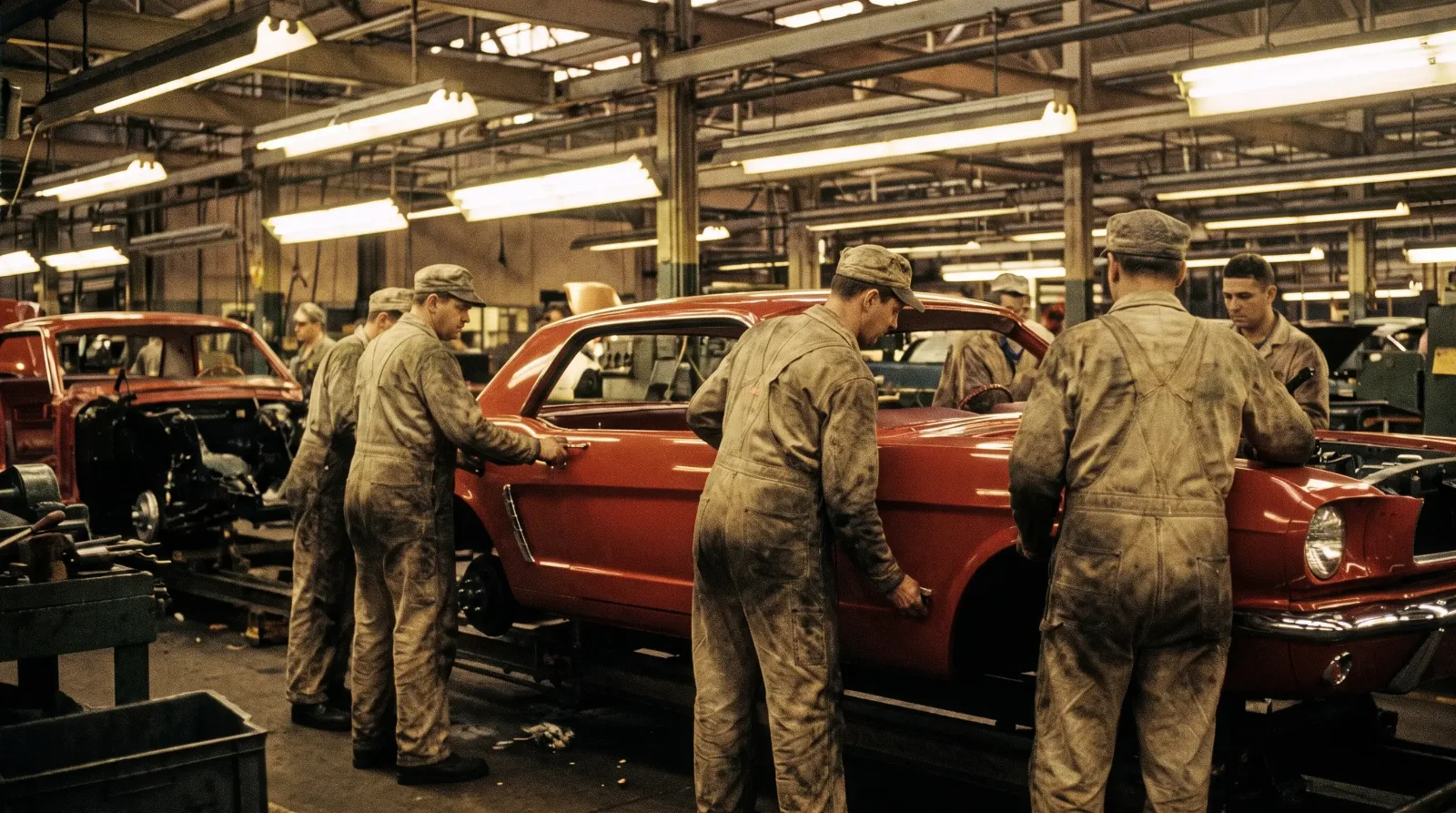
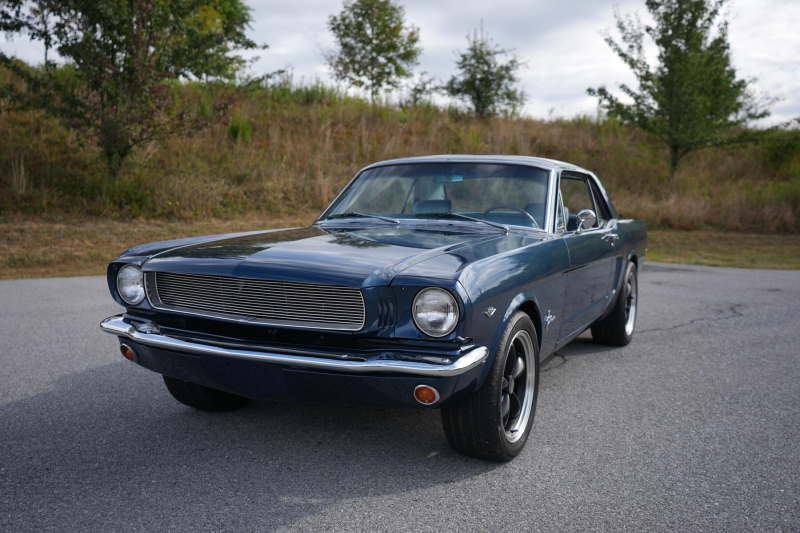
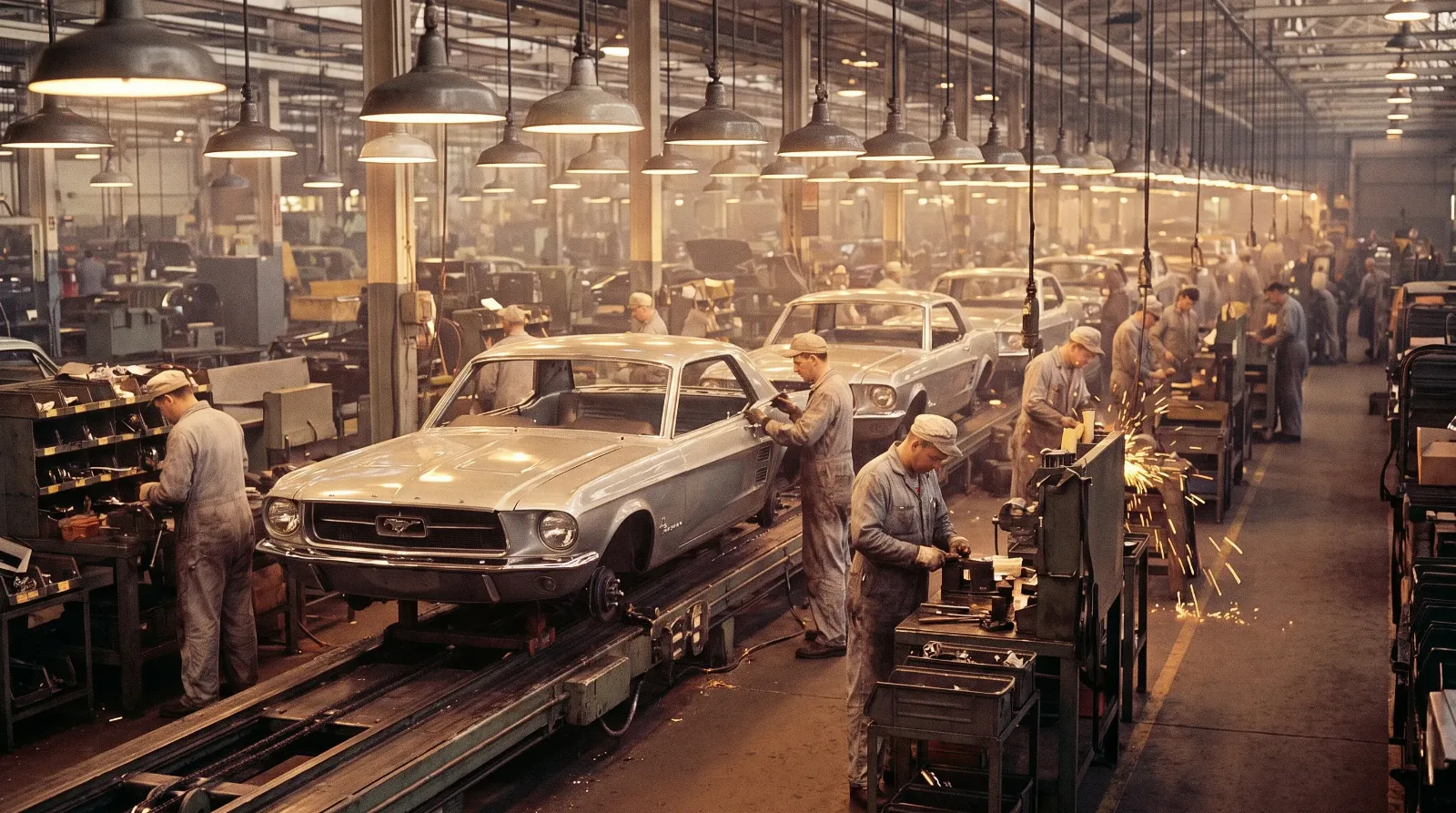
When Ford introduced the Mustang on April 17, 1964, the company expected a solid response. What happened instead was something the industry had never seen. Dealers were overwhelmed from the first day, and factory workers at Dearborn, San Jose, and Metuchen ran around the clock to meet demand. The cars produced between that April introduction and the formal start of the 1965 model year in August 1964 are popularly called "1964½" Mustangs, though Ford never used that designation officially. For production record purposes, Ford counted them as 1965 models.
The combined total for the 1965 model year, including those early introductory units, came to approximately 559,451 units on a model-year production basis (Ford's calendar/sales-year tally for the same period is often cited as the higher 680,989), making it the largest first model-year production run in American automotive history at that time. To put the figure in context, Chevrolet had taken three full years to approach that kind of volume with the Corvair. For background on how Ford conceived and rushed the Mustang to market, see the Mustang origins and legend.
The early cars used the 170 cubic-inch inline six as their base engine, with the 260 cubic-inch V-8 available at introduction and the more familiar 289 cubic-inch V-8 arriving shortly after. That wide engine range, combined with an equally wide options list, let buyers configure the car as a sporty economy car or a genuine performance machine, which is precisely why the order books filled so fast.
The one-millionth Mustang milestone
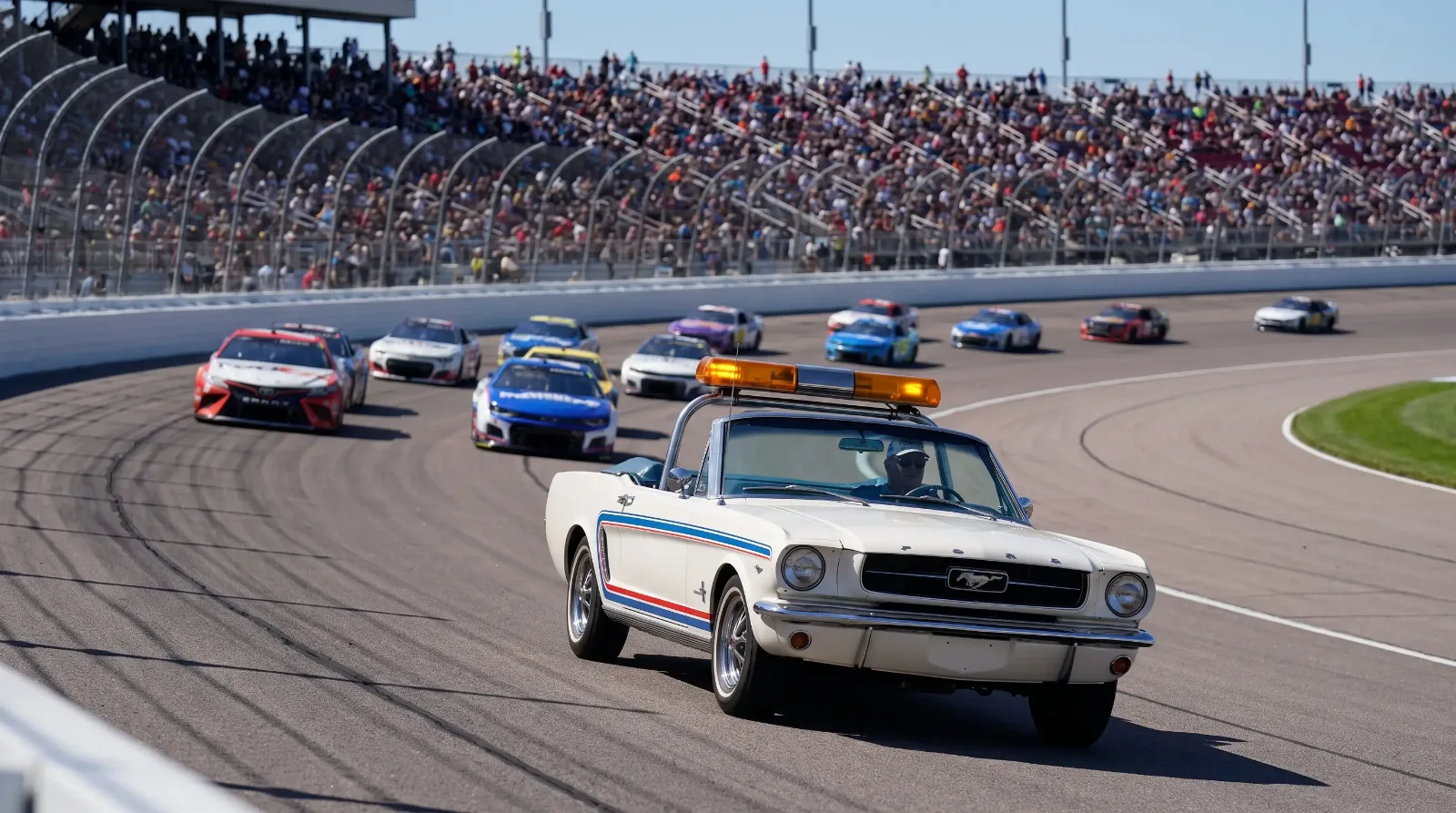
Ford reached the one-millionth Mustang built in March 1966, less than two full model years after the car went on sale. No American car had ever crossed that threshold so quickly from a standing start. The millionth unit was a white hardtop produced at the Mustang's main Dearborn assembly facility. Ford made the occasion a public relations event, presenting the car with ceremony and photographs that were widely distributed to the press.
The 1966 model year itself recorded production of approximately 607,568 units, which stands as the highest single model-year total in Mustang history. To reach a million cars in under two years required all three assembly plants, Dearborn in Michigan, San Jose in California, and Metuchen in New Jersey, operating at or near maximum capacity simultaneously. The logistics of coordinating that output while also managing a parts supply chain stretched across the continent was a significant industrial achievement.
Lee Iacocca, who championed the Mustang project through Ford's internal approval process, used the milestone extensively in public appearances. The car had become the defining product of his career at Ford, and the production numbers gave him concrete data to point to. For the full story of how the Mustang became a cultural force, see the Mustang story.
"The production numbers from 1965 and 1966 are not just impressive statistics, they are primary-source evidence that Ford had identified a segment of the market that no one else had bothered to build a car for."
— Tom Ramirez
First-generation production year by year, 1965 to 1973
The first generation of the Mustang ran from 1965 through 1973, a span that saw the car evolve from a light, compact sporty car into a considerably heavier performance machine, then contract again under the pressures of insurance costs, emissions regulations, and two oil price shocks. The production table below documents the trajectory.
| Model Year | Approximate Production | Notes |
|---|---|---|
| 1965 | ~559,451 | Includes April–August 1964 "1964½" cars; all counted as MY1965 |
| 1966 | ~607,568 | All-time single model-year record; one-millionth Mustang built March 1966 |
| 1967 | ~472,121 | First major restyle; body widened to accept 390 FE big-block |
| 1968 | ~317,404 | 428 Cobra Jet introduced mid-year; first emissions equipment |
| 1969 | ~299,824 | SportsRoof fastback, Mach 1, Boss 302 and Boss 429 introduced |
| 1970 | ~190,727 | Production decline begins; Grabber colors; Boss 302 final year |
| 1971 | ~149,678 | Largest and heaviest first-gen body; 429 Super Cobra Jet available |
| 1972 | ~125,093 | Net horsepower ratings adopted; emissions detuning cuts output |
| 1973 | ~134,867 | Final first-generation year; slight uptick before Mustang II launch |
The decline from the 1966 peak to the 1972 trough represents a reduction of more than 480,000 units per year, roughly an 80 percent drop in annual volume. Several forces converged to produce that slide: rising insurance premiums targeting high-displacement engines, increasingly strict federal emissions standards that required equipment adding weight and robbing power, and the broader market shift away from performance cars that began around 1969 and accelerated after the first oil shock of 1973.
The decline through the early 1970s and its causes
Understanding the production slide requires separating the factors that were specific to Ford from those that reshaped the entire muscle-car segment. On the Ford side, the 1969 model year saw a proliferation of Mustang variants, including the Mach 1, the Boss 302, and the Boss 429, each targeting a slightly different performance buyer. That strategy added tooling and assembly complexity while spreading the same pool of buyers across more configurations. It was a classic product-line expansion that worked well in marketing terms but complicated production efficiency.
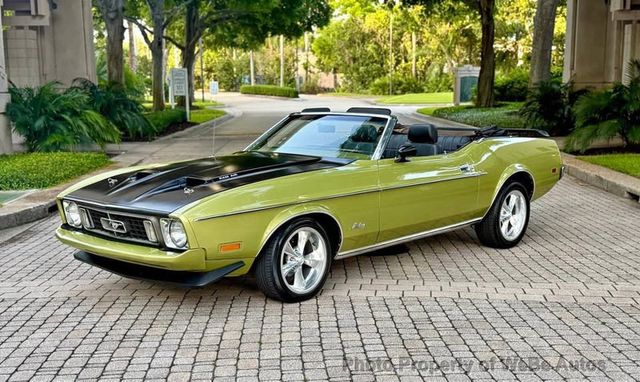
The 1971 redesign produced the largest first-generation Mustang, a car that had grown considerably heavier than the 1965 original. The wheelbase remained the same but the body was wider, longer, and taller, and curb weight had climbed accordingly. Buyers who had been attracted by the original's lightweight agility were not returning, and the performance buyers who remained were being priced out by insurance surcharges that treated any car with a large-displacement V-8 as a liability risk regardless of how the owner actually drove it.
By 1972, Ford was publishing horsepower figures using the new SAE net rating standard rather than the older gross rating, which produced dramatically lower numbers on paper even when actual power output had not changed substantially. The 351 Cleveland V-8, for instance, appeared in buyer materials as producing significantly less horsepower than buyers had seen in 1970 brochures, even though the engine had not been fundamentally altered. This created a perception problem on top of a real performance problem, and sales continued to fall.
Notable low-production variants of the first generation
Against the backdrop of hundreds of thousands of standard coupes and fastbacks, a handful of first-generation variants were produced in numbers small enough to make them genuinely rare today. The Boss 429 is the most cited example: built primarily to homologate the 429 cubic-inch engine for NASCAR competition, it required custom modifications to the front suspension towers to fit the wide engine, and production was contracted to Kar Kraft rather than handled entirely in-house. Total Boss 429 production across 1969 and 1970 was approximately 859 units in 1969 and 499 units in 1970, for a combined total of roughly 1,358 cars.
The Shelby variants, though technically separate products, were produced in similarly limited quantities throughout their run from 1965 to 1970. The 1965 and 1966 GT350 models were built at Shelby American's facility in Los Angeles, with approximately 562 fastbacks produced for 1965. The GT500, introduced for 1967, used the 428 Police Interceptor engine and was produced in larger numbers but still represented a fraction of total Mustang output.
The 1969 Boss 302, built to homologate the high-revving 302 cubic-inch engine for the SCCA Trans-Am racing series, saw production of approximately 1,628 units for the 1969 model year. These cars used solid-lifter valve trains and high-flow cylinder heads derived directly from racing development, making them among the most mechanically sophisticated Mustangs Ford had ever offered at the retail level. Their rarity today, combined with their documented racing heritage, places them among the most sought-after first-generation cars.
Sources and notes
A note on basis: The year-by-year totals in the production table above are stated on a model-year production basis, which is the standard reference used by Mustang registries and parts specialists. Under this basis the 1965 figure of ~559,451 already includes the early "1964½" cars built from April 1964 onward. Readers will sometimes encounter a higher 1965 figure of 680,989; that number reflects Ford's calendar/sales-year tally for the introductory period rather than the model-year production count, which is why it differs. Production figures from this era come from a mix of official Ford records and registry reconstruction, so individual sources may vary by a few units, particularly for the rarest variants. Boss 429 totals are given as 859 (1969) and 499 (1970) for a combined ~1,358 cars; some references cite slightly different splits depending on whether the two Cougar units are included.