When the garage door opens
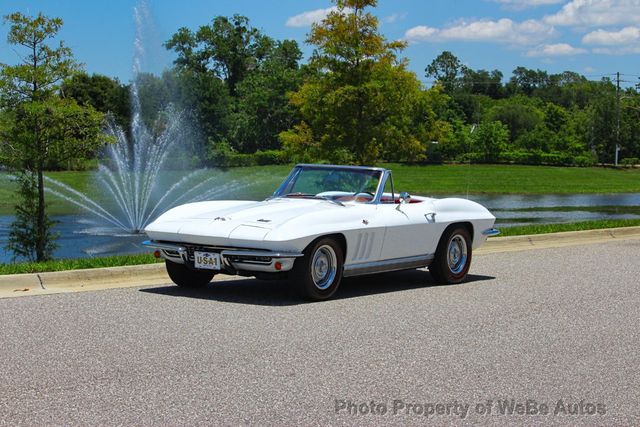
The phone call Tom Ramirez gets a few times a year usually starts the same way. Someone is settling an estate, or clearing out a property, or just finally getting around to dealing with a car that has sat untouched since a year they can remember but can hardly believe. The caller doesn't always know what they have. Sometimes they know exactly. Either way, the moment a barn-find Corvette surfaces after twenty or thirty or forty years, it sets off a chain reaction that touches the registry, the auction houses, and the buyers who have been waiting for exactly this car.
These aren't folklore. The documented cases of Corvettes found in long-term storage represent some of the most significant recoveries in American collector car history. And understanding why they happen, what they mean for value, and how to tell the real ones from the frauds is work that starts well before anyone writes a check.
How high-performance Corvettes end up forgotten
The reasons a car stops being driven are almost always personal, and almost never about the car. Injury is one of the most common. A man buys a 1969 L88 at the height of his racing ambitions, parks it after an accident, and never quite gets back to it. The intent to return is real. The return never comes. The car waits.
Divorce accounts for a surprisingly high share of long-term storage stories. A Corvette sitting in a contested garage can go legally unresolved for years while the principals argue about everything else. By the time the paperwork settles, the car has been there long enough that moving it feels like its own disruption. The new owners of the property often don't know what they have. They are not car people. The Corvette is just another thing in a garage full of things.
Estate abandonment is the third pattern, and it produces the most complete time capsules. The original owner passes without leaving clear instructions. Heirs disagree about value, about logistics, about whether to sell or keep. The car sits through a decade of inaction, then another. When it finally surfaces, sometimes through a real estate transaction, sometimes through a probate sale, the odometer and the calendar have drifted apart in ways that no one anticipated.
What makes Corvettes particularly susceptible to this pattern is the combination of cost and specificity. A high-option C2 or C3 was an expensive car when new, bought by someone with disposable income and strong preferences. When circumstances changed, the car often stayed because selling felt like an admission that circumstances had changed. Pride and sentiment conspire to keep these cars in garages longer than practical logic would suggest.
Documented recoveries and what they revealed
The most discussed American barn find of recent decades isn't a Corvette, but some of the most significant finds are. In 2014, a 1967 L88 with fewer than 5,000 original miles surfaced through an estate sale in the Southeast. The tank sticker was intact. The broadcast sheet was found folded under the rear seat carpet, where factory workers sometimes left them. NCRS judges examined the car and found the numbers consistent across every checkable point: VIN, partial VIN stamps, casting dates on the engine block and heads, carburetor date codes. It sold for well over a million dollars. The buyer didn't restore it. The whole point was that no one had.
Original-owner C1 survivors with genuinely low mileage present a different kind of documentation challenge. A 1958 Corvette with 12,000 miles on the odometer is believable on its face, but the supporting evidence matters enormously. Service records, original title sequences, period photographs of the car at family events, correspondence with the dealer, all of it builds or erodes the case. The cars that arrive with a paper trail going back to delivery are not common. The ones that do command a premium that restored examples simply cannot match, regardless of the quality of the restoration work.
"The tank sticker matters. Not because it tells you everything, but because it's the factory's own record of what left the line. A 1969 L88 without its tank sticker isn't worthless, but it's a different conversation. If you're buying a claimed L88, have someone from the registry look at it before you write the check."
— Tom Ramirez
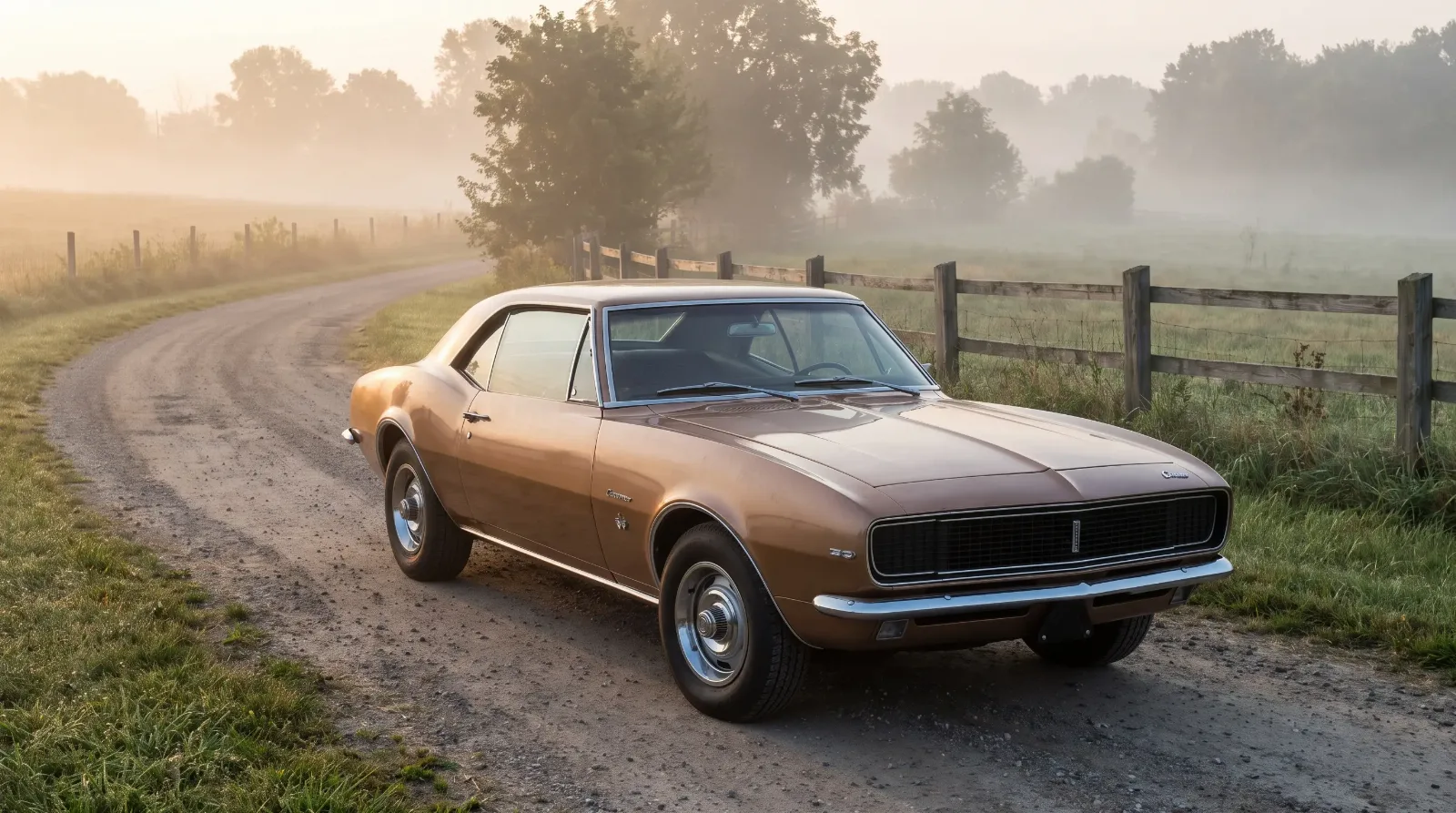
C3 barn finds occupy a different market position. The 1970-1972 LT1 cars, the 1970 LS5 and LS7 cars that were never officially sold to the public in meaningful numbers, the 1971 and 1972 big-blocks as emissions pressure mounted — these are the sleeper recoveries. They don't generate the headlines that a low-mileage L88 does, but a documented, unrestored 1971 LS6 Corvette with its original paint is genuinely rare. Most of them were driven hard by people who bought them to be driven hard. The survivors are survivors in the fullest sense.
Why barn finds often sell for more than restored examples
This runs counter to the intuition most people bring to the question. A freshly restored car looks better. It runs better. It is, in the conventional sense, more usable. And yet the market for significant Corvettes consistently rewards documented originality over quality restoration, sometimes by a substantial margin.
The reason is irreversibility. A correct, numbers-matching, unrestored Corvette can be restored at any time. The decision is available. Once the car has been restored, however carefully, the original paint is gone, the original interior materials are gone, the surface patina that confirms decades of undisturbed storage is gone. You can recreate the specification. You cannot recreate the history. Collectors who understand this pay for the optionality as much as for the condition.
The auction results confirm this consistently. Mecum, Barrett-Jackson, and RM Sotheby's have all run well-documented barn-find Corvettes in the past decade, and the pattern holds: original, unrestored examples of significant cars bring premiums over comparable restored examples that range from meaningful to dramatic depending on the car's rarity and provenance strength. The 2015 Mecum Kissimmee sale of a documented original-paint C2 big-block illustrated this directly when it outperformed the pre-sale estimate substantially, while a high-quality restored example in the same configuration had sold for considerably less at the previous year's event.
Reading about the rarest Corvettes in American automotive history helps frame why condition-original survivors of low-production variants attract this level of attention. There are only so many L88s, only so many ZL1 options, only so many LS7 engines that actually made it into street cars. When one surfaces in original condition, it is not replaceable in any meaningful sense.
Authenticating a claimed barn find versus spotting a fraud
The barn find premium creates a fraud incentive, and the fraud exists. Not every claimed barn find is fraudulent, but the category attracts misrepresentation in ways that freshly restored cars typically don't. The usual pattern is a car that has been partially worked on, with the work obscured to look like long-term storage patina. Fake dust. Artificially aged rubber. A carefully arranged scene of abandonment that photographs convincingly.
The physical evidence that is hard to fake is the evidence that matters. Undisturbed spiderwebs photograph well but don't exist in a car that has been moved recently. Consistent tire flat-spots from sitting in one position for years are measurable. Mouse nesting in the interior or engine bay, unpleasant as it is, confirms long-term vacancy in a way that is difficult to manufacture. The oxidation patterns on chrome trim and brightwork follow a predictable progression over decades; accelerated aging treatments exist but rarely hold up under close comparison to naturally aged examples.
🔧 Inspection Priorities
- Engine pad VIN stamp. Partial VIN stamp location and font should match factory specifications for the model year. Restamped pads show tool marks and font inconsistencies under magnification. Cost of missing this: buying a non-numbers-matching car at a numbers-matching price.
- Casting date codes on major drivetrain components. Block, heads, intake manifold, transmission case, and rear axle all carry date codes. Every one of them must predate the car's assembly. A single out-of-sequence date code needs a credible explanation before you proceed.
- Paint thickness readings. Use a paint depth gauge on every exterior panel and in the door jambs. Factory paint over bare metal reads differently than repaint over existing paint. Inconsistent readings suggest refinishing even if the color looks correct.
- Title chain completeness. Request the full title history. A gap of any significant length requires explanation. Gaps are where VIN swaps and component transfers happen without documentation.
- Tank sticker and broadcast sheet presence. Absence is not proof of fraud, but presence and consistency with the VIN is strong evidence of authenticity. Get the NCRS or a knowledgeable registrar to review any documentation before committing.
The NCRS judging process was built specifically to evaluate authenticity claims under competitive conditions, and it has evolved over decades of seeing exactly this kind of misrepresentation. Sending a car through a Duntov-level or Top Flight judging event before purchase, or hiring a judge to inspect it independently, is not excessive caution. It is the appropriate response to a claim that can affect price by tens or hundreds of thousands of dollars.
Sellers who resist independent inspection are telling you something. Sellers who have already arranged for independent documentation and present it proactively are telling you something different. The transparency of the sales process is itself evidence.
What to evaluate when you find one
Assuming provenance checks out, the condition evaluation of a stored Corvette follows a different logic than evaluating a driving car. The questions are not primarily about what works. They are about what is present, what is original, and what the cost of preservation versus restoration looks like.
Fuel systems on cars stored for decades are universally compromised. Varnished carburetors, degraded fuel lines, contaminated tanks — this is expected and priced in by anyone who knows what they are looking at. The same applies to brake systems, cooling systems, and wiring insulation on longer-stored cars. These are mechanical restoration costs that are both predictable and, relative to the car's value, manageable.
The irreplaceable elements are the finish surfaces. Original lacquer paint on a C1 or early C2 is not reproduced convincingly by any modern refinish process. Original interior materials on significant low-mileage cars carry provenance weight that new upholstery, however correct the pattern, cannot match. A barn find with intact original paint and interior, even in imperfect condition, is worth more in that condition than it would be after restoration. The collector market has understood this for at least two decades, even if the general public is still catching up.
Engine bay originality on high-option cars matters in ways specific to the option. An L88 was delivered with specific smog-exemption paperwork in some states, with specific cold-air induction components, with a specific radiator configuration intended to support the demands of a 430-horsepower engine that Chevrolet officially rated at 430 hp on paper and considerably more in practice. The presence of correct, date-coded components in the engine bay is not cosmetic. It is the substance of the car's claim to be what it is.
Sources and notes
- National Corvette Restorers Society (NCRS), Judging Standards and Guidelines, current edition. The primary reference for authentication methodology and documentation requirements on C1 through C4 Corvettes. ncrs.org.
- Bloomington Gold Corvette, certification program documentation. Bloomington's certification standards for survivor and original-paint Corvettes provide the most detailed published criteria for barn-find condition assessment in the hobby. bloomingtongold.com.
- Mecum Auctions, Kissimmee 2015 and 2023 sale results. Hammer prices for documented barn-find and original-condition Corvettes are publicly archived and provide the clearest market evidence for the originality premium. mecum.com.
- Shea, Terry. Corvette: America's Sports Car. Motorbooks, 2014. Covers production history and variant identification for C1 through C5 generations with factory documentation context.
- Antonick, Michael. Corvette Black Book, 1953–2024. Michael Bruce Associates, updated annually. The standard reference for production numbers, option codes, and VIN decoding across all Corvette model years.
- RM Sotheby's, Monterey 2022 catalog notes. The auction house's condition descriptions for significant unrestored Corvettes in recent sales provide useful language and criteria for evaluating originality claims. rmsothebys.com.