Why 1955 almost killed the Corvette
By the time the 1955 model year closed out, Chevrolet had sold just 700 Corvettes. Seven hundred. For a car that had debuted to enormous fanfare at the 1953 Motorama, that number was a quiet catastrophe. The original fiberglass roadster looked the part but performed like a touring car fitted with Blue Flame inline-six power and a two-speed Powerglide automatic. It had side curtains instead of roll-up windows, no exterior door handles, and enough refinement complaints to fill a dealer manual. GM's front office was weighing whether to pull the plug entirely.
What saved it was a combination of two things that arrived in sequence: the V8 that arrived in 1955 gave the Corvette actual performance credibility, and the 1956 redesign gave it the appearance, equipment, and driver involvement to back that credibility up. Understanding the 1956 model means understanding that this was not an incremental update. It was a course correction, executed under genuine pressure, by people who knew the car's survival depended on getting it right.
The body that finally looked serious
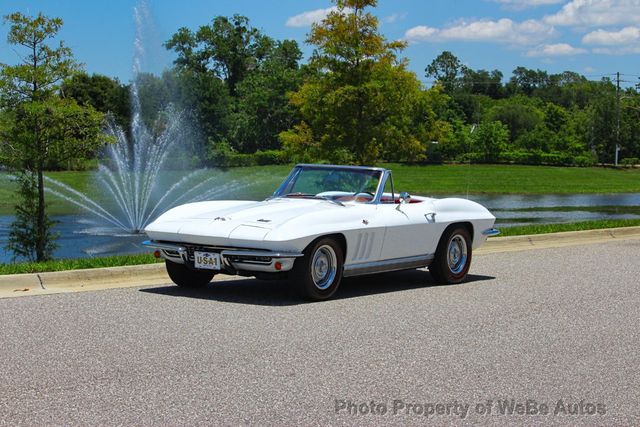
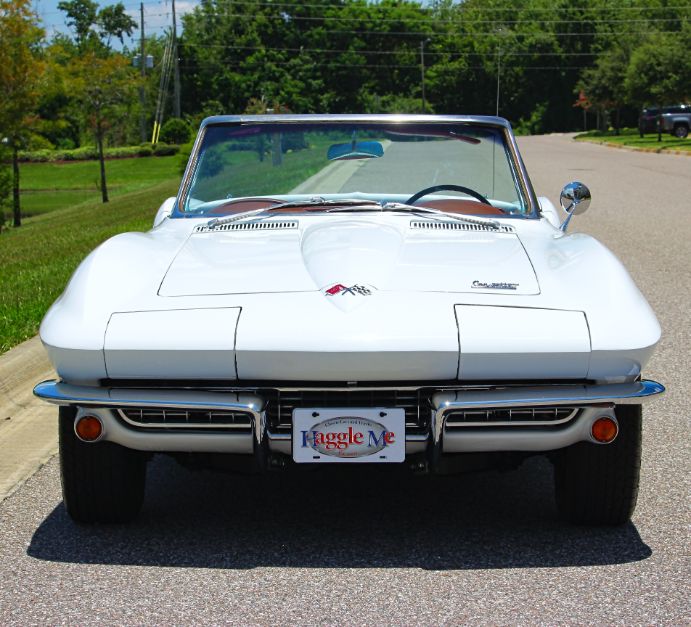
Harley Earl's studio reworked the Corvette's exterior for 1956 with changes that were immediately legible even to someone who had never looked closely at the car. The most distinctive new element was the concave cove sculpted into the rear quarter panels, a swept indentation that broke up the slab sides of the 1953-55 body and gave the car genuine visual tension. Chevrolet offered the cove in a contrasting color from the main body, which created a two-tone effect that became one of the era's most recognizable automotive signatures. Six exterior colors were available for 1956, compared to the near-total restriction to Polo White that had characterized earlier production.
Chrome rocker panels ran along the bottom of the body and added a horizontal accent that lowered the car's visual center of gravity. The hood was revised. The tail was cleaned up. But the detail that mattered most from a practical standpoint was the addition of exterior door handles. The 1953-55 Corvette had none, requiring the driver to reach inside through the side curtain opening to release the door. It was an inconvenience that every road test had noted and no owner had defended. For 1956, the handles appeared as standard equipment, a small change that signaled the car was now designed for actual human use.
Roll-up windows replaced the removable side curtains entirely. This alone transformed the Corvette from a fair-weather proposition into something a driver could use year-round without staging a minor production every time it rained. An optional removable hardtop was also offered for the first time, giving buyers a second roof configuration that improved both weather sealing and high-speed stability. The 1956 Corvette was, in material terms, a complete car in a way none of its predecessors had been.
Engine options and what they actually meant
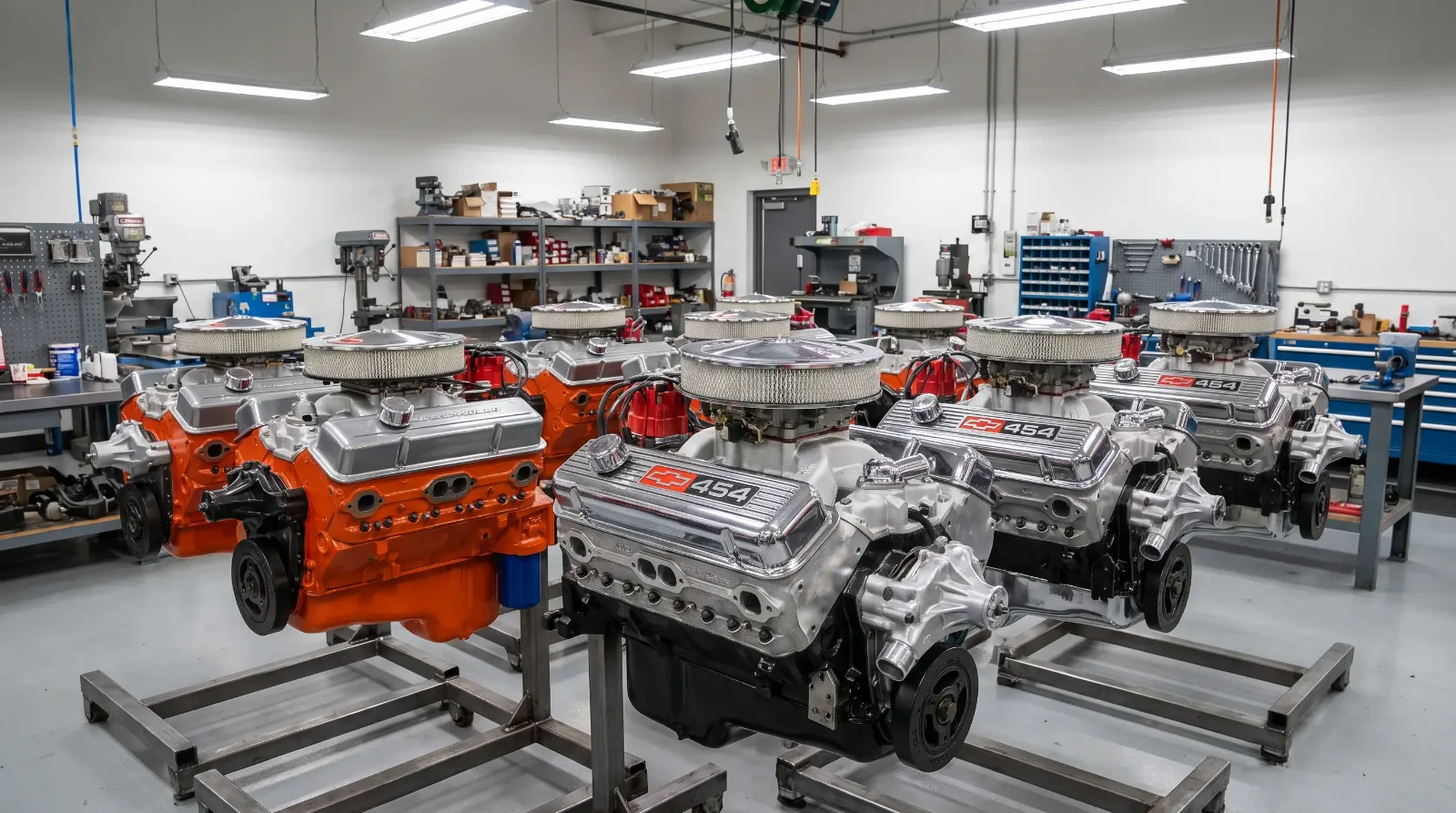
The 265 cubic-inch V8 that had arrived in the Corvette for 1955 carried over into 1956 but was now offered in three distinct states of tune, each with a different carburetion setup and output rating. The base engine used a single four-barrel carburetor and produced 210 horsepower. The first optional version added dual four-barrel carburetors and brought output to 225 horsepower. The top option used the same dual-carb arrangement but with a more aggressive camshaft profile, pushing output to 240 horsepower.
| Engine option | Carburetion | Output | Notes |
|---|---|---|---|
| Base 265 V8 | Single 4-bbl | 210 hp | Standard equipment |
| 265 V8 dual-carb | Dual 4-bbl | 225 hp | First optional upgrade |
| 265 V8 dual-carb, hot cam | Dual 4-bbl | 240 hp | Aggressive camshaft; top option |
Both the Powerglide two-speed automatic and a three-speed manual transmission were available, which meant buyers could now specify a car configured for either street convenience or driver engagement. The manual option mattered: a sports car sold exclusively with an automatic had been one of the recurring criticisms from European-oriented publications. The 1956 Corvette addressed that directly.
What these numbers represented in practice was a car that could run with the European competition it was ostensibly meant to challenge. The 240-horsepower version of the 265 was not a paper figure. It produced a car that accelerated hard, sounded purposeful, and could be pushed through corners with something approaching confidence, provided the driver understood what Zora Arkus-Duntov had been doing to the chassis.
Duntov, Daytona, and the moment it became real
Zora Arkus-Duntov had joined Chevrolet's engineering staff in 1953, drawn specifically by the Corvette project. His background in European racing and his technical understanding of what made a car handle gave him a perspective that few inside GM shared at the time. Through 1954 and 1955 he worked on the suspension geometry, steering ratios, and weight distribution of the Corvette with the stated goal of making it a car that rewarded skilled driving rather than merely tolerating it.
The result of that work went on public display in January 1956 at Daytona Speed Weeks, when Duntov drove a 1956 prototype on the beach course and recorded a two-way flying-mile average of 150.583 mph. That run was not a closed-course stunt. It was conducted under observed conditions at a public event, in front of the press, against other cars that were there to be timed. It put a number next to the Corvette's name that required no qualification and invited no skepticism.
Road & Track and Motor Trend had treated the Corvette politely in 1953 and 1954, which in automotive journalism is the equivalent of damning something with faint praise. After Daytona, the tone changed. The car was now being evaluated on the same terms as the Jaguar XK140 and the Mercedes-Benz 300SL rather than being treated as an interesting American experiment. That shift in press attitude translated directly into customer confidence.
"The 1956 Corvette is the model I keep coming back to when people ask where the car's character actually formed. The 1953 original was a concept car with license plates. The 1956 was the first one I'd have trusted on a mountain road."
— Tom Ramirez
Sales, legacy, and what 1956 set in motion
Chevrolet produced 3,467 Corvettes for the 1956 model year. Against the backdrop of 700 units in 1955 and persistent internal debate about whether the car had any future, that number was a vindication. It was not a blockbuster by the standards of American volume production, but it was enough to confirm that a market existed and that the car, properly developed, could reach it.
The 1956 model accomplished something more durable than a single strong sales year. It established the template from which every subsequent C1 Corvette was developed. The coved body, the roll-up windows, the multiple engine options, the manual transmission availability, the hardtop option: all of these carried forward through 1962 with refinements but without fundamental reconsideration. The 1956 car defined what the Corvette was going to be.
That definition had consequences for what followed. The 1957 fuelie that followed arrived with Rochester mechanical fuel injection and a close-ratio four-speed manual, building directly on the performance and driver-engagement priorities that 1956 had established. The entire arc of the C1 Corvette story runs through what Harley Earl's studio, Zora Arkus-Duntov, and the Chevrolet product planners put together for that 1956 model year.
For collectors, the 1956 remains one of the more coherent choices in the C1 range: a car that is historically significant, mechanically honest, and fully usable by modern standards in a way that the side-curtain cars simply are not. If you want to find one, the classic Corvette for sale listings are the place to start, though early C1 examples in documented condition have become competitive to acquire.
The 1953 Corvette was a promise. The 1956 was the delivery.
Sources and notes
- Hemmings Motor News — Historical coverage of the 1956 Corvette redesign, production figures, and specification details.
- Motor Trend archive — Contemporary and archival road test coverage of the 1956 Corvette and its performance credentials.
- Corvette Action Center — Detailed production data, option codes, and factory specification documentation for the 1956 model year.
- National Corvette Museum — Institutional history of the Corvette including the Daytona Speed Weeks records and Duntov's role in the 1956 program.