How the secretary's car label got started
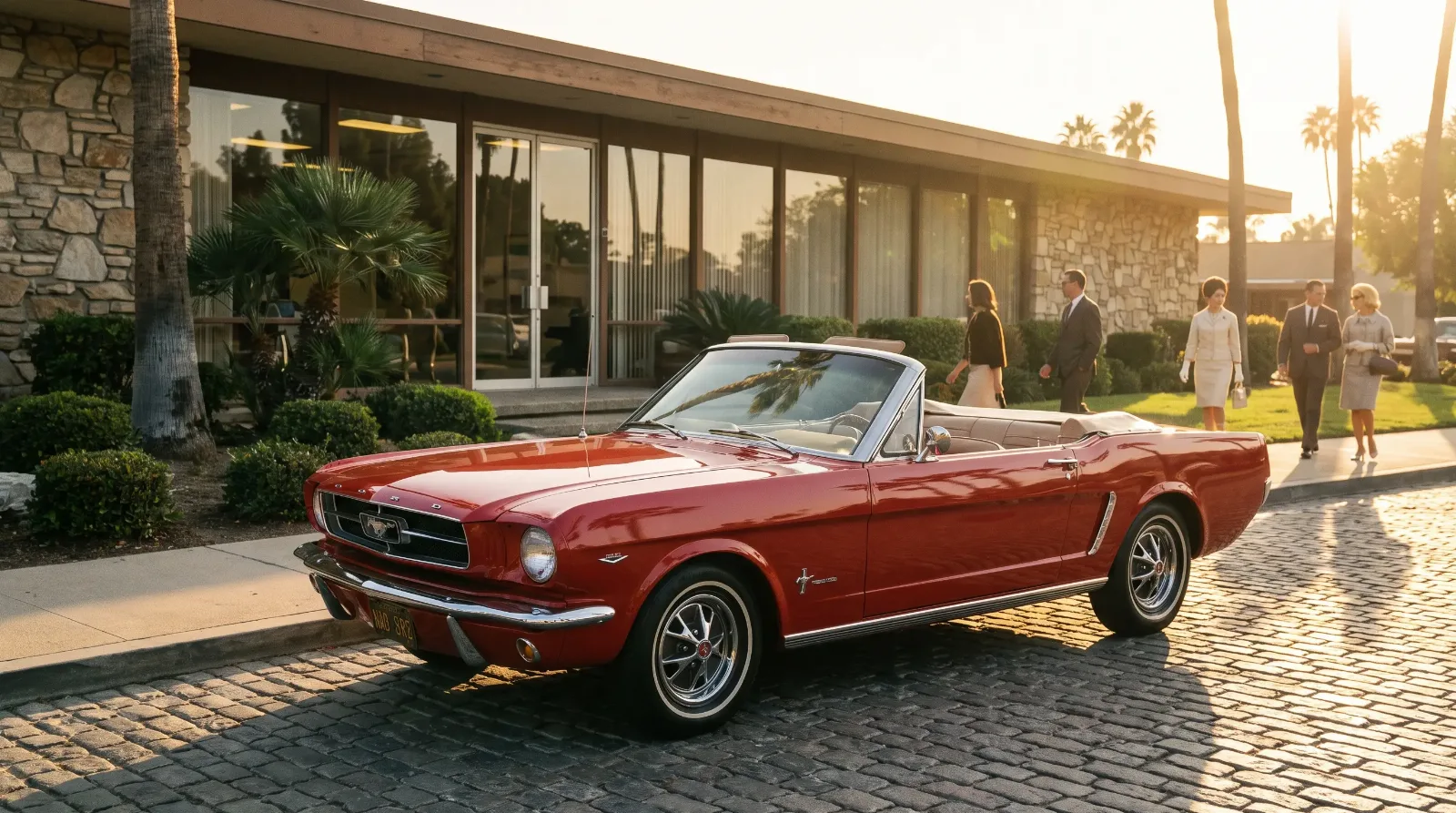
When Ford launched the Mustang in April 1964, the company did something unusual for an American automaker of that era: it deliberately marketed the car to women. Advertisements ran in fashion magazines, showroom brochures highlighted color choices and interior appointments, and the introductory price of $2,368 put the Mustang within reach of single working women who had never been considered serious car buyers. That calculated move worked. It also planted the seed of a reputation that would follow the Mustang for decades.
The "secretary's car" label was not invented by critics. It was, in a roundabout way, an unintended consequence of Ford's own success. Lee Iacocca and his team at Ford had designed the Mustang on the Falcon platform partly to keep costs down, and they needed volume to justify the investment. Reaching female buyers was a smart commercial decision. But once a car is associated with a particular buyer demographic, that association tends to stick in automotive culture, where image often matters more than engineering.
The broader "chick car" tag followed naturally. American car culture in the 1960s was dominated by young men who measured a vehicle's worth in horsepower figures and quarter-mile times. A car that your mother or your girlfriend might buy was, by that logic, suspect. The fact that the base Mustang's 170-cubic-inch inline-six produced a modest 101 horsepower did nothing to help the car's credibility with the muscle-car crowd.
Who actually bought the early Mustangs
The demographic reality was more complicated than the stereotype suggests. Ford's own marketing data from the period showed that women accounted for a large share of early Mustang buyers, with figures commonly cited from roughly a third up toward 42 percent, and Ford reported that women bought nearly as many Mustangs as men during the 1965 model year. That is a major demographic, but it does not make the car a women's-only product: a substantial share of buyers were young men attracted by the sporty styling and the available V8 options. The car also sold strongly to married couples, recent college graduates, and second-car buyers across a wide age range.
Ford never hid its intention to appeal to multiple audiences. The company explicitly positioned the Mustang as a car for "the young at heart," which was marketing language designed to cast the widest possible net. That strategy, along with the Mustang's genuine versatility, is why the car sold 419,000 units in its first twelve months, a record at the time for a new nameplate. A car that appealed only to secretaries would not have done that.
The six-cylinder car existed because it made the Mustang affordable. Ford always intended buyers to step up to the 260-cubic-inch or 289-cubic-inch V8 options, and many did. By the time the Mustang's first full model year ended, V8-equipped cars made up a significant share of sales, which sits awkwardly with any claim that the car was purely a lightweight economy proposition aimed at non-enthusiast buyers. Part of the Mustang's story, explored in depth in our coverage of Mustang myths, is how often perception has drifted from the documented record.
The performance heritage that the label ignores
Whatever the buyer demographics of the base car, there is simply no version of the "chick car" argument that survives contact with the Shelby GT350. Carroll Shelby began transforming production 1965 Mustang fastbacks in late 1964, fitting a high-output version of the 289 V8 producing 306 horsepower, a close-ratio four-speed gearbox, revised suspension geometry, and Koni shock absorbers. The GT350 was a Sports Car Club of America B-Production road racer that you could drive to the track on a Tuesday morning. It was not a secretary's car. It was not even close to a secretary's car.
The performance thread running through early Mustang history is extensive. The K-code 289 Hi-Po, introduced late in the 1963 model year as a special-order option on the Fairlane and carried into the Mustang from mid-1964, produced 271 horsepower and came with solid lifters, a high-revving cam profile, and a 6,000-rpm power peak. The 1967 and 1968 cars could be ordered with the 390-cubic-inch FE big-block. Then came the 428 Cobra Jet in 1968, an engine that Ford conservatively rated at 335 horsepower but which was widely understood to understate actual output significantly. Period road tests recorded quarter-mile times in the mid-13-second range, confirming what the factory numbers downplayed.
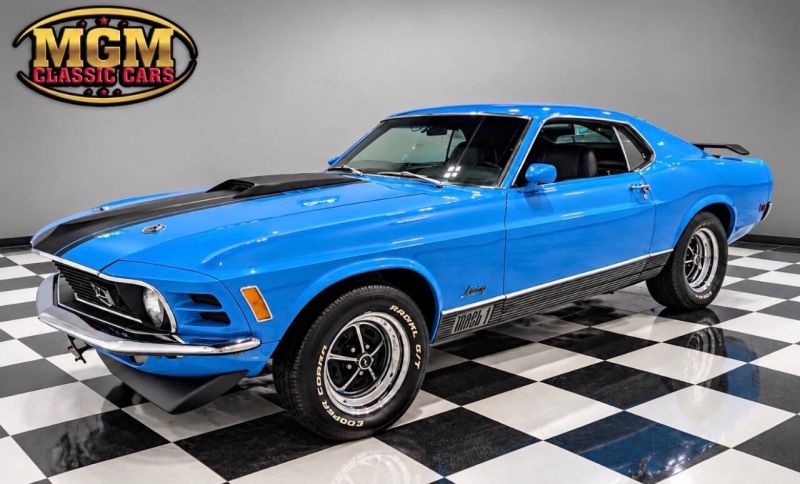
The Boss 302 arrived for 1969, purpose-built for the Trans-Am racing series, with a free-breathing 302-cubic-inch small-block and a chassis tuned for cornering rather than straight-line acceleration. The Boss 429, also a 1969 model, used a semi-hemispherical 429-cubic-inch engine developed for NASCAR competition and stuffed into a widened Mustang engine bay that required significant sheet-metal modification. These were not decisions made by a company that saw its own car as a soft daily driver. How the ordinary cars behaved on the road, and why they handled that way, is a story of its own.
The collective history of the GT, Shelby, Boss, and Cobra Jet variants represents one of the most concentrated bursts of performance development in American automotive history, all hanging off the same basic Mustang body. Dismissing the Mustang as a "chick car" requires ignoring roughly half the cars that carried the badge.
How the reputation evolved over time
The "secretary's car" criticism faded substantially during the muscle-car era, when the Mustang's performance credentials were impossible to argue with. It resurfaced, somewhat, during the 1970s, when federal emissions regulations and the fuel crisis forced Ford to detune its engines severely. The 1974 Mustang II, built on the smaller Pinto platform and initially available only with four-cylinder and V6 power, gave critics fresh ammunition. The performance Mustang had effectively paused for several years.
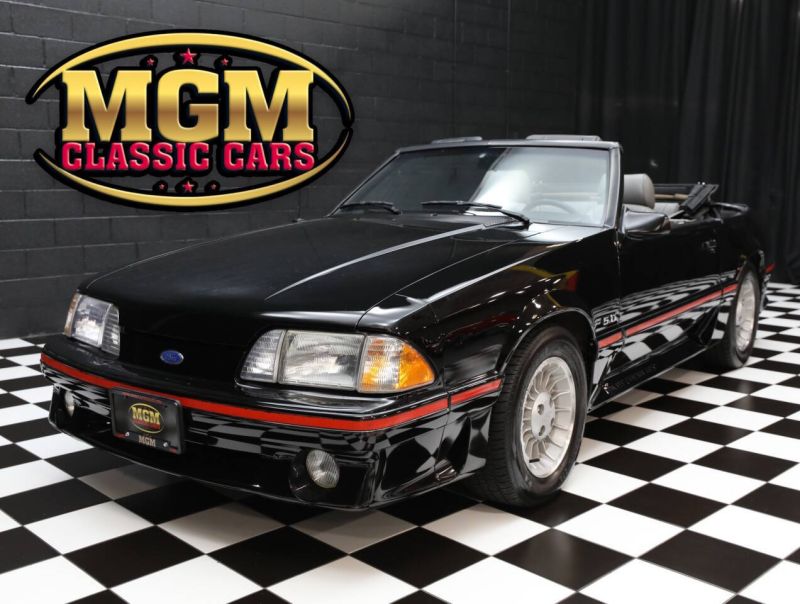
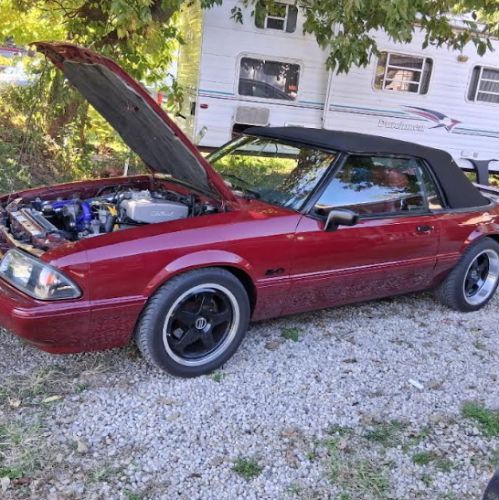
The Fox-body Mustang, introduced for 1979 and refined through 1993, brought the performance argument back decisively. The 5.0-liter High Output V8, introduced in 1982, gave the Mustang GT genuine muscle-car performance at a price that undercut almost every competitor. Hot Rod magazine and Car and Driver ran enthusiastic multi-page features. The Mustang became a legitimate street-performance car again, and the demographic makeup of buyers shifted back toward young male enthusiasts.
By the 1990s and into the current era, the Mustang's cultural standing had essentially reversed. What was once used as evidence of the car's alleged softness, its affordability and broad appeal, came to be seen as part of its democratic character. The Mustang was not an exclusive club. Anyone could own one, and serious performance was always available for buyers who wanted it. That accessibility, once treated as a weakness, became a defining strength.
"The secretary's car story says more about 1960s automotive snobbery than it does about the Mustang itself. The car that won the 1965 Tour de France rally and dominated SCCA B-Production doesn't need defending."
Patrick Walsh
Separating the myth from the record
The honest account of the early Mustang is that Ford built exactly what it intended: a versatile platform that could be a practical commuter in six-cylinder trim, a capable sporty car with the two-barrel 289, or a serious performance machine with the K-code, the GT equipment group, or the Shelby treatment. The range was the point. Ford sold classic Mustangs to a genuinely broad cross-section of the American car-buying public, and the variety of available configurations reflected that intentional breadth.
Labeling any car a "chick car" reveals more about the labeler's assumptions than about the car itself. The Mustang's buyer base included women, yes, along with male office workers, college students, racing enthusiasts, blue-collar workers, and retired couples buying a second car. That is not a weakness in the car's history. It is evidence that Ford got the product right. A car that only appeals to one narrow group is a car with a problem. A car that sells 419,000 units in year one is a car that understood its moment.
The performance legacy, from the 271-horsepower K-code 289 through the 428 Cobra Jet and the Boss 429, stands on its own. The Shelby GT350 and GT500 have been among the most sought-after American performance cars at auction for decades. The historical record does not support the secretary's car myth. It never really did.
Sources and notes
This article is provided for general historical and editorial interest. Period horsepower figures were gross SAE ratings and, in the case of the 428 Cobra Jet, were widely believed to understate true output; demographic figures come from contemporary Ford marketing data and vary somewhat by source. Readers verifying details for restoration, valuation, or purchase decisions should confirm specifications against primary documentation for a given vehicle.
- Ford Mustang (first generation): Wikipedia: engine ratings including the 170 six and 271 hp K-code 289, plus model history.
- Birth of the Mustang: Ford Motor Company: launch context, first-day orders, and first-year sales of roughly 419,000 units.
- Why do so many women drive Ford Mustangs?: Marketplace: early female-buyer share (commonly cited near 42%) and the "secretary's salary" advertising.
- The History of the K-Code Engine, kcode.net: 271 hp rating and the engine's 1963 Fairlane debut ahead of its mid-1964 Mustang availability.
- Shelby Mustang: Wikipedia: 1965 GT350 specifications, including the 306 hp tuned 289.
- 1968 Ford Mustang 428 Cobra Jet: HowStuffWorks: 335 hp factory rating, its real-world underrating, and mid-13-second quarter-mile times.