The brief: find a car that feels alive
When pre-production began on the 2007 Transformers film, the character of Bumblebee carried a specific problem. In the original 1984 Hasbro cartoon, Bumblebee was a Volkswagen Beetle, a small, cheerful, slightly goofy car that suited a small, cheerful, slightly goofy robot. General Motors had a co-promotion deal with Paramount Pictures for the film, which ruled the Beetle out immediately. But it also opened a catalog: the production team could pick from any GM vehicle on the lot. The question was which car would make audiences care about a CGI robot in under five minutes of screen time.
Production designer Jeff Mann has spoken in interviews about the team's search for a car with what he called character in the silhouette. A modern car would look too corporate, too interchangeable with a dozen other films. A car from the 1970s would read as ironic, a knowing wink at muscle car nostalgia rather than a genuine emotional anchor. The first-generation Camaro, built from 1967 to 1969, sat at exactly the right intersection: old enough to feel personal and weathered, young enough in design language to read as powerful on a modern screen.
What the '67 body style communicates
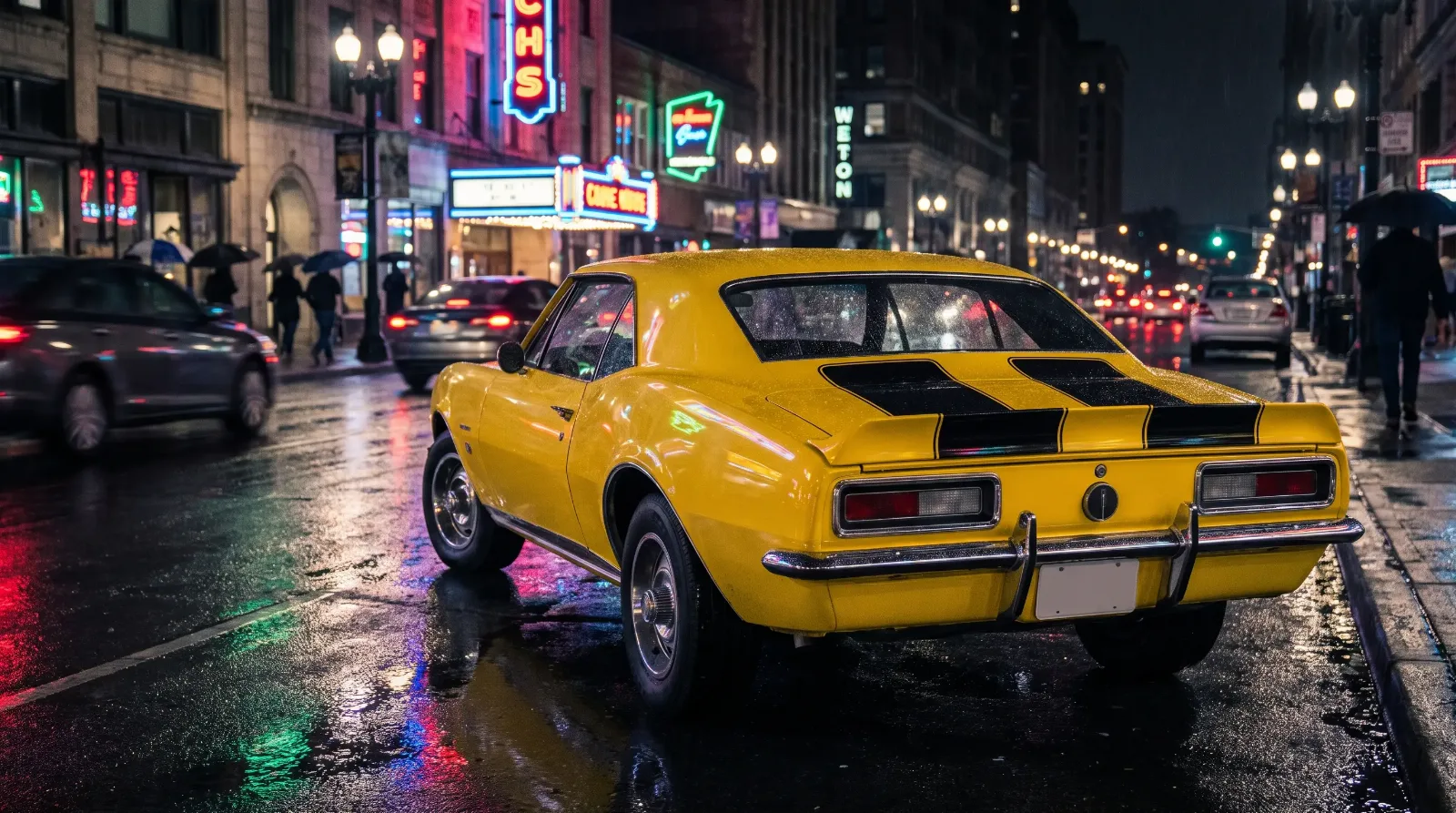
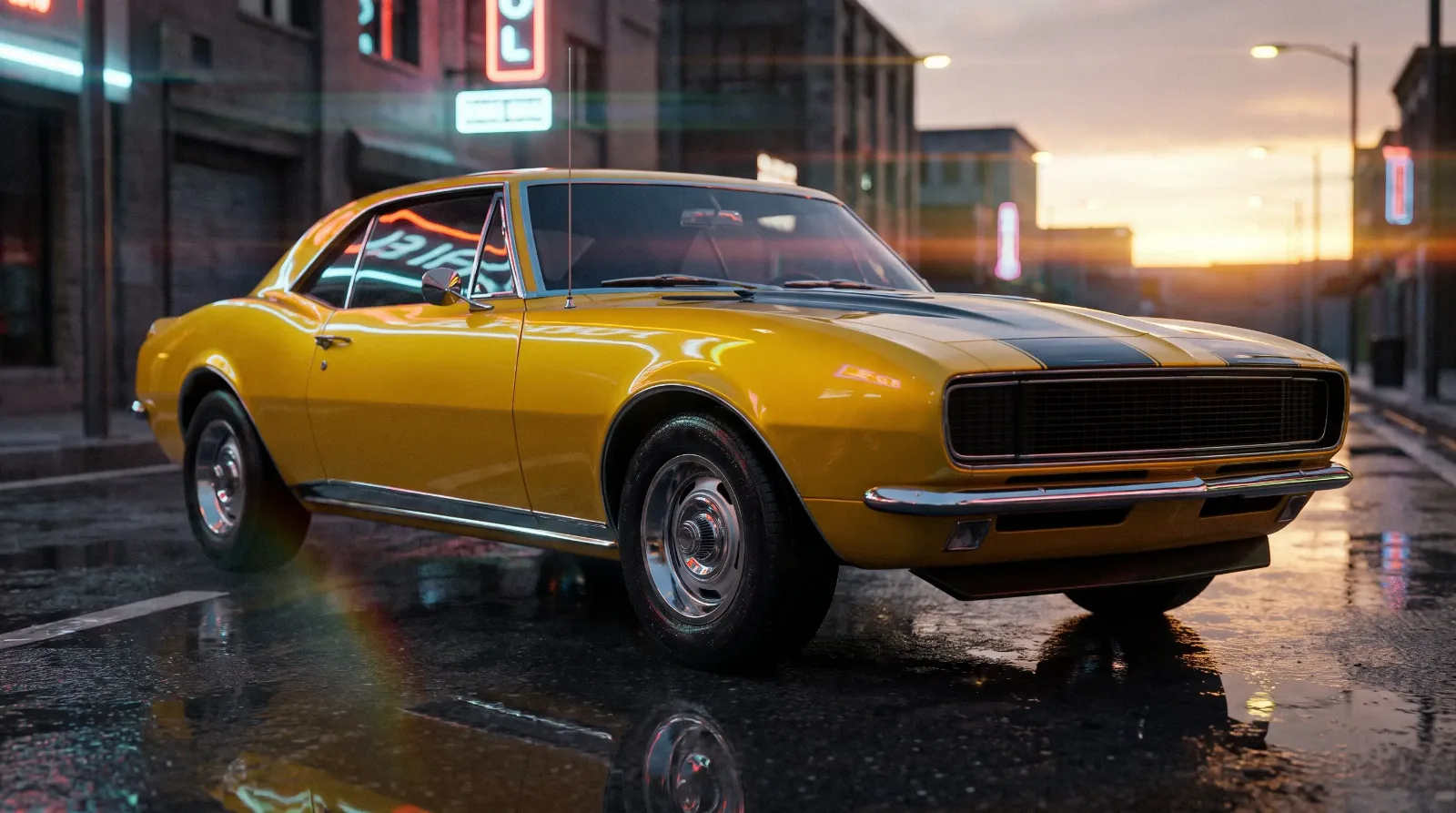
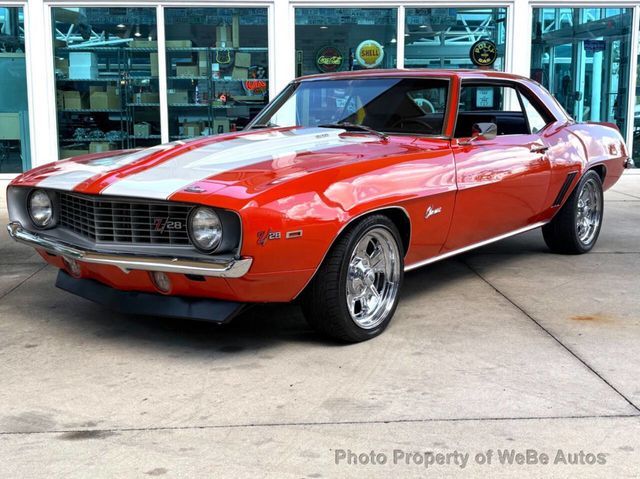
Car design communicates mood before the engine turns over. The 1967 Camaro's long hood and short rear deck followed what designers call forward-leaning proportions: the visual weight sits at the front, suggesting aggression and speed even at rest. The stacked quad headlights on the Rally Sport package gave the front end a face that read well in close-up shots, which matters enormously when a director is trying to suggest that a machine has feelings.
Compare this to a contemporary GM vehicle in 2006-era design, and the difference is stark. The cars of that period, shaped by aerodynamic efficiency and crash standards, had blunter noses and more upright windshields. They were fine cars, but they did not have faces. The '67 Camaro had a face, and the camera knew it.
"You put a camera in front of a '67 Camaro and the car does half the acting for you. The proportions are just right in a way that very few cars from any era manage."
-- Patrick Walsh
The yellow color question
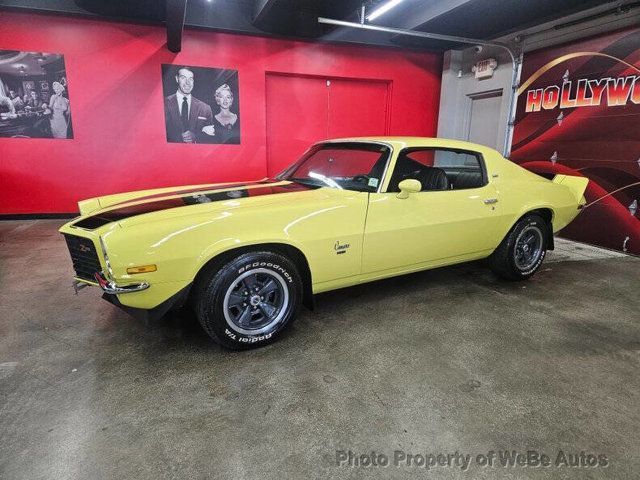
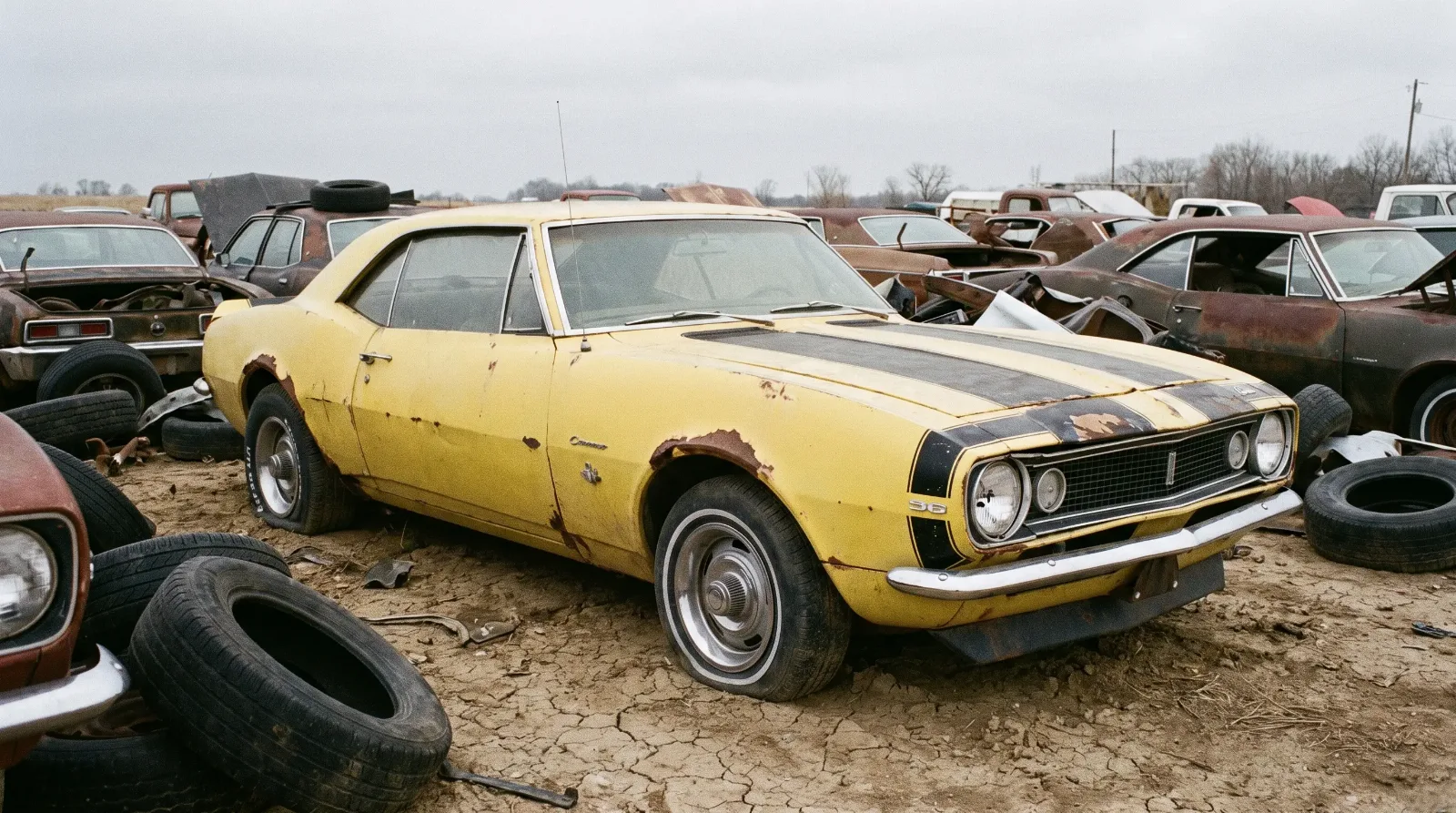
Bumblebee's yellow was not negotiable: the character had been yellow since 1984. What the production had to decide was which shade. The car in the film uses a warm, slightly greenish yellow that sits closer to period Chevrolet colors like Fathom Gold or Daytona Yellow [VERIFY exact paint code used on hero car] than to the flat lemon yellow that appears in some promotional materials. The choice was deliberate: a cool, clean yellow would look like a toy. A warmer, deeper yellow with the right patina on a worn car looked like something that had been sitting in a lot waiting to be found.
The team also had to consider how yellow reads in different lighting conditions on film. Yellows can blow out in direct sunlight and look greenish in shade. The production's approach was to give the car visible grime and wear so that the color had texture rather than existing as a flat field. That decision made the car feel real rather than designed, which is exactly what a story about an alien trying to pass as an ordinary vehicle requires.
The 1977 versus 1967 production detail
Here is where it gets interesting for Camaro enthusiasts. The hero car built for the film was based on a 1977 Camaro body, which belongs to the second generation (1970-1981), not the first. The team modified the body to incorporate visual cues from the first-generation design, but the underlying structure was the later car [VERIFY: multiple sources reference the 1977 base but production details vary].
Why? Practicality. First-generation Camaros in complete, driveable condition were already commanding collector prices in 2005-2006. Building a stunt car that would take practical hits, drive on gravel lots, and be modified for camera rigging on a genuine '67 shell would have been expensive and complicated. Second-generation cars were more abundant, cheaper, and structurally similar enough that the modifications made sense. The visual result, under the camera, read as first-generation to audiences who were not already enthusiasts.
This is actually a tradition in Hollywood: film cars are often composites, built to look like one thing while being based on something more practical. The Camaro's long history in pop culture includes plenty of similar behind-the-scenes compromises that audiences never notice.
The casting decision that held up
Nearly two decades after the film released, the 1967 Camaro remains the definitive Bumblebee. The sequels tried several updated Camaro generations, the spinoff tried a Volkswagen Beetle, and none of them dislodged the original car from its position in cultural memory. That is the test of a good casting decision: it feels inevitable in hindsight, even if nothing about it was inevitable at the time.
The next article in this series shifts from the specific to the historical, looking at the longest rivalry in American muscle car history. Find out how the Camaro versus Mustang rivalry defined an era that neither brand has fully escaped.
For the broader picture on Bumblebee and the Camaro's cinematic life, start with the Camaro in movies and culture.
Sources and notes
Production figures, engine specifications, codes, and dates in this article are cross-referenced from established Camaro references, period documentation, and owner registries. Where sources differ, the most commonly cited value is used. Cost figures are indicative and vary by supplier, region, and condition.
- Roll Out: The Story Behind The Bumblebee Camaro From Transformers (SlashGear)
- Rob's Movie Muscle: The 1977 Camaro Z/28 From Transformers (Street Muscle)
- Here's The Story Behind The Transformers 'Bumblebee' Camaro (HotCars)
- Bumblebee (Transformers) - Wikipedia
- How Chevy's Camaro Changed with the 'Transformers' Franchise - Variety