
1968 Chevrolet Camaro
$89,995 $99,995
Vehicle Details
Chevrolet
Camaro
1968
5,122 miles
45079
Convertible
Automatic
Gasoline
454 BORED/STROKED TO 467CI
Description
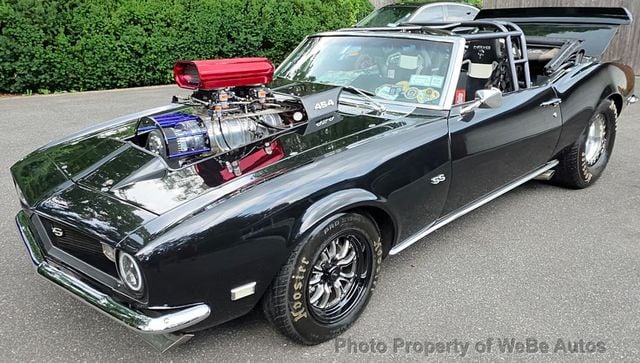
1968 Chevrolet Camaro Convertible Pro Street For Sale
1,500 HP Blown Big Block * 8-71 Supercharger * Full Chromoly Chassis * Street-Driven Pro Street Build
This 1968 Chevrolet Camaro Convertible is an over-the-top, no-expense-spared Pro Street build that combines show-quality craftsmanship with serious drag-strip capability. Built over roughly two years with extensive custom fabrication throughout, this Camaro was designed to be both street driven and track capable, with an NHRA-certified cage and a drivetrain capable of producing approximately 1,500 horsepower without nitrous, plus an additional 200-shot nitrous system. The car was originally purchased from Florida and had already been mini-tubbed, but the current build went far beyond that.
The entire chassis was transformed with a full chromoly structure, full tubs, custom floors, custom transmission tunnel, extensive sheetmetal work, and countless one-off details. Engine & Performance
Power comes from a massive 467 cubic-inch Chevrolet big block, based on a GM Performance 454 block and built with premium internal components throughout. Performance highlights include:
GM Performance big-block foundation
454 bored/stroked to approximately 467ci
Air Flow Research cylinder heads
Ported and polished heads
Roller rockers
ARP hardware throughout
BDS polished 8-71 supercharger
Dual 950 CFM Quick Fuel double-pumper carburetors
200-shot nitrous system
Approximately 1,500 horsepower without nitrous
Additional 200 HP available on spray
MSD ignition
Magnum 500 fuel pump
Custom American Racing headers
3-inch oval exhaust
Custom shoebox-style mufflers exiting ahead of the rear wheels
This is a brutally powerful engine combination, but the car was intentionally set up to remain streetable and has been driven to local shows and cruise nights.
Transmission & Drivetrain
Backing the big block is a fresh Turbo 400 automatic transmission with fewer than 50 miles on it. Drivetrain features include:
Turbo 400 automatic transmission
Built by Select Performance Transmissions
3,500 RPM Pro Torque stall converter
Reverse manual valve body
Trans brake
Line lock
Oversized 1350 U-joints
Heavy-duty custom driveshaft tunnel
Moser rear end
4.11 gears
35-spline axles
The rear assembly has been beautifully finished and detailed, reflecting the same level of craftsmanship seen throughout the rest of the car. Chassis, Suspension & Brakes
This Camaro features a full chromoly chassis with extensive custom fabrication designed to handle extreme horsepower safely.
The rear suspension features a custom 4-link setup with a Panhard bar and adjustable coilovers, designed to control the massive horsepower and keep the rear end planted. For additional safety, the car incorporates a custom 1/8-inch steel driveshaft tunnel that fully encloses the driveshaft yoke and transmission tailshaft, providing substantial protection in the event of a driveline failure. Highlights include:
NHRA-certified roll cage
Full tub conversion
Adjustable coilovers front and rear
Tubular front control arms
Custom oil-pan protection/skid ramp
Wilwood front and rear disc brakes
Cross-drilled and slotted rotors
Adjustable front/rear brake bias
Parachute system
External battery disconnect
Track-required window netting
The cage and chassis were built with serious racing capability in mind while still allowing comfortable street use.
Cooling & Fuel System
A custom cooling system was engineered specifically for this high-horsepower application. Features include:
Custom oversized aluminum radiator
Dual puller fans
Additional pusher fan
Separate transmission cooler
Custom radiator support modifications
Approximately 36-gallon custom fuel cell system
Gel-cell battery
Hidden fuel and electrical routing through the chromoly chassis
The cooling setup is extremely effective, with the car reportedly maintaining approximately 185 degrees even in heavy summer traffic. Exterior
The exterior retains the unmistakable appearance of a first-generation Camaro while incorporating numerous custom touches.
Exterior features include:
Removable hood with Dzus fasteners
Custom front splitter
LED halo headlights
Custom sequential LED taillights
1967-style full-size rear taillight conversion
Billet exterior mirrors
Stainless hardware throughout
Fold-down rear license plate
Hidden battery charging connection
Rear-view camera
Integrated rear parachute
The rear camera displays through the interior mirror, making backing up this heavily tubbed Camaro significantly easier. Wheels & Tires
The car rides on serious drag-race hardware while maintaining a striking Pro Street stance. Features include:
Weld Racing wheels
Rear beadlock wheels
Massive Hoosier rear tires
Approximately 31x18 rear tire sizing
Wider-than-traditional front runners for improved street manners
Interior & Custom Fabrication
The interior is every bit as impressive as the mechanical build.
Features include:
Custom fabricated interior
Full roll cage with passenger protection
Adjustable seats
Adjustable custom pedals
Tilt steering column
Grant GT steering wheel
Steering-wheel-mounted nitrous controls
Custom carbon-fiber accents
Extensive custom gauge package
Custom switch panel
Backup nitrous activation
Purge controls
Fuel pump, fan, and system switches
Rear camera mirror display
Phone mount with integrated charger
Custom hidden electronics panel
Small custom storage compartment between the tubs
The rear storage area, wiring, switches, and electronics were all custom designed and hand fabricated, with wiring labeled and routed for easy service. Additional Custom Details
This car is loaded with thoughtful one-off touches, including:
Custom upright nitrous bottle mount integrated into the cage
Custom hidden wiring through the chassis
Custom trunk access panels
Bow Tie accents stamped into the sheetmetal
Illuminated Chevrolet emblem in the rear storage area
Custom billet and anodized details
Integrated bottle opener hardware
Hidden charge connection behind rear plate
The attention to detail is extraordinary, and nearly every component has been considered from both a functional and aesthetic standpoint. Mileage & Use
The engine has approximately 5,000 miles, while the completed chassis and drivetrain setup have roughly 1,000 miles of street use.
The Turbo 400 transmission itself has fewer than 50 miles. Despite its extreme appearance and performance potential, this Camaro was built to be driven and has been regularly cruised rather than trailered. Summary
This 1968 Chevrolet Camaro Convertible Pro Street is an extraordinary one-off build combining serious race technology with show-quality craftsmanship and real-world streetability.
With its 467ci blown big block, 8-71 supercharger, 1,500-horsepower capability, nitrous system, full chromoly chassis, Moser 4.11 rear, Wilwood brakes, custom cooling system, and extensive hand fabrication, this Camaro is unlike virtually anything else on the road. Built to run hard, show beautifully, and still cruise to local events under its own power, this is the kind of car that must be seen in person to fully appreciate. For Sale By Owner Located In Greenlawn, NY 11740
Take A L@@K At The Video On YouTube:
Follow This Link To Over 275 High Resolution Photos: GRjs7
Follow this Link to 780 Build Photos and Videos: 3gGCA
Trim: Pro Street For Sale
Options: Premium Sound System
Classic Chevrolet Camaro Buyer's Guide
Chevrolet Camaro Market Overview
Based on 327 Chevrolet Camaro listings currently on ClassicCarsArena.com
Classic Chevrolet Camaro Buyer's Guide
The Chevrolet Camaro launched in September 1966 as Chevy's direct response to the Ford Mustang, and for over five decades it has defined American performance for an entire generation of enthusiasts. Whether you're hunting a numbers-matching first-generation Z/28, a survivor split-bumper second-gen, or a clean third-gen IROC-Z, the Camaro buyer's market is deep, varied, and full of pitfalls for the unprepared.
What to Check Before Buying
Common Issues
What to Look For
Price Guide
Did You Know?
Also Consider
Similar classic cars shoppers also browse:
How Does It Compare?
Head-to-head matchups for the Chevrolet Camaro:
Price Cut! -$10,000 (-10%)
1968 Chevrolet Camaro
Contact Seller
Listed by dealer
Nationwide consignment dealer
WeBe Autos lists vehicles from sellers across multiple states. The vehicle may not be at the dealer's address shown. Contact the dealer to confirm the vehicle's actual location before traveling.
Buying safely?
Read our scam-avoidance tips before paying →
Listing Actions
Browse by Era
1960s Classics for SaleAll 1968 Classics
Browse all 1968 Cars for SaleGet classic car alerts
Latest arrivals, newest deals, and discount coupons — straight to your inbox.
Selling your classic car?
Reach millions of classic car enthusiasts on the largest US classics marketplace.
Sell Your Car →Similar Listings
 Dealer
 United States
1918 Chevrolet 100
 Dealer
United States
Dealer
United States
1923 Chevrolet Master
 Dealer
United States
Dealer
United States
1925 Chevrolet Superior K
 Dealer
United States
Dealer
United States
1926 Chevrolet 100
Contact Seller
Call this seller?
You're about to call WeBe Autos about the 1968 Chevrolet Camaro.
+1 (631) 339-0399
Report this Ad
Help us keep the marketplace clean. Our moderation team reviews every report within 24 hours.