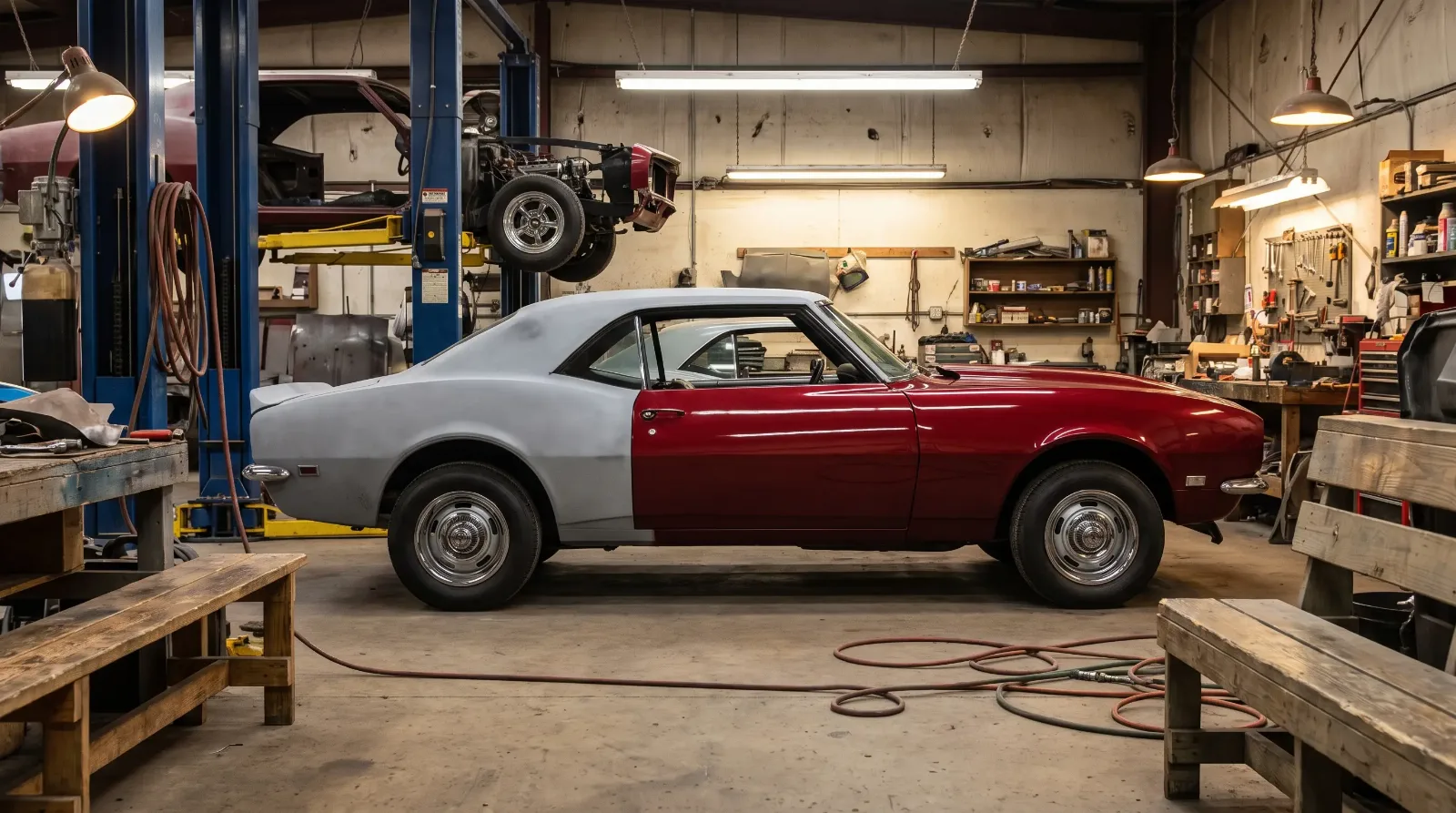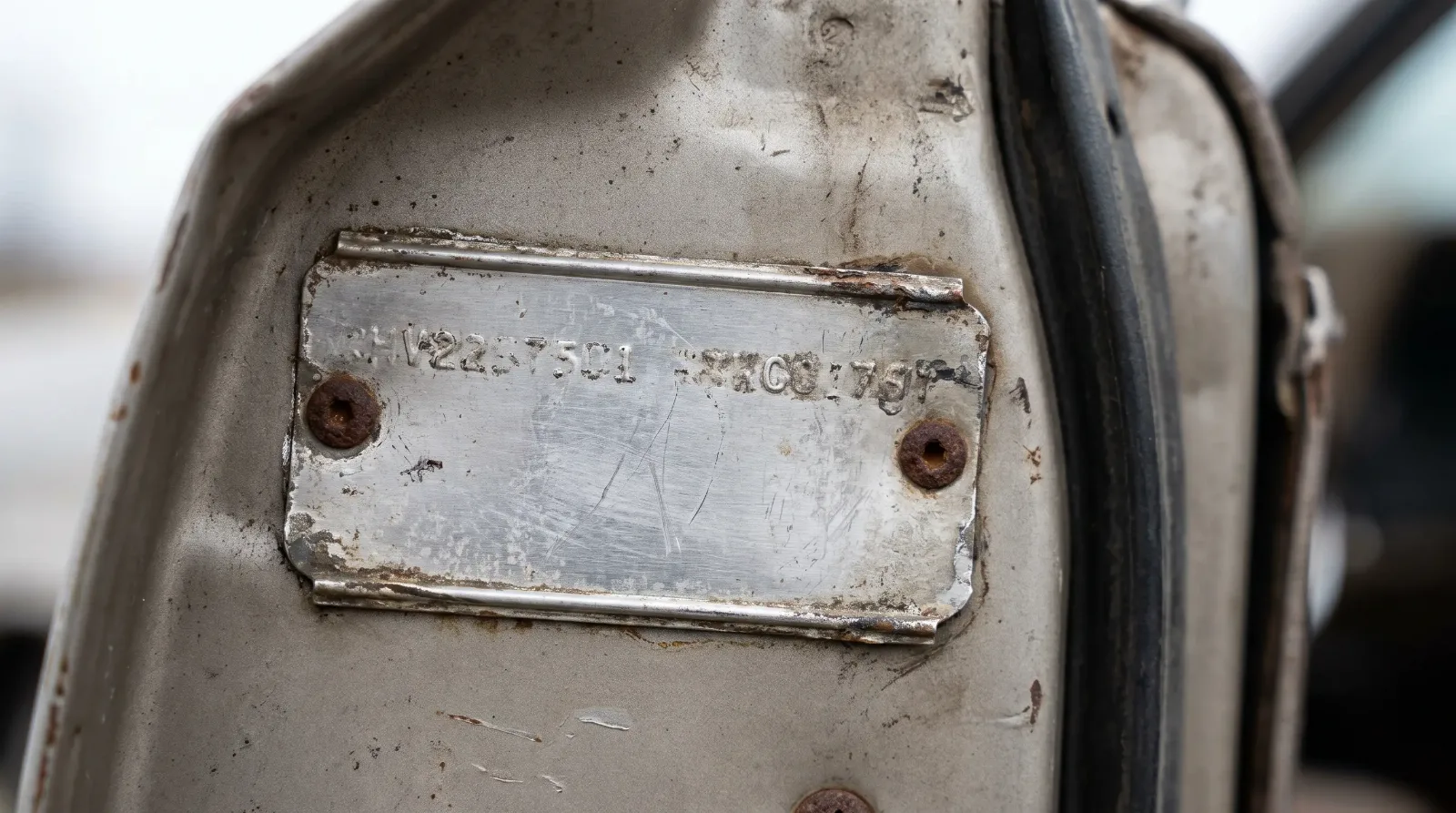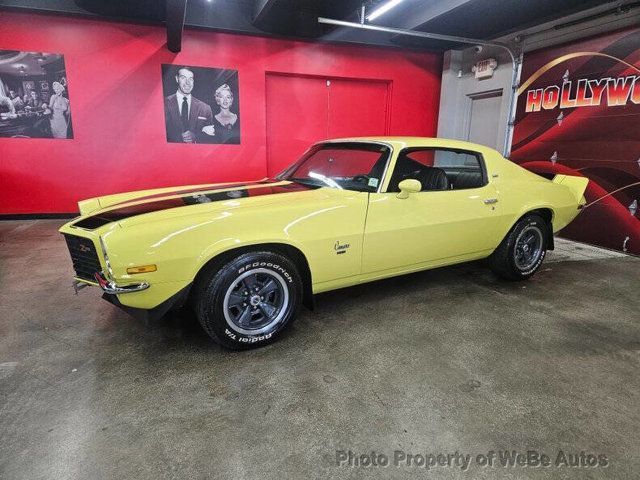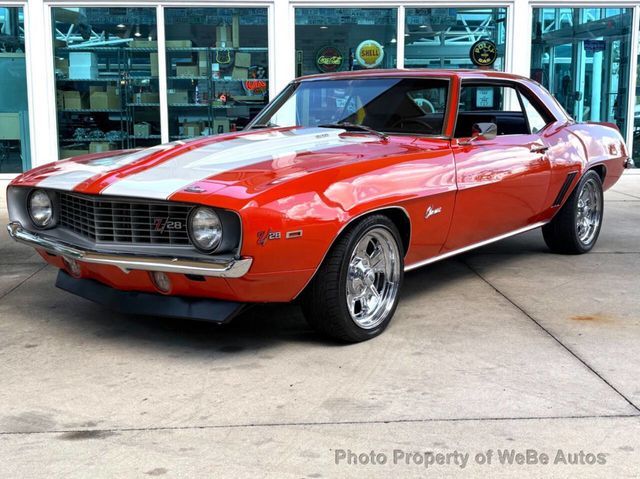
After you confirm the VIN is correct, the trim tag is the next document you should read before you form any opinion about a first-generation Camaro. This small metal plate, riveted to the firewall or the door jamb depending on model year, encodes the factory paint code, interior trim color, convertible top color if applicable, body production date, and a string of option codes that document exactly how the car left the assembly line. A car whose trim tag agrees with its VIN, its engine stamp, and its build sheet is a car you can trust.
Where the trim tag lives and what it looks like
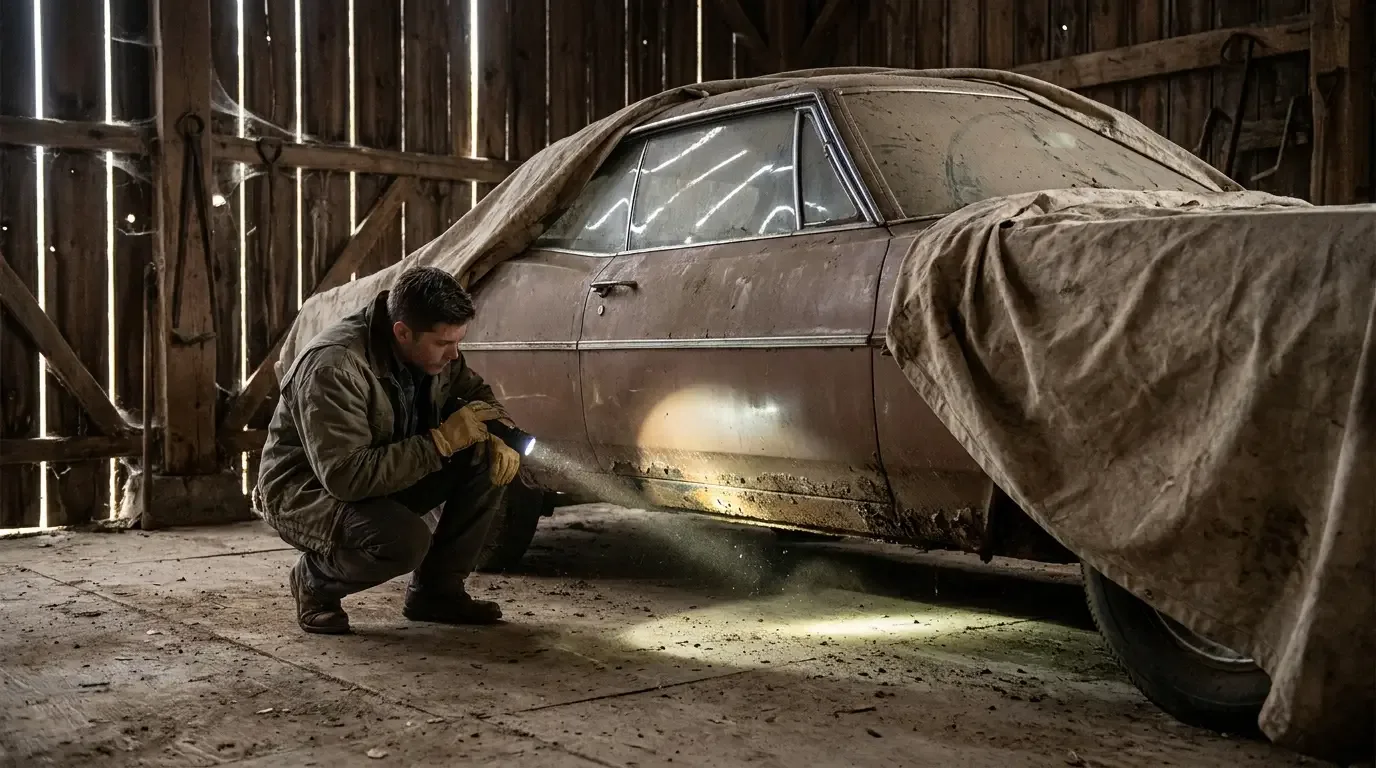
On 1967 and 1968 first-gen Camaros the trim tag is mounted on the firewall, passenger side, near the top. On 1969 models GM relocated it to the door jamb pillar on the driver side. The tag is stamped aluminum, roughly two inches by three inches, with three or four rows of data. The ink or paint that originally filled the stampings may be gone on weathered cars, so angle your flashlight to read the impressions rather than relying on visible color fill.
The cowl tag is different from the trim tag. It is a separate plate found inside the cowl vent area, beneath the wiper pivot panel, and it carries the body production sequence number. The cowl tag does not repeat the option data but is useful for cross-dating the body build to the VIN sequence. Together the two tags form the factory documentation baseline. You can find broader context for how these tags fit into the overall verification process in our Camaro restoration guide.
Reading the paint and interior codes
The first meaningful row on the trim tag carries the body paint code and the interior trim code. These are the codes that tell you the original color combination the car left the factory with. An important format change to watch for: 1967 and 1968 used alphabetic paint codes (a letter such as R for Bolero Red), while 1969 switched to two-digit numeric paint codes (such as 72 for Hugger Orange). For 1967, Chevrolet offered roughly 15 exterior colors; by 1969 the palette had broadened to include sought-after shades such as Hugger Orange and Fathom Green.
| Year | Code position on tag | Example color | Code |
|---|---|---|---|
| 1967 | Row 1 (alphabetic code) | Bolero Red | R |
| 1967 | Row 1 (alphabetic code) | Marina Blue | F |
| 1969 | Row 1 (numeric code) | Fathom Green | 57 |
| 1969 | Row 1 (numeric code) | Hugger Orange | 72 |
| 1969 | Row 1 (numeric code) | Dusk Blue | 51 |
Interior trim codes follow immediately. A three-digit code beginning with 7 typically indicates a standard vinyl interior; a code beginning with 7 followed by a higher second digit often indicates a custom interior upgrade. Cross-reference your specific code against a published Camaro trim tag guide, as there are several dozen combinations across the three model years.
Decoding the build date
The build date is stamped as a two-digit week number and a single letter for the year: for example, 08B decodes as the eighth week of 1968. The week number counts from the start of the model year production, not the calendar year. Model year production typically began in late summer or early fall of the prior calendar year, so a very low week number on a 1968 car indicates a very early build, assembled in the fall of 1967.
The build date on the trim tag should precede the VIN sequence date by a few days to two weeks. Body production ran slightly ahead of final assembly. If the trim tag date is months later than what the VIN sequence implies, someone may have swapped bodies between cars. This matters enormously for high-option cars where the body carried much of the documented content.
"I once verified a car claimed to be an early-production 1969 Z/28. The VIN sequence was consistent, but the trim tag date was seven weeks later than expected for that sequence. Turned out the body had been swapped from a later car. The engine was genuine, but the body documentation was not. The buyer had paid Z/28 money for a composite."
— Tom Ramirez
Reading the option codes on the trim tag
Below the paint and date information, the trim tag carries a series of two- or three-character option codes separated by spaces. These represent the RPO (Regular Production Option) codes that were ordered with the car. Common codes you will encounter include:
- Z28: Performance package (1967-1969, specifics vary by year)
- L35: 396 cu in V8, 325 hp
- L78: 396 cu in V8, 375 hp
- M20: Wide-ratio four-speed manual transmission
- M21: Close-ratio four-speed manual transmission
- M22: Heavy-duty close-ratio four-speed ("Rock Crusher")
- U17: Special instrumentation gauge package
- D80: Spoiler package (front and rear)
Not every option ordered will appear on the trim tag. Some lower-cost options were tracked only on the build sheet, which was a paper document placed in the car during assembly and often found tucked behind the rear seat or under carpeting. If a build sheet survives, it is more complete than the trim tag alone.
Convertible top codes and special body notes
On convertibles, an additional code on the trim tag designates the original top color. A single letter following the interior code handles this: W for white, B for black, and so on depending on the year and the options available. If a convertible top has been replaced, the new color may not match the original code, which is not a fault but is worth noting for a full-correctness restoration.
Once you have read the trim tag fully, your next step in documenting a first-gen Camaro is the body itself. Move on to our guide covering first-gen Camaro body panels and sheet metal repair to understand where rust originates, which panels are reproduced, and how to assess what you are looking at before you commit to a restoration budget.
Sources and notes
Production figures, engine specifications, codes, and dates in this article are cross-referenced from established Camaro references, period documentation, and owner registries. Where sources differ, the most commonly cited value is used. Cost figures are indicative and vary by supplier, region, and condition.