
A painted frame is one of those things that either looks right for the next twenty years or starts flaking and rusting within a couple of winters, and the difference almost always comes down to prep, not the paint you chose. I've seen guys spend real money on a quality chassis paint and get a mediocre result because they rushed the surface work, and I've seen a cheaper paint hold up fine over a frame that was actually prepped correctly.
Restoration & Tech
6 min read
How to Prep and Paint a Classic C10 Frame
How to strip a C10 frame to bare metal, treat rust in hidden sections, and choose and apply a coating that actually holds up.
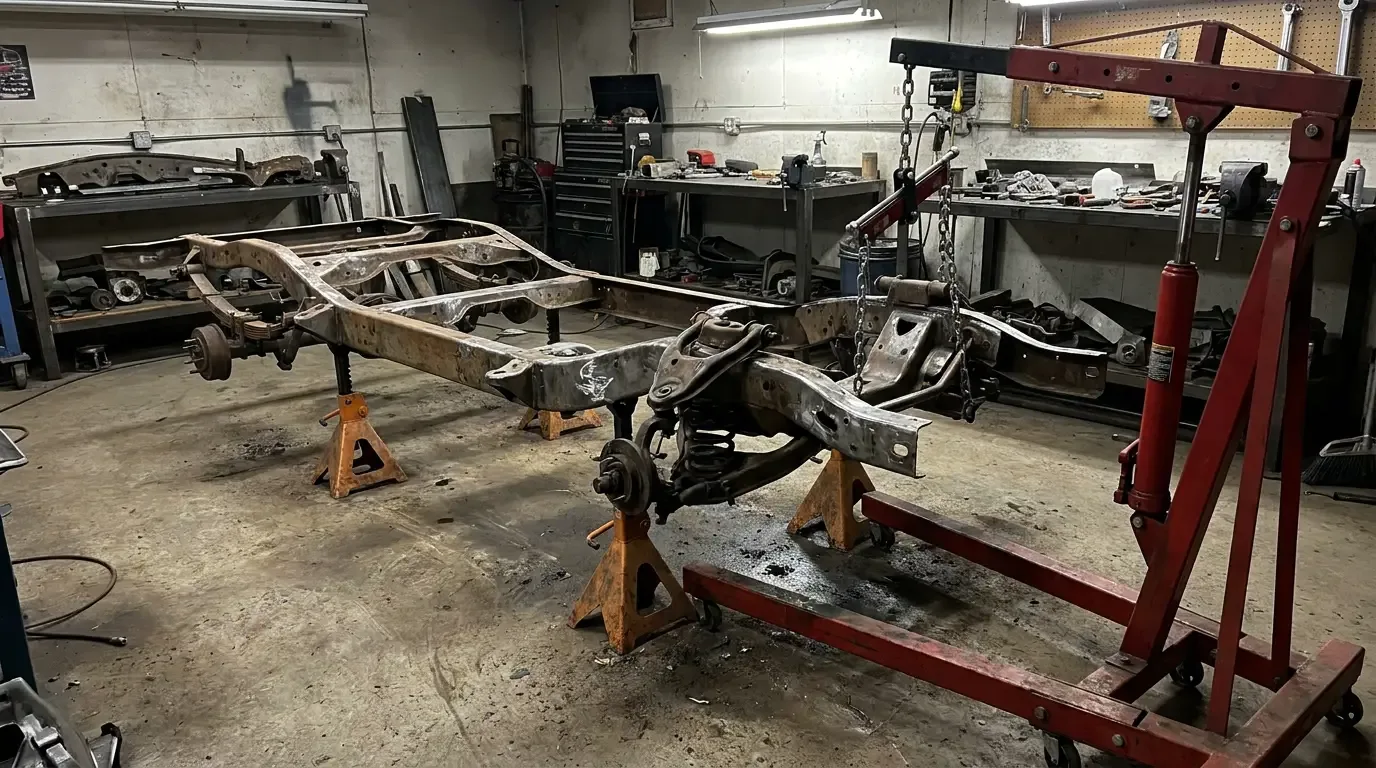
Frame paint doesn't have the same visual standards as a body panel. Nobody's checking for orange peel under a show light on the underside of a truck. What it does need is a surface that's genuinely clean and rust free before anything goes on, because a frame lives outdoors, exposed to moisture and road salt, for the rest of its service life.
Why frame prep is different from body prep
A frame's job is structural, not cosmetic, and the coating on it has one purpose: keeping moisture off bare steel for as long as possible. That means the prep priorities shift compared to a body panel. Perfect smoothness doesn't matter much. Complete rust removal in every crevice, box section, and weld seam matters enormously, because any spot left with active corrosion under the new paint keeps working from underneath it.
Frames also have a lot more hidden area than body panels. Boxed sections, gussets, and places where crossmembers meet the rails all trap moisture and old undercoating in spots you can't fully see without getting a light and a mirror in there. Prep on a frame is as much about access as it is about technique.
Stripping the frame to bare metal
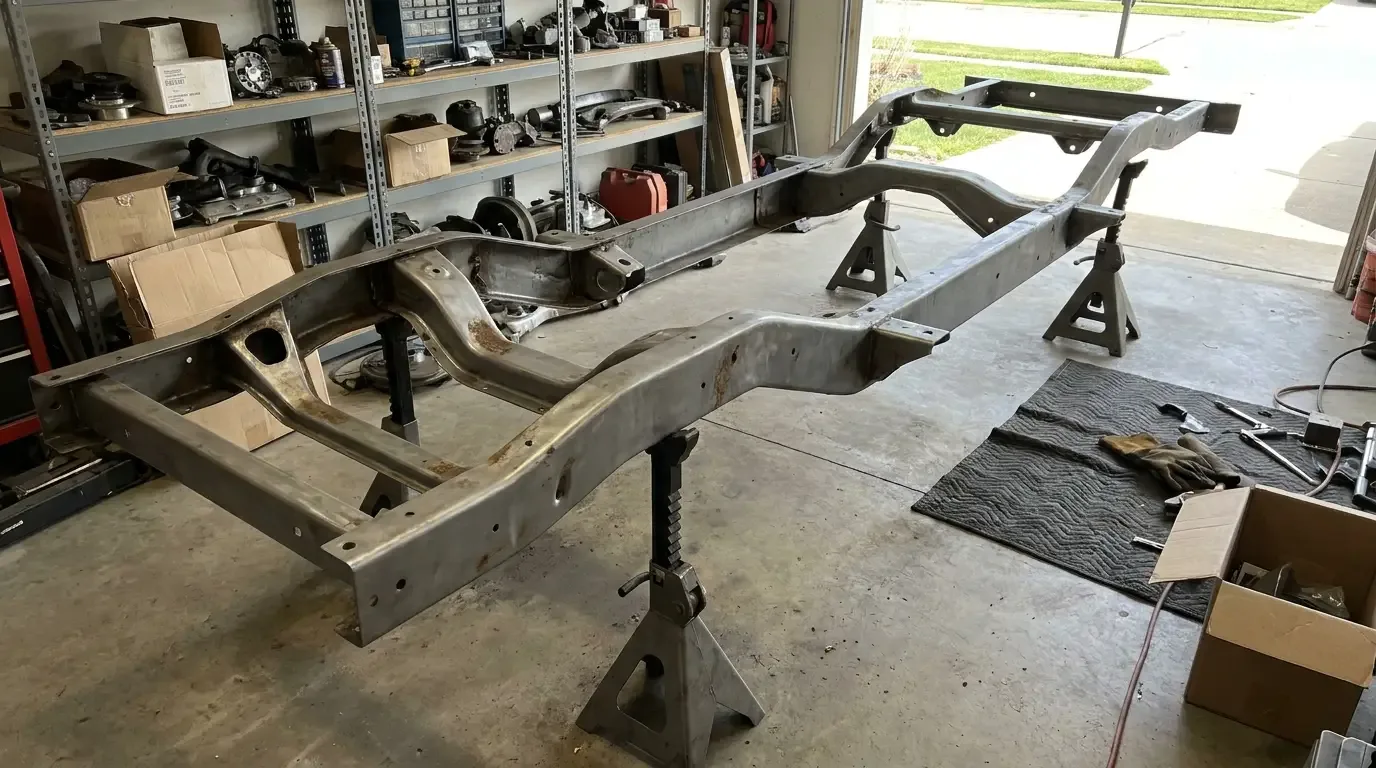
Sandblasting is generally the right call for a frame, unlike a bed floor or body panel, since warping isn't a real concern on structural steel this thick. Media blasting works too, and can be gentler on any factory markings or stampings you want to preserve, but straight sand or a similar aggressive media clears decades of undercoating and rust faster on a part this heavy.
Get the frame off the truck for this if you possibly can. A frame still under the cab and bed is nearly impossible to blast and coat properly, since you can't reach the top surfaces of the rails or get a full angle on the crossmembers with everything still mounted. A rotisserie or even just engine hoists and jack stands to get the frame up and accessible from every side makes this job realistic instead of a fight against your own access.
Treating rust and sealing the bare steel
Once the frame is blasted, treat any remaining rust in hard to reach spots, inside boxed sections especially, with a rust converter or penetrating treatment that can flow into areas you can't physically sand or blast. It's not a full substitute for mechanical rust removal where you can reach it, but it's the only real option for the interior of a boxed rail section.
Wipe the entire frame down with a wax and grease remover before any coating goes on, since years of road grime, oil drips, and old undercoating leave residue that blasting alone won't fully clear. Any oily residue left behind causes the same adhesion problems on a frame that it does on a body panel, just in a spot where you're less likely to notice the failure until it's already peeling.
Choosing and applying frame coating
Chassis paint, powder coating, and rubberized undercoating all have a place, and the right choice depends on how the truck will actually be used. A truck that sees regular driving and weather benefits from a tougher, more flexible coating that can handle stone chips and flex without cracking. A show truck or trailer queen has more options, since it won't be taking the same abuse.
Whatever you choose, apply it in full coats rather than a single heavy pass, and make sure it reaches into the same boxed sections and crevices you worked hard to clean. A beautiful coating on the visible faces of the rails with untreated bare metal inside a boxed section is a frame that looks finished and isn't. Pay attention to the areas around suspension mounts and body mount points too, since these see repeated flexing and are common spots for coating to crack and let moisture back in over time.
"Nobody restores a truck to look at the frame. But the frame is the one part holding everything else together, and it's the part I check first on any truck somebody's trying to sell me. A frame that was actually stripped and coated right tells me the rest of the build was probably done with the same care."
Mike Sullivan
Frame work fits into the bigger sequence covered in the restoration guide, and it's genuinely the foundation everything else gets built on. Before any of this stripping and coating work starts, it's worth checking that same frame for straightness first, since paint and coating won't tell you anything about whether the rails themselves are true, and coating a bent frame just means redoing the work later once the problem gets discovered the hard way.
Sources and notes
- KBS Coatings: chassis paint prep for a Chevy C10
- GMT400 forum: frame refinishing, paint or powder coat
- Refinishing a rusty truck frame
- Essential steps for coating a classic truck frame
- Classic Broncos forum: best material to coat a frame for rust prevention
- C10 Trucks forum: fresh frame-off restoration example
Related Reading
Have a
Chevrolet C10
for Sale?
Reach thousands of serious classic car collectors across the US.
Sell It Here →
Are You a Classic Car Dealer?
List your full inventory and connect with targeted classic car buyers.
Join as a Dealer →

About the author
Mike Sullivan
Detroit-area muscle car enthusiast and restoration specialist with three decades of hands-on experience working on American iron.
Related Listings - Chevrolet C10
More in Restoration & Tech
Comments
Be the first to comment on this article.