
Classic Porsche 911 Buyer's Guide
Definitive buyer's guide for classic Porsche 911 1965-1989. Long-hood and G-body generations, structural rust hotspots, engine number authentication, and Porsche Certificate of Authenticity essentials.

The Porsche 911 has been in continuous production since 1964 — sixty years across eight platform generations — but the air-cooled era (1965-1998) defines the classic 911 market. From the long-hood early cars (1965-1973) through the impact-bumper G-body (1974-1989) and the 964 (1989-1994) and 993 (1995-1998) generations, each platform has its own engineering character, its own pitfalls, and its own collector trajectory. The Porsche marque is exacting in its documentation requirements, and buyers entering this market should understand exactly what separates a documented original car from a clone, a re-skin, or an outright fraud.
Overview
The Porsche 911 is the longest continuously-produced sports car in history and the single most documented chassis in the collector market. Sixty years of production records, factory archives, and a robust specialist community means that virtually every 911 ever built can be traced back to its original specification — provided the buyer demands the right documentation. From a concours judging perspective, the air-cooled era (1965-1998) defines the classic 911 market, and within that, three sub-eras matter most: long-hood (1965-1973), G-body (1974-1989), and 964/993 (1989-1998).
Generations Worth Knowing
Long-Hood Era (1965-1973)
The original. Thin chrome bumpers, slim taillights, and the iconic sleek profile that defined the 911 silhouette. The 1965-1968 cars used the original 2.0L flat-six; 1969-1971 brought the 2.2L; 1972-1973 the 2.4L. The 911S was the high-performance variant from 1967 forward, with the legendary 1973 Carrera RS 2.7 representing the apex of long-hood engineering. Among the marque registries, the long-hood era is consistently the most desirable and the most actively collected.
G-Body Era (1974-1989)
The 1974 redesign brought federally-mandated impact bumpers (aluminum, with energy-absorbing hydraulic mounts on US cars), galvanized body panels (from 1976 onward), and a series of engine displacement increases: 2.7L (1974-1977), 3.0L SC (1978-1983), 3.2L Carrera (1984-1989). The G-body era is the smart-money entry into air-cooled ownership — bulletproof engines, exceptional parts support, and dramatically more affordable than long-hood cars.
964 Era (1989-1994)
The 964 was the first all-new 911 in twenty-five years — same basic silhouette but completely re-engineered underneath. Power steering became standard, ABS arrived, the rear suspension was redesigned, and the 3.6L flat-six produced 250 hp in normally-aspirated form. The 964 was historically the least-loved air-cooled 911 but has appreciated dramatically since 2018 — clean Carrera 2 and Carrera 4 cars now trade for $50,000-$85,000.
What to Look For (in person)
The Porsche Certificate of Authenticity
Before any in-person inspection, request the Porsche Certificate of Authenticity from the seller (or order it yourself for $254 from Porsche Cars North America via the chassis number). The certificate confirms the original specification: chassis number, engine number, gearbox number, paint color, interior color and material, options, and delivery destination. Without the certificate, no Porsche over $60,000 should be purchased.
Structural Rust on Pre-1976 Cars
Long-hood 911s and 1974-1975 G-body cars were not galvanized. Structural rust at the kidney bowls (behind the front wheels), the longitudinal sills under the doors, the front trunk floor, the battery box, and the suspension pan is the structural killer of any pre-galvanization 911. Lift the carpet, pull the door cards, inspect with strong light from underneath the car. Perforation in any of these areas means $8,000-$25,000 minimum in proper professional structural repair.
Engine and Gearbox Number Verification
The engine number is stamped on a flat pad on the engine case (passenger side, near the fan housing on most cars). The gearbox number is stamped on the gearbox case. Cross-reference both against the Certificate of Authenticity. Mismatched numbers reduce value significantly — 15-30% on driver-quality cars and 30-50% on premium cars (911S, RS, Turbo).
Pricing Tiers
| Tier | Description | Price Range (2024) |
|---|---|---|
| Driver | 1978-1983 911 SC or 1984-1989 Carrera 3.2, decent paint, original interior with wear, runs and drives | $45,000-$85,000 |
| Survivor | 1969-1973 911T or 911E with original paint, documented mileage, COA verified | $80,000-$160,000 |
| Concours | Documented 911S, Carrera RS 2.7, Turbo, or low-production special, frame-off restoration | $200,000-$3M+ |
Common Pitfalls
The single biggest pitfall in 911 buying is paying premium money for a car without Certificate of Authenticity verification. The market is full of cars with replacement engines, replacement gearboxes, or replacement bodies that the seller has not disclosed. The Certificate of Authenticity instantly resolves this — if the seller refuses to provide it or claims the certificate is "unavailable," walk away.
The second pitfall is structural rust hidden under fresh undercoating and fresh paint. Long-hood 911s rust everywhere, and amateur restorations commonly cover up rather than properly repair. The unrestored survivor in original livery is almost always a safer purchase than a freshly-restored car of unknown provenance.
"From a concours judging perspective, the unrestored survivor in original livery is almost always preferable to the freshly-restored car of unknown provenance. The market premium for a documented matching-numbers 911 with original paint is real — $30,000 or more on a typical 911S — and it pays to spend the $254 on a Certificate of Authenticity rather than chase a deal that turns out to be too good to be true. The Porsche archives don't lie."
— Sarah Whitfield
Final Verdict
The 911 market rewards documentation, structural integrity, and patience. Long-hood cars (1965-1973), particularly the 911S and Carrera RS 2.7 variants, are blue-chip investments with steady appreciation curves. G-body SC and Carrera 3.2 cars remain the smart-money entry into air-cooled ownership at $45,000-$95,000. The 964 generation has appreciated dramatically since 2018 and continues to offer reasonable entry pricing into modern-driving classic Porsche ownership.
For new buyers, start with a 1984-1989 Carrera 3.2 with documented service history and the Certificate of Authenticity. They're the most usable air-cooled 911 — bulletproof engines, modern brakes, comfortable interiors, and parts support that approaches American muscle-car levels. From there, the upgrade path is clear: 911 SC, then early G-body 2.7, then long-hood 911T, then 911E, then 911S, then RS and Turbo cars. Patience and Porsche Certificate of Authenticity verification beat impulse buys every time in this market.
Browse Porsche 911 listings
 Dealer
 United States
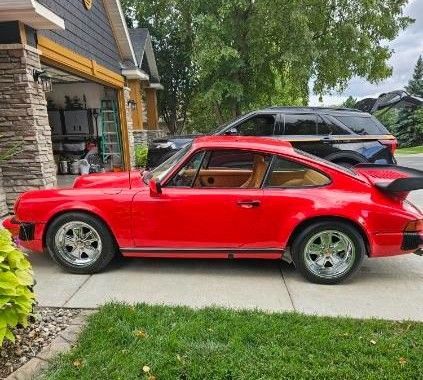
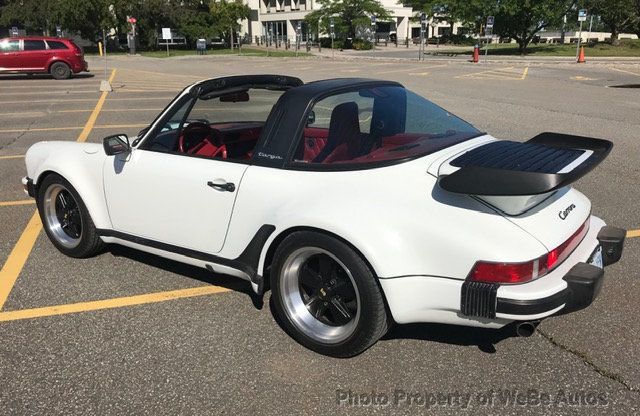
1978 Porsche 911
 Dealer
United States
Dealer
United States
1988 Porsche 911
What to Look For
The Porsche Certificate of Authenticity ($254 from Porsche Cars North America) is the gold-standard documentation for any classic 911. The certificate confirms the original equipment of the car: engine number, gearbox number, color, interior, options, and delivery destination. For any 911 priced over $60,000, the certificate is mandatory.Engine and gearbox numbers are the second-tier verification. The engine number is stamped on a flat pad on the engine case (passenger side, near the fan housing). The gearbox number is stamped on the gearbox case. Cross-reference both against the certificate. Mismatched engine and gearbox numbers (versus the certificate) reduce value by 15-30% on driver-quality cars and by 30-50% on premium cars.
Structural rust inspection is the first non-negotiable for any pre-1976 911. Lift the carpet at the driver and passenger footwells and look at the kidney bowls (visible from inside the car, behind the foot pedals). Inspect the longitudinal sills under the doors with a strong flashlight from underneath the car. Look at the battery box (front trunk, driver side on left-hand-drive cars). Look at the suspension pan ahead of the front wheels. Perforation in any of these areas is structural and expensive to repair — $8,000-$25,000 minimum for proper professional work.
Car matching numbers (the chassis number stamped on the body in multiple locations) is the third-tier verification. The chassis number appears on the dashboard plate (visible through the windshield), on the front trunk hinge area, and stamped into the body in the front and rear suspension mounting areas. Mismatched stamping styles or different patina between locations indicates a re-shell, a body swap, or a fabricated car.
Pre-Purchase Checklist
-
Order Porsche Certificate of Authenticity ($254)
Available from Porsche Cars North America via chassis number. Confirms original engine, gearbox, color, options, delivery. -
Verify engine number stamping against COA
Stamped on flat pad on engine case (passenger side, near fan housing). Mismatch = 15-50% value reduction. -
Verify gearbox number against COA
Stamped on gearbox case. Original gearbox preferred; replacement gearboxes acceptable but reduce value. -
Inspect kidney bowls (pre-1976 cars)
Visible from inside footwells with carpet lifted. Critical structural rust point on non-galvanized bodies. -
Inspect longitudinal sills under doors
From underneath car with strong flashlight. Perforation = $8,000-$25,000 structural repair. -
Check battery box and front trunk floor
Battery acid leaks plus rust = perforation. Front trunk floor commonly rotten on neglected cars. -
Compression and leakdown test by specialist
Should read 145-175 PSI with <10% leakdown. SC and Carrera 3.2 head-stud failures are known issues. -
Inspect heat exchangers from underneath
Long-hood and G-body cars use exhaust heat exchangers for cabin heat. Rusted units = $3,000-$6,000 per side. -
Verify chassis number on body and dashboard
Multiple stamping locations should agree in style and patina. Mismatched = re-shell or body swap. -
Test all electrical and CIS fuel injection
Mechanical CIS (1973+) works well when serviced but fails expensively. Verify pressure regulator and warm-up regulator.
Common Issues
Air-cooled 911 rust is the structural killer for cars from any climate where road salt is used. The kidney bowls (the curved structural elements behind the front wheels), the longitudinal sills under the doors, the front trunk floor, the battery box, the suspension pan ahead of the front wheels, and the rear suspension mounting points are all critical structural rust zones. Long-hood cars (1965-1973) are particularly vulnerable because Porsche did not begin galvanizing the 911 body until 1976.Mechanically, the air-cooled flat-six is exceptionally durable when serviced correctly but unforgiving when neglected. Top-end rebuilds are required at 100,000-150,000 mile intervals due to head-stud failure (a known weakness on 1978-1983 3.0L SC and 3.2L Carrera engines), valve seat recession, and worn timing chain tensioners. The 1965-1973 Mezger-era engines are the most robust but also the rarest. Heat exchanger rust on long-hood cars is universal — a properly restored heat exchanger system is $3,000-$6,000 per side.
Electrical issues vary by era. Pre-1972 cars used Bosch fuel injection (mechanical) on the 911S and 911E variants; 1973 brought the introduction of CIS (continuous injection system) which works well when serviced but fails expensively. Original wiring harnesses on long-hood cars are 50+ years old and prone to chafing in the engine bay where heat and vibration converge.
More 911 for sale
 Dealer
United States
Dealer
United States
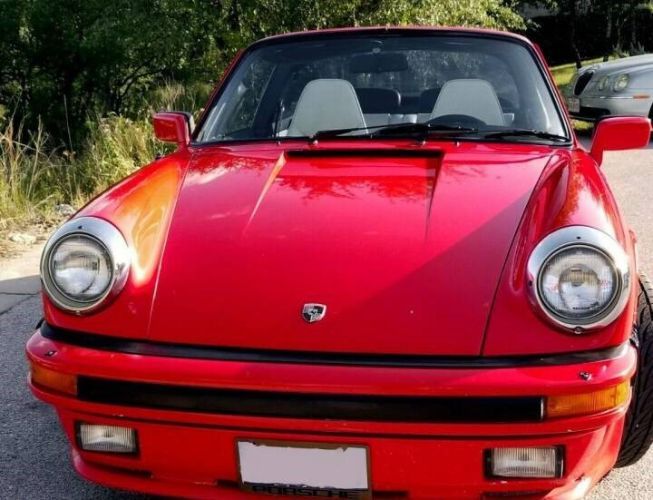
1983 Porsche 911
 Dealer
United States
Dealer
United States
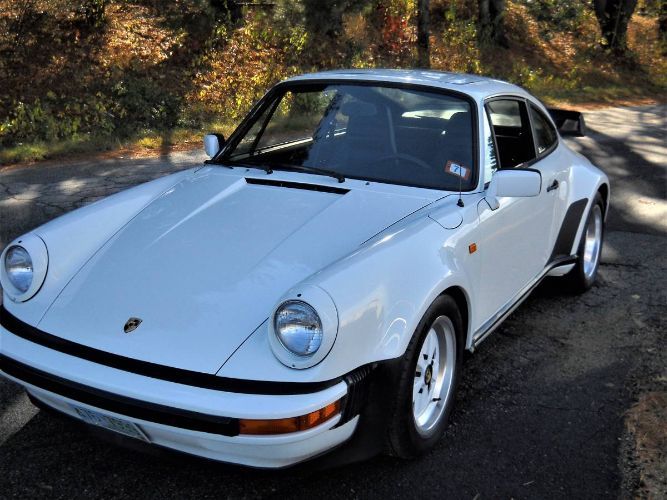
1981 Porsche 911
Pricing Guide
Long-hood 911s (1965-1973) are the blue-chip end of the market. Driver-quality 1969-1973 911T (the base model) cars run $65,000-$110,000. Documented 911S (the high-performance variant) cars run $140,000-$280,000. The 1973 Carrera RS 2.7 is the holy grail — $700,000-$1.5M+ for documented Touring (M472) cars and $1.2M-$3M+ for Lightweight (M471) cars.G-body 911s (1974-1989) are the bargain entry into air-cooled ownership. Driver-quality 1978-1983 911 SC (3.0L) cars run $45,000-$75,000. 1984-1989 Carrera 3.2 cars run $55,000-$95,000. Documented Turbo (930) cars from this era run $80,000-$180,000 depending on year and condition. The 1989 Speedster and 1989 Carrera Speedster are special cases — $120,000-$220,000 for documented examples.
964 generation (1989-1994) was the bridge between the air-cooled classic era and the modern 993. Driver-quality 964 Carrera 2/4 cars run $45,000-$80,000. 964 Turbo: $140,000-$280,000. 964 RS America: $95,000-$180,000.
Project cars (running but rough) start around $25,000 for G-body cars and $50,000-$80,000 for long-hood cars. Stripped roller candidates can be had for $15,000-$35,000, but rust restoration on a long-hood 911 typically runs $50,000-$120,000 in body and structural repair alone. Buy finished cars from competent specialists — restoration economics rarely work on 911s.
Fun Facts
The 911 was originally going to be called the 901, but Peugeot held the trademark on three-digit model designations with a zero in the middle (Peugeot 304, 504, etc.) and threatened legal action. Porsche changed the name to 911 in October 1964, just before public launch — only 82 of the original 901 cars had been built and badged before the name change. Surviving 901-badged cars are now among the most valuable production 911s, with documented examples trading for over $1 million.The 1973 Carrera RS 2.7 was originally homologated for FIA Group 4 racing and required Porsche to build 500 road-going examples to qualify. The car was so popular that Porsche eventually built 1,580 — exceeding the homologation requirement by more than three times. The RS Lightweight (M471) variant weighed 200 kg less than a standard 911S thanks to thin-gauge sheet metal, fiberglass bumpers, and stripped interior.
The air-cooled flat-six produced its final road-going version in the 1998 993 — and the engine architecture traces directly back to the 1948 Volkswagen Beetle flat-four via Ferdinand Porsche's design philosophy. The 1998 993 represented the end of fifty years of horizontally-opposed air-cooled engineering at Porsche.
Frequently Asked Questions
Ready to find your 911?
Browse 6+ active Porsche 911 listings on Classic Cars Arena.
View Listings →