
Cadillac Seville Buyer's Guide
Cadillac's sophisticated answer to Mercedes-Benz — the 1975–1979 Seville is a compact American luxury masterpiece that remains elegantly undervalued.

History & Overview
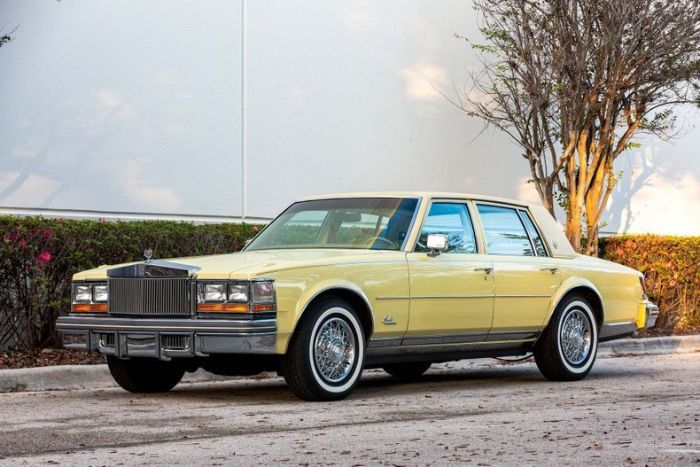
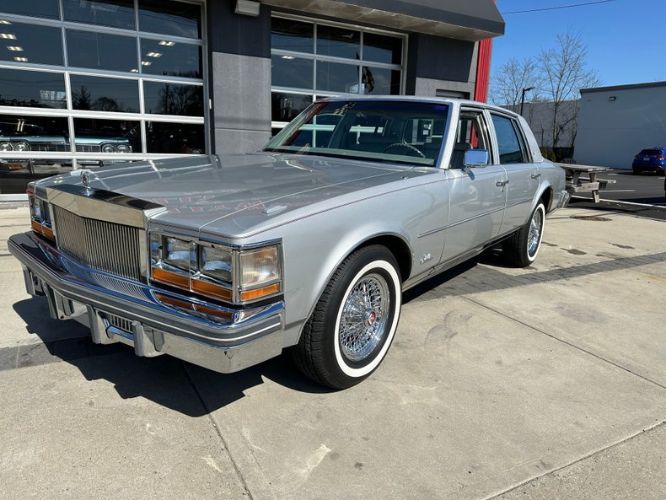
Cadillac introduced the Seville in 1975 to directly counter the growing market share of European luxury imports. Built on a modified Chevrolet Nova platform (the same GM X-body architecture as the Chevrolet Nova), the Seville was Cadillac's most discipline exercise since the Series 62 of the 1950s. The result was a 204-inch car — nearly a foot shorter than the Coupe de Ville — with a European-influenced rectilinear design by Bill Mitchell that aged remarkably well.
Two distinct generations define the collector market:
- 1975–1979 First Generation: The original, pure, and most elegant Seville. Rectilinear bodywork with a formal notchback profile. Fuel-injected 350ci V8 (Oldsmobile-sourced). These are the correct answer to "which Seville?"
- 1980–1985 Second Generation: Dramatically restyled with a controversial "bustle-back" Hooper-inspired rear. Divisive aesthetics, but the 4.1L V8 and available diesel are period-correct choices. The 1980–1981 are most prized; avoid the 1982–1985 with the HT4100 engine.
Which Seville to Buy
The 1976–1979 first-generation Seville is the clear choice for collectors. The 1975 has minor teething issues with the EFI system; the 1976–1979 cars have those resolved. The 350ci Oldsmobile-sourced V8 with electronic fuel injection is smooth, durable, and well-supported.
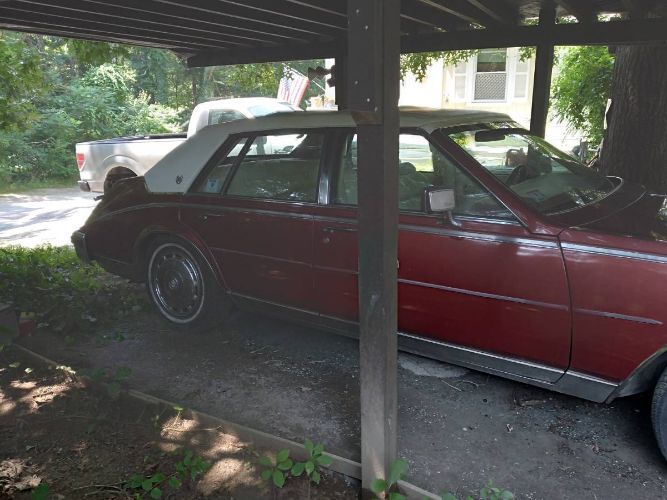
Among the second generation, the 1980–1981 bustle-back cars are polarizing but have their advocates — the "Elegante" package in two-tone with wire wheels is striking in an over-the-top 1980s way. Absolutely avoid the 1982–1984 HT4100 4.1L engine — it is one of the most failure-prone powerplants Cadillac ever produced. The 1985 is the safest second-gen choice, having received the repaired HT4100, but it's still not the Oldsmobile 350.
Common Problems & What to Inspect
Engine Guide
| Engine | Years | Output | Notes |
|---|---|---|---|
| 350ci (5.7L) Oldsmobile V8 w/EFI | 1975–1979 | 180 hp | Best engine in either generation; durable and smooth |
| 350ci (5.7L) Diesel V8 | 1978–1985 | 105 hp | Economy choice; avoid unless fully rebuilt |
| 368ci (6.0L) V8 | 1980–1981 | 145 hp | Acceptable; better than the HT4100 |
| HT4100 4.1L V8 | 1982–1985 | 135 hp | Highly problematic — avoid unless rebuilt by specialist |
"In 1975, Cadillac did something it had never done before — admitted that smaller could be better. The Seville proved it. In any drawing room from New York to Cannes, a first-generation Seville in Cotillion White with a deep burgundy interior reads as quietly, confidently correct." — Sarah Whitfield
Pricing & Market
The first-generation Seville is profoundly undervalued given its historical significance and elegant design. Driver-quality 1976–1979 cars run $6,000–$12,000; professionally detailed examples with correct colors and good EFI reach $14,000–$20,000. The 1980–1981 bustle-backs trade at $5,000–$14,000. The HT4100 second-gen cars (1982–1985) are a buyer's market at $3,000–$8,000 — but the engine risk makes the lower end of that range the only sensible entry point unless the HT4100 has been professionally addressed.
Browse Cadillac Seville listings
 Dealer
 United States
1977 Cadillac Seville
 Dealer
United States
Dealer
United States
1977 Cadillac Seville
What to Look For
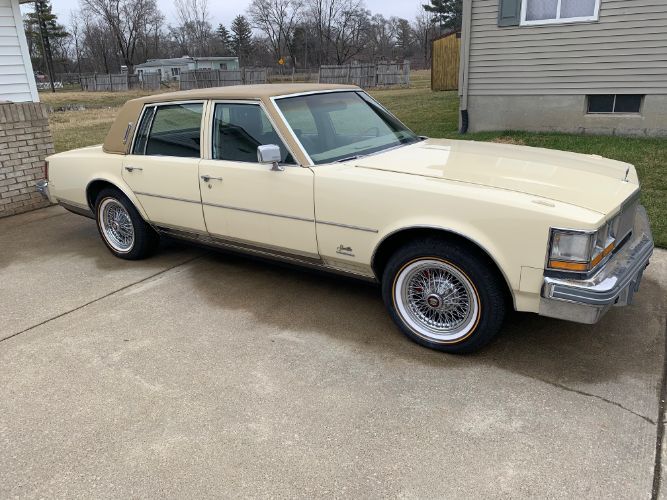
The ideal Seville is a first-generation 1977–1979 car in a classic color combination — Cotillion White/Antique Saddle or Firethorn Red/Antique Parchment — with a sorted EFI system and dry, rust-free structure. These cars are still regularly found as estate vehicles with modest mileage and careful ownership. Avoid any car described as 'just needs the engine sorted' on HT4100 generations.Pre-Purchase Checklist
- Test EFI system through cold start, warm idle, and hot restart (1975–1979)
- Inspect Nova-platform floor pans and rocker panels for rust
- Test all vacuum-operated accessories (windows, locks, climate)
- On HT4100 cars: look for white exhaust, overheating history, and verify head bolt condition
- Verify A/C function or assess R-12 to R-134a retrofit cost
- Inspect leather interior condition — correct color/grain replacement is expensive
- Check for diesel engine (identify by badging and exhaust color) — verify complete rebuild if present
- Confirm trunk and interior dry — no water intrusion from roof or quarter windows
Common Issues
The Bendix EFI on first-generation cars needs attention on most survivors — hot-start issues and lean surge are common. HT4100 head gaskets and head bolt thread pull-out are the defining problem of 1982–1984 cars — many have been poorly repaired. Diesel V8s require complete rebuilds if not recently done. Nova-based structure rusts in the usual floor and rocker locations.More Seville for sale
 Dealer
United States
Dealer
United States
1979 Cadillac Seville
 Dealer
United States
Dealer
United States
1984 Cadillac Seville
Pricing Guide
First-gen 1976–1979: $6,000–$12,000 driver; $14,000–$20,000 detailed. 1980–1981 bustle-back: $5,000–$14,000. 1982–1985 HT4100: $3,000–$8,000 (engine risk makes higher prices unjustifiable without specialist documentation). EFI rebuild budget: $800–$1,500.Fun Facts
The Seville was the only American car with standard electronic fuel injection when it debuted in 1975. Its Nova platform underpinnings were the worst-kept secret in Detroit, yet the execution was so convincing that Road & Track compared it favorably to the Mercedes-Benz 280S. The bustle-back 1980 design was inspired by Hooper-bodied Rolls-Royces of the 1940s and 1950s — a direct reference to British coachbuilding tradition.Frequently Asked Questions
Ready to find your Seville?
Browse 6+ active Cadillac Seville listings on Classic Cars Arena.
View Listings →