
1955 Chevrolet Bel Air
$99,995
Vehicle Details
Chevrolet
Bel Air
1955
8,412 miles
VC55B192851
Wagon
Automatic
Gasoline
5.7L
Description
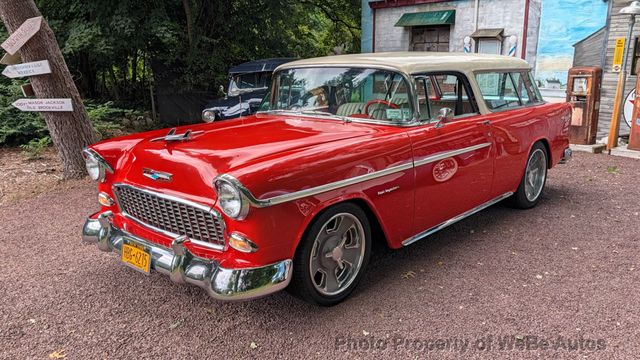
1955 Chevrolet Bel Air Nomad Restomod For Sale
5.7L Corvette V8 * 4-Speed Overdrive * A/C * 4-Wheel Disc Brakes
This 1955 Chevrolet Bel Air Nomad combines one of Chevrolet's most iconic designs with the mechanical upgrades needed to make it a genuinely enjoyable long-distance cruiser. Finished in the classic combination of Gypsy Red and Shoreline Beige/Ivory with a coordinating red-and-ivory interior, this Nomad retains a largely stock exterior appearance while hiding a thoroughly modernized drivetrain and chassis underneath. This isn't a restomod built simply to sit at shows.
The owner has driven it extensively, including trips from Long Island to Charlotte and Raleigh, North Carolina, as well as Syracuse, New York. It currently shows approximately 8,412 miles since the build, demonstrating that the car has been sorted and enjoyed.
5.7L Fuel-Injected Corvette V8
Power comes from a later-model 5.7L fuel-injected Corvette V8, providing considerably more performance and everyday reliability than the original drivetrain while keeping the engine combination appropriately Chevrolet. It's backed by a 4-speed automatic overdrive transmission, making this Nomad equally comfortable around town or cruising at highway speeds.
The exhaust has been deliberately kept subtle. Rather than prominent tailpipes hanging beneath the rear bumper, the system is neatly tucked underneath and turned down for a clean appearance. The result is a pleasant V8 rumble without detracting from the Nomad's beautiful rear styling.
Powertrain Highlights:
* 5.7L fuel-injected Corvette V8
* Electronic fuel injection
* 4-speed automatic overdrive transmission
* Dual exhaust
* Currie rear end
* Approximately 8,412 miles since the build
* Built and proven as a long-distance cruiser
Upgraded Chassis & 4-Wheel Disc Brakes
The chassis has received extensive upgrades to complement the modern drivetrain. A fast-ratio power steering box and tubular control arms provide more responsive handling, while four-wheel power disc brakes deliver significantly improved stopping capability. The car is described as exceptionally smooth and easy to drive, requiring little effort at the wheel and tracking straight down the road.
Chassis & Suspension:
* Currie rear end
* 4-wheel power disc brakes
* Power steering
* Fast-ratio steering box
* Tubular control arms
* Upgraded suspension
* Tilt steering column
The owner reports that the car has never had rust, and the underside is presented to the same high standard as the exterior. Gypsy Red & Ivory Presentation
The Nomad's unmistakable body is finished in a beautiful red-over-ivory two-tone combination that emphasizes the sweeping lines and extraordinary amount of brightwork Chevrolet incorporated into its premium wagon. The body is exceptionally straight, with excellent panel fitment and a tremendous amount of beautifully finished chrome and stainless trim.
From the distinctive roof trim and wraparound glass to the heavily chromed tailgate and unmistakable Nomad profile, the car retains the styling details that make the 1955 Nomad instantly recognizable. LED rear lighting has been discreetly incorporated for improved visibility while preserving the original appearance. Staggered Billet Specialties Wheels
The stance is one of this Nomad's strongest features.
A set of Billet Specialties wheels combines a polished/chrome lip with a classic spinner- style center reminiscent of vintage Halibrand wheels. The setup is staggered with 18-inch wheels up front and 19-inch wheels in the rear, allowing a substantial rear tire to tuck neatly beneath the quarters without compromising the car's clean body lines. The result gives the Nomad a more aggressive stance while remaining tasteful and consistent with the overall stock-inspired theme.
Red & Ivory Interior
Inside is a beautifully finished red-and-ivory interior that continues the exterior color scheme. A shortened steering wheel maintains the classic appearance while providing additional room and comfort. The steering column tilts, and the car is equipped with power windows and air conditioning, making it considerably easier to enjoy on long trips.
A Dakota Digital full gauge package provides modern instrumentation while integrating neatly into the original-style dashboard. Even the clock is incorporated into the gauge package. Interior & Comfort Features:
* Red-and-ivory interior
* Air conditioning
* Power windows
* Tilt steering column
* Shortened steering wheel
* Dakota Digital instrumentation
* Full gauge package with clock
* Custom sound system
* Center console
* Day/night rearview mirror
* Red carpeting and matching floor mats
* Front and rear seat belts
* Rear shoulder belts
The audio system has also been upgraded while maintaining an appropriately understated appearance.
An American Design Icon You Can Actually Drive
The 1955 Nomad has long been one of the defining designs of Chevrolet's Tri-Five era. Its two-door wagon body, wraparound glass, distinctive roof treatment, extensive chrome, and Bel Air-level trim made it dramatically different from an ordinary station wagon. This example retains that unmistakable appearance while addressing virtually every aspect that can make a 1950s automobile challenging to use regularly.
The fuel-injected Corvette V8 starts easily and provides plenty of power. The automatic overdrive makes highway travel comfortable. Four-wheel disc brakes provide confident stopping, while power steering, upgraded suspension, air conditioning, power windows, and modern instrumentation make it easy to spend hours behind the wheel.
And unlike many highly finished Nomads, this one has actually demonstrated its ability to travel. Its road trips throughout the Northeast and down to North Carolina reinforce the owner's intention when building it: create a beautiful Nomad that can be driven and enjoyed rather than trailered. With its 5.7L fuel-injected Corvette V8, 4-speed automatic overdrive, Currie rear end, four-wheel disc brakes, power steering, tubular control arms, air conditioning, power windows, Dakota Digital gauges, staggered 18/19-inch Billet Specialties wheels, beautiful two-tone presentation, and approximately 8,412 miles since completion, this 1955 Chevrolet Nomad delivers classic Tri-Five style with modern road manners.
For Sale By Owner Located In Glen Head, NY 11545
Take A L@@K At The Video On YouTube:
Follow This Link To Over 220 High Resolution Photos: zzgR8
Trim: Nomad Restomod For Sale
Options: Premium Sound System
Classic Chevrolet Bel Air Buyer's Guide
Chevrolet Bel Air Market Overview
Based on 188 Chevrolet Bel Air listings currently on ClassicCarsArena.com
Classic Chevrolet Bel Air Buyer's Guide
The Chevrolet Bel Air ran from 1950 through 1975 across five distinct generations, but for collectors, the name means one thing above all: the 1955-1957 Tri-Five era. Those three model years define the most iconic Chevrolet body shape ever produced and represent one of the most active segments in the entire classic car market. Whether you're hunting a 1957 fuel-injected convertible, a clean 1955 hardtop, or a survivor 1953-1954 Bel Air with the original Blue Flame six, knowing what separates a documented original from a Chevy 210 dressed up with Bel Air trim is the difference between an honest investment and an expensive lesson.
What to Check Before Buying
Common Issues
What to Look For
Price Guide
Did You Know?
Also Consider
Similar classic cars shoppers also browse:
1955 Chevrolet Bel Air
Contact Seller
Listed by dealer
Nationwide consignment dealer
WeBe Autos lists vehicles from sellers across multiple states. The vehicle may not be at the dealer's address shown. Contact the dealer to confirm the vehicle's actual location before traveling.
Buying safely?
Read our scam-avoidance tips before paying →
Listing Actions
Browse by Era
1950s Classics for SaleAll 1955 Classics
Browse all 1955 Cars for SaleOriginal Factory Colors
Official paint codes for the Chevrolet Bel Air (1955).
🎨 View Factory ColorsGet classic car alerts
Latest arrivals, newest deals, and discount coupons — straight to your inbox.
Selling your classic car?
Reach millions of classic car enthusiasts on the largest US classics marketplace.
Sell Your Car →Similar Listings
 Dealer
 United States
1918 Chevrolet 100
 Dealer
United States
Dealer
United States
1923 Chevrolet Master
 Dealer
United States
Dealer
United States
1925 Chevrolet Superior K
 Dealer
United States
Dealer
United States
1926 Chevrolet 100
Contact Seller
Call this seller?
You're about to call WeBe Autos about the 1955 Chevrolet Bel Air.
+1 (631) 339-0399
Report this Ad
Help us keep the marketplace clean. Our moderation team reviews every report within 24 hours.