
1964 Chevrolet C10
$54,997
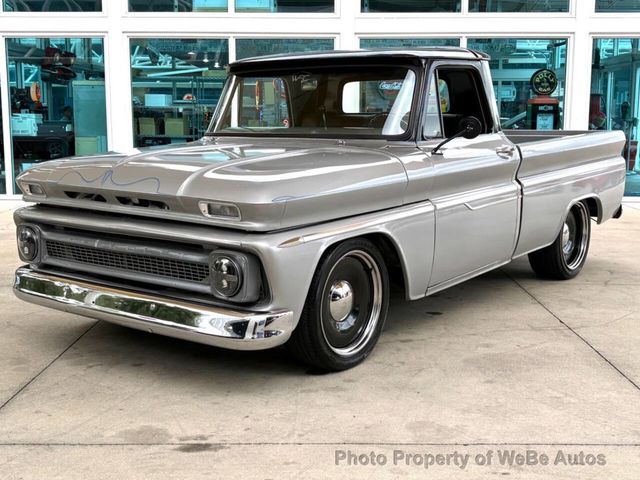
Vehicle Details
Chevrolet
C10
1964
4,218 miles
4C144H103863
Pickup Truck
Automatic
454ci Big Block V8
Description
1964 Chevrolet C10 Custom Build — 454 Big Block, Triple Carb, Air Ride, Four-Link Rear Why This Car Is Special The 1960 to 1966 Chevrolet C10 is widely regarded as the most desirable generation of the C/K pickup line. Collectors and custom truck builders call this body style the 'Action Line' generation, and for good reason — the cab-forward design, wraparound windshield, and deeply sculpted sheetmetal gave Chevrolet's half-ton pickup a look that felt more car than truck. The 1964 model year specifically sits in a sweet spot within this generation.
It was the second year of the redesigned C/K platform, which had debuted in 1960, and by 1964 Chevrolet had refined the body and trim details into one of the most proportionally balanced truck designs of the era. Fleetside models like this one carried a smooth, flush bed that replaced the old stepside look and gave the truck a longer, lower stance. This particular 1964 Chevrolet C10 has been built as a full custom — not a trailer queen, not a light refresh.
Someone spent serious money engineering this truck from the ground up with a focus on real-world performance: a 454 cubic inch big block under a triple-carburetor induction setup, air ride suspension with a four-link rear, four-wheel Wilwood disc brakes, and a chassis that can actually use the power being made. The VIN decodes this truck as a 1964 model year, C-series (conventional two-wheel drive), half-ton (10) capacity, built at the Flint, Michigan assembly plant — a factory that produced the majority of Chevrolet truck output during this period. The result is a truck that carries the proportions and character of the original 1964 Chevrolet C10 while being built with the mechanical hardware of a purpose-driven custom.
Features List - 454ci Big Block V8 - Triple Carburetor Induction with Detroit Speed Shop Intake - Chevrolet Script Valve Covers - Electric Cooling Fan - Aluminum Radiator - 3-Speed Automatic Transmission - Floor Shifter - Dual Exhaust with Square Exhaust Tips - 4-Wheel Disc Brakes - Wilwood Brake Master Cylinder - Wilwood Red Calipers (front and rear) - Air Ride Suspension - Four-Link Rear Suspension - Tubular Control Arms - Two-Tone Silver and Black Paint - Custom Black Roof - Chrome Side Body Trim - Blue Pinstripe Graphics - Custom Pinstripe Hood - LED Headlights - Chrome Bumpers (front and rear) - Black Steel Wheels with Chrome Dog Dish Hubcaps - Performance Tires - Auto Meter Gauge Cluster - Tachometer, Speedometer, Oil Pressure, Water Temp, Fuel Level, and Volt Gauges - Custom Chrome 3-Spoke Steering Wheel - Black Vinyl Bench Seat - Custom Black Door Panels - Custom Black Carpet - C10 Embroidered Floor Mat - Seat Belts Mechanical The engine in this 1964 Chevrolet C10 is a 454 cubic inch big block V8, which is the largest displacement engine in the traditional Chevrolet Mark IV big block family. The 454 was introduced by Chevrolet in 1970 and became one of the most recognizable American V8s ever produced, appearing in everything from Corvettes to heavy-duty trucks. Dropping a 454 into a 1964 C10 chassis is a well-established and respected approach in the custom truck world — the big block fits the engine bay without excessive modification, and the torque output of the 454 suits the cab-forward proportions of the truck in a way that smaller displacement engines simply do not.
What makes this particular installation notable is the induction system. A Detroit Speed Shop intake manifold supports a triple-carburetor setup — three two-barrel carburetors arranged in a progressive or simultaneous configuration across the intake. This type of induction has deep roots in American performance history, used famously on the Chevrolet Corvette's fuel-injected competitors in the late 1950s and early 1960s, and later embraced by the custom truck community for both its visual impact and its ability to feed a large displacement engine across a broad RPM range.
The Chevrolet script valve covers are a period-correct
Classic Chevrolet C10 Buyer's Guide
Chevrolet C10 Market Overview
Based on 328 Chevrolet C10 listings currently on ClassicCarsArena.com
Classic Chevrolet C10 Buyer's Guide
The Chevrolet C10 is the most popular classic American truck on the road today, and that popularity has driven values up considerably over the last decade. Whether you're after a clean 1967-1972 short-bed Fleetside or a square-body restomod, this guide will help you spot the good, the bad, and the cleverly disguised.
What to Check Before Buying
Common Issues
What to Look For
Price Guide
Did You Know?
Also Consider
Similar classic cars shoppers also browse:
1964 Chevrolet C10
Contact Seller
Listed by dealer
Nationwide consignment dealer
WeBe Autos lists vehicles from sellers across multiple states. The vehicle may not be at the dealer's address shown. Contact the dealer to confirm the vehicle's actual location before traveling.
Buying safely?
Read our scam-avoidance tips before paying →
Listing Actions
Browse by Era
1960s Classics for SaleAll 1964 Classics
Browse all 1964 Trucks for SaleGet classic car alerts
Latest arrivals, newest deals, and discount coupons — straight to your inbox.
Selling your classic car?
Reach millions of classic car enthusiasts on the largest US classics marketplace.
Sell Your Car →Similar Listings
 Dealer
 United States
1918 Chevrolet 100
 Dealer
United States
Dealer
United States
1923 Chevrolet Master
 Dealer
United States
Dealer
United States
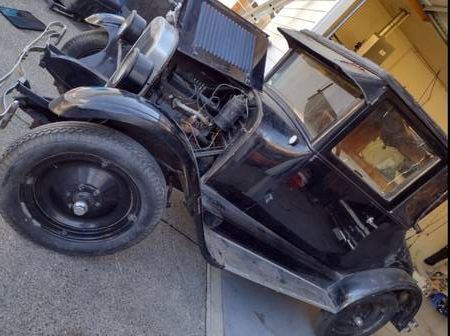
1925 Chevrolet Superior K
 Dealer
United States
Dealer
United States
1926 Chevrolet 100
Contact Seller
Call this seller?
You're about to call WeBe Autos about the 1964 Chevrolet C10.
+1 (631) 339-0399
Report this Ad
Help us keep the marketplace clean. Our moderation team reviews every report within 24 hours.