
1980 Chevrolet Camaro
$39,997
Vehicle Details
Chevrolet
Camaro
1980
86,859 miles
1P87LAN562791
Coupe
Automatic
5.7L 350ci LM1 V8
Description
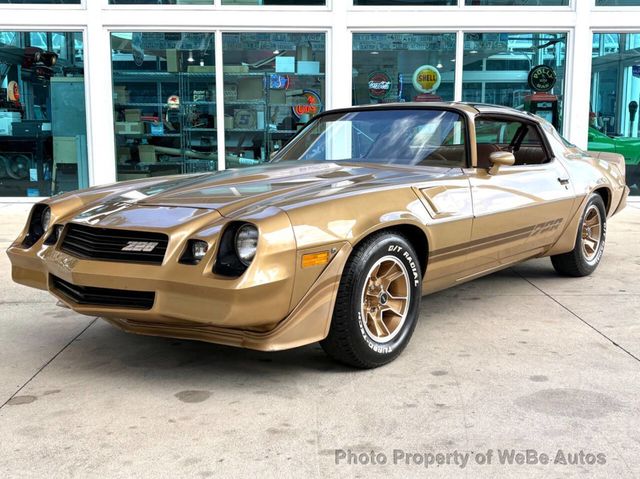
1980 Chevrolet Camaro Z28 — 350ci LM1 V8, Glass T-Tops, Camel Tan Leather, Solid Undercarriage Why This Car Is Special The 1980 Chevrolet Camaro Z28 occupies a complicated but genuinely interesting place in American muscle car history. By 1980, emissions regulations and insurance pressures had already defanged most of Detroit's performance lineup, yet the Z28 managed to survive that era with more character than most of its contemporaries. The second-generation Camaro body — introduced for 1970 and running through 1981 — was by 1980 one of the longest-running and most refined pony car platforms on the market.
Chevrolet had spent a decade sorting out the chassis, the sheetmetal, and the interior packaging, and by the end of the run, these cars had a tightness and presence that newer designs from the same period simply couldn't match. The Z28 was actually dropped after the 1974 model year due to tightening emissions and fuel economy concerns, then brought back for 1977 in response to sustained consumer demand. By 1980, it had found its footing again as a performance-oriented package built around the 5.7-liter LM1 350 cubic inch V8.
That engine was not the high-compression screamer of the early 1970s, but it was a proven, durable small-block with real displacement and a dual exhaust setup that gave it a tone and throttle response the four- and six-cylinder alternatives of the day couldn't approach. This particular 1980 Chevrolet Camaro Z28 presents in gold over a camel tan leather interior, which is one of the more period-correct and visually cohesive color combinations available on the car that year. The gold aluminum wheels, Z28 graphics package, front air dam, and rear spoiler all confirm this as a correctly configured Z28, not a base Camaro with badges added later.
The undercarriage photos tell a significant story — the floorpans, framerails, and rear subframe are solid and well-preserved, which is the first thing any experienced buyer should verify on a 45-year-old unibody car. This one passes that test. Features List - 5.7-Liter 350ci LM1 V8 Engine - 3-Speed Automatic Transmission - Glass T-Tops - Camel Tan Leather Bucket Seats - Center Console - Z28 Sport Steering Wheel with Z28 Horn Badge - Tachometer, Voltmeter, Temperature Gauge, Electric Clock, Fuel Gauge - Dual Exhaust with Resonators - Gold Aluminum Alloy Wheels - Front Air Dam - Rear Spoiler - Z28 Graphics Package and Badging Throughout - Air Conditioning - Heating System with Flow-Through Ventilation - Power Steering - Power Brakes with Front Disc Brakes - Power Windows - Power Door Locks - Heavy-Duty Radiator - Concealed Windshield Wipers - Upgraded Aftermarket Stereo - Solid Undercarriage Mechanical The engine under the hood of this 1980 Chevrolet Camaro Z28 is the 5.7-liter LM1 350 cubic inch V8, which was the standard Z28 powerplant for 1980.
The LM1 was a two-barrel carbureted version of Chevrolet's small-block, emissions-compliant but still producing usable torque across a broad RPM range — characteristics that made it well-suited to daily driving and occasional spirited use alike. Paired with the 3-speed automatic transmission, the combination is smooth and straightforward to drive. The Turbo-Hydramatic behind the LM1 was a durable unit that held up well in regular service.
The Z28 package in 1980 included a heavy-duty radiator as standard equipment, and that component is present on this car. The dual exhaust system with resonators — also a Z28-specific feature — remains in place. The front disc and rear drum brake setup, boosted by power assist, provides adequate stopping power for the car's weight class.
Power steering keeps the driving effort manageable. The undercarriage photographs are worth studying carefully. The floorpans show no evidence of patchwork or filler. The framerails are intact, the rear leaf spring mounts are solid, and the entire underside has been treated and is presented in clean, painted condition.
For a 1980
Classic Chevrolet Camaro Buyer's Guide
Chevrolet Camaro Market Overview
Based on 329 Chevrolet Camaro listings currently on ClassicCarsArena.com
Classic Chevrolet Camaro Buyer's Guide
The Chevrolet Camaro launched in September 1966 as Chevy's direct response to the Ford Mustang, and for over five decades it has defined American performance for an entire generation of enthusiasts. Whether you're hunting a numbers-matching first-generation Z/28, a survivor split-bumper second-gen, or a clean third-gen IROC-Z, the Camaro buyer's market is deep, varied, and full of pitfalls for the unprepared.
What to Check Before Buying
Common Issues
What to Look For
Price Guide
Did You Know?
Also Consider
Similar classic cars shoppers also browse:
How Does It Compare?
Head-to-head matchups for the Chevrolet Camaro:
1980 Chevrolet Camaro
Find a similar Chevrolet Camaro currently for sale.
Browse Similar ListingsComparable Sales
Buying safely?
Read our scam-avoidance tips before paying →
Listing Actions
Browse by Era
1980s Classics for SaleAll 1980 Classics
Browse all 1980 Cars for SaleGet classic car alerts
Latest arrivals, newest deals, and discount coupons — straight to your inbox.
Selling your classic car?
Reach millions of classic car enthusiasts on the largest US classics marketplace.
Sell Your Car →Similar Listings
 Dealer
 United States
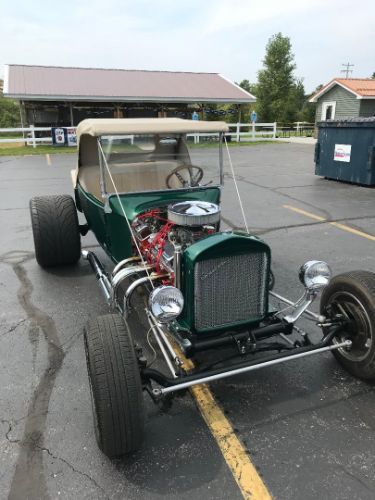
1918 Chevrolet 100
 Dealer
United States
Dealer
United States
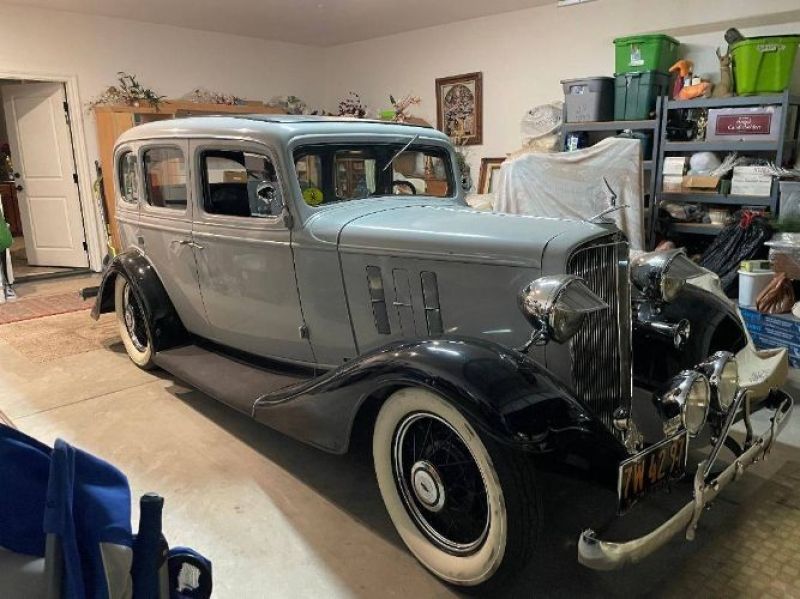
1923 Chevrolet Master
 Dealer
United States
Dealer
United States
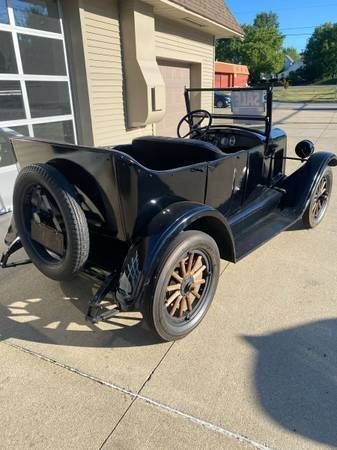
1925 Chevrolet Superior K
 Dealer
United States
Dealer
United States
1926 Chevrolet 100
Call this seller?
You're about to call WeBe Autos about the 1980 Chevrolet Camaro.
+1 (631) 339-0399
Report this Ad
Help us keep the marketplace clean. Our moderation team reviews every report within 24 hours.