
1939 Ford Deluxe
$44,997
Vehicle Details
Ford
Deluxe
1939
4,466 miles
91A74361
Convertible
Automatic
Boss 302
Description
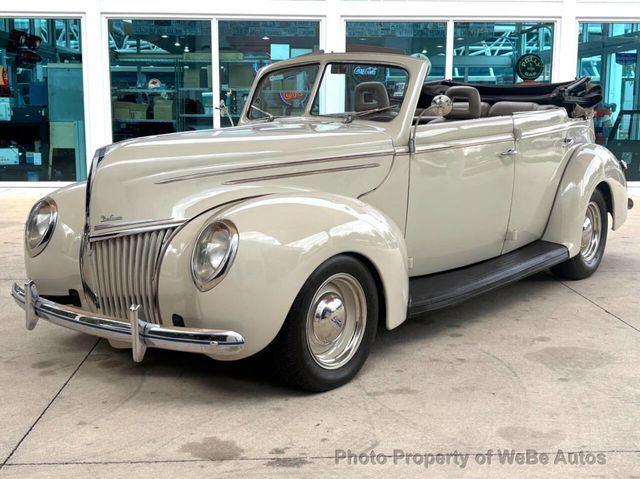
1939 Ford Deluxe Four-Door Convertible Sedan Street Rod — Boss 302 V8, Four Two-Barrel Carbs, Full Leather Interior Why This Car Is Special The 1939 Ford Deluxe was the last pre-war Ford to wear the classic styling that defined the late 1930s. Designed under the direction of Bob Gregorie, the 1939 Ford Deluxe carried a vertical bar grille, sweeping fenders, and a profile that remains one of the most recognizable silhouettes in American automotive history. Ford offered the Deluxe in a broad range of body styles that year, but the four-door convertible sedan was always among the rarest configurations.
Unlike a standard convertible, the four-door convertible sedan retained a full set of doors and a rear-hinged back door on each side, giving passengers genuine access to the back seat without sacrificing the open-air experience. Production numbers for this body style were extremely limited even when new, and the passage of more than eight decades has made intact, steel-bodied examples genuinely scarce. This particular 1939 Ford Deluxe takes the open-air four-door concept and builds on it in a direction that makes the car equally at home on a long cruise as it is at a show field.
The builder chose a Boss 302 V8 crate engine as the heart of the build — a logical and historically appropriate choice, since the Boss 302 is a Ford engine through and through. Topped with four two-barrel carburetors, the intake setup is a serious nod to the tradition of multi-carb street and show engines that defined custom Ford builds for decades. The result under that cream-painted hood is a visual centerpiece as much as a powerplant.
A complete American Auto wiring harness, electronic ignition, and a chrome alternator mean this is not a car that was given a modern engine and left with antique electrical infrastructure trying to keep up with it. The chassis work is equally thorough. HEIDTS supplied the front end, which includes tubular A-arms, coil-over front suspension, and rack-and-pinion steering — a combination that addresses the handling limitations of the original transverse leaf front suspension while maintaining a period-correct stance.
A Ford 9-inch rear end handles the power delivery out back, which is the correct choice for any serious street rod build. The 9-inch has been the default rear axle for custom Ford builds for more than sixty years because of its strength, the wide availability of gear sets and carriers, and its known rebuild path. The finished car presents in cream over a tan full leather interior, with a HARTZ cloth convertible top and blue dot taillights that pay tribute to the accessory customizers were fitting to pre-war Fords as far back as the 1940s.
This is a 1939 Ford Deluxe that drives the way it looks — with purpose, presence, and a long list of thoughtful decisions made by someone who understood both the car and the craft. Features List - Ford Boss 302 V8 crate engine - Four two-barrel carburetors - Automatic transmission - HEIDTS front end with rack-and-pinion steering - Tubular A-arms - Coil-over front suspension - 9-inch Ford rear end - Front disc brakes - Ceramic coated headers - Dual exhaust with Flowmaster mufflers and Magnaflow exhaust tips - Electric cooling fan - Electronic ignition - Chrome alternator - American Auto wiring harness - HARTZ cloth convertible top with leather convertible top boot - Full leather interior in tan - Power leather reclining front seats - Leather rear bucket seats - Headrests front and rear - Seat belts front and rear - Wood door cap trim - Billet dash insert - VDO 5-gauge instrument cluster - VDO quartz clock - Ididit tilt steering column - Grant wooden steering wheel - Lokar floor shifter - Lokar dipsticks - Billet gas and brake pedals - Aftermarket CD stereo - Leather trunk interior - Leather battery cover - Custom diamond-plate engine bay liner - Custom embroidered floor mats - Coker Smoothie wheels with Ford center caps - Blue dot taillights - Chrome exterior mirr
Classic Ford Deluxe Buyer's Guide (1935–1940)
Ford Deluxe Market Overview
Based on 174 Ford Deluxe listings currently on ClassicCarsArena.com
Classic Ford Deluxe Buyer's Guide (1935–1940)
Few cars shaped American car culture as completely as the prewar Ford Deluxe. Between 1935 and 1940, Ford built millions of V8-powered coupes, sedans, and convertibles that were affordable enough for everyday buyers and fast enough to embarrass far more expensive competition. Today those same cars anchor show fields from Goodguys to GNRS, get chopped and channeled into kustoms, or sit glass-encased as factory-stock survivors. The market is broad, the parts supply is deep, and the prices — if you know where to look — can still be surprisingly reasonable. But the buying traps are just as broad. Here's what I've learned buying and building them for thirty years.
What to Check Before Buying
Common Issues
What to Look For
Price Guide
Did You Know?
1939 Ford Deluxe
Contact Seller
Listed by dealer
Nationwide consignment dealer
WeBe Autos lists vehicles from sellers across multiple states. The vehicle may not be at the dealer's address shown. Contact the dealer to confirm the vehicle's actual location before traveling.
Buying safely?
Read our scam-avoidance tips before paying →
Listing Actions
Browse by Era
Pre-War Classics for SaleAll 1939 Classics
Browse all 1939 Cars for SaleGet classic car alerts
Latest arrivals, newest deals, and discount coupons — straight to your inbox.
Selling your classic car?
Reach millions of classic car enthusiasts on the largest US classics marketplace.
Sell Your Car →Similar Listings
 Dealer
 United States
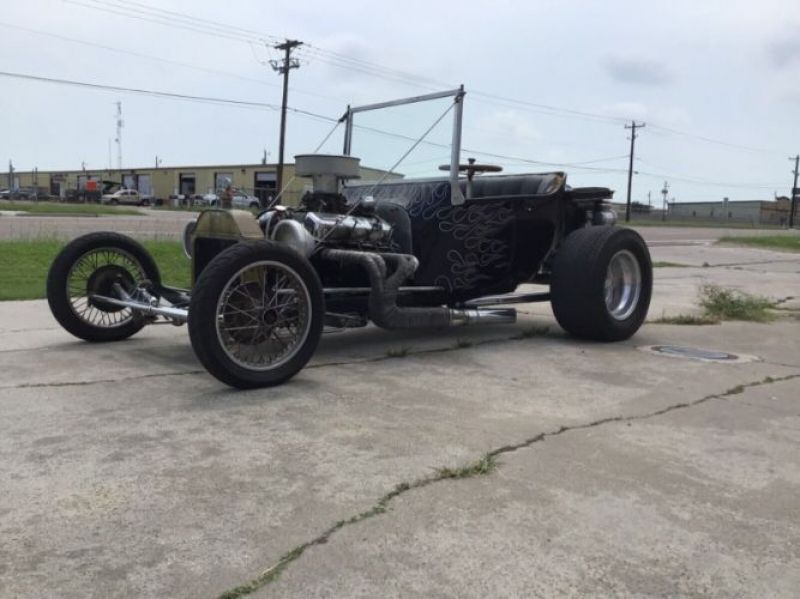
1915 Ford T Bucket
 Dealer
United States
Dealer
United States
1915 Ford Model T
 Dealer
United States
Dealer
United States
1917 Ford Model T
Contact Seller
Call this seller?
You're about to call WeBe Autos about the 1939 Ford Deluxe.
+1 (631) 339-0399
Report this Ad
Help us keep the marketplace clean. Our moderation team reviews every report within 24 hours.