
1965 Ford Mustang
$127,995 $178,555
Vehicle Details
Ford
Mustang
1965
3,200 miles
MAR6551
Coupe
Manual
Gasoline
FORD RACING 302R, 347CI
Description
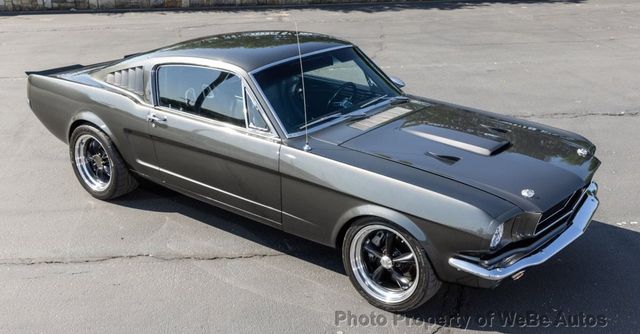
1965 Ford Mustang Pro-Touring Fastback For Sale
Engine:
302R Engine Block From Ford Racing
Four Bolt Main Bearings
347 Cubic Inches, 530 Hp
Throttle Body Fuel Injection
Trick Flow Aluminum Heads
Forged Scat Crankshaft
Carrillo Connecting Rods
Diamond Pistons
Crower Roller Rocker Valve Train
Erson Roller Camshaft
MSD Ignition With LS Coil Packs - One Coil Per Cylinder
Ron Davis Radiator
Dual Electric Thermostatically Controlled Fans
Stainless Steel 3" Exhausts
Heated/Baffled Oil Pan
Remote Oil Filter Adapter
XRP Hoses
Transmission:
Tremec TKX Five Speed
Carbon Fiber Driveshaft With Extra Large U-Joints
Curry 9 Inch Rear End With 31 Spline Axles
Wavetrac Differential With 3:50 to 1 Gears
Body:
1965 Mustang Body by Maeco Engineering
Wider Wheel Wells for Larger Tires
Maeco Floor Pans With Reinforced Torque Boxes
Sub-Frame Connectors
Custom Fender Modifications for Bigger Wheels/Tires
All Metal Hood With Functional Shelby GT350 Hood Scoop
Ring Brothers Billet Hood Hinges
NACA Ducts in Hood to Improve High Speed Air Flow
Functional Custom Rear Spoiler
Doors Custom Fit for Perfect Open/Close and Power Window Installation
LED Projector Headlamps
Suspension:
Total Control Coil-Over Front Suspension Koni Shocks
Total Control Four Link Rear Suspension
Adjustable Upper and Lower Control Arms
Wave Track, Locking, Curry 9" Rear Differential
31 Spline Rear Axles
235x40xR17 Front Tires
275x40xR17 Rear Tires
Carbon Fiber Rear Wheel Center Caps
Total Control Power Rack & Pinion Steering
Brakes:
Baer/Alcon Four Wheel Racing Disc Brakes
Functional Brake Cooling Ducts With Carbon Fiber Inlets
Interior:
Custom Carbon Fiber Console
Carbon Fiber Door Panels
Carbon Fiber Reinforced Roll Cage
Carbon Fiber Instrument Surround
Carbon Fiber Glove Box Door
Carbon Fiber Shift Knob
Alpine Car Audio With Smartphone Integration
Smart Phone Holder
Alpine Power Amp and Speakers
Simpson Seatbelts/shoulder Harnesses
Rear Seat Delete
Power Windows
Sparco Adjustable Seats With Side Bolsters
Custom Headliner
Motortrend's Dan Kahn Called This 1965 Mustang Fastback, "a Fully Independent Ferrari Beater Wrapped in Vintage Tin"... as the Oldest Authorized Shelby Cobra Dealer in the World, We Can Testify It's Every Bit of That, and More. This 1965 Mustang GT, Fastback is the Finest Pro-Touring Build We've Ever Seen... and We've Seen a Lot of Them in the Past 25+ Years
Admittedly, That's a Bold Statement. Read More to Learn What Backs That Up.
The Original Build Was Meticulously Completed in 2004 by Maeco Motorsport, at the Time Located in Northridge, California. Maeco is Known for Precision Engineering and Construction, Building Bodies and Chassis' for Both Street and Racing Applications. Classic Mustangs Are One of Their Specialties.
When It Was Originally Completed Twenty-Two Years Ago, More Than $155,000 Was Invested in Building the Owner's Dream Car (Over $265,000 in Today's Money), Which Included Myriad Handling and Performance Upgrades Along With Creature Comforts. The Most Recent Owner, Who is a World-Class Craftsman in His Own Right, Spared No Expense in Taking It to the Next Level, and Beyond, Investing an Additional $160,000 to Create a Pro Touring Rocket With Performance and Handling Comparable to the Finest Cars on the Road Today, All Wrapped in a Beautiful Silver Smoke Gray, 1965 Mustang Fastback Maeco Body, De-Badged to Give It a Clean, Minimalist Look. The Project Started When the Original Owner Contacted Maeco Motorsport to Build His Dream Luxury Race Car.
He Wanted the Option to Drive It on the Street Comfortably, as Well as Push the Envelope on the Back Roads, at Speed. Performance and Handling Were at the Top of the List, With Creature Comforts Like Power Rack & Pinion Power Power Windows, and an Excellent Sound System Close Behind. Maeco Started With a Bone Stock, Rust Free, 1965 Mustang Fastback and Modified the Unibody to Strengthen It, Top and Bottom. a New, All Metal Hood Was Installed With a Functional Hood Scoop and Naca Ducts to Keep Air Flowing Through the Engine Compartment at Triple Digit Speeds.
Maeco Spec Torque Boxes and Frame Rails Were Installed and Tied to a Roll Cage Reinforced With Carbon Fiber. This Was Done to Counteract the Body-twisting-torque of the 530 Hp, 347 C. I. Ford Racing Engine, Which Was Rebuilt in 2022, Roughly 3,000 Miles Ago.
To Put That Power on the Ground, Maeco Installed a Four-Link Rear End and a Detroit Locker Rear Axle. Since Then, the Rear Axle Has Been Changed to a More Streetable Wave Track, Locking, Curry 9" Rear Differential Using 31 Spline Axles. It's Bulletproof.
The Front End Has Been Replaced by a Total Control Coil-Over System With Adjustable Shocks and Adjustable Tie Rods for Bump Steer Correction Keeping the Front-end Evenly on the Ground
Along With the Coil Over Front Suspension, Total Control Power Rack and Pinion Steering Helps to Keep the Car Predictably Where You Aim It, Flat on the Road or Track at Speed, in Corners and on the Straights. The Unibody is All Metal. No Fiberglass on This One.
While Not Immediately Noticeable, the Folks at Maeco Fabricated Slightly Flared Fenders to Accommodate Bigger Wheels and Fatter Tires. It Easily Turns Lock-to-Lock Without Rubbing. The Body Gaps Are Perfect - a Big Improvement Over the Original Ford Construction.
Doors Open and Close Like a New Lexus. There Are a Number of Companies That Build Exceptional Pro-Touring Recreations of 1965- 1970 Shelby Mustangs That Are Priced Well Into Six Figures. You Can Expect to Pay $375k to More Than Half a Million $ for One That is Properly Set Up for the Street.
This 1965 Pro-Touring Mustang is Ready to Enjoy as a Weekend Show Car, Pushing the Envelope on the Back Roads, or Hot Laps at Your Favorite Race Venue, All While Listening to a Custom Alpine Car Audio System Combined With the Delicious Sound of a Powerful Ford 302R V8. In Addition to Robust Car Audio, Power Windows Were Installed for Added Creature Comfort. An Air Conditioning System Was Installed, but the Previous Owner Removed the Compressor and Receiver Dryer as It Wasn't Needed in N.
California. the Rest of the Components Are Still Installed in the Car (AC/Heater Controls, Duct Work, Vents, Blower Plenum, Etc.) and the Heater/Defroster Works Fine. The List of Equipment on This One is Mind Boggling... Engine is an SVO, 302R Ford Factory Race Block With Four Bolt Main Bearings, Bored/stroked to 347 Cubic Inches, Balanced and Blueprinted.
A Ron Davis Radiator With Dual Electric Fans Keeps It Cool Year Round. Aluminum Cylinder Heads From Trick Flow Are Ported and Polished With Ls Individual Coils Over Each Spark Plug. Inside the Block, the Reciprocating Mass Includes the Very Best Components... a Balanced Scat Forged Crankshaft, Carrillo Rods, Diamond Pistons, Erson Custom Grind Solid-roller Camshaft With Crower Stainless Steel 1.6 Ratio Roller Rockers, XRP Hoses a Custom Road Race Heated and Baffled Oil Pan, Edelbrock 1000cfm Electronic Throttle Body Fuel Injection With 60 Lb Injectors, Custom 1 5/8? Equal Length Stainless Steel Headers and Full Stainless Steel 3? Exhaust.
Engine Dyno Shows 530hp. Clutch is a Tilton Dual Disc Actuated by a Tilton Hydraulic Throw-out Bearing Inside a Quick Time Steel Bellhousing. the Transmission is a New Tremec TKX Five Speed With a Custom Short-Throw Shifter
To Put All This Power on the Ground, It's Equipped With a Custom 4? Diameter Carbon Fiber Driveshaft With Extra Large U-joints, 9? Ford Differential Housing a Wave Track 3:50 to 1 Locking Rear Axle Surrounded by Four Link Suspension Geometry. All Four Koni Shock Absorbers Are Adjustable for Additional Ground Clearance if Needed.
It Stops as Well as It Goes. Four Wheel Baer/Alcon Pro Disc Brakes With Slotted Rotors Bring It to a Stop Effortlessly. Slowing at a High Speed Freeway Exit or Entering a Hairpin Turn is Quick and Predictably Progressive.
Front Brakes Are Equipped With Functional Cooling Ducts Originally Designed for Nascar. the Duct Air Intake is Carbon Fiber. Recently, a New Electric Emergency Brake System From "Stopp" Was Installed. It's Far Superior to the Stock Version, and It Actually Works! With the Press of a Button, You Could Almost Hang It on a Wall!
The Alpine Surround System With a Trunk Mounted Power Amp Interfaces With Android or iPhone.
All Running Gear: Including the Engine, Transmission, Carbon Fiber Driveshaft and Rear End Are All New or Rebuilt Within the Last 3200 Miles. This Car Runs Exceptionally Well. It Cruises Effortlessly at 80 Mph Turning a Comfortable 2300 Rpm, and Sticks to the Road Like It's on Rails.
Generous Use of Carbon Fiber Components is Evident Throughout the Car, Including the Drive Shaft Air Cleaner Snorkel, Brake Cooling Duct Intakes, Rear Wheel Center Caps, Roll Cage Struts, Door Panels, Console, Glove Box Door and Instrument Panel. the Gauge Cluster is All Autometer. In the Trunk, You'll Find a Fuel Safe Fuel Cell With a Fresh Bladder, and a Optima Agm Trunk-mounted Battery, Like '65 GT350's. In 2010, Dan Kahn of Motortrend Featured This Car in Both Online and Print.
Since the Article Was Written, the Car Has Been Further Refined With State of the Art Performance and Creature Comfort Upgrades to Craft a Pro-Touring Weekend Toy That is at Home on Both the Track and the Back Roads. Here's a Link to the Motortrend Article: 1006-1965-ford-mustang-gt-fastback/ Please Keep in Mind That Many Upgrades Have Been Completed Since It Was Written. There Was Also an Article by "Mustangs & Fords" Written About His One as Well.
Frankly, It Has to Be Seen to Be Believed. Over $350,000 Invested in the Build... and It Shows. Loads of Documentation Come With the Car. For Sale By Owner Located in the Dallas/Fort Worth Area
Trim: Fastback For Sale
Options: Premium Sound System
Classic Ford Mustang Buyer's Guide
Ford Mustang Market Overview
Based on 452 Ford Mustang listings currently on ClassicCarsArena.com
Classic Ford Mustang Buyer's Guide
The Ford Mustang launched on April 17, 1964 and sold a million units faster than any car in American history. Sixty years later, the first-generation Mustang (1964½-1973) remains the cornerstone of the classic car hobby — the gateway car for new collectors, the trophy car for veteran enthusiasts, and the most cloned, faked, and re-stamped muscle car on the market. Whether you're hunting a base inline-six coupe or a documented Boss 429, knowing what separates the real cars from the tribute builds is the difference between an investment and a money pit.
What to Check Before Buying
Common Issues
What to Look For
Price Guide
Did You Know?
Also Consider
Similar classic cars shoppers also browse:
How Does It Compare?
Head-to-head matchups for the Ford Mustang:
Price Cut! -$50,560 (-28.3%)
1965 Ford Mustang
Contact Seller
Listed by dealer
Nationwide consignment dealer
WeBe Autos lists vehicles from sellers across multiple states. The vehicle may not be at the dealer's address shown. Contact the dealer to confirm the vehicle's actual location before traveling.
Buying safely?
Read our scam-avoidance tips before paying →
Listing Actions
Browse by Era
1960s Classics for SaleAll 1965 Classics
Browse all 1965 Cars for SaleGet classic car alerts
Latest arrivals, newest deals, and discount coupons — straight to your inbox.
Selling your classic car?
Reach millions of classic car enthusiasts on the largest US classics marketplace.
Sell Your Car →Similar Listings
 Dealer
 United States
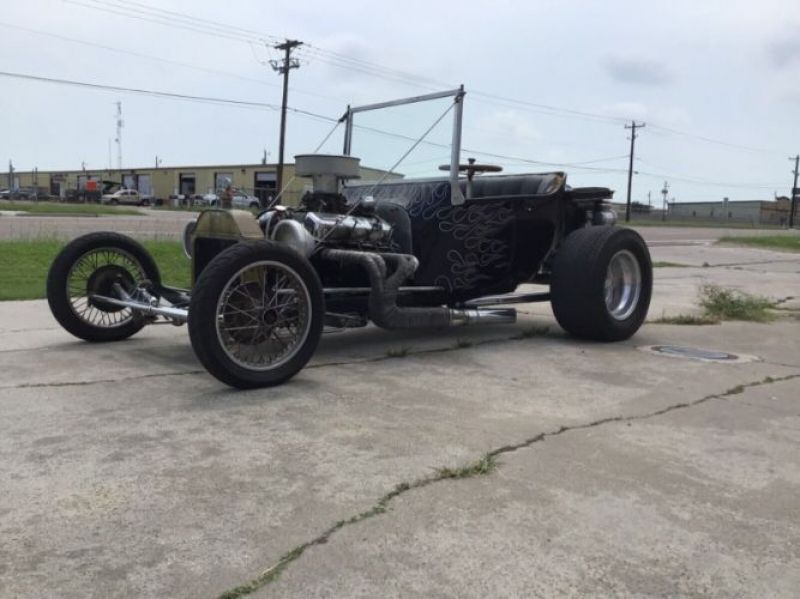
1915 Ford T Bucket
 Dealer
United States
Dealer
United States
1915 Ford Model T
 Dealer
United States
Dealer
United States
1917 Ford Model T
Contact Seller
Call this seller?
You're about to call WeBe Autos about the 1965 Ford Mustang.
+1 (631) 339-0399
Report this Ad
Help us keep the marketplace clean. Our moderation team reviews every report within 24 hours.