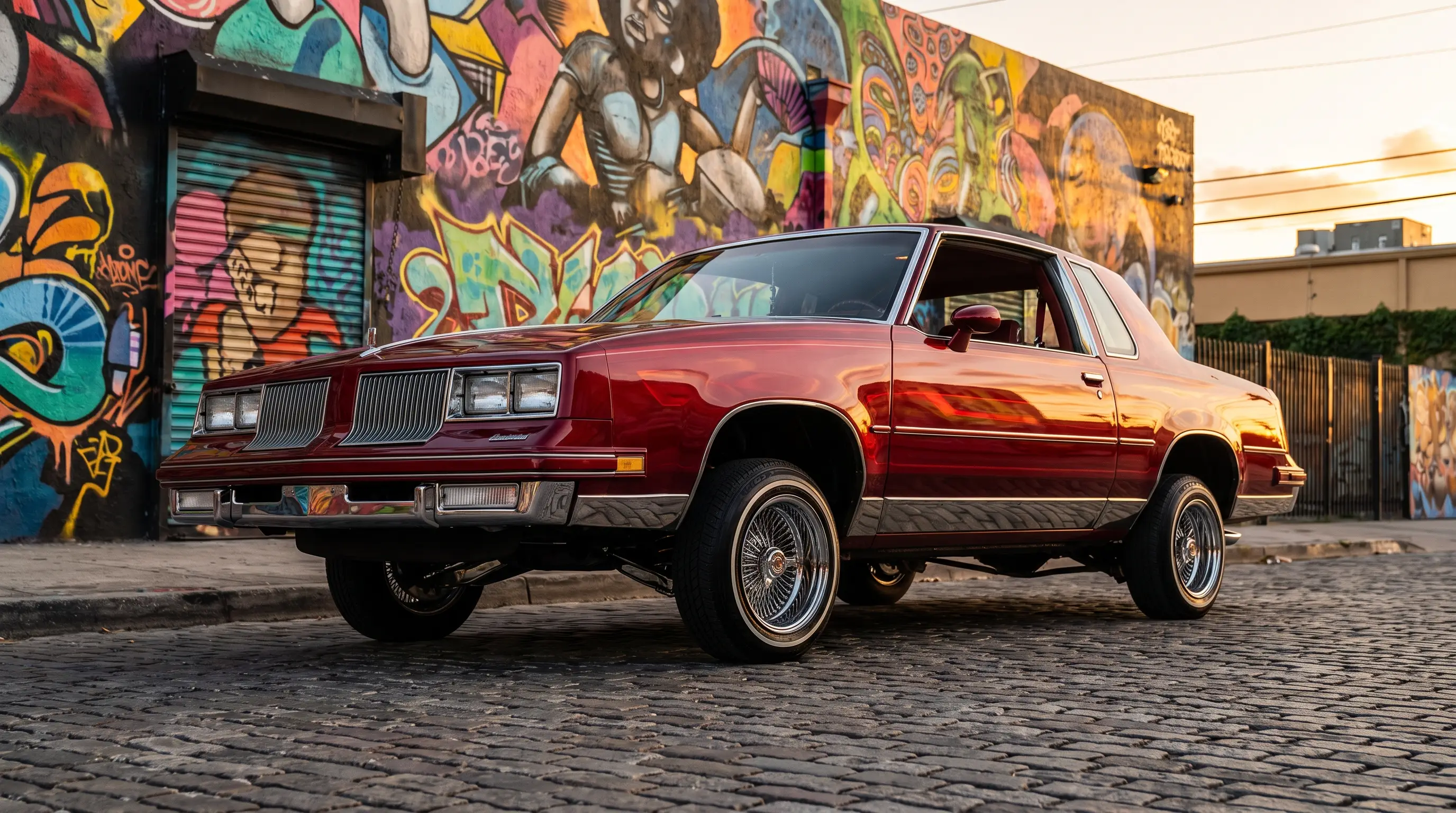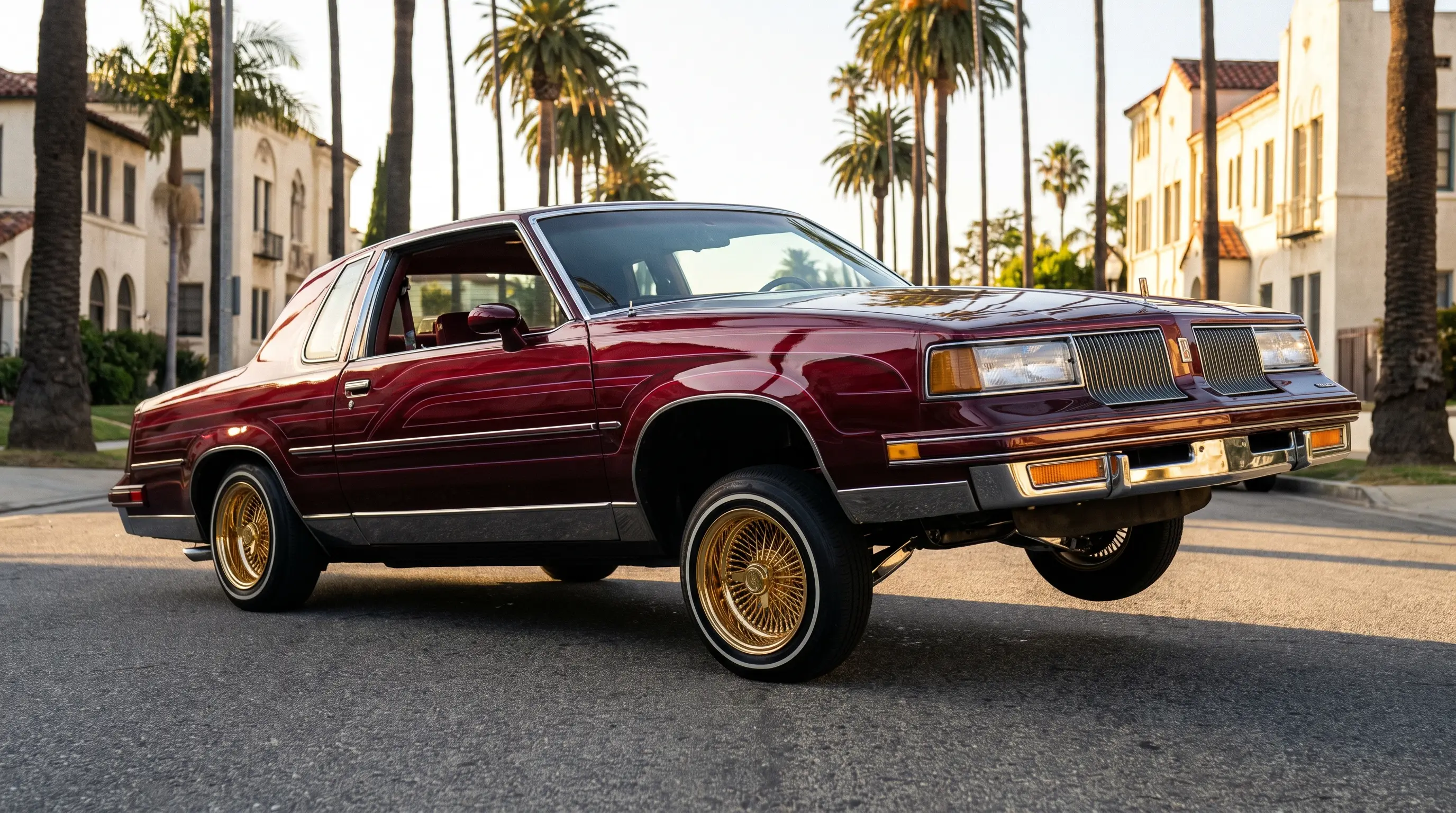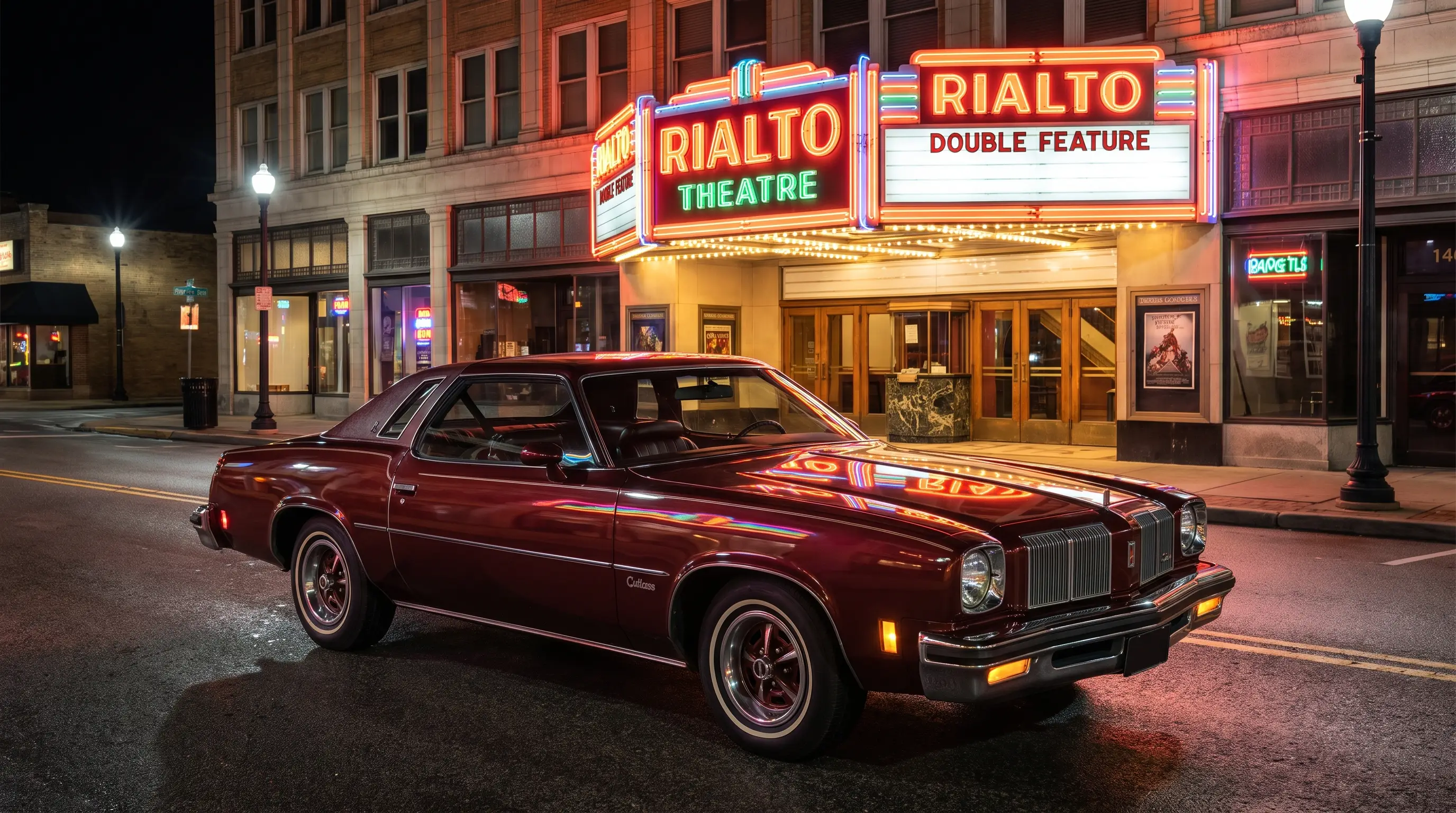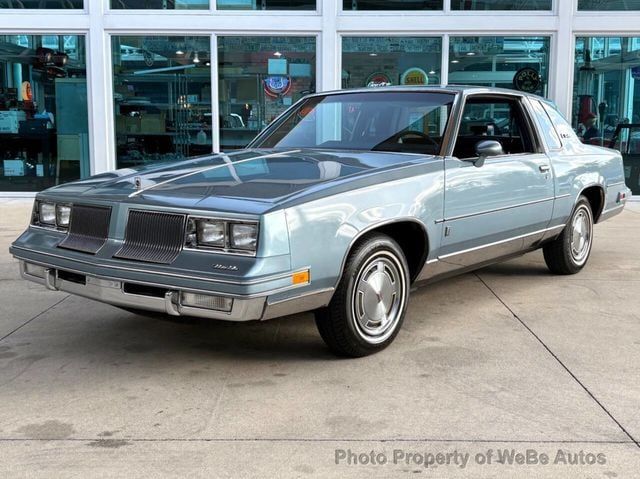
Somewhere between the drum machine and the low end of a 1980s bassline, the Oldsmobile Cutlass found its way into hip-hop's visual vocabulary and never really left. The cutlass in hip hop is not a footnote. It is a recurring character, name-checked in lyrics, parked in album art, and driven through music videos by artists who could have picked almost any car and chose this one instead.
That choice was rarely accidental. By the time hip-hop was building its own iconography in the late 1980s and through the 1990s, the Cutlass Supreme, especially the boxy G-body coupe, had already become a fixture of lowrider and custom car culture on the West Coast, and a familiar, affordable used car everywhere else. It carried built-in credibility that a brand-new luxury import simply could not fake.
A car that was already the culture before the music caught up
Hip-hop did not invent the Cutlass's cool factor so much as document it. The car had already spent the better part of a decade being customized, lowered, and shown off in Los Angeles, Houston, and other cities where car culture and street culture overlapped heavily. When rap artists from those same scenes started making music videos, the cars in their neighborhoods, the cars their families drove, the cars their friends had built, showed up on screen because that was simply what was around.
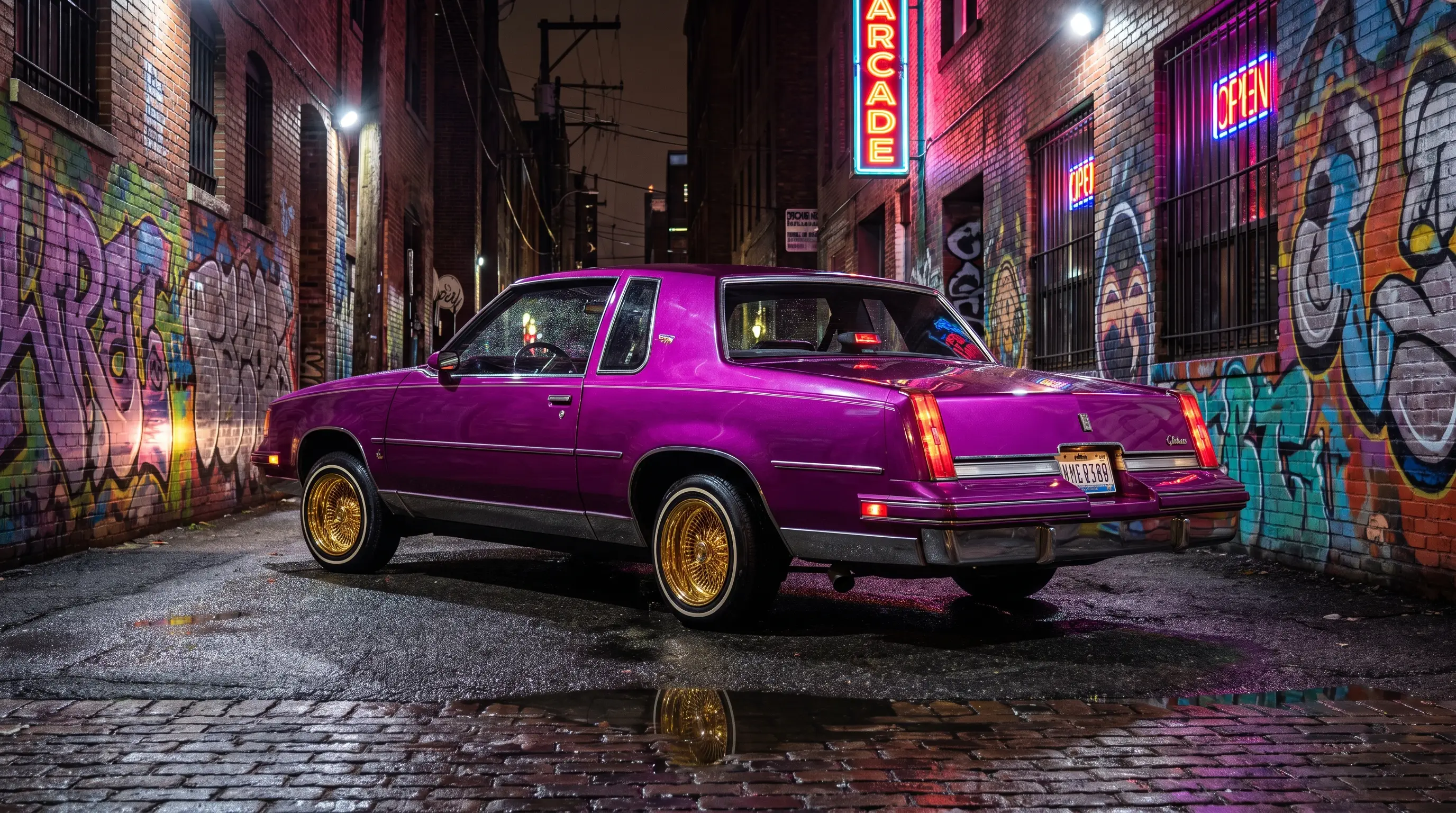
Houston's screwed and chopped scene in particular leaned hard into slow, candy-painted G-body cars, Cutlass Supremes among them, riding on wire wheels or elaborate rims, often shown in slow motion to match the music's own tempo. That visual pairing, a syrupy, unhurried car matched to a syrupy, unhurried sound, became one of the defining aesthetics of an entire regional hip-hop movement.
Lyrics that turned a car into a reference point
Beyond the visuals, the Cutlass earned a place in rap lyrics as shorthand for a certain kind of come-up: not flashy new money, but a car that signaled taste, patience, and connection to a scene. Namechecking a Cutlass Supreme in a verse did work that naming a generic luxury car could not. It located the artist geographically and culturally in a way listeners immediately understood, whether the song was coming out of Los Angeles, Houston, or Detroit.
That specificity mattered. Hip-hop has always rewarded detail over generality, and a Cutlass Supreme on 13-inch wire wheels said something a plain reference to "a nice car" never could. It told listeners the artist understood the difference between buying status off a showroom floor and building it, panel by panel, over months of work with a trusted painter and a hydraulics guy who knew what he was doing.
| Regional scene | Cutlass connection | Visual signature |
|---|---|---|
| Los Angeles / West Coast | Lowrider club culture crossover | Hydraulics, candy paint, boulevard cruises |
| Houston / Southern rap | Screwed and chopped car culture | Wire wheels, slow motion video treatment |
| Detroit / Midwest | Hometown pride, affordable G-body access | Everyday ownership, family car reference |
Read the Cutlass culture story for the wider context of how the nameplate crossed into custom car and street culture in the first place, since hip-hop's relationship with the car grew directly out of that scene rather than inventing it independently.
Why the car aged into a symbol instead of a punchline
A lot of cars get a single moment in a music video and fade back into obscurity. The Cutlass kept showing up because the culture around it kept renewing itself. New generations of builders restored old G-body cars, new artists referenced the same models their predecessors had, and the visual language around the Cutlass calcified into something closer to a symbol than a passing trend.
"You cannot tell the story of American car culture in the 1980s and 1990s without talking about how hip-hop picked up cars the mainstream car press was largely ignoring. The Cutlass got a second life on camera because artists who grew up around these cars knew exactly what they were looking at, and they made sure everyone else did too."
— Patrick Walsh
Album covers and video shoots as an accidental archive
Music videos and album photography from the era ended up preserving something the automotive press of the time largely ignored: what actual custom Cutlass builds looked like, block by block, city by city, at a specific moment in the 1980s and 1990s. A video shot on a real street with a real car club's cars in the background is, decades later, a more honest record of what people were driving and building than most contemporaneous car magazine coverage, which tended to focus on new factory models rather than what enthusiasts were doing with older ones.
That accidental documentation matters more now than it did at the time. Builders and historians trying to trace how paint styles, wheel choices, and hydraulic setups evolved through the 1980s and 1990s often turn to old music videos and album art as reference material, precisely because so few other sources captured that world with the same frequency or the same care for getting the details right.
The legacy still visible today
That legacy is not purely historical. Collectors and builders restoring G-body Cutlass Supremes today are often working within a tradition that hip-hop helped preserve and publicize, even if the restoration itself has nothing to do with music. The car's continued presence in reissued classic hip-hop imagery, in retrospective documentaries, and in younger artists' nostalgic references keeps demand and cultural awareness alive in a way that pure automotive history alone might not have managed.
For readers who want the complete picture, from factory floor to street corner to music video, the full Cutlass story ties every thread together. Music was not the only screen the Cutlass showed up on, either, and a related deep-dive covers its parallel run through film and television. For anyone whose interest in the car started with the music and ended with wanting one of their own, there are always classic Oldsmobile Cutlass for sale listings worth a look, whether the goal is a faithful restoration or a period-correct custom build.
Sources and notes
- Wikipedia: General Motors G platform (RWD)
- GBodyForum: 82 Cutlass Lowrider
- Ground Up Motors: A and G Body Differences From 1969-1988
- GBodyNation: When is a G-Body not a G-Body?
- autoevolution: 5 of the Most Iconic GM G-body Muscle Cars from the 1980s
- Rock The Bells: Hip-Hop's Greatest Road Trip Songs