
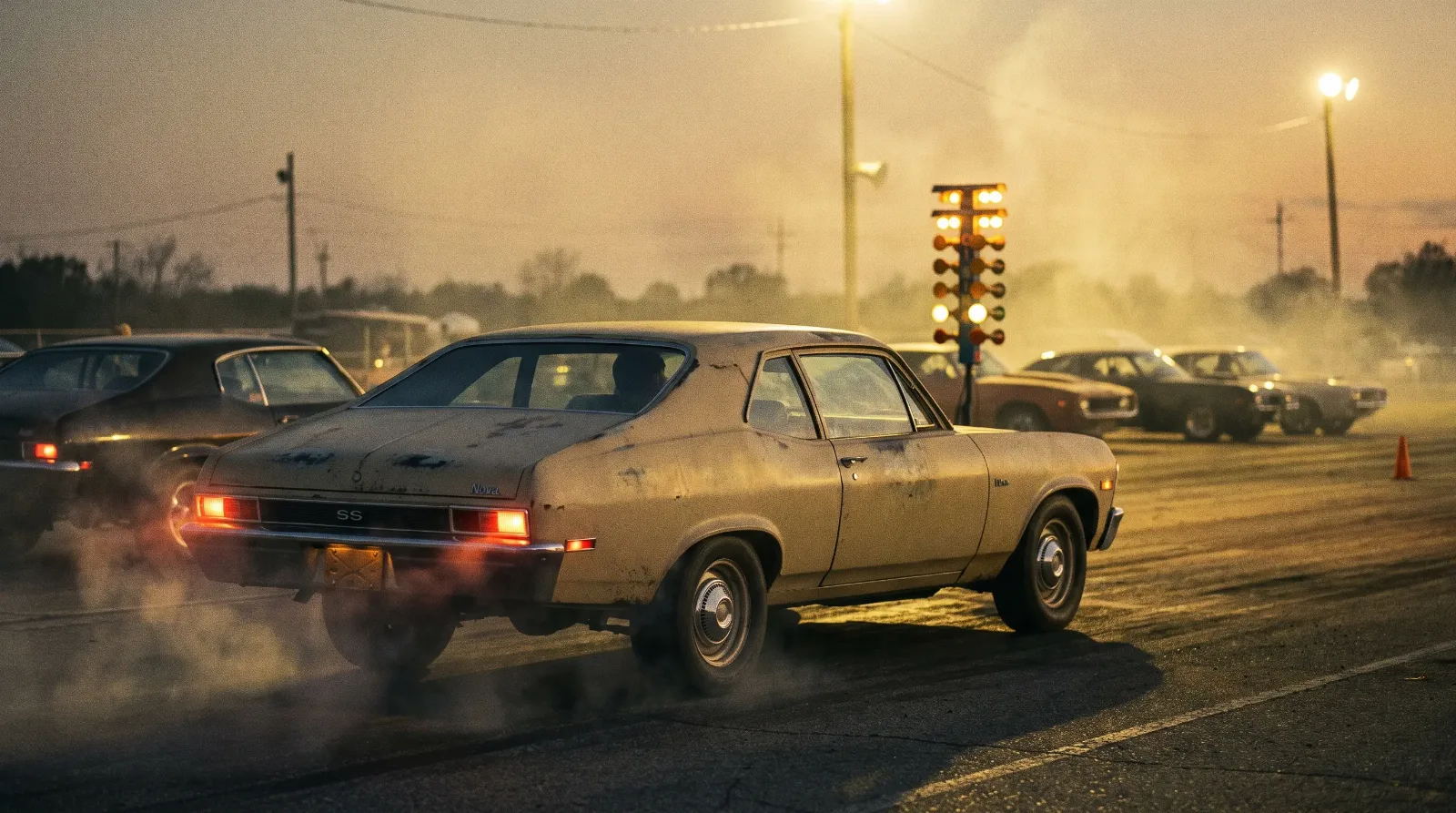
Saturday night at a small-town strip in the early 1970s, and the loudest reaction from the stands is not for the Camaro up front or the Chevelle idling in the staging lanes. It is for the plain-looking Chevy Nova two cars back, the one with no stripes, no scoop, and a driver who has just quietly run a number that shut up half the pit. That scene played out at hundreds of tracks across the country for two straight decades, and it is the reason nova drag racing became its own quiet institution long after Chevrolet stopped selling the car new.
Car Features
6 min read
The Nova as Drag Racing Icon
The Chevy Nova built its drag racing reputation from the grassroots up, becoming one of the era's great sleepers on strips across the country.
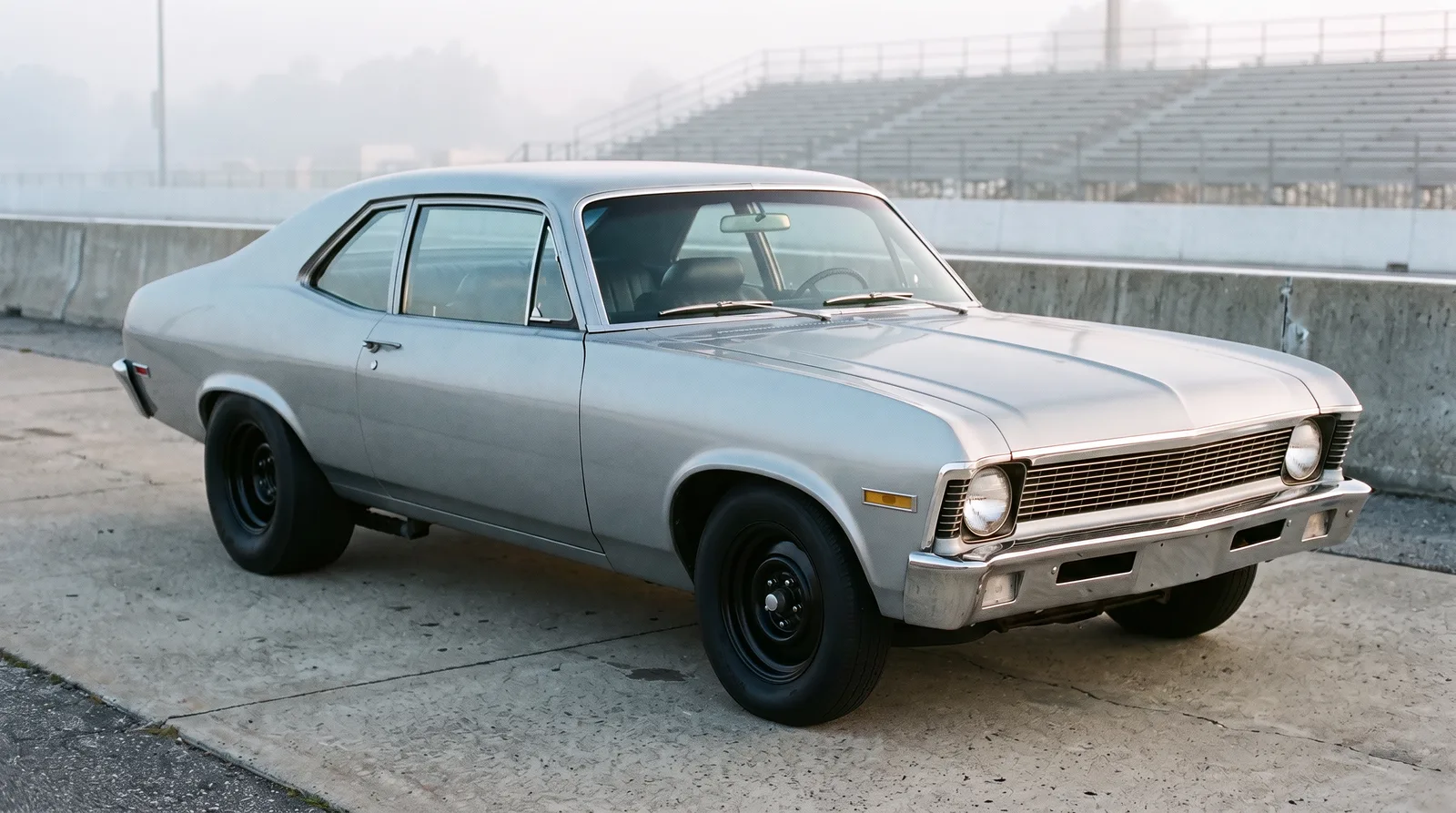
The sleeper reputation was earned, not marketed
Chevrolet never sold the Nova as a factory drag weapon the way it sold the Camaro or the Chevelle SS. The Nova's performance identity came from the bottom up, built by racers who noticed the car's light curb weight and narrow front clip made it an ideal home for a small-block Chevy V8. A 1968 to 1972 Nova with a 350 under the hood weighed less than a comparable Chevelle, and that weight advantage translated directly into elapsed time at the strip.
Because the car looked so unremarkable, opponents underestimated it constantly, which is exactly why "sleeper" stuck as the defining word for a well-built drag Nova. That reputation connects directly to the small-block story covered elsewhere on this site, but the short version is simple: a car nobody feared on sight became one racers specifically feared on the tree.
Grassroots racing built the legend, not the factory
NHRA and IHRA stock and super stock classes saw serious factory-backed Nova entries in the late 1960s and early 1970s, but the car's deepest roots are in bracket racing and local grudge matches, not national events. Weekend racers bought cheap, high-mileage Novas specifically because parts were interchangeable with Camaros and Chevelles, insurance was cheaper, and the car did not draw attention sitting in a driveway during the week.
That grassroots identity is part of why Nova drag culture never faded the way some factory muscle car reputations did. The car was never really about the showroom package. It was about what an owner with a modest budget and a small-block could build in a home garage, and that culture kept building well past the era when Chevrolet actively supported it.
| Era | Common drag configuration | Typical strip context |
|---|---|---|
| 1968-1972 | 350 or 396 small/big-block, factory or built | Stock/Super Stock, bracket racing |
| 1973-1979 | 350 swap, aftermarket heads and carburetion | Grassroots bracket and grudge racing |
| 1980s-1990s | Built small-blocks, tubbed rear ends on modified cars | Street/strip and index classes |
What a period-correct drag Nova actually looked like
Walk a swap meet today and you can still spot the tells of a real drag-built Nova from this era. Ladder bars or a four-link rear suspension replaced the stock leaf springs on serious cars, tubbed rear wheel wells made room for slicks wider than anything Chevrolet ever fit at the factory, and a straight front axle conversion showed up on the most committed builds, shaving weight off the nose to help the car hook off the line. None of that came from a Chevrolet parts catalog. It came from local chassis shops and driveway fabrication, car by car, over decades.
Interior work told the same story. Stripped door panels, a single bucket seat, a roll bar welded in by someone's cousin who did that kind of work on the side, and gauges mounted wherever they would fit. These were not show cars. They were tools built to do one job, and the plain Nova body made an honest, unpretentious base for that kind of purpose-built work in a way a flashier Camaro never quite matched.
Why the Nova outlasted flashier rivals on the strip
Camaros and Chevelles got more attention, more factory options, and more money at auction decades later. But those same qualities made them expensive to buy as project cars once the collector market caught up. The Nova stayed affordable longer, which meant it stayed accessible to the exact kind of racer who built the sport's grassroots culture in the first place. A young builder with a limited budget in 1985 or 1995 could still find a rough Nova, drop in a built 350, and go racing without needing Camaro money.
That accessibility is the throughline connecting the drag strip Nova to the wider story of why the car still matters to collectors today, a subject covered in more depth in the piece on why the Nova endures. The strip reputation was never separate from the ownership story. It fed it.
It also explains why so many surviving drag-built Novas from the 1970s and 1980s still exist today instead of having been scrapped or parted out. A car that cost little to buy and race in the first place was also cheap enough to store in a barn or a back lot when a racer moved on to something else, which is exactly why so many of these builds turned up decades later as restoration projects rather than crushed hulks.
"Nobody ever lined up against a Nova expecting a fight. That was always the whole point. The car did its talking on the tree, not in the pits beforehand."
Patrick Walsh
The legend has more layers than the strip alone
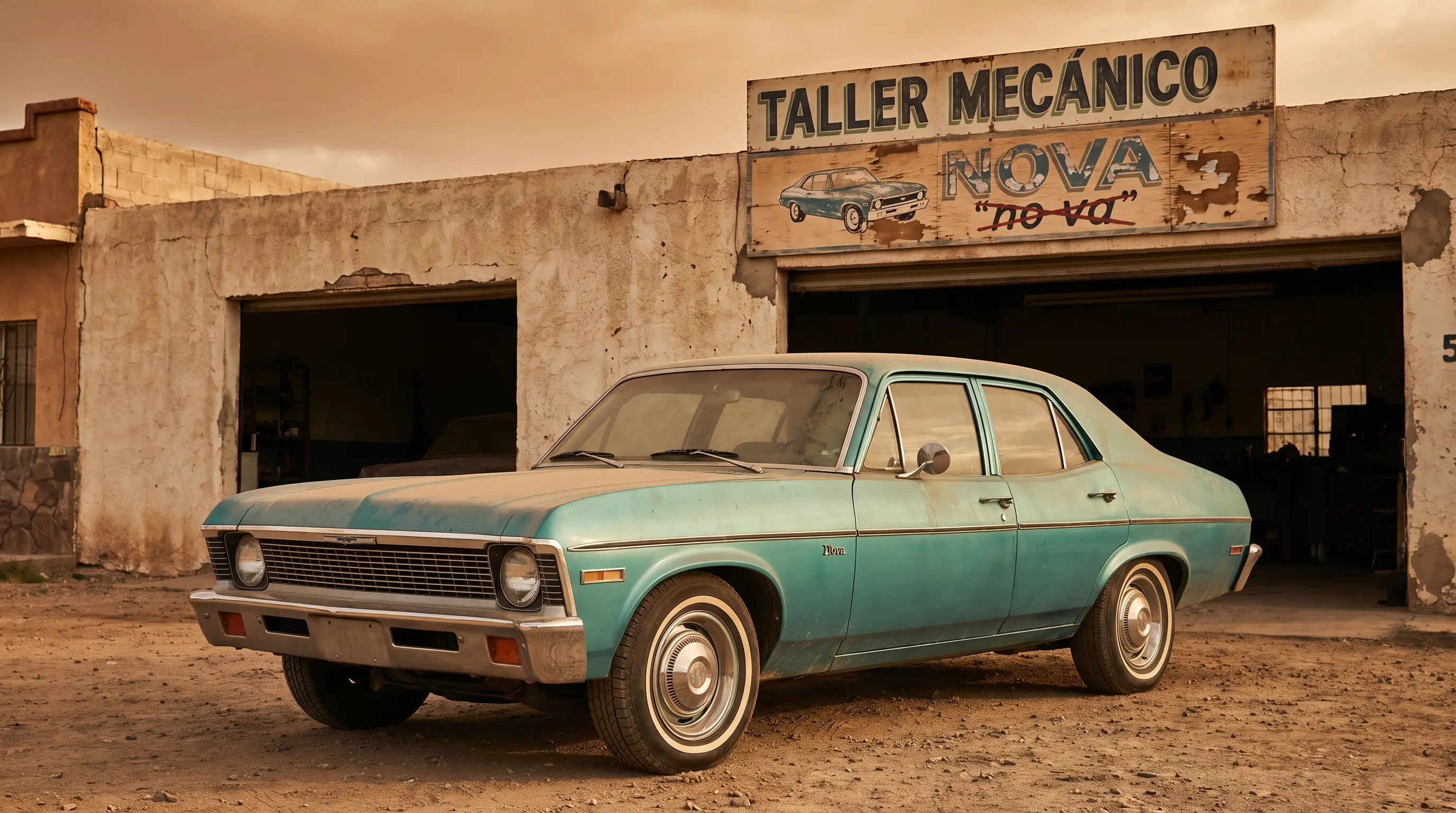
The drag racing story is only one thread in how the Nova built its reputation. There is also the long-running myth about the car's name and Spanish-speaking markets, a story that gets repeated at nearly every car show and deserves its own honest look. If you want another angle on how the Nova's reputation grew and sometimes got distorted along the way, that piece picks up where this one leaves off.
What stays consistent across every version of the story is the car's core appeal. It never needed a factory performance package or a marketing campaign to earn its place. It earned it one quarter-mile at a time, run by owners who understood exactly what a light body and a good small-block could do together.
Sources and notes
- NovaResource: Nova History and Production
- Steve's Nova Site: SS L78 396/375 Production Numbers
- HotCars: Complete Chevy Nova Guide, SS Models and Drag Racing History
- Wikipedia: Chevrolet Chevy II / Nova
- Barn Finds: 1 of 667, 1968 Chevrolet Nova SS 396 L78
- Demotor Performance: GM A/F/X-Body Chassis Reference
Related Reading
Have a
Chevrolet Nova
for Sale?
Reach thousands of serious classic car collectors across the US.
Sell It Here →
Selling a classic? Here's how: where to sell your classic car online
Are You a Classic Car Dealer?
List your full inventory and connect with targeted classic car buyers.
Join as a Dealer →
#classic chevrolet
#small-block chevy
#Sleeper Muscle Cars
#chevrolet nova
#nova drag racing
#drag strip history

About the author
Patrick Walsh
Automotive journalist covering classic car shows, events, and the enthusiast community across North America.
Related Listings - Chevrolet Nova




Comments
Be the first to comment on this article.