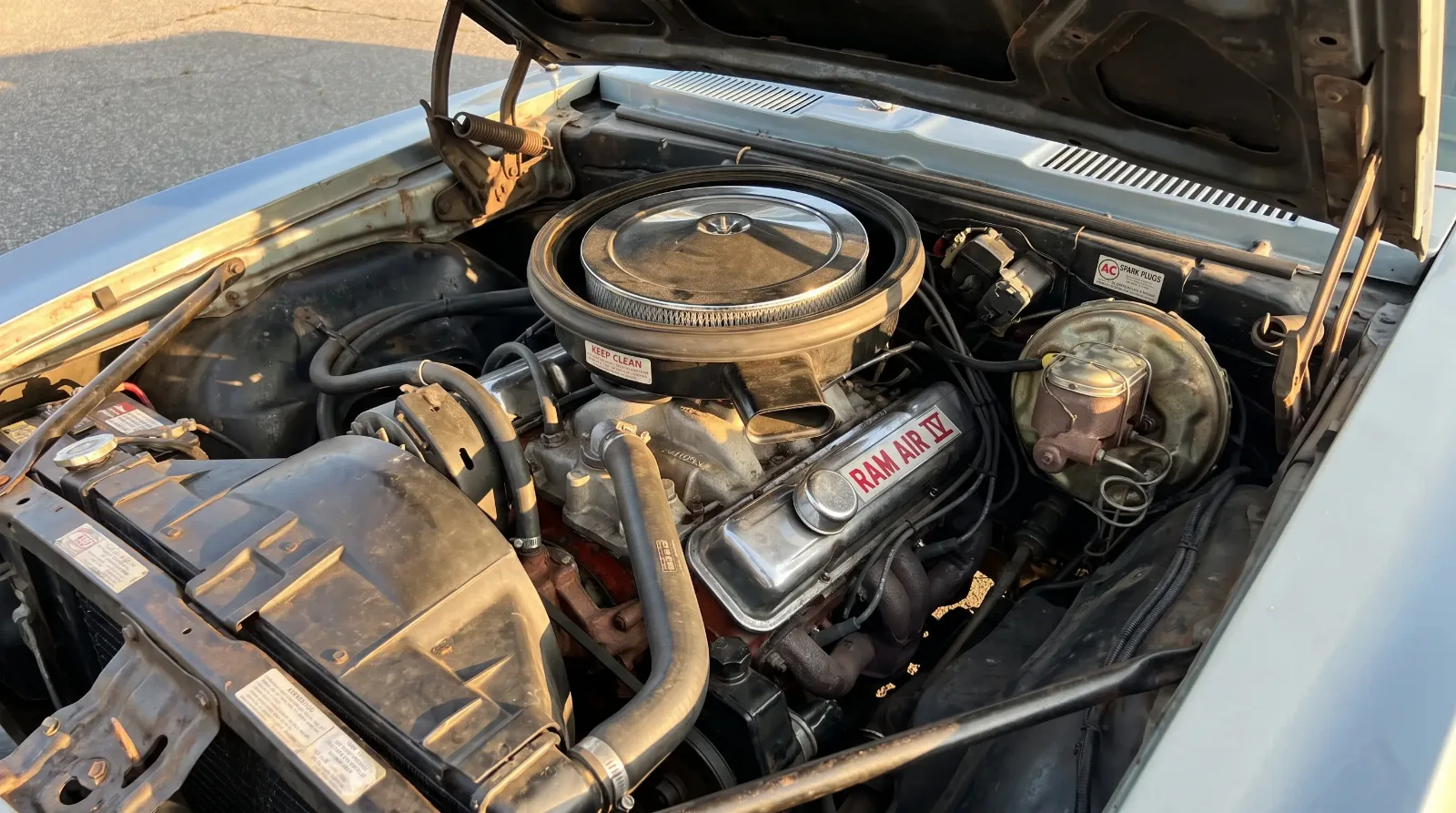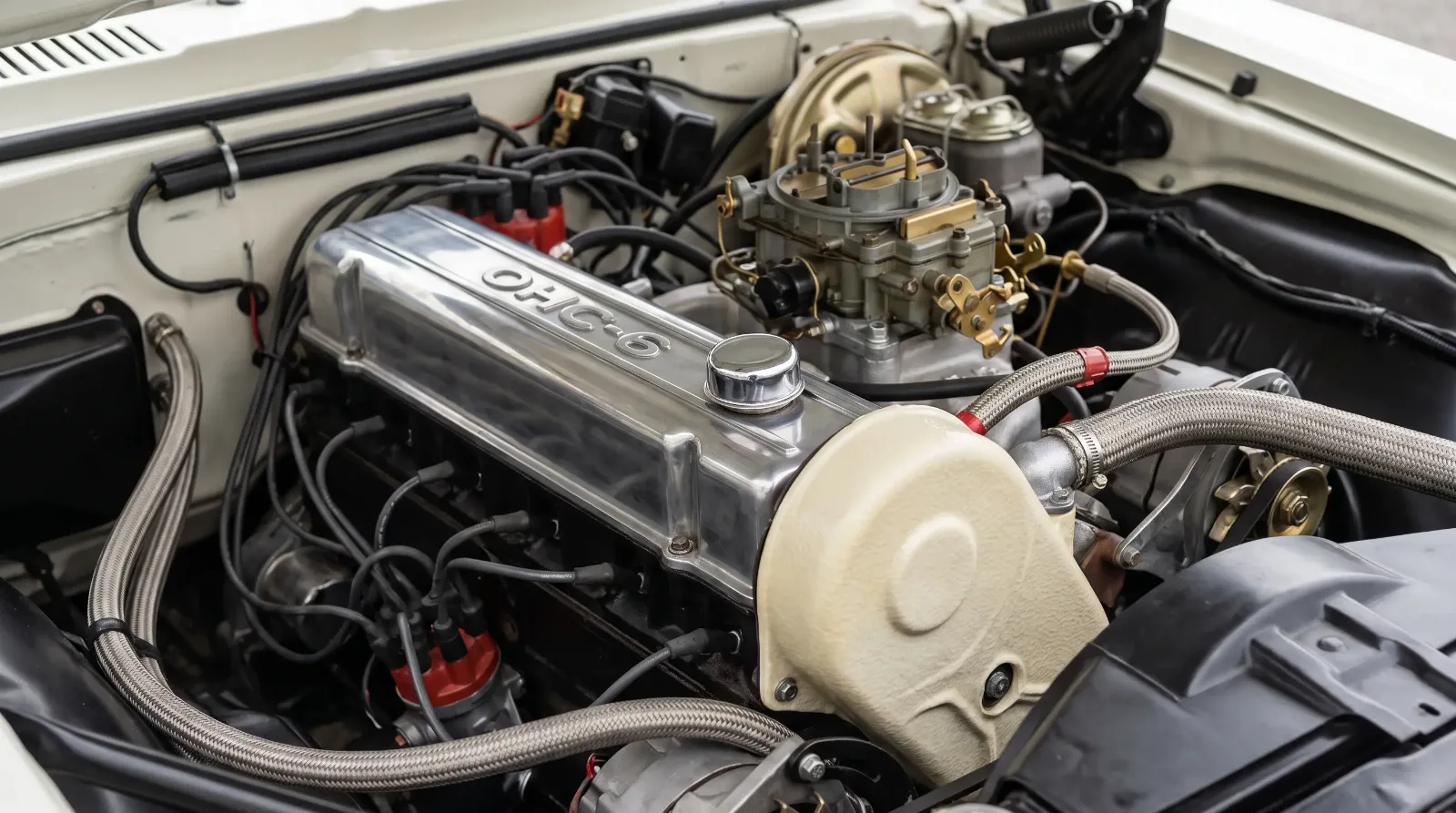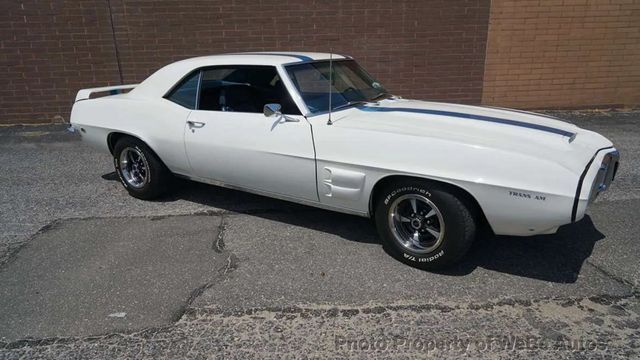
The pontiac small v8 label is a little misleading, and that is worth clearing up before anything else. The 326 and the 350 that powered early Firebirds were not built on a separate small-block architecture the way Chevrolet ran two distinct V8 families. Pontiac used one block design across nearly its whole V8 range, from a 326 up through a 455. The "small" in small V8 just means smaller displacement, not a smaller casting.
One block, every displacement
Pontiac engineers built every V8 from 1955 onward around a common external block architecture. Bore centers, deck height, and general dimensions stayed consistent whether you were looking at a 326 or a 455. That is why a Pontiac 350 and a Pontiac 400 can share accessories, motor mounts, and bellhousing patterns without much fuss. It also means the term small-block, borrowed from Chevrolet's marketing, does not really describe how Pontiac engineered its engines. Pontiac just bored and stroked one core design to hit different displacement targets.
That matters for anyone shopping a Firebird, because it means engine swaps and upgrades within the Pontiac family are simpler than people expect. A 326 owner looking for more displacement is not hunting for an entirely different physical engine family. They are hunting for a bigger bore and stroke inside the same basic block footprint.
It also means Pontiac's engineering department could tool one set of machining lines and produce a whole range of displacements off it, which kept costs down at a time when Detroit was racing to offer more engine choices per model than ever before. Chevrolet solved the same problem with two separate architectures. Pontiac solved it with one, and the 326 and 350 are the clearest proof that the approach worked without sacrificing much in the way of durability or parts availability decades later.
The 326: Firebird's first V8 option
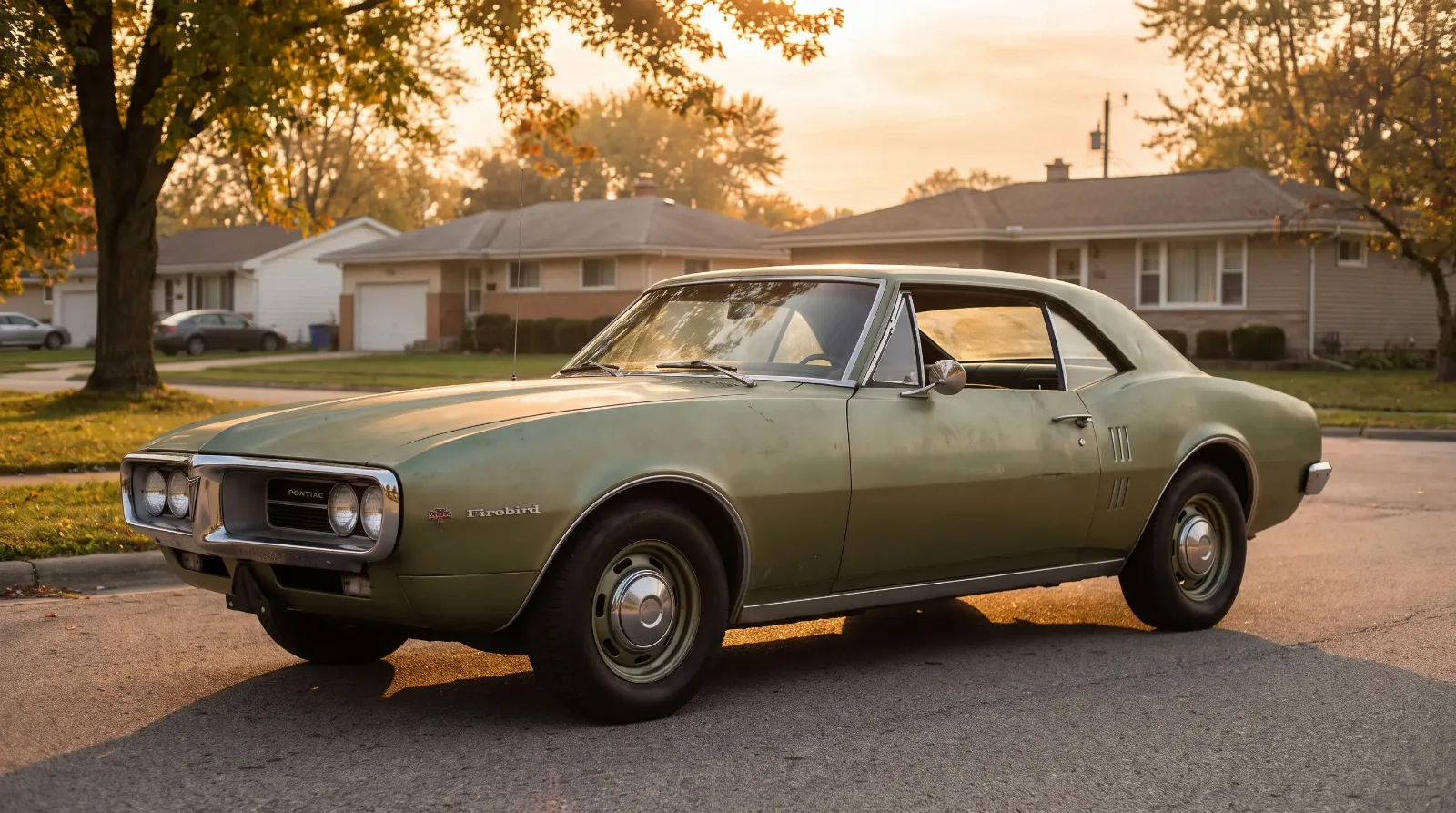
Pontiac introduced the 326 cubic inch V8 in 1963 for full-size cars, and it carried into the first Firebirds in 1967 as the entry V8 option. The base two-barrel version was rated at 250 hp, while the H.O. four-barrel version pushed that to 285 hp. Neither number sounds dramatic against a 400 cubic inch Ram Air option, but the 326 gave a 1967 or 1968 Firebird buyer real V8 torque without the insurance surcharge that came with the bigger engines.
The 326 lasted two model years in the Firebird before Pontiac replaced it. It is a short window, which makes surviving 326 Firebirds less common than the 350s that followed.
Part of the reason the 326 got a short run comes down to marketing math rather than engineering shortfall. Pontiac wanted a round, marketable displacement number to sit alongside the 350s and 400s that competitors were advertising, and 326 simply did not have the same ring to it on a window sticker. The engine itself kept doing useful work in other Pontiac products even after the Firebird moved on, which says more about its underlying soundness than its short tenure in this one model line suggests.
The 350 takes over
Pontiac introduced its own 350 cubic inch V8 for 1968, and it replaced the 326 as the Firebird's mainstream V8 option through 1969. The two-barrel version made a claimed 265 hp, and the four-barrel H.O. version was rated at 320 hp for 1968 (rising to 325 hp for 1969), a real jump that put the 350 H.O. within range of some 400 cubic inch offerings on paper.
This is the engine most people mean when they say pontiac small v8 in a Firebird context, because it was the volume seller. It bridged the gap between the economy six and the big Ram Air 400s, and it did the job well enough that Pontiac kept the 350 in production across multiple model lines well into the 1970s.
The 350's longevity across Pontiac's broader lineup, well past the point the Firebird moved on to bigger standard displacements, is the strongest evidence that it was a genuinely well-sorted design rather than a stopgap. Engines that only exist to fill a marketing gap tend to disappear fast once that gap closes. The 350 kept earning its spot in engine bays for years, which is not something you can say about every mid-displacement V8 Detroit built in this era.
| Engine | Years in Firebird | Base rating | H.O. rating |
|---|---|---|---|
| 326 cid V8 | 1967-1968 | 250 hp | 285 hp |
| 350 cid V8 | 1968-1969 | 265 hp | 320 hp (325 hp in 1969) |
Buying and identifying one correctly
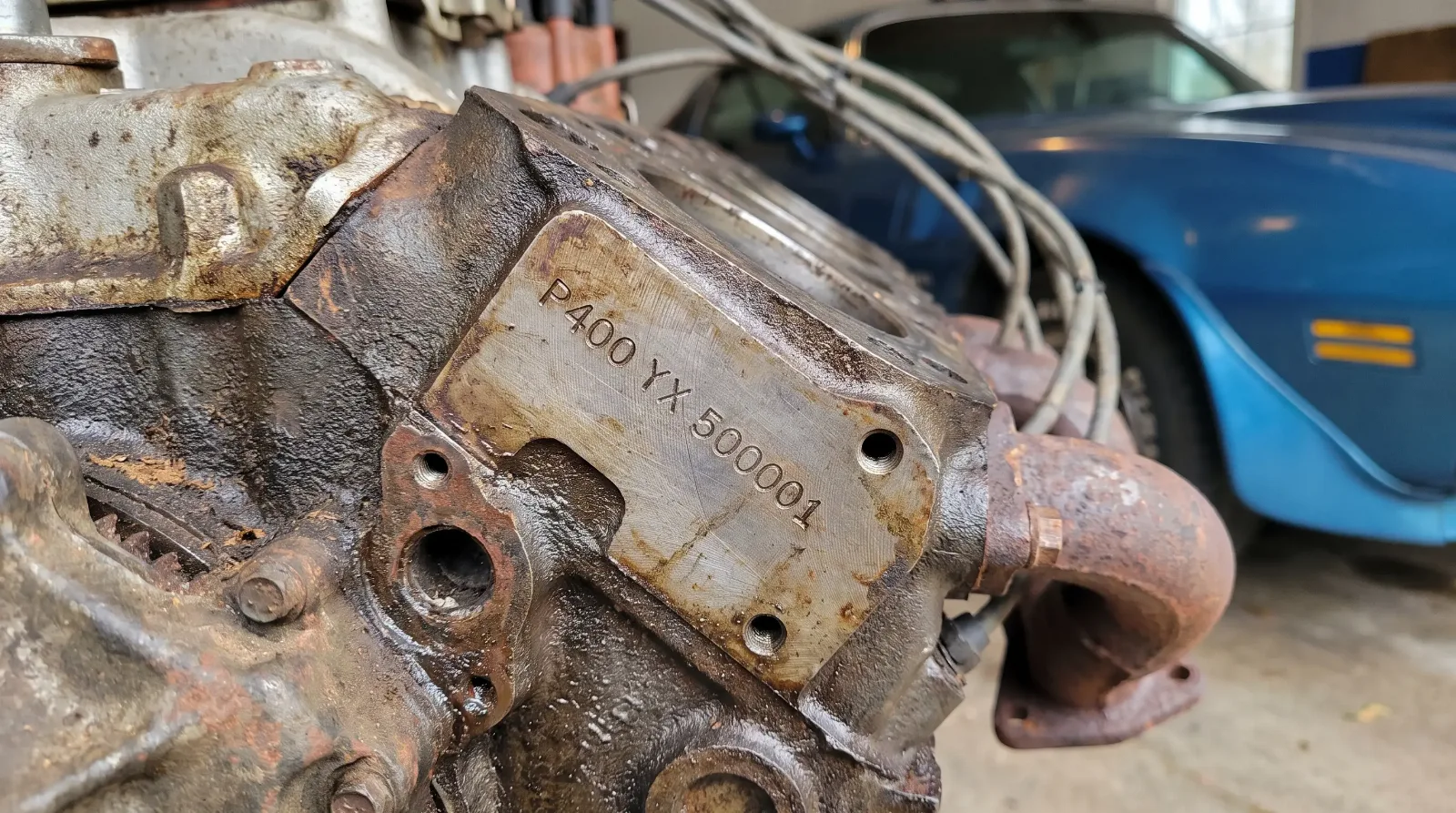
Displacement alone will not tell a buyer which small V8 sits under the hood, and neither will a casual glance at the valve covers. Block casting numbers and the engine code stamped on the front of the block are the only reliable way to separate a 326 from a 350, or a base two-barrel from an H.O. four-barrel that has had its carburetor swapped somewhere over fifty years of ownership. Anyone paying an H.O. premium needs to confirm the code matches the claim, not just trust the seller's description.
"People say small block Pontiac like it means something structural. It does not. Pontiac built one V8 architecture and just changed the bore and stroke. The 326 and the 350 are cousins, not different species."
— Dan Reeves
Where the small V8s sit in Pontiac's lineup
The 326 and 350 are the entry point into Pontiac's V8 world, the option that let a Firebird buyer skip the six-cylinder without stepping up to a Ram Air 400. For anyone trying to decode exactly which V8 sits in a given car from the numbers stamped on the block, a related deep-dive breaks down how Pontiac's engine code system actually works.
Two displacements, one shared architecture, and a straightforward upgrade path for anyone who understands that Pontiac never really built a separate small-block family in the first place.