
Pontiac Firebird engines are not Chevy engines. That is the first thing to get straight, and most people get it wrong. A Firebird looked like a Camaro, shared a body shell with a Camaro, and sat next to Camaros on the same GM assembly logic. Under the hood it was a different animal. Pontiac built its own V8s in its own plant, to its own rules, and those rules produced some of the best muscle-era engines Detroit ever stamped a code on.
Car Features
8 min read
Pontiac Power: The 400, 455 and Ram Air Engines
Pontiac Firebird engines were their own world: one block scaled from 326 to 455, the Ram Air series, the SD455 special casting, and why none of it is Chevy.
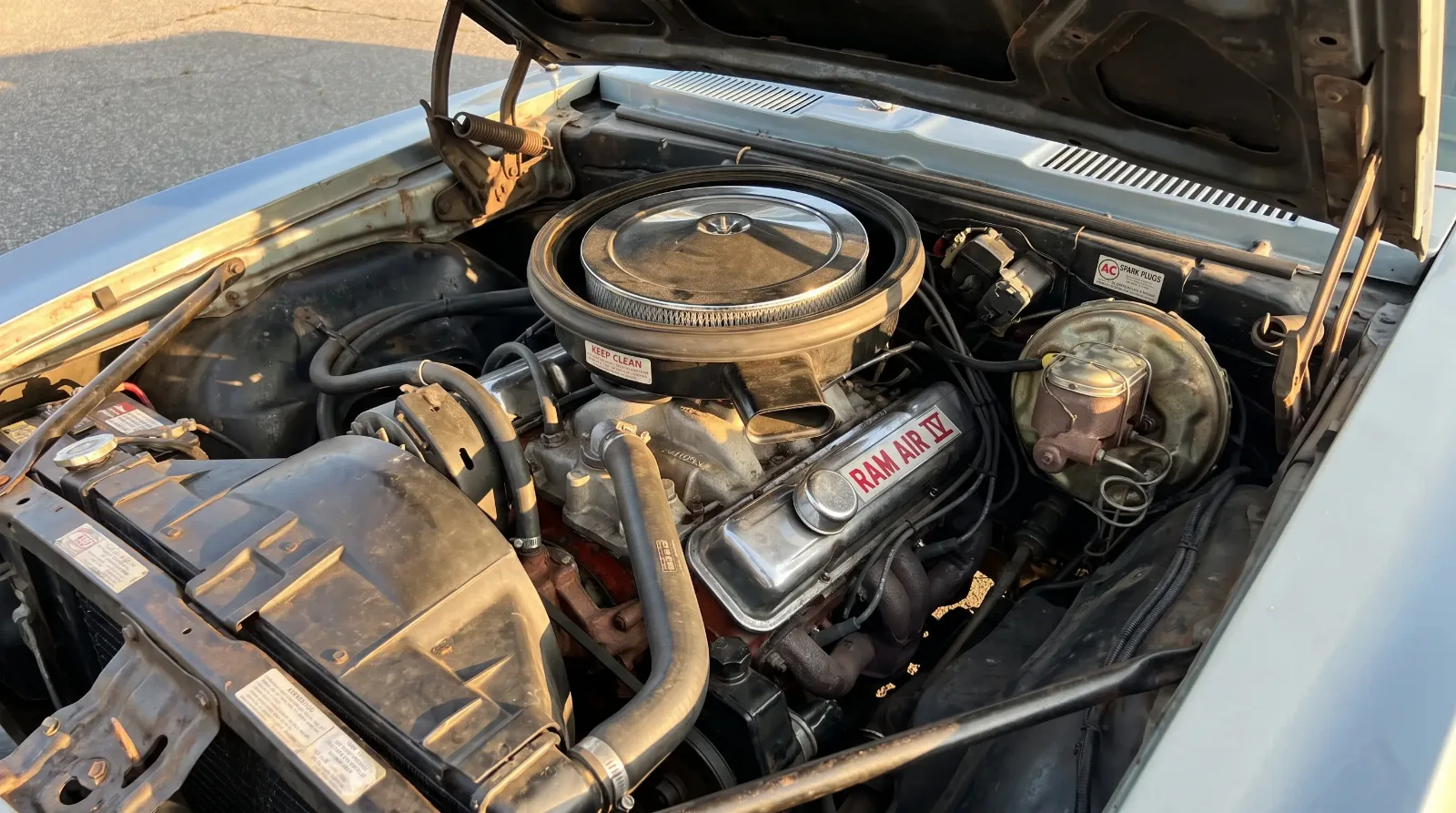
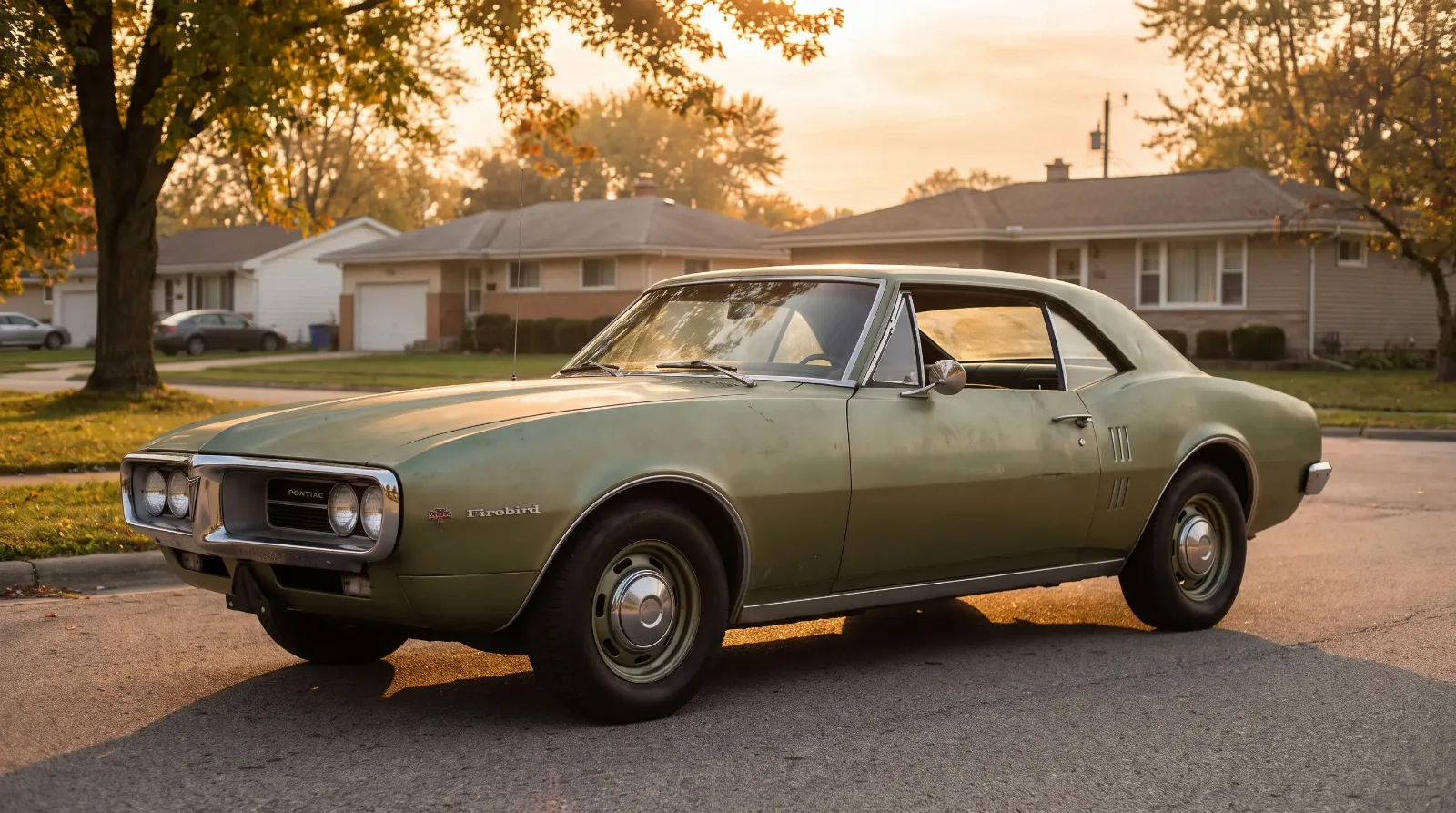
The short version: one basic V8 design, scaled from 326 cubic inches to 455, plus an oddball overhead-cam six that had no business being as good as it was. If you want the wider story of the car itself, we covered how the Firebird legend began separately. This piece is about what turned the crank.
One block, many sizes: Pontiac's engine philosophy
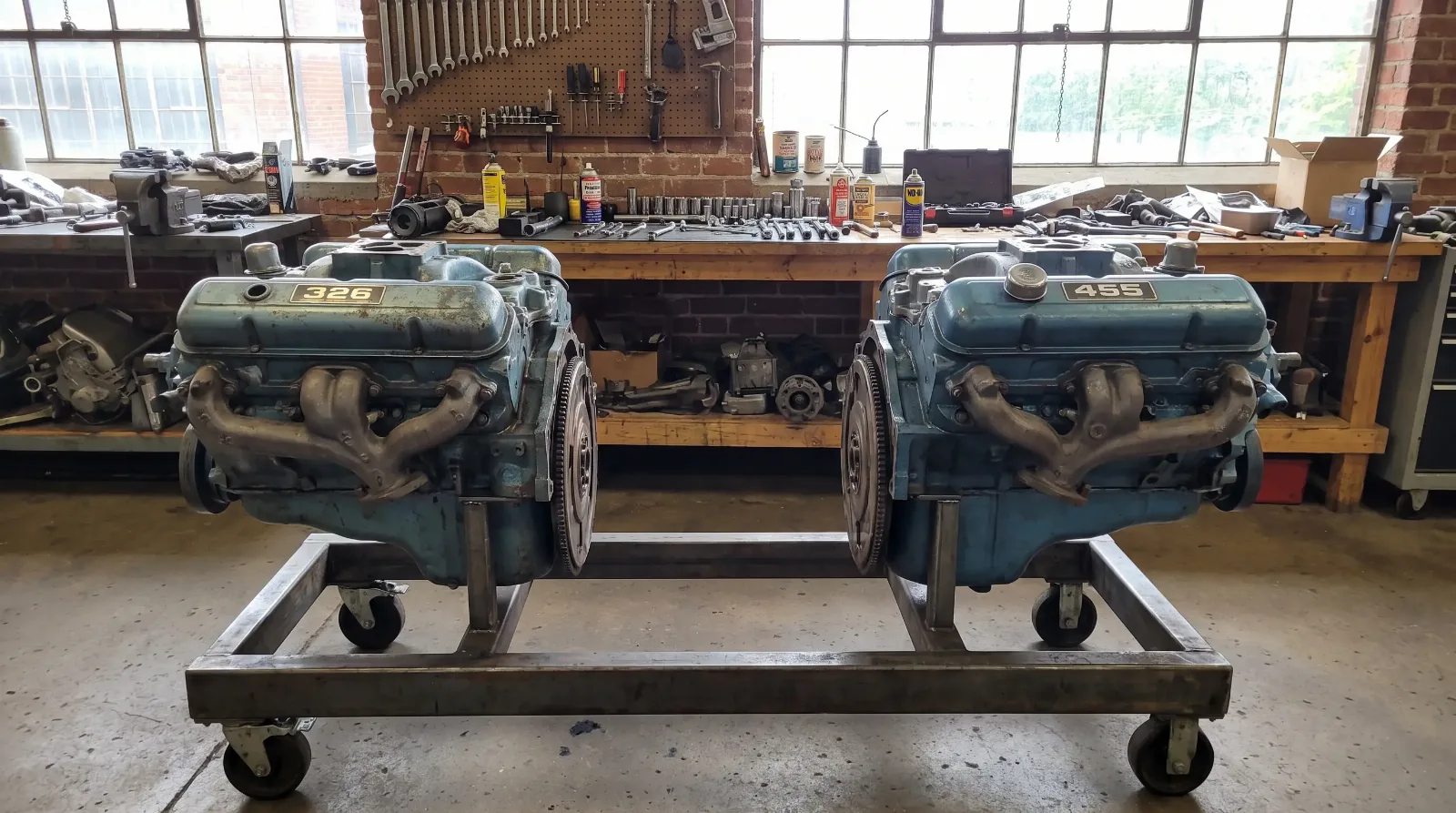
Pontiac did something no other GM division did. From 1963 through 1979, every Pontiac V8 (326 through 455) shared the same external block architecture. Same physical size. Same deck. Same bellhousing bolt pattern. Whether you ordered a 326, a 350, a 400, or a 455, the lump bolted in the same way and weighed within a few pounds of every other Pontiac V8.
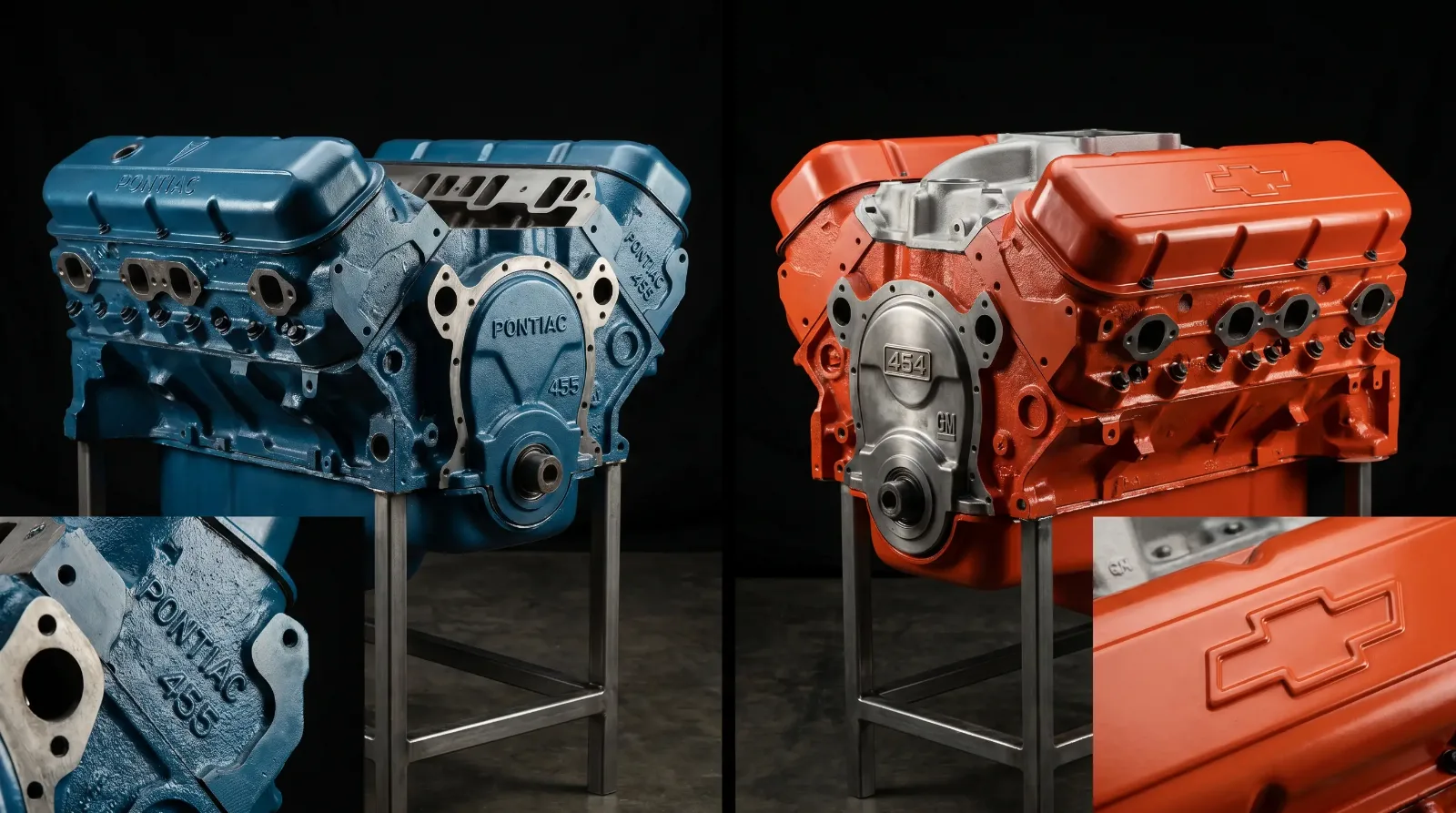
That is not how the rest of Detroit worked. Chevy had a small-block and a big-block, two entirely separate families with different weights and dimensions. Pontiac had one family and changed the bore and stroke. A 455 is not a "big-block" in the Chevy sense. It is the same block casting as a 350 with more meat and a longer throw.
This matters for a buyer. It means a numbers-matching Firebird engine swap is not obvious from across the room. A 400 and a 455 look identical externally. You read the codes, not the silhouette. More on that below.
The OHC-6: an overhead-cam six in a 1967 pony car
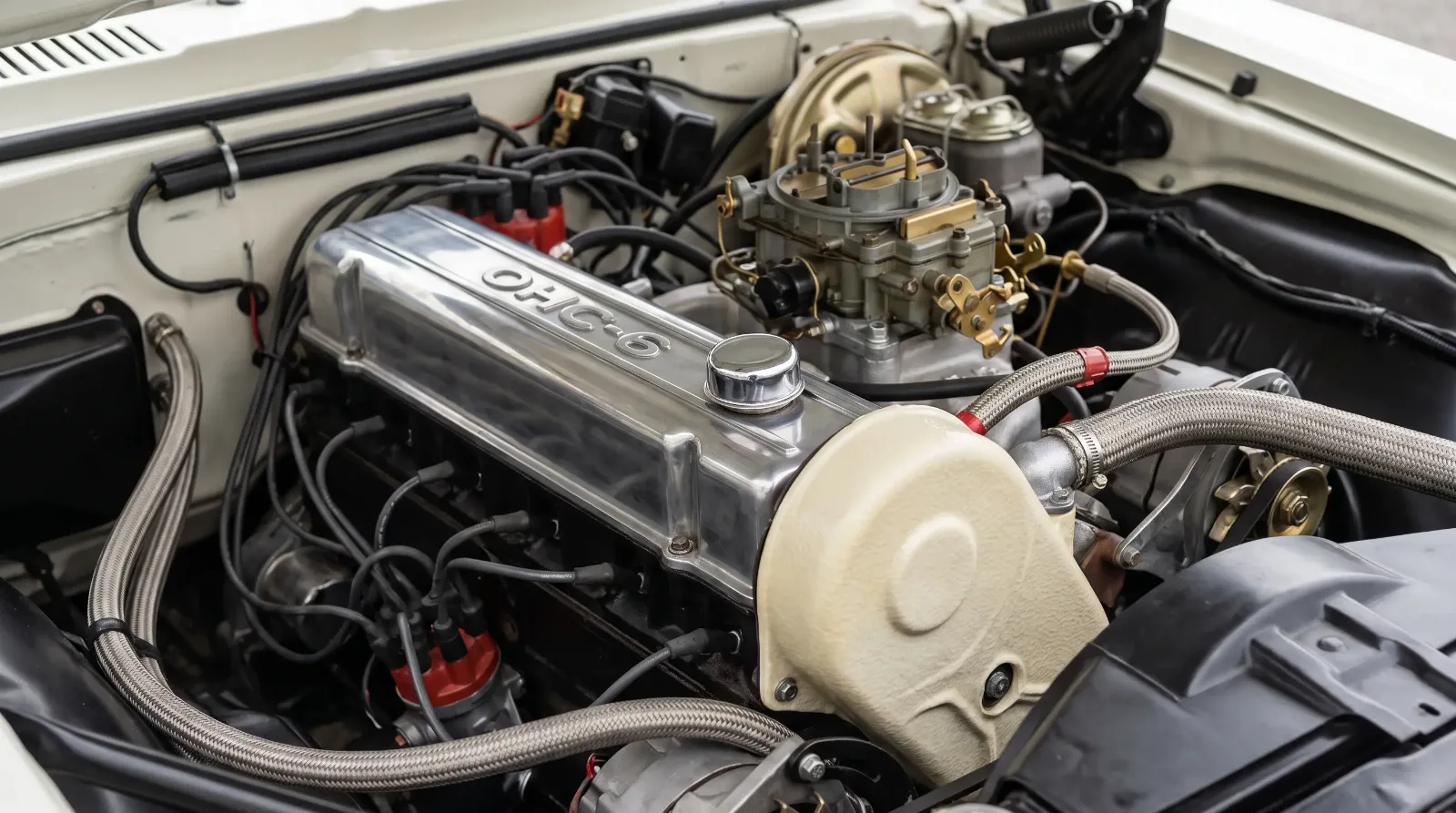
Start the base 1967 Firebird and you did not get a V8. You got Pontiac's overhead-cam inline six, 230 cubic inches, a single overhead cam driven by a fiberglass-reinforced rubber belt. In 1967. In an American car. Nobody else was doing this.
The base OHC-6 made 165 hp. The one that mattered was the Sprint version: four-barrel carb, hotter cam, split exhaust, rated at 215 hp for 1967 (207 hp when the Sprint debuted in 1966). In 1968 the six grew to 250 cubic inches. The Sprint six could pull past 6,000 rpm without protest, which no Chevy six of the era would do.
It did not sell. Buyers wanted V8s and the Sprint six was gone after 1969. But it was the most sophisticated six-cylinder built in Detroit in the 1960s, and a Sprint Firebird today is a genuine oddity worth having.
The 400: Pontiac's Firebird workhorse
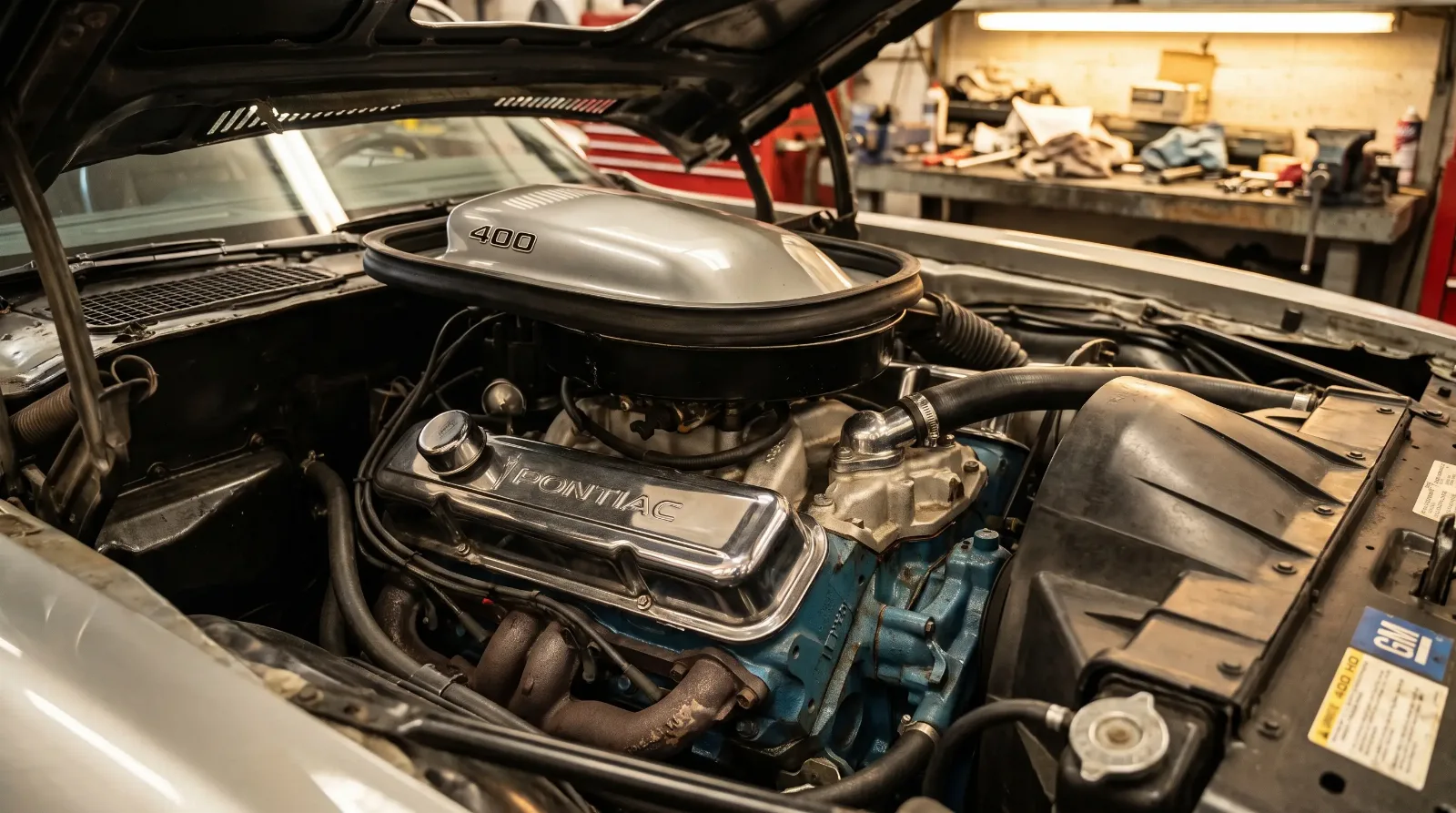
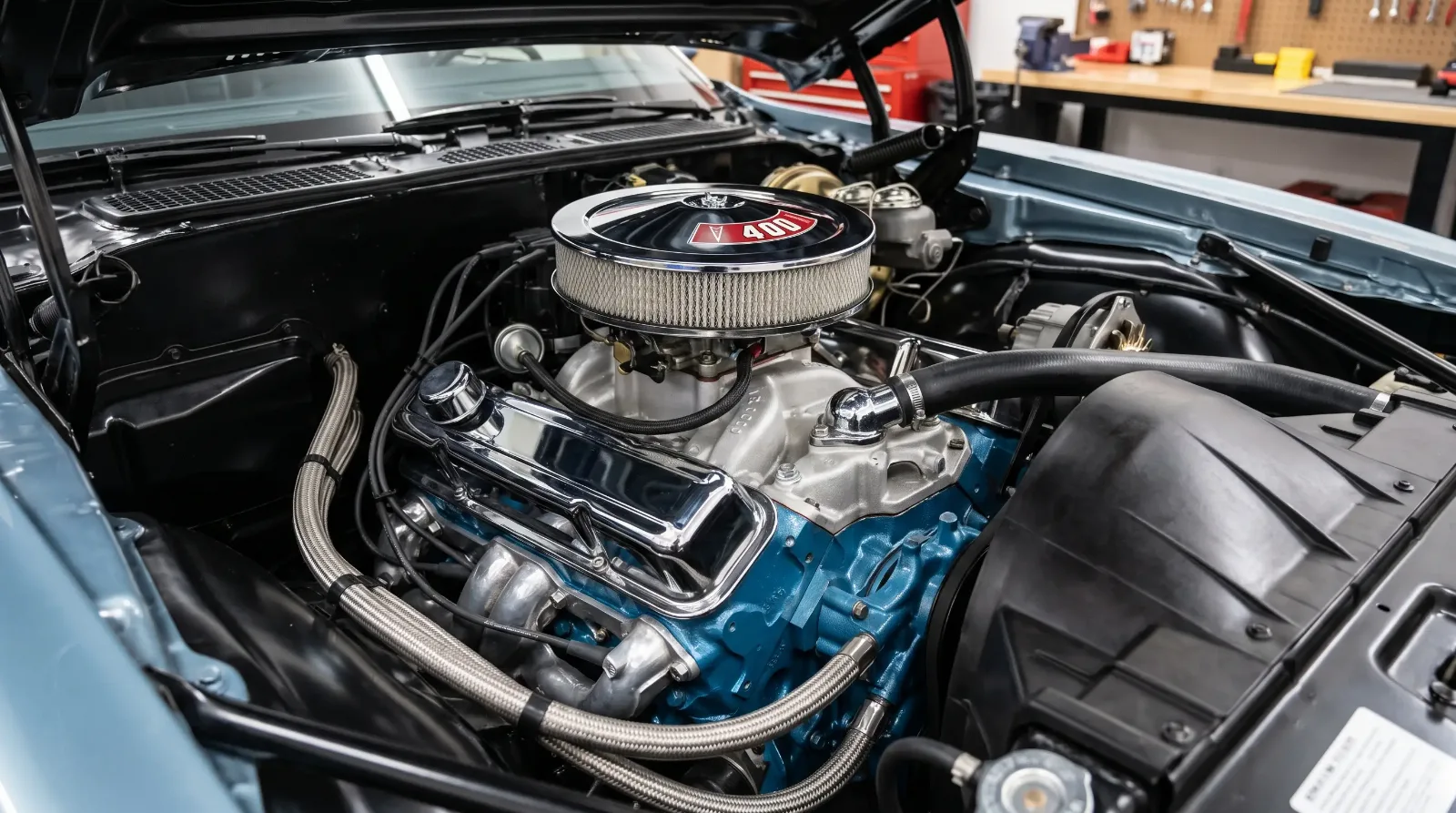
The 400 was the heart of the muscle-era Firebird. Four hundred cubic inches, 6.6 liters, and it lived under the hood from 1967 through 1979 in some form. This is the engine most people mean when they talk about Pontiac Firebird engines.
Rated outputs moved around with the year and the emissions rules, but the muscle-era numbers ran roughly like this. Early 400s made 325 to 335 hp gross. The 1969 Ram Air cars climbed higher. By the mid-1970s, choked by emissions gear and rated in net figures, the 400 fell to around 185 hp. Same displacement, different world.
| Engine | Displacement | Years (Firebird) | Peak rating |
|---|---|---|---|
| OHC-6 Sprint | 230 / 250 cu in | 1967-1969 | 215 hp gross |
| 400 standard | 400 cu in (6.6L) | 1967-1979 | ~335 hp gross |
| Ram Air III 400 | 400 cu in | 1969-1970 | 335 hp gross |
| Ram Air IV 400 | 400 cu in | 1969-1970 | 345 hp gross |
| 455 HO | 455 cu in (7.5L) | 1971-1972 | 335 hp gross (1971), 300 hp net (1972) |
| SD455 | 455 cu in | 1973-1974 | 290 hp net |
Ram Air I through IV: the real power
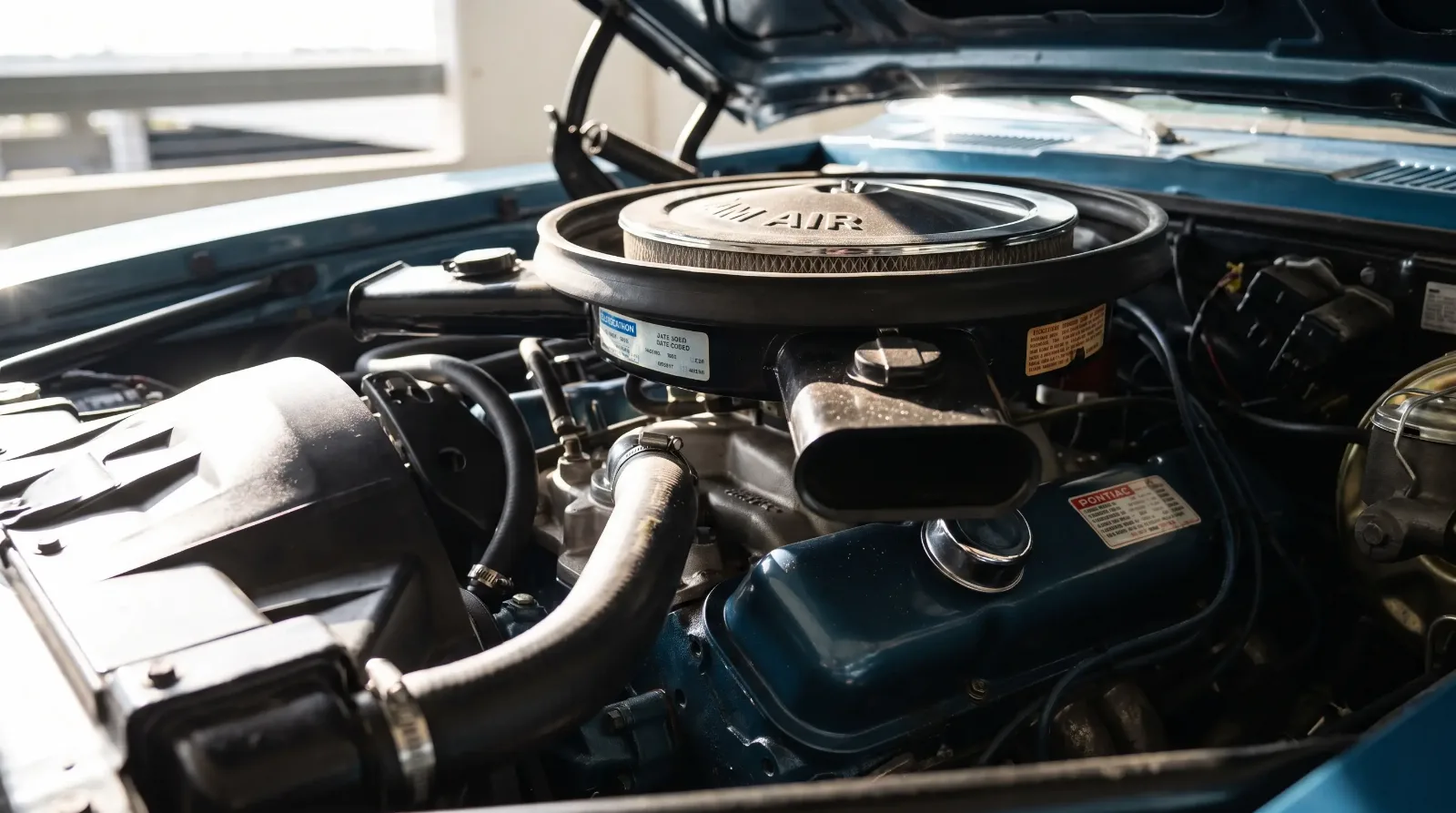
Ram Air is where Pontiac got serious. The name refers to a functional hood scoop feeding cold air to the carb, but the Ram Air packages were far more than a scoop. Each was a different engine build.
- Ram Air (I): 1967 into 1968, the first cold-air 400 with a hotter cam and better breathing.
- Ram Air II: 1968, introduced round-port heads and forged internals. Rare and short-lived.
- Ram Air III: 1969-1970, the volume performance 400, rated 335 hp gross.
- Ram Air IV: 1969-1970, the top dog. Round-port heads, aggressive cam, aluminum intake, rated 345 hp gross at 5,400 rpm.
Here is the honest part. The Ram Air IV's 345 hp rating was catalog fantasy in the polite direction. Pontiac underrated it, partly for insurance reasons, partly for GM's internal power-to-weight rules. The real figure was higher. What made the IV special was not peak horsepower anyway. It was the round-port cylinder heads and the way it pulled to 6,000 rpm while the III ran out of breath earlier.
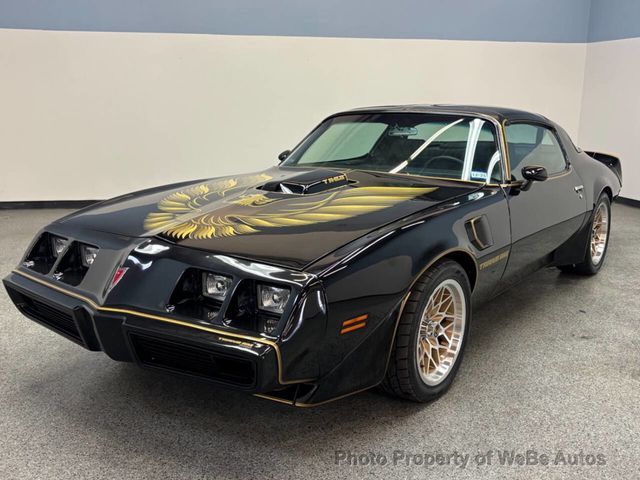
Ram Air IV Firebirds are the ones collectors chase now. Production was tiny. If Trans Am history is your thing, there is another Firebird worth knowing from a very different era, but for raw big-block Pontiac muscle, 1969 to 1970 is the window.
"The Ram Air IV said 345 horsepower on the sticker. It was lying, and everyone at Pontiac knew it. Insurance companies read stickers. Drag strips read timeslips. The timeslips told the truth."
Dan Reeves
The 455 and the SD455 special block
In 1970 Pontiac stretched the block to 455 cubic inches, 7.5 liters. The 455 was a torque engine first. It did not rev like a Ram Air IV. It shoved. Peak torque landed low and hard, and in a heavy Firebird that was exactly the point.
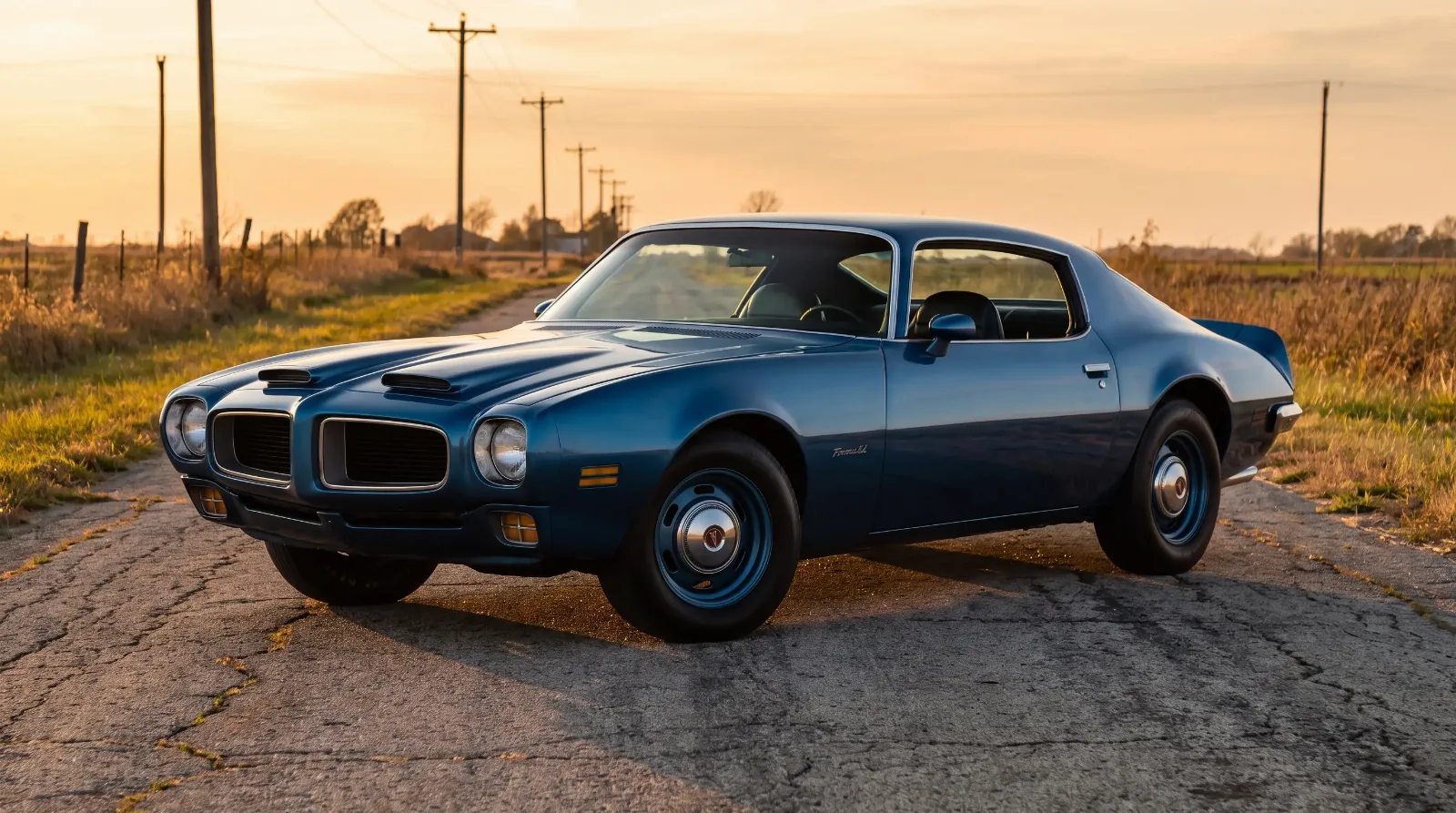
The 455 HO arrived in 1971 with round-port heads, rated 335 hp gross that year, then re-rated to 300 hp net for 1972 as the industry switched to net figures. Compression dropped for low-lead fuel and the gross-to-net shift made every muscle engine look weaker on paper overnight.
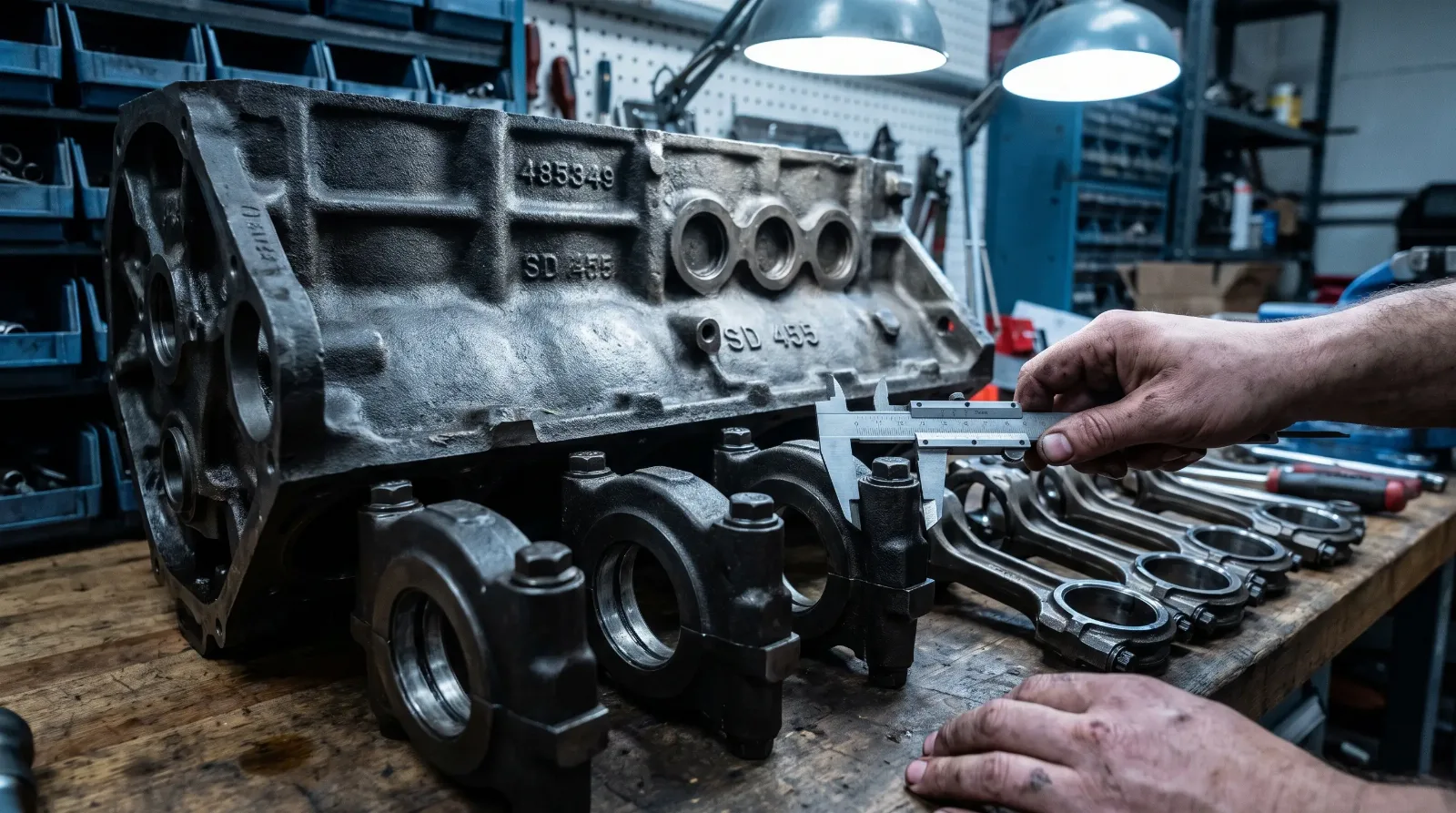
Then came the outlier. The Super Duty 455, the SD455, built for 1973 and 1974. This was a special casting, not a warmed-over 455. Reinforced block with provisions for dry-sump oiling, forged rotating assembly, unique heads. Pontiac initially advertised 310 hp net, then revised the production figure to 290 hp net after the cam was tamed for emissions.
The SD455 is the last real muscle engine Detroit built before the malaise era swallowed everything. In 1973, with the rest of the industry already surrendering, Pontiac shipped a purpose-built race block in a street Trans Am. The numbers on paper were modest. On the track they were not. If you want to see what survives, browse the big-block Firebirds for sale and note how the SD cars sit in a value bracket of their own.
Reading Pontiac engine codes
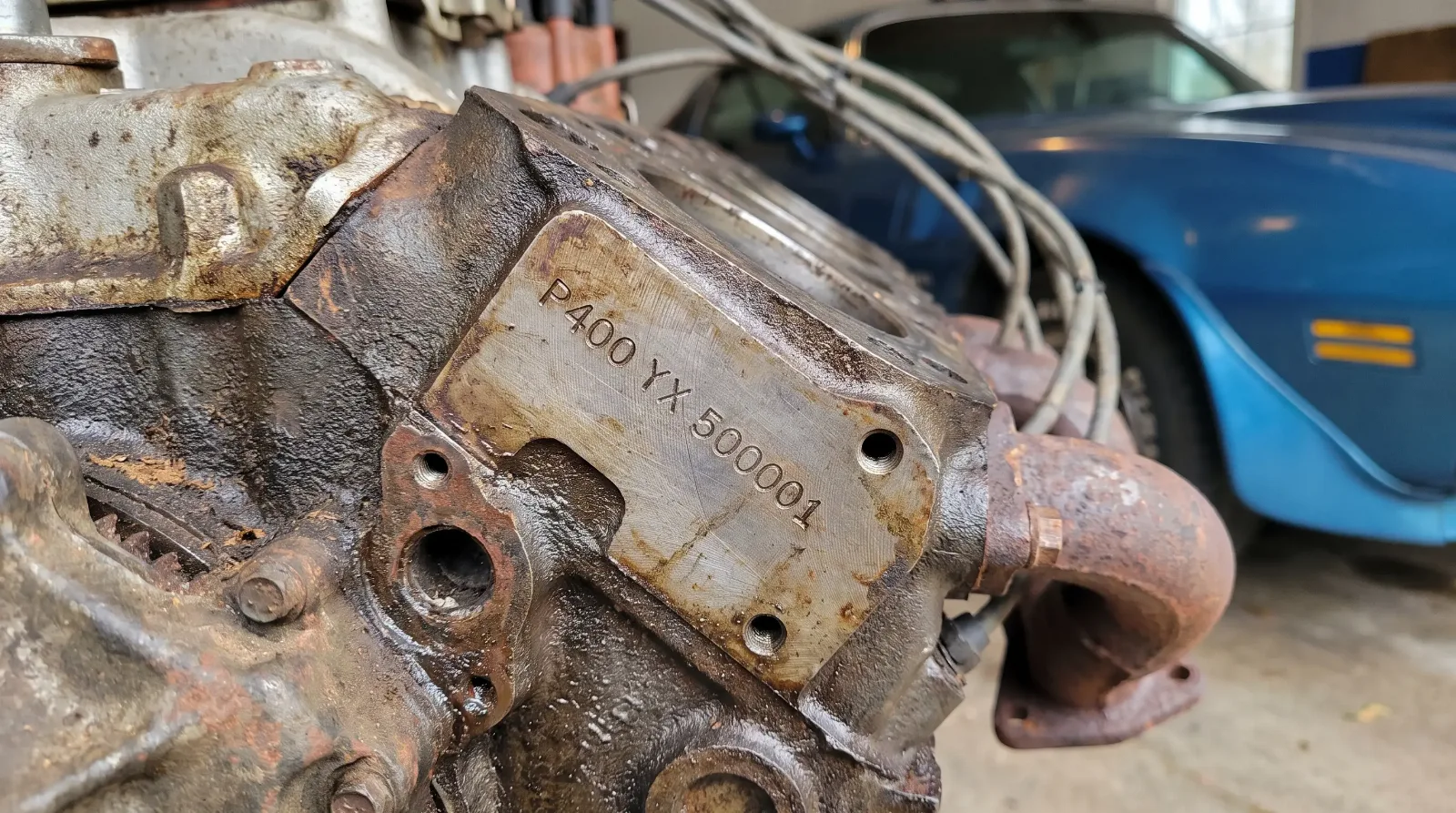
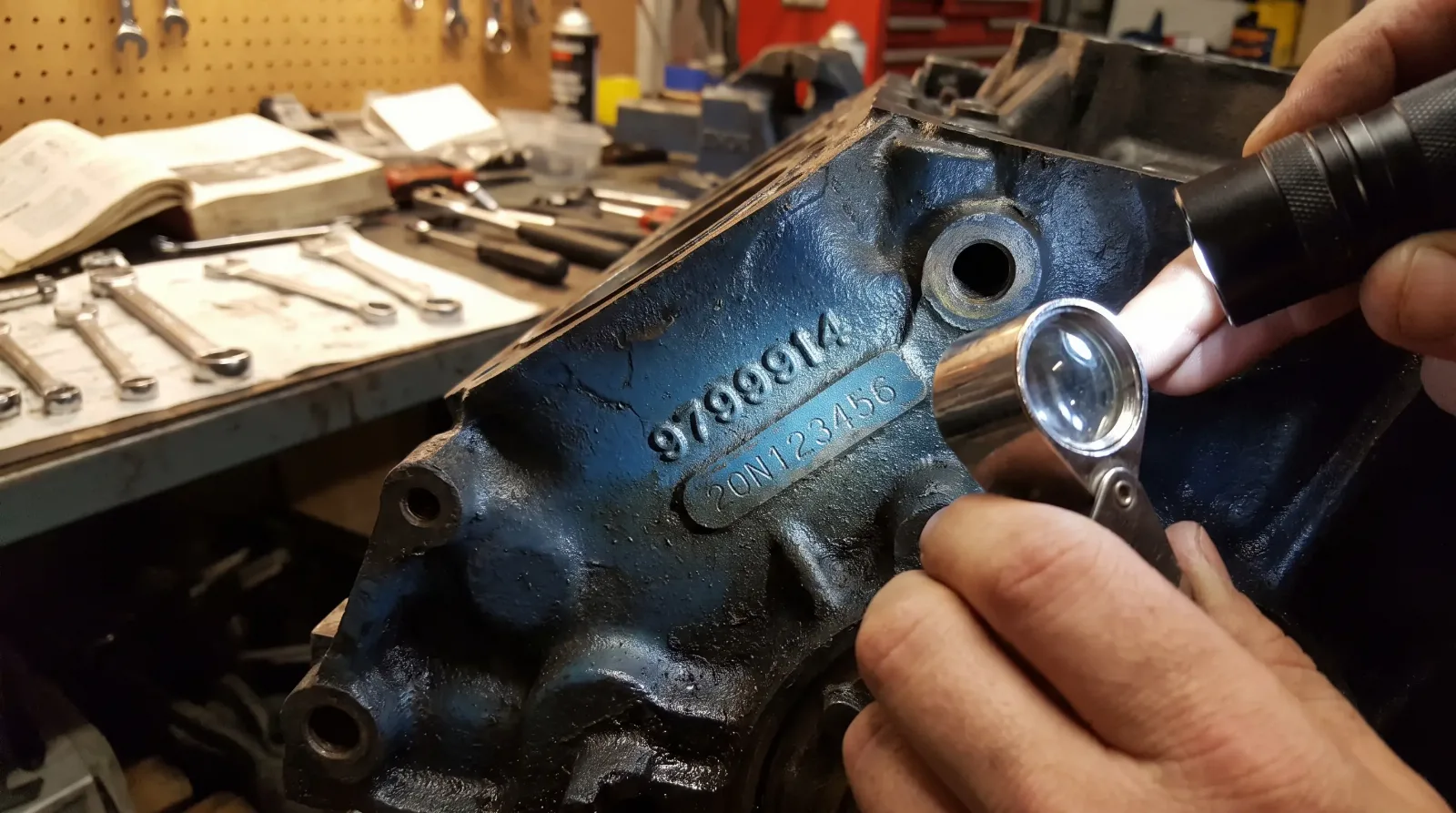
Because every Pontiac V8 looks the same, the codes are how you tell them apart. Pontiac stamped a two-letter code on the front of the block, on a machined pad below the passenger-side cylinder head. That code tells you displacement, application, transmission, and year.
Ram Air IV cars carry codes like WH for 1969 manual-transmission builds and WC for 1970 manual-transmission builds. The SD455 carries a Y8 code on automatic cars. Learn to read the pad and you can separate a genuine Ram Air car from a clone in about thirty seconds. Skip it and you are trusting the seller, which is a bad plan.
Why Pontiac V8s are their own world
Say it one more time because it keeps costing people money. A Pontiac V8 is not interchangeable with a Chevy V8. Different bellhousing pattern from a Chevy. Different water pump. Different distributor. Different oiling. Different everything. You cannot bolt Chevy small-block parts to a Pontiac 400 and you cannot drop a Pontiac 455 in place of a Chevy 350 without changing mounts, trans, and accessories.
Pontiac shared its bellhousing pattern with Buick and Oldsmobile, the old BOP family, not with Chevy. That is why a Firebird and a Camaro, sister cars on paper, do not share a single engine part below the badge.
This is also why Pontiac engines are a specialist's game today. Parts come from Pontiac-specific suppliers. Machine work needs a shop that knows the quirks. The upside is that a correct, coded, numbers-matching Pontiac Firebird engine is a known quantity with a real following, and the market rewards the ones that were never molested. Buy the engine first and the car second. With Pontiacs, the block is the whole story.
Sources and notes
Related Reading
Article
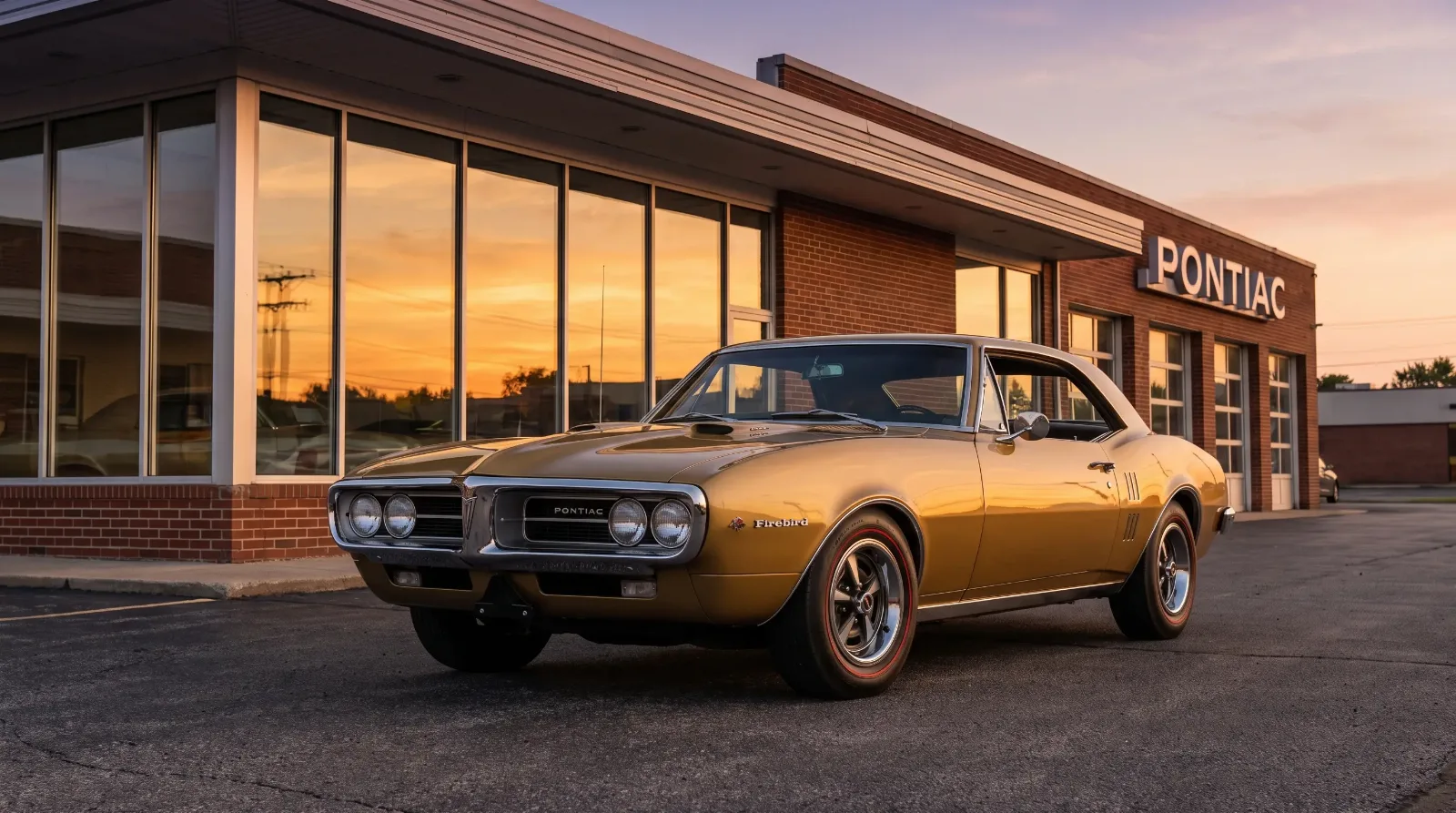
The Pontiac Firebird Story: From 1967 to the Screaming Chicken
Article
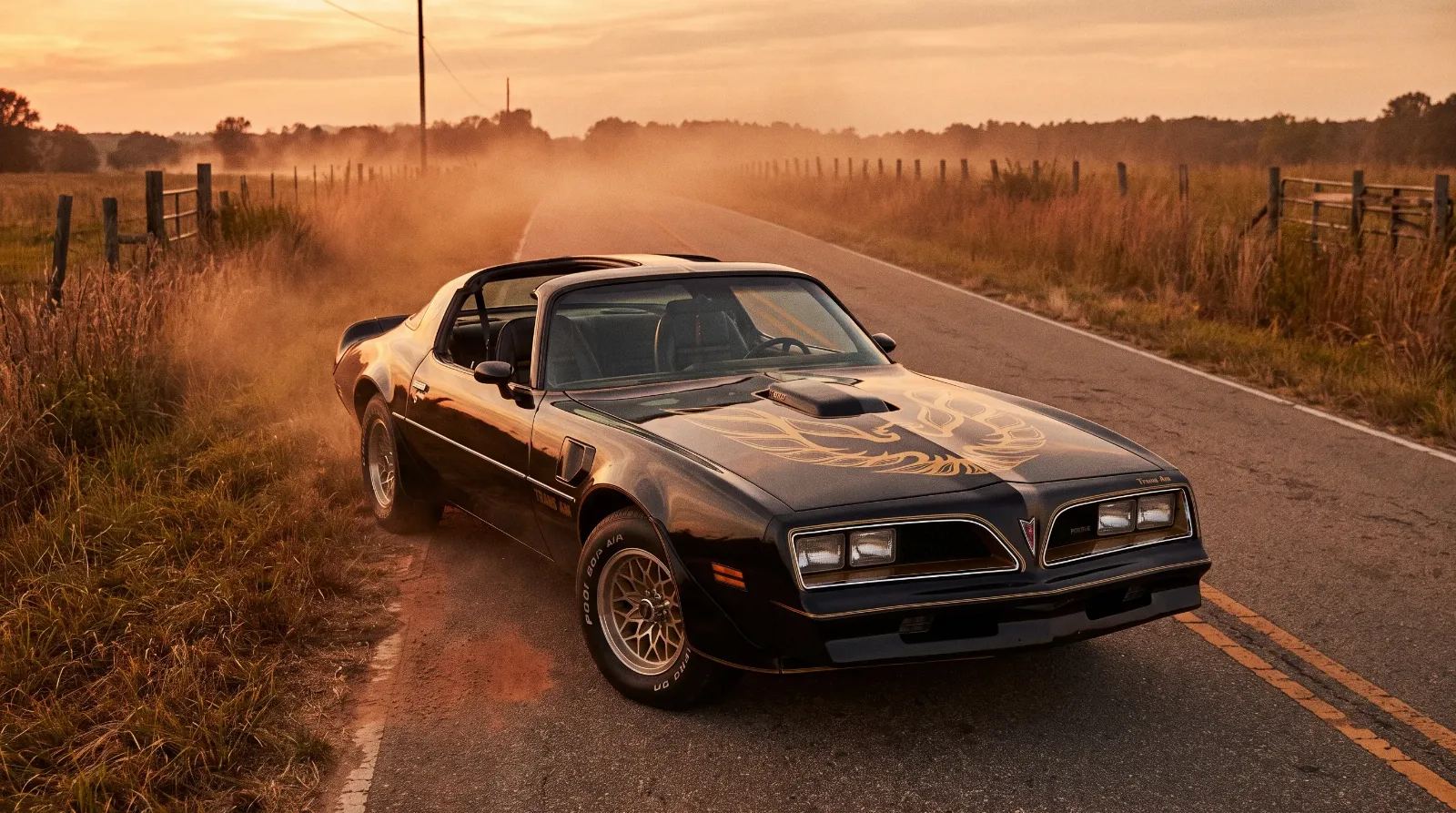
Smokey and the Bandit: How Hollywood Made the Trans Am a Star
Article
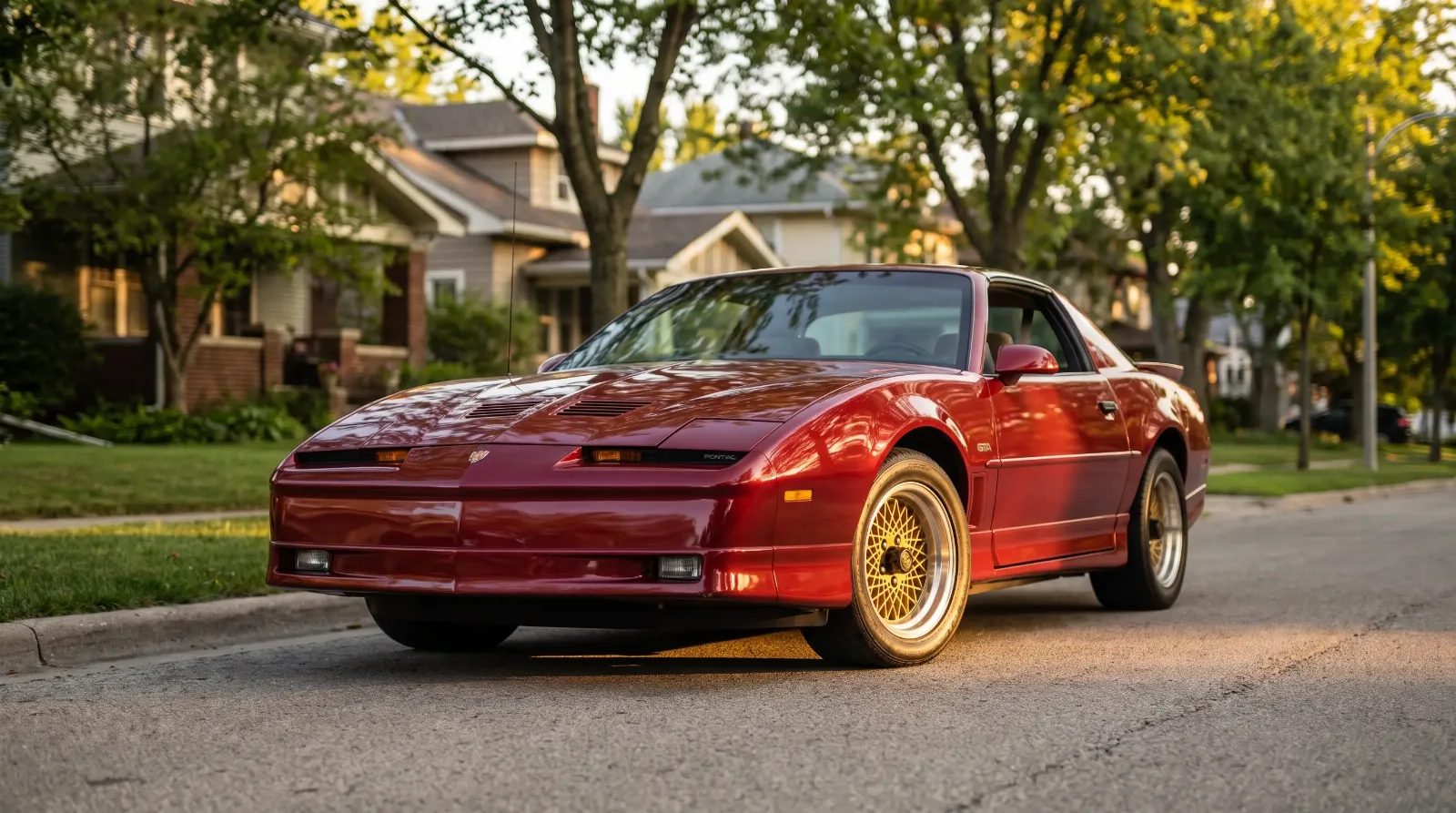
Third-Generation Firebird 1982-1992: The Aero Era
Article
The Pontiac 400: The Firebird's Heart
Article
The 455 HO
Article
Ram Air I Through IV Explained
Article
The SD455's Special Block
Article
Pontiac's One-Block Design Philosophy
Article
The OHC-6 Sprint
Article
The 350 and 326 Small Pontiacs
Article
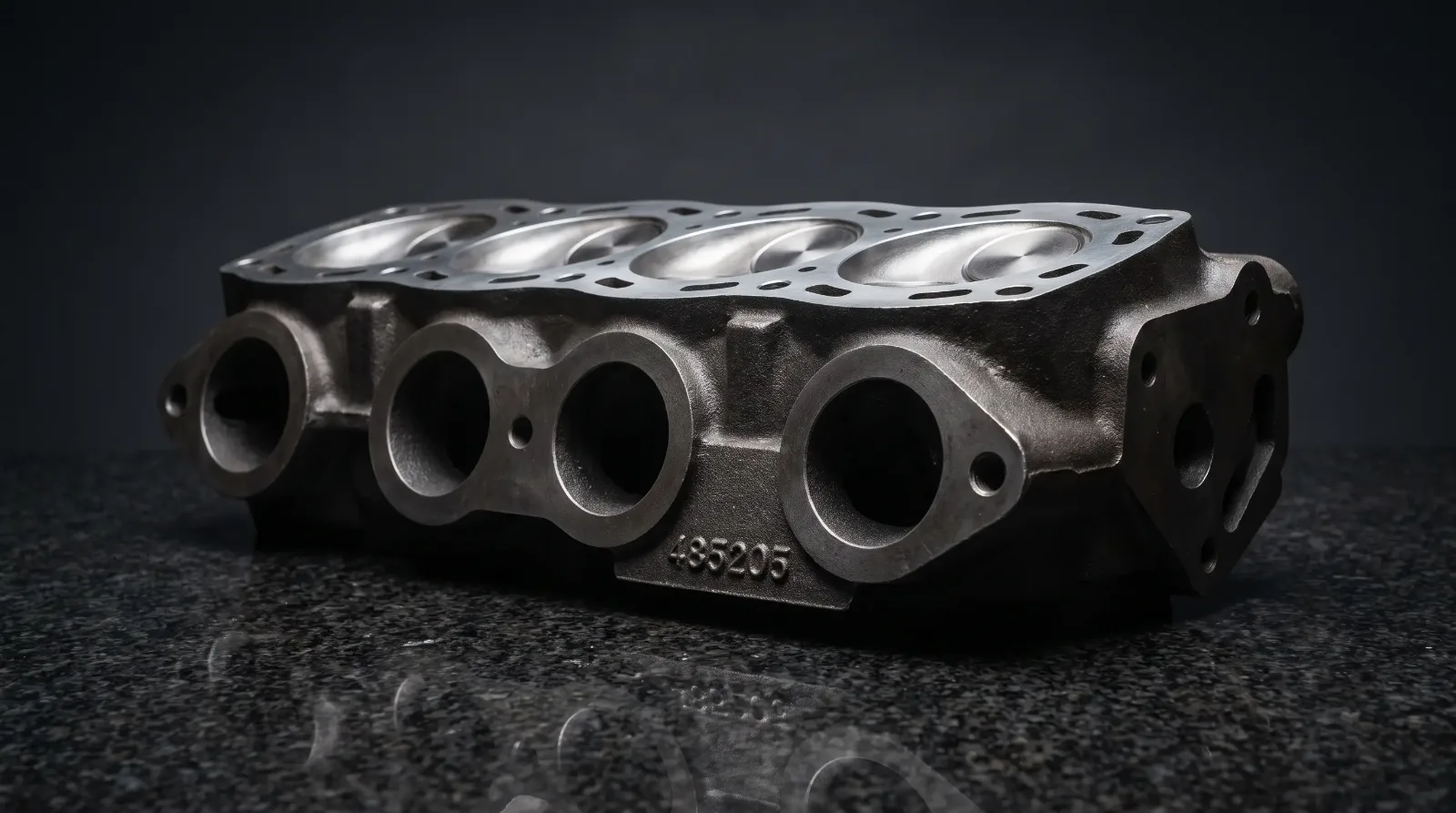
Reading Pontiac Engine Codes
Article
Round-Port vs D-Port Heads
Article
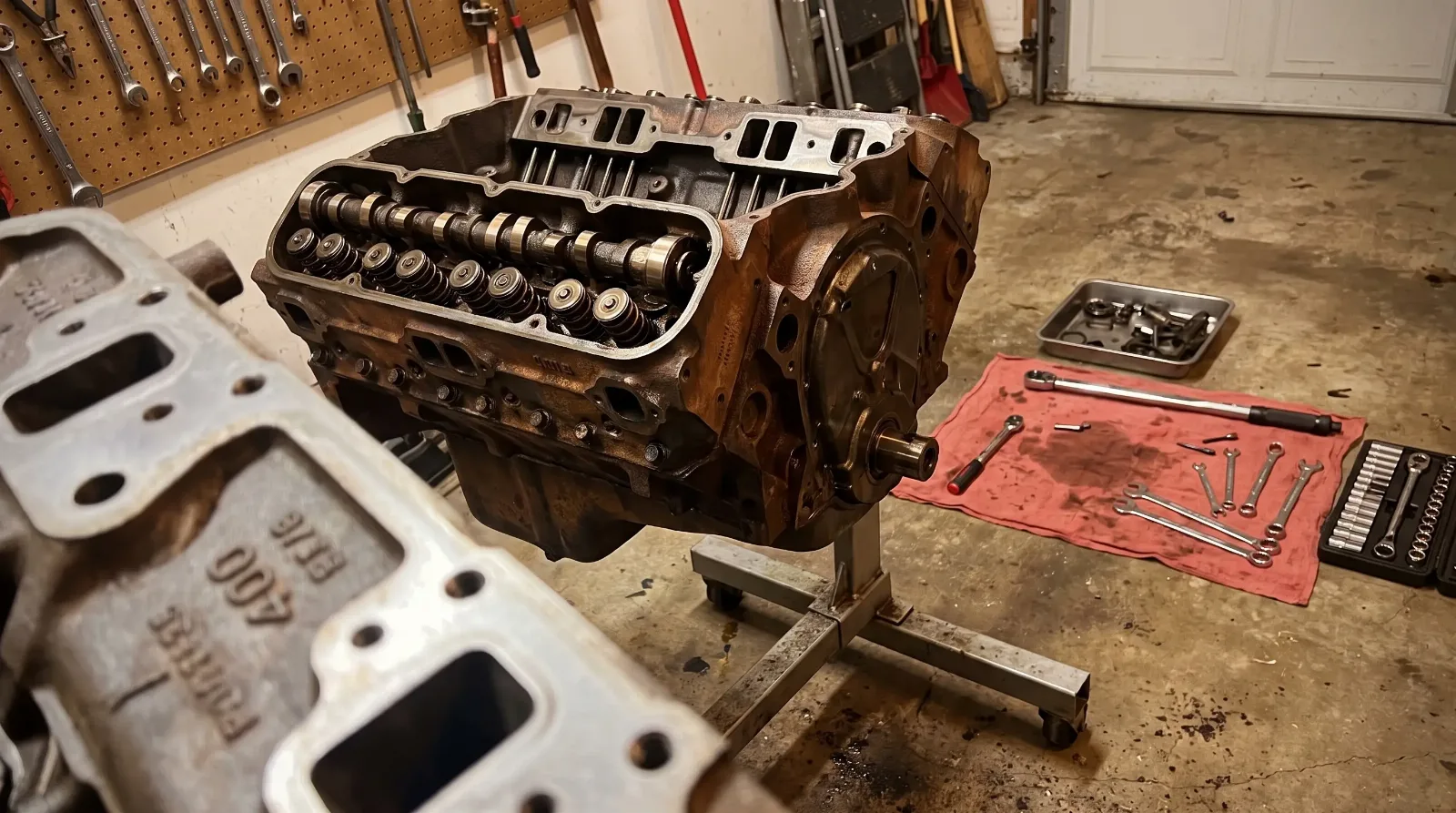
Rebuilding a Pontiac 400
Article
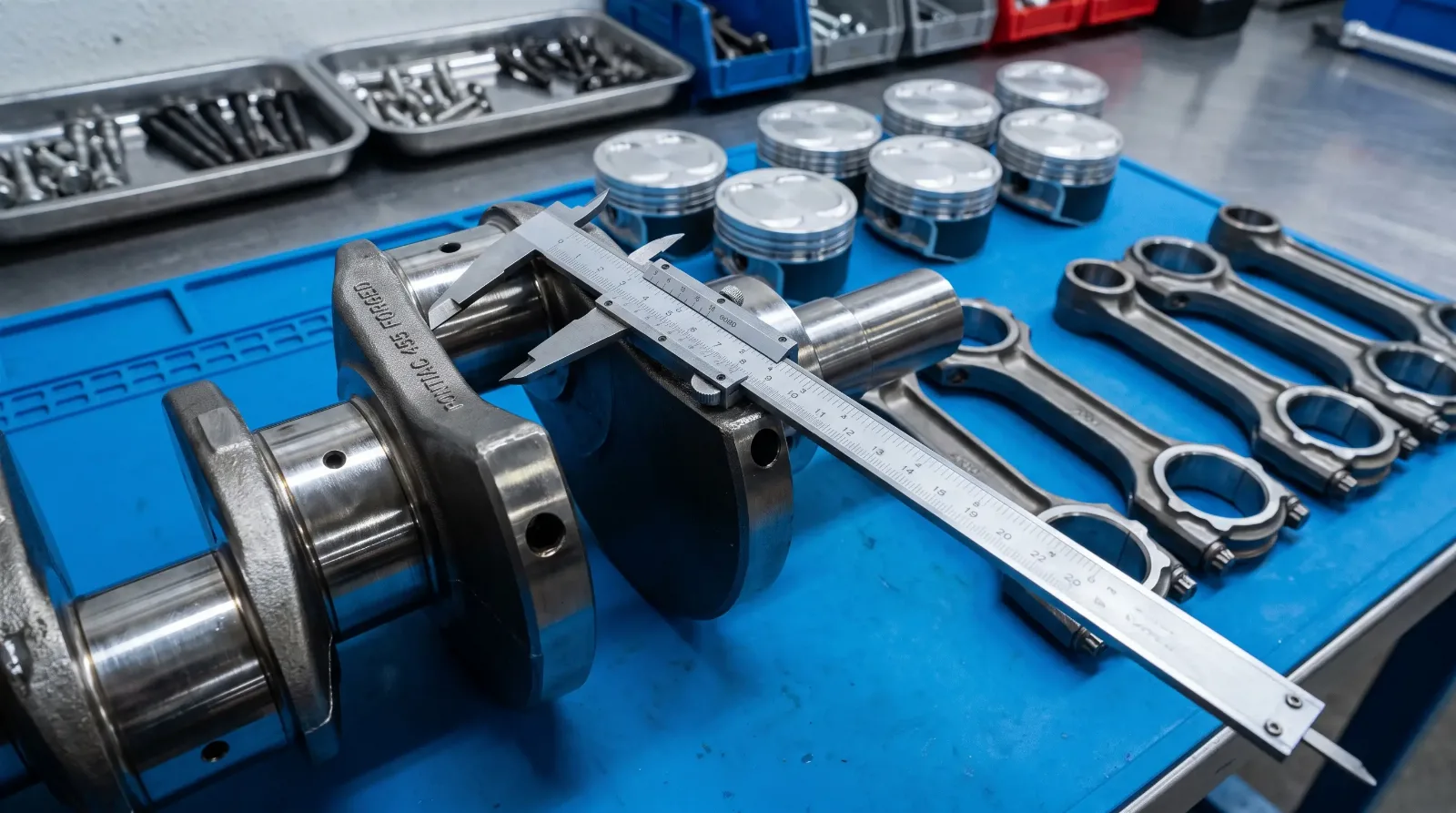
The 455 Torque Monster
Article
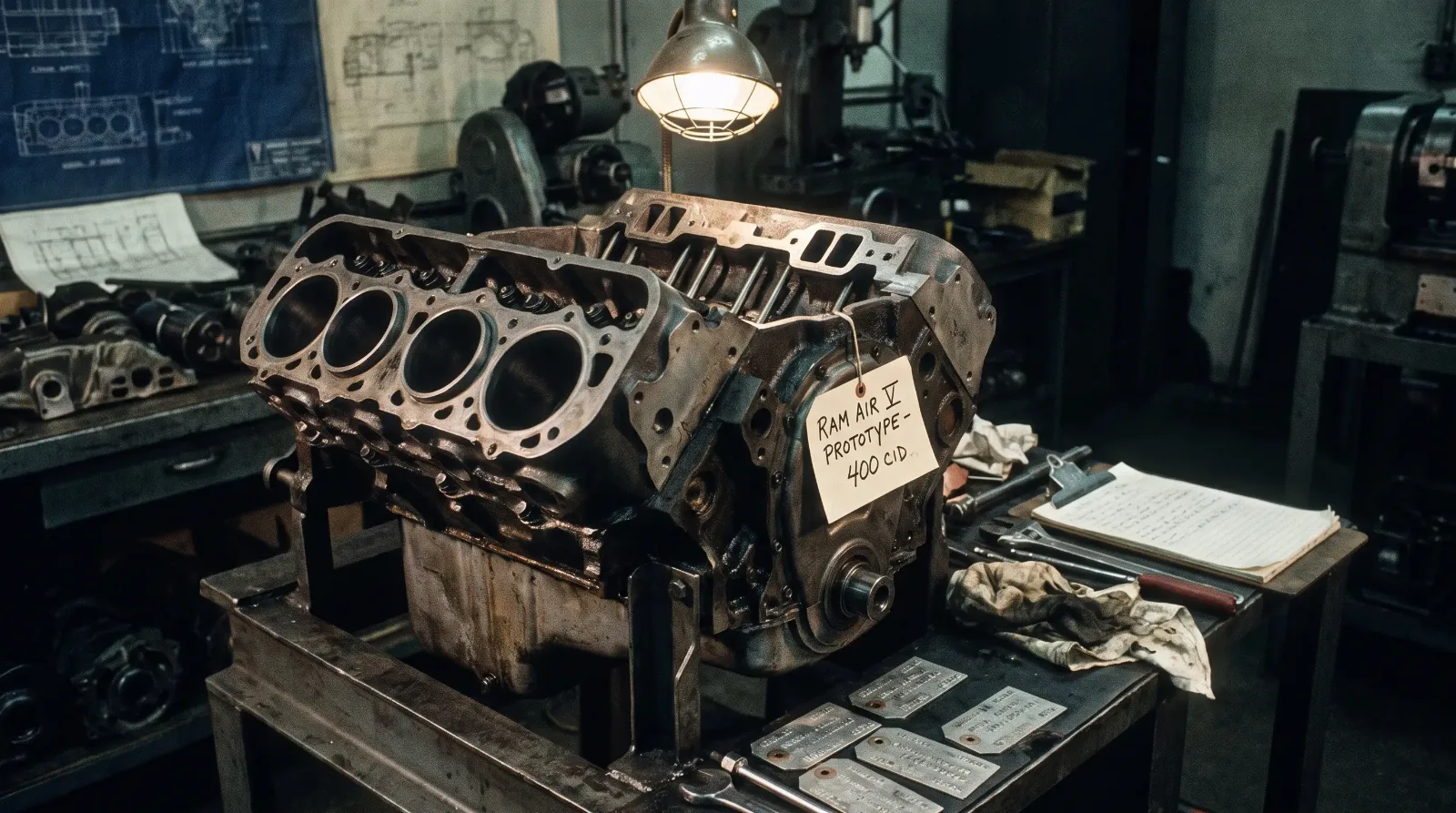
Ram Air V: The Engine That Never Shipped
Article
Pontiac vs Chevy Big-Block
Article
Numbers-Matching Pontiac Firebirds
Article
Why Pontiac V8s Are Their Own World
Have a
Pontiac Firebird
for Sale?
Reach thousands of serious classic car collectors across the US.
Sell It Here →
Are You a Classic Car Dealer?
List your full inventory and connect with targeted classic car buyers.
Join as a Dealer →

About the author
Dan Reeves
Performance engine builder from North Carolina's motorsports corridor, focused on swaps, forced induction and making real, repeatable power.
Related Listings - Pontiac Firebird




Comments
Be the first to comment on this article.