A proportion that changed American cars
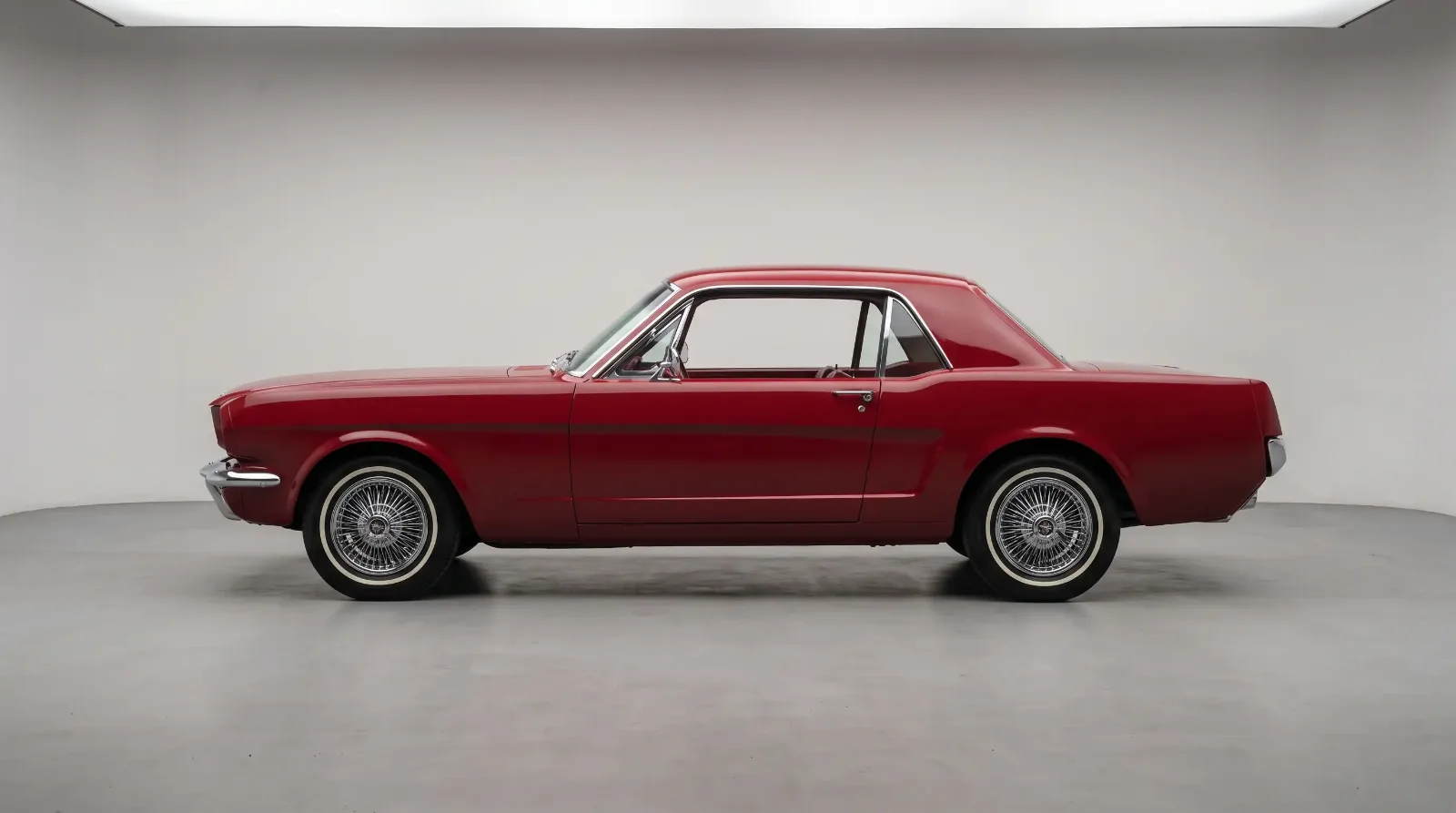
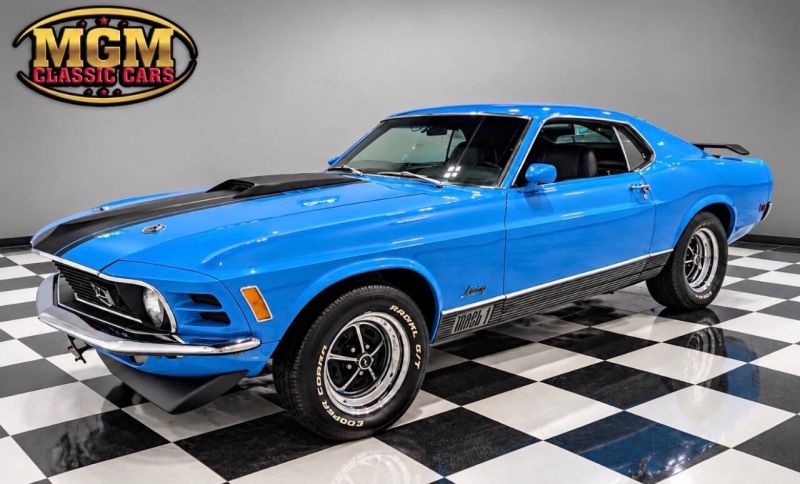
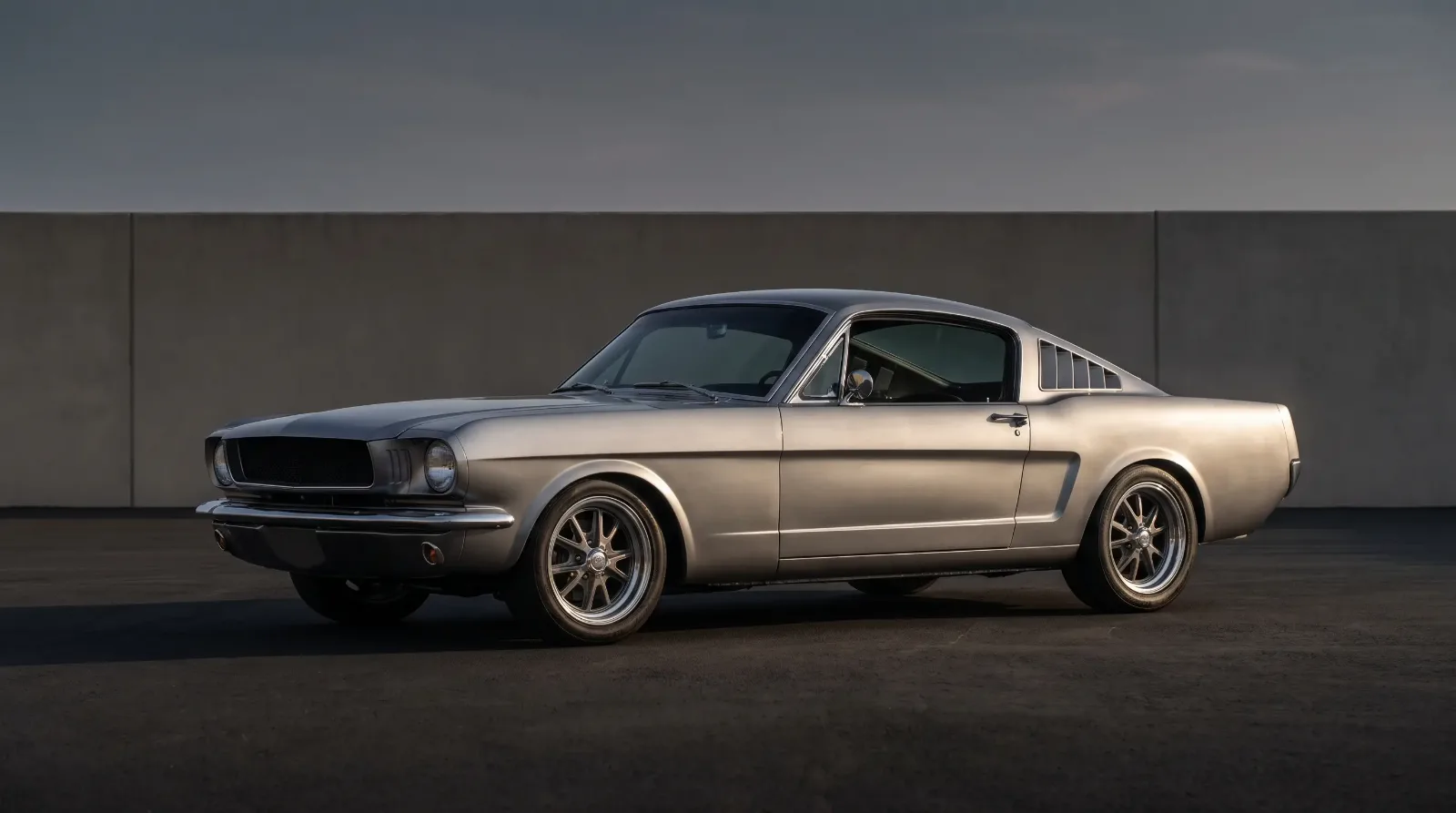
Before the Mustang arrived in April 1964, the American mass-market car was organized around a different set of priorities. Bench seats, tall rooflines, and generous trunk volumes told the story of a vehicle built for families and long hauls. What classic Mustangs introduced was a radically different visual grammar, one borrowed from European GT coupes and applied to a price point that secretaries and factory workers could reach. The key to that grammar was proportion: a hood stretched long and low, a passenger compartment pushed rearward, and a deck lid cropped short behind the rear axle. That arrangement, which engineers and designers came to call long-hood/short-deck, did not merely look fast. It implied a mechanical logic, and the American public responded as though it recognized something it had always wanted but never been offered.
European roots and the Mustang I concept
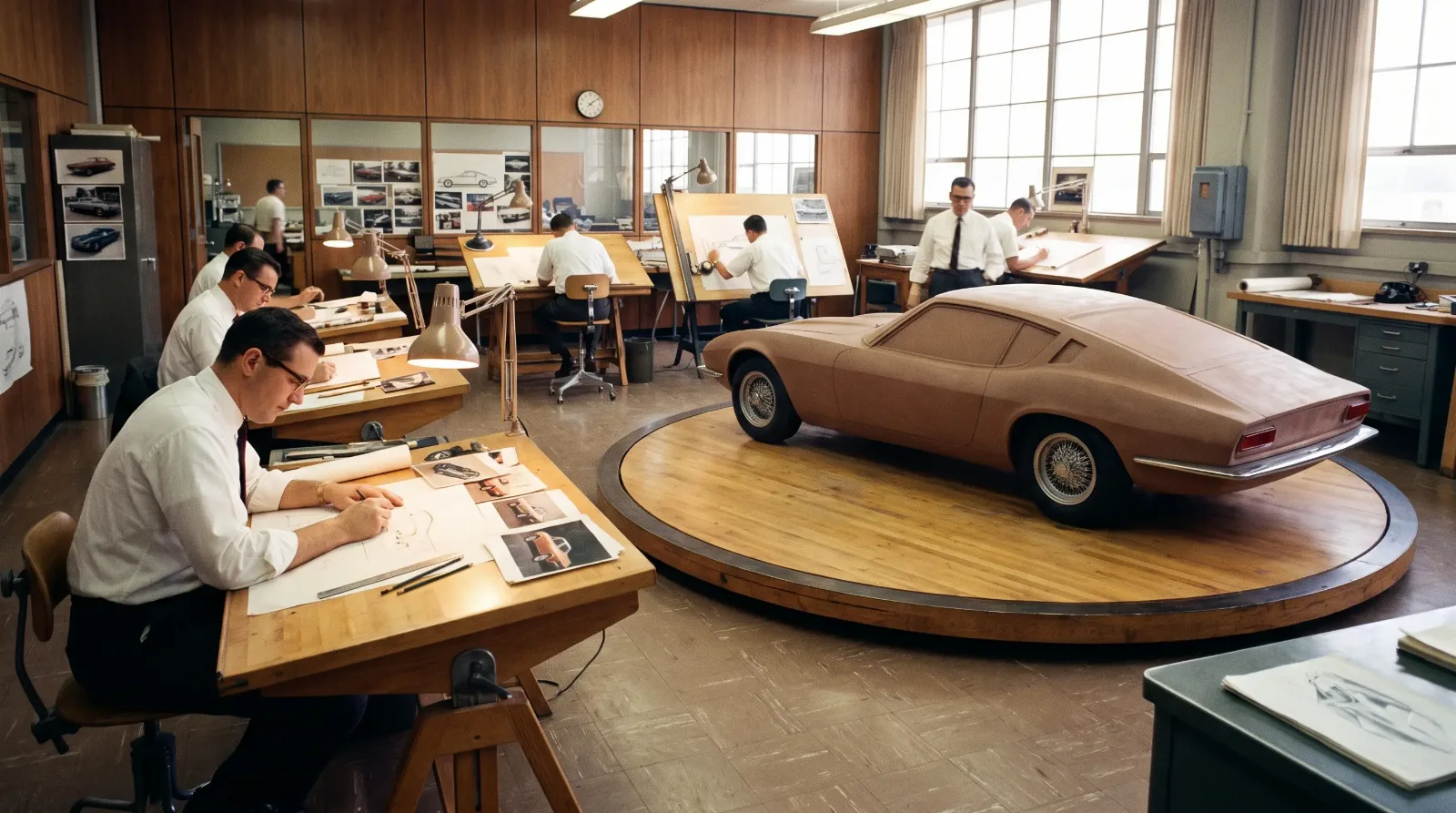
Ford's design team under Joe Oros and L. David Ash did not arrive at the mustang long hood short deck proportion by accident. The aesthetic had already been refined on European roads, most visibly in the small GT coupes coming out of Britain and Italy in the late 1950s and early 1960s. Cars like the Jaguar E-Type and various Alfa Romeo coupes established that a long bonnet over a front-mounted engine, combined with a compressed tail, produced a visual weight distribution that read as athletic even at rest.
Ford tested the concept formally with the Mustang I, a two-seat mid-engine roadster displayed at the United States Grand Prix at Watkins Glen in October 1962. The Mustang I was a genuine engineering study, not merely a styling exercise, and it made no direct visual contribution to the production car. Its wheelbase was too short and its configuration too exotic for a volume product. But the exercise confirmed something important inside Ford: the American buying public was ready for a car that looked like it belonged on a European circuit. When the production Mustang was approved, the design brief called for that same sense of purpose, executed within the constraints of a shared Falcon platform and an entry price under $2,500.
How the proportion implies power
The psychology behind the long-hood/short-deck arrangement is straightforward once stated plainly. A long hood suggests a large engine bay. A large engine bay suggests a large engine. A large engine suggests speed. None of these inferences need to be true in a specific car for the visual effect to work. The base Mustang in 1964 carried a 170-cubic-inch inline six producing 101 horsepower, an engine that would have embarrassed itself against most European sports cars of the period. But the car did not look like a six-cylinder economy coupe because the proportion refused to read that way.
The short deck compresses the visual mass at the rear, which pushes the eye forward toward the hood. European GT designers understood this intuitively. A car with a long tail and short hood reads as a touring car, settled and luggage-oriented. Reverse the proportion and the same mass of steel reads as purposeful and front-loaded. Ford's stylists used the short deck to reinforce the impression that the car was poised rather than parked.
The fastback variant introduced for 1965 extended this logic further. The roofline flowing into the truncated tail maintained the compressed rear visual while adding a roofline angle that referenced genuine racing coupes of the period. In Mustang design terms, the fastback was the proportion taken to its logical conclusion: every surface angled toward the front, and the shortest possible interruption between the rear wheels and the end of the car.
"Strip the badges and the chrome off any pony car from that era and you are looking at the same argument about where to put the visual weight, and Ford got there first."
Jim Vasquez
The template every pony car copied
The Mustang's commercial success made the long-hood/short-deck proportion impossible for competitors to ignore. Ford sold roughly 418,000 cars in the model's first twelve months on the market, a figure no rival could dismiss as a niche result. General Motors responded on two fronts. The Chevrolet Camaro, introduced for 1967, adopted the proportion directly, with a hood stretched over a front-mounted engine bay sized to accept the 396-cubic-inch big block while maintaining a compressed tail. The Pontiac Firebird, launched at the same time on the same F-body platform, made the same choice.
Chrysler's answer came with the Plymouth Barracuda's 1967 redesign and the Dodge Challenger introduced for 1970. Both cars used the long-hood/short-deck arrangement as their organizing principle, and the Challenger in particular took front-end length to an extreme, its hood stretching to accommodate big-block engines as large as the 426 Hemi and the 440 Six Pack. AMC joined the segment with the Javelin in 1968, again applying the same proportion.
What is notable about this pattern is that the competitors were not simply copying a styling trend. They were acknowledging that the proportion had become definitional to the category. A car that wanted to compete in the pony car segment was required to speak the same visual language. The long-hood/short-deck arrangement was no longer a design choice. It was the genre's grammar.
Why it still reads as sporty today
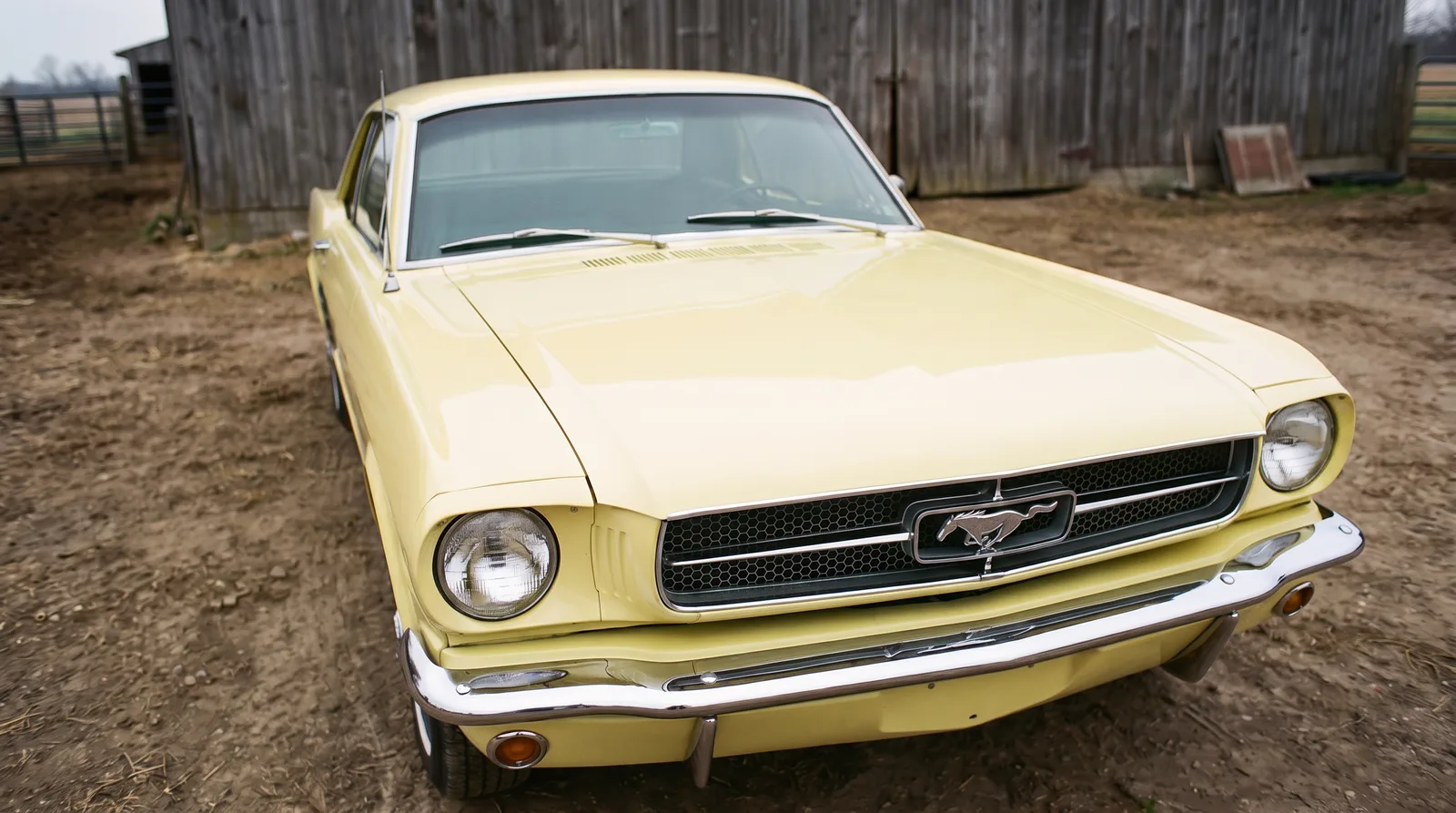
More than sixty years after the original Mustang went on sale, the proportion retains its effect on observers who have never seen a 1960s advertisement and have no conscious knowledge of its automotive history. This staying power suggests that the arrangement connects to something more durable than fashion. Only the running horse in the grille is as closely tied to the car's identity, and that emblem has a story of its own.
Part of the explanation is mechanical honesty. Front-engine, rear-wheel-drive performance cars genuinely do have long engine bays and compressed passenger compartments. The proportion that Ford borrowed from European GT coupes reflected a real engineering configuration, which meant it did not read as cosmetic decoration. When modern automakers return to the proportion, as Ford did with the fifth-generation Mustang introduced for 2005 and carried forward through subsequent iterations, the visual effect reactivates because the underlying logic has not changed.
There is also a temporal dimension. Generations of moviegoers and television viewers have seen the proportion associated with chase scenes, muscle, and speed across decades of American popular culture. The association has compounded. A car that wears a long hood and a short deck arrives carrying that accumulated meaning, whether the person looking at it can articulate the source or not. The Mustang did not invent this response, but it was the car that embedded the proportion into American automotive consciousness at scale, and the echoes are still audible in every performance car sold today that places its engine forward and trims its tail short.
Sources and notes
This article is an editorial perspective on automotive design and history. Specifications and production figures were cross-checked against the sources below at the time of writing; period figures can vary slightly between references, and exact hood dimensions are not an official factory specification. Readers verifying details for restoration or valuation should confirm against primary Ford documentation.
- Ford Mustang: Wikipedia (first-year sales record of 418,812 cars; model history)
- SlashGear: The Inline-Six That Powered the First Mustang (170-cubic-inch six rated at 101 horsepower)
- Conceptcarz, 1965 Ford Mustang Specifications & Dimensions (181.6-inch overall length, 108-inch wheelbase)
- Chevrolet Camaro (first generation): Wikipedia (1967 SS 396 big-block availability)
- Dodge Challenger (1970): Wikipedia (426 Hemi and 440 Six Pack engine options)