The shape that started a class
When the Ford Mustang arrived in April 1964, it did not introduce a new engine or a new chassis. Most of its hardware came straight from the Falcon compact. What it introduced was a shape, and that shape was so well resolved that it created a whole category of car. The long hood, the short rear deck, the low roofline and the forward-leaning stance read instantly as sporting, even on a six-cylinder secretary's coupe. The Mustang design did not just sell a car. It sold a feeling of motion while standing still, and a generation of drivers bought into it.
This article is the hub for how the first-generation Mustang looked and why it worked. It covers the core design language and the way that language changed across the 1964½ to 1973 run. The deeper stories, individual model histories and the full origins of the car belong elsewhere; for the broad arc, start with the classic Mustang story. Here the subject is form: proportion, body styles, era-by-era evolution, the people who drew it, and the running-horse identity that tied it all together.
Long hood, short deck: the proportions that defined a class
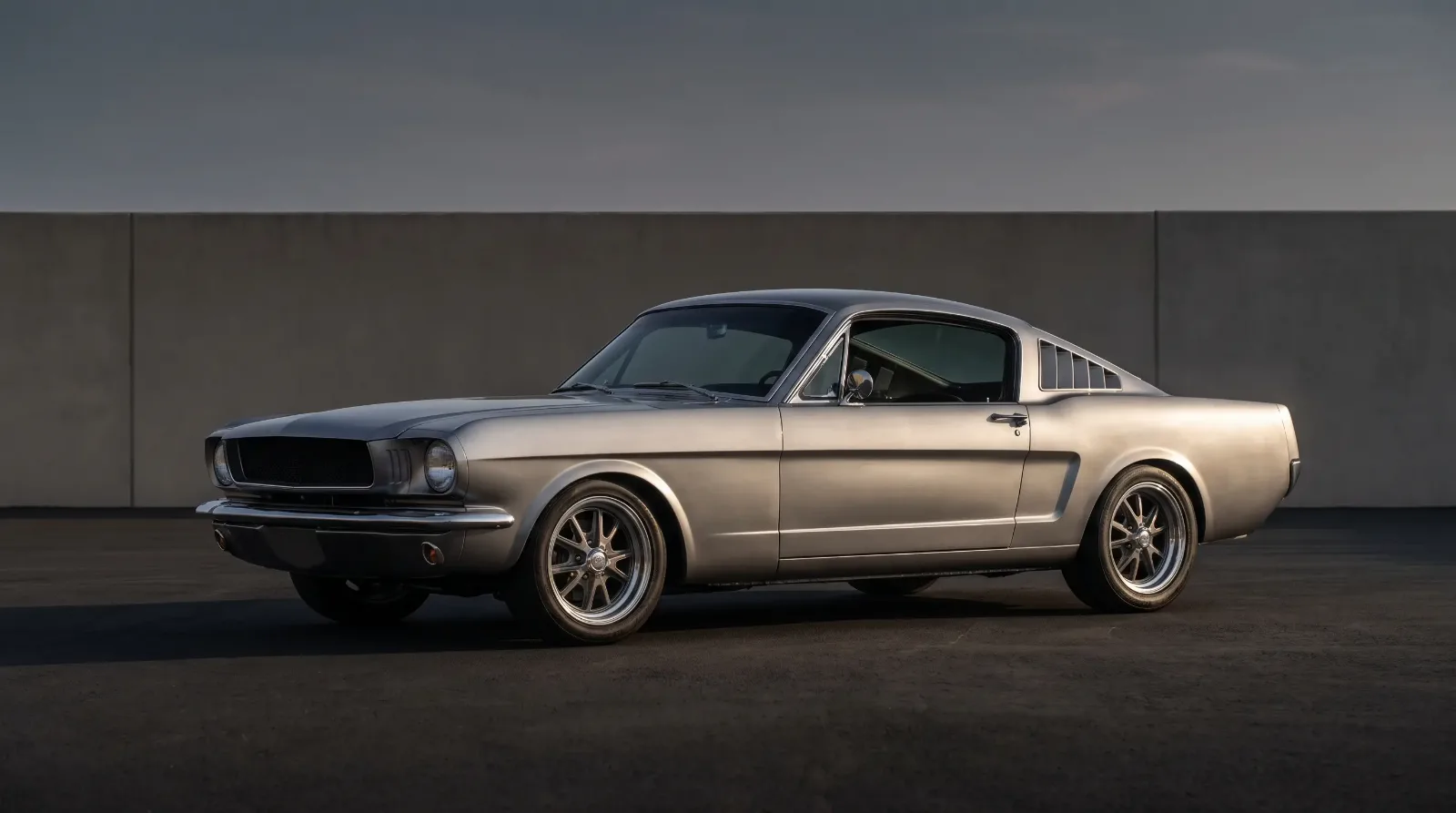
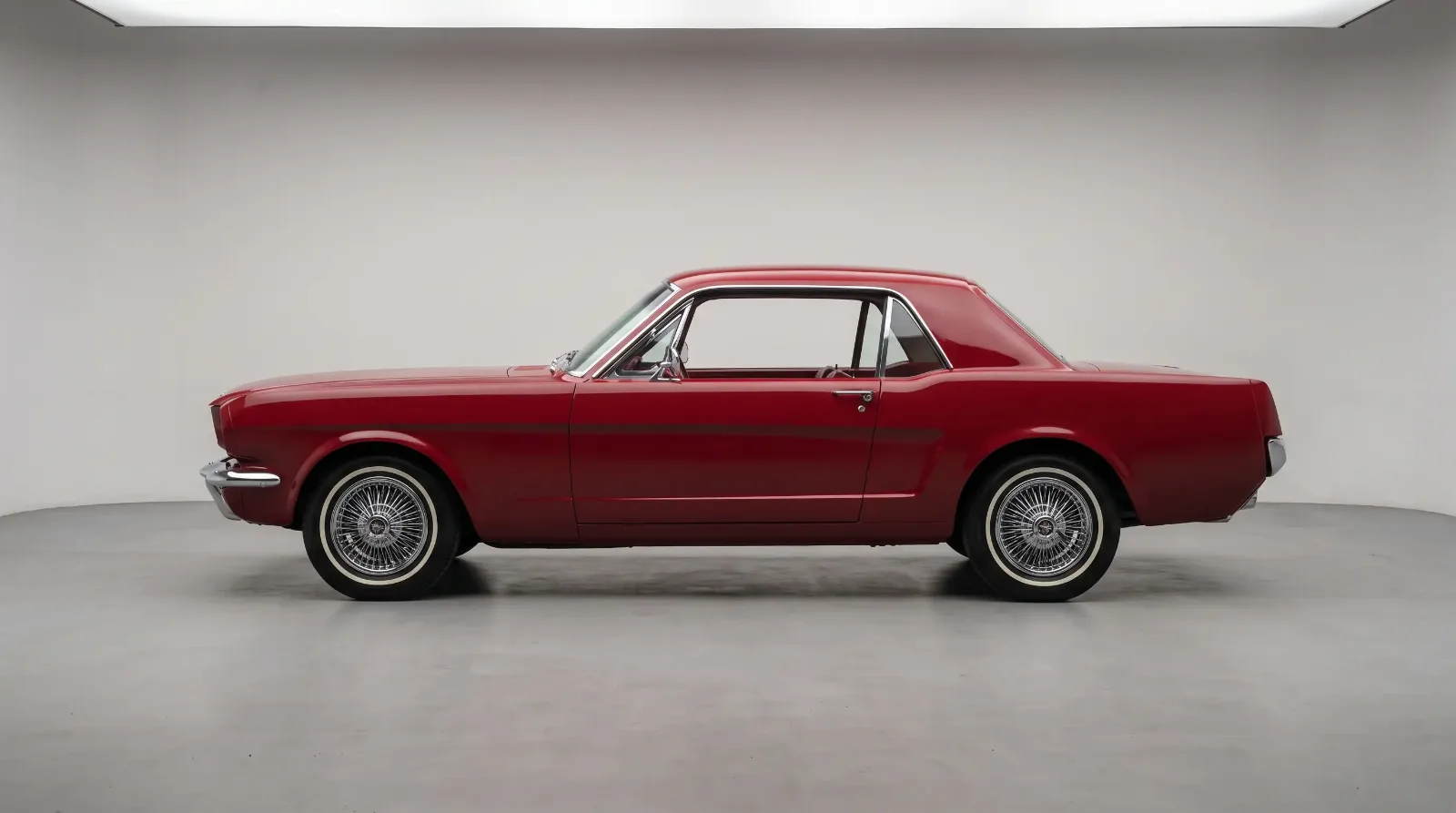
The single most important decision in the Mustang's appearance was its proportion. The car sits on a relatively short wheelbase, around 108 inches on the early cars, yet the designers pushed the passenger cabin rearward and stretched the hood forward. That long-hood, short-deck balance is the visual signature of what the industry came to call the pony car, a class the Mustang named and defined.
The effect is psychological as much as physical. A long hood implies a large engine and power held in reserve, even when a 170 cubic inch straight six sat underneath. A short deck pulls the visual mass forward and makes the car look ready to launch. Add the low beltline, the sculpted side scoops ahead of the rear wheels and the simple grille with its floating horse, and the package looked expensive without being expensive. Ford priced the base car at 2,368 dollars at launch, which put the look within reach of buyers who could never have afforded a European sports car.
Designers reinforced the proportion with detail. The side cove, a long concave sculpture running from the front wheel to the rear, drew the eye along the body and emphasized length. The forward-canted nose and the rearward cabin created a sense of a wedge leaning into the wind. None of this was accidental. It was the result of a styling brief that asked for a sporty, personal car that any buyer could feel proud to park in the driveway.
Three body styles, three design statements
The first-generation Mustang launched in two body styles and gained a third within months, and each one expressed the long-hood, short-deck idea differently.
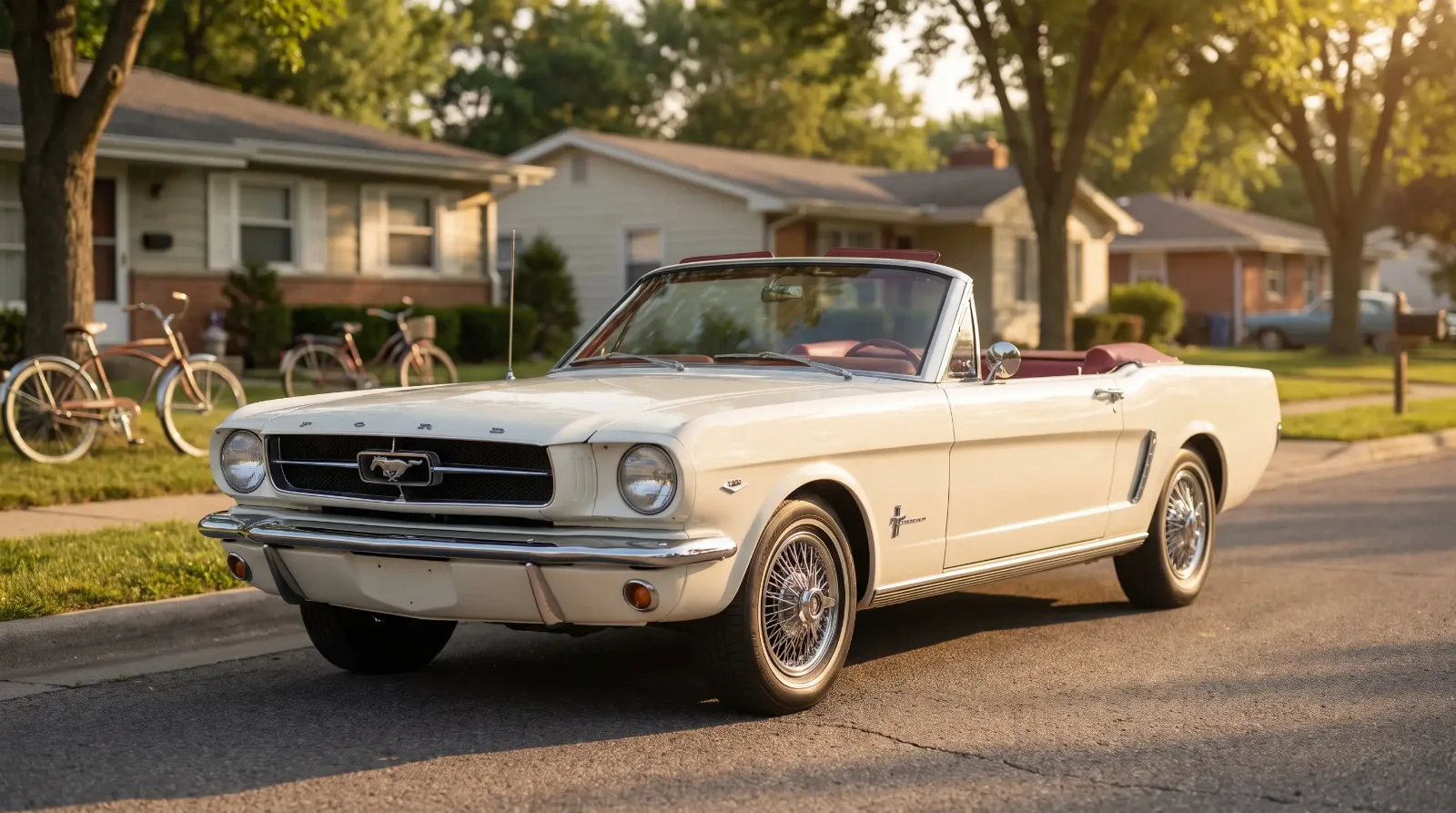
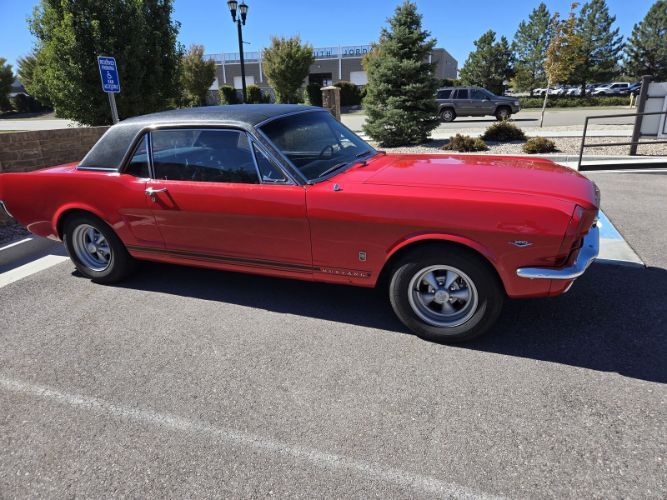
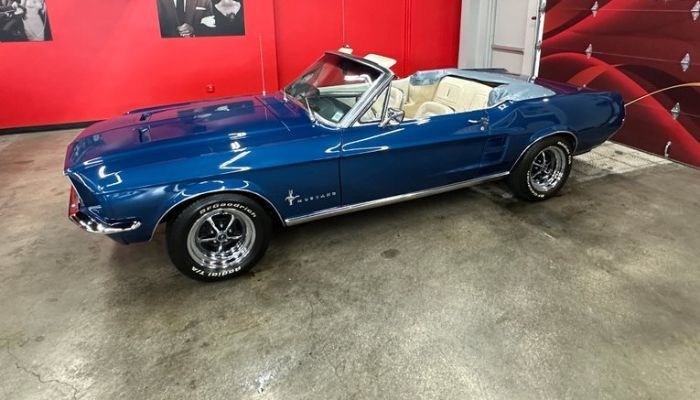
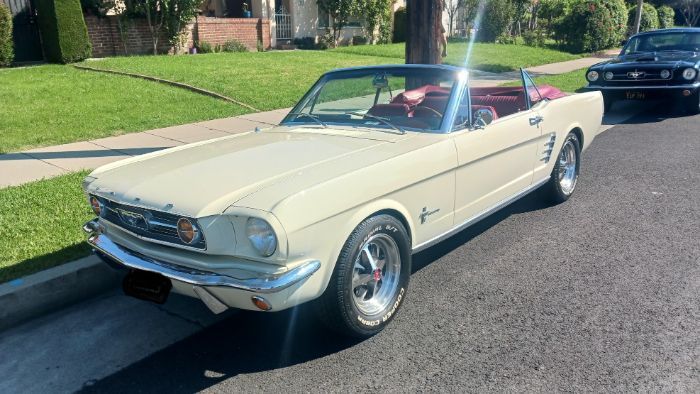
The hardtop coupe was the volume seller and the purest statement of the original proportion. Its formal roofline and crisp rear quarters gave it a balanced, upright elegance that aged well. The convertible took the same body and removed the roof entirely, exposing the full sweep of the beltline and turning the proportion into something openly glamorous. With the top down, the long hood read even longer and the car looked like the promise in its own advertising.
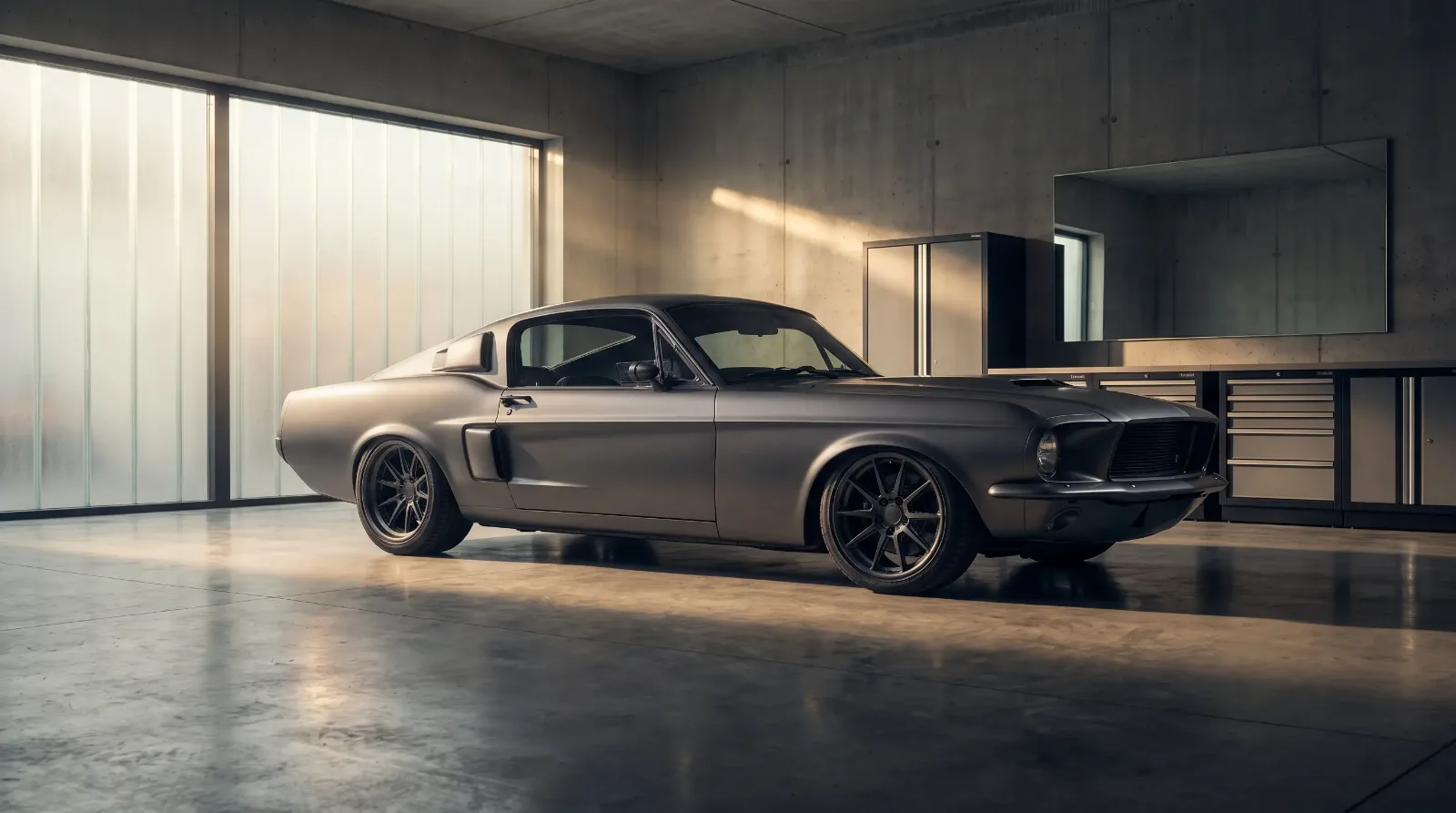
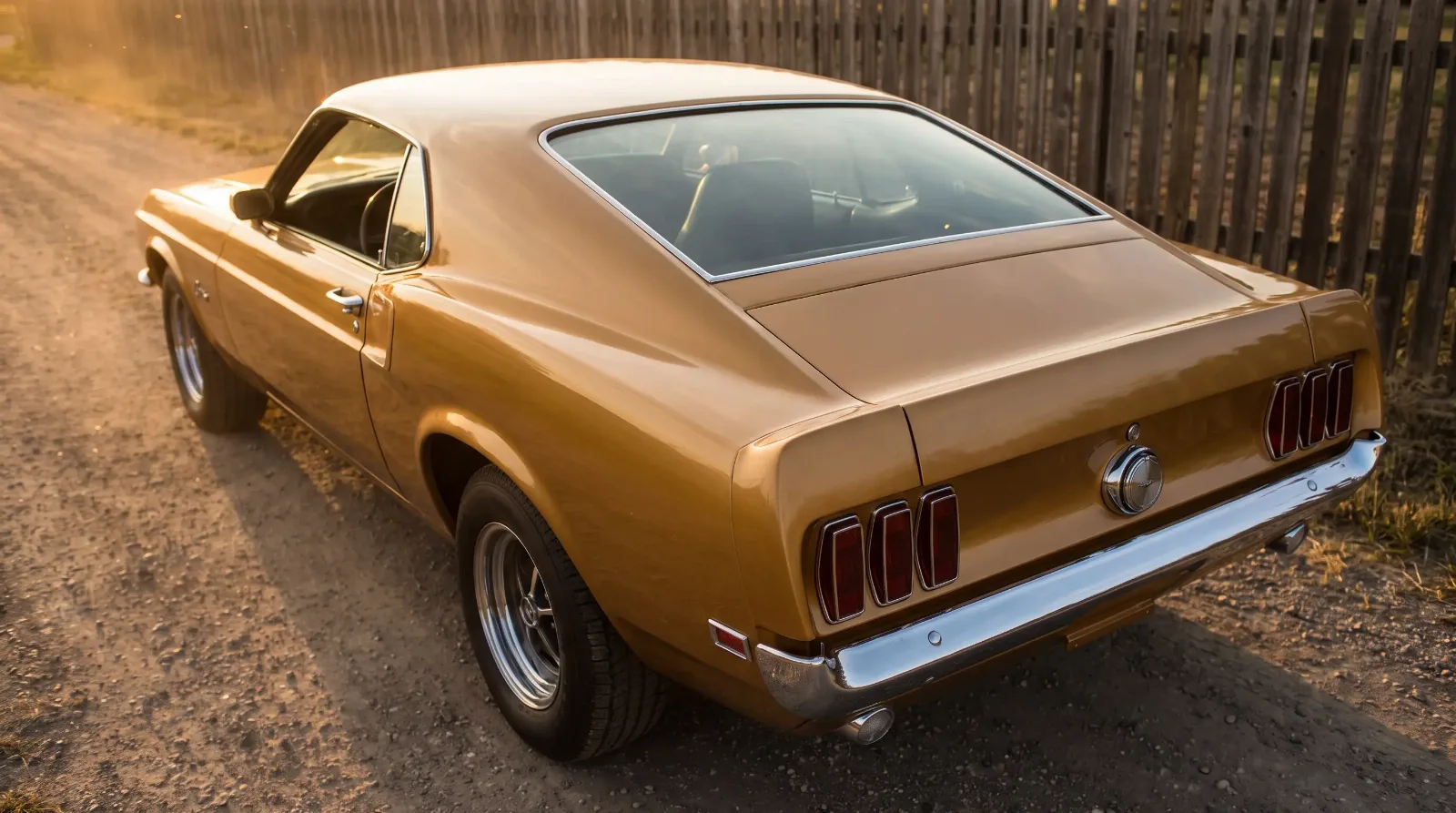
The fastback, introduced for 1965 as the 2+2, was the body style that pointed toward the future. Its roof flowed in an unbroken line from the windshield to the tail, swallowing the short deck into one continuous slope. The fastback turned the Mustang from a stylish commuter into something that looked fast and competition-bred, and it became the canvas for the high-performance variants and the racing image that followed. The same three-style logic, formal coupe, open convertible and flowing fastback, carried through the entire first generation even as the sheet metal grew.
Styling evolution 1964½ to 1973: from clean to broad
Across nine model years the Mustang stayed recognizably itself while growing steadily larger and more aggressive. The change happened in clear phases, and understanding those phases is the key to reading any first-generation car at a glance.
The early cars, 1964½ through 1966, are the clean ones. Crisp lines, modest overhangs, simple grilles and the tightest version of the original proportion. These are the cars most people picture when they hear the name. For 1967 and 1968 the Mustang grew in every dimension, gaining width and a more muscular body to make room for big-block engines. The grille opened up, the side coves deepened, and the car traded some of its lightness for presence.
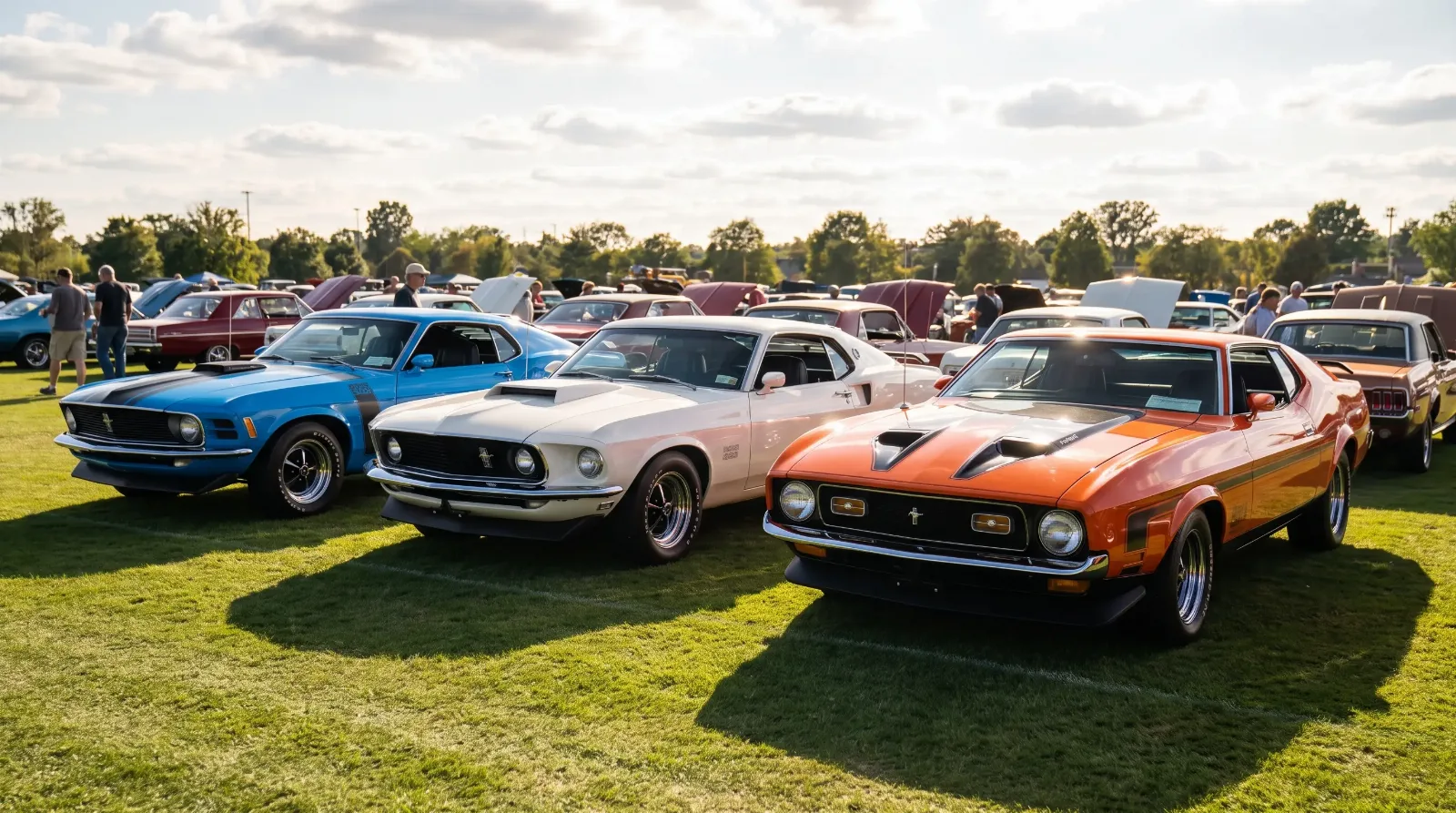
The 1969 and 1970 cars are the aggressive ones. The body grew longer and lower, the quad headlamps of 1969 gave the front a wide, predatory look, and the fastback flattened into the dramatic SportsRoof profile. This is the era of the most theatrical Mustangs, the cars whose names, like Mach 1 and Boss, became shorthand for the breed. Finally, 1971 through 1973 brought the broad cars, the largest and heaviest of the first generation, with a near-horizontal fastback roof and a wide, planted stance that traded agility of line for sheer scale. By 1973 the original light pony car had become a big, muscular cruiser, and the stage was set for the dramatic downsizing that followed.
The cultural reach of these shapes ran far beyond the showroom; the most theatrical late-1960s fastbacks in particular became screen icons, a story told in Mustang in pop culture.
| Design era | Model years | Character | Signature cues |
|---|---|---|---|
| Clean early cars | 1964½–1966 | Light, crisp, original | Tight proportion, simple grille, side cove |
| The bigger Mustang | 1967–1968 | Wider, more muscular | Larger grille, deeper coves, big-block room |
| The aggressive era | 1969–1970 | Lower, longer, theatrical | Quad lamps (1969), SportsRoof fastback |
| The broad cars | 1971–1973 | Largest, heaviest, planted | Near-flat fastback roof, wide stance |
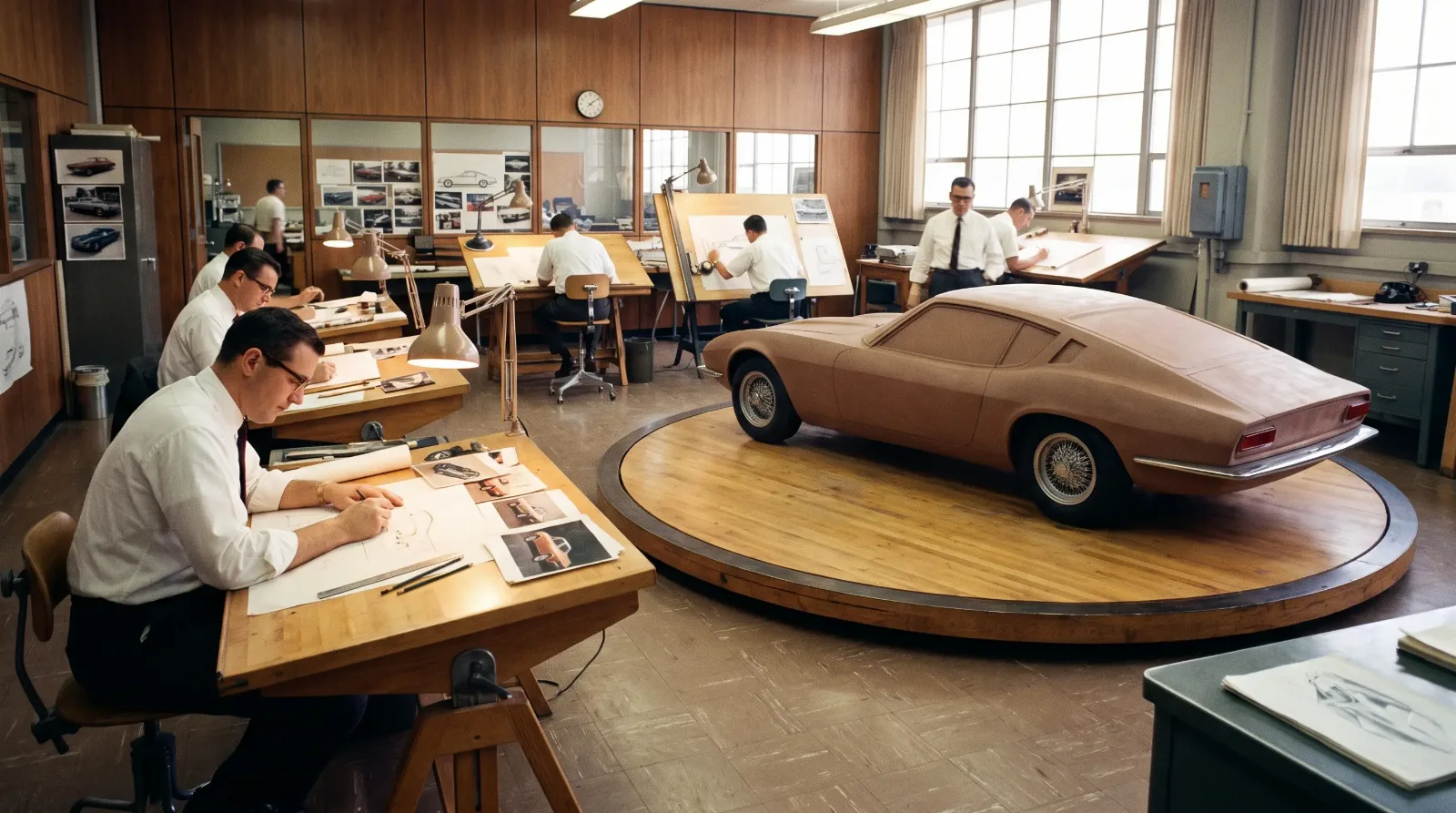
The design studio: Oros, Halderman and the team
The Mustang's look was the work of Ford's styling studios under design chief Gene Bordinat, with the production shape emerging from a competition between internal teams. The studio led by Joe Oros produced the proposal that became the car, and the clay model that won, often referred to as the Cougar proposal during development, set the proportions that reached production largely intact.
Within that effort, designer Gale Halderman is widely credited with the sketch that defined the production Mustang's body sides and overall stance. Halderman worked under Oros and translated the brief, a sporty, affordable, personal car, into the long-hood, short-deck form that survived the journey from clay to assembly line with remarkably few changes. The grille, the side sculpture and the fastback all trace back to decisions made in those studios in 1962 and 1963.
What makes the story unusual is how little the design was diluted. Many cars lose their best ideas between the studio and the factory. The Mustang reached dealers looking very close to the winning clay, which is part of why it landed with such force. The team had resolved the shape so completely that there was little left to compromise.
"The genius of the first Mustang was restraint. The studio drew a shape so right that the factory had almost nothing to ruin."
— Tom Ramirez
The running horse: an identity in steel and chrome
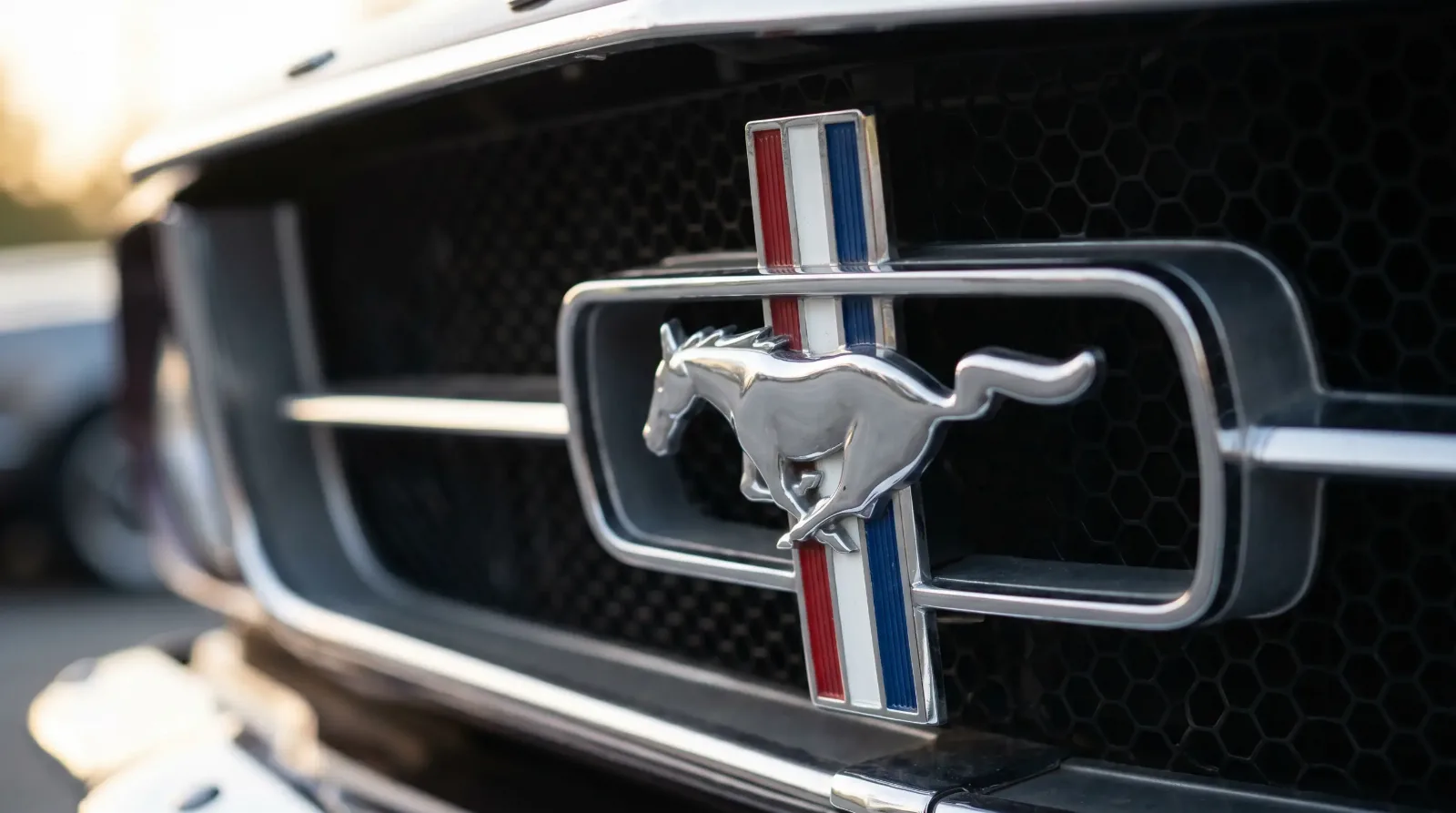
A great shape needs a great emblem, and the Mustang got one. The galloping horse, set against the tricolor bars in the grille, gave the car a single instantly readable symbol. It worked at speed and at a glance, on a hubcap or a fender, and it tied every body style and every trim level into one family. The horse was not a badge added late in the process. It was part of how the car presented itself from the front, floating in the grille opening like the car's own heraldry.
The identity extended into the details. The simple round or rectangular tail lamps, the chrome side trim, the optional styled steel wheels and the clean instrument panel all spoke the same restrained, confident language. Even the name, drawn from the idea of a fast, free American horse rather than the wartime aircraft some assumed, reinforced the theme of motion and independence. The result was a car whose looks, name and emblem all pulled in the same direction, which is rare and is part of why the design has never needed reinvention to stay recognizable.
Why the shape endures
More than sixty years on, the first-generation Mustang's design still works, and the reasons are structural rather than nostalgic. The proportion is timeless because it borrows from a much older idea, the front-engine sporting car with power up front and the driver set back, an arrangement that has read as desirable for a century. The car layered an accessible price and a friendly face onto that classic proportion, which is why it never looked aloof.
The shape also gave designers room to grow without losing identity. Across four distinct eras the Mustang changed character, from light to muscular to aggressive to broad, yet the long hood, the short deck and the running horse held the whole run together. Later Mustang generations, including the modern retro-styled cars, returned again and again to these original cues because they remain the clearest shorthand for what the car is. The first-generation design endures because it was solved, not merely styled, and solved problems stay solved.
For readers who want to see how those eras look in the metal rather than on the page, the present-day market keeps a steady supply of classic Mustangs for sale, spanning the clean early cars through the broad final first-generation models.
Sources and notes
Figures in this article were checked against the sources below. Pricing and production milestones are drawn from Ford's own corporate history and contemporary records. One point is explicitly unconfirmed: Ford never officially explained why the grille horse gallops to the left, so any account of that choice as a deliberate symbol of independence should be read as enthusiast interpretation rather than documented intent.
- Ford Motor Company — Mustang Debut at the World's Fair (confirms the 2,368 dollar base price and April 17, 1964 launch).
- HISTORY — Ford celebrates 1 millionth Mustang, March 2, 1966 (one million cars built in under two years).
- Ford Motor Company — Birth of the Mustang (Falcon-based hardware, studio origins and proportions).
- CarParts.com — A Tale of a Running Horse: The Ford Mustang Logo (left-facing emblem; Ford never stated its reasoning, plus the competing theories).
- Over-Drive Magazine — 1969 Ford Mustang Fact Sheet (1969 quad headlamps and the SportsRoof fastback restyle).
- CJ Pony Parts — Mustang Prices Through the Years (base MSRP across the 1964½–1973 run).