Born from the SportsRoof: the Mach 1's origins in 1969
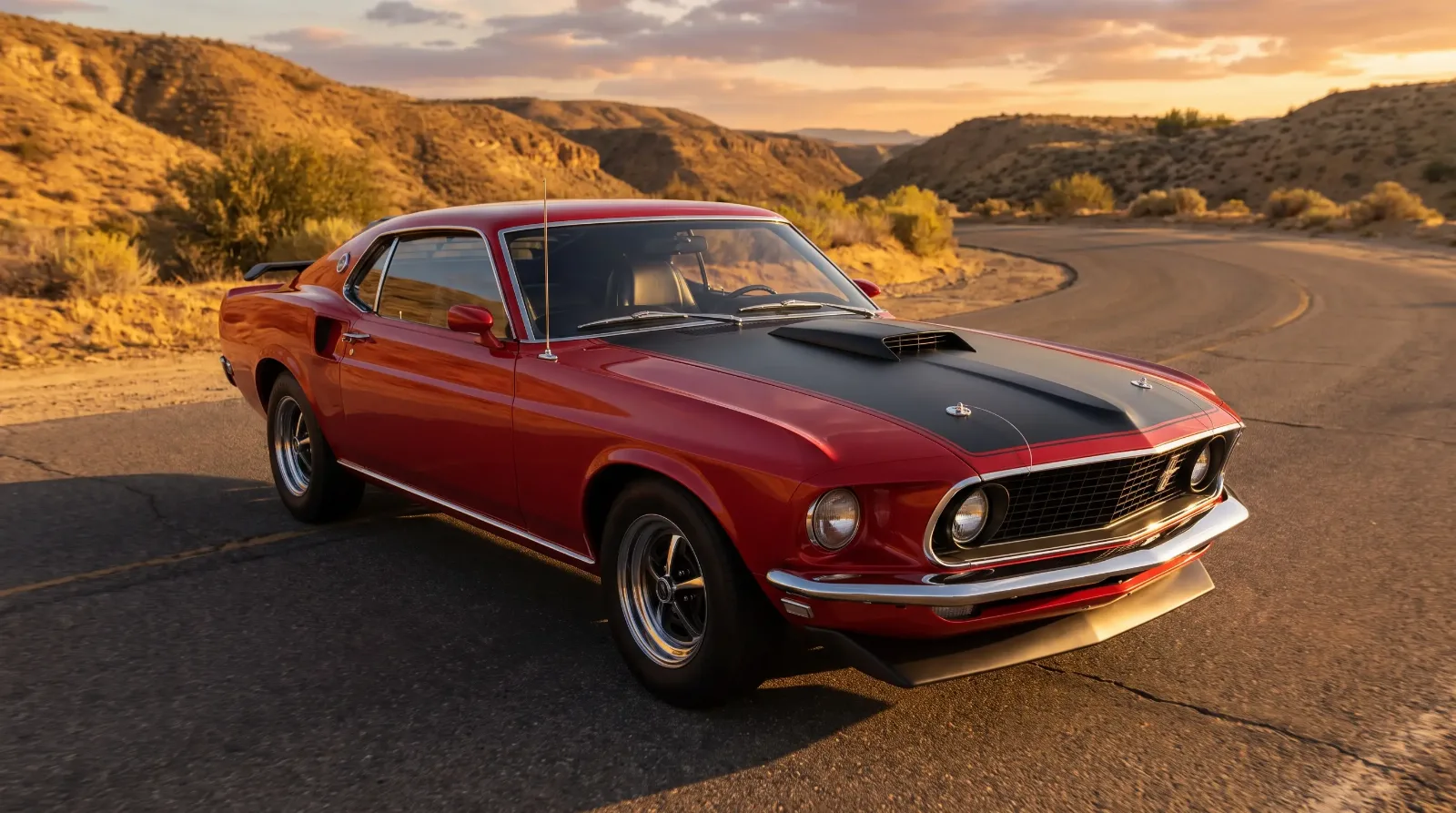
When Ford unveiled the 1969 Mustang lineup, the big news was not one model but an entire restructuring of the range. The fastback body style was renamed the SportsRoof, and sitting at the top of the performance-appearance hierarchy was a brand-new package called the Mach 1. Ford's product planners understood that buyers wanted a Mustang that looked the part before it even moved, and the Mach 1 delivered exactly that: a factory-built machine that combined genuine powertrain muscle with styling aggression that no dealer-installed option package could match.
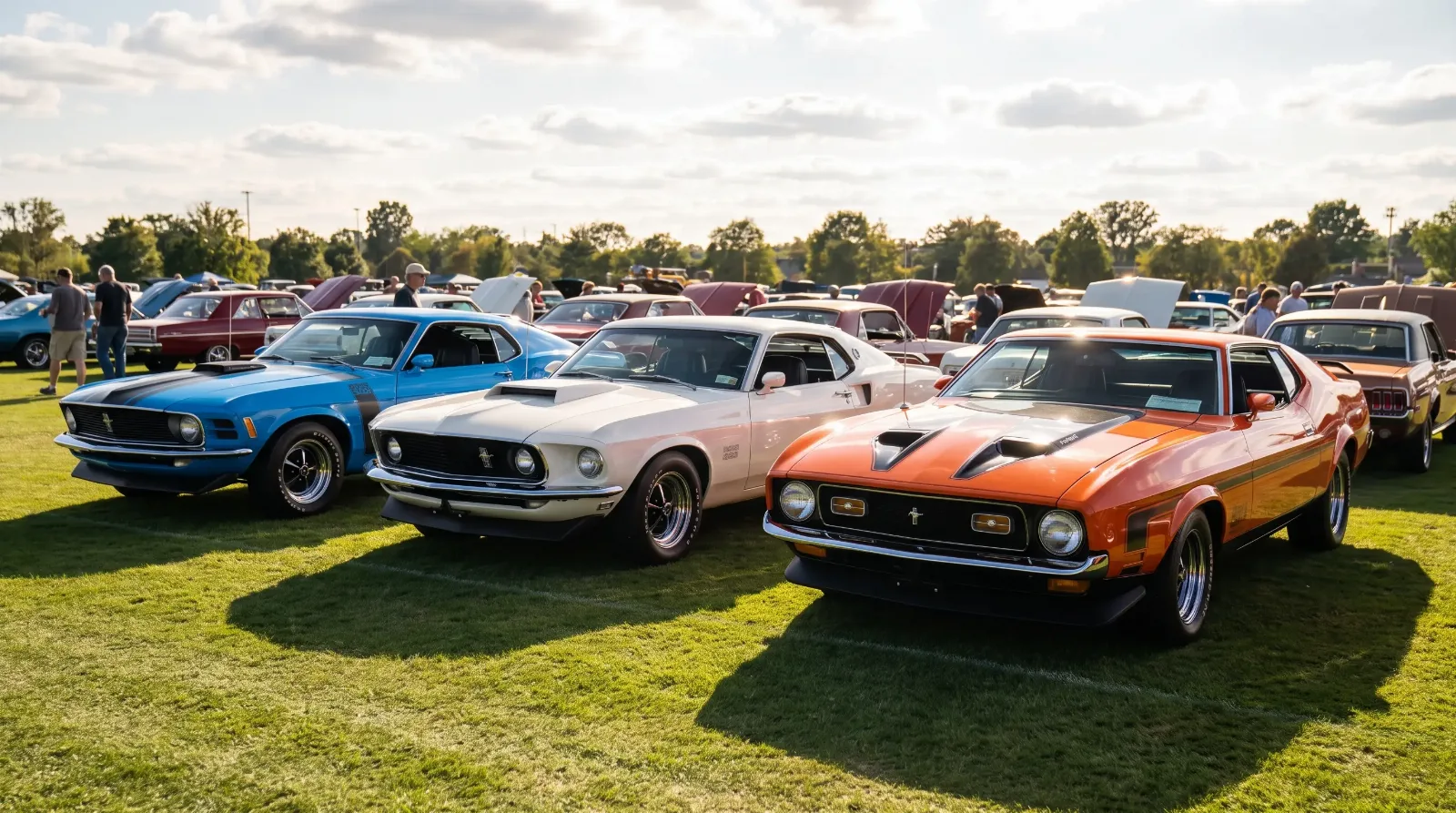
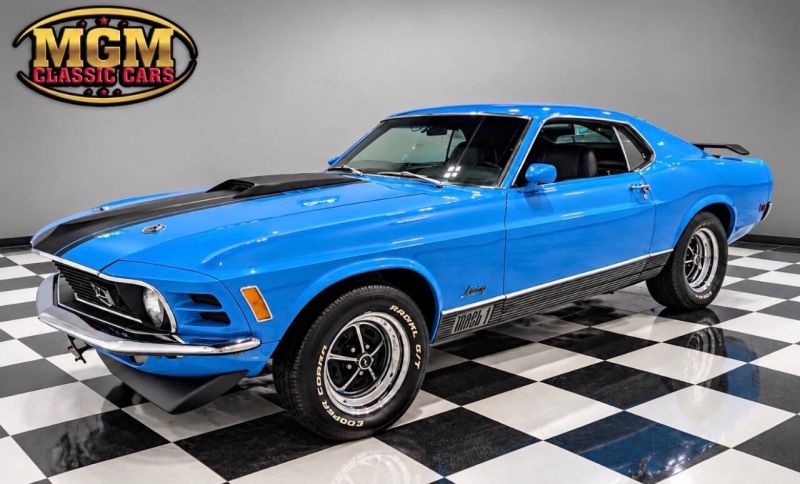
The Mach 1 was available only on the SportsRoof body, which meant the long, sweeping roofline that sloped into a short rear deck. That shape alone set it apart from the coupe and convertible Mustangs sharing the showroom floor. Ford then layered on a specific visual package: a matte-black hood treatment, styled steel wheels with chrome lug nuts, a color-keyed front spoiler, and special bodyside striping. The result was a car that looked purposeful even when equipped with the base engine, and genuinely menacing when fitted with the big-block options.
Engine choices: from the 351 to the 428 Cobra Jet
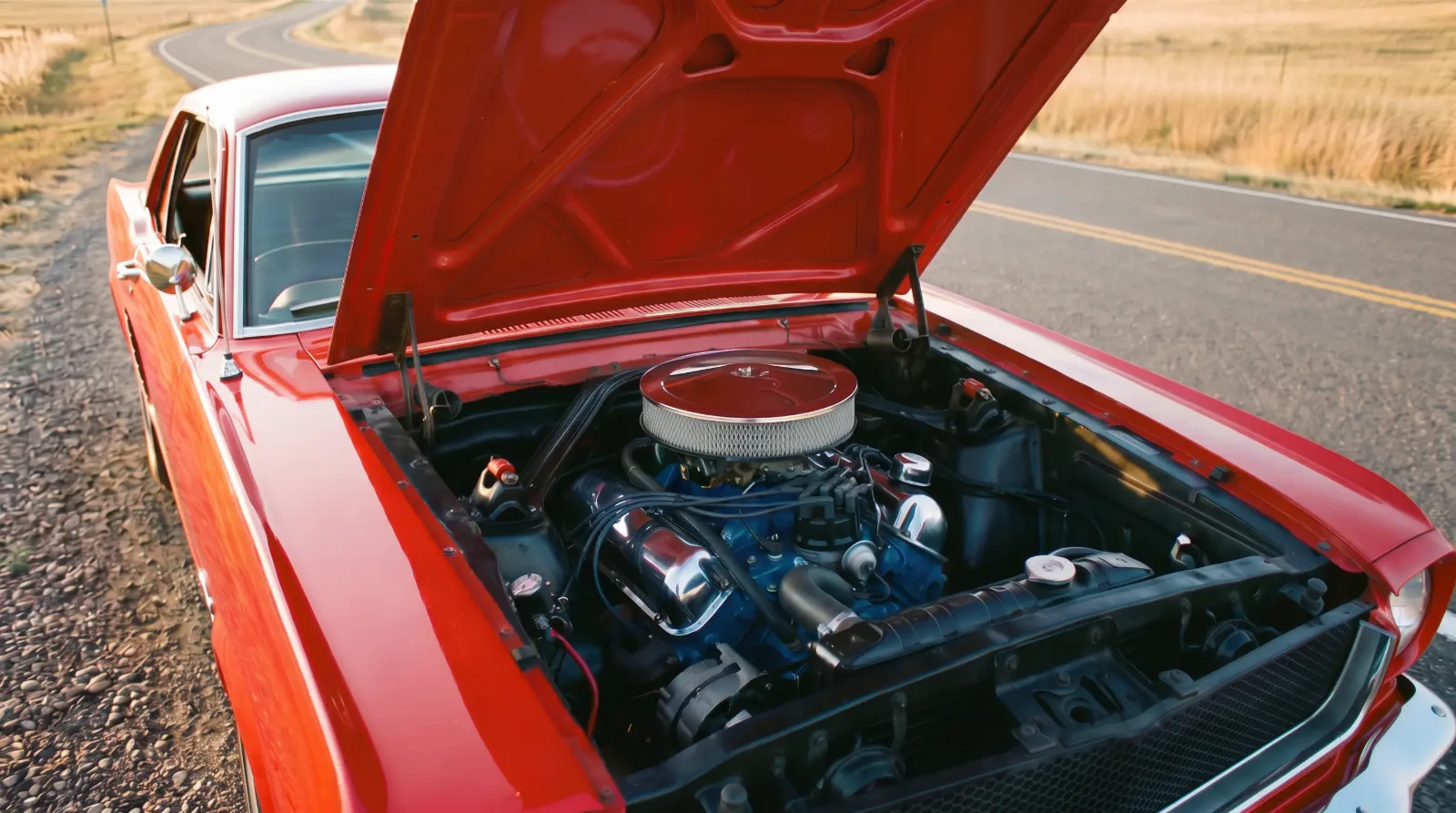
One of the Mach 1's genuine strengths was the range of powerplants Ford offered beneath that hood. The standard engine for 1969 was the 351 Windsor two-barrel, rated at around 250 horsepower. Buyers who wanted more could step up to the 351 four-barrel, and from there the options escalated quickly through the big-block territory that defined the muscle-car era.
The 390 FE-series big block was available in Mach 1 trim, carrying a factory rating of about 320 horsepower. Above it sat the engine that made the Mach 1 a genuine stoplight threat: the 428 Cobra Jet. Introduced as a mid-year option in 1968, the 428 CJ arrived in Mach 1 guise with an advertised 335 horsepower -- a number widely understood at the time to be conservatively rated, a practice Ford and its competitors used to manage insurance costs and internal competition between model lines. The 428 Cobra Jet Ram-Air version, which paired the engine with a functional cold-air induction system through the shaker scoop, added another layer of theatre and a modest real-world performance benefit.
For those wanting the absolute maximum, Ford offered the 428 Super Cobra Jet in 1969 and 1970, which included a different crankshaft, connecting rods, and oil cooler provisions intended for drag-strip use. These cars, often identifiable by their order codes and documentation, are among the most sought-after Mach 1s today. For a broader look at where the Mach 1 sits among the high-performance Mustangs of the first generation, the story spans several distinct and competing approaches to speed.
| Year | Engine | Displacement | Advertised HP | Notes |
|---|---|---|---|---|
| 1969 | Windsor 2V | 351 cu in | 250 hp (approx.) | Standard Mach 1 engine |
| 1969 | Windsor 4V | 351 cu in | 290 hp (approx.) | Optional step-up |
| 1969 | FE 4V | 390 cu in | 320 hp (approx.) | Big-block entry |
| 1969–1970 | Cobra Jet | 428 cu in | 335 hp | Conservatively rated |
| 1969–1970 | Cobra Jet Ram-Air | 428 cu in | 335 hp | Shaker scoop, functional cold-air |
| 1971 | Cobra Jet | 429 cu in | 370 hp | New 385-series engine family |
| 1972–1973 | Cobra Jet | 351 cu in | 266 hp net | Emissions-era detuning |
The shaker scoop and the look that defined an era
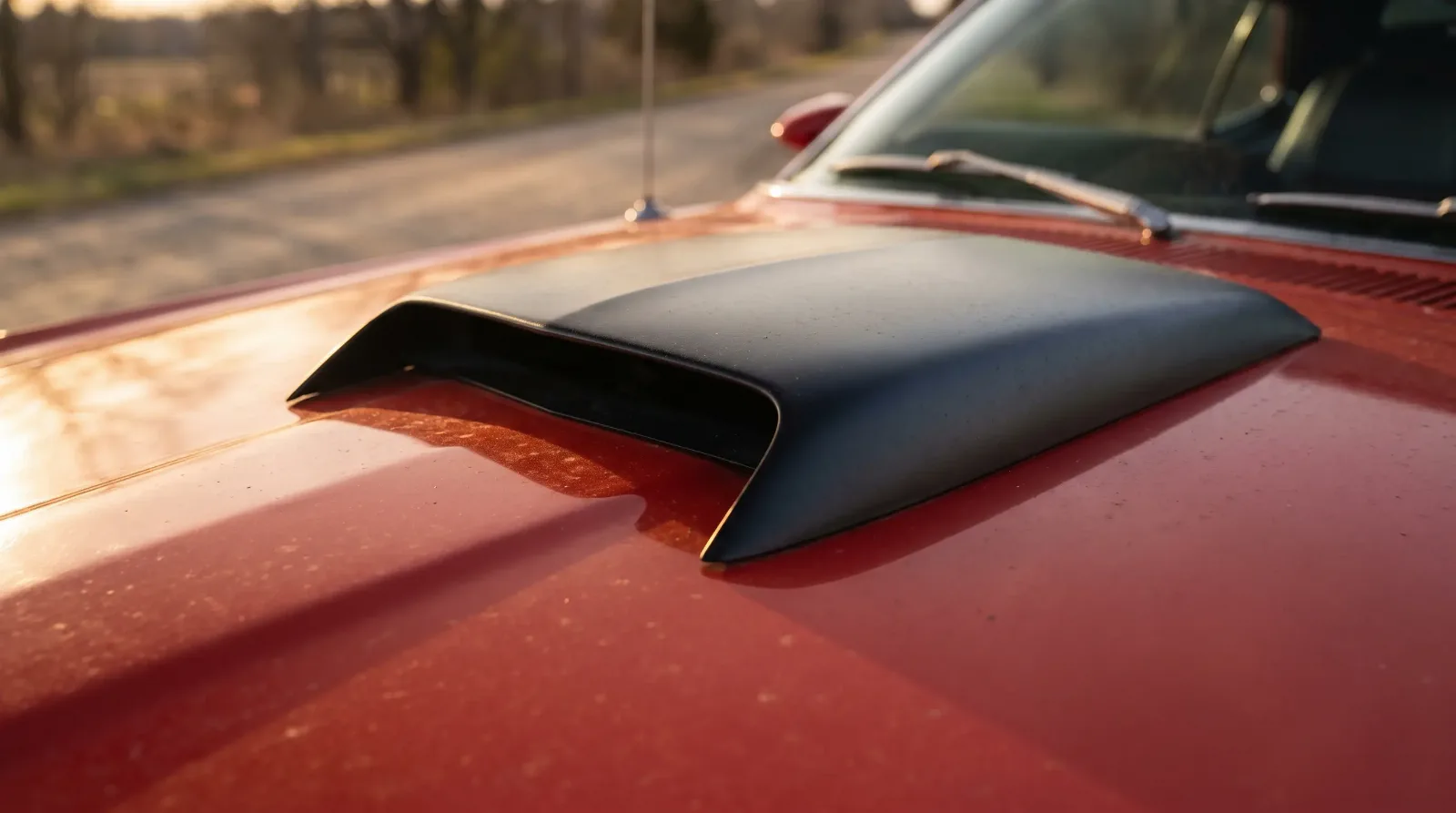
No single visual element is more associated with the early Mach 1 than the shaker hood scoop. Unlike conventional hood scoops that were bolted to the hood skin itself, the shaker was mounted directly to the engine's air cleaner assembly, which meant it protruded through a cutout in the hood and moved with the engine. At idle, a big-block Mach 1 with the shaker installed would visibly vibrate the scoop in rhythm with the engine, which is precisely how the option earned its name. It was pure showmanship, but it also served a real purpose: feeding cooler, denser outside air directly to the carburetor rather than the heat-soaked air sitting under a closed hood.
The matte-black hood treatment was the other defining visual element. Ford applied a flat-black or argent paint to the hood's center section, framed by a subtle body-color surround. Combined with the front spoiler, the NASCAR-style twist locks on the hood, and the integrated chin spoiler, the Mach 1 looked like a production car that had already spent time in a racing program. That was not entirely accidental. Ford was deeply invested in motorsport during this period, and the visual language of the Mach 1 borrowed liberally from what was winning on the track.
Sales success and the Mach 1's run through 1973
The buying public responded to the Mach 1 with immediate enthusiasm. Ford sold roughly 72,000 Mach 1 units (about 72,458 by most accounts) in the 1969 model year, a figure that validated the strategy of building a performance-appearance package at a price point accessible enough for a broad market. The Mach 1 cost meaningfully more than a base SportsRoof but considerably less than the Boss 302 or Boss 429, which occupied the top of the Mustang hierarchy with their race-derived specifications and correspondingly high prices.
The Mach 1 carried into 1970 with minor refinements, retaining the essential character while Ford updated the bodyside graphics and made small adjustments to the hood treatment. The 428 Cobra Jet remained available, and 1970 added a twist: the NASA-style dual hood scoop, a functional alternative to the shaker that gave the car a different aesthetic while still feeding fresh air to the engine.
The 1971 model year brought the biggest change to the Mach 1's mechanical story. Ford introduced the 429-cubic-inch engine from the new 385-series family, which replaced the aging FE big block. The 429 Cobra Jet and the Super Cobra Jet were available in the 1971 Mach 1, making those cars among the most powerful Mustangs ever built from the factory. But 1971 also brought the substantially redesigned Mustang body -- wider, longer, and heavier than its predecessors. The Mach 1 retained its visual package but critics noted the car had grown in all the wrong directions for a sports car.
By 1972 and 1973, emissions regulations and insurance pressures were doing what the competition could not: reducing the potency of the available engines. The 429 options disappeared, and the Mach 1 soldiered on with a 351 Cleveland as its high-performance choice, producing outputs that would have been considered ordinary just three years earlier. The 1973 model year closed out the first-generation Mach 1. Ford discontinued the model for 1974 as the Mustang itself was downsized dramatically into the Mustang II platform.
"A numbers-matching 1969 Mach 1 with the 428 Cobra Jet and the shaker scoop is one of those cars where the documentation tells the whole story -- and if the documentation is right, there is nothing else to argue about."
Mike Sullivan
The Mach 1 returns, and what it means for collectors today
Ford briefly revived the Mach 1 name for the 2003 and 2004 model years, using it on a performance-appearance package for the then-current SN95 Mustang. The revival was well-received as a proper enthusiast's Mustang with a 4.6-liter V8 and handling improvements over the standard GT, but it occupied a fundamentally different place in the market from the original. Ford brought the Mach 1 back again for the 2021 and 2022 model years on the S550 platform, positioned between the GT and the Shelby GT500 and equipped with the 480-horsepower 5.0-liter Coyote V8.
These modern revivals have not diluted the appeal of the original 1969 to 1973 cars among serious collectors. If anything, the continued use of the name has kept the Mach 1 story in front of newer generations of enthusiasts who then seek out the originals. A clean 1969 Mach 1 with documented big-block credentials represents a legitimate piece of muscle-car history, one that sold in large enough numbers to be findable today but carries enough visual drama and mechanical substance to justify serious collector interest. Buyers looking to explore the available inventory can find classic Mustangs for sale across a range of years and specifications.
The original Mach 1 succeeded because Ford got the formula exactly right for its moment: genuine performance options, accessible pricing, and styling that communicated speed before the engine was started. That combination is harder to achieve than it looks, which is why the 1969 Mach 1 remains the benchmark against which every subsequent performance-appearance package Mustang is measured. Its performance lineage goes back further, to the 289 K-code Hi-Po where Mustang performance began.
Sources and notes
Advertised horsepower figures from this era are gross (SAE) ratings through 1971 and net (SAE) ratings from 1972 onward, and were not always consistent across Ford literature; the 428 Cobra Jet's 335 hp rating in particular is widely regarded as deliberately conservative. Production totals vary slightly between sources. Figures here have been cross-checked against the references below and should be treated as the best widely accepted values rather than absolute originals. Always verify the specification and documentation of any individual car before purchase.
- Ford Mustang Mach 1: Wikipedia (engine ratings by year, 1969 production, 2003-2004 and 2021-2023 revivals)
- 2021 Ford Mustang Mach 1 first drive: Motor Authority (480 hp 5.0-liter Coyote V8)
- Mach 1 returns with 480 horsepower for 2021: Mustang Driver
- 1969 Ford Mustang Mach 1 428 Cobra Jet: Silodrome (1969 engine options and Cobra Jet detail)
- Indianapolis 500 pace cars: Wikipedia (the 1969 pace car was a Chevrolet Camaro SS; Ford Mustang paced the race in 1964, not 1969)