The Man Who Gave the Corvette a Soul
By the time the National Corvette Museum opened its doors in Bowling Green, Kentucky, in September 1994, Zora Arkus-Duntov had already outlived most of the battles that defined him. The mid-engine layout he spent decades pushing for had never made it into production. The racing program he'd championed had been shuttered by GM's corporate caution. He was eighty-four years old, his health in gradual decline, and the America that had embraced him as an immigrant engineer turned automotive visionary was not quite the same country he'd arrived in half a century before.
But the Corvette was still there. It had survived every quarterly review, every budget cut, every executive who'd looked at sales figures and wondered aloud whether the thing made sense. And now it had a museum — a building consecrated to the idea that a two-seat sports car made in Kentucky was worth preserving, worth celebrating, worth driving two hours off the interstate to stand in front of. Duntov attended the opening. He was not well, but he was present. Within two years, he would be gone. And then, in a decision that remains one of the stranger and more quietly moving facts in American automotive history, he would never truly leave.
Nineteen Years at the Center
Zora Arkus-Duntov joined General Motors in 1953, the same year the Corvette made its debut as a concept-car curiosity at the Motorama show. He hadn't been hired to save it. He wrote an unsolicited memo — his famous "Thoughts Pertaining to Youth, Hot Rodders and Chevrolet" — that circulated quietly through the right offices and landed him a role at Chevrolet. The Corvette was nearly cancelled in 1954, its first year of real production yielding a car too slow and too expensive for the market it was supposed to reach. Duntov's arrival, and his insistence that the car needed to perform rather than merely look the part, reoriented what the Corvette could become.
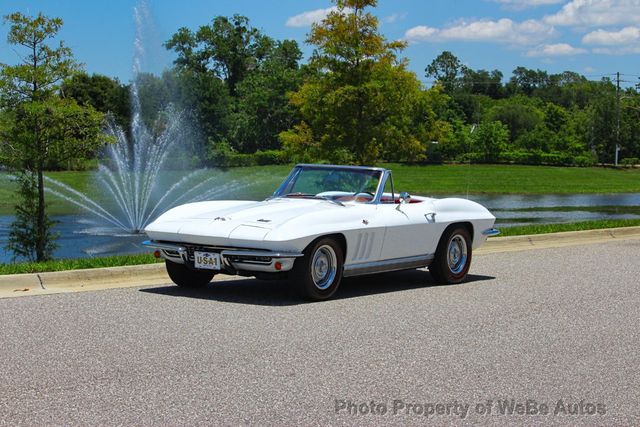
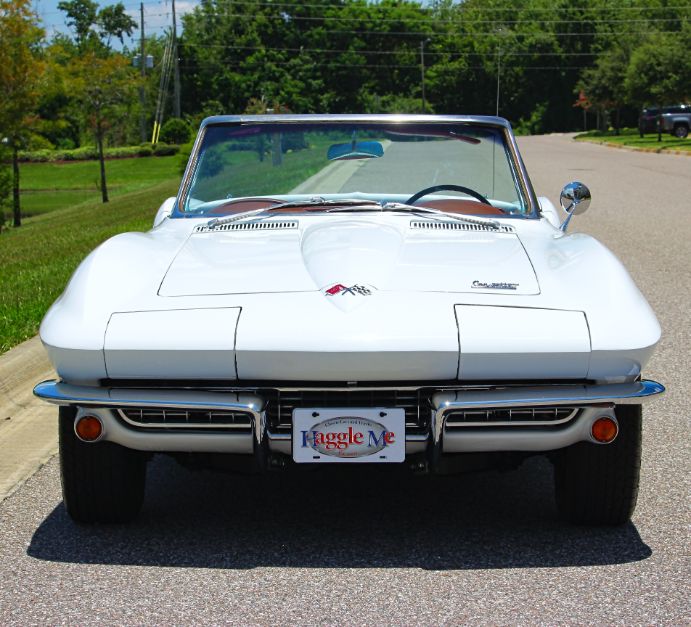
He ran Corvette engineering from the mid-1950s until his retirement in 1975. In that time he pushed through the small-block V8, advocated relentlessly for independent rear suspension, set land-speed records at Daytona to prove that a production Corvette could legitimately be called fast, and championed a mid-engine layout that the corporation kept approving in concept and abandoning in practice. His relationship with GM's hierarchy was, by all accounts, combative in the way that productive relationships between engineers and bureaucracies often are — he knew what the car should be, and he spent two decades trying to make the institution agree.
After retirement in 1975, he didn't withdraw. Period accounts suggest he remained one of the most accessible figures in the Corvette enthusiast world — attending shows, signing memorabilia, talking with collectors who'd driven their C2s and C3s hundreds of miles for the chance to speak with the man whose fingerprints were on every design decision. He was generous with his time in the way that people sometimes become when they've made their peace with a life's work. His racing career and engineering legacy had given him something durable to stand behind.
Through the late 1980s and into the early 1990s, his health declined. He was present for the C5 development discussions that would eventually produce the most capable Corvette yet, though he would not live to see it reach production. He attended the museum's opening in September 1994, walking through a building that had been built, in no small part, because of the car he'd shaped. He died on April 21, 1996. He was eighty-six.
What Elfi Arranged
The details of how Zora Arkus-Duntov came to be interred at the National Corvette Museum are not exhaustively documented in public sources. What is known, according to museum accounts, is that his wife Elfi coordinated with museum leadership in the period following his death, and that an arrangement was made to place his cremated remains in a niche within the museum. Elfi's ashes later joined his there. He is widely regarded as the only person interred at the museum — a distinction that, stated plainly, sounds like a footnote but is in fact something closer to a philosophical statement.
Museums are, at their core, institutions that draw a line between the living and the objects they leave behind. You visit a museum to be in the presence of things that have outlasted their makers. The object persists; the person recedes into context, into caption text, into the curatorial voice that explains what you are looking at. The arrangement at Bowling Green refuses that separation. Duntov is not contextualized at the museum. He is not memorialized adjacent to it. He is, in the most literal sense possible, part of it.
"The Corvette is an American sports car. I am an American, and I have worked on the Corvette. It is a part of me, and I hope I am a part of it."
— Zora Arkus-Duntov, in interviews throughout his retirement years
There is a tradition, scattered across cultures and centuries, of people choosing to be buried near the things or places that defined them. Racing drivers have been interred at the tracks where they competed. Ship captains have gone down with their vessels. Aviators have been buried beside their planes. What those arrangements share is proximity — a deliberate insistence that the person and the object belong in the same geography, the same silence. The Corvette Museum arrangement goes further. It places the man inside the institution built to preserve the object. The Corvette and Duntov's legacy are not merely associated; they are, by the most concrete means available, co-located.
The Ground Opens
On the morning of February 12, 2014, a sinkhole opened beneath the Skydome section of the National Corvette Museum floor. It happened overnight; no one was present. By the time staff arrived, eight historic Corvettes had disappeared into a 40-foot-wide, 25-foot-deep cavity in the earth. Among them were the 1 Millionth Corvette — a white 1992 convertible — the Black ZR-1 Spyder concept, a 1962 black Corvette, a 1984 PPG Pace Car, and several others. Some were damaged beyond meaningful restoration. Others were eventually recovered and rebuilt. The whole episode was recorded on the museum's security cameras, and the footage — six luxury cars vanishing into a hole in the ground over the course of a few surreal seconds — circulated widely.
Duntov's resting place was not in the affected section. The sinkhole was contained to one area of the building, and museum accounts confirm his niche was not damaged. But the event, which drew national and international attention, renewed public interest in the museum generally, and by extension in the figures whose lives were woven into its identity. Journalists and enthusiasts who'd never previously known that a person was interred there found themselves reading about it for the first time. The sinkhole had carved out a strange second chapter in the museum's story — one involving loss and recovery and the sudden vulnerability of things we assume are permanent.
There is something fitting, if unsettling, about the fact that the ground beneath a museum — an institution premised on permanence — turned out to be hollow. The Corvettes that fell through it were exactly the kind of objects museums exist to protect: irreplaceable, singular, impossible to reproduce. Several of them were later restored, which raises its own questions about authenticity and the nature of preservation. But Duntov's connection to the place was not damaged, not recoverable, not in question. Whatever had been vulnerable that February morning, it wasn't him.
What Remains
It is possible to visit the National Corvette Museum in Bowling Green today and stand in the same building as the man who did more than anyone else to make the car what it is. That is an unusual thing to be able to say. Most of the people who shaped the objects in our museums are scattered — in cemeteries far from the workshops where they spent their lives, in places chosen by family or circumstance or simple geography, with no particular relationship to the work that defined them.
Duntov chose differently, or his wife chose on his behalf, or the museum chose with them — the historical record is incomplete enough that it isn't entirely clear how the decision was made. What is clear is the result: a building that houses both the objects and the man who shaped them, in an arrangement that collapses the usual distance between maker and made. When you walk through those exhibits, past the C1s and C2s and C3s and the milestone plaques and the concept cars, you are in his presence in a way that is not metaphorical.
Museums are supposed to be about things. This one, quietly, is also about a person. And that distinction — the fact that the line between the two could not, in the end, be maintained — may be the most honest thing the institution has ever said about what the Corvette actually is.
Sources and notes
- National Corvette Museum — Museum History — Official institutional history and background on the museum's founding and collections
- New York Times — Sinkhole Swallows Corvettes at Museum in Kentucky (Feb. 2014) — Contemporary coverage of the February 12, 2014 sinkhole event and the eight affected vehicles
- MotorTrend — Zora Arkus-Duntov: Father of the Corvette — Profile of Duntov's engineering career and his role in shaping Corvette development from the 1950s through retirement
- Road & Track — The Engineer Who Made the Corvette Real — Long-form feature on Duntov's tenure at GM and his post-retirement presence in the enthusiast community
- National Corvette Museum — Sinkhole Exhibit — Museum's own account of the 2014 sinkhole, the vehicles affected, and the decision to preserve part of the cavity as a permanent exhibit